
Travel Guide · Culture
Ha Giang Traditional Houses: A Guide to Trinh Tuong Homes
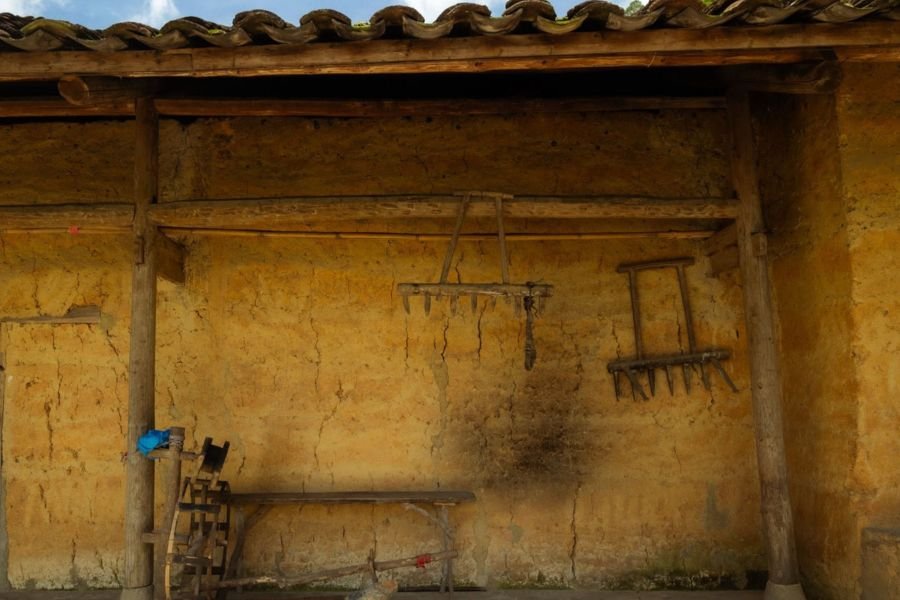
On the Dong Van Karst Plateau, people still build homes the old way: walls of rammed earth, roofs of clay tiles and fences of stone stacked by hand.
Drive across the Dong Van Karst Plateau and the houses start to look like they grew out of the ground. Ochre walls the color of the fields, dark clay tile roofs furred with moss, and low fences of grey stone that follow every slope. Ha Giang traditional houses are built from what the mountains provide, by families and neighbors working together, and they are one of the quiet highlights of the loop.
Locals call the earth walled homes nha trinh tuong, which simply means rammed earth houses. This guide explains how Ha Giang traditional houses are built, why they suit the plateau so well, what you will find inside a Hmong house and where to see the best examples on the Ha Giang Loop, along with the etiquette that keeps you welcome at the gate.
Ha Giang traditional houses at a glance
- Walls: rammed earth, packed layer by layer inside wooden molds, often 40 to 50 centimeters thick.
- Roofs: wooden frames under yin and yang clay tiles, or thatch on older and poorer houses.
- Fences: dry stone, stacked without mortar from stones cleared out of the fields.
- Builders: mainly Hmong, Lo Lo and Dao families on the plateau, with the whole village helping.
- Best villages: Lung Cam and Lao Xa in Sung La Valley, Lo Lo Chai, Pho Bang, Pa Vi Ha and Nam Dam, plus Dong Van Old Quarter and the Vuong Family Palace.
- Etiquette: look from the lane, ask before photos, and only go inside when invited.
What Are Trinh Tuong Houses?
Trinh tuong houses are homes whose walls are made of earth: damp, clay rich soil pounded so hard inside a wooden frame that it sets almost like stone. The technique is used by several highland peoples across northern Vietnam, and on the Ha Giang plateau it belongs above all to the Hmong, the Lo Lo and the Dao. Each group arranges the house a little differently, but the walls are built the same way.
How the Earth Walls Are Built
It starts with the soil. Builders look for sticky, clay rich earth that will compact firmly, then break it up, pick out the stones and roots and mix it to an even texture. Wooden molds are set up along the line of the walls, and soil goes in a layer at a time. In many Hmong villages it is the women who stand inside the frames and tamp each layer down with heavy wooden mallets, while the men shape and smooth the outer face with planks.
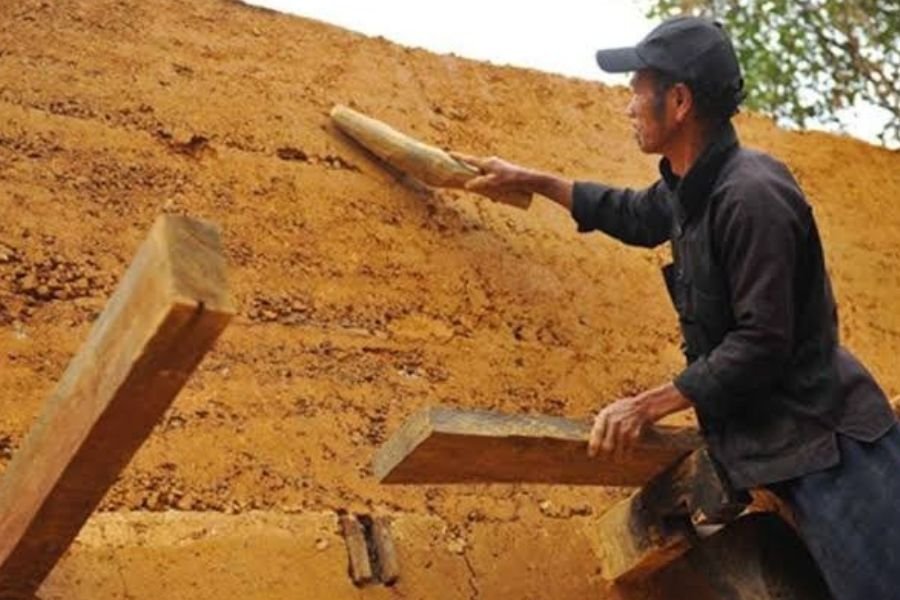
When one section is solid, the mold moves up and along, and the wall rises course by course until it is tall enough for the roof. Doors and windows are cut out once the walls are finished and dry. There is no cement and no machinery, just earth, timber and a lot of hands.
That is the point. Building one of these Ha Giang traditional houses is a village event: neighbors and relatives turn up to help, children watch and learn, and older people give advice. When the main walls are up, the family thanks everyone with a meal, and the corn wine goes round. Our Ha Giang food guide has more on ruou ngo and what usually comes with it.
Why Earth Works on the Plateau
The plateau is a hard place to live. Winters are cold and windy, summers can be hot in the middle of the day, and timber has always been precious in a landscape of bare limestone. Ha Giang traditional houses answer all of that with thick earth walls. They hold warmth through winter nights and stay cool in summer, they stand up to the wind, and the main material is free, dug from the land around the house. In the past they also gave families a sense of security against thieves and wild animals.
If you visit in winter, you will feel the difference the moment you step inside, and our Ha Giang weather by month guide explains what each season brings on the plateau.
Stone Fences and Clay Tile Roofs
Earth walls are only half the picture. What makes Ha Giang traditional houses so photogenic is the way they sit inside a frame of stone and under a roof of clay tiles.
Dry Stone Fences
Almost every Hmong house on the plateau is wrapped in stone fences. They are dry stacked, with no mortar at all, using the stones that families clear from their fields, which on the Dong Van plateau is a never ending job. The fences mark out land, shelter the house from cold wind, keep cattle out of the vegetable garden and pen in the animals. A long stretch can take months to build.
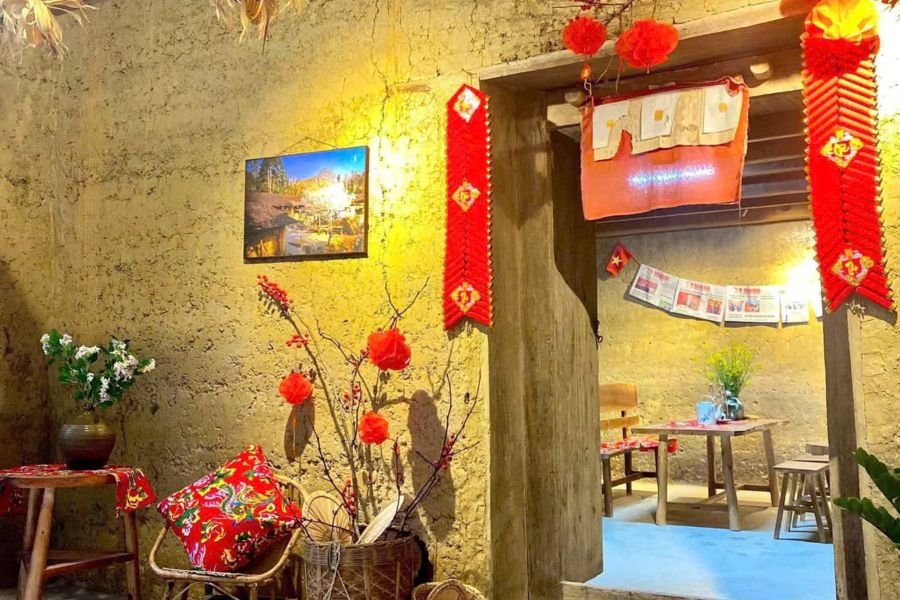
From Dong Van to Meo Vac, these stone fences run around houses, fields and pens in almost every village, and locals see them as a sign of patience and hard work. There is an old saying that a man who can build a house, stack a stone fence and keep a steady home is a skilled family man.
Yin and Yang Roof Tiles
The classic roof on Ha Giang traditional houses uses yin and yang roof tiles: curved clay tiles laid in alternating rows, one facing up and one facing down, so rain runs off cleanly. New tiles are reddish brown and darken over the years, and on older houses they are patched with moss and lichen. In the Hmong community cultural village of Pa Vi Ha, near Meo Vac, you can see the molds once used to make them. Poorer or older homes used thatch instead, and you still see the occasional thatched roof in remote hamlets.
Stone Hamlets on the Hilltops
In a few places the stone takes over completely. On some hilltops in Dong Van and Meo Vac, Hmong hamlets sit behind walls and houses built almost entirely of stone, so solid that from a distance they look like small forts. They are mostly far from the main road, so ask your driver whether one is within reach on your route.
Inside a Hmong House
Seen from the lane, a Hmong house looks simple: a long, low building with a door in the middle. Inside, every part of it has a job.
The Altar, the Hearth and the Loft
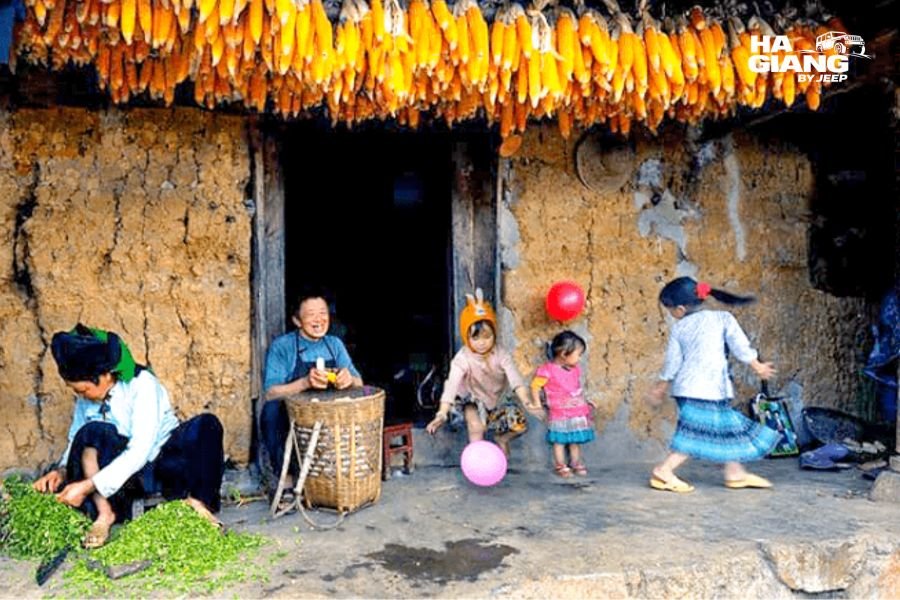
Most Hmong houses follow a three part plan. The central space holds the ancestral altar and is where the family gathers and receives guests. The side sections are for sleeping and for cooking, with the hearth at the heart of family life. Traditionally the fire is ringed with long stones, and during Tet it is kept burning day and night.
Above, a wooden loft reached by a ladder stores corn and other food, kept dry by the warmth and smoke rising from the hearth. In hard winters, the loft was also where a traveler in need of a bed might be put up for the night.
Courtyards and Gates
In villages like Lao Xa, a traditional home is a small closed world: house, outbuildings and stone walls on four sides around a courtyard, entered through a low wooden gate, with peach and plum trees in the yard. In spring, when the blossom comes out against the earth walls, it is one of the prettiest sights on the plateau.
Why Ha Giang Traditional Houses Change as You Climb
Ha Giang is home to many ethnic groups, and Ha Giang traditional houses follow the landscape. In the warmer valleys, the Tay, Nung and Giay traditionally build stilt houses, raised on wooden posts above damp ground. Up on the cold plateau, the Hmong, Lo Lo, Dao, Pu Peo and others build their houses directly on the ground, with thick walls against the weather.
The loop takes you through both worlds. Around Du Gia, at the southern edge of the route, wooden stilt houses stand among rice fields. A day later you are among ochre earth walls and stone fences on the plateau. Near Quan Ba, the Dao village of Nam Dam shows a third variation: golden earth walls in a green, forested valley.
Where to See Trinh Tuong Houses on the Ha Giang Loop
You will pass Ha Giang traditional houses all over the plateau, often right beside the road. These are the places where the old architecture is best preserved and easiest to appreciate.
| Community | What to look for | Good to know | |
|---|---|---|---|
| Lung Cam and Lao Xa | Hmong | Earth houses, stone walls, Pao's House | Sung La Valley, on the loop |
| Vuong Family Palace | Built for a Hmong ruling family | Stone walls, carved timber courtyards | National relic since 1993 |
| Lo Lo Chai | Lo Lo | Old earth houses below Lung Cu | Many houses are now homestays |
| Dong Van Old Quarter | Tay and Hoa families | Old rooflines and shopfronts | Close to the Sunday market |
| Pho Bang and Pho Tro | Hmong, Pu Peo and others | Yellow earth walls near the border | A detour off the main loop |
| Pa Vi Ha | Hmong | Community cultural village, tile molds | Close to Meo Vac |
| Nam Dam | Dao | Golden earth walls in a green valley | Near Quan Ba |
Sung La Valley: Lung Cam, Pao's House and Lao Xa
Sung La Valley, between Yen Minh and Dong Van, is the easiest place to see Hmong earth houses up close. In Lung Cam village, Pao's House became famous as a location for the Vietnamese film Pao's Story and is now open to visitors as a modest museum of highland life: earth walls, a clay tile roof, a stone fenced courtyard and simple wooden furniture. Some neighboring houses have been lived in by the same families for decades.
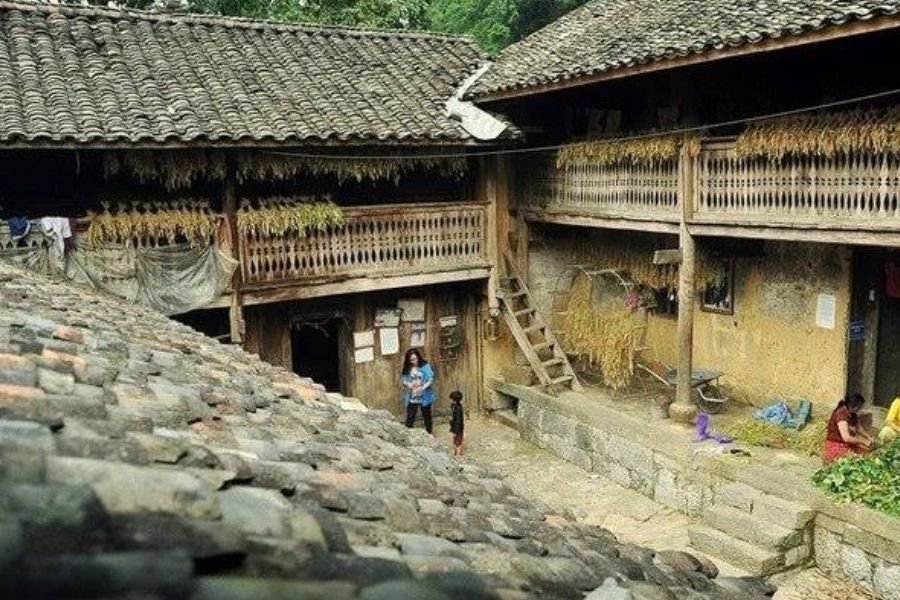
A little further on, Lao Xa is a Hmong village of stone walled courtyards and three part houses, especially lovely in spring when peach and plum trees flower in the yards.
The Vuong Family Palace
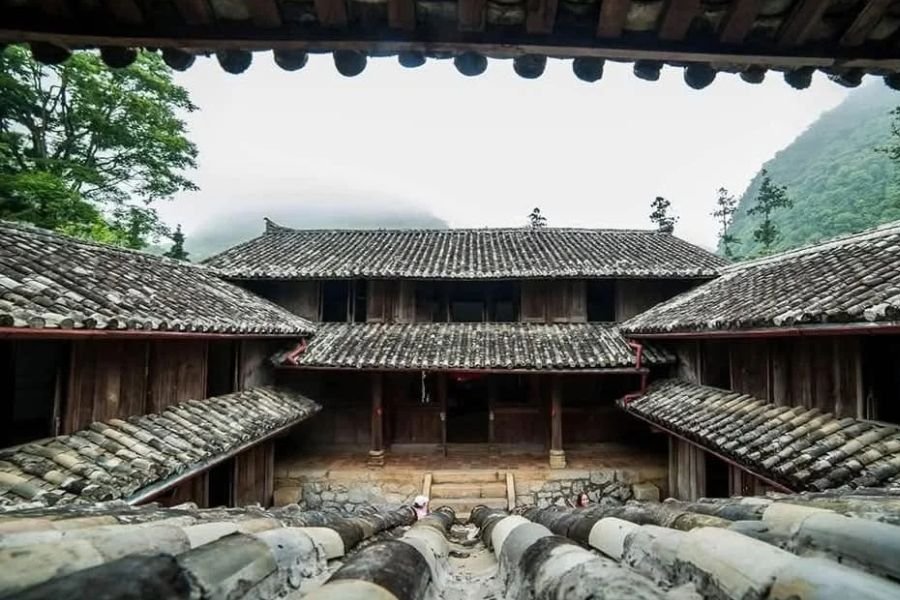
The Vuong Family Palace in Sa Phin shows what the plateau's building traditions looked like with real wealth behind them. Built in the early 20th century for the Vuong family, the Hmong leaders who ruled this area, it combines thick stone walls with courtyards of carved fine timber, and it was recognized as a national architectural and artistic relic in 1993. It sits beside National Route 4C, so it is an easy stop on the way to Dong Van.
Lo Lo Chai, Below Lung Cu Flag Tower
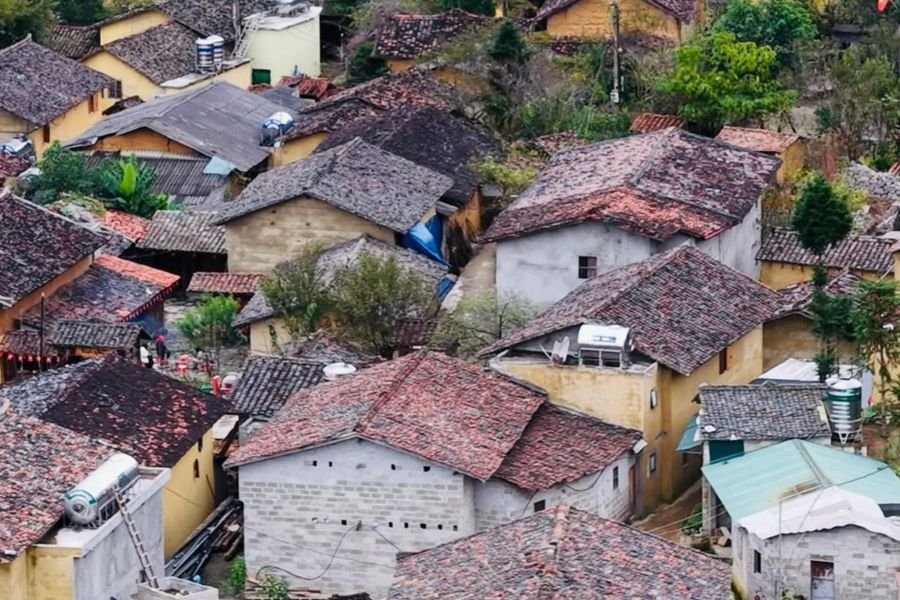
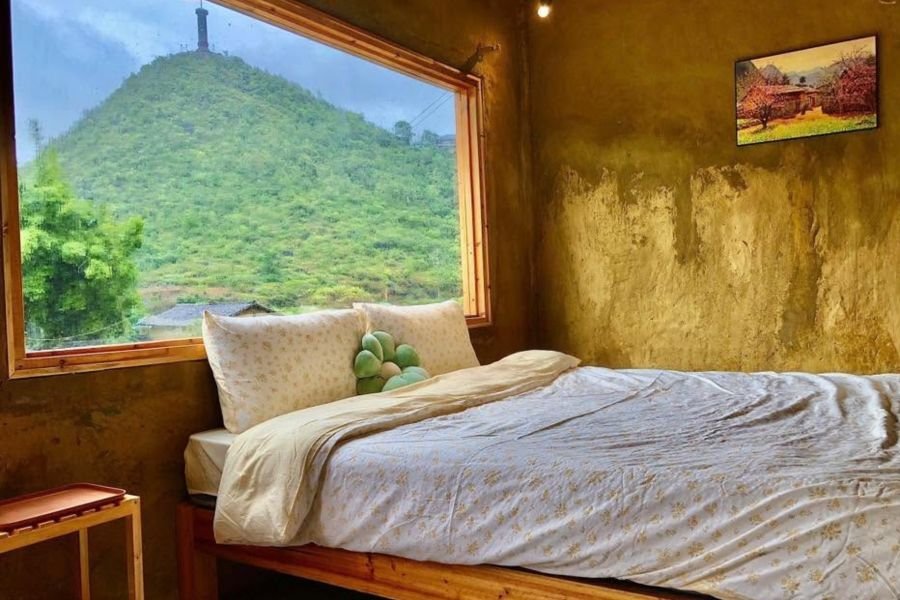
At the foot of Lung Cu Flag Tower, Lo Lo Chai is a village of the Lo Lo people with dozens of old earth houses, some around a century old, wrapped in stone walls and small vegetable gardens. Many families now open their homes to guests, and in 2025 the village was named one of the Best Tourism Villages by UN Tourism. Stay a night if you can: the village is at its best in the early morning, before the day visitors arrive. Our Ha Giang homestay guide explains what to expect.
Dong Van Old Quarter
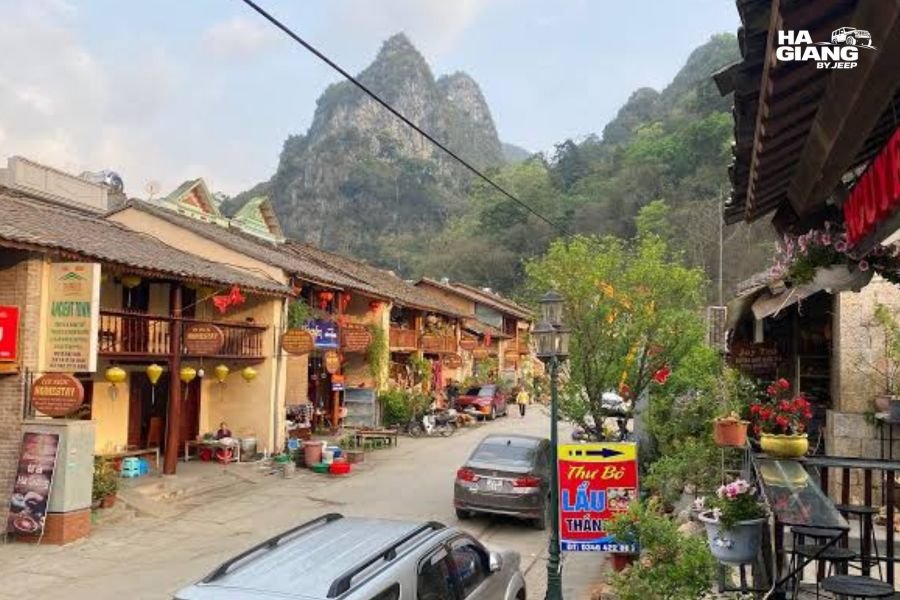
Dong Van Old Quarter grew up as a market town more than a century ago, and its old houses, with thick walls, clay tile roofs and wooden shutters, still line the streets around the old market. One of them, a Tay family home around 100 years old, now serves coffee. Time your visit for a Sunday and you can combine the old streets with the market, which our Ha Giang market days guide covers in detail.
Pho Bang and Pho Tro
North of the main loop road, near the Chinese border, the small town of Pho Bang is a sleepy grid of yellow earth walls and simple wooden doors. Close by, the village of Pho Tro, home to Hmong and Pu Peo families, has earth houses with mossy tile roofs around a small lake. It is a detour, so mention it when you book if you would like to include it.
Pa Vi Ha, Near Meo Vac
Pa Vi Ha is a Hmong community cultural village near Meo Vac that has kept its traditional houses, fences and roof tiles, and makes a good stop to see how the old building methods are being kept alive.
Nam Dam, Near Quan Ba
In a valley below the Quan Ba area, Nam Dam is a Dao village of thick golden earth walls, and several families run homestays in them. Even the newer rooms built for guests have been made in the same rammed earth style.
Visiting Village Homes Respectfully
Most Ha Giang traditional houses are family homes, not museums, apart from places like Pao's House and the Vuong Family Palace. A few simple habits make a big difference.
- Look from the lane first. Do not walk into a courtyard or house unless you are invited in.
- Ask before taking photos of people, and of the inside of a home. A smile and a gesture toward your camera usually does it, and your driver can ask for you.
- Respect the green branch. A green branch hung over a gate or door is a traditional sign that the family is observing a ritual and does not want visitors. Do not go in.
- Leave the altar alone. Do not touch it or the offerings, and keep your feet off the hearth stones.
- Do not climb on stone fences. They are dry stacked and can collapse, and they took someone months to build.
- Spend a little money. A coffee, a homestay night or a craft bought from the family helps keep the old houses standing.
A Craft Under Pressure
Rammed earth houses take time, skill and a lot of labor, and many families now choose faster, cheaper materials. Across the plateau, brick walls, corrugated metal roofs and cement sheets are replacing earth and clay tiles, and in many villages original trinh tuong houses with yin and yang roofs are getting harder to find.
There is pushback. Local authorities support repairs and community tourism, villages such as Lo Lo Chai and Pa Vi Ha have kept their traditional architecture, and families in places like Nam Dam are building new guest rooms in the old style. Travelers play a part too: every night spent in an earth house homestay shows that these buildings are worth keeping.
Seeing Ha Giang Traditional Houses by Private Jeep
The best house you see on the plateau will probably be one you were not looking for: a perfect roofline on a bend, a grandmother sitting at a gate, a fence curving over a hill. On a private Ha Giang jeep tour, you can stop for it. You are never part of a convoy and never on someone else's schedule, so a ten minute look becomes easy rather than awkward.
Your local driver grew up in these mountains, speaks English and can talk to families in their own language, which turns a photo from the road into a conversation at the gate. The open roof gives you the full view of the villages, and the soft top and heater keep you comfortable in the cold months, when the earth houses look their most atmospheric under mist. And if the family offers you a glass of corn wine, nobody in your group has to drive afterward. If you are wondering about the roads, our guide to whether the Ha Giang Loop is safe by jeep answers the common questions.
Which Jeep Tour Is Right for You?
All our tours cross the plateau, so you will see plenty of Ha Giang traditional houses on any of them. The difference is how much time you have to stop.
- 3 days: the classic loop for travelers short on time, including Sung La Valley and Dong Van, at a brisker pace.
- 4 days: the full loop at a slower pace, with more time in the villages and room for quieter detours. The best fit for this guide.
- 5 days or 6 days: the loop plus Cao Bang and Ban Gioc Waterfall, where you trade the earth houses of the plateau for Tay stilt houses and the old stone village of Khuoi Ky. Our Ha Giang vs Cao Bang comparison explains the differences.
- Jeep rental: for confident drivers who want to set their own pace in a Jeep Wrangler Rubicon. Check license requirements with us before booking, as rules can change.
3 Days Loop
The core loop: Sung La Valley, Dong Van and Ma Pi Leng, then back to Ha Giang City.
From 17,490,000 VND
View Tour4 Days Loop
The full loop at an unhurried pace, with more time for villages, markets and the plateau.
From 21,490,000 VND
View Tour5 Days Combo
The loop, then east into Cao Bang for Ban Gioc Waterfall. Finishes in Cao Bang City.
From 32,990,000 VND
View Tour6 Days Combo
The loop, Cao Bang and Ban Gioc, then Ba Be Lake for a boat trip. Finishes at Ba Be.
From 37,990,000 VND
View TourPrices are for the whole private jeep, not per person, and depend on group size from 1 to 4 travelers. They include VAT and exclude bus tickets and private room upgrades.
Prefer to drive yourself? The Jeep Wrangler Rubicon rental is available by the day from Ha Giang City. Not sure which tour fits? Send us a message with your dates and the villages you would like to see, and we will help you choose.
Ha Giang Traditional Houses: Frequently Asked Questions
A traditional house with walls of rammed earth: damp, clay rich soil packed layer by layer inside wooden molds until it is almost as hard as stone. In Ha Giang they are built mainly by Hmong, Lo Lo and Dao families, usually with clay tile roofs and dry stone fences.
Mostly earth, stone and timber. The walls are rammed earth, often 40 to 50 centimeters thick, the roof sits on a wooden frame under clay tiles or thatch, and dry stone fences surround the house and yard.
Thick earth walls keep the house warm through the plateau's cold winters and cool in summer, and they stand up to strong winds. The material also costs nothing, because it comes from the land around the house.
The best places include Lung Cam and Lao Xa in Sung La Valley, Lo Lo Chai below Lung Cu Flag Tower, Dong Van Old Quarter, Pho Bang, Pa Vi Ha near Meo Vac and Nam Dam near Quan Ba. The Vuong Family Palace shows the same traditions on a grand scale.
Only if you are invited. Pao's House and the Vuong Family Palace are open to visitors, and homestays let you sleep in a traditional house. Elsewhere, admire from the lane and let your driver ask the family first.
Yes. Several villages, including Lo Lo Chai and Nam Dam, have homestays in old or newly built earth houses. Expect simple rooms and a warm welcome.
It is a traditional sign that the family is observing a ritual and does not want visitors. Do not go in, and do not photograph the house.
Yes, many are family homes. But brick walls and metal roofs are replacing earth and clay tiles in many villages, so the best preserved houses are increasingly found in protected villages and homestays.
It was built in the early 20th century for the Vuong family, the Hmong leaders who ruled the area. It combines stone walls with carved timber courtyards and has been a national architectural and artistic relic since 1993.
Early morning and late afternoon light suits the ochre walls best. Spring brings peach and plum blossom in the courtyards, autumn brings flowering fields, and winter mist makes the villages look timeless.
Yes. Sung La Valley, Lo Lo Chai and Dong Van are on the loop, and with a private jeep you can stop wherever you like. Tell us which villages interest you when you book and we will plan the route around them.
Walk Through Villages Built by Hand
Ha Giang traditional houses are some of the most beautiful buildings in Vietnam, and every one of them was raised by neighbors with molds, mallets and a jug of corn wine waiting at the end. Our private jeep tours give you time to see them properly: Sung La Valley, Lo Lo Chai, Dong Van and the quieter villages in between.
Secure Your Spot with a 20% deposit. It prepays your homestays, your driver and the border permit paperwork, so everything is ready before you reach Ha Giang. The rest is paid in cash on arrival.
Prefer email? Write to booking@hagiangbyjeep.com.