
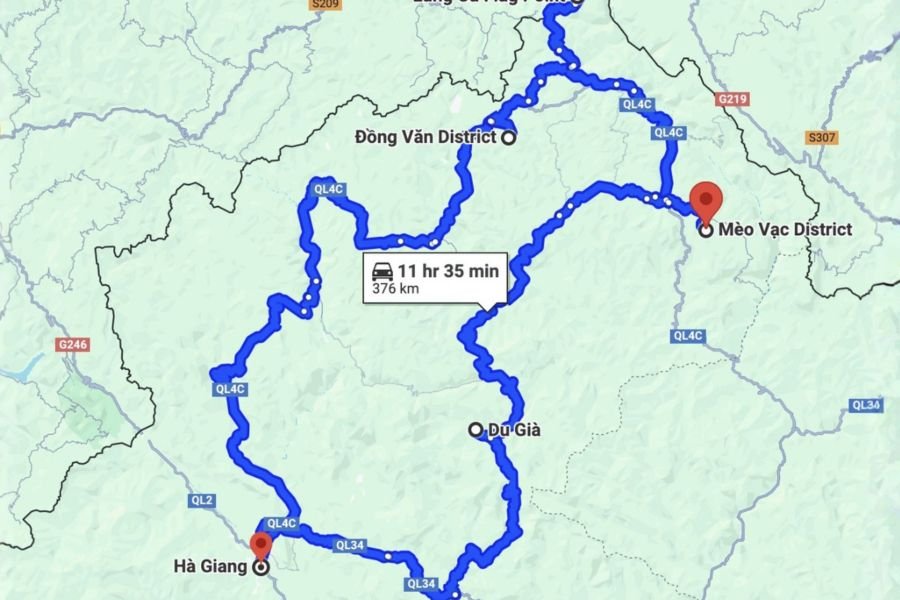
Travel Guide · Before You Go
Vietnam Travel Apps 2026: 8 Essentials Before You Land
Your phone does more work in Vietnam than almost anywhere else. It books the car from the airport, reads the menu, converts the prices and keeps you found in the mountains. Set it up before you land and the first days get much easier.
The best Vietnam travel apps are not the flashy ones. They are the handful that get you out of the airport without haggling, translate a menu in a market, convert a price with too many zeros and keep working when the signal fades somewhere above Ma Pi Leng Pass. Download them at home on good WiFi, and set them up while your own SIM card can still receive verification texts.
This guide narrows it down to eight Vietnam travel apps, one for each job that counts, with notes on how each one helps in Hanoi, which keep working on the Ha Giang Loop and what you can safely skip. App names and features change often, so treat it as a starting point and check the latest versions before you fly.
Before You Land: Set Up Your Vietnam Travel Apps
Most problems with Vietnam travel apps happen at the worst possible moment: standing at arrivals with no data, trying to verify an account with a code sent to a SIM card that is switched off. If you are making a list of apps to download before going to Vietnam, make a second list of the setup jobs, and do both at home.

- Download everything on home WiFi. Offline maps and language packs are big files, and airport WiFi is slow.
- Create accounts and verify them now. Car booking and messaging apps send a code by text message, which is easy at home and awkward abroad.
- Link a payment card where you can. Paying inside a car booking app saves fumbling with cash at the curb.
- Switch off data roaming on your home SIM. Keep the SIM active for verification texts, but let your eSIM or local SIM carry the data, so there is no surprise bill waiting when you get home.
- Download offline areas. Hanoi and the whole Ha Giang region in your map app, and Vietnamese in Google Translate.
- Save the numbers that matter. Your hotel, your tour team on WhatsApp, and Vietnam's emergency numbers: 113 for police, 114 for fire and 115 for an ambulance.
- Screenshot your bookings. Flights, hotel confirmations, your visa approval and your tour details, so you can show them without a signal.
Getting Around: Taxi Apps in Vietnam and Maps
Of all the Vietnam travel apps, the car booking ones save the most hassle. In Hanoi and the other big cities you see the fare before you book, the driver sees where you are going, and nobody has to negotiate in a language they do not share.
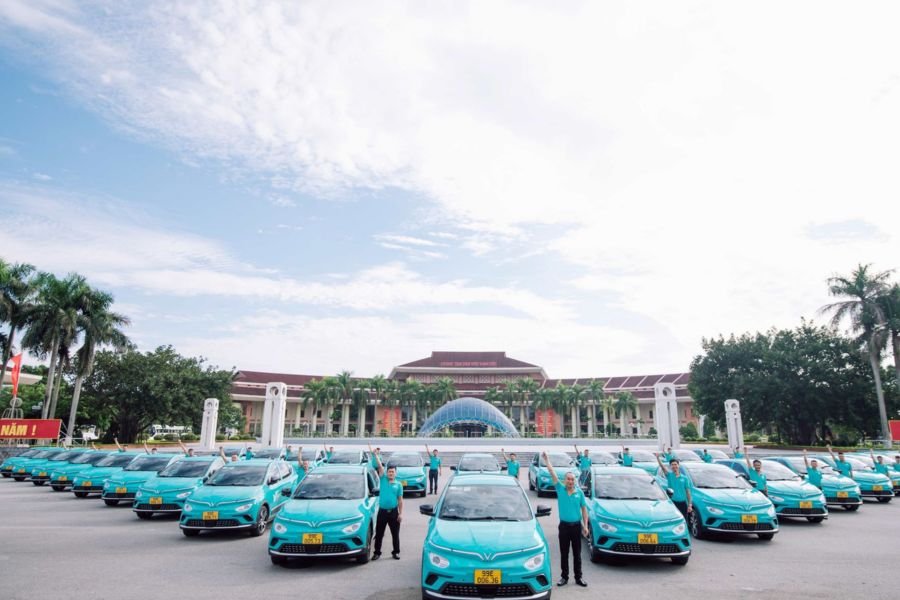
1. Grab, With Xanh SM as Backup
Grab is the default car booking app across Southeast Asia, and the one most visitors already have. In Vietnam it handles airport transfers, city trips by car and GrabFood deliveries to your hotel. You see the fare before you book, you can pay by card inside the app, and you can share the trip with someone at home. Book a car from Noi Bai Airport into central Hanoi and you skip the bargaining in the arrivals hall entirely.
Install Xanh SM too. It runs an all electric taxi fleet of green VinFast cars, the app works in English, and the drivers work directly for the company rather than as freelancers, which many travelers find reassuring. When one app is busy, the other often is not. Whichever you use, check that the plate number matches the app before you get in, and at the airport or outside busy sights, ignore unmarked cars and lookalike taxis with slightly altered names.
2. Google Maps, With Offline Areas
Google Maps works well in Vietnam for walking directions, finding pharmacies and ATMs, checking opening hours and reading reviews of street food stalls. Its real value for mountain travel is the offline feature: download Hanoi and the Ha Giang region before you fly, and the blue dot keeps moving when the signal does not.
If you like a backup, an app built on OpenStreetMap, such as Organic Maps or Maps.me, stores whole regions offline and often shows small village tracks that Google misses. On the loop it is oddly satisfying to watch your position move past Quan Ba, Yen Minh and Dong Van while the phone shows no bars at all.
3. 12Go
12Go is the easiest way for visitors to book buses, trains and some flights in Vietnam in English, with operator reviews and tickets on your phone. It usually lists sleeper buses and limousine vans from Hanoi to Ha Giang City, which is how most travelers reach the start of the loop. Operators and schedules change, so read recent reviews, screenshot the ticket and confirm the pickup point the day before.
Staying Connected: Vietnam eSIM, WhatsApp and Zalo
Data is cheap and fast in Vietnam's cities, and getting connected takes minutes if you sort it before you fly.
4. An eSIM App: Airalo, Holafly or Ubigi
A Vietnam eSIM is the simplest way to land with working data. Apps such as Airalo, Holafly and Ubigi let you buy and install a data plan at home, then switch it on when the plane touches down. Check first that your phone supports eSIM and is not locked to your home carrier, and install the plan before you leave, while you still have WiFi to do it.
If you would rather have a local number, SIM counters at Noi Bai Airport sell tourist packages from the main networks, Viettel, Vinaphone and Mobifone, and you will need your passport to register. For the mountains, Viettel is widely regarded as having the strongest coverage in remote areas like Ha Giang, but coverage changes as new towers go up, so check local updates.
5. WhatsApp, Plus Zalo for Local Businesses
WhatsApp is how most tour operators, homestays used to foreign guests and fellow travelers will talk to you. It works over WiFi as well as data, so messages still go through at a homestay when your plan has run dry, and live location sharing helps a group find each other in a busy market. It is also how you reach Ha Giang by Jeep: our team answers around the clock on WhatsApp, at +84 862 379 288 and +84 938 988 593.

Zalo is Vietnam's own messaging app, and it is what most Vietnamese people, small hotels, drivers and shops actually use. You do not need it for a great trip, but it helps when a guesthouse owner or a bus company only answers on Zalo. If you install it, sign up before you fly, while the verification text can still reach your home number.
Language, Money and Mountain Weather
Translation, money and weather are where Vietnam travel apps quietly do the most work, because all three come up every single day.
6. Google Translate
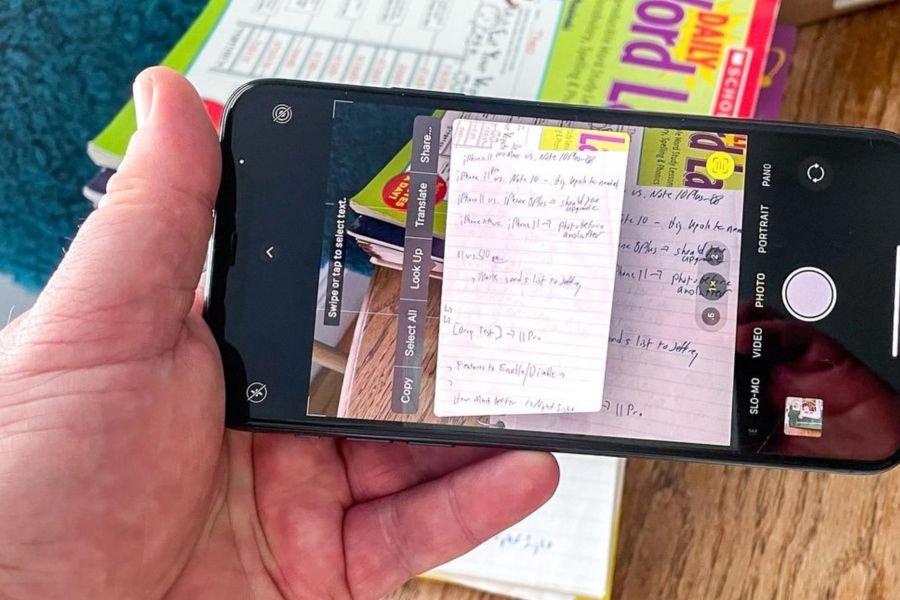
Download Google Translate Vietnamese for offline use before you leave home. Three features earn their place: camera mode, which reads menus and signs as you point at them; conversation mode, for a quick exchange with a shop owner; and saved phrases, so the sentences you use every day are one tap away.
Point the camera at a market stall sign and you will learn that banh cuon trung is steamed rice rolls with egg and chao au tau is a root porridge eaten on cold evenings. Dish names can come out strange, so use it for the gist rather than the poetry, and browse our Ha Giang food guide for the full menu. In remote villages, many older people speak their own language rather than Vietnamese, which is one more reason a local driver who speaks both is worth having.
7. XE Currency
The Vietnamese dong comes with a lot of zeros, and at the end of a long day it is easy to mix up a 20,000 note and a 500,000 note, which come in similar shades of blue. XE Currency converts prices offline using the last rates it downloaded, so you can check a market price without a signal. A useful habit: drop the last three zeros and think in thousands.

Cards, Cash and QR Codes
Alongside XE, set up the app for whichever card you will use: a multicurrency card such as Wise or Revolut, or simply your own bank's app with transaction alerts switched on, so you see every charge and can freeze the card in seconds if you need to. Check your bank's foreign transaction fees before you go.
Vietnam runs on QR codes: locals pay for almost everything by scanning a code with a banking app. Cross border QR payment for visitors is spreading fast, and travelers from several Asian countries, including China, South Korea, Thailand, Singapore, Laos and Cambodia, can already pay with apps from home at many shops. Visitors from Europe, North America and Australia generally cannot yet, so for now plan on cards in hotels and city restaurants, and cash everywhere else.
Cash still rules in the mountains
ATMs are easy to find in Ha Giang City and much harder once you are up on the plateau. Homestays, market stalls and roadside food stops on the loop expect cash, so withdraw enough in town before your tour starts.
8. Windy
Mountain weather changes fast, and Windy shows wind, rain and cloud by the hour in a way ordinary weather apps do not. Check it the night before each day on the loop: a cloudy morning at Ma Pi Leng can clear by noon, and a good driver will shuffle the day around the forecast. For what each month usually brings, see our Ha Giang weather by month guide.
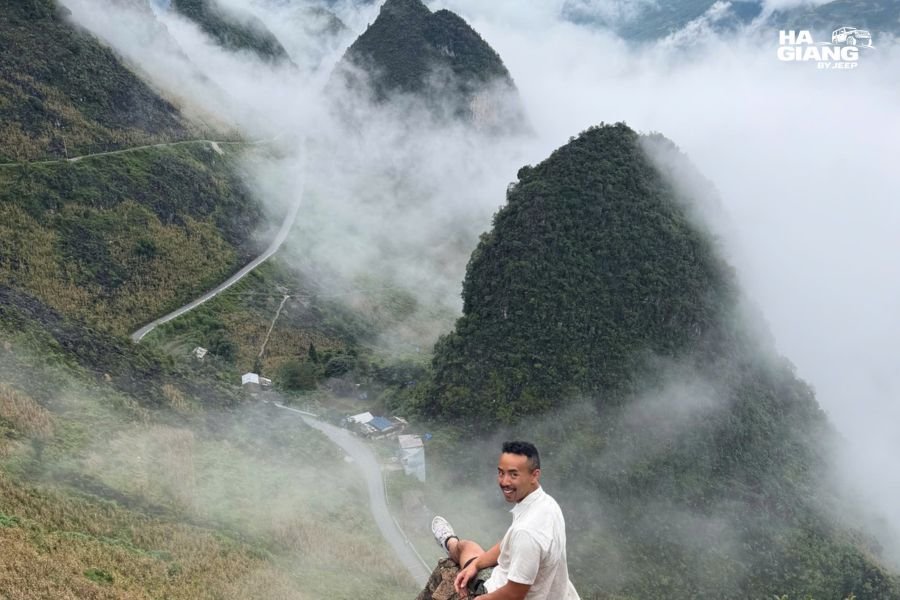
The same habit pays off in Hanoi, where air quality can be poor in the cooler months. Windy has an air quality layer too, and if the numbers are high, take it as one more reason to head for the mountains.
Which Vietnam Travel Apps Work in Ha Giang?
Ha Giang is where your phone setup gets tested. Signal is generally decent in Ha Giang City and in the bigger towns such as Yen Minh, Dong Van and Meo Vac, but it drops in deep valleys and on long, empty stretches of road, and homestay WiFi can crawl when everyone uploads their photos at once. Our Ha Giang homestay guide covers what else to expect at night.
| Works offline? | Useful on the loop for | |
|---|---|---|
| Google Maps | Yes, if you downloaded the area | Seeing where you are and how far the next town is |
| Organic Maps or Maps.me | Yes | Village tracks, viewpoints and backup navigation |
| Google Translate | Yes, with Vietnamese downloaded | Menus, market signs and simple chats |
| XE Currency | Yes, with the last saved rates | Checking prices at markets |
| No, needs signal or WiFi | Messaging your tour team and family | |
| Windy | No, needs signal | Checking tomorrow's weather from the homestay |
| Grab and Xanh SM | No | Little use on the loop; coverage in smaller towns is patchy |
What Your Driver Handles
On a private jeep tour, much of the work your Vietnam travel apps would do simply disappears. Your driver knows the route, the fuel stops, the homestays and which viewpoint is clear today. They speak Vietnamese and often a local language too, so translation becomes a conversation instead of a screen. The border area permit is arranged for you, and the jeep stops wherever you want to eat, be it com lam smoking at a roadside stall or a bowl of thang den at Dong Van Sunday Market.

With a private jeep, nobody has to find parking and nobody has to drive after a glass of ruou ngo, the local corn wine. If food is a big part of why you travel, the 4 days loop leaves the most room for market mornings and long lunches. For more on the roads themselves, our guide to whether the Ha Giang Loop is safe by jeep answers the common questions.
Battery and Charging
Navigation, photos and cold mornings all drain batteries. Bring a power bank and a short charging cable, and charge everything at the homestay overnight. Electricity in remote villages can be unreliable, so top up whenever you get the chance.
Photos and Backups
You will take far more photos in Ha Giang than you expect, usually at Ma Pi Leng, Lung Cu and every second bend in between. Free up space on your phone before the trip, and set Google Photos or iCloud to back up on WiFi only, so the uploads wait for the homestay connection instead of eating your data on the road. If you shoot a lot of video, a separate camera with its own memory card saves a painful clearout halfway round the loop.
Apps and Sites to Skip or Use With Care
Some Vietnam travel apps and websites cost more than they save. A few to watch for:
- Unofficial visa websites. Vietnam's official electronic visa portals end in .gov.vn, at evisa.gov.vn and thithucdientu.gov.vn. Lookalike sites with similar names and paid ads charge extra and can misuse your passport details, so check the address before you type anything.
- Taxi apps pushed on you at the airport. Stick to the apps you set up at home, or to clearly branded metered taxis from the official rank.
- Local digital wallets. MoMo, ZaloPay and the banking apps locals use are everywhere, but signing up usually needs a Vietnamese bank account or ID, so most visitors skip them.
- Apps that insist on a local number. Some delivery and booking apps only accept a Vietnamese phone number. If you really need one, buy a local SIM at the airport rather than fighting the signup.
Which Ha Giang Jeep Tour Is Right for You?

With your Vietnam travel apps sorted, the remaining question is how much of the north you want to see. Here is the short version.
- 3 days: the core Ha Giang Loop at a comfortable pace, finishing back in Ha Giang City. The easy fit for a first Vietnam trip with limited time.
- 4 days: the full loop, slower, with more villages and markets. Ideal if you want Ha Giang to feel unhurried.
- 5 days: the loop plus Cao Bang and Ban Gioc Waterfall, finishing in Cao Bang.
- 6 days: the same, then Ba Be Lake for a boat trip and Puong Cave, finishing at the lake.
- Jeep rental: for confident drivers who want their own pace in a Jeep Wrangler Rubicon. Check license requirements with us before booking, as rules can change.
3 Days Loop
The core loop: Quan Ba, Dong Van and Ma Pi Leng, then back to Ha Giang City.
From 17,490,000 VND
View Tour4 Days Loop
The full loop at an unhurried pace, with more villages, markets and time on the plateau.
From 21,490,000 VND
View Tour5 Days Combo
The loop, then east into Cao Bang for Ban Gioc Waterfall. Finishes in Cao Bang.
From 32,990,000 VND
View Tour6 Days Combo
The loop, Cao Bang and Ban Gioc, then Ba Be Lake for a boat trip. Finishes at Ba Be.
From 37,990,000 VND
View TourPrices are for the whole private jeep, not per person, and depend on group size from 1 to 4 travelers. They include VAT and exclude bus tickets and private room upgrades.
Prefer to drive yourself? The Jeep Wrangler Rubicon rental is available by the day from Ha Giang City for confident drivers.
Vietnam Travel Apps: Frequently Asked Questions
These eight cover almost everything: Grab for cars in the cities, Google Maps with offline areas, 12Go for buses, an eSIM app, WhatsApp, Google Translate with Vietnamese downloaded, XE Currency and Windy for mountain weather. Add Xanh SM as a backup to Grab, and Zalo if your guesthouse uses it.
Yes. Grab works in Hanoi, Ho Chi Minh City and many other cities for car trips, airport transfers and food delivery, and you can pay by card in the app. Coverage in small mountain towns is patchy, so ask your guesthouse for a local taxi number there.
Either works. An eSIM is easiest because you install it at home and land with data, while a local SIM from the airport gives you a Vietnamese number, which some local apps require. Bring your passport if you buy a SIM.
Viettel is widely regarded as having the strongest coverage in remote mountain areas, though no network covers every valley. Download offline maps and translation before you go, and expect some gaps on the loop.
Yes, if you download the Vietnamese language pack before you need it. Camera translation of menus and signs works offline too, though the results can be rough around the edges.
Visitors from several Asian countries, including China, South Korea, Thailand, Singapore, Laos and Cambodia, can scan Vietnamese QR codes with apps from home at many shops. Most travelers from Europe, North America and Australia cannot yet, so carry a card for the cities and cash for the mountains.
Use the government portals that end in .gov.vn: evisa.gov.vn and thithucdientu.gov.vn. Lookalike sites charge extra and may misuse your data, so check the address before you enter passport details.
Locals mostly use Zalo, but WhatsApp is widely used by tour operators, hotels used to foreign guests and other travelers. Ha Giang by Jeep answers on WhatsApp around the clock, or you can reach us through our contact page.
Very few. Your driver handles the route, the stops and most of the translation, and homestays are booked for you. Keep WhatsApp, offline maps, Google Translate and your camera ready, plus cash for markets and snacks.
Book a car on Grab or Xanh SM from the arrivals area, take a metered taxi from the official rank, or arrange a pickup through your hotel. Ignore drivers touting for business inside the terminal.
Download the Apps, Then Leave the Driving to Us
Set your Vietnam travel apps up at home and the cities get easy. Then head north, put the phone in your pocket and let a local driver take you through the Ha Giang highlands in your own Jeep Wrangler Rubicon, with the border permit handled and your homestays booked.
Secure Your Spot with a 20% deposit. It prepays your homestays, your driver and the border permit paperwork, so everything is locked in before you land. The rest is paid in cash when you arrive.
Prefer email? Write to booking@hagiangbyjeep.com.