
Travel Guide · Getting There
Sapa to Ha Giang 2026: Best Routes, Stops and Tips
Most travelers reach Ha Giang from Hanoi. Arrive from Sapa instead and the map flips: you come in from the west, through the high border country, with the limestone plateau still ahead of you. This is the route in the other direction.
Sapa and Ha Giang are the two great mountain names of northern Vietnam, and most itineraries treat them as separate trips, each one starting and ending in Hanoi. That means two long journeys out of the capital and two long journeys back through the same lowlands. There is a neater way to do it. Traveling from Sapa to Ha Giang directly turns two round trips into one sweep across the top of the country, with two very different mountain worlds back to back.
This guide covers how to get from Sapa to Ha Giang in practice: the three realistic ways to make the trip, what you see on each road, why exact travel times are a trap, and how to set up your first night in Ha Giang City so the loop starts fresh. At the end there is a quick guide to choosing a private jeep tour of the Ha Giang Loop once you arrive.
The Other Direction: Why Go From Sapa to Ha Giang
Picture the classic northern trip as a star with Hanoi at the center. You go out to Sapa and back, then out to Ha Giang and back. It works, but you spend days in transit on roads you have already seen. Connect the two mountain regions directly and the trip becomes an arc instead: Hanoi to Sapa, Sapa to Ha Giang, then home to Hanoi, or further east to Cao Bang first if you have the days.
One Arc Across the North, No Backtracking
The arc is the whole point. You climb into the northwest, cross east through the border highlands and finish in the northeast, and almost every day shows you country you have not seen yet. Add Cao Bang and the arc stretches further still. The Ha Giang Cao Bang jeep tour in 5 days and its slower 6 days version both finish in Cao Bang instead of looping back to Ha Giang City, so your trip home to Hanoi starts from the far east of the map. Sapa, Ha Giang, Ban Gioc Waterfall, then home, without covering the same road twice.
Two Mountain Worlds, Back to Back
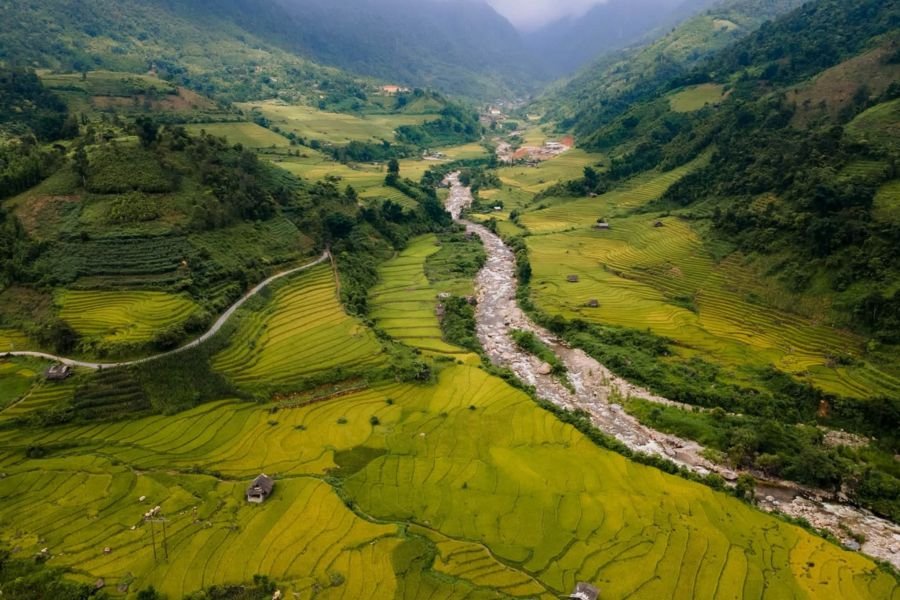
On a map, Sapa and Ha Giang look like neighbors. On the ground they feel like different countries. Sapa sits high in the Hoang Lien Son range beneath Fansipan, and its signature view is valley after valley of rice terraces carved into steep green slopes. It is trekking country, best explored on foot, village to village.
Ha Giang is limestone. The Dong Van Karst Plateau UNESCO Global Geopark is a landscape of gray stone peaks, corn planted in pockets between the rocks, deep river canyons and long mountain passes. It is road country, and the views arrive through the windshield and over the open roof, one bend after another.
That contrast is why the pairing works so well. You leave Sapa having done the terraces and the trekking, and Ha Giang hands you something completely new to look at, along with a different way of moving through it.
Sapa to Ha Giang: Three Ways to Make the Trip
There is no railway into Ha Giang and no airport, so everything goes by road. In practice you are choosing between three options, and the right one depends on your budget, your energy and how much you want to see along the way.
Sapa to Ha Giang by Bus or Limousine Van
A handful of companies now run direct services between Sapa and Ha Giang City, using sleeper buses or smaller limousine vans, so you no longer have to go back through Hanoi. A Sapa to Ha Giang bus is the cheapest way to make the crossing and the easiest to arrange: most hotels in Sapa can book a seat for you.
The tradeoff is control. Service is limited, vehicle quality varies, and the bus keeps its own schedule and stops where the driver decides. Operators, departure times and pickup points also change from season to season, so book through your hotel or a reputable booking platform, confirm the details the day before, and ask exactly where you will be dropped off in Ha Giang City.
Private Car on the Lowland Road
Going from Sapa to Ha Giang by car gives you your own timetable and room to stretch out. You can book a private car and driver through your Sapa hotel or a transfer company. Unless you ask for something else, many drivers choose the lower road: down the mountain to Lao Cai, along the valleys, then onto the main highway north into Ha Giang City.
It tends to be the more predictable choice, with fewer tight bends, which matters if anyone in your group gets carsick. The scenery is pleasant rather than dramatic: river valleys, farmland and small market towns. Think of it as the sensible option that saves your energy for the loop itself.
Private Car on the Highland Route
This is the road that makes the Sapa to Ha Giang route worth getting excited about. Instead of dropping into the lowlands, it climbs from Lao Cai up to Bac Ha, crosses the border highlands of Xin Man, and comes down through the rice terraces of Hoang Su Phi before joining the main highway into Ha Giang City. Market towns, minority villages and terraced mountainsides line the way.
It is slower and more tiring, and some sections are narrow and winding. Ask for this route specifically when you book, check that your driver knows it well, and accept that a good driver may advise against it on the morning if rain or road work makes it a poor choice that day.
| Bus or limousine van | Private car, lowland road | Private car, highland road | |
|---|---|---|---|
| What you see | Depends on the operator's route | River valleys, farmland, market towns | Bac Ha, Xin Man, Hoang Su Phi terraces |
| Stops | Set by the operator | Whenever you like | Whenever you like |
| Flexibility | Low | High | High, weather permitting |
| Best for | Budget and solo travelers | Families and anyone prone to carsickness | Photographers and scenery lovers |
| Watch out for | Changing schedules and drop points | Less to see | Fatigue, weather and road work |
A note on names
Since the 2025 provincial merger, Ha Giang officially sits inside Tuyen Quang province, so you may see Tuyen Quang on bus tickets, maps and hotel addresses. Everyone on the ground still says Ha Giang, and the loop is exactly the same loop.
The Highland Route From Sapa: Where to Stop
If you go the highland way, treat the day as sightseeing with a long drive attached, not a drive with some sightseeing squeezed in. These are the places worth knowing about. There will not be time for all of them in one day, so pick two or three and let the rest go.
Bac Ha and Its Sunday Market
Bac Ha is a highland town east of Lao Cai, and its Sunday market is one of the most colorful in the north. Flower Hmong families come in from the surrounding hills to trade buffalo, horses, pigs, vegetables, tools and the brightly embroidered clothing the area is known for. If your transfer falls on a Sunday, leave Sapa early and make Bac Ha your first stop, because the market is at its liveliest in the morning.
In town, the Hoang A Tuong Palace, a mansion built during the French colonial period for a local Tay chieftain, makes a good short stop. Traveling on a Saturday instead? Can Cau, north of Bac Ha near the Chinese border, holds its market that day and has a smaller, more local feel.
Xin Man and the Border Highlands
Beyond Bac Ha the road crosses into Xin Man, on the western edge of Ha Giang. This is quiet country with few visitors: scattered Nung, Hmong and La Chi villages, terraced slopes and long views across the ridges toward China. Coc Pai, the main town, is the natural place for a coffee and a stretch of the legs.
Roads here are narrower and villages more spread out, which is exactly where a calm, experienced driver earns their keep. Xin Man runs along the border, so keep your passport on you. Rules for foreign visitors in border areas apply across this region and they change from time to time, so let your driver or hotel confirm the current situation before you set off.
Hoang Su Phi Rice Terraces
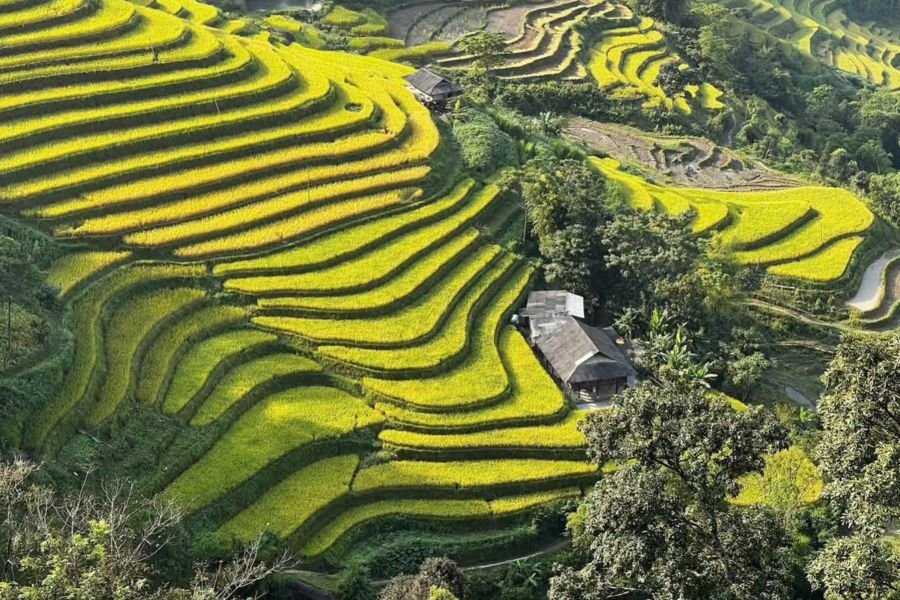
Hoang Su Phi is the highlight of the highland route from Sapa to Ha Giang, and its terraces are listed as a national scenic heritage site. Coming from Sapa, you might think you have seen enough terraces. You have not seen these. They climb entire mountainsides, they feel wilder, and they draw a fraction of Sapa's crowds.
The terraces change with the seasons. Around planting time in late spring they are flooded and mirror the sky, through summer they turn bright green, and around harvest in early autumn they glow gold. Exact timing shifts every year with the weather and the altitude, so check local updates if you are chasing a particular stage.
Choosing your stops
- Sunday transfer: start with the Bac Ha market.
- Saturday transfer: detour to the Can Cau market instead.
- Planting or harvest season: give Hoang Su Phi the most time.
- Tired legs after Sapa: take the lowland road and save your energy for the loop.
How Long Does Sapa to Ha Giang Take?
It is the first question everyone asks, and the useful answer is this: longer than the map suggests, and different every time. Treat it as a full travel day. Leave Sapa in the morning and aim to reach Ha Giang City before dark, because the last stretch of a mountain road is the worst place to be tired.
Several things move the clock:
- The route. The highland road through Bac Ha, Xin Man and Hoang Su Phi is much slower than the lower road, and every stop adds to it.
- Road work. Mountain roads in the north are constantly being widened and repaired, and one closed section can mean a long detour.
- Weather. Rain, fog and landslide clearing slow everything down, especially in the wet summer months.
- Your stops. A market morning in Bac Ha or a long lunch with a terrace view is the reason for going, and it is time well spent.
- The vehicle. A bus with scheduled stops and pickups moves very differently from a private car.
Be wary of exact times
Any blog, forum post or booking page that promises a precise number of hours from Sapa to Ha Giang is either guessing or describing one particular day. Ask your driver or bus operator for a current estimate the day before you travel, then add some slack.
One practical consequence follows from all this: do not arrive from Sapa and try to start the loop the same afternoon. Which brings us to Ha Giang City.
Arriving in Ha Giang City: The Night Before the Loop
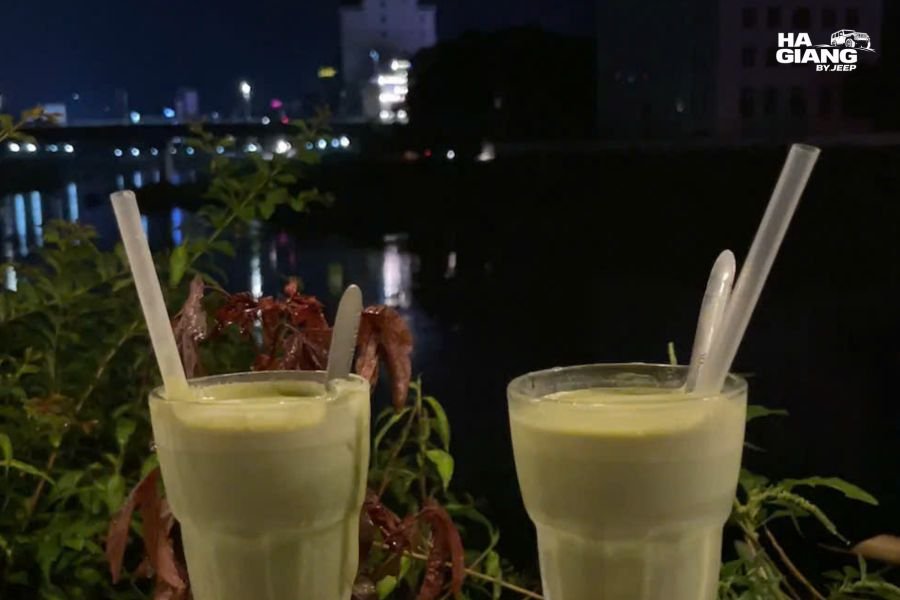
Ha Giang City is the gateway to the loop and the place tours set off from. It is a relaxed provincial town on the Lo River, with guesthouses, cafes, a busy market and enough good restaurants for an evening. Nobody comes here for the city itself, but it is a pleasant place to land after a long day.
Why Not Start the Loop the Same Day
After a full day of travel from Sapa to Ha Giang you will want a shower, a proper dinner and a real night's sleep. The first morning of the loop climbs quickly out of the city toward Quan Ba and Heaven Gate, the first big viewpoint over the plateau, and it deserves fresh eyes and morning light. One night in Ha Giang City costs very little and makes everything after it better.
What to Sort Out That Evening
- Cash. Bring enough Vietnamese dong for the whole loop. ATMs are easy to find in Ha Giang City and much harder once you are up on the plateau.
- Passport. Parts of the loop pass through border areas where foreign visitors need a permit. Ha Giang by Jeep arranges this for tour guests, but you need your passport with you on the road. Rules can change, so independent travelers should check the latest requirements.
- Warm layers. Even if Sapa felt mild, the plateau can be cold and windy, especially in the evenings and with the roof open.
- Luggage. If you are carrying a big trekking bag from Sapa, ask your guesthouse about storing what you will not need, and pack a soft bag for the jeep.
- Data and charging. Top up your SIM and charge everything. Signal and power can be patchy in remote villages.
Who to Call If Plans Change
Buses from Sapa run late, roads close, plans shift. Ha Giang by Jeep has an office in Ha Giang City and support around the clock, so there is always someone local to call. Because every tour is private, the start time is a conversation rather than a fixed departure. Send us your arrival plan on WhatsApp and we will work out the most comfortable start with you.
What Changes When You Come From Sapa
Arriving from Sapa shapes the loop in a few useful ways. Some things will feel familiar. Most will not.
From Rice Terraces to Limestone
The climb out of Ha Giang City leads to Quan Ba and its Twin Mountains, and from there the landscape turns to stone. Across the Dong Van Karst Plateau, gray limestone peaks crowd right up to the road, corn grows in pockets between the rocks, and villages of earth and stone houses sit low in the valleys. Dong Van Old Quarter, with its old tiled houses and its Sunday market, feels like a frontier town. If Sapa was green, Ha Giang is gray, gold and enormous.

Your Legs Get a Rest
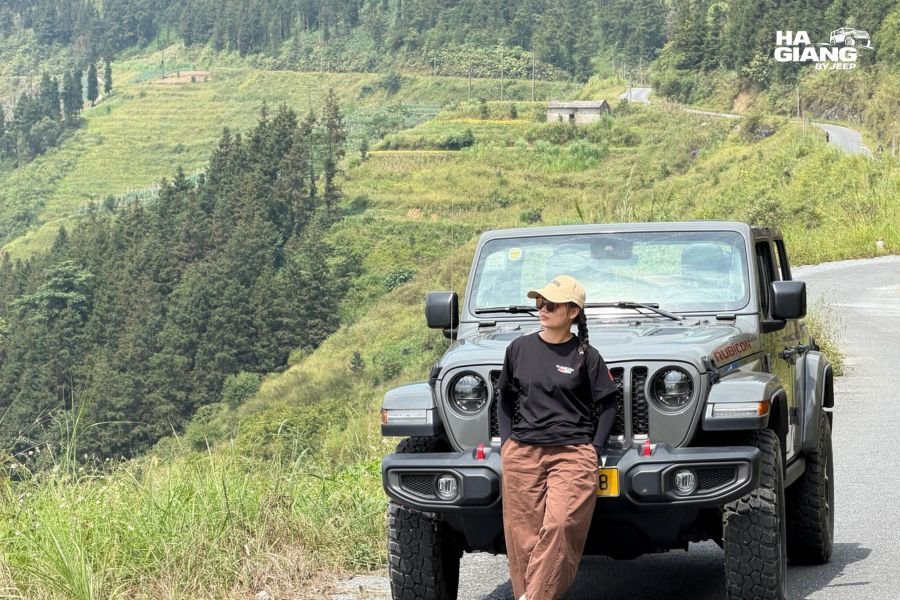
Sapa is walked. Most visitors spend their days there trekking between villages and arrive in Ha Giang with tired calves. On a jeep tour the effort changes completely. You sit back in a Jeep Wrangler Rubicon with a 360 degree view, step out for viewpoints, villages and markets, and climb back in when you have had enough. We call it adventure without exhaustion, and after a few days of trekking in Sapa you will understand why it matters.
Bigger Passes, Deeper Canyons
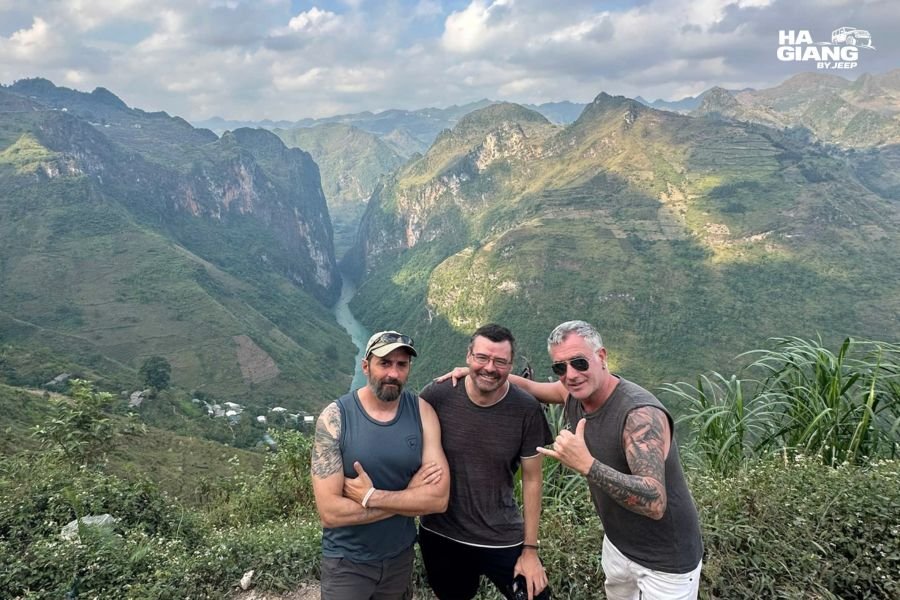
Ha Giang's passes are the main event. The headline is Ma Pi Leng Pass, where the road runs along a cliff high above the Nho Que River canyon. It is the stretch everyone remembers, and with the roof open and someone else at the wheel, you get to look down into the canyon instead of watching the road.
Markets on a Different Rhythm
If you loved the markets around Sapa, Ha Giang has its own circuit. Dong Van and Meo Vac hold big markets on Sundays, while many smaller village markets follow a rotating cycle rather than a fixed weekday. Khau Vai, near Meo Vac, is famous for a love market held once a year according to the lunar calendar. Market days move, so check our guide to Ha Giang market days and tell your driver which ones you want to catch.
What to Eat Between Sapa and Ha Giang
The food shifts as you cross from Sapa to Ha Giang, and the crossing is a fine excuse to eat well. A few things to look out for:

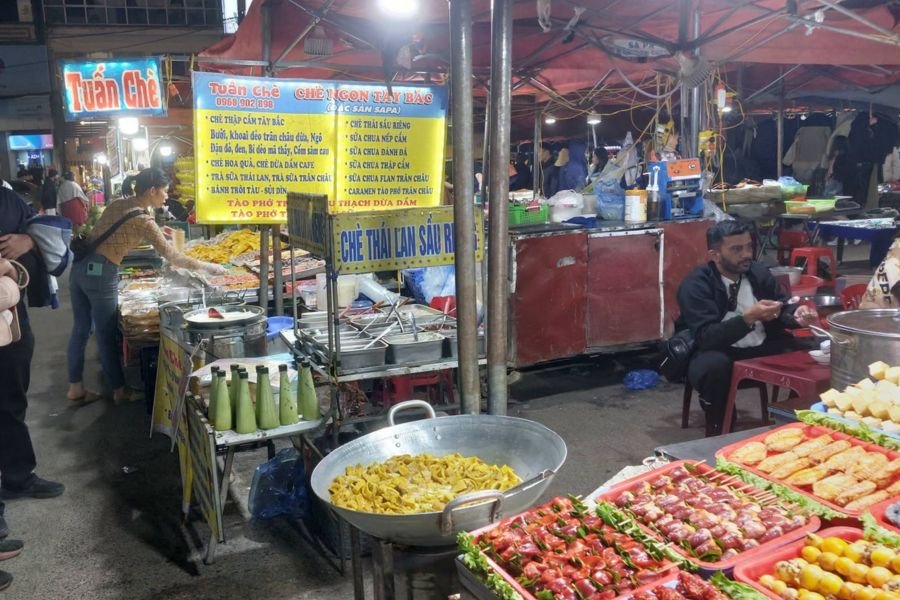
- Thang co in Bac Ha. The famous stew of the highland markets, traditionally made with horse meat and offal and cooked in huge pans on market day. It is not for everyone, but it is the real thing.
- Ruou ngo. Bac Ha is corn wine country, and the village of Ban Pho near town is known across the north for it. Ha Giang has its own versions, poured from plastic jugs at markets and offered in homestays.
- Com lam. Sticky rice cooked inside a bamboo tube over an open fire, sold at roadside stalls along the highland roads. Smoky, simple and filling.
- Banh cuon trung. Soft steamed rice rolls with egg, served in Ha Giang City with a bowl of pork bone broth instead of the dipping sauce you get in Hanoi. The classic breakfast before the loop.
- Chao au tau. A thick, earthy porridge made with au tau root, a Ha Giang specialty usually eaten in the evening when the air turns cold. The root needs careful preparation, so eat it at a busy, established stall.
- Thang den. Small glutinous rice balls in warm ginger syrup, sold at market stalls. The perfect sweet stop on a cold afternoon.
This is where a private jeep pays off. When you spot a smoking roadside grill or a busy market stall, you ask your driver to pull over, and that is it. Nobody has to hunt for parking, and nobody has to drive after a glass of corn wine. If food is a big part of why you travel, the 4 days loop leaves more room for market mornings and village stops, and our Ha Giang food guide has the full menu.
Packing for Two Mountain Regions
You can mostly pack once for both. A few things matter more in Ha Giang than they did in Sapa, and conditions shift a lot through the year, so check our Ha Giang weather by month guide before you go.
- Layers over bulk. A fleece or light down jacket plus a windproof shell. Mornings and evenings on the plateau can be properly cold, and an open roof adds wind.
- Sun protection. Sunglasses, sunscreen and a hat that stays on. The sun at altitude is stronger than it feels.
- Comfortable shoes. You will walk less than in Sapa, but there are steps up to viewpoints like Lung Cu Flag Tower and uneven paths in the villages.
- A soft bag. Soft luggage fits the jeep far better than a hard suitcase.
- A small day pack. Keep your passport, cash, layers and snacks within reach.
- Motion sickness tablets. If winding roads bother you, take them before the passes, not after.
Which Ha Giang Jeep Tour Is Right for You?
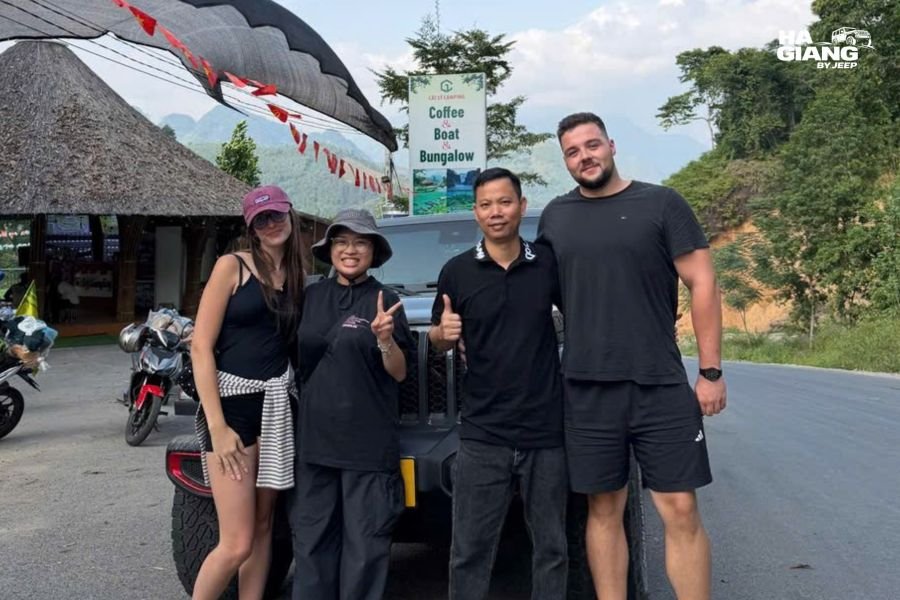
If you are doing the Ha Giang Loop from Sapa, the right tour depends mostly on how much time you have left and where you want to finish. Here is the short version.
- 3 days: the core loop at a comfortable pace, finishing back in Ha Giang City for the bus to Hanoi. The best fit if Sapa has already used up a good part of your time.
- 4 days: the full loop, slower, with more villages and markets. Ideal if Sapa felt busy and you want Ha Giang to feel unhurried.
- 5 or 6 days: the loop plus Cao Bang and Ban Gioc Waterfall, finishing in the east. This completes the arc across the north without backtracking.
- Jeep rental: for confident drivers who want their own pace in a Jeep Wrangler Rubicon. Check license requirements with us before booking, as rules can change.
3 Days Loop
The core loop: Quan Ba, Dong Van and Ma Pi Leng, then back to Ha Giang City. The quickest fit after Sapa.
From 17,490,000 VND
View Tour4 Days Loop
The full loop at an unhurried pace, with more villages, markets and time on the plateau.
From 21,490,000 VND
View Tour5 Days Combo
The loop, then east into Cao Bang for Ban Gioc Waterfall. Finishes in Cao Bang.
From 32,990,000 VND
View Tour6 Days Combo
The same arc with an extra day to slow down. Finishes in Cao Bang.
From 37,990,000 VND
View TourPrices are for the whole private jeep, not per person, and depend on group size from 1 to 4 travelers. They include VAT and exclude bus tickets and private room upgrades.
Prefer to drive yourself? The Jeep Wrangler Rubicon rental is available by the day from Ha Giang City for confident drivers.
Sapa to Ha Giang: Frequently Asked Questions
Yes. A few companies run direct buses and limousine vans between Sapa and Ha Giang City, so you do not need to go back through Hanoi. Service is limited and schedules change, so book through your hotel or a reputable platform and confirm the details the day before.
Plan on a full day. The exact time depends on the route, road work, weather and how often you stop, and the scenic highland road is much slower than the lower road. Be wary of anyone quoting a precise number of hours, and ask your driver for a current estimate.
The highland route through Bac Ha, Xin Man and Hoang Su Phi. It passes market towns, minority villages and some of the finest rice terraces in the north. It is slower and more tiring than the lower road, so it suits travelers with a private car and a full day to spare.
We do not recommend it. After a long transfer you would see the first and most beautiful stretch of the loop tired and in fading light. Spend one night in Ha Giang City and start fresh the next morning.
Foreign visitors need a permit for the border areas the loop passes through. Ha Giang by Jeep arranges it for all tour guests, so you just need to carry your passport. Rules can change, so independent travelers should check the latest requirements locally.
All loop tours start in Ha Giang City, where we have our office. If you are coming from Sapa, send us your travel plan on WhatsApp or through our contact page and we will help you time your arrival and your start.
Both orders work. Sapa first suits travelers who want to trek before settling into the jeep, and it lets you finish in Ha Giang or continue east to Cao Bang without backtracking. If you are short on time, the 3 days loop brings you back to Ha Giang City for the bus to Hanoi.
Yes, and it makes a good contrast. A jeep tour asks very little of your legs: you sit back between viewpoints and walk only when you want to. It suits families, couples and older travelers who want big mountain scenery without another week of hiking.
Main roads are generally in reasonable condition, but mountain roads bring tight bends, road work and changeable weather. Travel in daylight, choose an experienced driver or a reputable bus company, and check conditions on the day you leave. Our guide to whether the Ha Giang Loop is safe by jeep covers the loop itself.
Ready for the Other Half of the North?
Sapa gave you the terraces. Ha Giang gives you the passes, the canyon and the plateau, and the jeep makes it easy: your own Jeep Wrangler Rubicon, a local English speaking driver, the border permit handled and your homestays booked.
Secure Your Spot with a 20% deposit. It prepays your homestays, your driver and the border permit paperwork, so everything is locked in before you leave Sapa. The rest is paid in cash when you arrive.
Prefer email? Write to booking@hagiangbyjeep.com.