
Travel Guide · Getting There
Cao Bang to Ba Be Lake 2026: The Route and the Reason
Most Cao Bang trips end at Ban Gioc Waterfall and a long drive straight back to Hanoi. There is a better last chapter: a mountain road over Phia Oac, a lake the color of jade, a boat trip under the cliffs and, if you stay, a night in a Tay stilt house.
Cao Bang is usually the far end of a northern trip. You reach it after days of mountain roads, stand in the spray at Ban Gioc Waterfall, and then face the long haul back to Hanoi. Going from Cao Bang to Ba Be Lake changes that last chapter. Instead of one long day on the highway, you slow down at the largest natural freshwater lake in Vietnam, sleep in a wooden stilt house and spend a morning on the water before heading south.
This guide covers how to get to Ba Be Lake from Cao Bang, what the road looks like, why the lake is worth it, and how it fits into a private jeep tour of Ha Giang and Cao Bang. If you book our 6 days tour, this leg is already built in: the last day drives from Cao Bang to Ba Be over the mountains and finishes on the lake.
Why Go From Cao Bang to Ba Be Lake
Ba Be is not on most first time itineraries, and that is part of its appeal. The real case for it, though, comes from where it sits: close to the road between Cao Bang and Hanoi, at exactly the point in a northern trip when most people need a change of pace.
Water After Days of Mountains
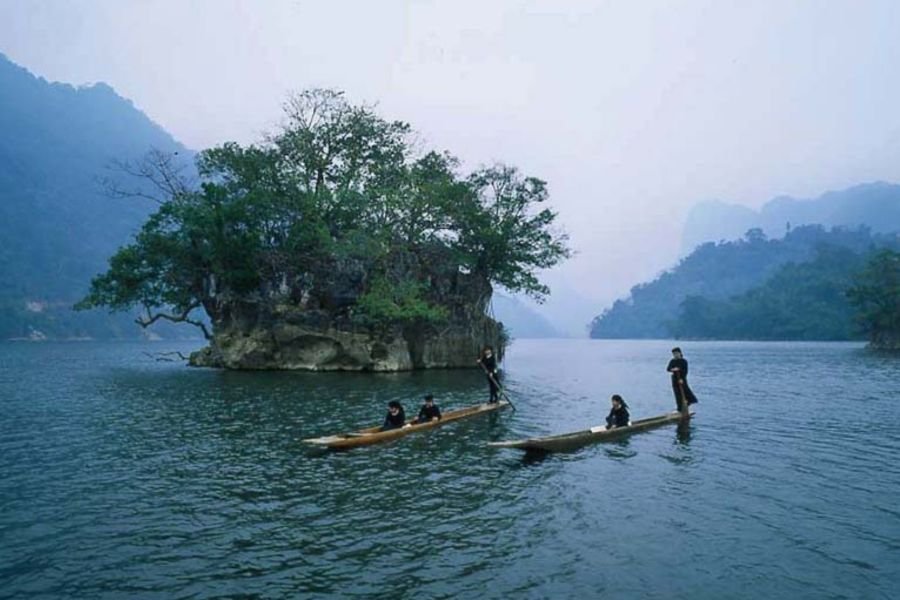
By the time you reach Cao Bang you will have spent days looking at passes, canyons and limestone from the road. Ba Be turns that around. The lake sits in a basin of forested limestone hills, and the best way to see it is from a slow wooden boat. Mist hangs over the cliffs in the early morning, the light shifts on the water through the day, and nobody is asking you to be anywhere at a particular time. After the plateau, it feels like exhaling.
A Softer Road Home to Hanoi
The 5 days jeep tour finishes in the far northeast, around Ban Gioc Waterfall or Cao Bang City, and the trip back to Hanoi from there is a long one. The 6 days tour goes one step further and ends at Ba Be, so the final day is a scenic mountain drive instead of a highway slog, and the trip home starts closer to Hanoi. Either way, the lake splits the return into two easier legs, Cao Bang to Ba Be and then Ba Be to Hanoi, and you arrive back in the capital rested instead of stiff.

A Third Protected Landscape
A Ha Giang and Cao Bang trip already crosses two UNESCO Global Geoparks: the Dong Van Karst Plateau and Non Nuoc Cao Bang. Ba Be adds a different kind of protection. The lake sits inside Ba Be National Park, which is also an ASEAN Heritage Park and a Ramsar wetland of international importance. That makes three protected landscapes in one trip, with three completely different moods: stone plateau, waterfall country and forest lake.
Cao Bang to Ba Be: The Route
There are two ways to drive from Cao Bang to Ba Be Lake: the main road, which most transfers use, and the mountain road, which our 6 days tour takes. There is also a public transport option, if you have patience and flexible plans.
The Main Road
Most drivers head south from Cao Bang City on National Road 3, the main highway toward Bac Kan and Hanoi, then leave it around Phu Thong and turn west through the hills toward Cho Ra, the last small town before the lake. From Cho Ra a short local road runs on to the lakeside villages of Pac Ngoi, Bo Lu and Coc Toc, where most homestays are.
It is generally the more predictable road, and the easier one on the stomach. The first stretch is highway; the second half gets prettier as the valleys narrow and the villages turn to wooden stilt houses. Road work can change the picture from month to month, so check local updates before you set off.
The Mountain Road Over Phia Oac
The alternative heads west from Cao Bang through Nguyen Binh and Tinh Tuc, past Phia Oac Phia Den National Park, before dropping toward Ba Be. It looks more direct on the map and it is far more beautiful, but it is winding and can be rougher, so it is rarely faster in practice. It is a road for a driver who knows it well, in settled weather.
How the 6 Days Tour Does It
On our 6 days Ha Giang Cao Bang jeep tour, the last day is this road. You leave Cao Bang City in the morning, drive up to Phia Oac peak, at 1,931 meters one of the highest points in Cao Bang, weather permitting, and walk through the bamboo forest near Nguyen Binh. Lunch is in Cho Ra, then it is out onto the lake for a boat trip and Puong Cave before the tour finishes at Ba Be in the afternoon. From there you can carry on to Hanoi by private car, or stay the night on the lake and take the morning limousine bus; both can be added when you book.
What You See Along the Way
Rice valleys, Tay and Nung villages, limestone hills wrapped in forest, and rivers that grow wider as you get closer to the lake. If your jeep tour ends at Ban Gioc, the drive back through Trung Khanh passes roadside stalls roasting the local chestnuts in early autumn. With a private car you can stop for any of it, which is most of the point of driving from Cao Bang to Ba Be instead of sleeping through it on a bus.
Getting There Without a Private Car
There is no direct tourist bus from Cao Bang to Ba Be. The usual public option is a bus heading south toward Thai Nguyen or Hanoi as far as Phu Thong, then local transport to Cho Ra, then a short local transfer for the last few kilometers to the lake, often arranged by your homestay. Connections are not guaranteed, so ask your homestay to check the current schedule before you travel, and leave Cao Bang early.
| Main road by car | Mountain road by jeep or car | Bus and local transfers | |
|---|---|---|---|
| Route | National Road 3, then west to Cho Ra | Nguyen Binh, Tinh Tuc and Phia Oac | Bus to Phu Thong, then local transport to Cho Ra |
| Comfort | Good | Good, but winding | Basic, with changes |
| Flexibility | High | High, weather permitting | Low |
| Best for | Most transfers, families, older travelers | Our 6 days tour, scenery lovers | Budget travelers with patience |
| Watch out for | Highway traffic on the first stretch | Rough patches, weather and fatigue | Missed connections and the last few kilometers |
A note on names
Since the 2025 provincial merger, Ba Be Lake sits inside Thai Nguyen province (it used to be Bac Kan), so maps, tickets and hotel addresses may show Thai Nguyen. Cao Bang kept its name. On the ground, everyone still just says Ba Be.
How Long Does Cao Bang to Ba Be Take?
Give it a full travel day, especially if you are starting from Ban Gioc rather than Cao Bang City, and treat any precise number of hours with suspicion. The real answer depends on which road you take, where in Cao Bang you start and how often you stop.
Several things move the clock:
- Your starting point. Starting from Ban Gioc Waterfall adds the drive back through Trung Khanh before you even reach Cao Bang City.
- The road. The mountain road through Nguyen Binh is usually slower than the highway route, even though it looks shorter on the map.
- Road work and weather. Rain, landslide clearing and road repairs can slow either route, especially in the wet summer months.
- The last stretch. Getting from Cho Ra to your homestay is quick by private car, but can take a while by public transport if you have to wait for a pickup.
Be wary of exact times
Any blog, forum post or booking page that promises an exact number of hours from Cao Bang to Ba Be is either guessing or describing one particular day. Ask your driver or homestay for a current estimate the day before, then add some slack so you reach the lake in daylight.
Arriving in daylight matters more here than almost anywhere. The first evening on the lake shore is one of the best parts of the whole stay, and the small roads around the villages are much easier before dark.
What to Do at Ba Be Lake
Ba Be rewards doing less. One good boat trip, a walk through a village, a long dinner at your homestay, and the lake has done its job. On the 6 days tour, the boat trip and Puong Cave are part of the final day; Dau Dang Waterfall and a slow evening in the villages are what an extra night buys you. These are the highlights.
The Ba Be Lake Boat Trip
The boat trip is the heart of any visit. Ba Be is really three connected lakes, Pe Lam, Pe Lu and Pe Leng, which is where the name comes from in the Tay language. Local boatmen take you out in narrow wooden boats from the lakeside villages and the park's boat station, past forested cliffs and small islands, including Ba Goa, the Widow's Island, which comes with a local legend your boatman will happily tell.
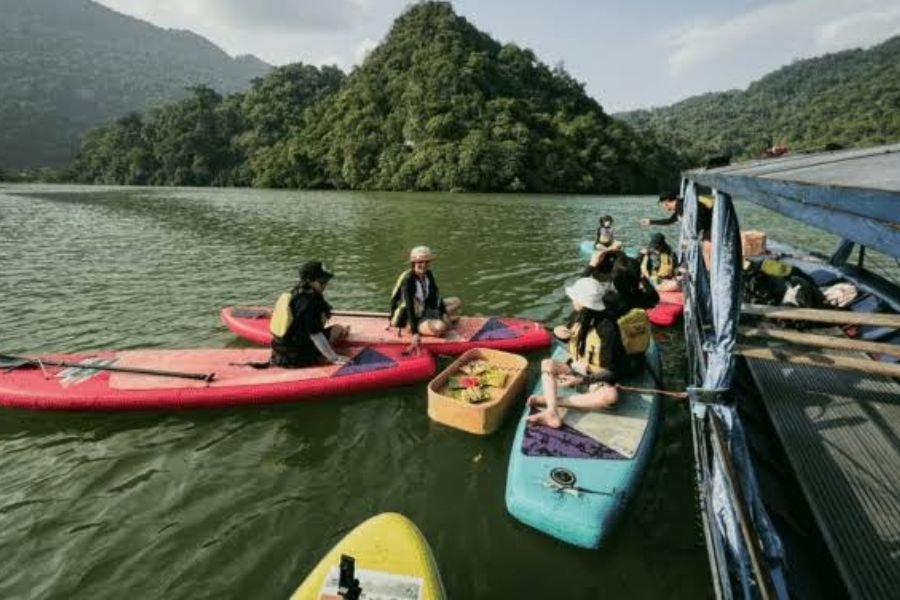
Most trips combine the lake with a stretch of the Nang River, Puong Cave and Dau Dang Waterfall. Ask your homestay to arrange the boat. It is simple, it saves haggling at the pier, and they know which boatmen are good.
Puong Cave and Dau Dang Waterfall
Puong Cave is a huge limestone tunnel that the Nang River flows straight through, and boats pass right under its roof. It is home to a large colony of bats, so expect to hear them before you see them. Further along the river, Dau Dang Waterfall is a broad run of rapids and cascades near the edge of the park, at its most dramatic when the water is high after the rains.

Ao Tien and the Lakeside Walks
Ao Tien, the Fairy Pond, is a small, still pool tucked behind the hills, a short climb up from the lake shore and usually combined with the boat trip. Back in the villages, the paths are flat and easy, perfect for a slow evening walk past rice fields and stilt houses. Many homestays also offer kayaks or bicycles if you want to explore at your own pace.
Pac Ngoi and the Tay Stilt House Villages
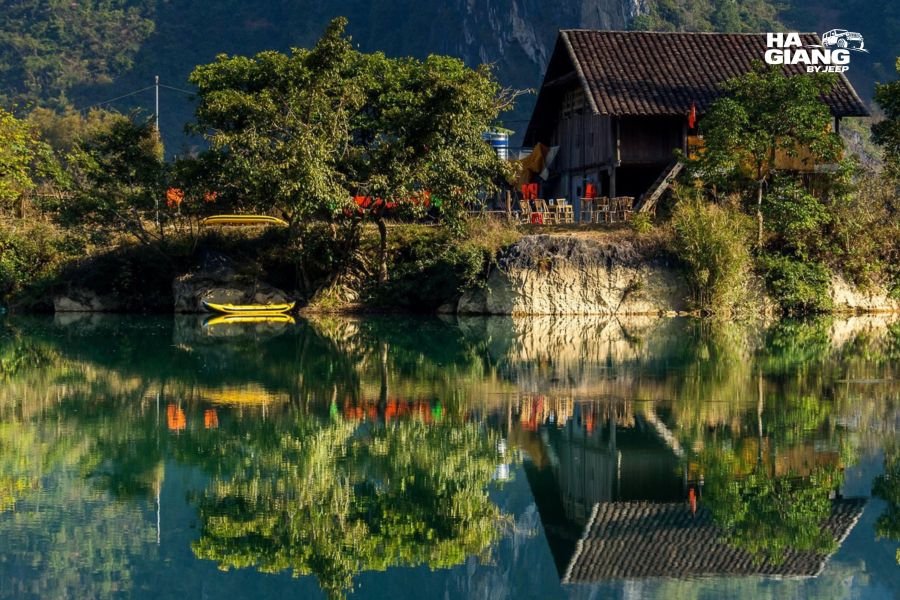
Pac Ngoi, Bo Lu and Coc Toc are Tay villages on the lake shore, with wooden stilt houses, rice paddies and water buffalo grazing at the edge of the water. Pac Ngoi is the best known and has the most homestays. Walking through in the late afternoon, when families come in from the fields and smoke rises from the kitchens, is one of the nicest things you can do at Ba Be.

Where to Stay at Ba Be Lake
After the drive from Cao Bang to Ba Be, stay on the lake, not in Cho Ra. The lakeside villages are where Ba Be makes sense, and a night in a traditional Tay stilt house is the experience most people remember. The 6 days tour finishes at the lake in the afternoon, so adding a night here is easy.
What a Ba Be Lake Homestay Is Like
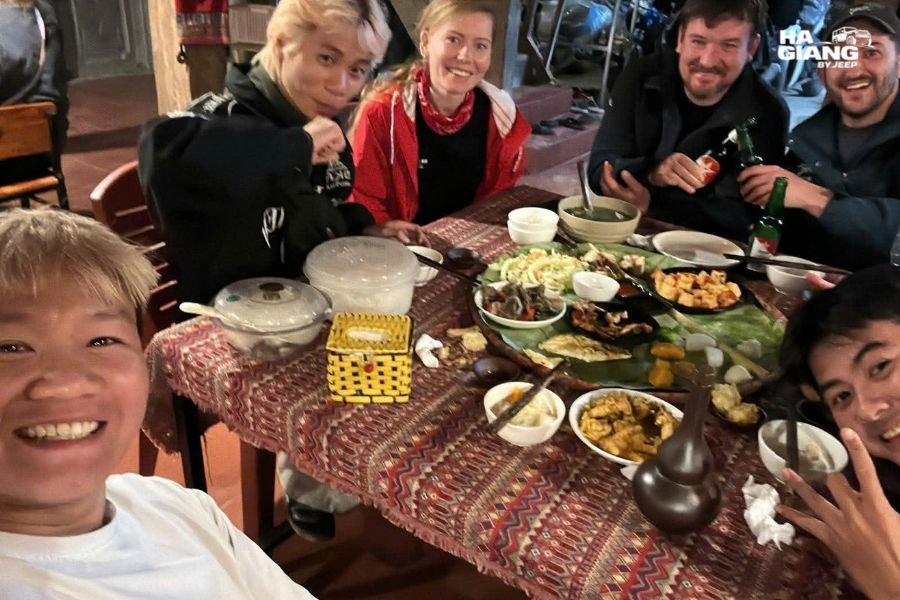
Most homestays are wooden stilt houses with a large shared living area upstairs, mattresses with mosquito nets, and bathrooms that range from simple to surprisingly modern. Many now offer private rooms as well. Dinner is usually a family style spread of grilled fish, vegetables from the garden and plenty of rice, often with a glass of homemade rice wine. Our Ha Giang homestay guide covers the etiquette, and almost all of it applies at Ba Be too.
How Many Nights?
Arriving on the 6 days tour, the boat trip is already done by the time you check in, so one night gives you a quiet evening and a misty morning before the bus to Hanoi. Traveling on your own, one night is enough for a boat trip and an evening in the village, but it means arriving tired and leaving early. Two nights is the sweet spot: one full day for the lake, Puong Cave and Dau Dang Waterfall, with time left over to do nothing at all. If you are traveling with children or older relatives, two nights also keeps the driving days short.
Booking Tips
- Book ahead for holidays and weekends. Vietnamese holidays and fine weekends fill the best homestays quickly.
- Ask for a private room if it matters. Shared sleeping areas are traditional, but many homestays now have private rooms with their own bathroom.
- Let your homestay arrange the boat. It saves time at the pier and they know the boatmen.
- Bring cash. Card payment is not reliable at small homestays and lakeside stalls.
What to Eat Between Cao Bang and Ba Be
The food changes as you drop from Cao Bang to Ba Be, from highland market towns to a lake full of fish, and the last leg of the trip is a good excuse to eat well.
- Pho chua. Cao Bang's sour pho: cold rice noodles with roast pork, liver, crushed peanuts and a tangy sauce. Nothing like the hot pho you know from Hanoi.
- Banh cuon Cao Bang. Steamed rice rolls served with a bowl of pork bone broth, the classic Cao Bang breakfast and a close cousin of the version in Ha Giang.
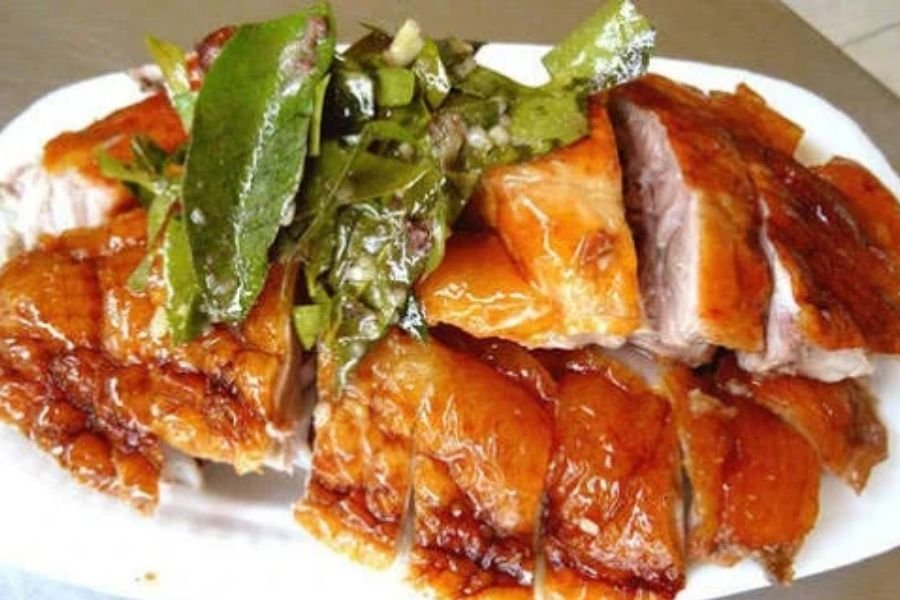
- Roast duck with mac mat leaves. A Cao Bang specialty: duck roasted with the fragrant leaves of the mac mat tree until the skin crackles.
- Trung Khanh chestnuts. Roasted at roadside stalls in early autumn, small, sweet and hard to stop eating.
- Grilled fish at Ba Be. Fish from the lake and the Nang River, grilled over charcoal and eaten with herbs and sticky rice.
- Bamboo shoots and forest greens. Stir fried or in soup, gathered from the hills around the lake.
On the jeep part of the trip, food is half the fun: com lam cooked in bamboo by the roadside, thang den at a market stall, banh cuon trung with broth for breakfast in Ha Giang City, and ruou ngo, corn wine, poured from plastic jugs on market day. With a private jeep you just ask your driver to pull over, nobody has to find parking, and nobody has to drive after a glass of corn wine. If food matters to you, the 4 days loop leaves the most room for market mornings in Ha Giang.
When to Go: Ba Be Lake Through the Year
Ba Be is green year round, but the lake changes with the seasons. Weather in the northern mountains can turn quickly, so check local updates before you go.
- Autumn, roughly September to November. Clear, comfortable days and calm water. A favorite time to combine Ba Be with Ha Giang and Cao Bang.
- Winter, December to February. Cool and often misty, with cold nights in the stilt houses. Atmospheric, but bring warm layers.
- Spring, March to May. Mild and fresh, with new green on the rice fields around the villages.
- Summer, June to August. Hot and humid, with heavy rain at times. The lake and waterfalls are full and dramatic, but allow for possible delays on the roads.
For the mountain half of the trip, our Ha Giang weather by month guide covers what to expect on the plateau.
Fitting Ba Be Into a Ha Giang and Cao Bang Trip
Ba Be works best as the final chapter of a loop across the north. The shape is simple: Hanoi to Ha Giang City, the jeep tour across the Ha Giang Loop and into Cao Bang, then Cao Bang to Ba Be, then Ba Be back to Hanoi. You never cover the same road twice, and the hardest driving happens early, while you are fresh.
The 6 Days Tour Ends at the Lake
The Ha Giang Cao Bang jeep tour in 6 days is the easiest way to do it: the loop, Cao Bang and Ban Gioc, then the mountain road to Ba Be on the last day, finishing on the lake. The 5 days version finishes in Cao Bang instead, so you would add Ba Be on your own by private car, with a night or two at the lake. Because every tour is private, tell us early if you want an extra night at Ba Be or a transfer onward, and we will build it in.
Doing It the Other Way Round
Taking one of the shorter Ha Giang Loop tours instead? You can start with the lake and finish with the mountains: Hanoi to Ba Be, then on to Ha Giang City for the loop. It suits travelers who want an easy first stop to get over jet lag. The catch is that the jeep tours start in Ha Giang City, so you will need a transfer from Ba Be first. Ask us and we will suggest the most comfortable way to link them.
Still deciding between the two regions? Our Ha Giang vs Cao Bang comparison lays out how they differ.
Which Ha Giang Jeep Tour Is Right for You?

If the road from Cao Bang to Ba Be is on your list, the real question is how much of the north you want to see before you reach it. Here is the short version.
- 3 days: the core Ha Giang Loop, finishing back in Ha Giang City. Ba Be would be a separate trip, so this suits travelers with only a few days.
- 4 days: the full loop at a slower pace, with more villages and markets. Also finishes in Ha Giang City.
- 5 days: the loop plus Cao Bang and Ban Gioc Waterfall, finishing in Cao Bang. Add Ba Be yourself afterward.
- 6 days: the same, then the mountain road to Ba Be Lake for a boat trip and Puong Cave, finishing at the lake. The one to pick if Ba Be is on your list.
- Jeep rental: for confident drivers who want their own pace in a Jeep Wrangler Rubicon. Check license requirements with us before booking, as rules can change.
3 Days Loop
The core loop: Quan Ba, Dong Van and Ma Pi Leng, then back to Ha Giang City.
From 17,490,000 VND
View Tour4 Days Loop
The full loop at an unhurried pace, with more villages, markets and time on the plateau.
From 21,490,000 VND
View Tour5 Days Combo
The loop, then east into Cao Bang for Ban Gioc Waterfall. Finishes in Cao Bang.
From 32,990,000 VND
View Tour6 Days Combo
The loop, Cao Bang and Ban Gioc, then the mountain road to Ba Be Lake for a boat trip. Finishes at Ba Be.
From 37,990,000 VND
View TourPrices are for the whole private jeep, not per person, and depend on group size from 1 to 4 travelers. They include VAT and exclude bus tickets and private room upgrades.
Prefer to drive yourself? The Jeep Wrangler Rubicon rental is available by the day from Ha Giang City for confident drivers.
Cao Bang to Ba Be: Frequently Asked Questions
The easiest way is a private car with a driver, which takes you from Cao Bang straight to your homestay on the lake. Most drivers follow National Road 3 south, then turn west toward Cho Ra. By public transport you will need to change buses and arrange a local transfer for the last few kilometers.
Not a direct tourist bus. The usual option is a bus toward Thai Nguyen or Hanoi as far as Phu Thong, then local transport to Cho Ra and a short transfer to the lake. Connections are not guaranteed, so ask your homestay to check current schedules.
Allow a full travel day if you start from Ban Gioc, and plenty of slack even from Cao Bang City. The time depends on the road, road work, weather and your stops. Be wary of anyone quoting an exact number of hours, and ask your driver for a current estimate.
Yes, especially as the last stop. After days of mountain roads, a boat trip and a night in a stilt house feel like a reward, and the stop splits the long drive back to Hanoi into two easier days.
On the 6 days tour the boat trip and Puong Cave are covered on the last day, so one extra night is enough for a quiet evening in the village and a misty morning. Traveling on your own, two nights is ideal: a full day for the boat trip, Puong Cave and Dau Dang Waterfall, plus time to relax.
Yes, the 6 days Ha Giang Cao Bang tour does. Its final day takes the mountain road from Cao Bang over Phia Oac, then a boat trip on the lake and Puong Cave, and the tour finishes at Ba Be. The 5 days tour finishes in Cao Bang instead.
Autumn, roughly September to November, brings clear and comfortable weather. Spring is mild and green, winter is cool and misty, and summer is hot and wet but makes the waterfalls dramatic. Weather can change quickly, so check local updates before you go.
Very. The boat trips are calm, the village walks are flat and the homestays are welcoming. Ask for a private room and check the bathroom setup if comfort matters, and keep the driving days short.
Cash for homestays and boat trips, insect repellent, a light rain jacket, comfortable shoes for village paths and a warm layer for cool evenings. A small dry bag is useful on the boat.
By private car the same afternoon, or stay the night on the lake and take a morning limousine bus. On our 6 days tour both options can be added when you book; send us your plans through our contact page and we will sort out the details.
Mountains First, Then the Lake
Ha Giang and Cao Bang give you the passes, the canyons and the waterfalls. Ba Be gives you the slow ending. Our 6 days tour does all of it in your own Jeep Wrangler Rubicon, with a local English speaking driver, the border permit handled and your homestays booked, finishing with a boat trip on Ba Be Lake.
Secure Your Spot with a 20% deposit. It prepays your homestays, your driver and the border permit paperwork, so everything is locked in before you travel. The rest is paid in cash when you arrive.
Prefer email? Write to booking@hagiangbyjeep.com.