
Visiting Ha Giang in September: What to Expect
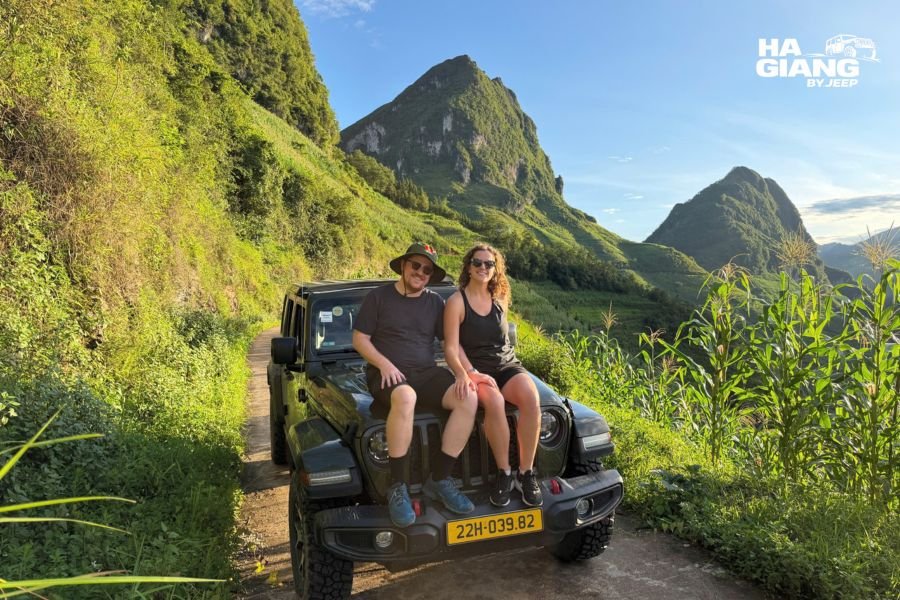
September is the month the plateau exhales.
The rain that has been hammering these mountains since June starts to back off. The air, which has spent three months thick enough to chew, thins out and turns clear. Rice that was green in August begins to turn. And the crowds that will pack every viewpoint in October and November have not arrived yet.
It is also, for the first two weeks, capable of dumping a day of rain on you without apology.
That combination makes September one of the more interesting months to be here, and one of the more misunderstood. Visiting Ha Giang in September means accepting a small gamble in exchange for a landscape at its best and a Loop that still feels like yours. Below is what that actually looks like from the driver's seat at Ha Giang by Jeep.
What's in this guide
- The honest verdict on September
- September is really two different months
- What the weather actually does
- The rice starts turning
- Why September is the best month for Ban Gioc
- What you will not see in September
- Crowds, holidays and availability
- What to pack for September
- Eating your way through September
- Which jeep tour is right for you?
- Mistakes people make in September
- FAQ
The Honest Verdict on September
Should you come? Yes, with one condition: keep your schedule flexible.
| What September gives you | What it takes |
|---|---|
| Rain easing week by week, air clearing | The first half can still deliver a full wet day |
| Rice turning gold in the valleys | Buckwheat flowers have not started yet |
| Ban Gioc Waterfall at its best combination of power and clarity | Domestic crowds around the National Day holiday |
| Far fewer international travelers than October and November | Late season storms are possible |
| Genuine availability. Jeeps and rooms are not yet fought over | Warmer and more humid than autumn proper |
If you want a guarantee of clear skies, book October. If you want the same landscape without the queue at every viewpoint, September is the month, and the second half of it is one of the sweetest windows in the whole year.
September Is Really Two Different Months
This is the single most useful thing to understand, and almost nobody says it.
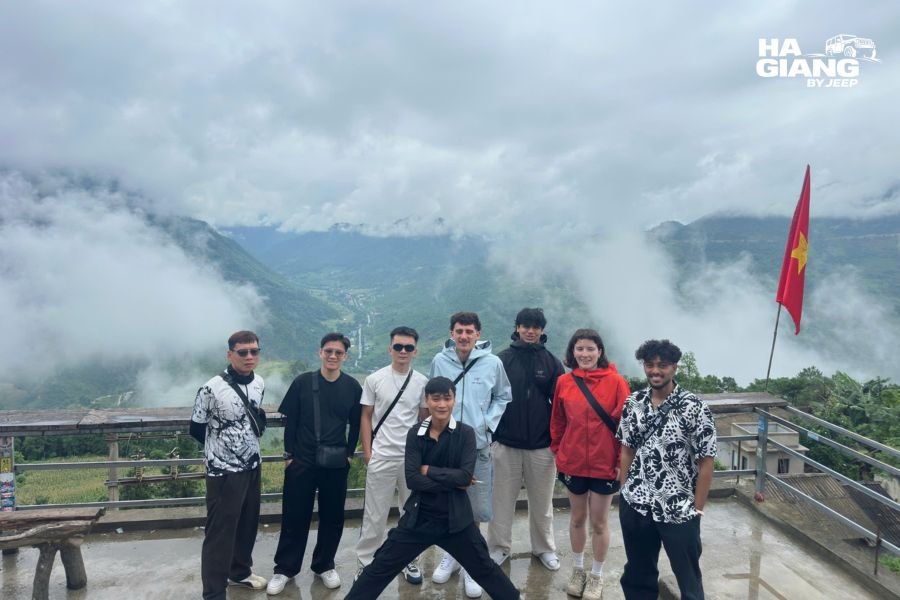
The first half of September is the tail of the rainy season. Warm, humid, and capable of throwing a storm system that parks for two or three days. The mountains are at their greenest. Waterfalls run hard. Cloud pours through the Ma Pi Leng canyon and either lifts by mid morning or does not.
The second half of September is often superb. Rain drops away, humidity falls, the light gets clean, and the rice starts to go gold. Visibility returns. Evenings need a light jacket for the first time in months. This is autumn arriving, quietly, about a fortnight before everyone else notices.
What we tell people who ask: if your dates are flexible, take the second half. If they are not, come anyway and build in a spare day. A wet morning in a jeep is a wet morning with a roof over your head, and the afternoon usually pays you back.
What the Weather Actually Does
Long term averages for Ha Giang City put September at around 30°C in the day and 22°C at night. Warm, in other words, in the valley.
Then you climb, and the number stops applying. Dong Van, Meo Vac and Lung Cu sit high on the Dong Van Karst Plateau and run several degrees colder than the city, before you add wind at the top of a pass. A September afternoon in Ha Giang City can feel tropical. A September evening in Dong Van wants a fleece.
Rain is the real variable. September sits at the end of the wet season, which means it is drying out rather than dry. Expect showers rather than downpours by the second half, and expect at least the possibility of a storm system in the first.
Two honest notes:
- Late season storms can affect northern Vietnam in September. They are unpredictable, they are occasionally serious, and no operator can promise you otherwise. Heavy rain can trigger landslides on steep sections, which local crews clear quickly, but it can change the order of a day.
- Conditions change. Check a forecast close to your travel dates, and search Dong Van or Meo Vac rather than Ha Giang City.
The full detail, month by month, is in our guide to Ha Giang weather by month.
Not sure whether your week works?
Send us the dates. We will tell you what that stretch of September usually does up here, including the parts that do not flatter us. No scripted sales reply, just an answer from people who drive it every week.
Private 4x4 every time. Local drivers who speak English. Soft top up when the sky opens, down when it clears.
Ask us on WhatsApp See the 4 days jeep tour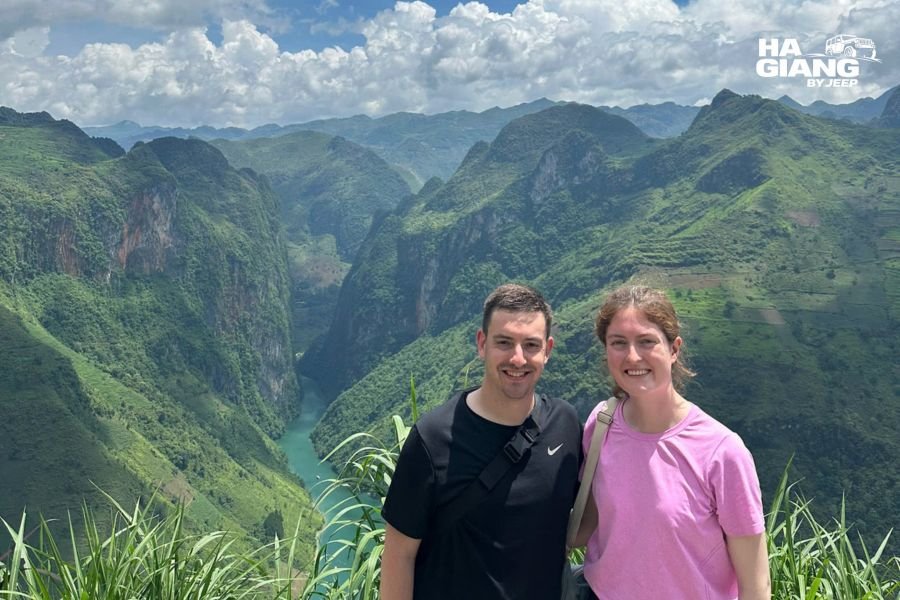
The Rice Starts Turning
September is when the whole province starts to change colour, and it happens from the ground up.
On the Loop, the terraced valleys around Quan Ba, below Yen Minh, on the road down to Du Gia and around Meo Vac begin to ripen through the month. By the last week of September the greens have gone yellow and the light does the rest. You will be asking the driver to pull over, repeatedly, and in a private jeep that costs you nothing but time.
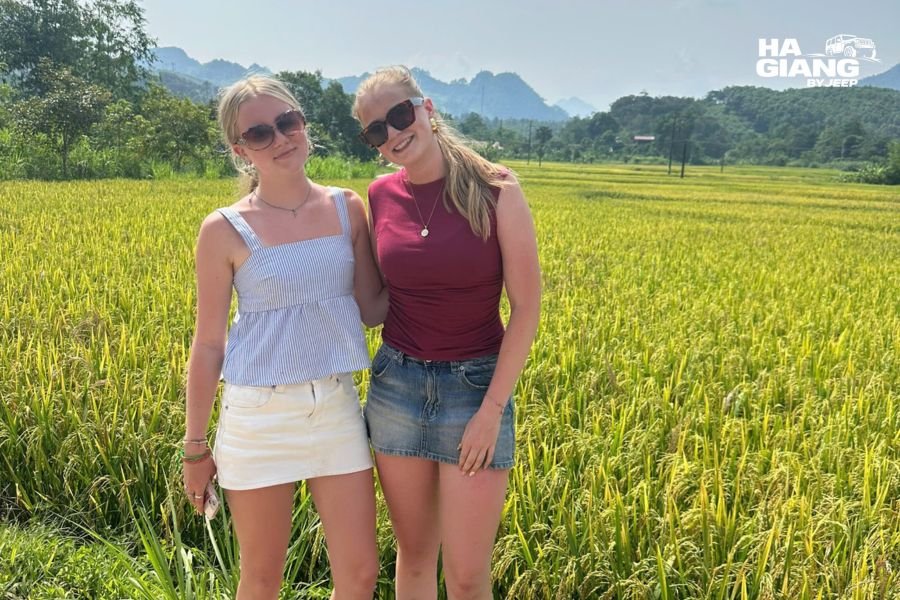
In Hoang Su Phi, west of Ha Giang City, the famous heritage listed terraces usually start their harvest from around mid September. That district is a separate journey in a different direction, not a detour off the Loop, and it deserves its own days. If gold terraces are the whole reason for your trip rather than a bonus, read our guide to Ha Giang rice terrace season before you book anything.
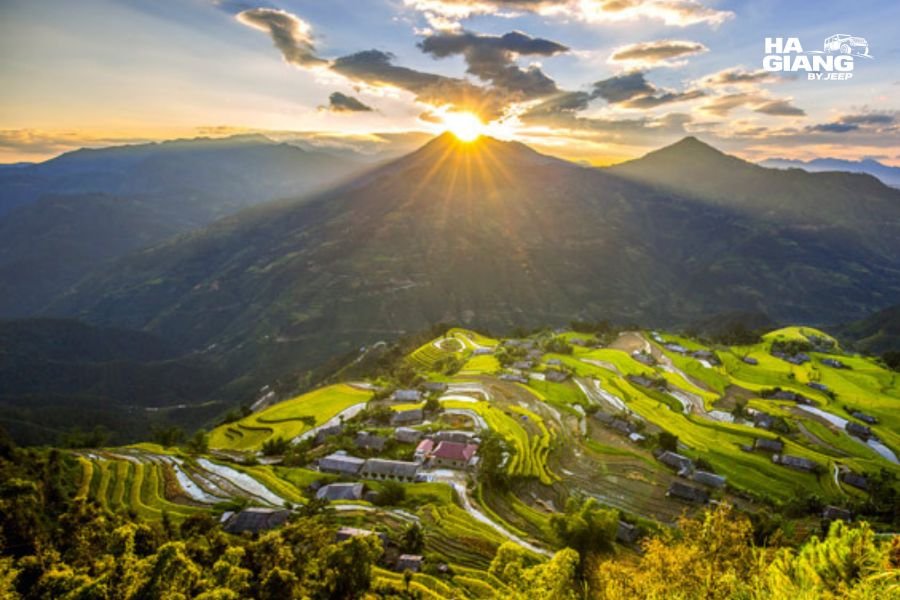
The timing caveat, which we repeat because it matters: rice ripens on the weather's schedule and each family's planting date, not on ours. A cool wet August pushes everything later. Anyone promising you a specific golden field on a specific day is promising something they do not control.
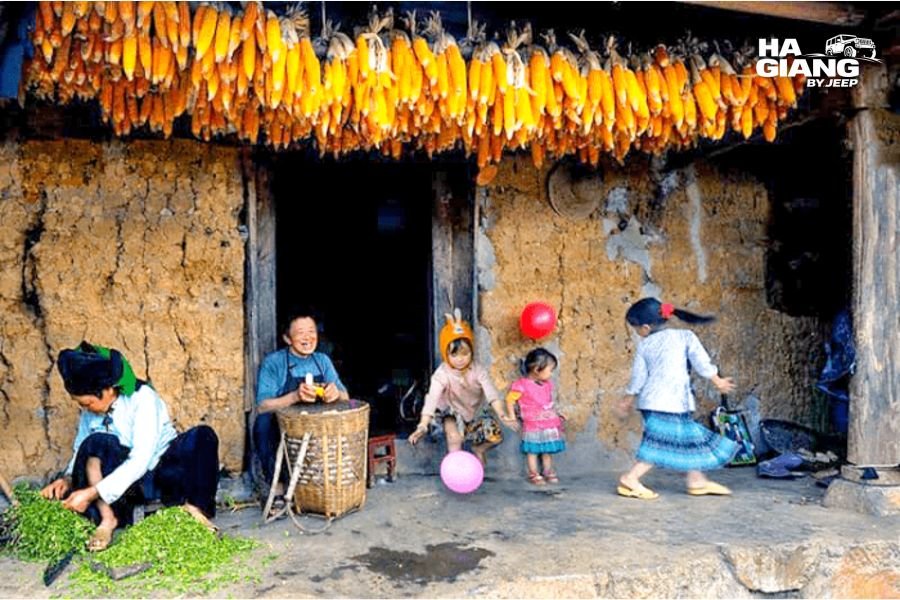
Alongside the rice, the harvest is visible everywhere. Corn hangs drying on the stone walls and wooden houses of the plateau. Markets fill with produce. Villages are busy in a way they simply are not in the quiet months, and that is a large part of what makes September worth the gamble.
Why September Is the Best Month for Ban Gioc
If your trip includes the run east into Cao Bang, September is quietly the best month of the year for it, and here is the reasoning.
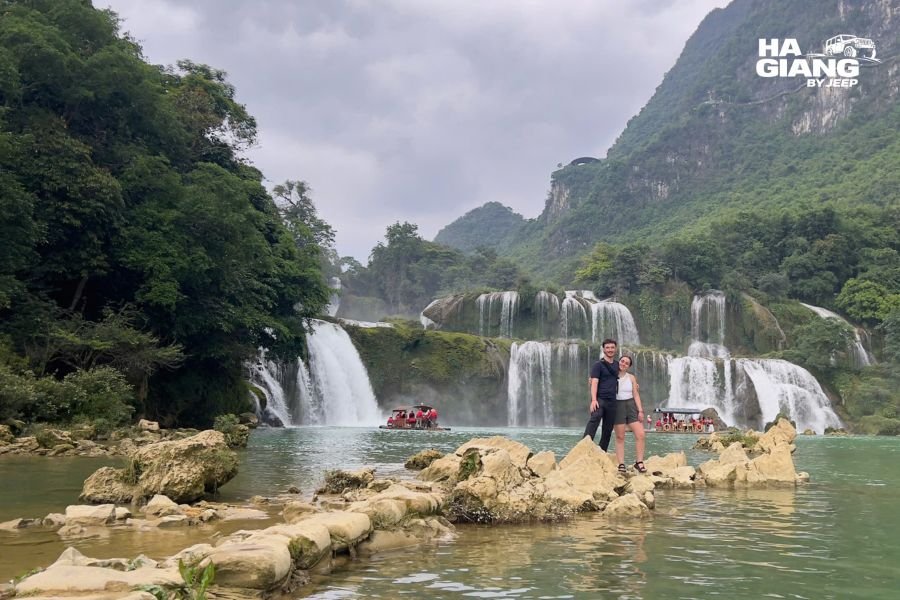
Ban Gioc Waterfall is fed by the rains. In July and August it is at maximum volume, thundering, and often the colour of milky coffee: spectacular, but not the turquoise you saw in photographs. In the dry months it clears beautifully but the flow drops.
September gives you both. The rains have filled the river, and as they ease the water starts to clear. Strong flow and returning colour in the same window, with skies opening up week by week. That combination does not last long.
The same logic applies to the Nho Que river back on the Loop. After months of heavy rain the water runs high and silty, then as September goes on it settles back toward the jade green colour it is famous for. Boat trips on the Nho Que can pause after bad weather for safety reasons, so if that is essential to your trip, ask us before booking and keep a spare day.
Our Ha Giang and Cao Bang 5 days jeep tour is built exactly for this, running from the Dong Van Karst Plateau into the Non Nuoc Cao Bang UNESCO Global Geopark and finishing at the falls. The 6 days route adds Pac Bo historical site, the bare summit locals call God's Eye Mountain, the quiet Ngoc Con Valley and the switchbacks of the 15 step pass.
What You Will Not See in September
Managing this expectation properly is the difference between a great trip and a disappointed one, so here it is plainly.
Buckwheat flowers. They do not bloom in September. The fields are typically sown after the corn harvest and start flowering from around mid to late October, peaking in November. If your entire mental image of Ha Giang is a pink field, September is the wrong month and we would rather you knew now. See Ha Giang buckwheat flower season for the real timing.
Guaranteed clear skies. September is drying out, not dry. That arrives in October.
Cold weather drama. No fog banks pouring over the passes, no frost, no fire lit evenings with corn wine. That is December and January.
What you get instead is a landscape at its greenest and most alive, rice going gold, waterfalls at full strength, and roads that are yours.
Crowds, Holidays and Availability
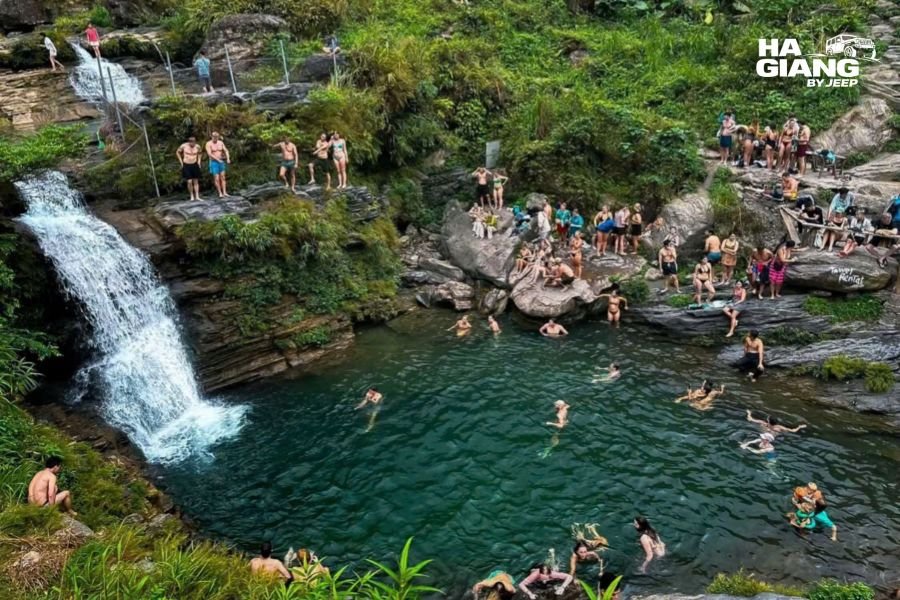
International visitors are still thin. The wave arrives in October. September viewpoints are quiet, homestays have space, and you are not queuing behind eleven other vehicles at the Ma Pi Leng lookout.
Vietnamese National Day, 2 September, is the exception. Domestic travel is heavy around the holiday and the days either side, and popular spots get busy. Book early if your dates fall there.
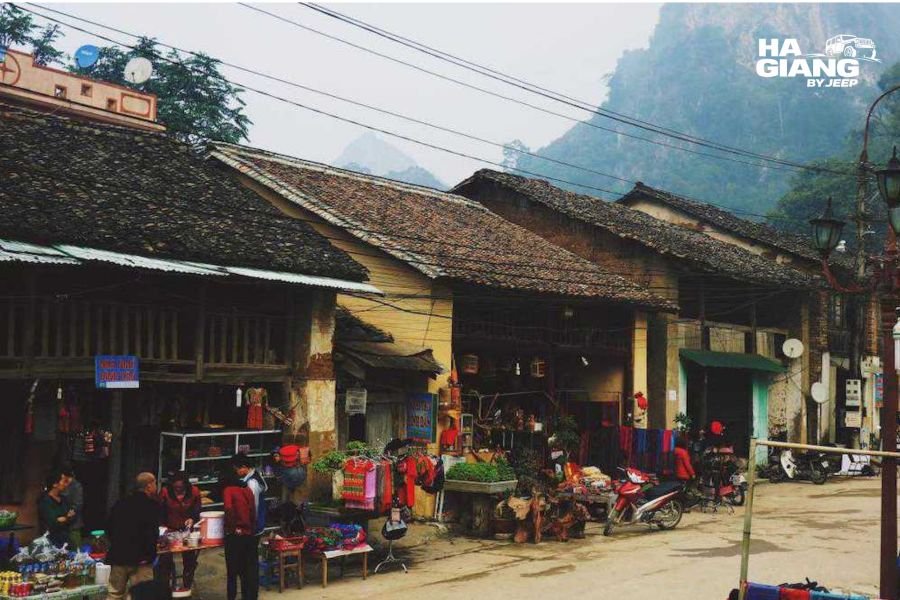
Mid Autumn Festival follows the lunar calendar and usually lands in September or early October. It is a family festival rather than a tourist one, and in towns like Dong Van it means lanterns, children in the streets and a very good evening to be wandering the Old Quarter with no plan. Check the lunar calendar for your travel year.
Availability is the underrated advantage. In October and November our jeeps are booked out weeks ahead, because the fleet is limited by the number of vehicles we own. In September there is room to move. If your dates are flexible, you can still get the itinerary you want at a week or two of notice, which is simply not true later in the autumn.
What to Pack for September
Warm and wet at the bottom, cool and windy at the top. Pack for both.
The non negotiables
- A proper rain jacket, not a plastic poncho
- Quick drying clothes. Cotton stays wet for hours in this humidity
- One warm layer, a fleece or a light jacket, for evenings on the plateau
- Shoes with grip. Village paths and viewpoints get slick
Worth having
- A dry bag or waterproof sleeves for camera, phone and passport
- Sunscreen. When the sun comes out at altitude it is stronger than it feels
- Mosquito repellent for evenings and homestays
- A spare pair of shoes, because one pair will get soaked eventually
Every season: passport, travel insurance, personal medication, and cash. Roadside stalls and village markets do not take cards, and you will want to buy things from them.

Eating Your Way Through September
Harvest season means the markets are at their best. Produce piles up, and the food that turns up on homestay tables is whatever came out of the ground that week.
Things to actually eat:
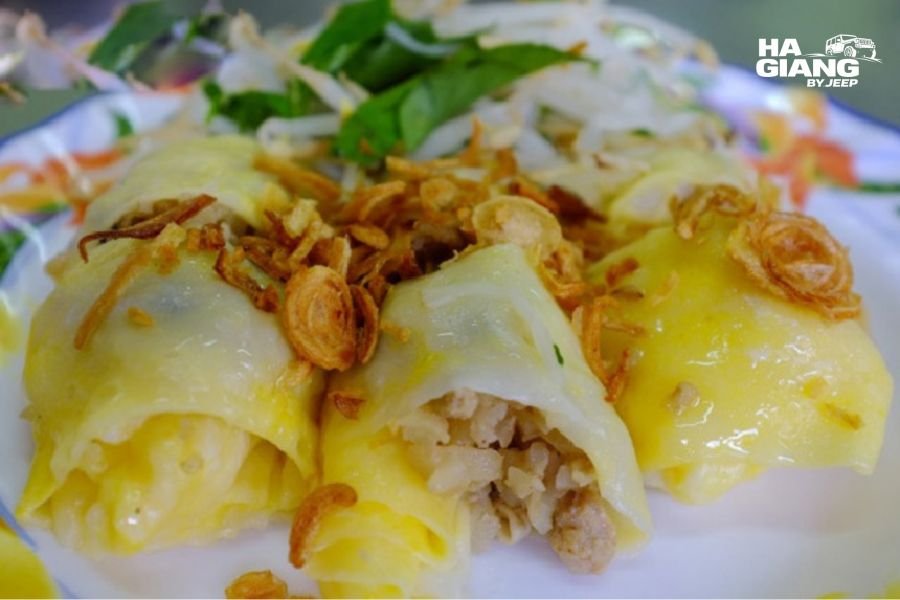
- Banh cuon trung, steamed rice rolls with egg, served with a bowl of hot broth. The best breakfast on the plateau and the correct answer to a grey morning.
- Com lam, rice cooked inside bamboo over a fire. Market food, best eaten hot, standing up.
- Thang den, glutinous rice balls in ginger syrup. More of a winter thing, but a cold late September evening in Dong Van qualifies.
- Ruou ngo, corn wine, poured at every homestay dinner on the plateau, whether you asked for it or not.
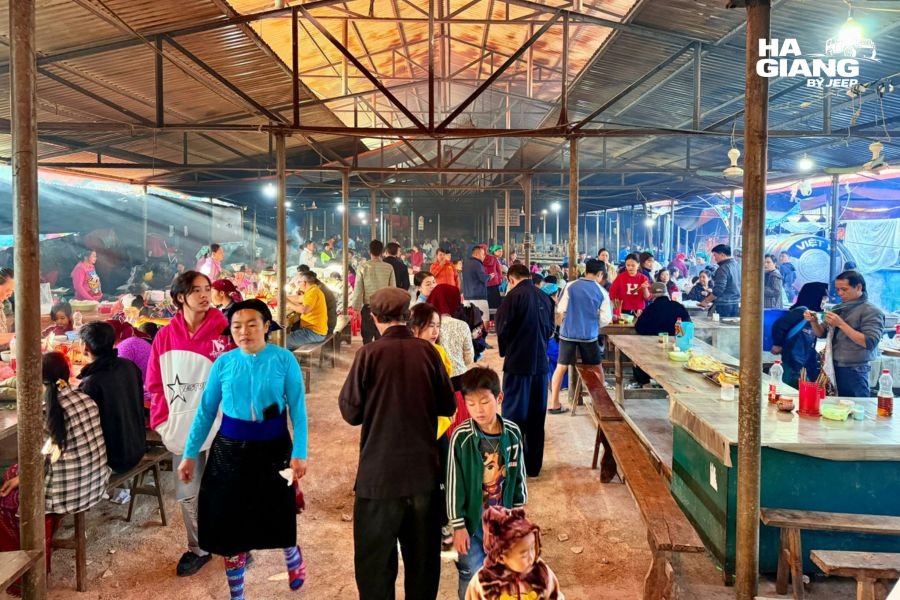
Dong Van Sunday Market and the Sunday market in Meo Vac are both worth building your route around in September, because a harvest market is a market with everything in it. Get there early. Both wind down by late morning.
There is a small advantage to doing all of this in a jeep that people only notice once they are here. You stop at whichever roadside stall smells right. You sit down properly rather than eating standing next to a bike. And you accept the glass of corn wine that the family pours, because somebody else is driving.
Which Jeep Tour Is Right for You?
| Option | Best for | In September |
|---|---|---|
| Ha Giang Loop 3 days | Tight schedules that still want the full Loop: Ma Pi Leng, Dong Van, Meo Vac | Works, but less room to reschedule around a wet day |
| Ha Giang Loop 4 days | The one we recommend most. Slower, with Du Gia and more village time | The extra day is your insurance policy against the tail of the rainy season |
| Ha Giang and Cao Bang 5 days | Adding Ban Gioc Waterfall and the Non Nuoc Cao Bang geopark | The strongest month of the year for the waterfall. Full flow, clearing water |
| Ha Giang and Cao Bang 6 days | The deep version: Pac Bo, God's Eye Mountain, Ngoc Con Valley, 15 step pass | Maximum flexibility to move a day around the weather |
| Jeep Wrangler Rubicon rental | Confident drivers who want the plateau on their own terms | You make the wet weather calls yourself. You need the correct licence and paperwork to drive legally in Vietnam, and rules change, so check current requirements first |
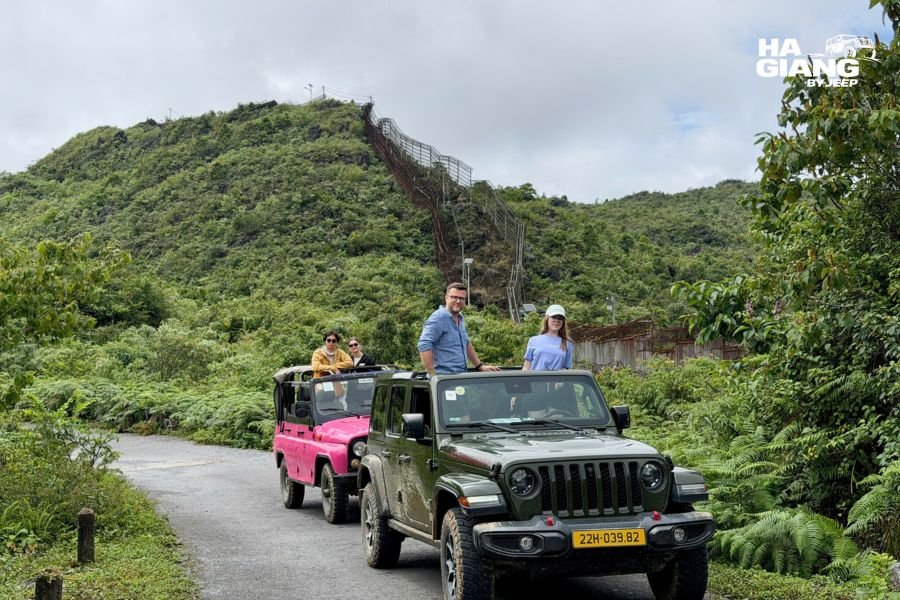
Every jeep is private, so it is your group and nobody else. Every driver is a local who was born in these mountains and speaks English. The soft top goes up when the sky opens and comes down when it clears, which in September it will, several times a day.
Book your jeep tour, message us on WhatsApp, or use the contact page. We answer 24/7 from an office in Ha Giang City and we handle the border zone permits.
Mistakes People Make in September
- Coming for buckwheat. It is not out yet. Come in November for that.
- Booking a rigid itinerary. The first half of the month needs slack. Leave a spare day and let the driver reorder around the weather.
- Packing only for heat. The valley is warm. The plateau at night is not.
- Assuming rain means a wasted day. It rarely does. Storms here move through. The light after one is the best light you will get.
- Underestimating National Day. The holiday on 2 September brings a domestic travel wave. Book earlier if your dates overlap.
- Cancelling because the forecast looks grey. Forecasts on the plateau go stale within hours.
- Expecting Hoang Su Phi on a Loop tour. Different direction, different trip.
FAQ
Is September a good time to visit Ha Giang?
Yes, especially the second half. Rain eases, the air clears, rice starts turning gold and the crowds have not arrived. The trade off is that the first half can still bring wet days.
How much does it rain in Ha Giang in September?
Less than the peak summer months, and less as the month goes on. September is the tail of the rainy season, so expect showers rather than constant rain, with the possibility of a storm system early in the month.
How hot is Ha Giang in September?
Long term averages for Ha Giang City are around 30°C by day and 22°C at night. The Dong Van plateau runs several degrees colder, so evenings up there want a jacket.
Will I see the buckwheat flowers in September?
No. They typically start flowering from around mid to late October and peak in November.
Will I see golden rice terraces in September?
Often yes, especially in the second half. The valleys on the Loop begin to turn through the month, and the Hoang Su Phi harvest usually starts around mid September, though that district is a separate trip to the west.
Is September good for Ban Gioc Waterfall?
It is arguably the best month. The rains have filled the river so the flow is strong, and as they ease the water starts to clear. Strong flow and colour in the same window.
Are there many tourists in Ha Giang in September?
Far fewer than in October and November. The exception is the Vietnamese National Day holiday around 2 September, when domestic travel is heavy.
Can you drive the Loop in September rain?
Yes, and we run all year. Heavy rain can affect steep sections and occasionally means a detour, which is exactly why a local driver matters. With the soft top up, rain is an inconvenience rather than a problem.
What should I wear in Ha Giang in September?
Layers plus a real rain jacket. Quick drying clothes for the humidity, one warm layer for evenings on the plateau, and shoes with grip.
How far in advance should I book for September?
Earlier is always better, but September has genuine availability compared with October and November. A few weeks is often enough, unless your dates fall around the National Day holiday.
Is September better than October?
October has more reliable weather and better visibility. September has fewer people, better availability and the strongest window for Ban Gioc. Pick your priority.
Do we need a permit for the border areas?
Some areas near the border require permits and we arrange these for our guests as part of the tour. Requirements can change, so check the latest updates if you are traveling independently.
The Month Before Everybody Else Arrives
Visiting Ha Giang in September means taking a small bet on the weather and being paid in space. Empty viewpoints. Villages busy with the harvest. Rice going gold. Waterfalls still running hard while the water clears. And a Loop that has not yet filled up with the autumn wave.
Bring a rain jacket, keep a spare day, and let a local driver read the sky.
Whichever week you pick, the vehicle does not change. Private 4x4, never shared with strangers. A driver who grew up on these passes and speaks English. Soft top and heater when the weather turns, open air when it clears. Two UNESCO Global Geoparks if you take the long route east.
Still weighing September against the rest of the calendar? Our guide to the best time to visit Ha Giang lays out all twelve months side by side.
Send us your dates
We will tell you the truth about them.
WhatsApp: +84 862 379 288 or +84 938 988 593
Email: booking@hagiangbyjeep.com
Office: Ha Giang City