
Best Time to Visit Ha Giang: Month by Month Guide

Ha Giang is worth seeing in every month. What changes is the weather, the light, the crowds, and how much comfort your trip needs to carry.
Ask ten travelers about the best time to visit Ha Giang and you will get ten confident answers, each one shaped by whichever month that person happened to be here. Useful for them. Not much help when you are staring at a calendar trying to lock in flights.
So here is the version we would give a friend, written from the driver's seat of a jeep that runs these passes all year. Some months hand you clear passes and pink flower fields. Others hand you fog, warm rain and empty roads, which a certain kind of traveler loves and another kind quietly regrets.
Below: what each month actually feels like up here, which markets and festivals are worth building a trip around, what to throw in your bag, and how to choose between the 3 days, 4 days, 5 days and 6 days routes at Ha Giang by Jeep once you have picked your window.
What's in this guide
- The short answer
- Ha Giang's seasons in plain English
- Ha Giang weather by month: read this first
- Month by month guide to Ha Giang
- What a day on a Ha Giang jeep tour looks like in each season
- Markets and festivals worth planning around
- The best time to visit Ha Giang for your kind of trip
- What to pack, season by season
- Which jeep tour is right for you?
- Common planning mistakes
- FAQ
The Short Answer
If you only read one section, read this one.
| If you want... | Go in | Why |
|---|---|---|
| The safest all round bet | October and November | Dry air, clear passes, comfortable temperatures, buckwheat flowers in bloom |
| Blossoms and mild days | March and April | Plum and pear blossom, soft light, dry roads, crowds still thin |
| Golden rice terraces | Mid September to early October | Harvest season, skies washing clean after the rains |
| Drama, mist and solitude | December to February | Cold, quiet roads, fog pouring over the passes, fire lit evenings |
| Deep green and low season quiet | June to August | Everything lush, rivers full, fewest foreign visitors, and rain |
There is no ruined month in Ha Giang. There is only the wrong jacket, the wrong expectations, or a schedule too rigid to bend around a wet morning. Pick the month that matches what you actually want, then pack for it properly.
If your dates are already fixed and you are simply wondering whether they are any good: they probably are. Tell us the dates on WhatsApp and we will tell you honestly what that week usually looks like up here, including the parts other operators skip over.
Ha Giang's Seasons in Plain English
Forget the four neat seasons you learned at school. Up here it works more like this.
Spring, roughly March to early May
The plateau wakes up. Blossom on the stone terraces around Pho Bang and Sung La, mild afternoons, mornings that still bite. Visibility improves week by week. Underrated, and quiet.
Summer, roughly late May to August
Hot in the valleys, warm and humid on the plateau, and wet. Clouds sit in the canyons and burn off by mid morning, or they do not. Waterfalls swell. Green so saturated it looks edited. This is the season that rewards flexibility.
Autumn, roughly September to November
The famous one. Rain retreats, the air turns glassy, rice goes gold and then buckwheat goes pink. Cool mornings, warm afternoons, long views from every pass. Also the busiest window, so book early.
Winter, roughly December to February
Cold, and genuinely cold at altitude, not "Southeast Asia cold." Fog banks, frost on the highest ridges some mornings, then a bright hard sky by lunch. The Loop empties out. Hot corn wine and a fire feel earned.
Ha Giang Weather by Month: Read This First
One thing almost every planning guide gets wrong, and it causes more disappointment than anything else.
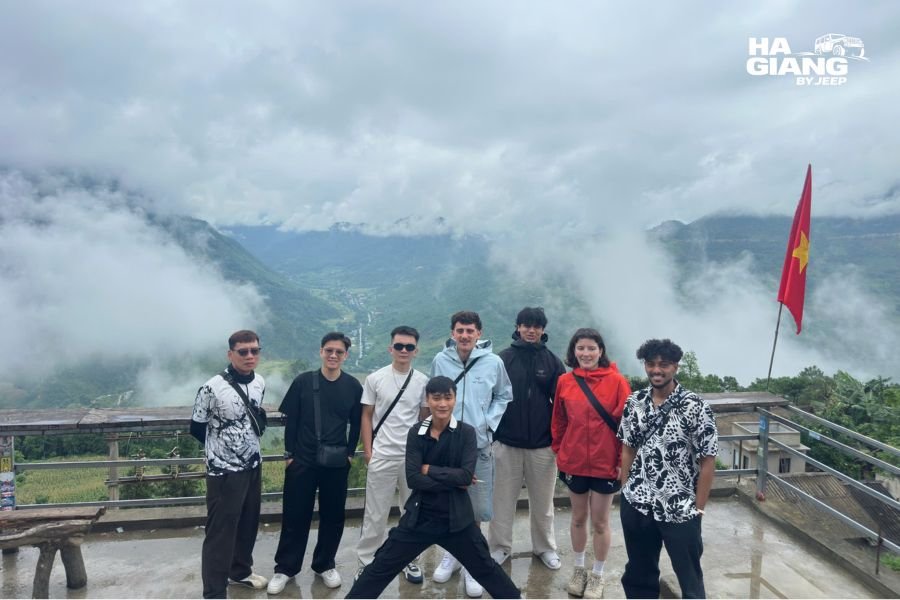
The forecast you see for "Ha Giang" is usually the forecast for Ha Giang City. The city sits low, in a river valley, and it is warm. The places you came for, Dong Van, Meo Vac, Lung Cu, the top of Ma Pi Leng, sit far higher on the Dong Van Karst Plateau, a UNESCO Global Geopark. In practice the plateau runs several degrees colder than the city, wind included, and it makes its own weather. A sunny app icon in the city can mean fog thick enough to lose the car in front of you at Ma Pi Leng.
Three rules that beat any average:
- Check the forecast for Dong Van or Meo Vac, not for Ha Giang City.
- Mornings and afternoons often disagree. Valley fog at dawn frequently clears into a bright afternoon. A grey 7am is not a verdict on the day.
- Altitude beats season. A warm October afternoon at Quan Ba can still be a cold October evening in Dong Van. Layers, always.
Everything below is a pattern, not a promise. Check a current forecast close to your dates, and check road updates locally in the rainy months.
Month by Month Guide to Ha Giang
January: Cold, Clear, and Completely Yours
January is the quietest month on the Loop, and for a certain traveler it is the best one. Dry air, very little rain, and on a good day the kind of visibility that makes Ma Pi Leng look computer generated. Fog sits in the valleys at dawn and often lifts by late morning.
It is cold. Nights on the plateau can drop close to freezing, and frost is possible on the highest ground around Lung Cu and the top passes. Locals wear layers you would recognise from a European winter. If you picture Vietnam as a permanent beach, this month will surprise you.
Roads are usually dry and stable, which is exactly why some of our repeat guests choose winter. What you trade is the occasional viewpoint swallowed by cloud.
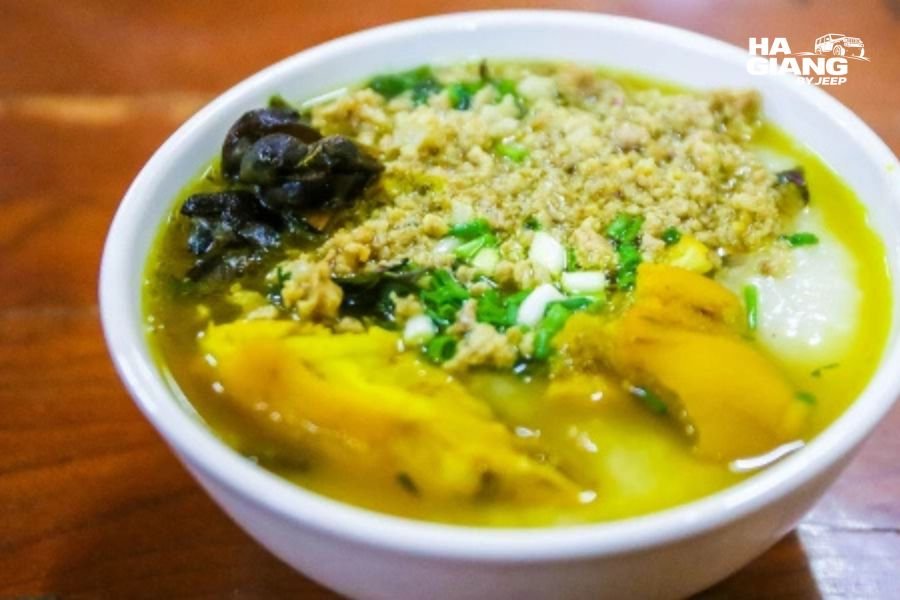
Food is the secret weapon. Chao au tau, a thick warming porridge sold in the evenings in Ha Giang City, and thang den, glutinous rice balls in hot ginger syrup, both make far more sense in January than in July. Add a small glass of ruou ngo, the local corn wine, by a fire in Dong Van Old Quarter and the cold stops mattering.
February: Blossoms, Tet, and a Plateau in Its Best Clothes
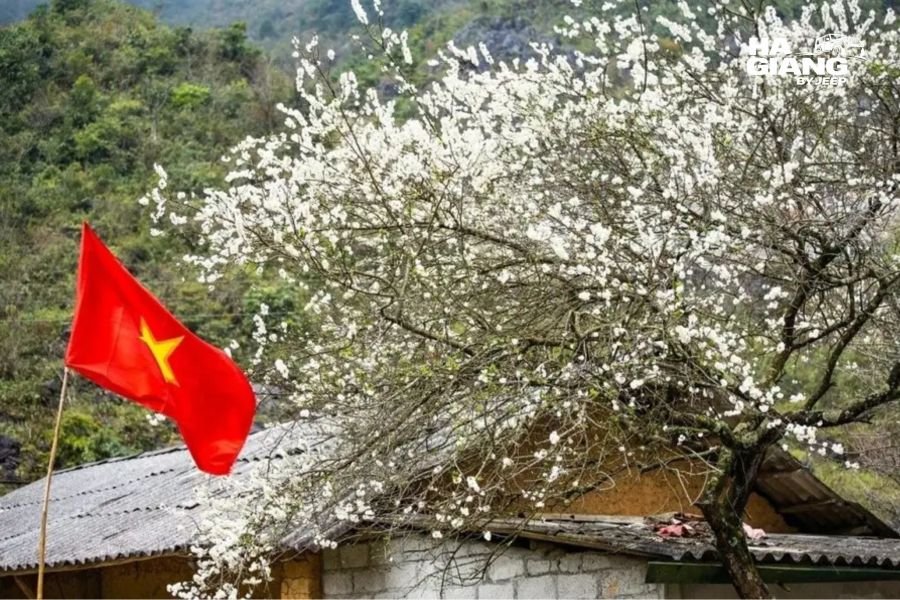
February is winter loosening its grip. Cold snaps still arrive, but between them come mild, bright days, and the first white plum and pear blossom appears against the stone walls of Pho Bang, Sung La and Yen Minh. For photographers this is one of the most beautiful moments of the year, and almost nobody comes for it.
Tet, the Lunar New Year, usually falls in late January or February. Exact dates move every year, so check the lunar calendar for your travel year. During Tet the villages are dressed up, families visit each other, children wear new clothes, and there is a warmth to the whole plateau. The trade off is practical: some shops, restaurants and small businesses close for several days, and domestic travel is heavy. It is a wonderful time to be here and a slightly harder time to be here. We are happy to walk you through the specifics for your dates.
Drizzle, the fine grey mist locals call mua phun, can hang around for a day or two at a time.
March: The Month Locals Would Choose
If a Ha Giang driver had a free week and could pick any month, a lot of us would pick March. Blossom still lingering into the first half. Air mild rather than cold. Dry roads. Long, clear views. And crowds that have not yet arrived.
Afternoons feel pleasant in a shirt, evenings still want a jacket. The plateau is starting to green up, and the terraces around Quan Ba and Yen Minh are being turned over for the year ahead. Villages are back to their normal rhythm after Tet.
It is a strong month for families and for guests in their 50s, 60s and beyond, because the weather does not punish anyone. Nothing is too hot, too wet, or too slippery. If you want to add Du Gia and the quieter eastern side of the Loop rather than rushing, this is the month to take the 4 days Ha Giang Loop jeep tour and simply go slower.
April: Green, Warm, and Livelier
April brings real warmth back. Fields go green, water starts appearing in the lower terraces, and the whole landscape switches from stone grey to something softer. Days are comfortable, evenings mild.
Two scheduling notes. First, Khau Vai Market, the famous annual gathering in Meo Vac district, follows the lunar calendar and usually lands in late April or May. Confirm the date for your year before you build a trip around it. Second, Vietnamese public holidays in late April and early May bring a big wave of domestic travelers. Homestays fill and the popular viewpoints get busy. Book early if your dates fall there.
Occasional showers begin, usually short and in the afternoon.
Not sure your dates work?
Send us the week you are thinking about. We will tell you what the roads, the fields and the markets usually look like then, and which route makes the most of it. No pressure, no scripted sales reply, just an honest answer from people who drive it every week.
Private 4x4 every time. Local drivers who speak English. Soft top and heater when the weather asks for it.
Ask us on WhatsApp See the 3 days jeep tourMay: The Turn of the Season
May is the hinge. Early May can still feel like spring. Late May usually feels like the beginning of the wet season, with heavier air, big afternoon build ups and the first serious rain.
What you get in return is water in the terraces, which means reflections, and a plateau that is starting to look impossibly lush. Khau Vai Market often falls in May. The valleys are hot. The plateau stays reasonable.
Rain matters less in a jeep than people expect, and this is the month guests start to feel that. You watch the storm arrive across the canyon from a dry seat, wait fifteen minutes with the soft top on, then step out into washed light and a completely empty viewpoint.
June: Full Green, Full Cloud
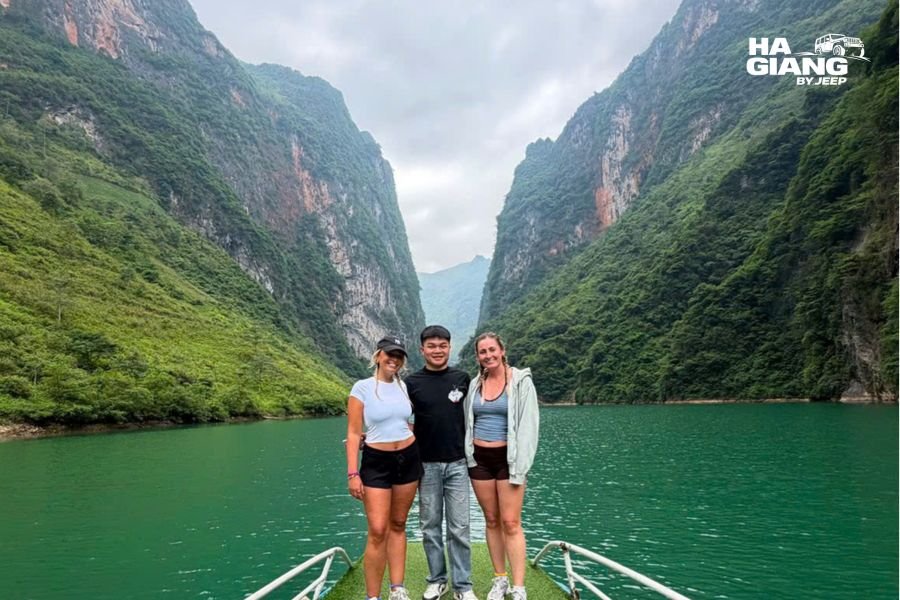
Summer proper. Warm, humid, and wet, with the heaviest rain of the year beginning to build. Cloud pours through the Ma Pi Leng canyon and hangs on the ridges. The Nho Que river runs full. Waterfalls that barely exist in February turn loud.
Foreign visitor numbers drop, so the Loop feels quiet again, and this is the month for travelers who value having a viewpoint to themselves over having a guaranteed view. It is honest to say the trade off is real: some days deliver the most dramatic skies you will ever photograph, others deliver grey and rain from morning to night.
Boat trips on the Nho Que can pause after heavy weather, for good safety reasons. If a specific activity is essential to your trip, ask us before you book, and keep a spare day in the plan.
July: The Wettest Stretch
July and August are the peak of the rainy season. This is when Ha Giang looks most alive and behaves most unpredictably. Rivers swell, the mountains turn a deep saturated green, and mist moves across the terraces like something with a plan.
Rain is rarely constant, but storm systems can settle in for a couple of days. Heavy rain occasionally triggers landslides on steep sections, which local crews clear promptly, though it can mean a detour or a changed order of stops. This is a normal part of travel here in summer, and it is the single strongest argument for having a local driver who is in contact with people up and down the route.
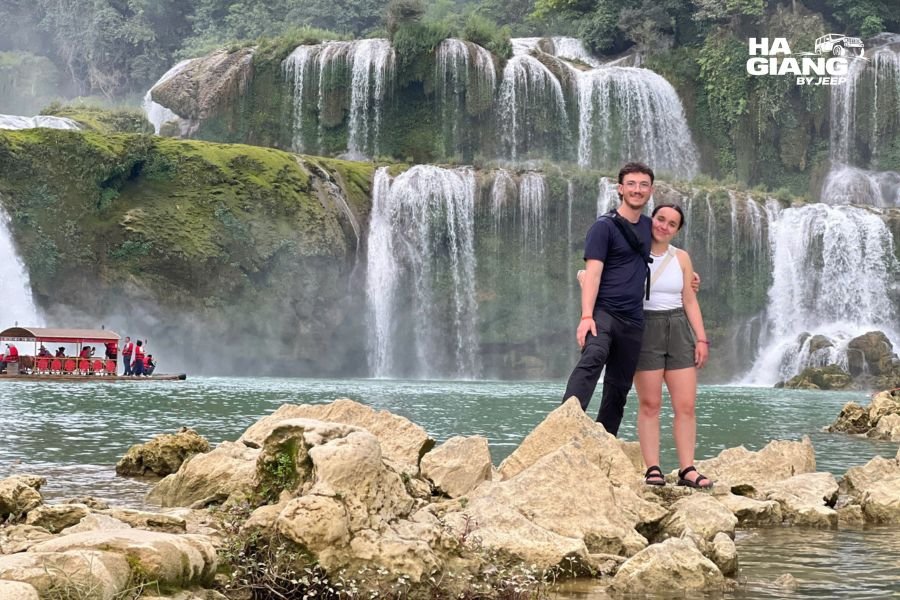
If you are joining a Cao Bang combo, note that Ban Gioc Waterfall runs at full volume in this season. Spectacular, and often silty and brown rather than the turquoise you see in postcards.
August: Lush, Loud, and Turning
August behaves much like July, with the rains often starting to ease late in the month. The reward comes at the end: the first rice fields begin to turn, the air starts to feel less heavy, and the light gets cleaner.
Vietnamese school holidays mean some domestic travel, though Ha Giang in August is nothing like Ha Giang in October. Villages are busy with field work. Markets are full of produce.
September: The Season Turns Gold
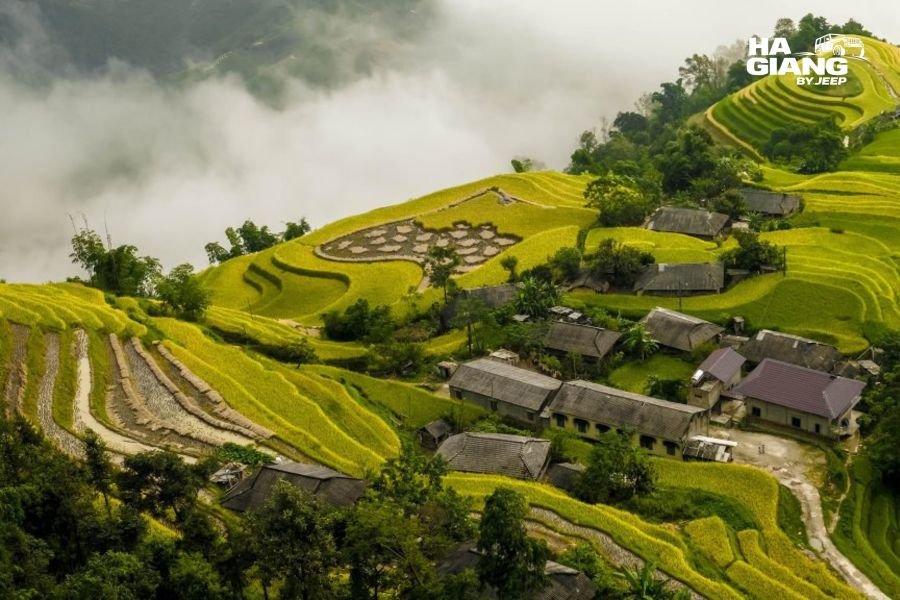
September is where the year starts getting very good. Rain retreats week by week, humidity drops, and the rice ripens. The terraces of Hoang Su Phi, on the western side of the province, usually turn gold from around mid September into early October, though the exact timing shifts with the weather and varies from village to village. Ask us what the fields are doing in the week you arrive, since we hear it from drivers on the road.
The plateau itself feels freshly rinsed. Views come back. Evenings need a light jacket again.
This is also the sweet spot for the Cao Bang side of the trip. After the rains, Ban Gioc Waterfall still carries strong flow but the water clears and the skies open up. If Ban Gioc is on your list, the Ha Giang and Cao Bang 5 days jeep tour is built exactly for this window, crossing from one UNESCO Global Geopark into another.
October: The Best All Round Month
If you gave us one month and no other information about you, we would send you in October.
Dry, clear, comfortable in the day, cool at night. The passes are open and the views run for miles. The rice harvest is finishing in places and the first buckwheat fields start to flower toward the end of the month in some areas. Ma Pi Leng at golden hour in October is the single most photographed thing in northern Vietnam for a reason.
It is also the month the Loop gets busy. Homestays fill, the good rooms in Dong Van and Meo Vac go early, and jeep availability tightens. Once you have a confirmed travel date, book as soon as you can. Most of our guests reserve one to three months in advance. Our fleet is limited by the number of vehicles we own, so early booking is not a sales line, it is the actual constraint.

November: Buckwheat Season
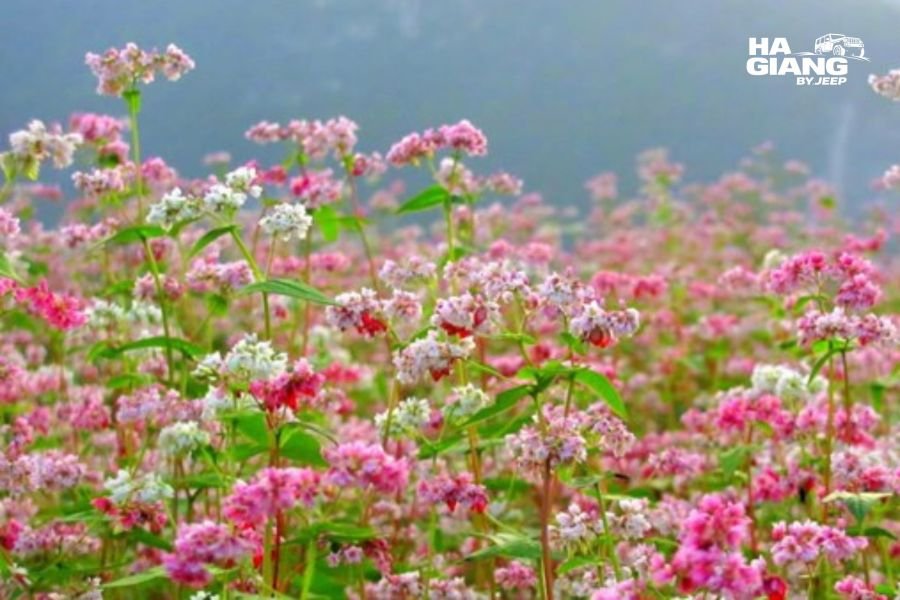
November is the month people plan whole trips around. The buckwheat fields, tam giac mach, bloom across the plateau in soft pink and white, and the stone landscape around Sung La, Pho Bang and Lung Cu turns into something that does not look like it should exist.
The Buckwheat Flower Festival is typically held during November, with a location and programme announced each year by the province, so check the latest updates when your dates are close. Flowering also varies field by field. Farmers plant on their own schedule, so there are early fields and late fields rather than one switch that flips.
Weather is usually excellent: dry, clear, cool. By late November the cold begins to settle in and evenings on the plateau want a proper coat.
This is our busiest month alongside October. If November is your window, treat booking as the first thing you do, not the last.
December: Cold, Sharp and Beautifully Empty
December closes the year the way it started. Late buckwheat lingers in some fields into the first part of the month. The air turns cold and hard, and on clear days the visibility is extraordinary, mountains stacking to the horizon with no haze at all.
Fog is the price. Some mornings the plateau disappears. Then it lifts and you get an hour of light that makes the whole day worth it.
Christmas and New Year bring a bump of international travelers, so December is not quite as empty as January, and the good rooms still go. Book ahead if you are traveling over the holidays.
Layer up, keep the soft top handy, and finish the day with hot food. This is corn wine season.
What a Day on a Ha Giang Jeep Tour Looks Like in Each Season
Here is something worth knowing before you read too many opinions online. If you read a Ha Giang jeep tour review written in July and another written in November, they can sound like two entirely different trips. Same road, same stops, completely different weather. So when people ask what to expect on a Ha Giang jeep tour, the honest answer starts with the calendar.
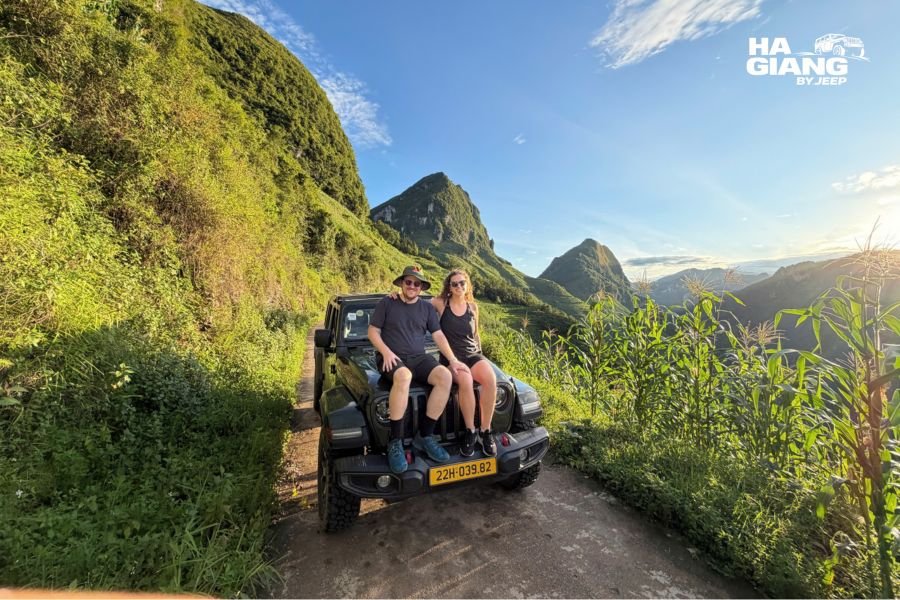
In the dry months, roughly October to April, the tops come off. You ride open air, standing room at the viewpoints, wind, 360 degree views, and the sound of the valley instead of the sound of an engine. The driver stops wherever you point. This is the version of the trip you have seen in photos.
In the cold months, December to February, we run with the soft top on and the heater going, and it changes everything. You stay warm between stops, step out for the photo, and get back into a warm car. Guests in their 60s and 70s do the winter Loop with us regularly, and the reason it works is simple: nobody is exposed to the weather for hours at a time. Blankets in the back, and a stop wherever there is a fire and a pot of something hot.
In the wet months, May to September, the soft top goes on and off all day. You sit out a shower with the roof up, then take it down when the sky opens. Your bags stay dry. Your camera stays dry. And because you are not the one driving, a slick pass is the driver's problem, not yours. The road across Ma Pi Leng in rain is a serious piece of driving, and it should be done by someone who grew up on it.
Every one of our drivers is a local who was born in these mountains and speaks English. Every jeep is private, so it is your group and nobody else, and you set the pace. That matters in every season, and it matters most in the ones with weather.
Markets and Festivals Worth Planning Around
Timing your trip to hit a market is one of the highest value scheduling decisions you can make, and it costs nothing.
| Event | When | Why go |
|---|---|---|
| Dong Van Sunday Market | Every Sunday morning | The classic highland market in the Old Quarter. Get there early. It winds down by late morning |
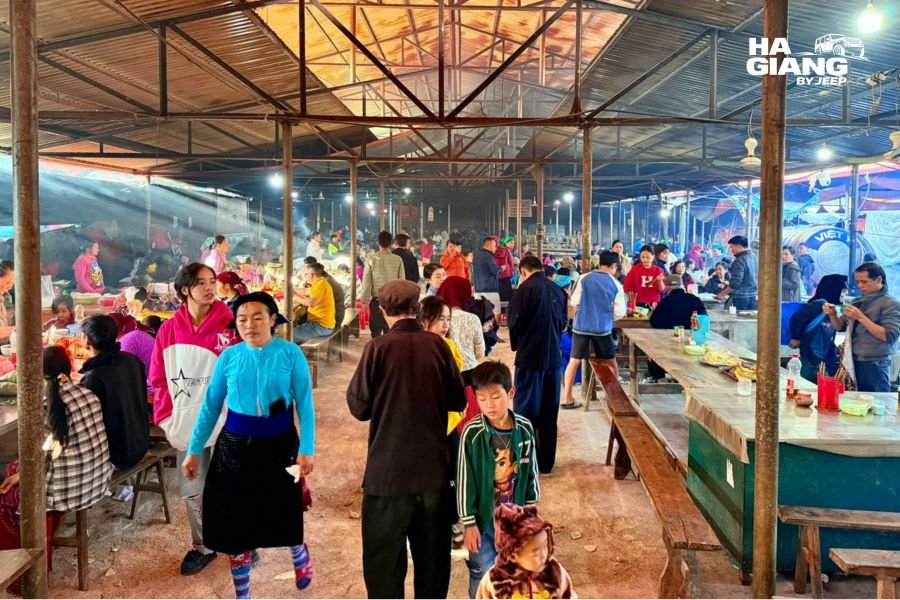
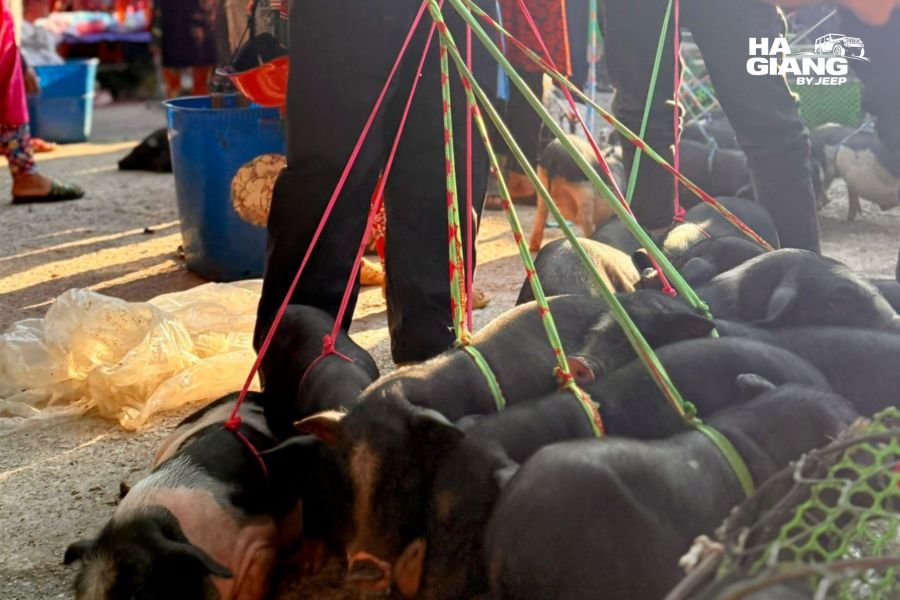
| Meo Vac Market | Sunday mornings | Bigger, rawer, famous for the livestock section. Traders arrive before dawn |
| Khau Vai Market | Once a year, 27th day of the third lunar month, usually late April or May | The Love Market. A historic gathering with deep local meaning. Confirm the exact date for your year |
| Tet, Lunar New Year | Late January or February, varies | Villages at their most festive. Some closures |
| Buckwheat Flower Festival | Usually November | Provincial festival built around the flowering fields. Programme announced each year, check latest updates |
| Hoang Su Phi rice harvest | Usually mid September to early October | Golden terraces on the western side of the province |
Smaller village markets rotate through the week across Yen Minh, Quan Ba, Pho Bang and Sung La, and weavers are usually at work in Lung Tam Linen Village whatever the season. Ask your driver what is on while you are here. Half the time we can reroute the morning to catch a market, because a private jeep does not have a schedule to defend.
The Best Time to Visit Ha Giang for Your Kind of Trip
Families with children
March, April, October. Comfortable temperatures, dry roads, no extremes. Kids handle a jeep day far better than they handle heat or rain, and being able to stop whenever someone needs a break is the whole game.
Travelers in their 50s, 60s and 70s
March, April, October, November. Mild weather, dry surfaces, long dry spells. Winter is very doable with the soft top and heater, but if you want the easy version, take the shoulder months.
Photographers
February for blossom, September for gold, November for buckwheat, January for cloud and light. Bad weather makes good photographs. Choose accordingly.
Couples who want quiet
January, February, June. The Loop belongs to you and the people who live here.
Foodies
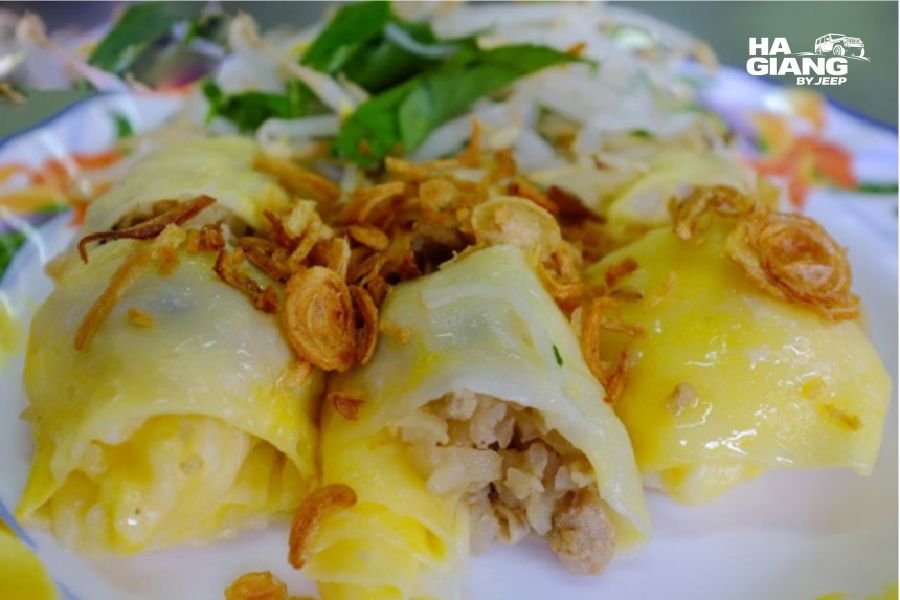
Any month, though winter has the edge. A private jeep means you stop at whichever roadside stall smells right, sit down for banh cuon trung with the hot broth, pick up com lam from a market stand, and try a glass of ruou ngo without a single thought about who is driving afterwards. That last part is not a small thing.
Anyone adding Cao Bang and Ban Gioc
September to November. The waterfall carries good flow after the rains, the water clears, and the skies open. The 6 days Ha Giang and Cao Bang jeep tour has room for Pac Bo historical site, the strange bare summit locals call God's Eye Mountain, the quiet Ngoc Con Valley and the switchbacks of the 15 step pass, all inside the Non Nuoc Cao Bang UNESCO Global Geopark.
What to Pack, Season by Season
Nobody has ever complained about bringing one layer too many. Plenty of people have spent a cold evening in Dong Van buying a jacket they did not plan to buy.
Winter, December to February
- Proper insulated jacket, not a hoodie
- Thermal base layer, gloves, warm hat, warm socks
- Light rain shell to go over the top for drizzle
- Lip balm. The wind is dry
- Something for the evenings. Temperatures fall fast after dark
Spring, March to May
- Layers: tee shirt, fleece or sweater, light jacket
- Compact rain jacket. Showers arrive fast
- Sunscreen. High altitude sun is stronger than it feels
- Comfortable shoes with grip for viewpoints and village paths
Summer, June to August
- Proper rain jacket, not a plastic poncho
- Quick drying clothes
- Dry bag or plastic sleeves for camera, phone and documents
- Mosquito repellent for evenings and homestays
- One warm layer anyway. The plateau surprises people
Autumn, September to November
- Layers again, plus a warmer jacket for late November
- Windproof outer layer for the passes
- Sunglasses. The light is bright and clean
- A scarf. Everyone ends up wanting a scarf
Whatever the season: passport, travel insurance, any personal medication, and a bank card plus some cash, because small villages and roadside stalls do not take cards.
Which Jeep Tour Is Right for You?
Once you have chosen your month, the next decision is how long to stay. Here is the plain version.
| Option | Best for | The honest catch |
|---|---|---|
| Ha Giang Loop 3 days | Travelers on a tight schedule who still want the full Loop: Ma Pi Leng, Dong Van, Meo Vac | The days are fuller. Less time to linger in villages |
| Ha Giang Loop 4 days | The one we recommend most. Same Loop, slower, with Du Gia and more village time | You need one more day |
| Ha Giang and Cao Bang 5 days | Adding Ban Gioc Waterfall and the Cao Bang geopark, finishing in Cao Bang | Point to point, so plan your onward travel from Cao Bang |
| Ha Giang and Cao Bang 6 days | The deep version. Pac Bo, God's Eye Mountain, Ngoc Con Valley, 15 step pass | You will want to come back anyway |
| Jeep Wrangler Rubicon rental | Confident drivers who want the mountains on their own terms | You need the correct licence and paperwork to drive legally in Vietnam. Rules change, so check current requirements before you commit |
Pick your month, we will handle the rest
Tell us your dates, your group and what you care about, and we will tell you which route we would put our own family on. Private 4x4, never shared with strangers. A local driver who speaks English and grew up on these passes. Border permits handled. Support 24/7 from our office in Ha Giang City.
Book your jeep tour WhatsApp us Contact the teamCommon Planning Mistakes
- Trusting the city forecast. Covered above, and worth repeating. Check Dong Van and Meo Vac.
- Booking October or November late. The two best months are the two busiest months. Jeep availability is limited by the size of the fleet, and rooms in Dong Van and Meo Vac fill first. One to three months ahead is normal.
- Building a rigid itinerary in the rainy season. June to September needs a spare day and a flexible mind. A good driver reorders the route around the weather. A locked schedule cannot.
- Packing for tropical Vietnam. Hanoi in December and Dong Van in December are not the same country as far as your body is concerned.
- Assuming markets run daily. The big ones are weekly, mostly Sunday, and the annual ones follow the lunar calendar. Check before you plan around one.
- Leaving paperwork to chance. Parts of the route sit close to the border and require the correct permits. We arrange these for our guests as standard. Rules can change, so if you are traveling independently, verify current requirements rather than relying on an old blog post. Be wary of anyone offering to sort "special access" for cash on the roadside, and book through an operator who gives you written confirmation.
FAQ
What is the best time to visit Ha Giang overall?
October and November. Dry weather, clear passes, comfortable temperatures, and buckwheat flowers in November. March and April are an excellent second choice with far fewer people.
Is there a bad month to visit Ha Giang?
No month is wasted, but July and August are the wettest and least predictable. If you go then, keep a spare day in your plan and treat the rain as part of the experience.
Can you do the Ha Giang Loop in the rainy season?
Yes, and we run all year. Roads can be affected by heavy rain and routes occasionally need adjusting, which is exactly why a local driver matters. Inside a jeep with the top up, rain is an inconvenience rather than a problem.
How cold does Ha Giang get in winter?
Cold enough for a real winter jacket. Nights on the plateau can approach freezing and frost is possible on the highest ground. Ha Giang City is noticeably milder than Dong Van and Meo Vac, so pack for the plateau, not the city.
When do the buckwheat flowers bloom?
Usually from late October through November, sometimes lingering into early December. Fields flower at different times because farmers plant on different schedules, so there is no single perfect day. Ask us what is blooming during your week.
When are the rice terraces golden?
Typically mid September to early October, especially in Hoang Su Phi. Timing shifts each year with the weather, so check close to your dates.
What day is Dong Van Market?
Sunday morning, in the Old Quarter, and it is worth an early alarm. Meo Vac also holds its main market on Sunday. Smaller village markets rotate through the week.
When is Khau Vai Market?
On the 27th day of the third lunar month, which usually falls in late April or May. Confirm the exact date for your travel year before planning around it.
How far in advance should I book a jeep tour?
Once you have a confirmed travel date, book as soon as possible. Most guests book one to three months ahead. Jeep availability is limited by fleet size, so early booking genuinely helps, especially for October and November.
Do we need a permit for the border areas?
Some areas near the border require permits, and we handle this for our guests as part of the tour. Requirements can change, so check the latest updates if you are traveling independently.
Do we miss anything by not being on a motorbike?
No. Same road, same passes, same villages, same stops. You simply see it from a seat instead of a saddle, with a roof available when the weather turns and no need to concentrate on the road for hours at a time.
Can we add Ban Gioc Waterfall to a Ha Giang trip?
Yes, on our 5 days and 6 days routes, which run from the Dong Van Karst Plateau across into the Non Nuoc Cao Bang geopark. September to November is the strongest window for the waterfall.
Pick Your Month, We Will Handle the Rest
The best time to visit Ha Giang is the month that fits the trip you actually want: October and November for the classic, March and April for the quiet version, September for gold, winter for empty roads and a fire at the end of the day.
Whichever you choose, the jeep does not change. Private vehicle every time, never shared with strangers. A local driver who speaks English and was born in these mountains. A soft top and a heater when the weather asks for them, open air when it does not. Two UNESCO Global Geoparks if you take the long route. Support 24/7 from our office in Ha Giang City.
Tell us your dates and we will tell you the truth about them.
Ready when you are
WhatsApp: +84 862 379 288 or +84 938 988 593
Email: booking@hagiangbyjeep.com
Office: Ha Giang City