
Ha Giang Rice Terrace Season: When to Go and Where
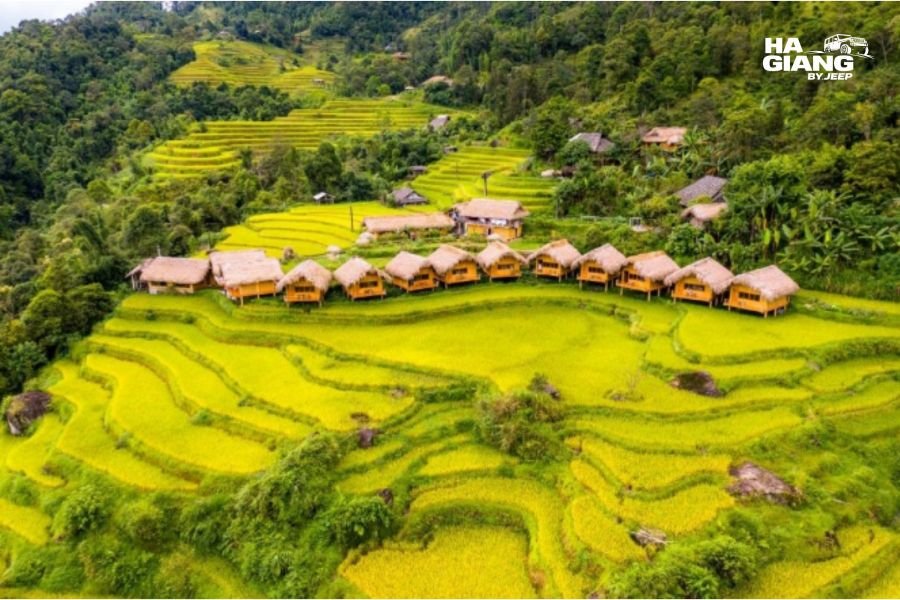
Two photographs sell this province. They were taken in different months, on opposite sides of it. A lot of people find that out too late.
One is a pink field of buckwheat on a karst plateau. The other is a mountainside stacked with rice terraces, glowing gold, mist in the valley below. Visitors arrive expecting to see both from the same road, and they do not.
This guide sorts that out. When the terraces fill with water and turn into mirrors, when they run green, when they turn gold, and where the real ones actually are. Ha Giang rice terrace season is one of the great sights in Vietnam, provided you understand what you are booking and when.
What's in this guide
- The short answer
- The thing nobody tells you about Ha Giang rice terraces
- Water season: the terraces as mirrors
- Green season: the quiet months
- Golden season: the one everyone wants
- Where to find the terraces
- Who built all this
- How to photograph rice terraces
- Fitting the terraces into a real trip
- Which jeep tour is right for you?
- Mistakes people make
- FAQ
The Short Answer
Rice up here is a single annual crop, so the whole landscape runs on one long cycle. Miss the window and you are looking at mud or stubble.
| Phase | Roughly when | What you see |
|---|---|---|
| Water season | May into June | Flooded terraces reflecting the sky. The mirror photographs |
| Green season | July and August | Young rice, deep green, dramatic summer skies. Wet |
| Golden season | Mid September to mid October | Harvest. The gold everyone comes for. Peak is usually late September into early October |
| Fallow | November to February | Cut stubble and bare terraces. Beautiful in the light, but not what you saw online |
If you only want the gold: aim for the last week of September through the first week of October. Higher and later fields, particularly around Ban Phung, tend to ripen toward mid October.
A caveat we cannot remove. Harvest timing is set by the weather and by each family's planting date, not by a calendar. A wet August can push it. A hot one can pull it forward. Rice does not care about your flight booking, and any operator who guarantees you a golden field on a specific day is selling you something they do not control.
The Thing Nobody Tells You About Ha Giang Rice Terraces
The famous terraces of Ha Giang, the ones in the photographs, are in Hoang Su Phi, a district in the west of the province.
The famous Ha Giang Loop, the one with Ma Pi Leng Pass, Dong Van Old Quarter, Lung Cu and Meo Vac, runs north and east from Ha Giang City across the Dong Van Karst Plateau.
They are two different journeys in two different directions. You cannot drive the Loop and casually pass through Hoang Su Phi on the way. It is a separate trip and it needs its own days.
Why this matters. Every season we speak to travelers who booked a short Loop trip expecting golden terraces and were disappointed. Nobody lied to them exactly, but nobody told them either. So, plainly:
- On the Loop you will see terraced fields. Real ones, around Quan Ba, Yen Minh, Du Gia and the valleys near Meo Vac. They are lovely, they turn gold at the same time of year, and they are genuinely worth stopping for.
- They are not Hoang Su Phi. Hoang Su Phi is a landscape on a completely different scale: an amphitheatre of terraces climbing entire mountainsides, recognised as a national heritage site.
If terraces are the reason for your trip, plan for Hoang Su Phi and accept that it needs extra days. If the Loop is the reason for your trip and terraces are a bonus, go in late September or early October and you will see plenty.
Not sure which of those is you?
Send us your dates and your priorities. We will give you a straight answer, even when the straight answer is that our standard routes are not the best fit for what you want. That happens, and we would rather tell you now than have you find out on day two.
Ask us on WhatsApp See the 4 days jeep tour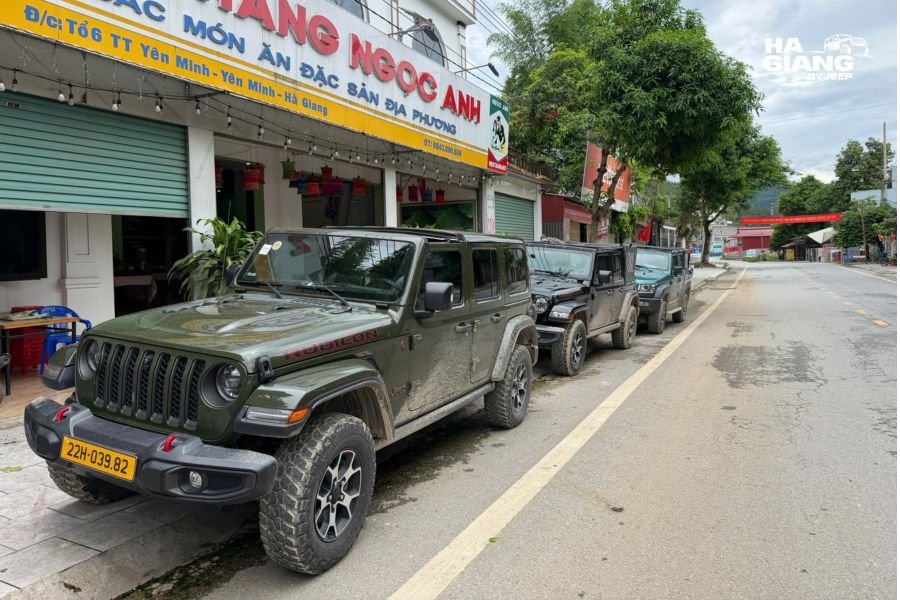
Water Season: The Terraces as Mirrors
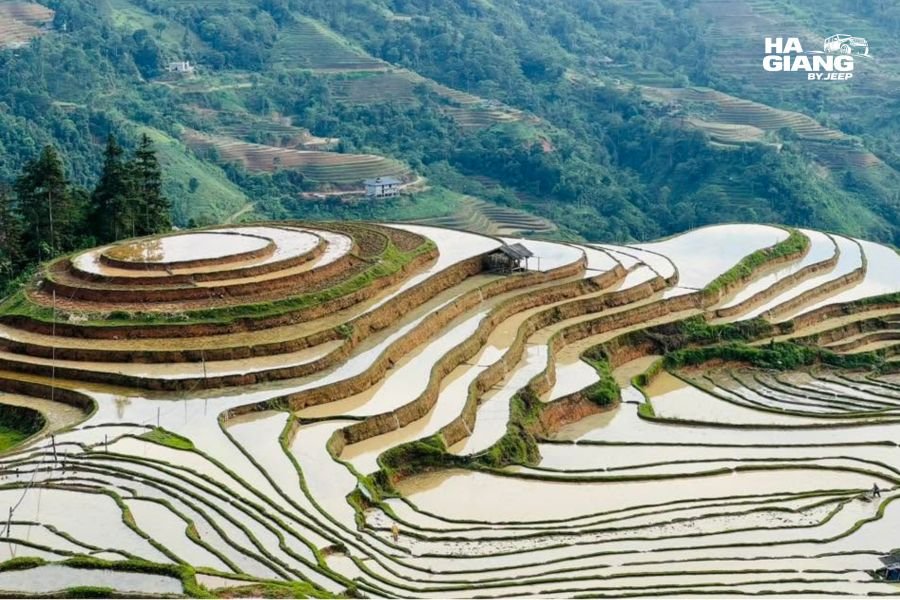
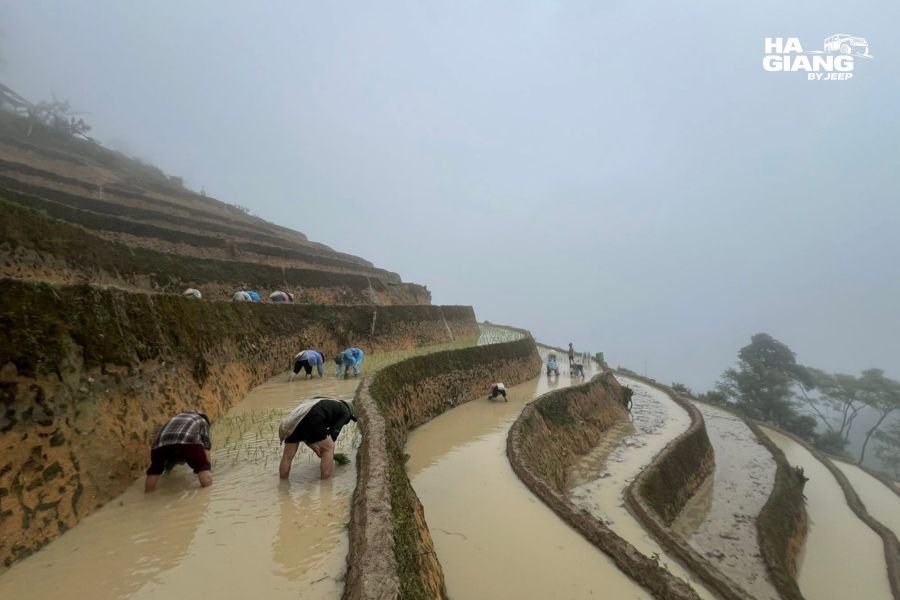
The Vietnamese call it mua nuoc do, the pouring water season. Water is channelled down from the forested peaks through an irrigation system maintained by hand for generations, and the terraces fill one by one, following the contour of the mountain.
For a few weeks, usually across May and into June, the fields hold still water and no rice. Every terrace becomes a mirror. On a clear morning they hold the sky. On a cloudy one they hold the mountain. At sunset they turn the colour of whatever is happening above them.
What it is like to be there:
- The terraces read as pure shape and line. No crop to soften the edges.
- Reflections need still air. Early morning, before the wind picks up, is the whole game.
- It is the start of the wet season, so expect humidity and afternoon storms. That is also why the water is there.
- Villages are working. Buffalo in the fields, people planting. This is not a quiet landscape, it is a busy one.
Fewer travelers come for water season than for gold, which is exactly the argument for it.
Green Season: The Quiet Months
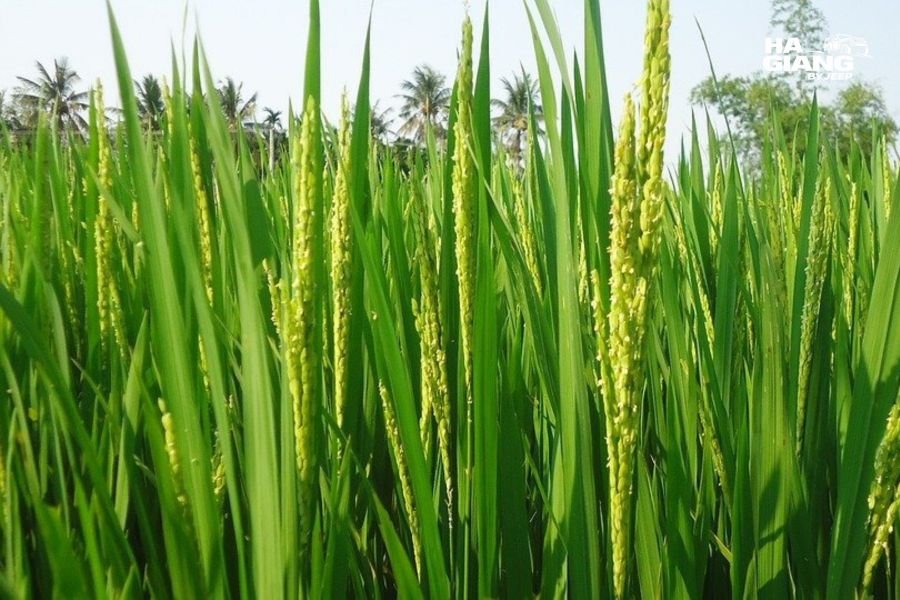
July and August. The rice is up, growing fast, and the whole landscape goes a green so saturated it looks turned up. Cloud sits in the valleys. Streams run hard. It is the wettest stretch of the year and the least visited.
Green season is underrated and it is also the gamble. The mountains are at their most alive. The rain is at its heaviest. Roads in the west can be affected after sustained rain, so you want a flexible schedule and a driver who is talking to people up the road. Our guide to Ha Giang weather by month has the honest detail on what those months actually do.
Go if you want the mountains without the crowds and you can live with a wet day. Skip it if your one shot at the terraces has to be the postcard.
Golden Season: The One Everyone Wants
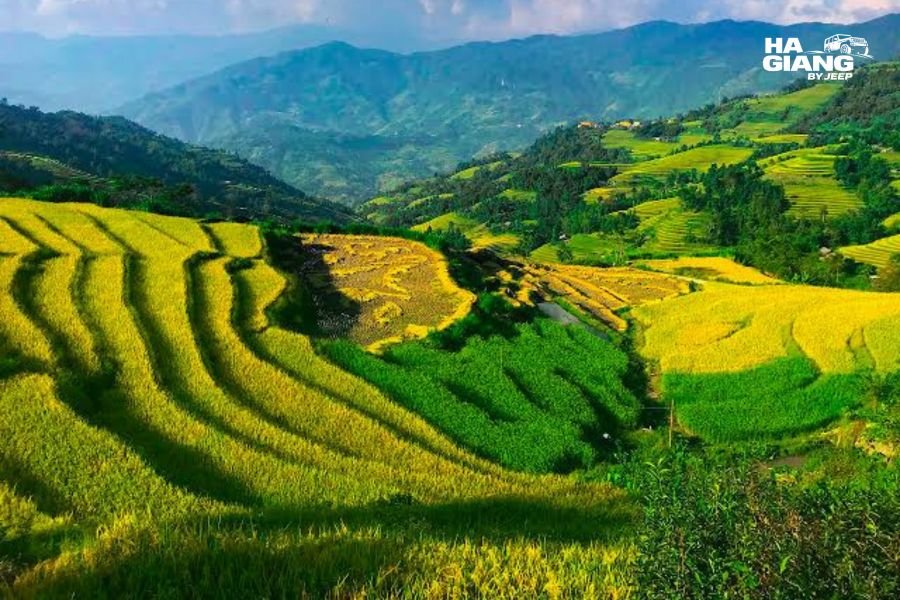
Mid September to mid October, peaking for most of Hoang Su Phi in the last week of September and the first week of October.
Ripening does not happen all at once, and understanding why will save your trip:
- Altitude. Higher fields ripen later. Ban Phung, which sits high and steep near the border, is usually among the last to turn.
- Planting date. Every family plants when their water and their labour allow. Neighbouring valleys can be a week apart.
- Weather. A cool, wet season delays everything.
So in early October you can stand on one ridge and see a cut field, a ripe field and a still greenish field within the same view. That is normal and it is beautiful.
The other clock: the harvest itself. Once a field ripens, it gets cut, often within days. Gold turns to stubble fast. Arriving at the very end of the window is a real risk, which is why we tell people to aim for the front half rather than the back half.
Practical notes for golden season
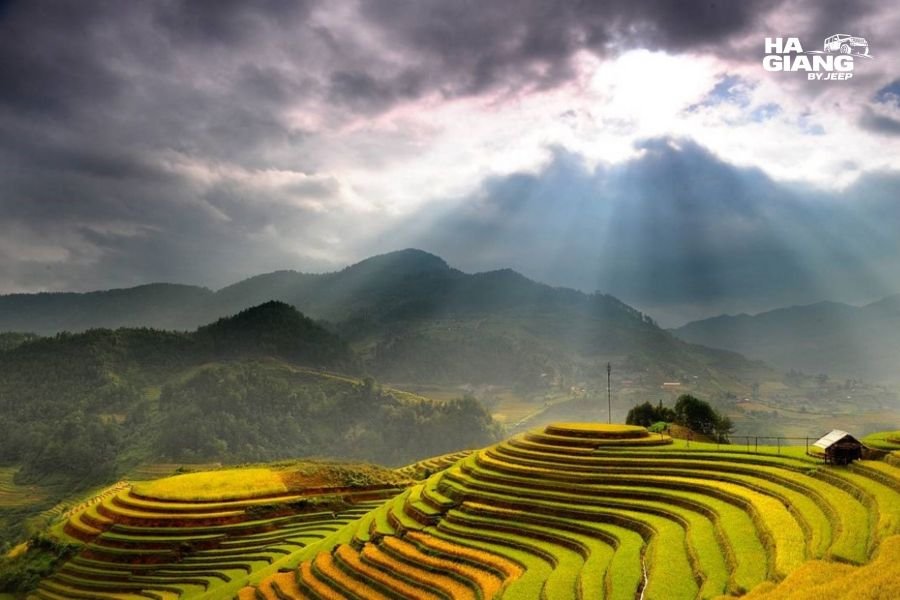
- Mornings are the reward. Mist sits in the valleys and burns off through the morning, and the low side light picks out every terrace edge.
- It is the tail of the rainy season, so pack a rain jacket even though the odds are good.
- This is the busiest time in the west. Homestays in the terrace villages are small and they fill.
Ha Giang province usually runs a golden season tourism programme in Hoang Su Phi around harvest, with dates announced each year. Check the latest updates close to your trip rather than trusting a date from an old article, including this one.
Where to Find the Terraces
The heritage listed terrace system of Hoang Su Phi covers close to 3,000 hectares across six communes. Each one has a different character.
Ban Phung
High, steep and close to the Chinese border, with some of the most vertical terraces in the district. The stacking here is extraordinary: the mountainside reads as a single staircase. Because it sits high, it usually ripens later than the rest, which makes it the best bet if you are arriving in the second week of October.
Ban Luoc
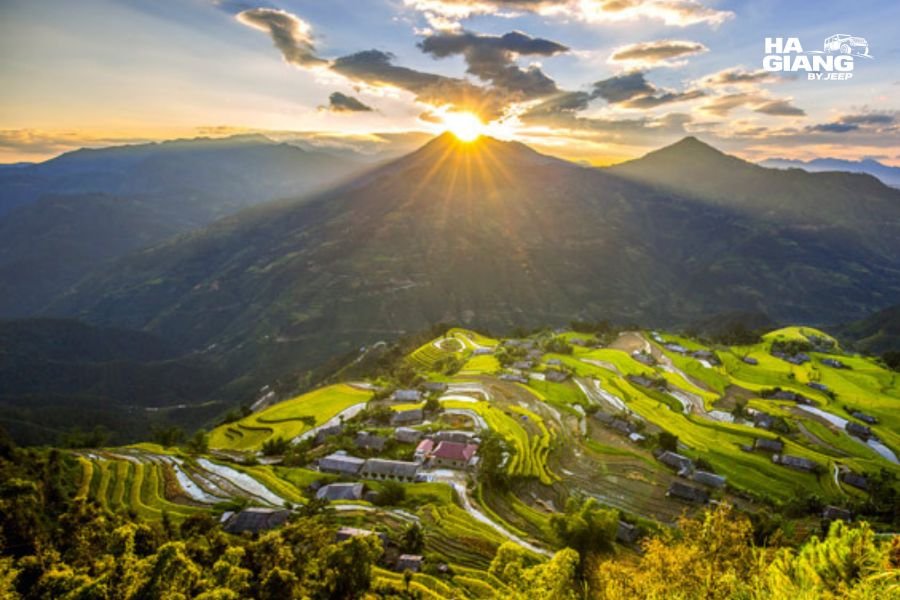
Broad, open terraces that catch the early sun. One of the most photographed parts of the district and one of the easier ones to reach.
Thong Nguyen and Nam Hong
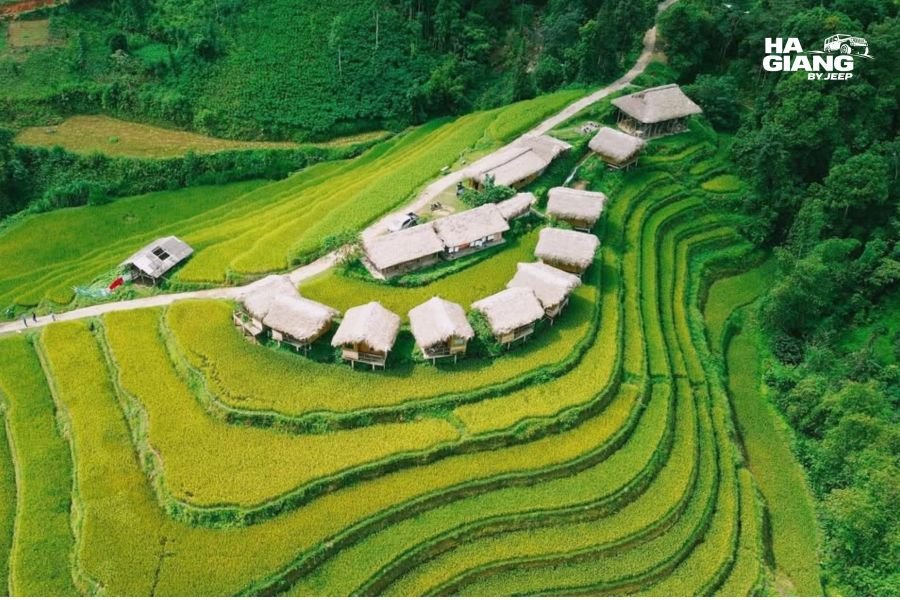
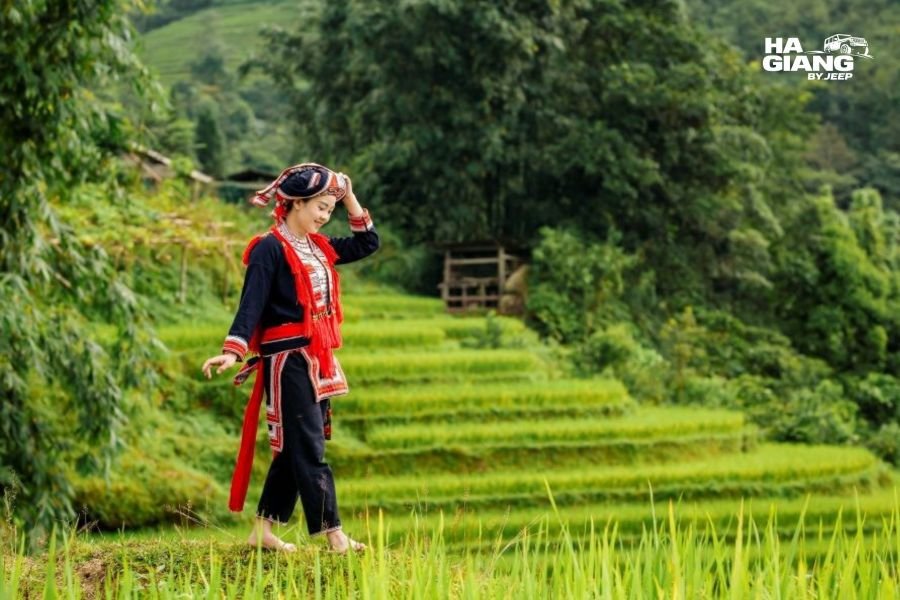
Where three streams meet, in one of the most complete terrace landscapes in Hoang Su Phi. The village of Nam Hong sits among the fields and is home to Red Dao families. Several travelers we have sent this way describe it as the moment the trip clicked.
Nam Ty
Wide amphitheatres of terraces and a reliable choice for photographers. Sunrise here, with mist below and gold above, is the shot most people have in their heads.
Ho Thau
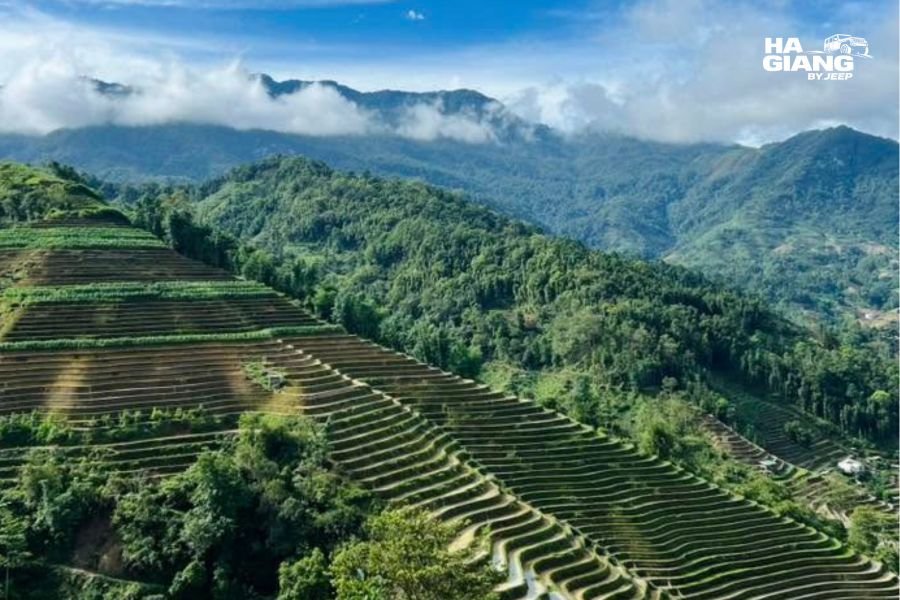
Sits above 1,000 metres, under Chieu Lau Thi, the second highest mountain in the province. Higher, cooler, cloudier. Trekking country as much as viewpoint country.
San Sa Ho
The quietest of the six and the one you will have most to yourself.
And on the Loop itself
If your trip is the classic Loop rather than a terrace expedition, you will still find terraced fields worth stopping for around Quan Ba, in the valleys below Yen Minh, on the road down to Du Gia, and around Meo Vac. In late September and early October they go gold too. Smaller in scale, but you will be pulling over for them.
Who Built All This
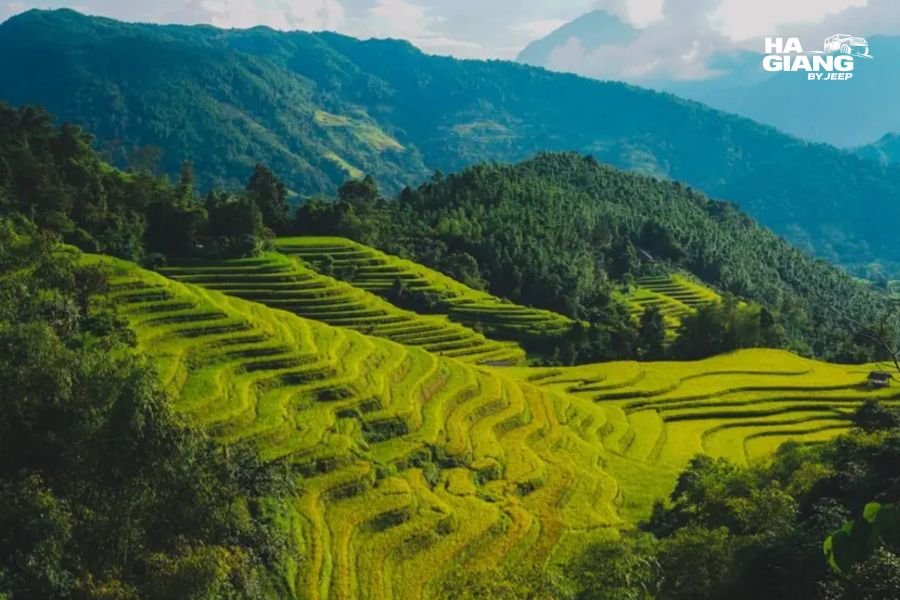
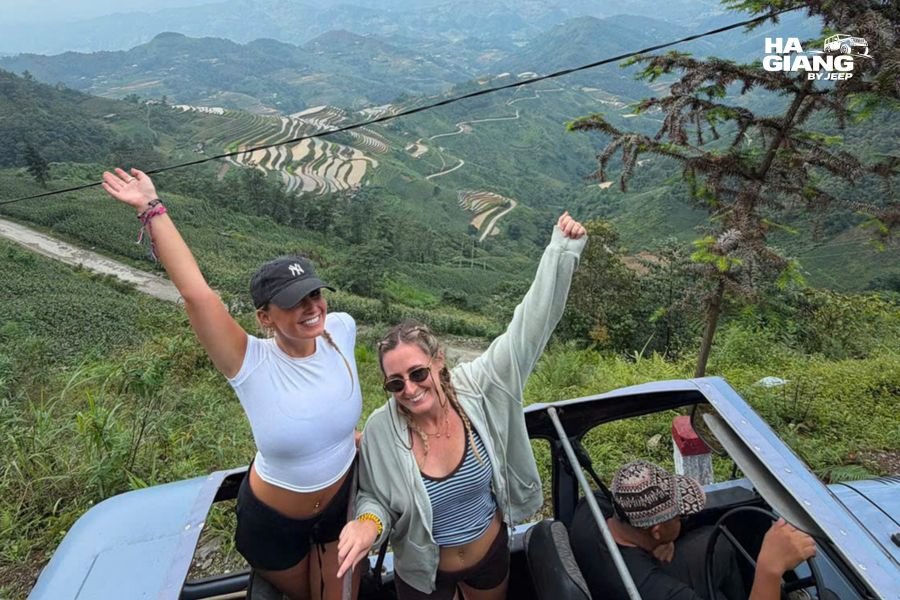
Nobody engineered these terraces from a plan. They were cut by hand, over generations, by the La Chi, Dao and Nung communities who farm this part of the province, on slopes most people would call unusable.
The genius is not the shape. It is the water. Each terrace has to be level enough to hold a flooded field, and water has to be carried from forested peaks down through hundreds of fields in sequence, each one filling and passing water to the next. The forest at the top is part of the system. Cut it and the water stops.
Vietnam recognised the Hoang Su Phi terraces as a national heritage landscape in 2012. What you are photographing is not scenery. It is infrastructure, built with hands, still in daily use.
Which is worth remembering when you step onto a terrace wall for a better angle. Those walls are structural. Stay on paths, ask before you cross a field, and if a family is working, let them work.
How to Photograph Rice Terraces
Light beats gear. A phone at 6am beats a professional camera at noon. Terraces are about edges and shadow, and midday sun erases both.
Light
- Sunrise. The single best hour of the day in terrace country. Mist in the valleys, low side light raking across the contours, and gold that actually looks gold.
- Late afternoon. Second best. Warmer, softer, and the terraces backlight beautifully when the sun drops behind the ridge.
- Overcast. Fine for green and water seasons, poor for gold. You need directional light to separate the terraces.
Composition
- Get above them. Terraces photographed from below turn into stripes. From a ridge or a high road, the pattern opens up.
- Look for a break: a house, a tree, a person cutting rice. A pure pattern is impressive for about four seconds. A pattern with a human detail in it is a photograph.
- Shoot the same view twice, an hour apart. The mist changes everything.
Practical
- Mornings are cold in October, even here. Something warm for the first hour.
- Roads in the terrace districts are narrow and winding. A vehicle that can stop at a viewpoint and wait for the mist to lift is worth more than any lens.
Fitting the Terraces Into a Real Trip
Time to be straight with you, because this is where honesty is worth more than a sale.
Our standard routes are the Loop and the Cao Bang combo. The 3 days and 4 days jeep tours run the classic Ha Giang Loop across the Dong Van Karst Plateau. The 5 days and 6 days routes carry on east into the Non Nuoc Cao Bang geopark toward Ban Gioc Waterfall. All four are superb, and in late September and early October all four pass terraced fields in gold.
None of them is a Hoang Su Phi trip. Hoang Su Phi is west, in the other direction, and doing it properly means extra days rather than a detour.
So here is the honest decision tree:
- You want the Loop, and gold terraces would be a bonus: book late September or early October. Take the 4 days Ha Giang Loop jeep tour so there is time to stop when a valley opens up rather than driving past it.
- You want Hoang Su Phi specifically: message us with your dates before you book anything. We will tell you honestly whether it fits, what it takes, and if it does not work for your schedule we will say so.
- You want to drive yourself: the Jeep Wrangler Rubicon rental gives you the freedom to go west and chase the harvest at your own pace. You need the correct licence and paperwork to drive legally in Vietnam, and rules change, so check current requirements before you commit.
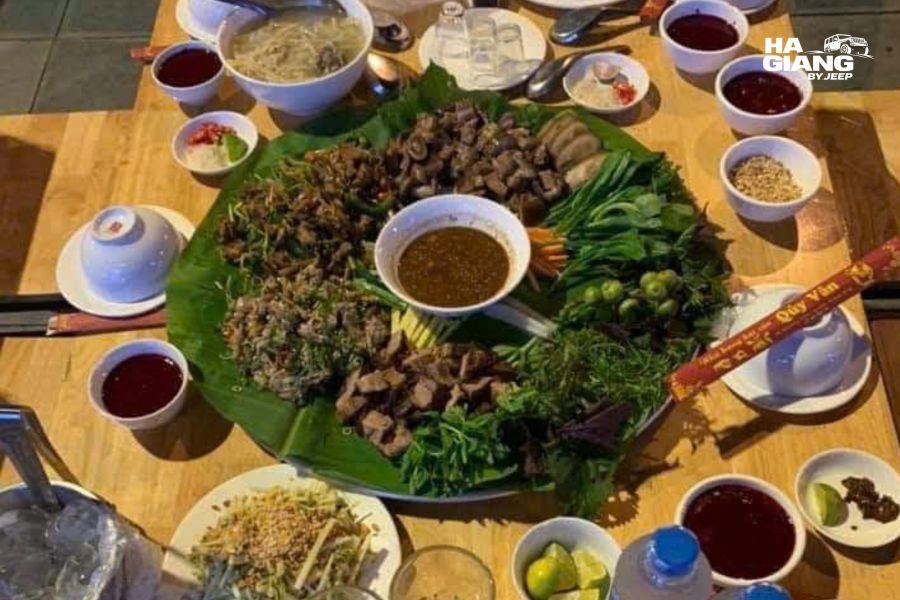
And a word on what a private vehicle actually buys you in this season. Terraces are a light game. The field that is flat and dull at 11am is extraordinary at 5pm. When the jeep is yours, you go back. You wait out the mist with a flask of tea. You stop at the homestay because someone is cooking, sit down to a bowl of com lam and a glass of ruou ngo with the family who grew the rice you are photographing, and then somebody else drives you home.
Which Jeep Tour Is Right for You?
| Option | Best for | In terrace season |
|---|---|---|
| Ha Giang Loop 3 days | Tight schedules that want the full Loop: Ma Pi Leng, Dong Van, Meo Vac | Passes terraced valleys around Quan Ba and Yen Minh. Not a Hoang Su Phi trip |
| Ha Giang Loop 4 days | The one we recommend most. Slower, with Du Gia and more village time | Du Gia adds some of the best terraced valleys on the Loop. Time to wait for the light |
| Ha Giang and Cao Bang 5 days | Adding Ban Gioc Waterfall and the Non Nuoc Cao Bang geopark | Autumn is the strongest window for the waterfall as well. Gold, then water |
| Ha Giang and Cao Bang 6 days | The deep version: Pac Bo, God's Eye Mountain, Ngoc Con Valley, 15 step pass | Most room to reorder days around weather and light |
| Jeep Wrangler Rubicon rental | Confident drivers who want to go west and find the harvest themselves | Full freedom, full responsibility. Check licence and paperwork requirements first |
Tell us what you actually want to see and we will tell you the truth about whether we are the right people for it. Book your jeep tour, message us on WhatsApp, or use the contact page. We answer 24/7 from an office in Ha Giang City, and everything we run is on the road every week at Ha Giang by Jeep.
Mistakes People Make
- Booking the Loop and expecting Hoang Su Phi. Different direction, different trip. Decide which one you are doing.
- Arriving at the end of the harvest window. Once a field is ripe it gets cut quickly. Aim for the front half of the window, not the back.
- Treating the dates as fixed. Ripening moves with the weather every year. Ask before you book, not after.
- Coming for terraces between November and February. The fields are bare. The plateau is stunning in winter, but the terraces are not the reason to come then.
- Shooting at midday. Terraces need low light. Plan your terrace days around sunrise and late afternoon and fill the middle with something else.
- Walking on terrace walls. They are structural, they belong to somebody, and they break.
- Leaving booking late for early October. It overlaps with the busiest weeks of the year here.
FAQ
When is Ha Giang rice terrace season?
There are two: the water season, roughly May into June, when the flooded terraces work as mirrors, and the golden harvest season, roughly mid September to mid October. Green rice fills July and August.
When exactly do the terraces turn gold?
Usually the last week of September into the first week of October, with higher areas like Ban Phung ripening later, toward mid October. Timing shifts every year with the weather and with each family's planting date.
Where are the best rice terraces in Ha Giang?
Hoang Su Phi district, in the west of the province. The heritage listed terraces spread across six communes: Ban Phung, Ban Luoc, Thong Nguyen, Nam Ty, Ho Thau and San Sa Ho.
Will I see rice terraces on the Ha Giang Loop?
Yes, around Quan Ba, Yen Minh, Du Gia and near Meo Vac, and they turn gold at the same time of year. They are smaller in scale than Hoang Su Phi, which is a separate journey to the west.
Can I do the Loop and Hoang Su Phi in one trip?
They are in opposite directions from Ha Giang City, so doing both properly needs extra days. Send us your dates and we will tell you honestly whether it fits.
What is the water pouring season?
Locally, mua nuoc do. Water is channelled down from the forest into the terraces before planting, and for a few weeks every field holds still water and reflects the sky. It usually runs across May and into June.
Is it worth visiting outside harvest season?
Water season is a genuinely great alternative and much quieter. Green season in July and August is beautiful but wet. From November to February the terraces are bare.
How old are the Hoang Su Phi terraces?
They have been built and extended by hand over generations by the La Chi, Dao and Nung communities. Vietnam recognised the terrace landscape as national heritage in 2012.
Is there a rice terrace festival?
The province usually runs a golden season tourism programme in Hoang Su Phi around harvest, with dates announced each year. Check the latest updates close to your trip.
What is the weather like in terrace season?
Water season sits at the start of the rainy months, so expect humidity and afternoon storms. Harvest season is the tail end of the rains, usually drying out and clearing week by week.
Can older travelers or families see the terraces comfortably?
Yes. The best viewpoints are reached by road, and in a private jeep you step out, take the photograph and get back in. No hiking is required unless you want it.
How far ahead should I book for the harvest?
As early as your dates are confirmed. Late September and early October overlap with our busiest season, and jeep availability is limited by fleet size.
The Fields Are Only Gold for a Fortnight
Ha Giang rice terrace season rewards people who plan it properly and quietly punishes people who assume. Two windows: water in May and June, gold from mid September to mid October. One location that matters most, Hoang Su Phi, and it is not on the Loop. Everything else is light, patience, and being in the right valley at 6am.
Tell us what you want to see and when you can travel. If our routes are right for you, we will show you the best of it: private 4x4, never shared with strangers, a local driver who speaks English and grew up here, soft top and heater when the weather asks for it. If our routes are not right for you, we will tell you that too.
Still deciding on the month rather than the landscape? Start with the best time to visit Ha Giang, and if pink is more your colour than gold, the Ha Giang buckwheat flower season runs a few weeks after the harvest ends.
Send us your dates
WhatsApp: +84 862 379 288 or +84 938 988 593
Email: booking@hagiangbyjeep.com
Office: Ha Giang City