
Ha Giang Buckwheat Flower Season: When and Where to Go
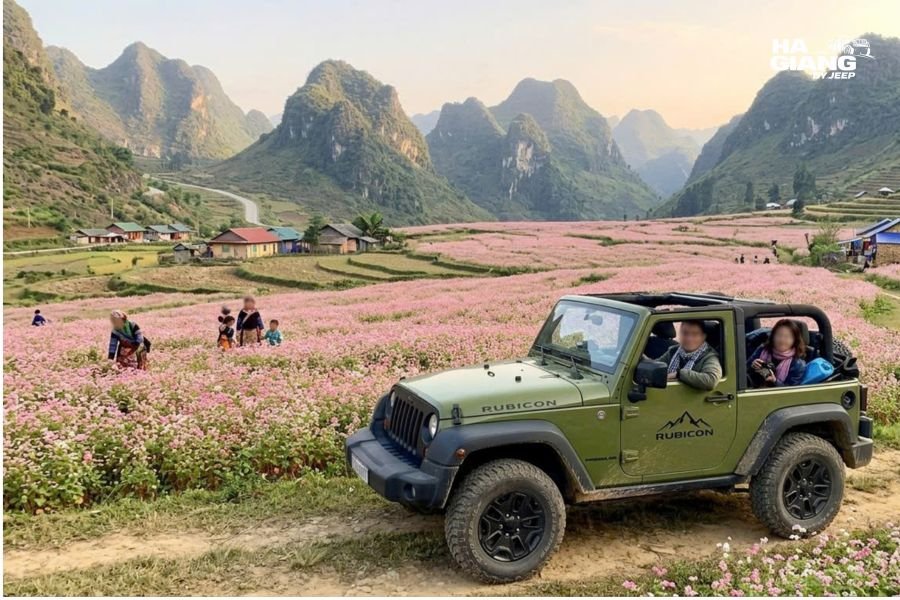
The bloom is a wave, not a switch. Show up in the wrong week at the wrong altitude and you get green stalks and a lot of other disappointed people.
Every autumn a few hundred thousand photographs of pink flowers leave this province and land on the internet, and almost none of them tell you the thing you actually need to know: the fields do not bloom all at once, and the pink you have seen only lasts a couple of weeks in any given field.
Ha Giang buckwheat flower season moves across the plateau field by field, farmer by farmer, at whatever pace each family planted. This guide is about getting the timing right. When the flowers open, how the colour changes as they age, which valleys hold the best fields, what the festival is and is not, and how to behave in a field that belongs to somebody trying to grow food in it.
We drive this plateau every week through the season at Ha Giang by Jeep, so the timing notes here come from watching the fields rather than from a press release.
What's in this guide
- When is Ha Giang buckwheat flower season?
- What tam giac mach actually is
- The colour clock: white, pink, red
- Where to find the fields
- The Buckwheat Flower Festival
- How to photograph the fields
- The part most guides skip: these are somebody's fields
- What buckwheat tastes like
- Planning around the season
- Which jeep tour is right for you?
- Mistakes people make
- FAQ
When Is Ha Giang Buckwheat Flower Season?
The short answer: mid October to late November, peaking through November. Some fields open earlier, some hold on into early December. That is the honest range, and anyone giving you a single perfect date is guessing.
Here is why the range is so wide. Buckwheat flowers roughly three weeks after it is sown. Farmers on the Dong Van Karst Plateau plant it after the corn harvest, and the corn does not come off every field on the same day. Add altitude, which changes everything up here, and you get a staggered bloom that rolls across the province rather than arriving all at once.
| Phase | Roughly when | What you will see |
|---|---|---|
| Early bloom | Mid to late October | First fields opening, mostly white and pale. Lower, warmer areas first |
| Peak | Early to late November | The postcard version. Pink across the plateau, most fields open at once |
| Late bloom | Late November into early December | Deeper pink and red tones, thinning fields, cold arriving |
What to do with that. If you have one week and you want the highest chance of pink, take the first three weeks of November. If your dates are already fixed and they fall outside that, message us and we will tell you what the fields are doing that week. We hear it from drivers on the road, not from last year's blog posts.
What Tam Giac Mach Actually Is
The Vietnamese name is tam giac mach, which translates roughly as triangle wheat, and it is a literal description. Split a buckwheat seed and it has three sides. That is the whole naming convention. No poetry required.
The plant is not decorative and it was never planted for tourists. Buckwheat grows fast, tolerates thin soil, and survives on the rocky ground of the plateau where very little else will. For generations it has been a food crop and, in hard years, a fallback when the corn or the rice fell short. Families up here still grind the seed into flour and use it.
That history matters because it changes how you look at a field. The pink carpet in your photograph is somebody's crop, planted in soil scraped together between limestone, in a place where a bad season has consequences.
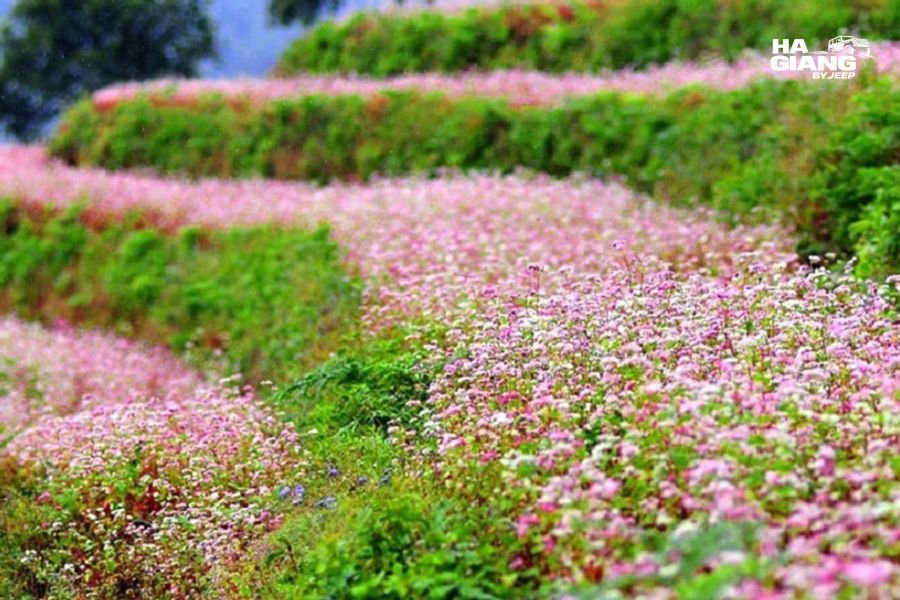
The flowers themselves are small, clustered on reddish stems, and they smell faintly sweet in the sun. Fields grow waist high in a good year, which is exactly the height that ruins a photograph when someone wades into the middle of one and flattens a path.
The Colour Clock: White, Pink, Red
This is the part almost nobody explains, and it is the difference between arriving on the right week and the wrong one.
Buckwheat does not open pink. It changes colour as it ages, on a predictable arc:
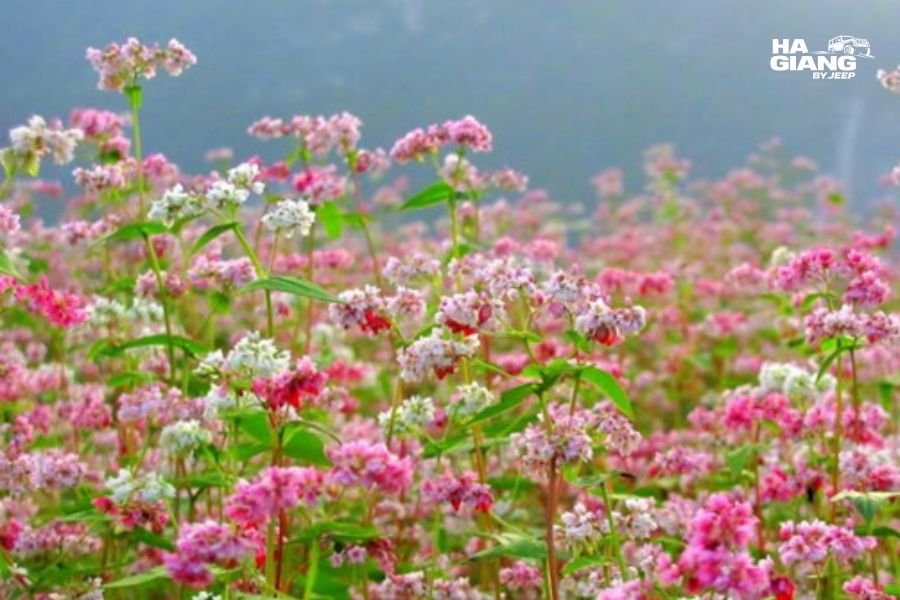
- White with a green tint. Fresh flowers, just open. Delicate, but from a distance the field reads pale and a little washed out.
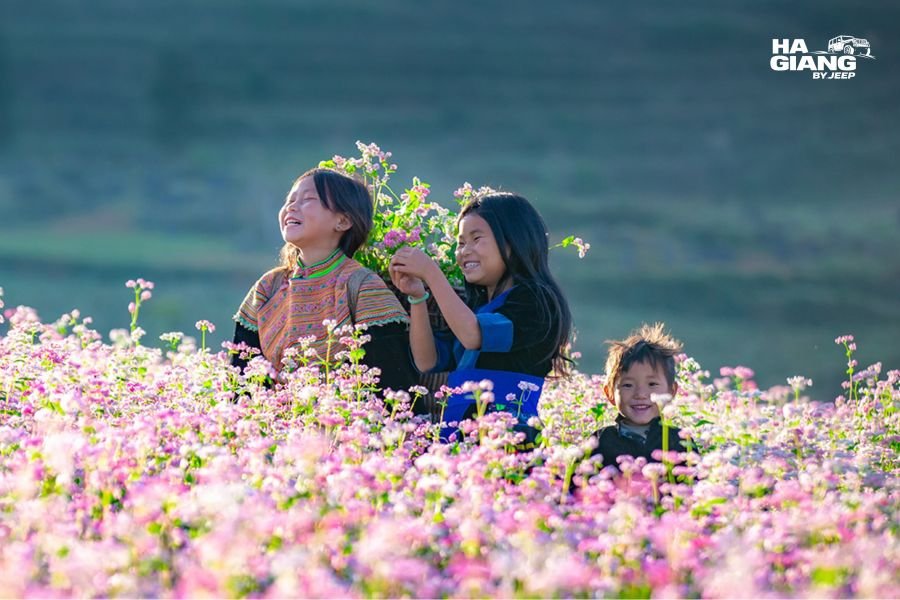
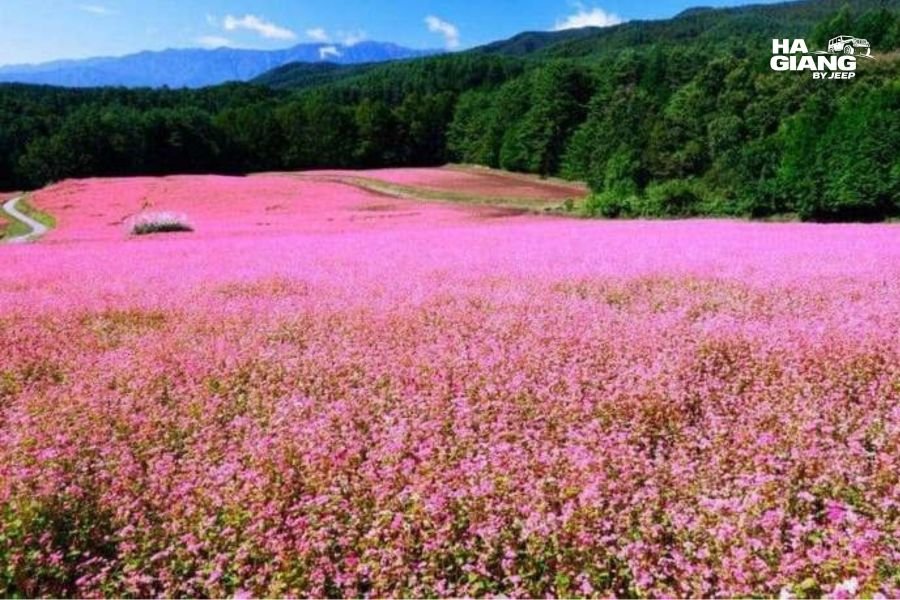
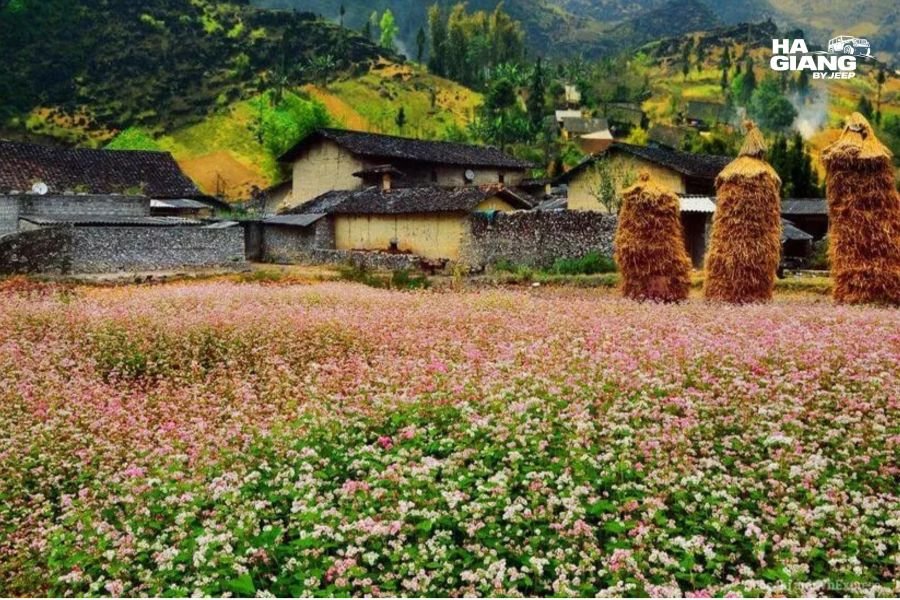
- Soft pink. A week or so in. This is the classic Ha Giang buckwheat flower season colour and the one in every photo you have seen.
- Deep pink into red and purple. Late in the life of the flower. Richer, moodier, and beautiful in low sun, though the field starts thinning.
So a single field goes white, pink, red across roughly three to four weeks. And because farmers plant on different days, you can stand at one viewpoint in November and see a white field, a pink field and a red field within a kilometre of each other.
Practical takeaway: do not judge the season by the first field you pass. Give the plateau a day. The colour you want is almost always somewhere within thirty minutes of where you are standing, and a private jeep can go and find it.
Where to Find the Fields
Buckwheat is planted right across the four highland districts of Quan Ba, Yen Minh, Dong Van and Meo Vac. These are the areas that reliably deliver.
Sung La valley and Lung Cam
The one you have seen. Sung La sits in a bowl of limestone on the road toward Dong Van, and the village of Lung Cam inside it is surrounded by fields hemmed in by stone walls and traditional earthen houses. Flowers, stone and old architecture in one frame, which is why this valley shows up in more photographs than anywhere else on the plateau. It also gets busy. Arrive early or arrive late, not at midday.
Pho Bang
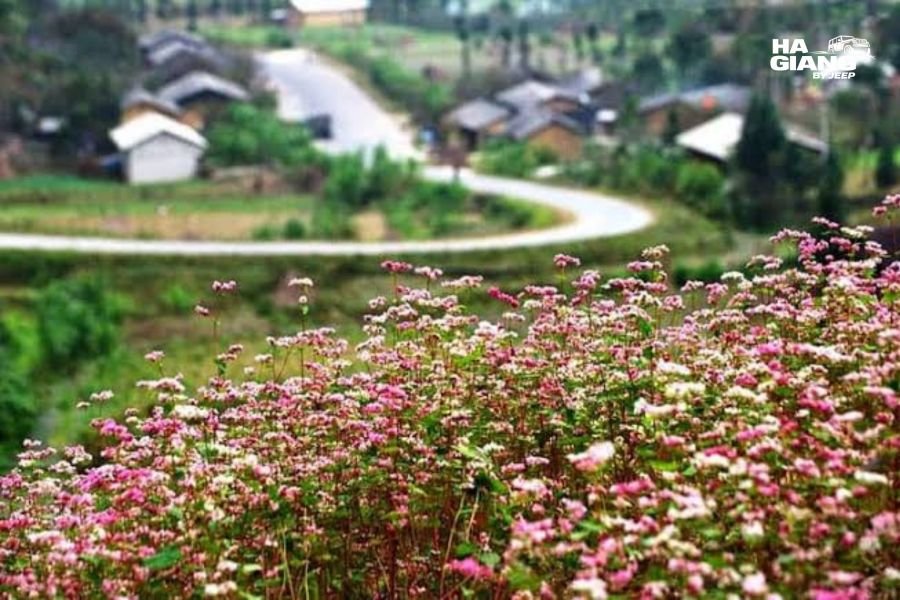
A quiet old town of clay walled houses just off the main route, and one of our favourite stops in the season. Fewer people, more atmosphere, and small fields tucked between the buildings rather than spread across a hillside. A completely different photograph.
Lung Cu and Ma Le
The fields below the Lung Cu Flag Tower, at the northernmost point of Vietnam, are a genuine highlight when they are open. The surrounding area around Ma Le carries buckwheat along the roadsides and up the terraces.
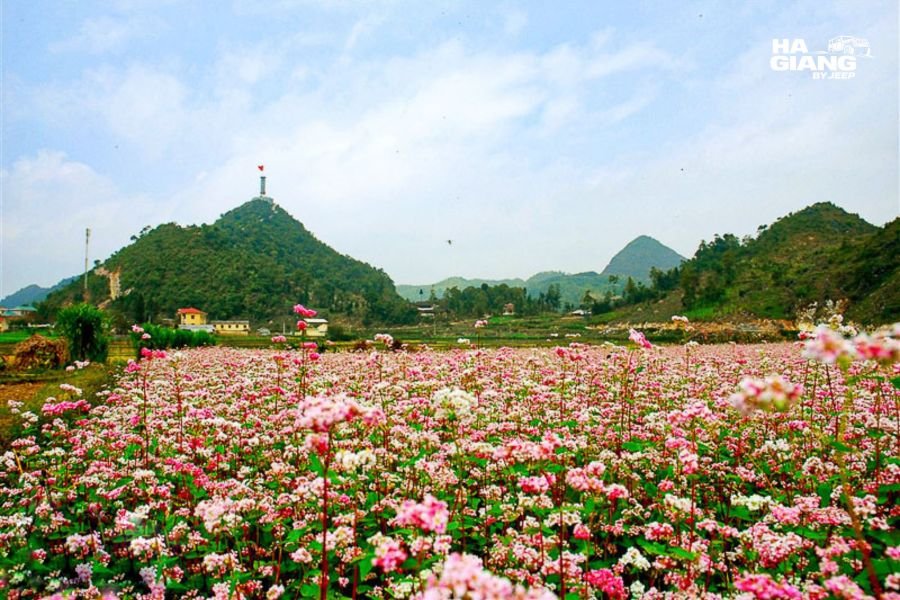
Sa Phin and the Vuong Family Palace
The valley around the old Hmong royal palace grows buckwheat in the fields on the approach. Stone, pine trees, history and flowers in the same frame.
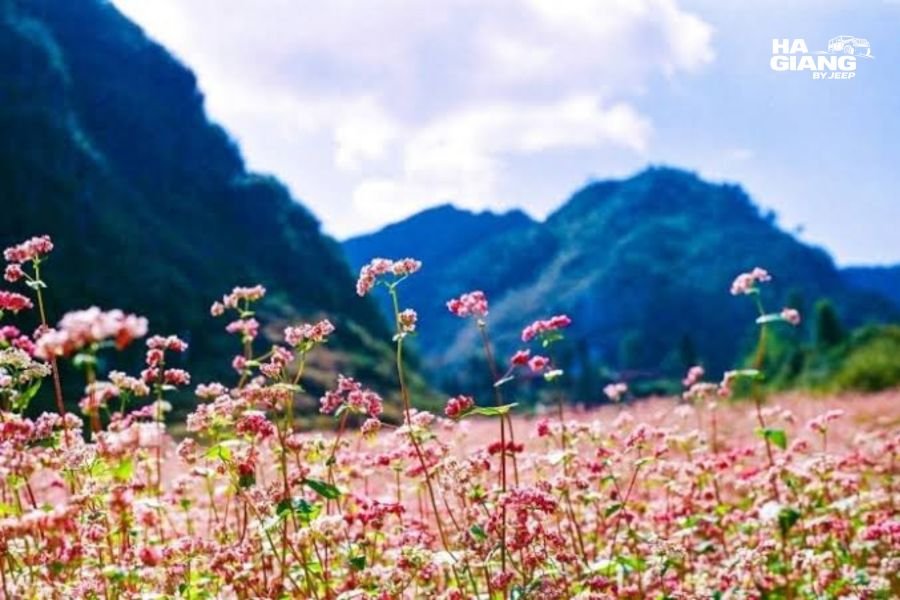
Thach Son Than, Quan Ba
Lower down, near the start of the Loop, buckwheat runs along the road past the limestone formations known as Thach Son Than. Because it sits at lower altitude, this area sometimes colours up earlier than the high plateau, which makes it a useful backup in late October.
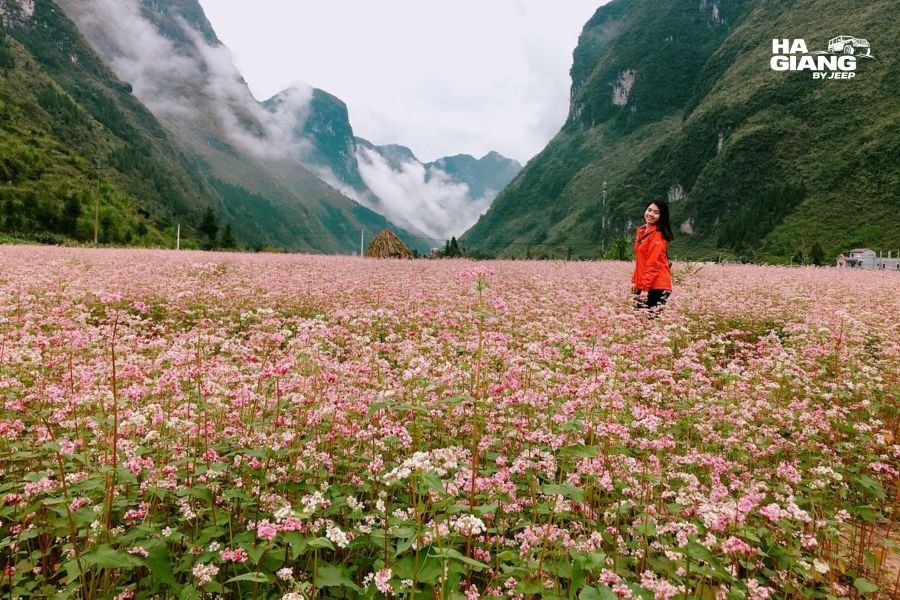
Ma Pi Leng and the roadside strips
Not fields exactly, but bands of buckwheat planted along the shoulder of the pass, with the Nho Que canyon dropping away behind them. Difficult to stop for on two wheels. Very easy to stop for when the vehicle is yours and the driver can simply pull over.
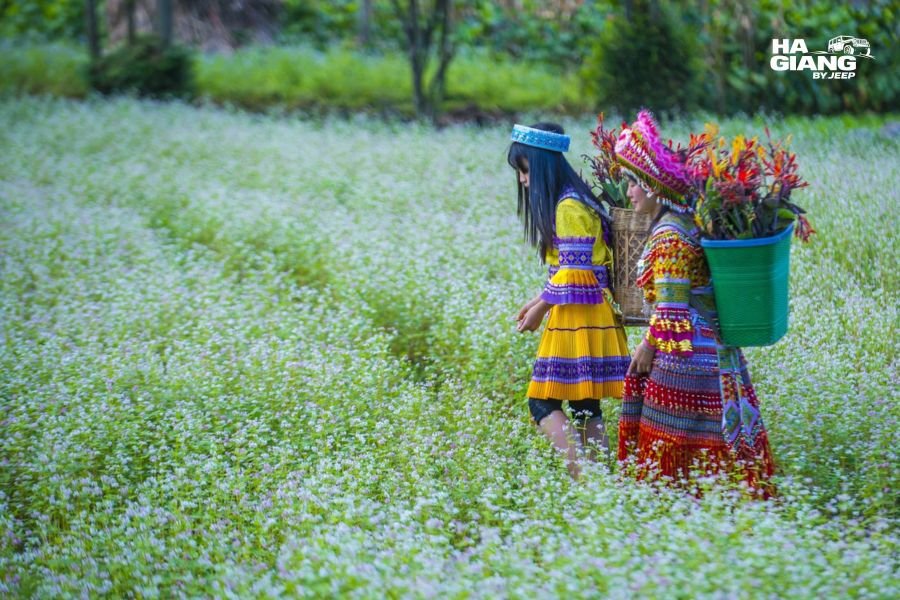
Meo Vac
The valleys around Meo Vac hold late fields, and the town is worth timing with a Sunday market anyway.
A note on chasing fields
No fixed itinerary can promise you a specific field in bloom on a specific day, and any operator who does is telling you what you want to hear. What we can do is drive out in the morning already knowing which valleys opened this week, and change the running order of the day accordingly. That is the practical value of a private vehicle in this season.
Ask what's blooming See the 4 days jeep tourThe Buckwheat Flower Festival
Ha Giang province runs an annual Buckwheat Flower Festival, usually held in November and usually centred on Dong Van, with the programme and exact dates announced each year by the provincial authorities. Past editions have included traditional music and dance from the Hmong, Dao, Tay and other local communities, craft demonstrations, buckwheat cake making, food stalls, and a range of cultural and sporting events across the plateau.
Two honest caveats.
First, dates and venues change from year to year and are not always confirmed far in advance. We are not going to print a date here that turns out to be wrong. Check the latest updates from official Ha Giang tourism channels close to your trip, or ask us and we will tell you what has actually been announced.
Second, and more usefully: you do not need the festival. The flowers are the event. The fields bloom whether or not there is a stage in Dong Van, and some of our best days in this season are spent nowhere near the official programme. If your dates coincide, enjoy it. If they do not, you have lost nothing.
If you do want the festival, book early. It coincides with the busiest weeks of the year on the Loop.
How to Photograph the Fields
You do not need expensive gear. You need to be in the right place at the right hour, which is mostly a scheduling problem rather than a photography one.
Light
- Early morning and late afternoon. The plateau is high and the midday sun is harsh. It flattens the pink and blows out the white. Golden hour makes the flowers glow and lays long shadows across the terraces.
- Backlight is your friend. Shoot into the low sun through the flowers rather than with the sun behind you. The petals go translucent.
- Overcast is not a write off. Soft grey light saturates the pink beautifully. Some of the best buckwheat photographs are taken on unremarkable days.
Composition
- Get low. A field shot from standing height reads as a pink smear. From knee height, individual flowers separate out and the field gains depth.
- Use the stone. Buckwheat against grey limestone, an old wall or an earthen house is far more interesting than buckwheat against sky.
- Include a person, small in the frame, for scale. The plateau is enormous and photographs rarely convey it.
Practical
- Mornings on the plateau in November are cold. Batteries drain faster in cold air, so carry a spare and keep it warm.
- Fog is common at dawn in late season and usually lifts through the morning. A grey 7am is not the end of the day, so do not put your best field first on the schedule.
For the full picture on what the sky is likely to be doing while you are here, see our guide to Ha Giang weather by month.
The Part Most Guides Skip: These Are Somebody's Fields
Here is the bit that gets left out of the pretty articles, and it matters more than any of the photography advice above.
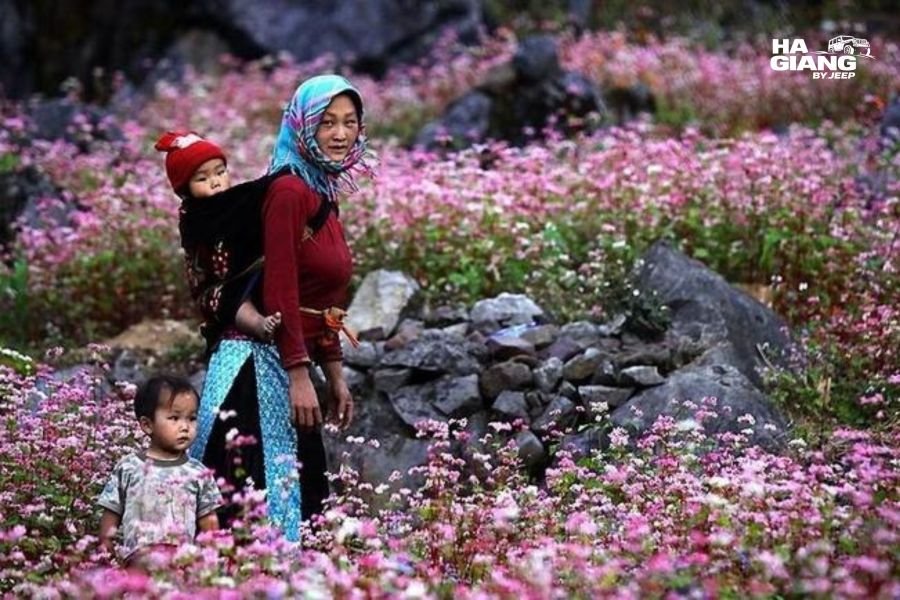
Almost every field you want to photograph is private farmland. It belongs to a family. The flowers are a crop. What looks like a scenic backdrop to you is somebody's food and income.
A few rules that will keep you welcome up here:
- Ask before you enter. A gesture and a smile is usually enough. If someone says no, that is the end of it.
- Expect a small fee at popular spots. Many families now charge a small amount to let visitors into their field for photographs. This is entirely fair, and it is a rare case of tourism money going directly to the people whose land is being photographed. Amounts vary and change, so carry small notes and ask rather than assume.
- Walk the edges, not the middle. Trampled buckwheat does not stand back up. A path stamped through the centre of a field ruins the crop for the farmer and the photograph for everyone behind you.
- Do not sit or lie in the flowers. It is a plant, not a prop.
- Take your rubbish with you. Obvious, and still necessary to say.
Drivers who grew up here know which families are happy to have visitors, which fields are off limits, and how to ask properly in the local language. That is worth more in this season than any list of coordinates.
What Buckwheat Tastes Like
The seed is the reason the crop exists, and you can eat your way through the season.
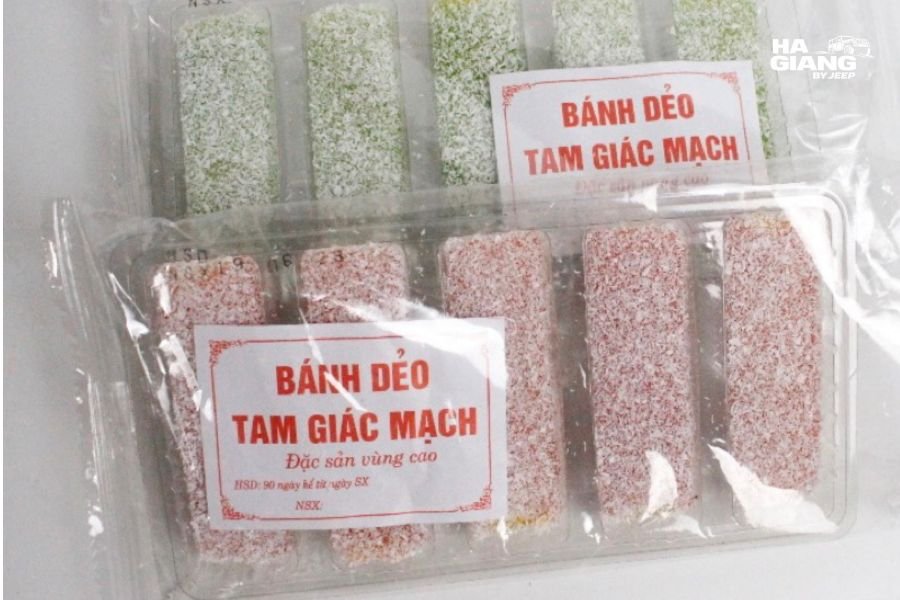
Banh tam giac mach, buckwheat cake, is the one to try. Ground buckwheat flour pressed into flat rounds and grilled over coals, usually sold at markets and roadside stalls through the season. Dense, faintly nutty, a little dry, and much better hot off the fire than cold from a plastic bag. Buy it where you can see the coals.
You will also find buckwheat in porridge and noodles, and turned into a local buckwheat wine, sold alongside the more common ruou ngo, the corn wine that turns up at every homestay dinner on the plateau.
While you are eating your way around: thang den on a cold Dong Van evening, glutinous rice balls in hot ginger syrup. Banh cuon trung for breakfast with a bowl of hot broth. Com lam, rice cooked in bamboo, from a market stall. And chao au tau, the thick warming porridge sold in Ha Giang City in the evenings, which comes into its own once November turns cold.
There is a quiet advantage to doing this season in a jeep that nobody mentions until they experience it. You stop at whichever stall smells right, at whichever market you happen to pass. You sit down. You have a glass of corn wine with the family who poured it, and then you get back in the car and someone else drives. In a season built around cold mornings, hot food and hospitality, that is not a small thing.
Planning Around the Season
The weather. November is one of the best weather months of the year here: dry, clear and cool, with cold arriving properly in the last week. The plateau runs colder than the forecast for Ha Giang City, so pack layers and a real jacket for the evenings.
The crowds. Buckwheat season overlaps with the busiest weeks on the Loop. Homestays in Dong Van and Meo Vac fill first and the good rooms go early. Weekends around the festival are the heaviest.
Booking. Once you have a confirmed travel date, book as soon as you can. Most of our guests reserve one to three months ahead, and in November that is not a sales line: our fleet is limited by the number of vehicles we own, and when they are out, they are out.
Flexibility. Build in a spare day if you can. The bloom moves. Twenty four hours of slack is the difference between finding the field and hearing about it afterwards.
If you are still choosing between months rather than locking in November, our guide to the best time to visit Ha Giang lays out the whole calendar.
Which Jeep Tour Is Right for You?
| Option | Best for | In buckwheat season |
|---|---|---|
| Ha Giang Loop 3 days | Short schedules that still want the full Loop: Ma Pi Leng, Dong Van, Meo Vac | Covers the main fields around Sung La, Lung Cu and Dong Van. Less room to go hunting |
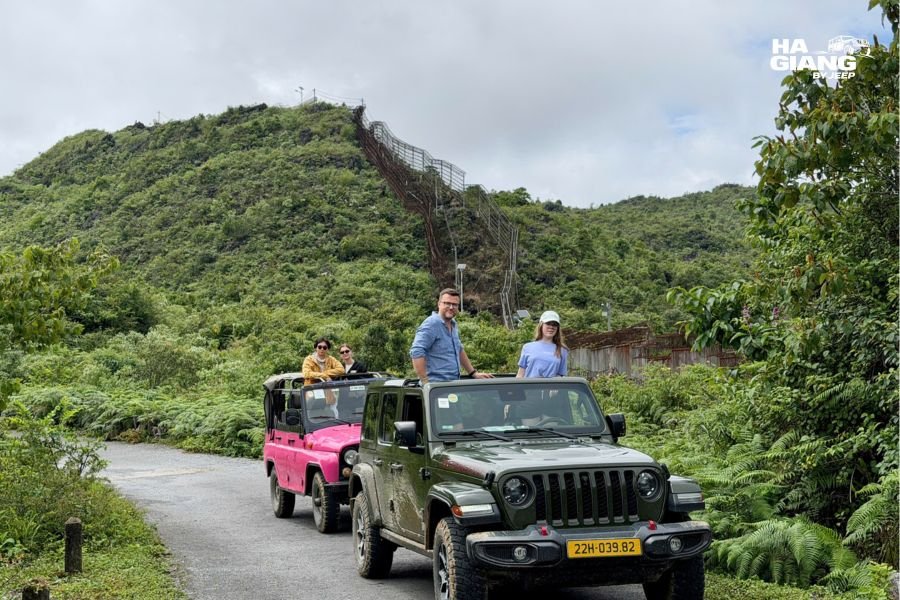
| Ha Giang Loop 4 days | The one we recommend most in this season. Slower, with Du Gia and more village time | The extra day is what lets us chase the fields that are actually open that week |
| Ha Giang and Cao Bang 5 days | Adding Ban Gioc Waterfall and the Non Nuoc Cao Bang geopark | Autumn is also the strongest window for the waterfall. Flowers, then water |
| Ha Giang and Cao Bang 6 days | The deep version: Pac Bo, God's Eye Mountain, Ngoc Con Valley, 15 step pass | Maximum flexibility to reorder days around bloom and weather |
| Jeep Wrangler Rubicon rental | Confident drivers who want the plateau on their own terms | You find your own fields. You need the correct licence and paperwork to drive legally in Vietnam, and rules change, so check current requirements first |
Tell us your dates and we will tell you honestly what the fields are likely to be doing. Book your jeep tour, reach us on WhatsApp, or use the contact page. We answer 24/7 from an office in Ha Giang City and we handle the border zone permits for Lung Cu and the northern fields.
Mistakes People Make
- Booking for a specific field. The bloom is a wave, not a schedule. Book the week, not the photograph.
- Assuming the whole plateau is pink. In any given week some fields are white, some are red, some are already cut. That is normal.
- Going only at midday. Harsh sun kills the colour. The same field at 4pm is a different photograph.
- Walking into the middle of a field. It flattens the crop, and it will be in the background of everyone else's picture too.
- Believing an unverified festival date. Programmes shift. Check official channels close to your trip.
- Leaving booking until October. November is our busiest month. Fields are free. Vehicles and rooms are not.
- Packing for tropical Vietnam. Late November evenings on the plateau are cold. Bring a proper jacket.
FAQ
When is Ha Giang buckwheat flower season?
Roughly mid October to late November, with the peak through November. Some fields hold on into early December. Timing shifts each year with planting dates, altitude and weather.
When is the peak bloom?
Usually the first three weeks of November. That is the window with the highest chance of finding pink fields across the plateau rather than in one or two spots.
Why are some fields white instead of pink?
Because the flowers change colour as they age. They open white with a green tint, turn soft pink after about a week, then deepen toward red and purple before the field thins out.
Where are the best buckwheat fields in Ha Giang?
Sung La valley and Lung Cam village, the fields below Lung Cu Flag Tower, Pho Bang, the Sa Phin valley near the Vuong Family Palace, Thach Son Than in Quan Ba, and the roadside strips along Ma Pi Leng Pass.
When is the Buckwheat Flower Festival?
It is an annual provincial festival usually held in November, most often centred on Dong Van. Dates and the programme are announced each year, so check the latest updates rather than relying on last year's schedule.
Do I need to go to the festival to see the flowers?
No. The fields bloom regardless. The festival adds culture, performance and food, but the flowers are not confined to festival week.
Can I walk into the fields?
Ask first. Almost all of them are private farmland. Many families charge a small fee for photographs, which is fair, and you should walk the edges rather than trampling the crop.
Is buckwheat season crowded?
The main viewpoints and Sung La can be busy, especially at weekends and around the festival. Early mornings, late afternoons and the quieter valleys are the answer, and a private vehicle makes both easy.
What is the weather like during buckwheat season?
November is generally dry, clear and cool, with cold settling in late in the month. The plateau runs colder than the forecast for Ha Giang City, so bring layers.
Can you still see flowers in December?
Sometimes, in late fields, especially in the first part of the month. The colour is deeper and the fields are thinner. It is a gamble rather than a plan.
How far in advance should I book?
As soon as your dates are confirmed. Most guests book one to three months ahead, and November fills first because jeep availability is limited by fleet size.
Can we combine buckwheat season with Ban Gioc Waterfall?
Yes. Our 5 days and 6 days routes cross from the Dong Van Karst Plateau into the Non Nuoc Cao Bang geopark, and autumn is a strong window for the waterfall as well as the flowers.
Come for the Flowers, Stay for the Plateau
Ha Giang buckwheat flower season is one of the few things in travel that lives up to the photographs, provided you understand what you are looking at: a working crop, planted on rock, that happens to turn an entire plateau pink for a few weeks a year.
Get the timing roughly right, keep a day spare, be decent to the people whose fields you are standing in, and it will be the best week of your trip.
Whichever week you choose, the vehicle does not change. Private 4x4 every time, never shared with strangers. A local driver who speaks English, born on these passes, who knows which valleys opened this week. Soft top and heater for the cold mornings, open air when the sun is out. Two UNESCO Global Geoparks if you take the long route.
Send us your dates
We will tell you the truth about them, including what the fields are likely to be doing that week.
WhatsApp: +84 862 379 288 or +84 938 988 593
Email: booking@hagiangbyjeep.com
Office: Ha Giang City