
Ha Giang Market Food: What to Order at a Sunday Market
The highland markets of Ha Giang are not primarily for tourists. That is exactly why the food is worth going for.
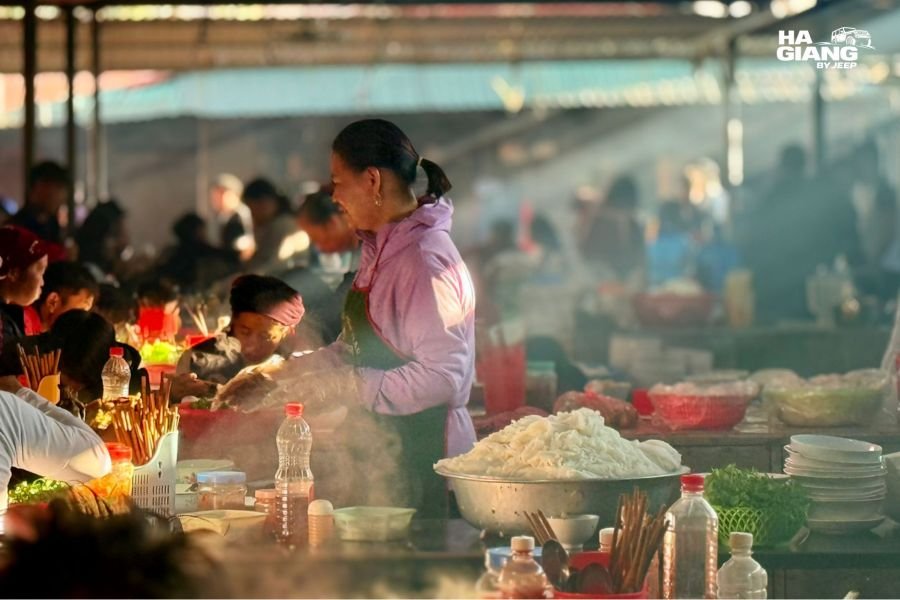
Chợ phiên, the rotating highland markets of Ha Giang, run on a cycle that means each village and town has its market day roughly once a week. Dong Van on Sunday. Meo Vac on Monday. Khau Vai at specific dates tied to the lunar calendar. The markets are where the plateau communities come to trade, meet and eat, and the food section of a highland market is one of the most honest eating experiences in northern Vietnam.
This guide covers what to look for, what to order, what to approach with curiosity and what to skip if your stomach requires persuasion. It also explains why a private jeep with a local driver changes how well the market food experience works.
Table of Contents
1. What highland markets are and why the food is different 2. Thang co: the dish everyone warns you about 3. Com lam: the dish no one warns you about because it is universally good 4. Banh cuon trung: the breakfast stop 5. Thang den: the sweet version of the market 6. Chao au tau: a bowl worth knowing 7. The grilled things 8. Ruou ngo: corn wine and what to do about it 9. What to eat if you are vegetarian 10. The highland ingredients you have not seen before 11. How to navigate a market food section 12. Which jeep tour is right for you 13. Frequently asked questions
What Highland Markets Are and Why the Food Is Different
Highland markets in Ha Giang are not craft markets or tourist markets. They are functional trading events where farming communities come to sell what they produce: livestock, vegetables, medicinal plants, fabric, tools. The food section exists to feed the people who have walked for hours to get there.
This is why the food is as good as it is. The customers are local families who eat here regularly and would not come back to a stall that was not worth it. The feedback loop is immediate and unforgiving in a way that tourist-facing food is not.
The market food section is usually in a covered area with low wooden tables, plastic stools and a fog of smoke from the cooking fires. The smell is the first thing: broth, charcoal, corn wine and the particular smoke of bamboo tubes being heated. The sound is the second: a specific kind of busy that is not the city.
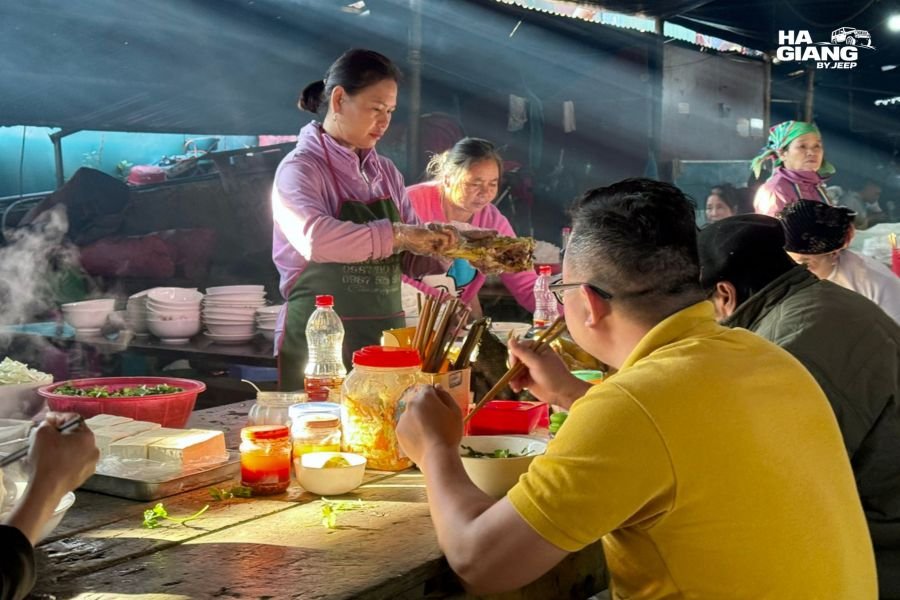
Finding the food section is usually simple: follow the smoke and the people eating. A local driver who has been to these markets their whole life knows which stalls are worth eating at, which is the most practical advantage of the private vehicle for food-focused travelers.
Thang Co: The Dish Everyone Warns You About
Thang co is the ha giang market food that appears in every article about the highlands, usually with a warning. The warning is accurate and worth taking seriously, but it misses the larger point.
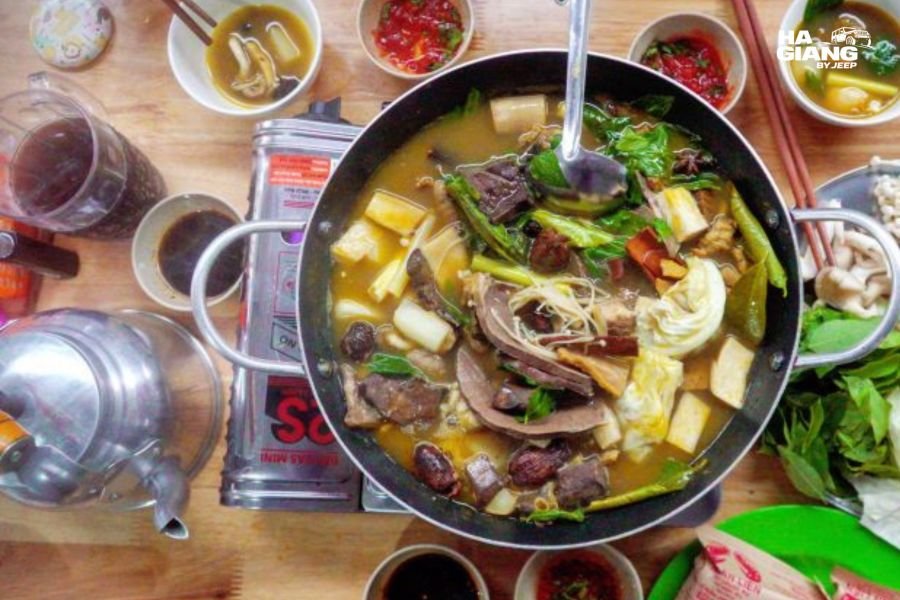
Thang co is a stew, traditionally made with horse meat and offal, cooked in a large pot for a long time with spices including five-spice, star anise and local herbs. The pot is typically started at the market and kept simmering across the day, which means the stew gets deeper and more concentrated as the morning goes on. The serious thang co drinkers arrive early; by afternoon the pot is sometimes gone.
The warning is that thang co, made traditionally, uses every part of the animal. The specific parts vary. Some bowls are manageable by almost everyone. Some are challenging. The honest approach is to look at the pot before you sit down and make a decision based on what you see rather than what an article says.
The cultural dimension: thang co is what you drink at a market among the H'Mong people. It is a social food as much as a sustenance food. Sitting at a thang co stall with a bowl and a glass of corn wine alongside local men who came down from the mountain that morning is one of those experiences that does not translate into photographs but stays with you.
If you are going to try one challenging thing at a highland market, thang co is the right choice.
Com Lam: The Dish No One Warns You About Because It Is Universally Good
Com lam is sticky rice cooked inside a green bamboo tube. The rice is packed into the tube with a small amount of coconut milk, the tube is sealed with a bamboo leaf and then roasted over a fire until the bamboo chars on the outside.
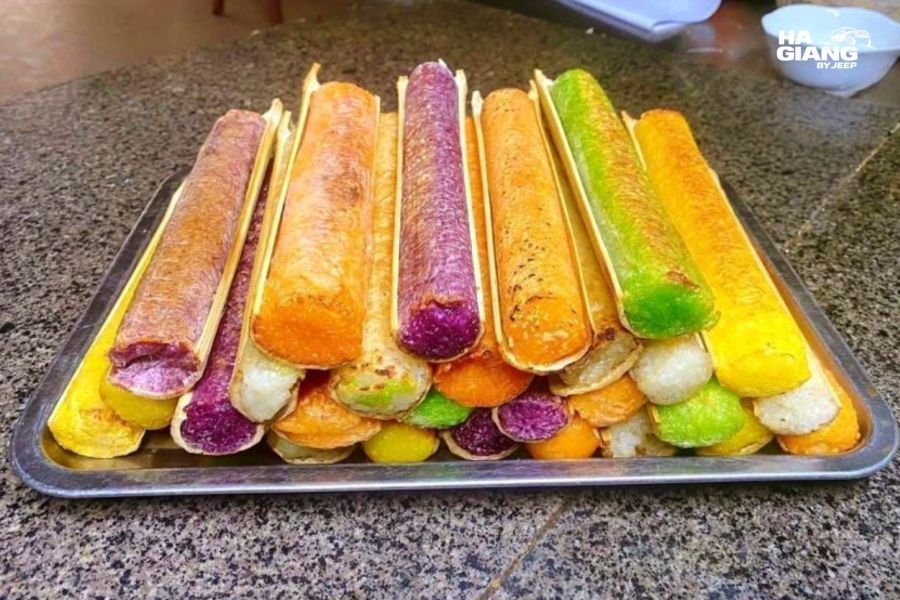
You peel back the charred outer layer of bamboo and eat the rice from the tube or tip it onto a leaf. The rice has absorbed both the bamboo flavor and, if coconut milk was used, a slight sweetness. The outer layer of rice that was against the bamboo has a faint char that makes it slightly different from the inner layers.
Com lam is sold at roadside stalls across the highlands and at every market. It is the safest and also one of the best things you will eat in Ha Giang. The combination of bamboo, smoke and sticky rice is specific to this region and its elevation. It does not taste exactly like this anywhere else.
Pairs well with: whatever else is on the table. Com lam functions as the starch that goes alongside everything from thang co to grilled meat to a bowl of pickled vegetables.
Banh Cuon Trung: The Breakfast Stop
Banh cuon is steamed rice rolls, a dish that exists across northern Vietnam, but the highland version, banh cuon trung, adds an egg. The roll is steamed fresh to order, laid flat on a banana leaf or a plate, the egg cracked onto the hot rice sheet and then everything rolled together with a small amount of pork filling and served with dipping sauce and fresh herbs.
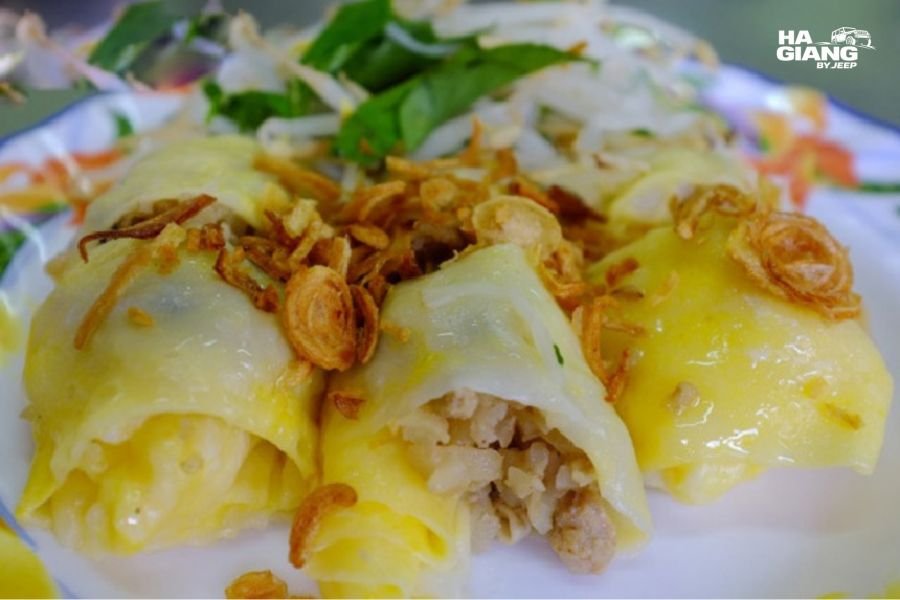
The texture is the main attraction: the rice sheet is soft and slightly gelatinous in a way that is distinct from noodles or bread. Fresh herbs, usually shiso and coriander, add a clean note to a dish that would otherwise be entirely soft in texture.
Banh cuon trung appears at market food sections in the morning and is often gone by midday. If your itinerary includes an early market arrival, this is the first stop.
Thang Den: The Sweet Version of the Market
Thang den is a sweet drink made from black glutinous rice that has been roasted, ground and simmered with sugar and ginger. The result is a thick, dark liquid served hot in a small bowl. The flavour is deep, slightly smoky from the roasting, and warmed by the ginger.
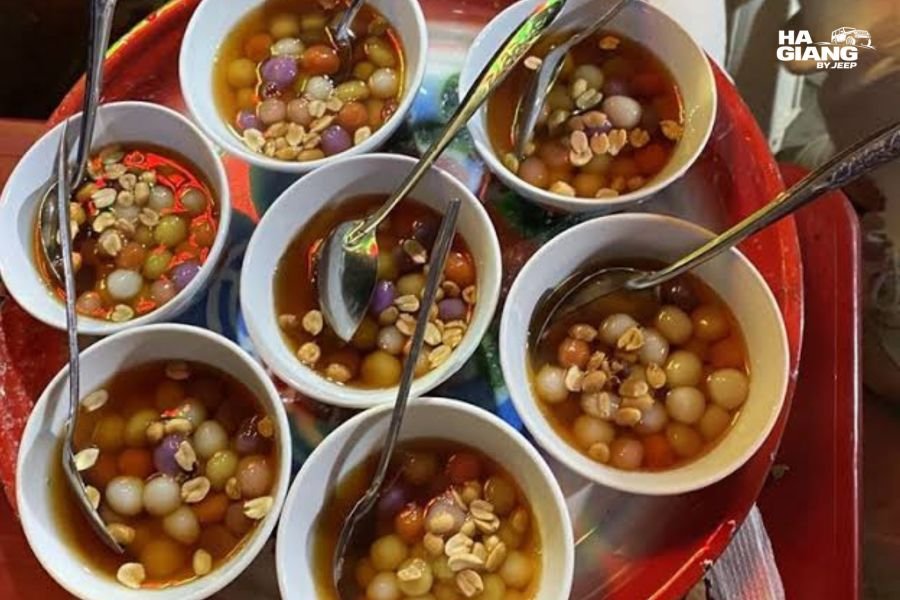
It is not a dessert in the formal sense, more of a warming drink that appears at markets in the cooler months. In winter and early spring, a bowl of thang den at a market is one of those small specific things about the highlands that travelers remember specifically.
It is accessible to almost everyone, including those who are cautious about market food generally. The flavour is unusual but pleasant, and it is served in small enough quantities that trying it does not require commitment.
See the Ha Giang Loop jeep tours
Chao Au Tau: A Bowl Worth Knowing
Chao au tau is a rice porridge made with the root of the monkshood plant, known locally as au tau. Monkshood is toxic when raw; the preparation method involves prolonged cooking and specific handling that neutralises the toxic compounds. The resulting porridge has a slightly numbing quality on the tongue from the residual alkaloids, which is a feature rather than a fault.
It is warming, thick, slightly medicinal in character and eaten mainly in the colder months. The numbing quality is subtle and most people describe it as interesting rather than alarming.
A note on caution: chao au tau should only be eaten from stalls where it is clearly freshly and properly prepared. This is a case where eating from a busy, well-established stall that local families are clearly returning to is the right instinct. Avoid eating it from sources where the preparation is unclear.
The Grilled Things
Around the edges of the main market food area, and sometimes along the road approaching the market, there are usually stalls selling grilled meat. What is on offer varies by season and market but typically includes:
- Grilled corn (bap nuong) brushed with fat and slightly charred
- Grilled chicken or pork on skewers
- Blood sausage (doi) grilled until the casing chars
- Grilled fish in some markets, particularly those near rivers
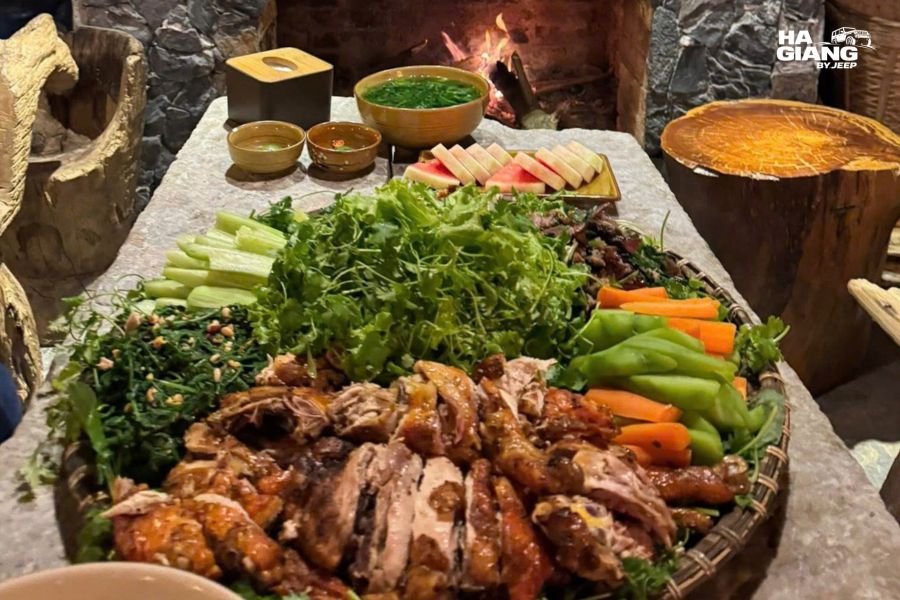
The grilled items are the easiest entry point to market food for travelers who are uncertain about the more unfamiliar dishes. The smell guides you to them. The visual check is easy: if the fire is going and the local families are eating, the quality is fine.
Ruou Ngo: Corn Wine and What to Do About It
Corn wine, ruou ngo, is the local spirit and it is woven into the social fabric of the highland market in a way that is impossible to separate from the food experience.
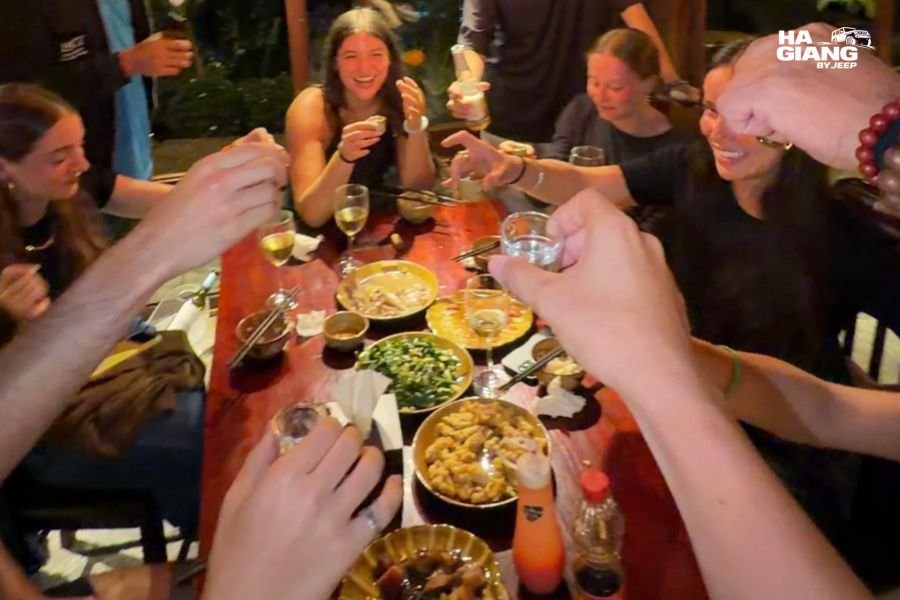
It is distilled from fermented corn and varies in strength and quality from stall to stall. The best versions have a clean, slightly sweet character. The rougher versions are rougher. A small glass with thang co at a market stall, poured by someone who is genuinely pleased you are sitting at their stall: this is one of those things that a description does not capture well.
The practical note: ruou ngo at a morning market hits differently than an evening drink. If your itinerary has road ahead of you after the market, this is a place where the private jeep arrangement genuinely changes what is possible. You drank the corn wine with the thang co. Your driver is your driver.
What to Eat If You Are Vegetarian
Highland markets are not set up for vegetarian eating and the default assumption across the food section is that meat is included in everything. That said, there are options.
- Com lam is naturally vegetarian when made without meat alongside
- Banh cuon trung can be ordered without pork filling, the egg version alone is genuinely good
- Fresh vegetables and pickled vegetables are sold throughout the market and eaten simply with rice
- Fruits in season, particularly what is available at the highland altitude in autumn and winter
- Thang den is vegetarian
The Highland Ingredients You Have Not Seen Before
Even if eating at the market is not the primary goal, walking through the produce section is worth the time.
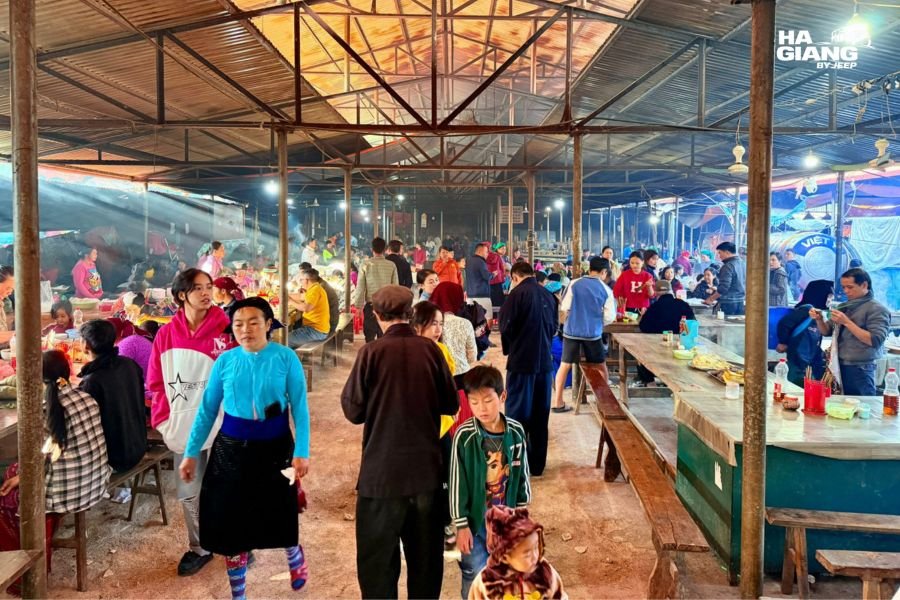
The highland markets of Ha Giang carry ingredients that are specific to the altitude and the communities that farm here. Things that appear in the markets but not in the cities:
- Mac khen (Sichuan pepper from the mountains, different from the cultivated version)
- Wild herbs that do not have common English names
- Dried medicinal plants used in both cooking and traditional medicine
- Highland mushrooms in season
- Black sesame paste in blocks for making thang den at home
- Highland rice varieties in unhusked form
How to Navigate a Market Food Section
The food section of a highland market is not a tourist food court. There are no menus in English and sometimes no menus at all. The way to navigate it is practical.
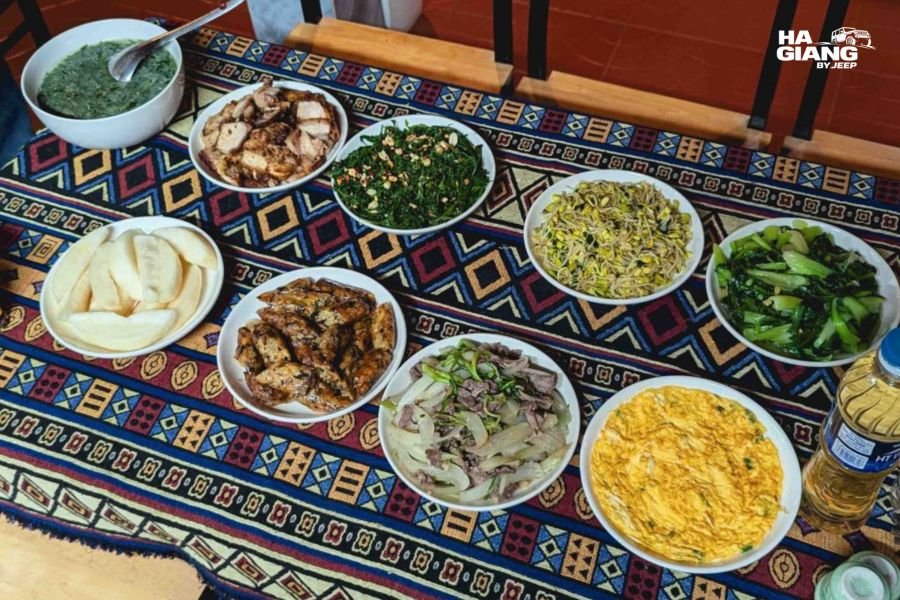
Walk through first. Before sitting down at anything, walk through the food section and look at what is cooking. The pots that are full of people eating are the ones worth stopping at.
Your driver is invaluable. A local driver from the highlands knows these markets from childhood. They know which stall has been there for thirty years and which one appeared last month. They know what is good at this particular market and what to avoid. Using their judgment is not laziness; it is the most effective way to eat well.
Sit where locals sit. The plastic stool next to a local family is the right seat. The empty table at the edge of the food section is usually empty for a reason.
Order by pointing. Language is not usually a barrier in the way people expect. Point at what you want to try. Hold up fingers for quantity. Pay what is asked or what is shown.
Eat early. The best food at a highland market is the morning food. The thang co pot is freshest. The banh cuon trung is still being made. The grilled things are going at full pace. By midday, many stalls are packing up.
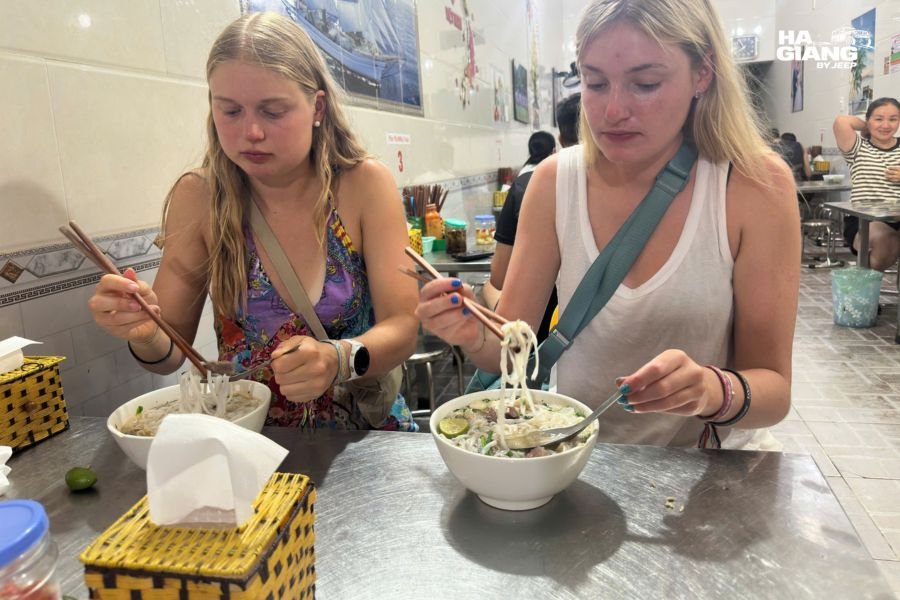
On the subject of hygiene: highland market food is prepared and eaten differently from a restaurant. The stalls are outdoors. The bowls are washed in buckets. The cooking is over wood fires. For the large majority of travelers, this causes no problem at all. A small percentage have sensitive stomachs and know this about themselves already.
The bowl of local soup you did not plan for:
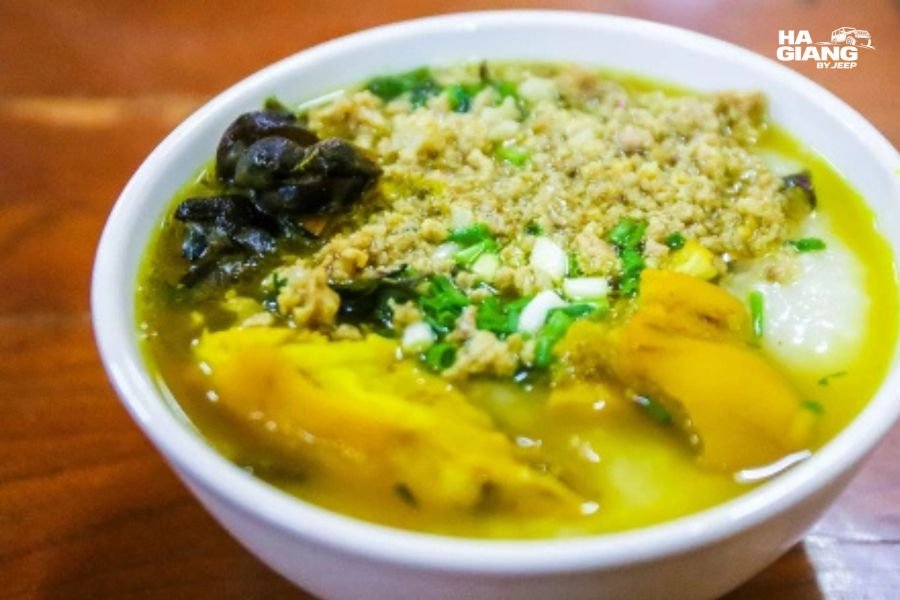
Sometimes a bowl of something arrives at your table without having been ordered, because the person running the stall decided you needed it. Eat it. This is not a scam and it is not an accident. It is hospitality.
Which Jeep Tour Is Right for You?
The highland market experience is one of the strongest arguments for a four days Ha Giang Loop over a three days one. With three days, the market day depends entirely on whether your itinerary happens to align with a market at the right town on the right day. With four days, there is usually one natural alignment.
Ha Giang Loop, 3 days the market is possible but depends on day and town alignment. Ask your operator when you book.
Ha Giang Loop, 4 days the best version for market food. More days means more flexibility to slow down when the food is worth slowing down for.
Ha Giang and Cao Bang, 5 days or 6 days adds Cao Bang and Ban Gioc. Cao Bang has its own market culture, different from Ha Giang's, worth experiencing if time allows.
Jeep Wrangler Rubicon rental for drivers who want to plan their own market timing.
The private vehicle makes the market food experience work properly for one specific reason: you stop when the market is happening, not when a group schedule allows. You eat the thang co, drink the corn wine, walk the produce section for as long as you want. Your driver waits. When you are done, you continue.
Questions about which markets your tour dates will hit? Message us on 📍 WHATSAPP. We can tell you the market day schedule for your specific itinerary.
Frequently Asked Questions
What is the best thing to eat at a Ha Giang market?
Com lam and banh cuon trung are the most universally good. Thang co is the most authentic and the most challenging. Thang den is excellent in cold weather. The grilled items near the entrance are the easiest starting point for cautious eaters.
Is thang co safe to eat?
Yes, from established stalls that have been cooking it properly for years. Thang co is a traditional highland dish that has been eaten for generations. The question is not safety but personal preference: it contains horse meat and offal, and whether that suits you is a decision to make in advance.
Do highland markets run every day?
No. Each market town has a specific day, roughly weekly, on a rotating system. Dong Van is Sunday, Meo Vac is Monday, and so on. The Khau Vai market runs on specific dates tied to the lunar calendar. Our Ha Giang market days guide has the full schedule.
Can vegetarians eat at Ha Giang markets?
With some navigation, yes. Com lam, banh cuon trung without meat, fresh and pickled vegetables, fruit and thang den are all vegetarian or can be made so. The market is not designed for vegetarian eating, but it is manageable.
What is corn wine and how strong is it?
Ruou ngo is a distilled spirit made from fermented corn. Strength varies by producer and batch. Some versions are genuinely strong; others are lighter. Drinking it at a morning market is a different experience from drinking it in the evening, and the effect is real. If you have road time ahead of you, bear that in mind.
How do you order food at a highland market without speaking Vietnamese?
Point, hold up fingers and smile. The system works. Your driver is the most valuable resource: they can order, explain what things are and tell you what is particularly good at that specific market on that day.
What time does the market food section get busy?
Early. Most highland markets start before 7 in the morning and the food section is busiest from 7 to 10. By midday many stalls are winding down or sold out of the best things.
Is chao au tau dangerous to eat?
It requires proper preparation to neutralise the toxic compounds in the au tau root. From an established stall that local families are clearly eating at regularly, the preparation is reliable. Avoid eating it from unclear sources.
Ha Giang by Jeep runs private 4x4 tours across the Dong Van Karst Plateau and Non Nuoc Cao Bang Geoparks, with English speaking local drivers and 24/7 support from our office in Ha Giang City. Email booking@hagiangbyjeep.com or WhatsApp +84 862 379 288.