
Ha Giang Loop 5 Days Itinerary: The Unhurried Version
Most itineraries for this region are written around how much ground you can cover. This one is written around how much you can stop.
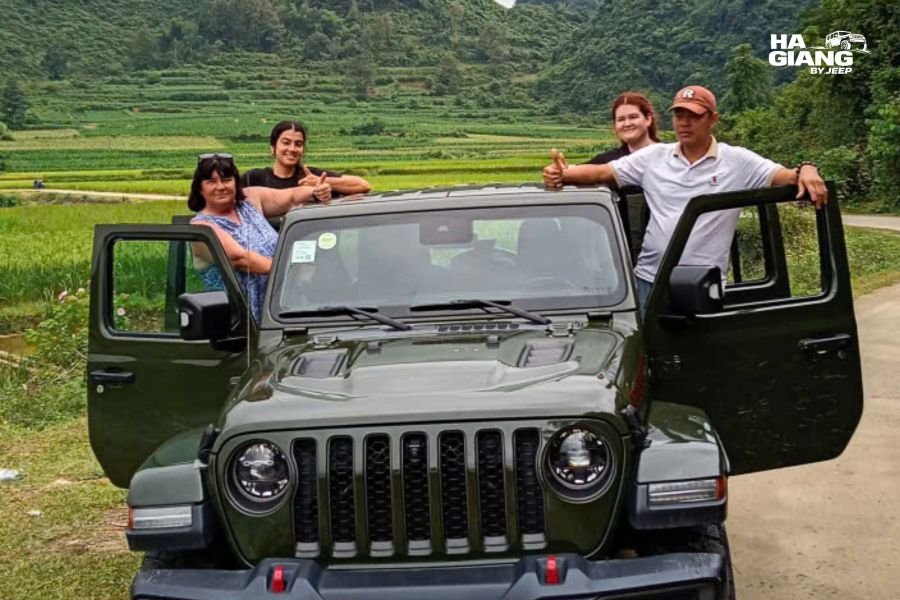
Three days does the Loop. Four days does it comfortably. Five days does something different: it lets you stay somewhere twice, sit in a market until it finishes rather than until the schedule says go, and reach the corners of the plateau that almost every itinerary drives straight past.
This Ha Giang Loop 5 days itinerary is for travelers who would rather see less and feel more. Day by day, what each stretch actually offers, where to sleep, and an honest section at the end on how to book five days in the north, because the obvious answer is not the only one.
Why Five Days Changes the Trip
There is a specific thing that happens on a Ha Giang Loop 5 days itinerary, and it is not simply that you see more.
On a three days trip, every morning starts with distance to cover. Stops are budgeted. A market that turns out to be wonderful is a problem, because the afternoon is already committed. You spend the whole trip making small trade offs and you feel each one.
Add two days and that pressure disappears. You unpack twice instead of four times. You walk into a village with no plan and nothing depending on how long you stay. You get a second morning in Dong Van, which matters because mornings there are entirely different from afternoons. And you get to include Pho Bang, Lung Cu, Du Gia and Tu San Canyon without any of them feeling squeezed in.
The other change is physical. Several hours a day on switchback roads is tiring in a way that flat driving is not. Spread across five days, it stops being tiring and starts being pleasant, which is the whole argument for travelling this region slowly.
Nobody finishes five days in Ha Giang wishing they had done it in three. The reverse happens constantly.
Who This Itinerary Suits
- Couples who want conversation and quiet evenings rather than a checklist
- Families with children, because the pace is the single biggest factor in whether kids enjoy this region
- Travelers in their 50s, 60s and beyond, for whom shorter driving days change everything
- Photographers, who need to be somewhere at the right hour rather than at the scheduled hour
- Anyone visiting Vietnam for the first time who wants one region done properly instead of four done partially
- Return visitors who have already done the classic route and want the parts they missed
It suits you less if you have a fixed short window, or if what you want is to say you did the Loop rather than to spend time in it. Nothing wrong with either. The 3 days itinerary exists for exactly that.
How to Read This Plan
Three things before the day by day.
No timings. You will notice this itinerary gives no departure times or driving durations. That is deliberate. Mountain roads here are affected by weather, roadworks, livestock, market traffic and the occasional repair crew. Any itinerary that promises you will be somewhere at a precise hour is making it up. Your driver will judge each morning on the day.
Order is flexible, market days are not. Markets here run on a rotating schedule, and the good ones are worth planning around. Dong Van's Sunday market, Meo Vac's weekly market and the famous Khau Vai gathering all sit on fixed days. Tell whoever plans your trip which markets matter to you and let the rest of the itinerary arrange itself around them.
Permits and access change. Parts of this region sit inside a border zone requiring a permit, which a reputable operator arranges. Road access to individual sites can be restricted temporarily. Rules change, so confirm current requirements close to your travel dates rather than relying on any article, including this one.
Day 1: Ha Giang City to Yen Minh
The day the landscape starts working on you.
Morning
You leave Ha Giang City and the road begins climbing almost immediately through Bac Sum Pass. This first stretch is the transition: rice terraces give way to steeper ground, and the first proper viewpoint opens onto the valley you just left.
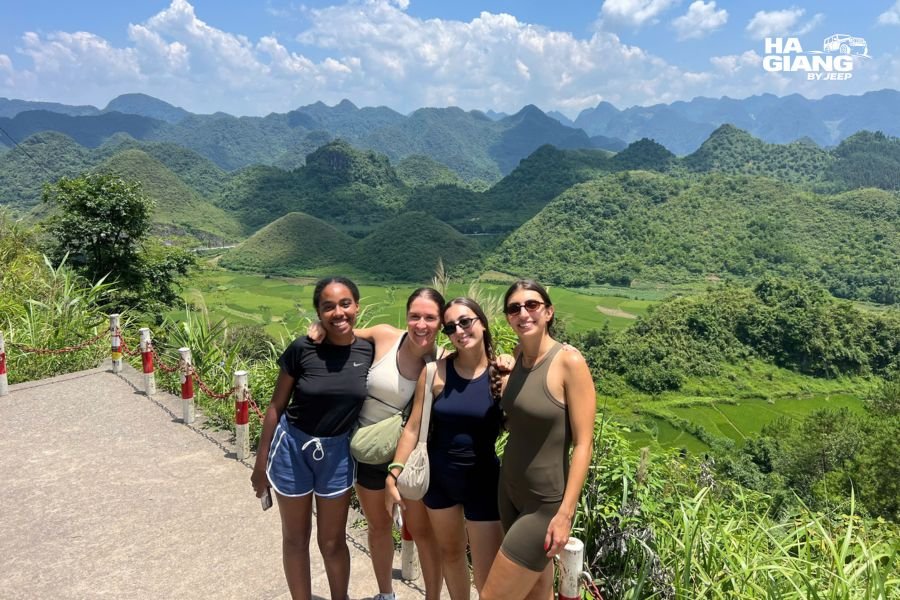
By late morning you reach Quan Ba, where Heaven's Gate looks out over the Twin Mountains and the plateau properly begins. On a clear day the view runs a long way. On a cloudy one you are standing inside the cloud, which is its own experience.
Afternoon
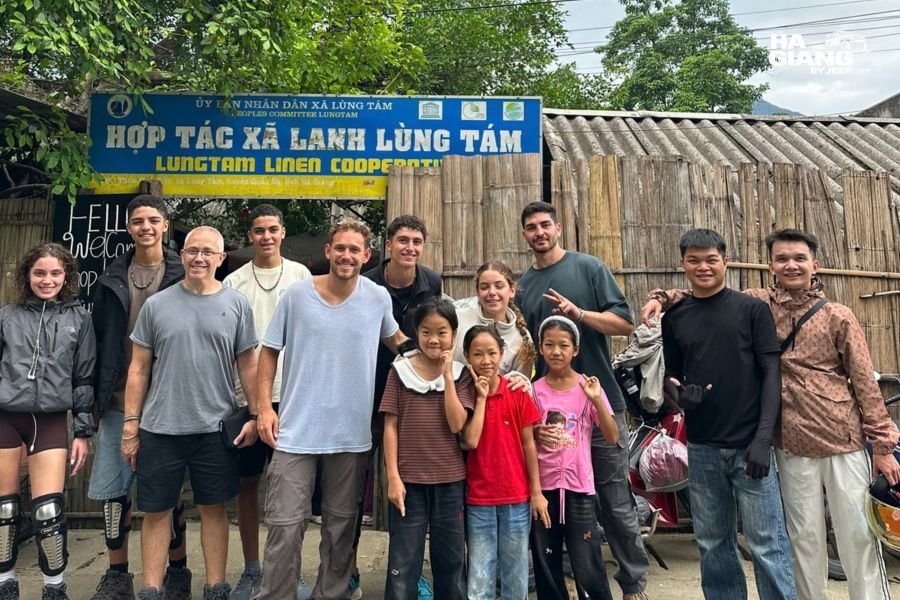
Drop into the Quan Ba valley for Lung Tam Linen Village, where Hmong women grow, spin, dye and weave hemp into indigo textiles using a process that takes months. This is a genuine craft village rather than a shopping stop, and watching the indigo dyeing is the part people remember.
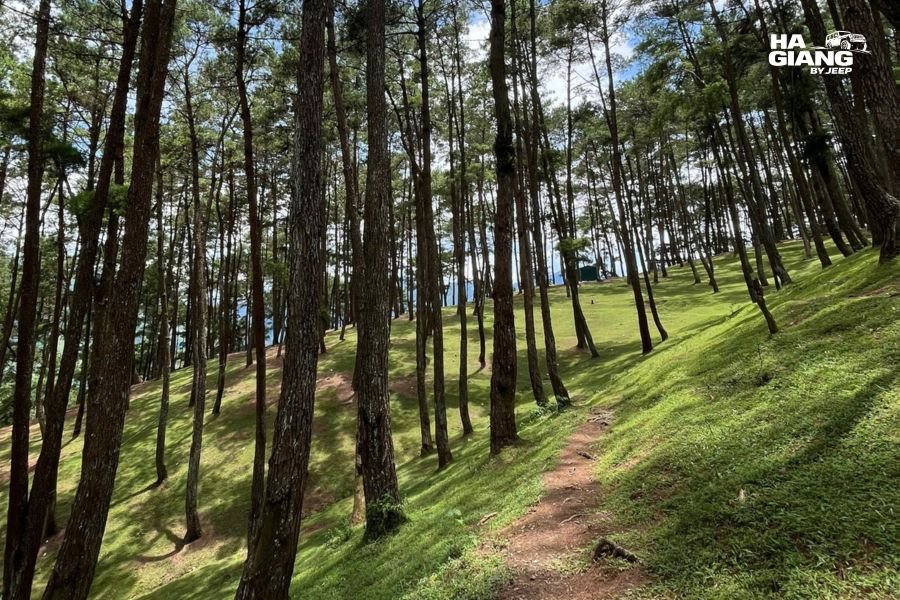
From there the road climbs again toward Yen Minh, through pine forest that looks nothing like the rest of the region. This stretch is often the quietest of the whole trip and a good place to simply stop at the roadside and stand for a while.
Evening
Where you sleep: Yen Minh town, or a homestay in a village outside it if you want the quieter option.
Worth doing: eat where your driver suggests rather than where the menu has photographs. This is your first proper mountain meal and it sets the tone.
Day 2: Yen Minh to Dong Van
The day the plateau turns to stone.
Morning
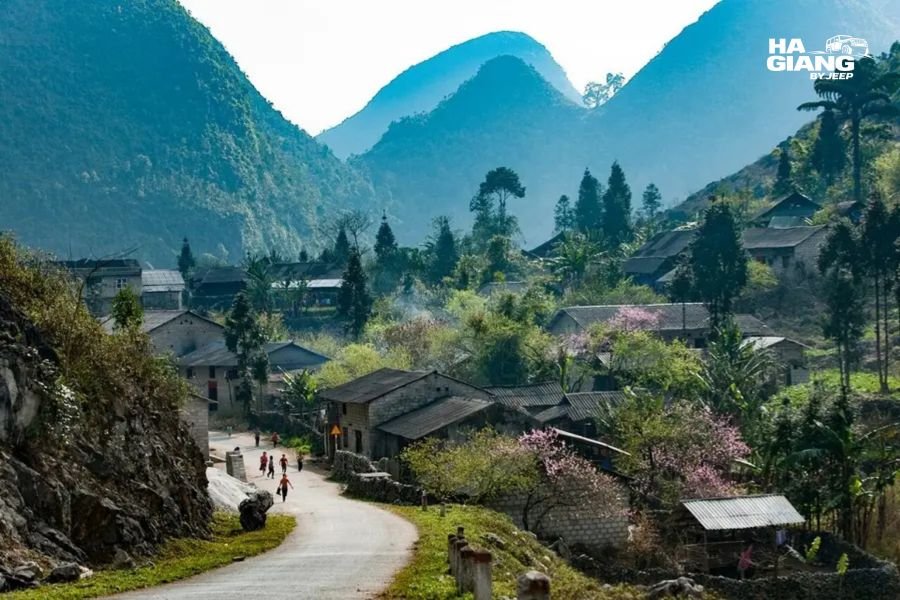
The road out of Yen Minh climbs onto the Dong Van Karst Plateau proper, and the change is abrupt. Grey limestone everywhere, corn planted in whatever soil exists between the rocks, and villages built from the stone they cleared to make room.
Sung La sits in a small green bowl on the way, and it is the valley everyone photographs. The stone walled houses here include Pao's House, known from a Vietnamese film and now a modest museum of everyday highland life.
Afternoon
A detour that most three days itineraries skip entirely: Pho Bang. A small old town of ochre walled houses tucked off the main road, quiet in a way the rest of the route is not, with old Chinese influenced architecture and almost no one there. On a five days plan you have the hours for it, and it is consistently one of the surprises of the trip.
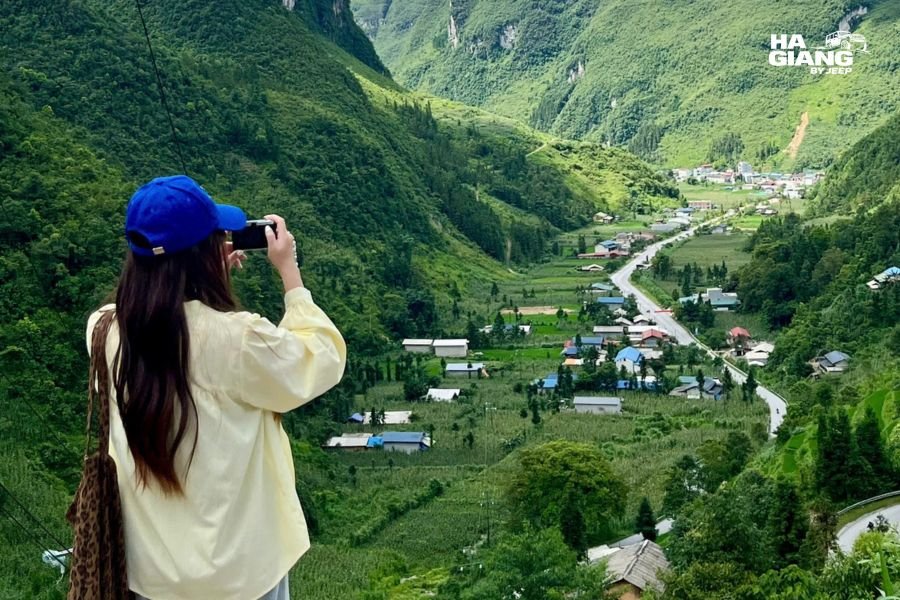
Continue to Dong Van, arriving with enough of the afternoon left to walk rather than collapse.
Evening
Where you sleep: Dong Van, two nights. This is the anchor of the whole itinerary.
Worth doing: the Old Quarter after dark, and thang den, sweet dumplings in warm ginger syrup, at a street stall. On a cold evening it is the best thing in town.
Day 3: A Full Day Around Dong Van
The day you do not pack a bag, and the reason to take five days at all.
Morning
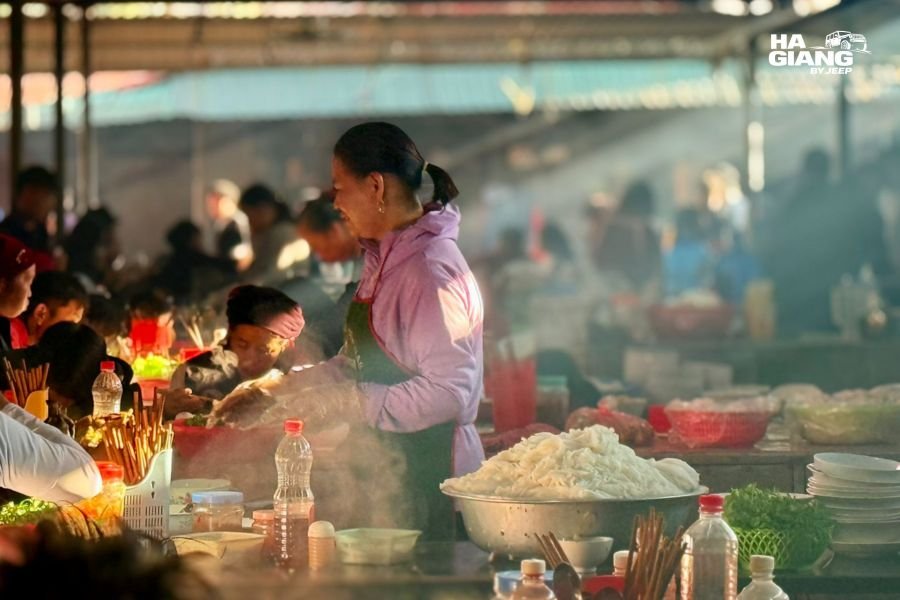
Dong Van in the early morning is a different town from Dong Van in the afternoon. The market fills with people who came down from villages hours away, the light is soft on the old buildings, and the tourist hours have not started.
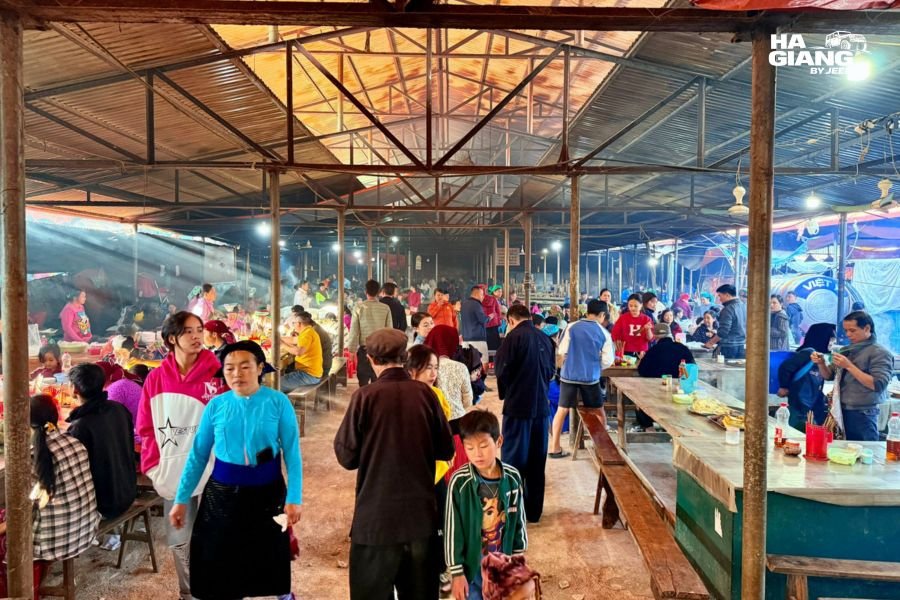
If you are here on a Sunday, the Dong Van Sunday Market is one of the best in northern Vietnam: livestock, textiles, tools, food stalls, and a great deal of standing around talking, which is most of the point.
Breakfast here should be banh cuon trung, steamed rice rolls with egg, served with a bowl of broth rather than dipping sauce.
Afternoon
Run north to Lung Cu, the flag tower marking the northern edge of the country, with the climb to the base and a view across into the hills beyond. On the way, the road passes through some of the starkest stone landscape on the plateau.
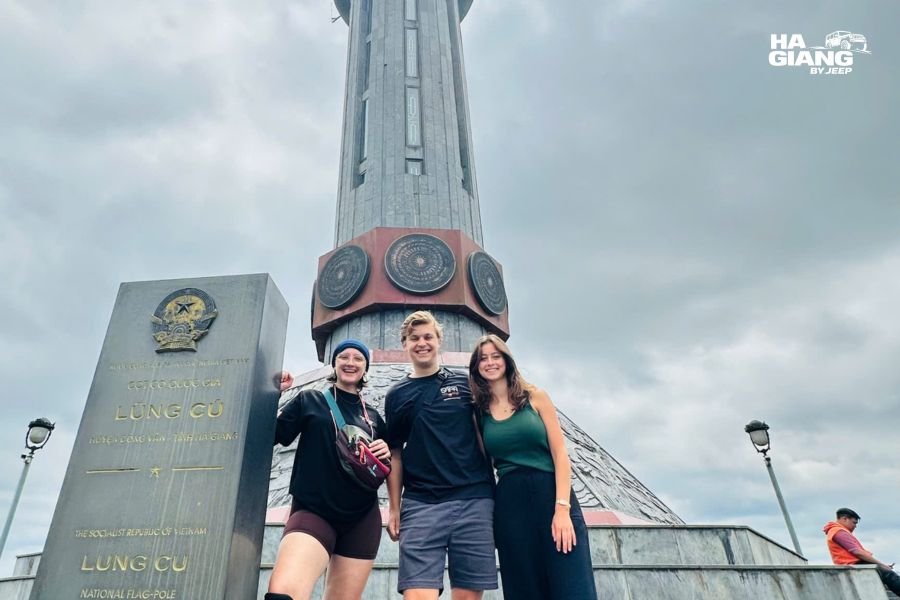
Alternatives if flag towers are not your thing: the Vuong family mansion at Sa Phin, the Lung Cam cultural village, or simply a slow afternoon in Dong Van doing nothing at all. On a five days plan, doing nothing at all is a legitimate choice rather than a waste.
Evening
Where you sleep: Dong Van again. Same room, no packing.
Worth doing: Shan tuyet tea somewhere with a view, and an early night. Tomorrow is the big one.
Day 4: Ma Pi Leng, Tu San Canyon and Meo Vac
The day the photographs come from.
Morning
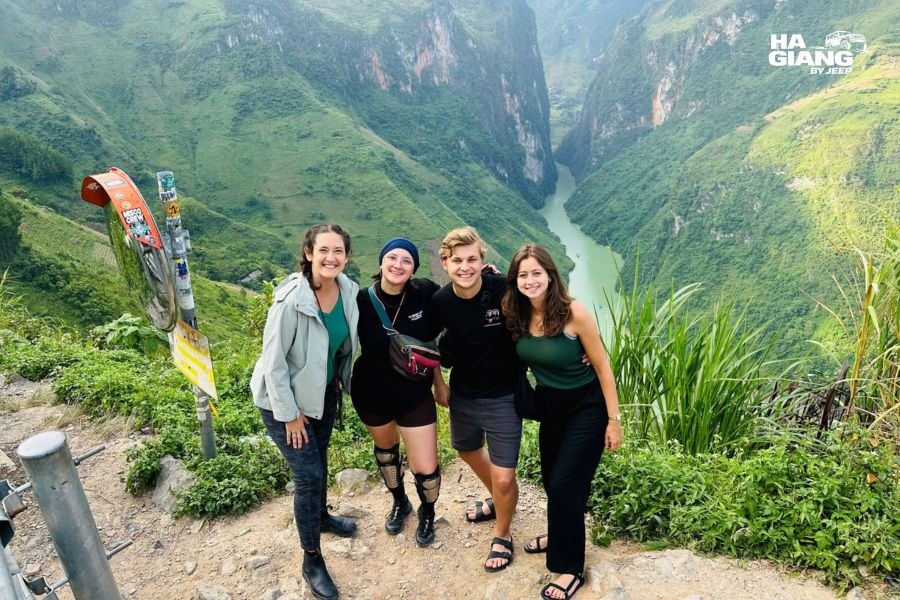
Ma Pi Leng Pass is the reason a lot of people come to Ha Giang, and it earns it. The road is cut into a cliff face high above the Nho Que River, with the water a distinct green far below and the canyon walls dropping away on both sides. There are several viewpoints along it, and the right one on any given morning depends on where the cloud is sitting, which is exactly the kind of judgement a local driver makes without being asked.
Afternoon
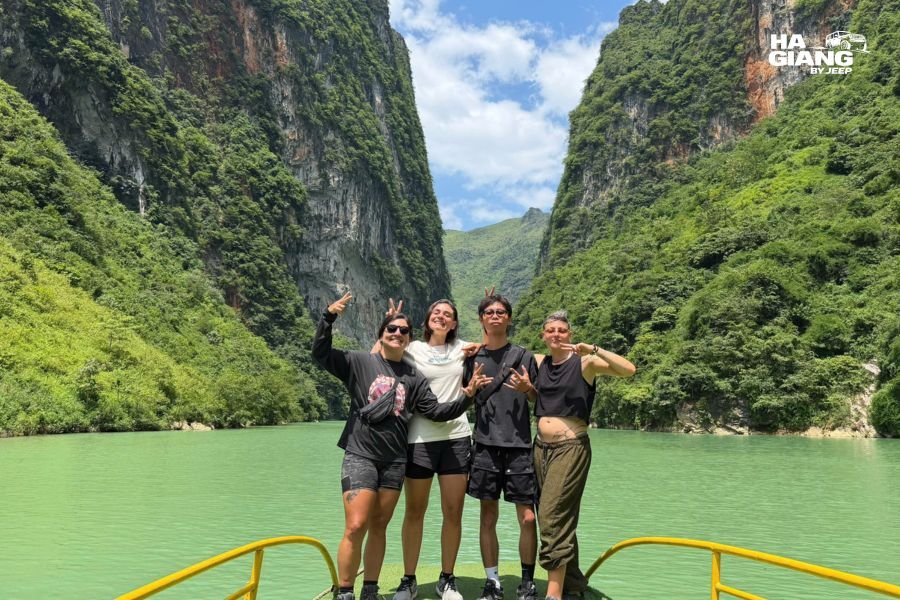
Down to the river for the Tu San Canyon boat trip, through the deepest canyon in Southeast Asia. Seeing it from the road is impressive. Seeing it from water level, with the walls rising vertically on both sides, is a completely different scale of thing. This is optional and separately priced, and it is the optional extra almost nobody regrets.
Continue to Meo Vac, a smaller and rougher town than Dong Van, sitting in a bowl surrounded by stone.
Evening
Where you sleep: Meo Vac town or a homestay in the valleys nearby.
Worth doing: if your dates line up with Meo Vac's weekly market, build the morning around it. If the Khau Vai love market falls during your trip, say so when you book, because it only happens once a year.
Day 5: Meo Vac to Du Gia and Back to Ha Giang City
The day the landscape softens.
Morning
The road south from Meo Vac leaves the stone behind. Within a stretch you are in green country: terraced rice, banana, bamboo, water running everywhere. It is startling how completely the region changes character.
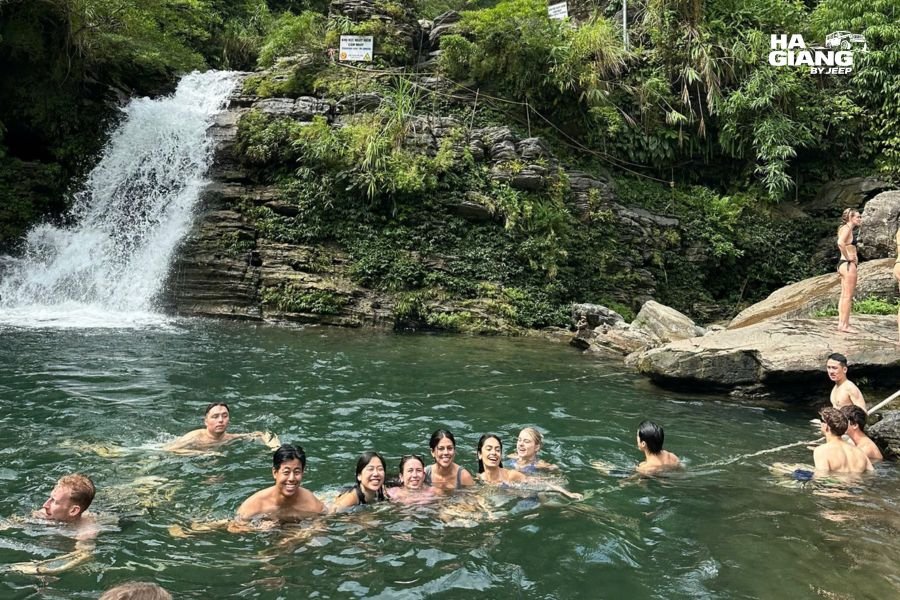
Du Gia is the destination, a village in a valley with a waterfall and a pool below it that you can swim in, weather permitting. For most travelers this is the single most relaxed part of the trip.
Afternoon
The run back to Ha Giang City, with the plateau behind you and the valley opening out again. Most people are quiet on this stretch, which is usually a good sign.
Evening
Where you sleep: Ha Giang City, or the night bus back to Hanoi if your onward plans demand it. If you have the option, stay the night and travel in daylight the next day. Arriving in Hanoi rested is worth more than the night you save.
Worth doing: chao au tau in Ha Giang City if you are travelling in the cold months. Bitter, warming, and specific to this region.
Where the Extra Days Actually Go
Useful if you are deciding between lengths rather than committing straight to a Ha Giang Loop 5 days itinerary.
| 3 days | 4 days | 5 days | |
|---|---|---|---|
| Quan Ba, Yen Minh, Dong Van, Ma Pi Leng, Meo Vac | Yes | Yes | Yes |
| Lung Tam Linen Village | Rushed or skipped | Yes | Yes |
| Two nights in one place | No | Sometimes | Yes |
| Pho Bang | Usually skipped | Sometimes | Yes |
| Lung Cu | Usually skipped | Sometimes | Yes |
| Du Gia | No | Yes | Yes, unhurried |
| Time to sit in a market | Very little | Some | Yes |
| Unscheduled hours | None | A few | Built in |
The pattern is clear. Days three and four buy you places. Day five buys you time, which is a different and better purchase.
Seasonal Adjustments
The itinerary above works all year. What changes is what you will see and how you should dress.
Late autumn, roughly October to December. Buckwheat flowers on the plateau, clear air, cold mornings, cloud seas below the viewpoints. Busiest period and the reason to book early. Add layers you can remove.
Winter, January and February. Genuinely cold up high. Fewer visitors, dramatic light, and Tet somewhere in there, which changes what is open and how busy the roads are. Heating in your room stops being optional.
Spring, March to May. Water on the terraces, blossom early in the season, comfortable temperatures. One of the best windows and less crowded than autumn.
Summer, June to September. Heavy green, full waterfalls, warm days and real rain. Du Gia is at its best. Roads can be affected after heavy rainfall, so a flexible schedule matters more than usual, which is another argument for five days rather than three.
Our weather by month guide goes through the trade offs properly.
What to Pack for Five Days
- Layers, not one warm jacket. Mornings and afternoons on the plateau are different climates.
- A windproof outer layer. Wind at the viewpoints does more than temperature.
- Shoes with grip. Nothing here is a hike, but stone paths and riverbanks are wet.
- Sun protection. Altitude sun is stronger than the temperature suggests.
- Cash in small notes. Card acceptance thins out quickly outside Ha Giang City.
- A power bank. Charging at homestays is possible but not always convenient.
- Any medication you rely on, including something for motion sickness if winding roads affect you.
- A small daypack, so your main bag can stay in the vehicle.
How to Actually Book Five Days in the North
Here is the honest part, because search results for this route will tell you a five days Ha Giang Loop is a standard product and it mostly is not.
The classic Loop is built around three or four days. Five days in Ha Giang alone is absolutely worth doing, and it is how the itinerary above is written, but it is usually arranged as a custom trip rather than picked off a list. Two practical routes to it:
Option one: the 4 days Loop, extended. Take the 4 days Ha Giang Loop and add a night, most usefully as a second night in Dong Van or an extra night in Du Gia. This is the closest thing to the plan above and the simplest to arrange. Tell us when you enquire and we will build it.
Option two: five days, Ha Giang and Cao Bang. The 5 days Ha Giang and Cao Bang tour uses the same five days differently. Instead of going deeper into one region, you cross into a second UNESCO Global Geopark, Non Nuoc Cao Bang, and finish at Ban Gioc Waterfall. The landscape changes completely: limestone towers over rice valleys instead of bare stone plateau.
Which is better depends on what you are after. Depth in one region, or two very different regions in the same window. There is no wrong answer, and we will tell you plainly which we think fits your group.
If you have six days, the 6 days Ha Giang and Cao Bang tour removes the trade off entirely and adds God's Eye Mountain, Ngoc Con Valley and the 15 step pass.
Which Jeep Tour Is Right for You?
Ha Giang Loop, 3 days if your calendar is fixed. The classic route, full days, everything essential.
Ha Giang Loop, 4 days the base for the itinerary on this page. More villages, slower rhythm, and the one we recommend most often.
Ha Giang and Cao Bang, 5 days if Ban Gioc matters to you and you want two regions rather than one.
Ha Giang and Cao Bang, 6 days the full northeast, unhurried, including the corners most itineraries never reach.
Jeep Wrangler Rubicon rental if you are a confident driver, comfortable with mountain roads and Vietnamese traffic, and want the vehicle without the driver.
One Thing a Private Jeep Changes on a Slow Itinerary
Five days only works if you can actually use the time. With a private vehicle and your own driver, you stop at any stall, any market, any place with plastic stools and no sign, because there is no group to consult and no schedule to defend. And when your homestay host pours the corn wine at dinner, you can say yes, because nobody at the table is driving in the morning.
That is the difference between an itinerary that says five days and a trip that feels like five days.
Send us your dates and group size and we will build the version of this that fits. Contact us or message +84 938 988 593 on WhatsApp.
Frequently Asked Questions
No. Five days is where the region stops feeling like a route and starts feeling like a place. You stay somewhere twice, reach Pho Bang, Lung Cu and Du Gia without rushing, and keep unscheduled hours in the plan.
Mostly. Four days covers the same core route but usually drops Pho Bang or Lung Cu and gives you one night in each place. It is a good trip. The fifth day is what makes it a slow one.
Our standard Loop tours are three and four days, and our five and six days tours continue into Cao Bang. A five days Ha Giang only trip is arranged as a custom extension of the 4 days tour. Tell us when you enquire.
The plan above runs Ha Giang City, Quan Ba, Yen Minh, Dong Van, Meo Vac, Du Gia and back. Market days are the main reason to adjust it, so mention any market you care about when booking.
Less than on a three days trip, which is the point. Exact durations depend on weather, road conditions and how often you stop, so nobody can promise a fixed number honestly.
It is usually an optional extra rather than part of the tour price, and it is the one optional extra most guests are glad they took. Confirm what is included when you book.
Yes, and better than a shorter one. The pace is the biggest factor in whether children enjoy this region, and a private vehicle means you stop when they need to stop.
Very much so. The walking is optional and short, and shorter driving days make a substantial difference. Comfort and the freedom to stop matter far more than fitness.
Your driver adjusts the order of stops and picks viewpoints based on where the cloud is. A longer itinerary absorbs weather far better than a short one, which is one of the quieter arguments for five days.
Parts of the route sit inside a border zone and require a permit, which reputable operators arrange for you. Requirements are set locally and can change, so confirm close to your travel dates.
Yes. Continuing east from Meo Vac into Cao Bang is far more efficient than reaching it separately from Hanoi. That is the five and six days combined tours, finishing at Ban Gioc Waterfall.
Ha Giang by Jeep runs private 4x4 tours across the Dong Van Karst Plateau and Non Nuoc Cao Bang Geoparks, with English speaking local drivers and 24/7 support from our office in Ha Giang City. Email booking@hagiangbyjeep.com or WhatsApp +84 862 379 288.