
Ma Pi Leng Skywalk and M Viewpoint: What to Know
Two separate things, both often described as the ma pi leng skywalk, each worth understanding before you get there.
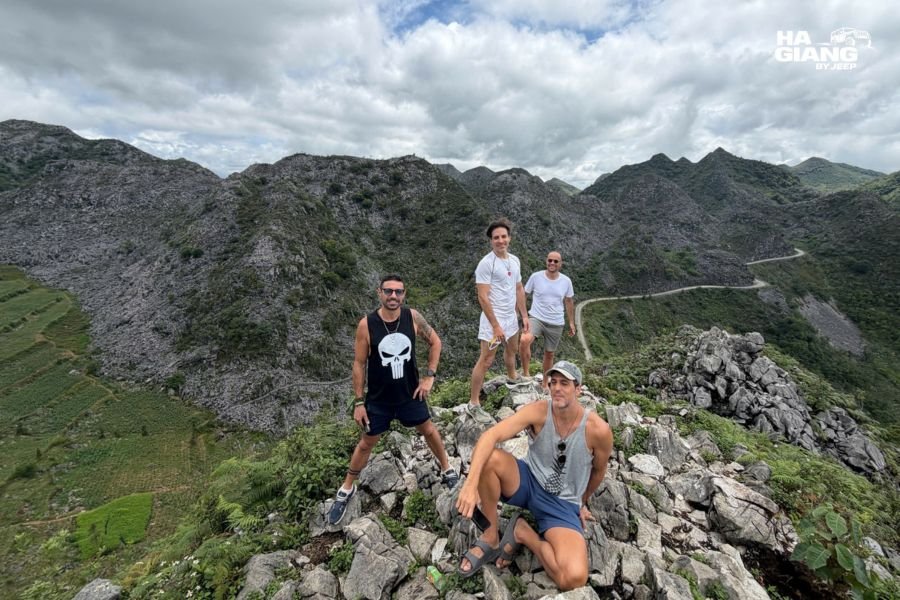
Ma Pi Leng Pass has two attractions that get mixed up in most travel writing. The first is the Skywalk, a purpose built glass platform extending out from the cliff face at one point on the pass. The second is what people usually call the M Viewpoint, named for the shape the road makes when seen from above, a natural point on the pass where the view of the Nho Que River below is clearest.
They are in the same place and the visit often covers both. But they are different experiences, and knowing which is which changes how you plan the day and what to expect.
The Skywalk and the M Viewpoint: What Each One Is
These two get grouped together because they are close to each other and the visit to Ma Pi Leng Pass usually includes both. The practical distinction is this:
The Skywalk is a built structure. It is a glass floored platform extending over the cliff edge at a specific point on the pass, reached by a short walk from where vehicles stop. There is a fee to use it, and the rules and pricing can change, so confirm current details on site or with your operator before you go.
The M Viewpoint is a natural location on the pass where the road curves into a shape that, seen from above, resembles the letter M. The view from this area looks out over the Nho Que River canyon below. Some travelers use the term M Viewpoint to mean any viewpoint on the pass, and different people describe them differently. The most important thing is that you stop, look, and give yourself time at the pass regardless of which specific point you are at.
The Ma Pi Leng Skywalk
The Skywalk is a glass platform cantilevered out from the cliff face above the canyon. You step onto it and the floor beneath you is transparent, which puts the Nho Que River and the canyon walls directly below your feet.
The practical effect varies by person. For some it is a powerful vertigo experience that makes the scale of the canyon viscerally clear. For others the glass floor is more of an intellectual novelty. Both reactions are legitimate.
The physical sensation is different from standing at a railing and looking down. When the floor disappears, the brain registers it differently even when you know the glass is solid. Some people who consider themselves entirely comfortable with heights find it unexpectedly affecting.
A few things worth knowing before you go:
- Fees apply and can change. Do not rely on any figure you read online, including here, as current. Ask your driver or check on site.
- Queueing is possible in high season. The platform handles a limited number of people at once, and in October and November the pass is busy.
- Footwear covers are often provided or required over your shoes on the glass surface.
- Photography rules may apply. Current guidelines should be confirmed on site.
The M Viewpoint
The M Viewpoint is the more naturally occurring of the two experiences. It is the section of the pass where the road curves in a way that has become iconic in photographs taken from above, and where the standard view of the canyon opens out most clearly.

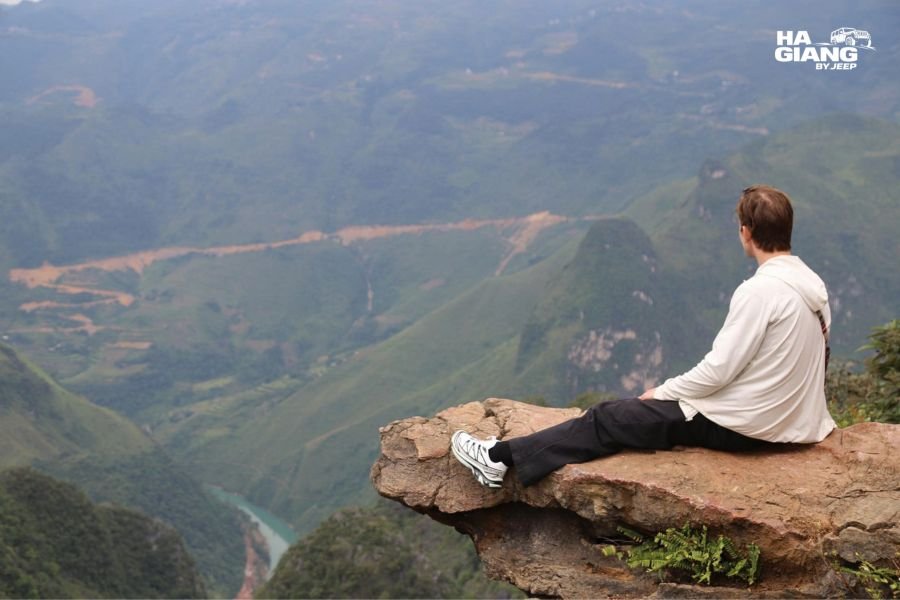
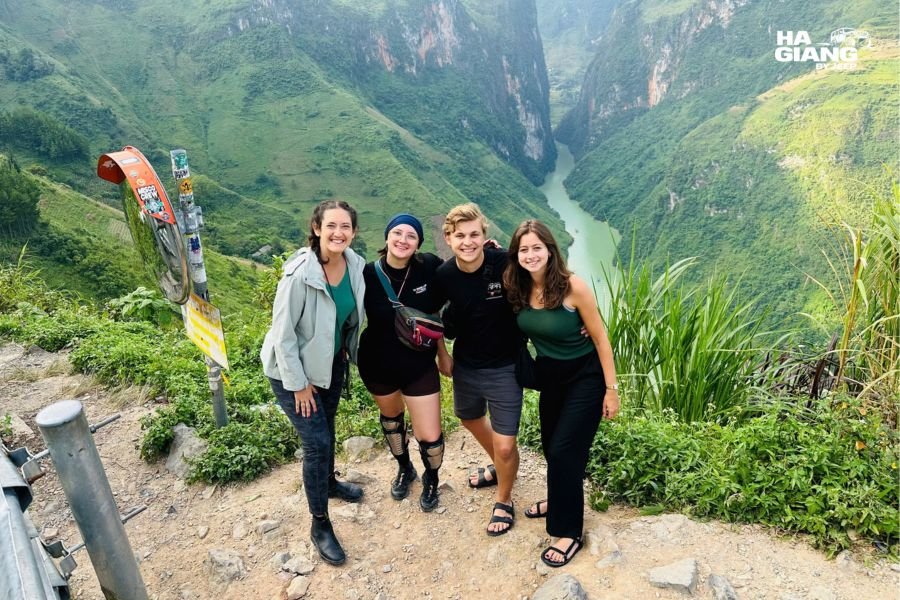
From this area you look down on the Nho Que River, which runs as a thin green line far below. The canyon walls rise on either side. On a clear morning, the light falls at an angle that picks out the colour of the water and the texture of the rock in a way that photographs struggle to capture entirely.
This is the view that appears in most images of Ma Pi Leng Pass: the S curve of the river, the walls of the canyon, the river almost impossibly small relative to the landscape around it.
The M Viewpoint does not require a fee in the way the Skywalk does. It is the road and its natural outlook. Stopping here is simply a matter of pulling over, which in a private vehicle with your own driver is whenever you want.
See the Ha Giang Loop jeep tours
The Nho Que River and What You See Below
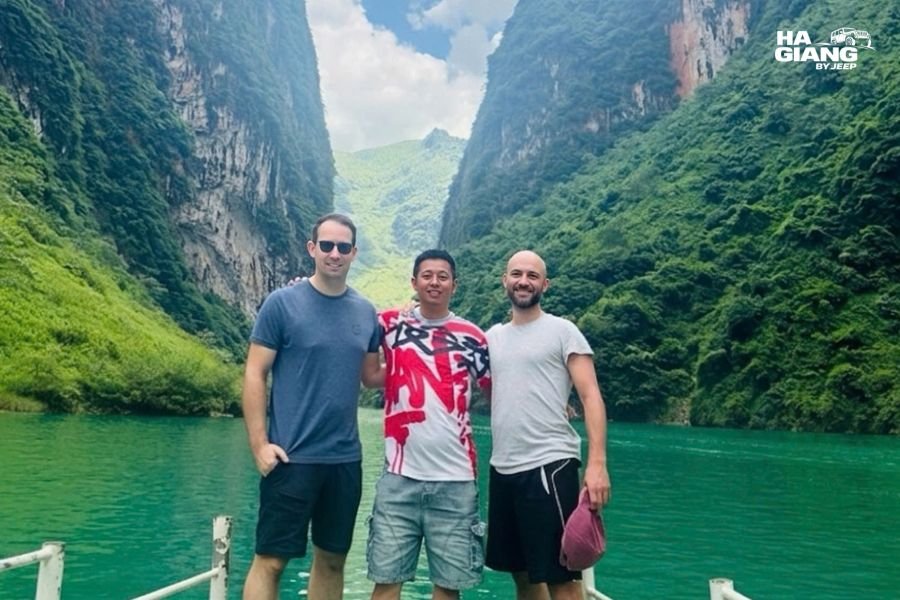
The main feature below Ma Pi Leng Pass is the Nho Que River, which runs through the canyon at the base of the cliff. Its colour is one of those things that surprises people who have seen it in photographs. The photographs do not exaggerate the green of the water. In good light, particularly in the morning and in the drier months when the water runs clear, it is a specific shade of green that does not look entirely natural.
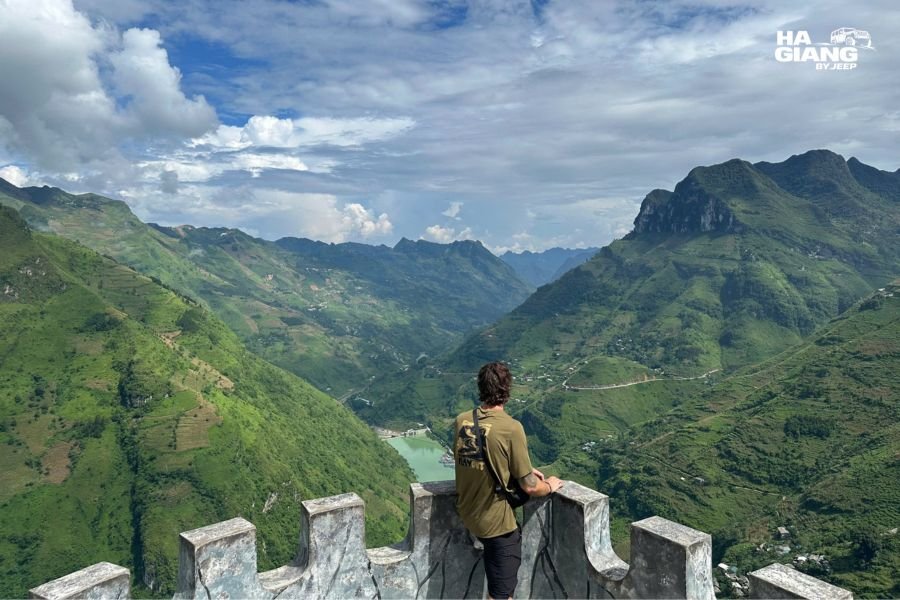
The river is far below. The height of the cliff and the narrowness of the canyon make the scale unusual. A boat in the river, from the pass above, is a small dark dot.
What you see also depends on the season. After heavy rain, the river runs brown with sediment. In dry season it is clearest. In very early morning it can be hidden in mist. All three versions of the canyon are real, and none of them is the definitive one.
The Tu San Canyon Connection
Tu San Canyon is the name for the gorge that the Nho Que River cuts through below Ma Pi Leng Pass. It is recognised as the deepest canyon in Southeast Asia by a common measure, and the scale of it from the pass is part of what makes the stop significant.

Most Ha Giang Loop itineraries include both the view from the pass and the optional boat trip through Tu San Canyon, which runs on the river below. The boat trip is a separate arrangement and a separate cost from the pass viewpoint. But the two experiences are complementary: seeing the canyon from above and then from water level, looking up at the walls you were standing on, is a significant shift in perspective.
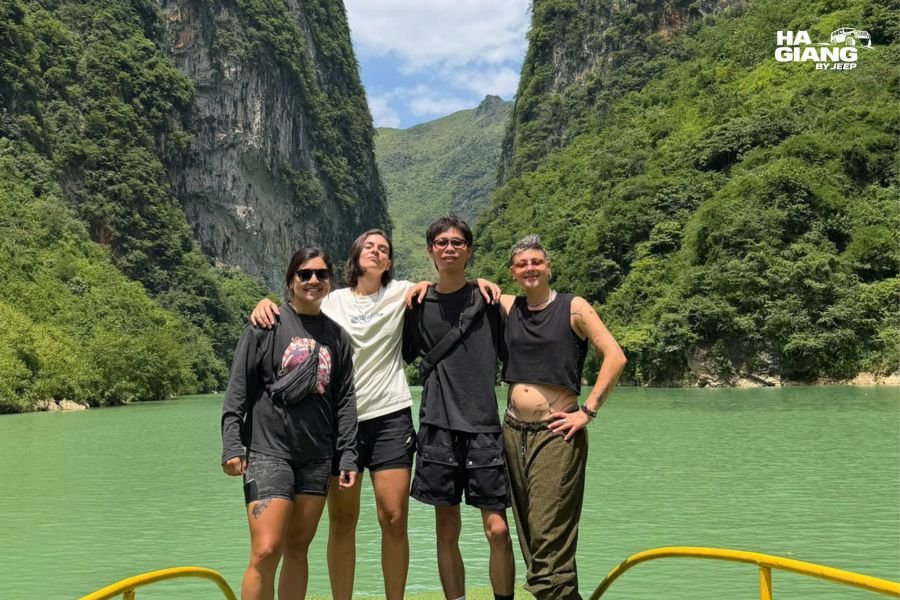
If you are going to do one, the pass view is usually the non negotiable and the boat trip is the optional that almost nobody regrets taking. Our Tu San Canyon guide covers the boat trip in more detail.
Skywalk vs Natural Viewpoint: Which to Prioritise
The Skywalk and the M Viewpoint give you different things, and if you have limited time or are travelling with people who have different interests, it is worth deciding in advance which matters more.
The M Viewpoint is the ma pi leng skywalk of the natural world: no structure, no floor, no ticket, just the cliff edge and the river far below. Standing here the scale of the canyon is measured by your eyes rather than by a platform. For most travelers, this is the irreplaceable experience. If you only have time for one, this is it.
The Skywalk adds the specific sensation of glass underfoot. It changes the psychological experience of the view rather than the view itself. People with a strong fear of heights may find it more challenging than they expect. People who consider themselves unbothered sometimes find the glass floor unexpectedly powerful. The experience is hard to predict in advance, which is part of why it is worth trying if you have the time.
The practical advice from people who have done both: start with the M Viewpoint, take your time there, then decide whether the Skywalk adds enough to be worth the fee and any queuing. Most people who do both in that order are glad they did.
Best Time to Visit Ma Pi Leng
Time of Day
Early morning is the single best time for the view. The light in the canyon is cleaner, the water colour is at its most vivid before the day's haze builds, and there are fewer people.
By late morning and afternoon, the pass gets busy in high season, and the light has moved. The canyon can look flat and washed out in the middle of the day in a way it does not at eight in the morning.
If your itinerary is driving from Dong Van toward Meo Vac, you hit the pass in the morning naturally. That is the right direction for this reason.
Season
October and November bring the buckwheat flowers and the clearest air. Ma Pi Leng is at its busiest in this period. The views are extraordinary but the pass is crowded.
March to May has clean air and manageable temperatures. Less busy than autumn.
June to September brings rain and sometimes mist in the canyon. The river runs more strongly and brown after heavy rain. The pass is accessible, the views are variable.
December to February is cold at altitude but often very clear. Cloud seas in the canyon at dawn are one of the specific things about this season.
How to Reach Ma Pi Leng Pass
Ma Pi Leng Pass sits on the road between Dong Van and Meo Vac. It is not a detour from the Loop. It is the Loop. Every Ha Giang itinerary that includes Dong Van and Meo Vac passes through Ma Pi Leng.
The pass is a road cut into a cliff face. You drive it rather than hike to it. Stopping at the viewpoint areas and at the Skywalk involves pulling over and walking a short distance. The walking is minimal and on paved surfaces, not a trail.

The practical implication for traveler comfort: you do not need to be fit to experience Ma Pi Leng. You need to be in a vehicle that gets you there. In a private jeep with a local driver, the stop at the pass is as long as you want it to be, and the driver will tell you which spots are worth stopping at on the day based on where the light is and what is clear.
What a Day at Ma Pi Leng Actually Looks Like
Most itineraries position the pass as part of a full day that leaves Dong Van in the morning and arrives in Meo Vac in the afternoon or evening.
The drive from Dong Van to the pass viewpoint involves a road that runs along the mountainside above the canyon. The view appears gradually and then opens fully at the main viewpoints.
The typical stop includes:
- The main viewpoint area. Parking, walking to the railing, looking down at the river. Ten to thirty minutes depending on how long you want and whether it is crowded.
- The Skywalk. Optional, separate fee, a short walk from the vehicle. Fifteen to thirty minutes including any queuing.
- Photographs. From various points along the pass rather than just the main viewpoint. In a private vehicle, this means stopping two or three times.
- Continuing to Meo Vac. The pass is not the last stop. The road continues.
The whole stop at the pass is usually one to two hours. What you do with that time depends on whether you use the Skywalk, how busy it is, and how long you want to simply stand and look.
What a Private Vehicle Changes Here
Cloud behaviour at Ma Pi Leng is not predictable. On some mornings the canyon is clear by eight. On others it is clear by ten. On a few days it does not clear at all.
A local driver who has driven the ma pi leng skywalk area hundreds of times knows what the cloud is doing. In a private vehicle, if the canyon is white when you arrive, he can pull over and wait, or suggest coming back on the return. In a shared vehicle on a schedule, you get whatever the canyon offers at the time the group passes through.
That is not a minor difference. The canyon at full cloud is still impressive. The canyon clear with the river green below is a different experience. In any vehicle, the right time of day is the best protection. With your own driver, you have additional options.
Which Jeep Tour Is Right for You?
Ma Pi Leng Pass and the Skywalk are included on every full Ha Giang Loop itinerary. The questions are how much time you have and whether you want to extend east.
Ha Giang Loop, 3 days the pass is on day two or three. The classic route, Ma Pi Leng guaranteed.
Ha Giang Loop, 4 days more time on the pass day, less rushing through it. The version we recommend most often.
Ha Giang and Cao Bang, 5 days continues east after Meo Vac into Cao Bang and Ban Gioc.
Ha Giang and Cao Bang, 6 days the full northeast loop, with the pass as one of several major highlights.
Jeep Wrangler Rubicon rental if you want to drive the pass yourself.
Questions about the Skywalk fees or what to expect on the day? Message us on WhatsApp and we will tell you what is current.
Frequently Asked Questions
The Skywalk is a glass floored platform built on the cliff face at Ma Pi Leng Pass, extending out over the canyon above the Nho Que River. It is a purpose built tourist attraction at one point on the pass, separate from the natural viewpoints along the same road.
No. The Skywalk is a built glass platform with a fee. The M Viewpoint is the name for the natural viewpoint area on the pass where the road curves and the view of the canyon is clearest. They are close to each other and the visit often covers both.
Yes. Fees apply and can change. Do not rely on any figure you read online. Confirm current pricing on site or with your operator before you travel.
The M Viewpoint is a conventional road-side overlook and is accessible to almost everyone. The Skywalk, with its glass floor, produces a stronger vertigo effect for some people. It is not a physical test of courage, but the glass floor registers differently in the brain than a standard railing, even for travelers who are otherwise comfortable with heights.
Yes. The natural viewpoints on the pass, including the M Viewpoint area, are free to access and give you the same view of the canyon and river below. The Skywalk adds the glass floor experience and a specific angle directly above the cliff edge.
Early morning, around eight to ten, when the light is clean, the colour of the river is at its best, and the canyon is more likely to be clear. If you are driving from Dong Van toward Meo Vac in the morning, you arrive at the right time naturally.
The road is open year round under normal conditions. Road conditions can be affected by heavy rain in the summer months. Mist can close the view in the canyon on any morning of the year. Check current conditions close to your travel dates.
The boat trip departs from the valley below the pass and is reached by descending from the viewpoint. It is a separate arrangement and cost from the Skywalk or the viewpoint. Many visitors combine both on the same day.
One to two hours covers the main viewpoint, the Skywalk and photographs along the pass. If you want to include the boat trip through Tu San Canyon, add one to two hours more. Confirm timings with your driver on the morning.
Ha Giang by Jeep runs private 4x4 tours across the Dong Van Karst Plateau and Non Nuoc Cao Bang Geoparks, with English speaking local drivers and 24/7 support from our office in Ha Giang City. Email booking@hagiangbyjeep.com or WhatsApp +84 862 379 288.