
Tu San Canyon: The Deepest Canyon in Southeast Asia
The road above gives you the view. The river below gives you the scale.
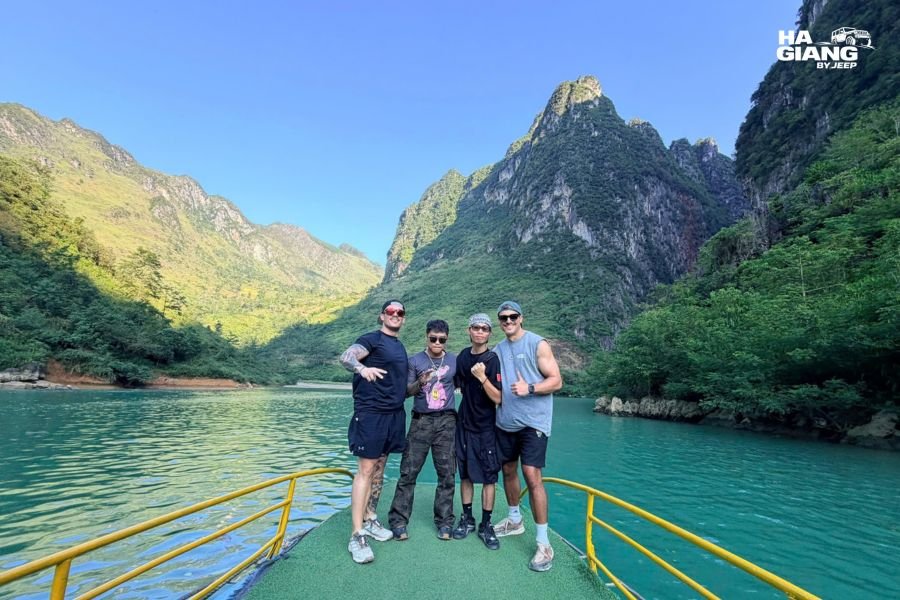
Tu San Canyon is the gorge that the Nho Que River has cut through the Dong Van Karst Plateau over millions of years. At its deepest point the walls rise approximately 800 metres from the water surface. The measurement is what earns it the designation of deepest canyon in Southeast Asia.
That figure is impressive on paper. What is more difficult to convey in numbers is what it actually feels like to be in the canyon. The walls are not just tall. They are close. The canyon is narrow enough that the sky above becomes a strip rather than an expanse. At the bottom of that strip, the Nho Que River runs in a colour that looks like something is wrong with the water, until you understand it is simply limestone.
Most Ha Giang Loop travelers see Tu San Canyon from above, from the road along Ma Pi Leng Pass. Fewer take the boat trip through it. The two experiences are complementary in a way that almost nothing else on the route is: you see something from the road and then you go inside it, and both versions are necessary to understand what you were looking at.
Table of Contents
1. What Tu San Canyon actually is 2. The depth and the claim 3. The Nho Que River 4. The view from Ma Pi Leng Pass 5. The boat trip through Tu San Canyon 6. What the boat trip is like 7. Best time to visit Tu San Canyon 8. How Tu San Canyon fits into the Loop 9. Which jeep tour is right for you 10. Frequently asked questions
What Tu San Canyon Actually Is
Tu San Canyon is not a separate attraction that you route to. It is the gorge directly below Ma Pi Leng Pass, the most famous stretch of the Ha Giang Loop. The road runs along the cliff face above it. The river runs through the bottom of it. They have always been the same place.
What changed in recent years is the boat trip, which gives access to the interior of the canyon in a way that was not previously organised for visitors. Before the boat trip existed, travelers saw the canyon from the road. Now they can also see the road from the canyon.
The canyon itself was formed by the Nho Que River cutting into the Dong Van Karst Plateau over geological time. The limestone here is old, and the river cuts through it differently from how rivers cut through softer rock: the walls of Tu San are vertical rather than sloped because limestone fractures along fault lines rather than eroding gradually. The result is a canyon that looks carved rather than worn, which is part of its visual character.
The Depth and the Claim
The "deepest canyon in Southeast Asia" claim is specific to Tu San Canyon and is the figure that appears in most descriptions. The measurement refers to the vertical distance from the canyon rim to the river surface at the deepest point.
This is worth understanding clearly rather than treating as a promotional slogan. The Dong Van Karst Plateau sits at a significant altitude, and the Nho Que River runs at a much lower elevation through the base of the canyon. The vertical differential between them is genuine, and the scale of it is part of what you are seeing from both the road and the boat.
The claim is used widely enough that it has become part of how the canyon is described. What matters practically is that the walls are tall enough to change the quality of light inside the canyon, narrow enough to make the sky above feel remote, and dramatic enough that standing in a small boat at the base of them produces a specific kind of quietness that larger, more open landscapes do not.
The Nho Que River
The Nho Que River runs from China into Vietnam through the Dong Van Karst Plateau and exits the plateau through Tu San Canyon before continuing south. Its colour is one of the first things visitors notice and one of the harder things to explain.
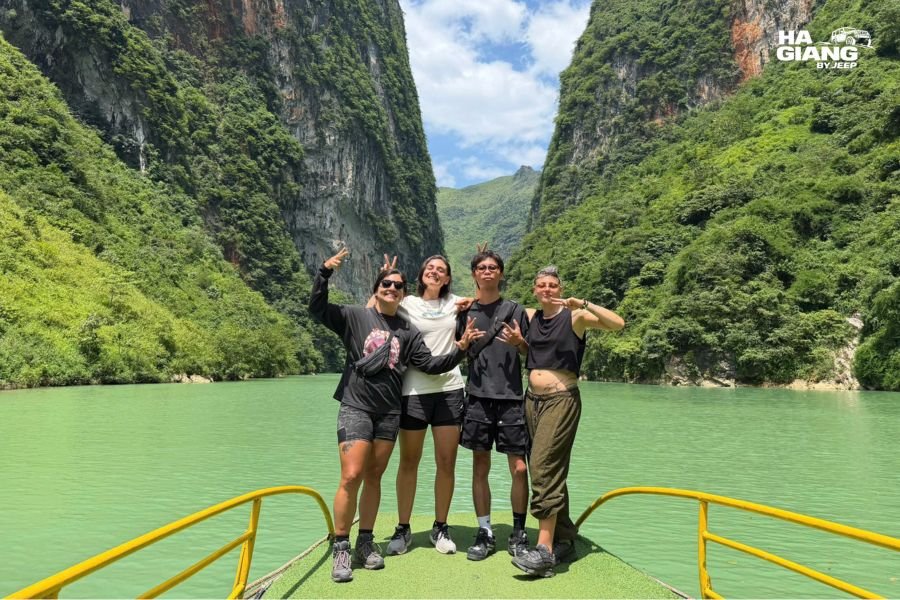
In the dry season, running clear, the river is a specific shade of turquoise that does not look entirely natural. Limestone geology produces this effect in rivers around the world: the calcium carbonate content of the water, combined with the right light and the right depth, creates a colour that photographs tend to slightly undersell rather than oversell. It is genuinely that colour.
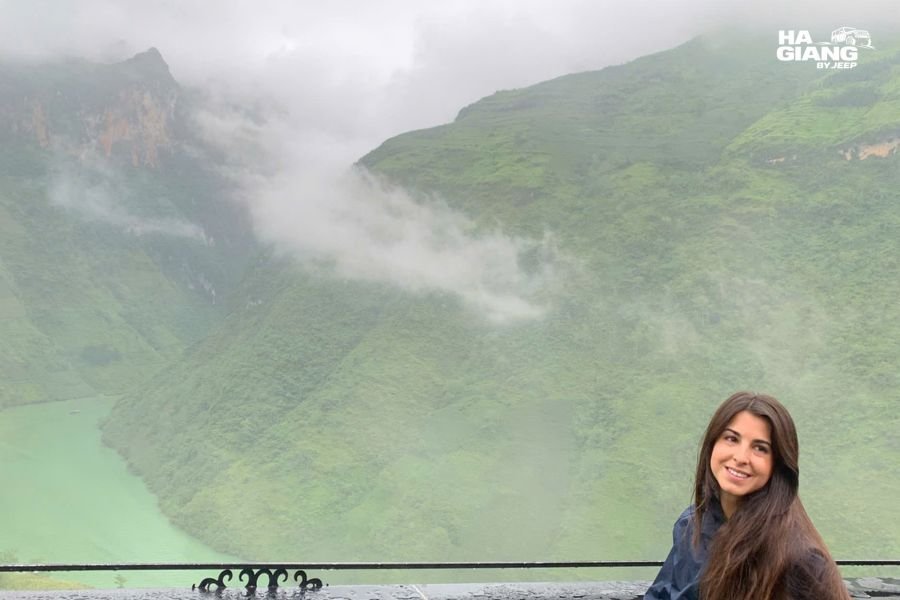
In wet season and during peak monsoon, the river runs brown and fast with sediment. The colour disappears and the volume increases dramatically. The canyon is accessible by boat in more conditions than you might expect, but the specific turquoise of the dry season river is not guaranteed in summer.
The width of the river in the canyon is narrow by river standards, though wide enough for the flat boats used for the trip. The current varies significantly by season.
The View from Ma Pi Leng Pass
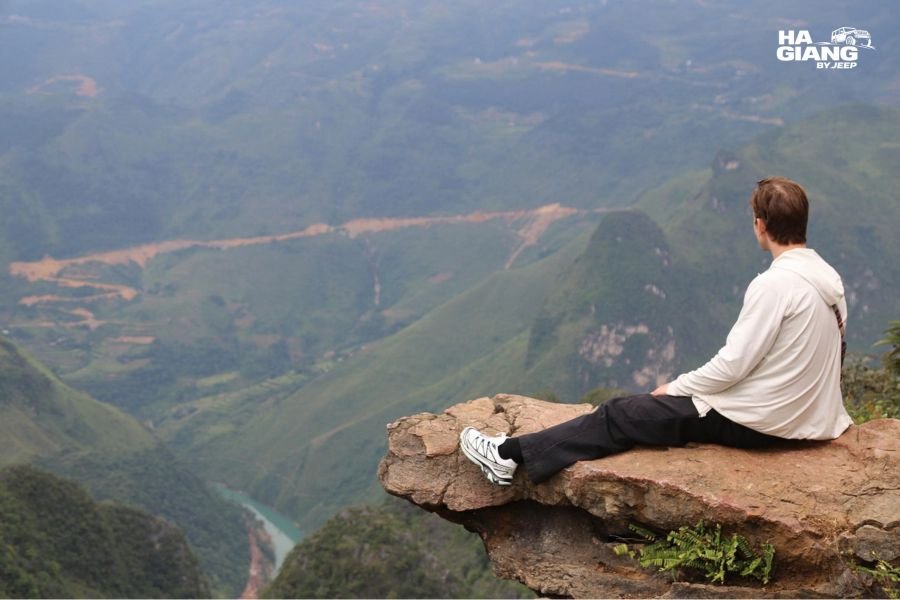
Most travelers encounter Tu San Canyon first from the road along Ma Pi Leng Pass, which is the standard route of the Ha Giang Loop. The road cuts along the cliff face high above the river, and at several viewpoints the canyon opens below you.
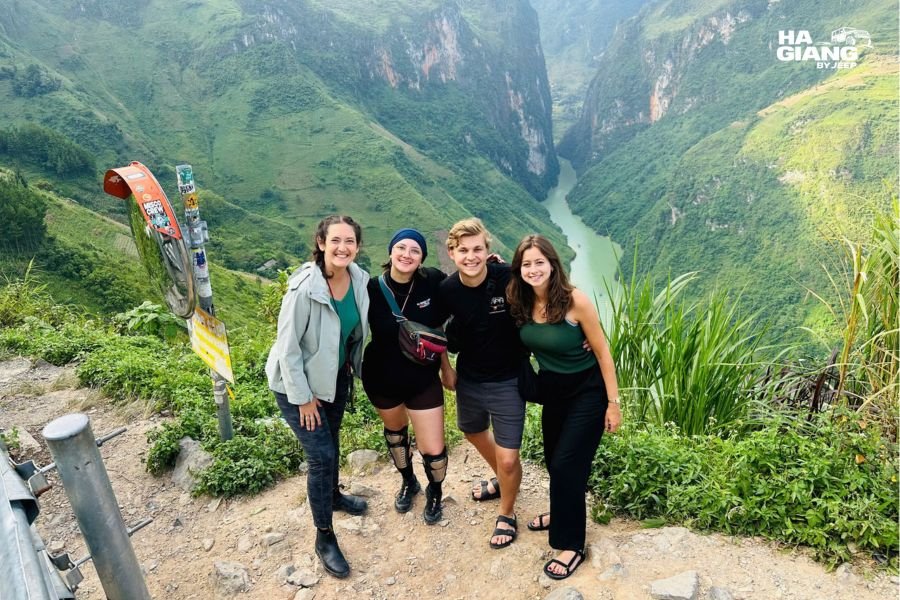
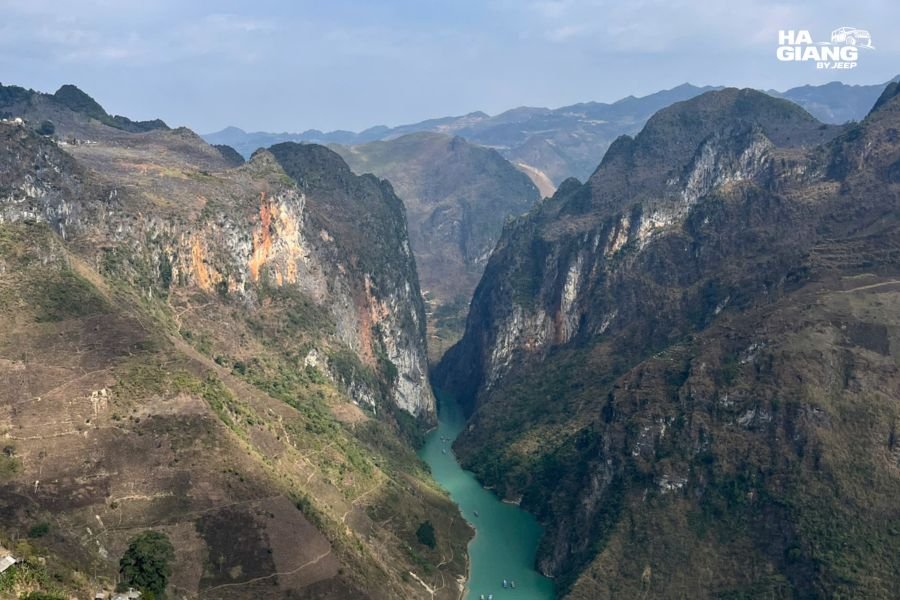
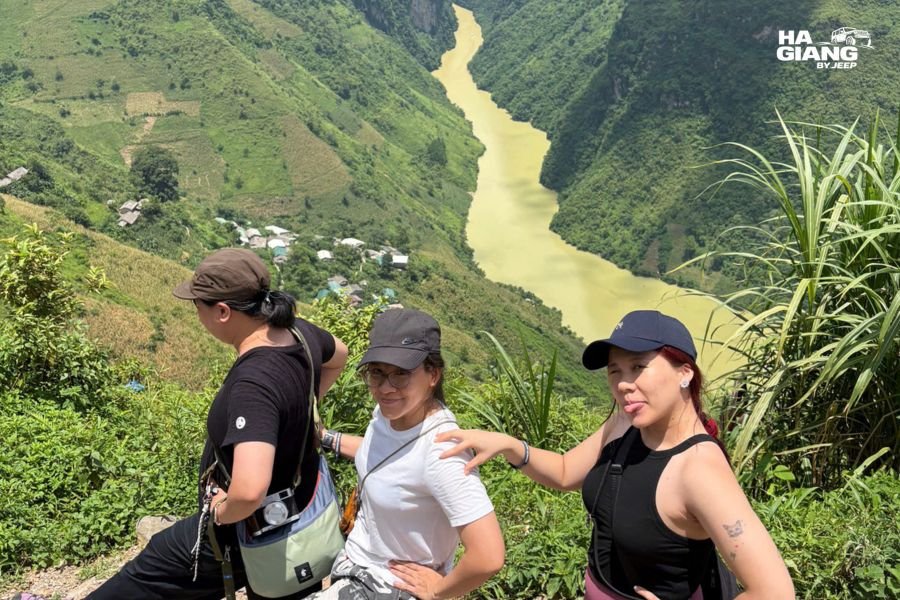
From this height the river appears as a narrow green line. The scale of the drop makes the boats on the water look small in a way that is hard to register until you are standing in one and looking back up at the road.
The view from the pass has its own character: panoramic, spatial, the canyon as part of a landscape rather than an immersive environment. You understand the geography of the canyon from up here in a way you cannot from inside it.
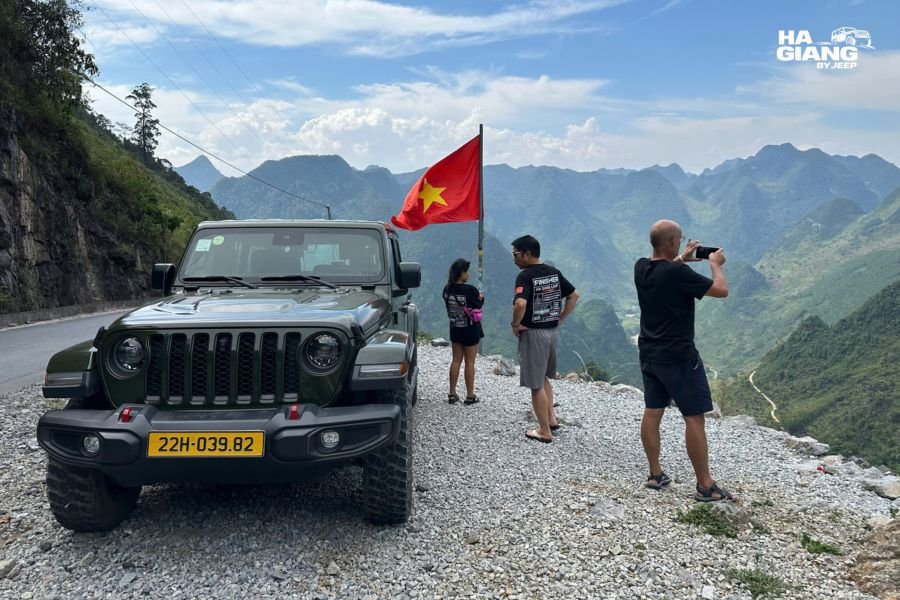
Our Ma Pi Leng Skywalk and M Viewpoint guide covers the pass viewpoints in more detail, including the glass floor platform above the canyon at the Skywalk.
See the Ha Giang Loop jeep tours
The Boat Trip Through Tu San Canyon
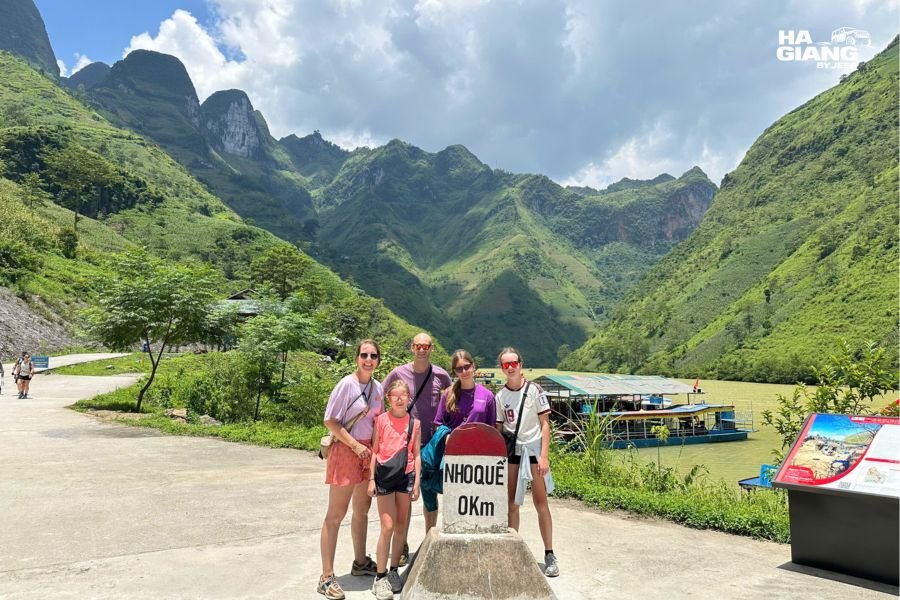
The boat trip is a separate arrangement from the viewpoints on the pass. It departs from a landing point reached by descending from the road, a descent that involves a path and some steps but is not a technical hike.
The boats are flat bottomed and electric or paddle powered, designed for the canyon rather than for open water. They carry several passengers and are operated by locals. The trip takes you into the interior of the canyon along the river.
Practical Points
- Fees apply and should be confirmed on site or with your operator before travel. Fees and arrangements can change.
- The landing point requires a descent from the road. Current access arrangements should be confirmed close to your travel dates.
- Timing with the Loop itinerary is important. Most Ha Giang Loop itineraries position the boat trip as an optional add-on to the Ma Pi Leng Pass day, which involves descending to the river and then returning to the road. Confirm with your driver what is possible within your schedule.
- Seasonal availability can affect the trip. During peak water season, the canyon interior can be rougher. During very low water, some sections become shallow. Confirm current conditions.
What the Boat Trip Is Like
The change in perspective from the boat is significant. What from the road looks like a canyon below you becomes, from the river, a canyon above you.
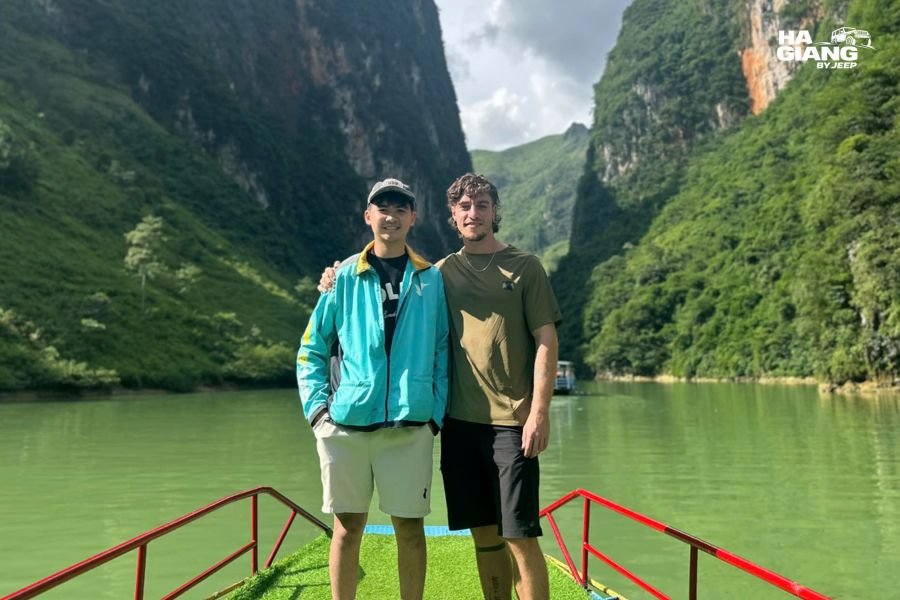
The walls rise vertically from the water on both sides. The strip of sky narrows as the canyon deepens. Looking straight up from a boat at the base of an 800 metre limestone wall is one of those experiences that arrives in a way that photographs taken in advance do not quite prepare you for.
At the narrowest points, the canyon walls are close enough that the sound changes. There is an acoustic quality to a deep narrow gorge that open landscapes do not have.
Looking up from the boat, the road along Ma Pi Leng Pass is visible as a thin line along the cliff face. The people on that road, if you look carefully, are the size of the people you were a short time ago.
The trip is not physically demanding. The boats are stable and the pace is calm. It is accessible to most travelers regardless of fitness level, and the canyon is accessible to families traveling with children on most conditions.
The experience is quiet rather than exhilarating. This is not whitewater. It is a slow passage through something geologically extraordinary, and the appropriate speed for it is the speed the canyon imposes.
Best Time to Visit Tu San Canyon
For the Colour
The turquoise of the Nho Que River is at its best in dry season, roughly October through April. The water runs clearer, the colour is most vivid and the contrast with the limestone walls is sharpest.
In this window, October and November are particularly good because the post-monsoon sky is clearing and the light in the canyon in the morning is extraordinary.
For the Volume
If the dramatic flood version of the canyon interests you, July through September brings the highest water levels. The river runs fuller and faster. The turquoise is replaced by a darker, more turbulent colour. The canyon walls appear to close in differently when the water is high.
For the Boat Trip
Dry season from October to April is the most reliable window for the boat trip. Conditions are predictable and the water is at its most photogenic. The descent to the landing is also more comfortable in dry conditions.
Confirm current trip availability with your operator before your travel dates regardless of season. Arrangements at specific sites in Vietnam can change.
Early Morning vs Midday
The quality of light in Tu San Canyon changes significantly through the day. The canyon is oriented such that direct sunlight reaches the water surface for limited hours. Early morning and late afternoon produce richer light on the walls and water. Midday light can be flat inside the canyon even when it is bright outside.
If you have flexibility in your itinerary, arriving at the boat landing in the morning is preferable to arriving at midday.
How Tu San Canyon Fits into the Loop
Tu San Canyon sits at the midpoint of the Ha Giang Loop between Dong Van and Meo Vac. It is part of the day that also includes Ma Pi Leng Pass, which makes it an already full day for most itineraries.
The standard approach on a four or five day itinerary is to leave Dong Van in the morning, stop at the main viewpoints on Ma Pi Leng Pass, descend to the boat landing for the Tu San Canyon boat trip, and continue to Meo Vac in the afternoon or early evening.
On a three days itinerary, the boat trip is sometimes omitted due to time, or it is treated as a brief stop rather than an extended experience. The four days version allows more time at each stop.
The descent to the river and the boat trip require an hour at minimum and two hours comfortably, excluding descent and ascent time. Plan accordingly. A private vehicle waits for you rather than operating on a fixed schedule, which makes a significant difference to how the day unfolds.
The view from the boat looking back up at the cliff road is something that the road experience alone does not give you. If you have done Ma Pi Leng Pass without the boat trip on a previous visit and are returning to Ha Giang, this is one of the most significant things that changes the experience.
Which Jeep Tour Is Right for You?
Tu San Canyon is on the route of every Ha Giang Loop itinerary. The difference between tours is how much time the day allows.
Ha Giang Loop, 3 days the canyon is seen from the road on the Ma Pi Leng Pass section. The boat trip may be possible with an early start; confirm with your driver.
Ha Giang Loop, 4 days the day that includes the canyon has more slack. The boat trip fits comfortably into a four days itinerary. This is the version we recommend if Tu San Canyon boat trip is on your list.
Ha Giang and Cao Bang, 5 days same canyon experience on day three or four, then continuing east to Cao Bang.
Ha Giang and Cao Bang, 6 days the fullest itinerary, with the most time at the canyon and the most of Cao Bang beyond it.
Jeep Wrangler Rubicon rental if you want to self drive and time the canyon visit yourself.
With a private vehicle and a local driver, the boat trip timing is flexible. You can arrive at the canyon early for the morning light, complete the trip, and continue to Meo Vac when you are ready. That flexibility is not available with shared transport.
Questions about the boat trip or itinerary timing? Message us on 📍 WHATSAPP. We can tell you what is currently operating and how it fits into your specific dates.
Frequently Asked Questions
What is Tu San Canyon?
Tu San Canyon is the gorge carved by the Nho Que River through the Dong Van Karst Plateau in Ha Giang province. It runs below Ma Pi Leng Pass, the most famous stretch of the Ha Giang Loop, and is recognised as the deepest canyon in Southeast Asia.
How deep is Tu San Canyon?
The canyon walls rise approximately 800 metres from the river surface at the deepest point. This is the measurement that earns it the deepest canyon in Southeast Asia designation.
Can you do a boat trip through Tu San Canyon?
Yes. A boat trip on the Nho Que River through the interior of the canyon is available. The boats depart from a landing point reached by descending from the road. Fees, availability and timing should be confirmed close to your travel dates.
Is Tu San Canyon the same as Ma Pi Leng Pass?
They are the same location viewed from different vantage points. Ma Pi Leng Pass is the road that runs along the cliff face above the canyon. Tu San Canyon is the gorge below. From the road you see the canyon. From the boat you see the road.
What colour is the Nho Que River in Tu San Canyon?
In dry season, the river runs a turquoise green that is distinctly unusual. The colour comes from the calcium carbonate content of the water interacting with the limestone geology and the light conditions in the canyon. In wet season, the river runs brown with monsoon sediment.
Is the boat trip suitable for families and older travelers?
The boat trip is physically accessible for most travelers. The boats are flat bottomed and stable. The descent to the landing is a path with steps rather than a technical hike. The main consideration is the descent itself, which may be challenging for travelers with significant mobility limitations. Confirm current access conditions with your operator.
Is the boat trip included in Ha Giang Loop tour packages?
Typically it is an optional add-on rather than a standard inclusion. Confirm with your operator what is included and what is additional.
What is the best time of year for Tu San Canyon?
October through April for the turquoise river colour and reliable conditions. July through September for the canyon at its most dramatic flood season volume. The boat trip runs most reliably in dry season.
Ha Giang by Jeep runs private 4x4 tours across the Dong Van Karst Plateau and Non Nuoc Cao Bang Geoparks, with English speaking local drivers and 24/7 support from our office in Ha Giang City. Email booking@hagiangbyjeep.com or WhatsApp +84 862 379 288.