
Travelling Responsibly in Ha Giang: What You Need to Know About Photos, Gifts and Children

The Ha Giang Loop puts you in contact with highland communities whose daily lives look quite different from your own. That contrast is part of what makes Ha Giang extraordinary. It is also what makes it easy to cause harm without meaning to.
This guide is not here to make you anxious about your visit. The vast majority of travelers leave Ha Giang without having done anything genuinely damaging. But a few habits — most of them adopted with good intentions — have become common enough to shape how communities experience tourism here. This is a practical look at which ones those are, and how to do things differently.
Why Ha Giang Specifically
Ha Giang attracts a particular kind of visitor: curious, independent, often coming specifically to see ethnic minority communities that outsiders rarely encounter. The Hmong, Dao, Tay, Lo Lo and Nung people of these highlands have their own languages, agricultural calendars, textile traditions and ceremonial practices. Many villages on the Ha Giang Loop have been receiving foreign visitors for little more than a decade. Tourism here is not established in the way it is in Hoi An or Hue: communities are figuring out how to relate to it in real time, season by season.
What makes the responsible travel question sharper here than in most of Vietnam is the economic gap. Many visitors come from countries where average incomes are ten or twenty times higher than the average household income in highland Ha Giang. That disparity creates specific dynamics around cameras, gifts and spending. It does not make visitors villains: it makes the choices you make more consequential.
The Dong Van Karst Plateau Geopark, which covers the most visited section of the Ha Giang Loop including Dong Van Old Quarter, Ma Pi Leng Pass, Meo Vac and the surrounding highlands, is a living cultural landscape. The communities inside it are not a heritage exhibit. They are farming families with their own economic pressures, relationships and very specific reactions to how visitors choose to behave. Some of those reactions have already been shaped by patterns established by earlier waves of tourism. Understanding what those patterns are is a reasonable starting point.
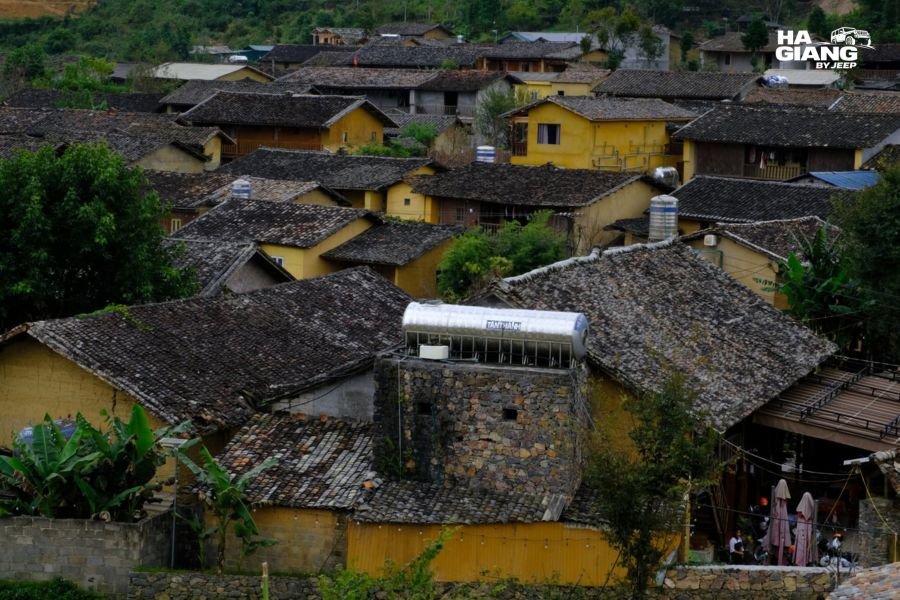
Photography in Ha Giang
Photography is probably the area where traveler habits diverge most sharply from community expectations. The highland market towns of Dong Van, Meo Vac and Khau Vai are genuinely photogenic. The temptation to photograph everything and everyone is understandable. But a few practical distinctions make a real difference.
Ask First, Shoot Second
The rule is simple enough to state: ask before you photograph anyone close up. Pointing at your camera and gesturing works across language barriers. Some people say yes immediately. Some hesitate and you can read that hesitation as a no. Some say no clearly. If someone says no, that is your answer. Full stop.
The more complex situations are market settings, where you might be photographing goods and stalls but a person is in frame; village scenes where you are photographing a house or a street but someone is in the shot; and ceremonies or gatherings that happen to be accessible to visitors. In all three situations, the question to ask yourself is whether the person has any idea you are pointing a camera at them. If they do not, you have already made the decision for them.
Some travelers feel conspicuous asking permission for every shot. That feeling fades quickly. What replaces it is a series of genuine, brief exchanges with people who either welcome you into the frame or decline with dignity. Neither outcome is awkward. Both are human.
The Money-for-Photos Question
Some communities and individuals in highland Vietnam have developed expectations of payment for being photographed. If someone clearly expects payment after you have taken a photo, pay them fairly: it is an honest transaction and beats the alternative of taking something you did not earn. The debate in responsible travel circles is whether offering payment preemptively — as a way of obtaining consent rather than as fair compensation for consent already given — distorts things. It can. Someone who would have said no, or who has mixed feelings, may say yes for the money. That is not quite the interaction either party might want.
The practical guidance: if someone extends their hand after you have photographed them, pay something reasonable, without grudging. If you want to photograph someone and they seem uncertain, do not lead with money. Lead with the gesture of asking, and accept whatever answer comes.
Children Are a Different Category
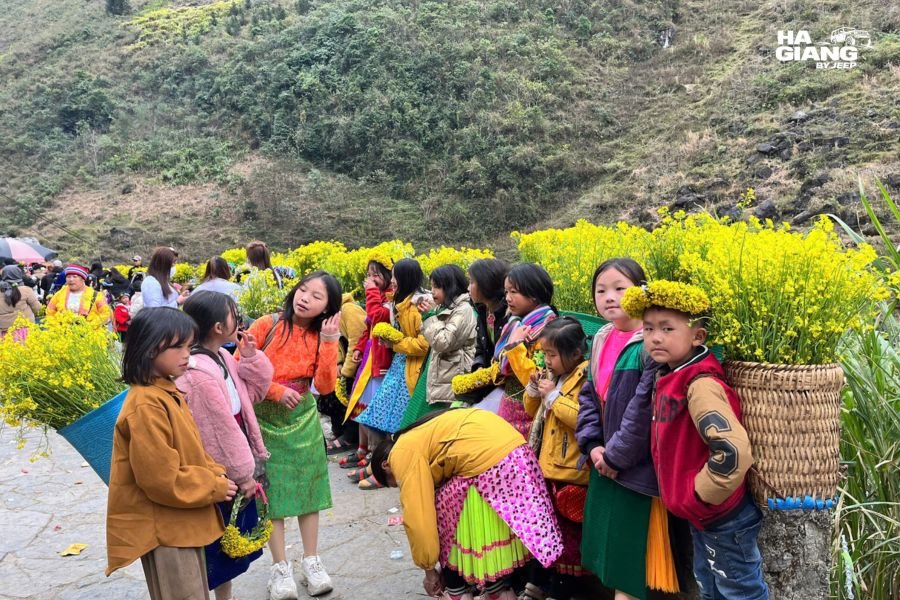
Children cannot meaningfully consent to being photographed, especially not by a stranger who speaks a different language. Parents and guardians can consent on their behalf, but that requires locating them and asking. In a busy market or on a roadside, that is often not practical.
The more uncomfortable question is what happens to those photographs afterward. The image of a child in ethnic dress is one of the most common types shared from Ha Giang, and it circulates indefinitely on social media and travel blogs without the subject having any say. A child in Dong Van or Lung Cu does not know their image is being seen by people on the other side of the world. They have not agreed to be part of anyone's travel story.
This is not an argument against photographing people's children under any circumstances. Parents who actively invite you to photograph their child are offering a different situation. The practical rule is: if you have not been invited, and you cannot make a genuine effort to ask an adult who can consent, leave the camera down.

Gifts and Children: What the Guides and the Communities Both Say
Few habits are more universally encouraged in pre-trip travel discussions and more universally discouraged by people who live in highland communities than giving sweets, pens or small gifts to children in villages along the Ha Giang Loop.
Why Candy Causes Harm
Dental care in rural highland Vietnam is limited. The nearest clinic capable of treating tooth decay may be many hours away. The practical consequence of a habit that began with individual travelers meaning well is that some villages now have children whose teeth are noticeably worse than they were a decade ago. That is a direct result of candy distributed by visitors.
The behavioral consequence is different but equally concrete: children learn that foreigners are sources of candy and sweets, not people to greet normally. In communities that have been receiving visitors for several years, you can observe this learned behavior yourself. Children who would otherwise be curious about you at a normal social distance instead run toward vehicles with hands outstretched. The habit has been trained into them by the cumulative behavior of people who thought they were being generous.
Pens and School Supplies: Good Intentions, Complicated Results
Pens and notebooks are a step up from candy in the sense that they do not cause dental damage. The intent behind giving them is usually genuine: education as a gift, something practical rather than frivolous. But the same behavioral dynamic applies. Giving pens to children who approach your vehicle reinforces the idea that approaching vehicles is the right strategy for getting things. And when you give to some children and not others because you run out, you create conflict within the group.
If you genuinely want to support education in highland communities, the most effective path is to research organizations working in Ha Giang before you travel and to donate in a way that reaches students through established channels rather than through individual distribution on the roadside. Donations handled by a school or community organization can be distributed fairly. A handful of pens given out of a jeep window cannot.
What Actually Helps
The most direct economic contribution any visitor makes to highland communities happens through spending decisions: eating at local restaurants and market stalls, buying from family-run craft shops, staying in locally-owned guesthouses where that choice exists. Each of those transactions puts money directly into household budgets. None of it requires distributing anything from a vehicle window, and none of it creates behavioral dynamics that persist after you leave.
The difference a local driver makes in these situations is not abstract. When a Hmong grandmother hesitates at your camera, he notices before you do. When a child asks for sweets, he knows how to redirect it without anyone losing face. That knowledge comes from living in these communities, not reading about them.
See the 4 Days Ha Giang Loop Tour WhatsApp Us to Plan Your RouteWhere to Spend and How
Responsible spending in Ha Giang is not complicated, but it requires knowing where to stop. A private jeep tour has a practical advantage here: your driver knows the roadside stalls, markets and craft villages that are worth pulling in for, and you are not on a fixed timetable that makes spontaneous stops impossible.
Lung Tam Linen Village
Lung Tam, in the Quan Ba district, is the most well-known handicraft community on the Ha Giang Loop. The women of Lung Tam have been weaving linen from hemp for generations. The fabric is dyed, often by hand, using traditional methods and locally-sourced pigments. The products sold at Lung Tam — table runners, scarves, clothing, bags — are genuinely beautiful and durable, the kind of thing that lasts rather than the kind of souvenir that ends up in a drawer.
Buying directly at Lung Tam, from the women who made what you are buying, is as close to a direct economic transfer as tourism gets. The price you pay goes to the household that produced it. No chain, no markup, no intermediary. It also takes time: the market at Lung Tam is worth half an hour rather than a five-minute stop. That is part of what makes it worth the stop.

Highland Markets
The Dong Van Sunday Market and the market at Meo Vac are genuine trade markets that have operated for generations, not tourist markets designed around visitor expectations. The goods sold include produce, livestock, clothing, tools and food. The vendors are there because that is where the region's trading happens, not because they are trying to sell to foreigners.
Buying food at the market, eating a bowl of pho at a stall, spending an hour watching what is actually being sold and by whom: these are small economic contributions, but they are direct. Khau Vai Market, held near Meo Vac traditionally on specific lunar calendar dates, is worth checking in advance for timing. It draws vendors and visitors from across the highland districts and has a character unlike anything else in the region. Pho Bang and Sung La are quieter stops between the main market towns where your driver often knows a stall or a family producing something genuinely local.

Food Stops and Roadside Stalls
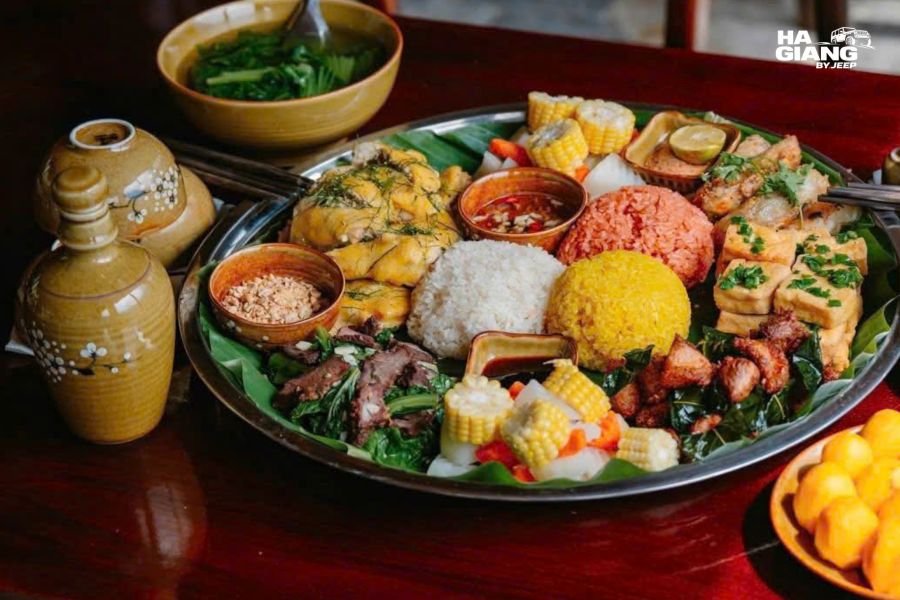
Highland food in Ha Giang is genuinely good, and eating it at the place it is made is both the best version and the most economically useful one. Com lam, sticky rice cooked in bamboo tubes over charcoal, appears at roadside stalls throughout the loop and is the simplest possible lunch. Thang den, sticky rice balls in ginger syrup, turns up at market stalls in the cooler months. Banh cuon trung, steamed rice rolls with egg, is a breakfast staple that varies slightly by village.
Chao au tau, Ha Giang's distinctive mountain yam soup, is warming and completely unlike anything you will find in Hanoi. Ruou ngo, the highland corn wine, is offered freely in many settings. If you drink it, drink it slowly: the proof varies unpredictably and the generosity of the pours can catch visitors off guard. If you decline, do it gracefully — the offer is genuine hospitality, not a sales tactic.

Interacting with Children
Children on the Ha Giang Loop are curious. In villages where tourism is relatively new, they will often come out to see a jeep stop, wave from a distance, or approach if they are feeling bold. The experience of genuine, unscripted curiosity from a highland child who has never spoken to a foreigner before is one of the moments that makes Ha Giang different from almost anywhere else in Vietnam.
When Kids Approach You
The practical question is what to do when they do approach. The answer is: engage without giving. Wave back. Say xin chao, which is hello in Vietnamese and which will produce delighted reactions even from Hmong-speaking children who do not use Vietnamese at home. Learn cam on, which is thank you, and use it. The linguistic effort alone, however clumsy, signals that you are treating them as people rather than subjects.
If a child asks for something — and in some villages they will, because other visitors have trained the expectation — a clear but friendly no, followed by continued engagement on other terms, is the most honest response. Children understand no. They understand it even better when it comes with eye contact and a smile than when it comes with a dismissive wave. If you are unsure how to redirect, your driver will know.
Connection Without Giving
Some of the most memorable interactions with highland children happen through things that require nothing: showing a child a photo of your own country on your phone, learning to count to five in Hmong from a seven-year-old, or just sitting near a group of kids and letting them approach at their own pace. These require no preparation and no expenditure. They work because children everywhere are fundamentally curious, and curiosity meets curiosity without needing a transaction in the middle.
What does not work: photographing children closely without asking, handing out anything from a bag or pocket, or creating a gathering of children around a vehicle by showing generosity to one and not to others. The last situation can spiral in a few minutes in villages where children have learned that vehicles sometimes produce sweets or pens.
What Your Local Driver Can Help With
The gap between reading about responsible travel and actually practicing it in unfamiliar cultural terrain is large. A local driver does not close that gap completely, but he narrows it substantially, and in ways that are difficult to replicate through preparation alone.
Your driver knows these communities because he is part of them, or comes from adjacent ones. He knows which families have an established relationship with visitors and which prefer not to be approached. He knows the unwritten protocol for entering a village during a ceremony, and can tell you before you get out of the jeep what is happening and how to behave. He knows which market stall in Meo Vac is run by a woman who has been selling the same handwoven cloth for twenty years, and which is a recent venture by a middleman reselling goods made elsewhere. That knowledge is not in any guidebook.
When something goes slightly wrong — when a photograph is taken in a moment of poor judgment, when a child is inadvertently given something that sets off a small scramble, when a cultural cue is missed — a driver can intervene with a word or a gesture that defuses the situation without anyone losing face. That capacity is not abstract. It comes from living here, knowing people personally, and understanding that the village you are passing through is not a backdrop for anyone's travel story but someone's actual home.
Du Gia, in the southeast of the loop, sits at the edge of the highlands where the landscape transitions from karst peaks to river valley. The communities here are less visited than Dong Van or Meo Vac. Your driver's local knowledge matters most precisely in places like this, where there is no infrastructure of tourism to absorb a cultural misstep.

Which Ha Giang Jeep Tour Is Right for You?
The nature of responsible travel in Ha Giang changes somewhat depending on how long you have and where you go. A longer tour means more time in each community, more flexibility to stop and engage meaningfully rather than passing through on a schedule. A shorter tour is still worthwhile: even a 3 days tour through the Ha Giang Loop puts you in contact with communities and landscapes that most visitors to Vietnam never reach.
The 4 days Ha Giang Loop tour is the most popular option for good reason: the extra day compared to the 3 days version means you are not rushing through the highlands. You have time to stop at Lung Tam without it eating your schedule, to linger at a market, to let an interaction happen rather than shepherding it. That unhurried pace is part of what makes responsible travel practical rather than aspirational.
The 5 days Ha Giang Cao Bang tour and 6 days Ha Giang Cao Bang tour extend south into Cao Bang province, adding Ban Gioc Waterfall, Pac Bo Historical Site and the highland communities of the Non Nuoc Cao Bang Geopark. Two distinct geoparks, two distinct cultural zones, and a longer arc through the northern highlands than most visitors to Vietnam ever attempt.

All tours are private: no shared groups, no strangers in your jeep. Your vehicle is a Jeep Wrangler Rubicon with open-air soft-top capability for highland passes and heater for the cold months, operated by a local English-speaking driver who grew up in this region. If you would prefer to self-drive, the Jeep Wrangler Rubicon rental is available as a separate option.
Ha Giang Loop
3 Days 2 Nights
- Quan Ba, Yen Minh, Dong Van
- Ma Pi Leng Pass, Meo Vac
- Village stops and local markets
Ha Giang Loop
4 Days 3 Nights
- Full loop, unhurried pace
- More time in highland villages
- Lung Tam, Khau Vai Market
Ha Giang and Cao Bang
5 Days 4 Nights
- Full loop plus Cao Bang
- Ban Gioc, Non Nuoc Geopark
- Two UNESCO Global Geoparks
Ha Giang and Cao Bang
6 Days 5 Nights
- Maximum time, minimum rush
- Full day each major landmark
- Pac Bo, Phia Oac, Ban Gioc
Frequently Asked Questions
Yes, with the right approach. The key is asking first, through gesture if necessary, and respecting whatever answer you receive. Close-up portraits of individuals require a clearer ask than landscape shots where people appear in the distance. Children specifically require more care: without a consenting adult present, it is better to leave the camera down.
If someone extends their hand after you have photographed them, pay something fair without grudging. Offering payment preemptively as a way of obtaining consent is more complicated: it can blur the question of whether someone actually wants to be photographed. The more honest path is to ask through gesture first, and treat payment as fair compensation for genuine consent rather than as a way of bypassing uncertainty.
The recommendation from most experienced guides and responsible tourism organizations working in highland Vietnam is no. Candy causes dental damage in communities where dental care is limited. Any kind of gift given from a vehicle creates behavioral expectations that persist long after you leave. If you want to contribute something meaningful, spending at local businesses and markets is the most direct and least disruptive way to do it.
Handwoven linen from Lung Tam Linen Village in Quan Ba district is the most well-known craft item on the Ha Giang Loop, produced by Hmong women using traditional techniques. Buying directly from the makers rather than from souvenir shops in Hanoi or Ha Giang City ensures the money reaches the household that produced it. Embroidered textiles, traditional clothing items and locally-grown tea are other options worth considering at highland markets.
Some basic ones: remove your shoes before entering a home if you are invited in. Avoid pointing at people with your finger: an open hand or a nod is less intrusive. If you are offered food or drink in a home, accepting at least a small amount is polite. During ceremonies or rituals, observe from a respectful distance unless invited closer. Your driver can brief you on the specific customs of any community you are about to enter, since practices vary by ethnic group.
In practice: choosing to spend at local family businesses rather than chains or middlemen; asking before photographing; not giving gifts to children; engaging with people as people rather than as photographic subjects or recipients of generosity. It does not mean abstaining from normal interaction or spending the whole tour in a state of cultural anxiety. Most of responsible travel in Ha Giang is just behaving the way you would want a visitor to behave in your own community.
Only if you are clearly invited. Some families along the Ha Giang Loop have an established practice of welcoming visitors, often for a meal or a demonstration of weaving or other craft. Others do not. The marker is an explicit, unambiguous invitation, not an open door or a friendly wave from outside. Your driver will know which households have that established relationship and can facilitate an introduction where it makes sense.
The clearest signal is hesitation or discomfort in the person you are interacting with. Turned shoulders, brief answers, an averted gaze: these are legible across language barriers. A second signal is your own instinct: if you feel you are pushing past someone's comfort to get a photo or an interaction, you probably are. A local driver who knows these communities personally can read these situations faster than any visitor and will usually intervene or redirect before anything becomes genuinely uncomfortable.
Lung Tam is a Hmong weaving community in the Quan Ba district of Ha Giang, known for traditional hemp-linen fabric made using hand-dyeing and weaving techniques that have been practiced in the region for generations. The products sold there are made by the people selling them. Buying directly at Lung Tam is one of the most straightforward ways a visitor can put money into a highland household, and a half-hour stop is more useful than a quick look around.
In several practical ways. You are not competing with 15 other people for a photo at every stop. You can pause when something interesting happens rather than following a group timetable. Your driver is from these communities and can brief you on conduct, introduce you to people he knows personally, and read situations that a guidebook cannot prepare you for. You can also stop at any roadside stall or market your driver recommends, putting spending decisions in the hands of someone who knows which businesses are genuinely local.
Yes, for the same reason any genuine trade market is: the people selling at Dong Van Sunday Market are there because that is where the regional economy functions, not because a tourism operator arranged them. Eating at a market stall, buying produce or craft goods from a vendor, spending time in the market as a participant rather than a spectator: all of these are both more interesting and more economically useful than buying the same items from a souvenir shop in a tourist hub.
No. A handful of basic Vietnamese phrases makes a difference: xin chao (hello), cam on (thank you), and a willingness to gesture, laugh and engage without language. Many of the most meaningful interactions on the Ha Giang Loop happen without shared vocabulary. What matters more than language is intention: the difference between treating people as the main event rather than as a backdrop is visible and legible regardless of what words you use.
Ha Giang done well is unforgettable. The communities you visit deserve visitors who come curious rather than extractive. Ready to plan your trip?
Secure Your Spot WhatsApp: +84 938 988 593