
The Cao Bang Loop: Routes, Highlights, and What It Is Actually Like
Everyone calls it a loop. It is really a hub with four spokes, and knowing that changes how you plan it.
The Cao Bang Loop has become the phrase people use for a trip around Cao Bang province in the far northeast, and it is worth being straight about what it describes. Unlike the Ha Giang Loop, which is a genuine circuit you drive round and come back to where you started, Cao Bang is a province with a city in the middle and its best places scattered on separate roads radiating out from it.
That sounds like a technicality. It is not. It is the single thing that determines whether your itinerary works, because a spoke has to be driven twice and a circuit does not, and people who plan Cao Bang as if it were Ha Giang end up spending two days repeating the same road.
This guide covers what is actually out there, which sequences make sense, how the province connects to Ha Giang, and what we can and cannot do for you. Cao Bang holds Non Nuoc Cao Bang, a UNESCO Global Geopark, and it sees a fraction of the visitors that the Dong Van plateau does.
What is in this guide
- The Cao Bang Loop is not one loop, and that matters
- How Cao Bang differs from Ha Giang
- The highlights, one by one
- Three route options that actually work
- How our combo tours run, and what we do not sell
- Getting there and getting away
- When to go
- Practical notes for a border province
- What to eat
- Mistakes people make
- Which jeep tour is right for you?
- FAQ
The Cao Bang Loop is not one loop, and that matters
Here is the geography in one paragraph.
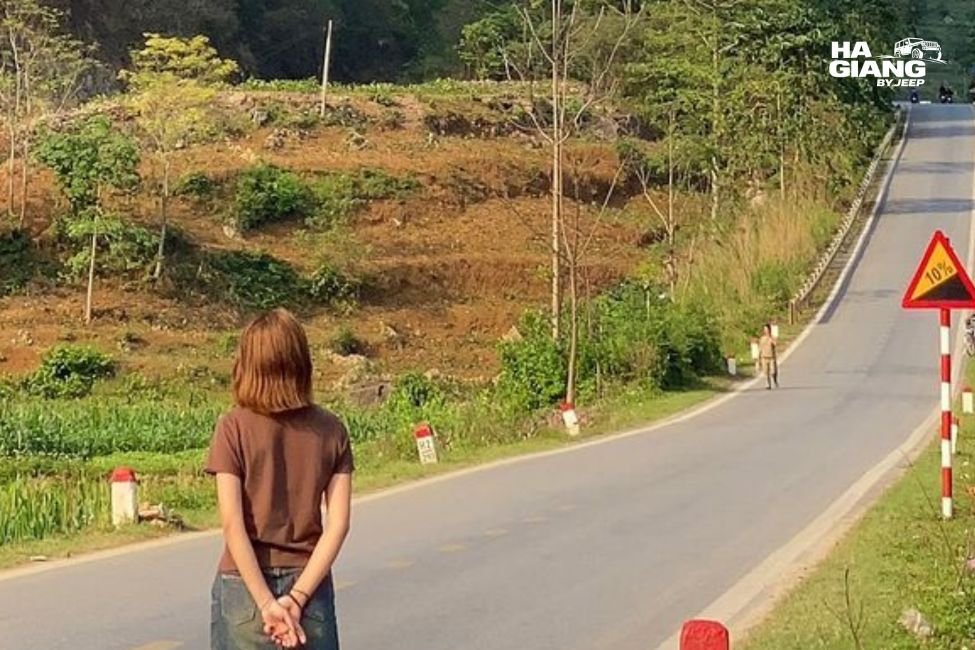
Cao Bang City sits roughly in the middle of the province and functions as the hub. East of it, past Ma Phuc Pass, the road runs to Trung Khanh and on to Ban Gioc Waterfall on the border river, with Nguom Ngao Cave and the Ngoc Con Valley in the same corner. Northwest of the city, a separate road runs to Pac Bo near the border. South and slightly east, the Thang Hen lakes and God's Eye Mountain sit in their own pocket. West, a long road runs through Nguyen Binh and on toward Bao Lac, where the 15 level pass climbs the mountainside, and that western road is the one that eventually reaches Ha Giang.
So there are four directions from one base, plus a western corridor that connects the whole province to Ha Giang. What people call the Cao Bang Loop is usually some combination of the eastern spoke to Ban Gioc, a detour to God's Eye, and a run out to Pac Bo.
The planning consequence: you either accept doubling back on some roads, or you use the western corridor to arrive from Ha Giang and finish in Cao Bang City, which turns the whole thing into one long line rather than a set of out and back trips. The second version is how our combo tours are built, and it is the reason they finish in Cao Bang rather than returning to Ha Giang.
How Cao Bang differs from Ha Giang
Both provinces are limestone country and both hold a UNESCO Global Geopark. They do not look alike.
Ha Giang is vertical and dry. Bare grey towers of rock, maize planted in the cracks, deep canyons, villages clinging to slopes. The drama is in the height and the drop.
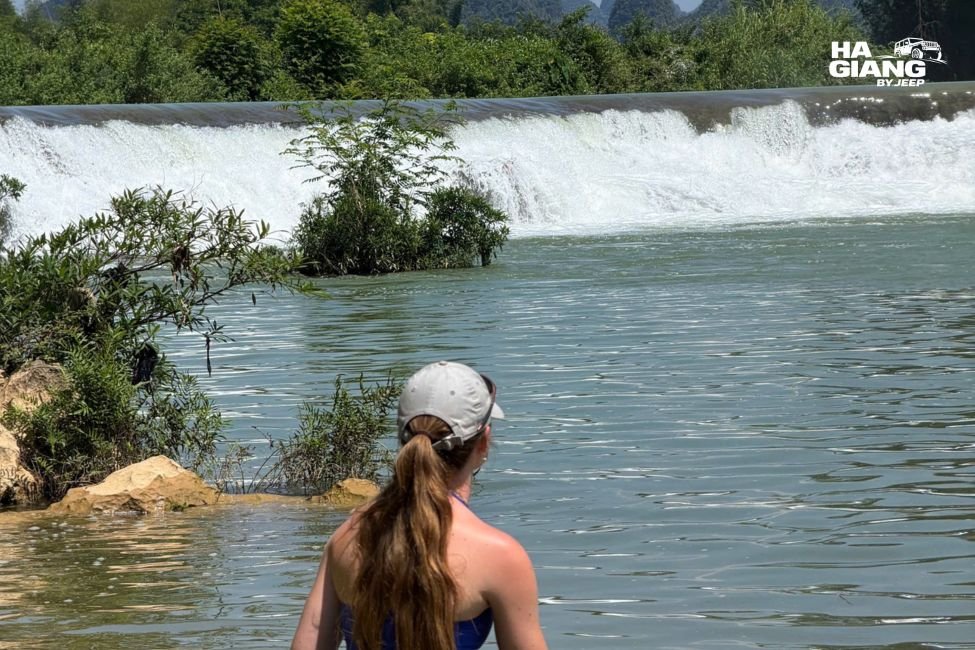
Cao Bang is horizontal and wet. Rounded karst hills standing in flat green valleys, rivers running between them, rice rather than maize, buffalo in the fields. Waterfalls, lakes, caves. It is softer country and it photographs completely differently.
Two practical differences worth knowing:
Cao Bang has fewer visitors. Substantially fewer. Where the Ha Giang loop road can be busy in autumn, most of Cao Bang is empty by comparison, particularly outside the Ban Gioc car park.
The driving is easier. Lower, wider, less exposed than Ma Pi Leng. If someone in your party found the Ha Giang passes hard work, Cao Bang is the gentler half of the trip.
Neither is better. They are complements, which is why we run them together rather than as alternatives.
Thinking about adding Cao Bang to a Ha Giang trip?
Tell us your dates and how many nights you have and we will tell you honestly whether 5 days or 6 days makes sense, or whether you are better off doing Ha Giang properly and saving Cao Bang for another visit.
The highlights, one by one
Ban Gioc Waterfall
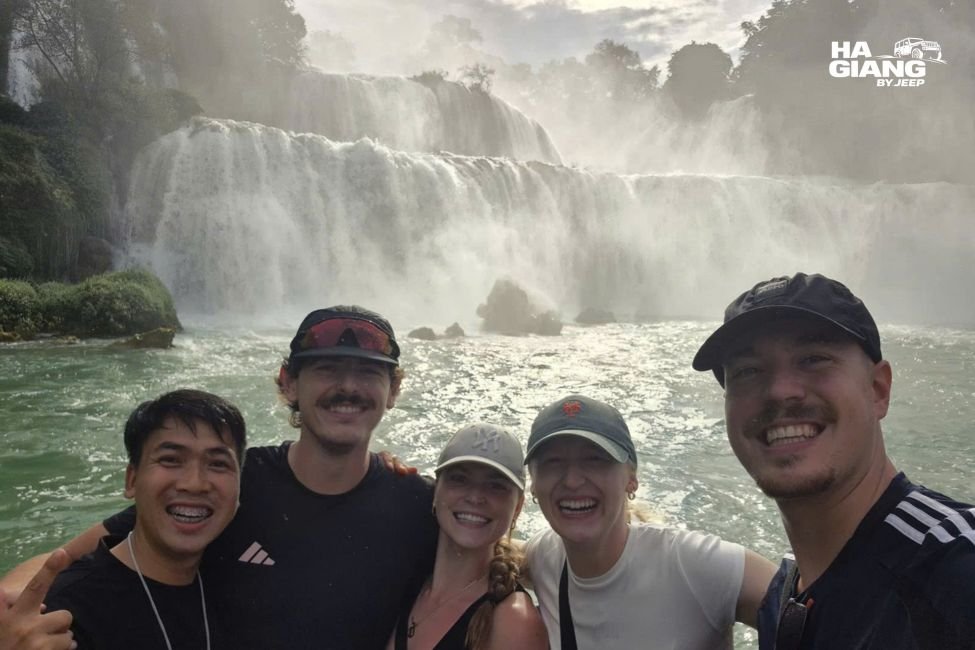
The reason most people come. A wide, tiered waterfall on the Quay Son River, which forms the border with China at this point, so the falls are shared between the two countries. Bamboo rafts take visitors out onto the water below the main tier, and the viewing area on the Vietnamese bank is paved and flat.
Flow varies enormously with the season, which is the thing to understand before you plan around it. The wet months give you volume and power. The dry months give you clearer water and a more defined shape. Both are worth seeing and they are not the same photograph.
Ticketing, opening hours, raft operation and anything to do with the border area can all change, so treat specifics you read online as provisional and check on the day. We will have a full Ban Gioc guide covering the practical detail, and when it is live this section will point at it rather than trying to be it.
Nguom Ngao Cave
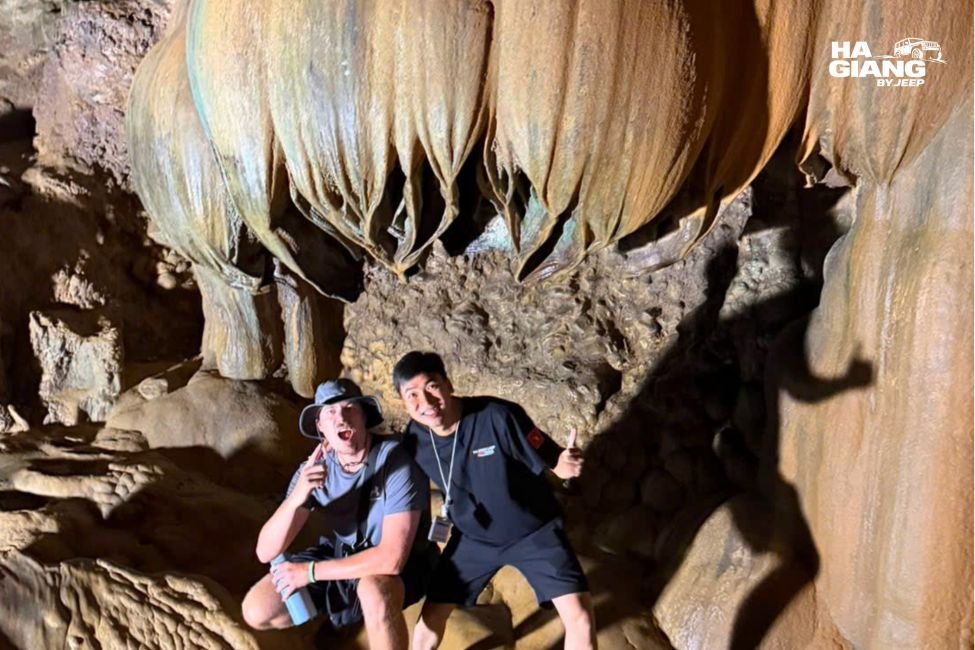
A large limestone cave system close to Ban Gioc, with a lit walking route through chambers of stalactites and flowstone. Most people do it in the same half day as the waterfall, which is the sensible pairing since they are near each other.
Worth knowing: it is cool inside, the floor can be wet, and the walk involves steps and uneven ground. Grip on your shoes matters more than anything else you bring.
Ngoc Con Valley
The stretch of the Quay Son between Trung Khanh and Ban Gioc, where the river runs slow through rice fields with karst hills standing behind them and villages along the bank.
Almost nobody stops here, because it is on the way to something famous. That is exactly why you should. It is the most quietly beautiful driving in the province and it costs nothing but the willingness to pull over.
Ma Phuc Pass
The gateway east from Cao Bang City. Limestone blades rise on both sides of the road and the pass gives you the first proper sense of what the province looks like. A short stop rather than a destination, but do stop.
God's Eye Mountain and the Thang Hen lakes
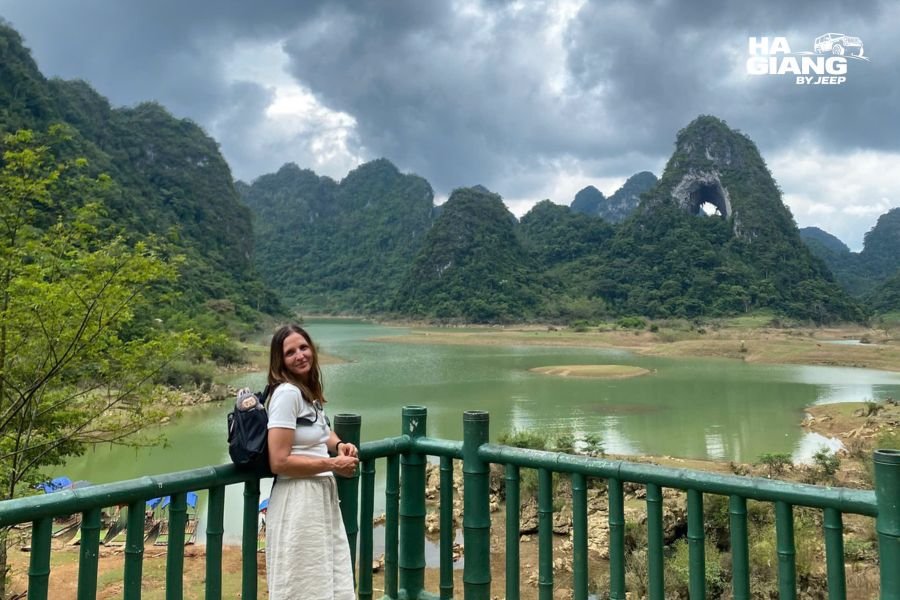
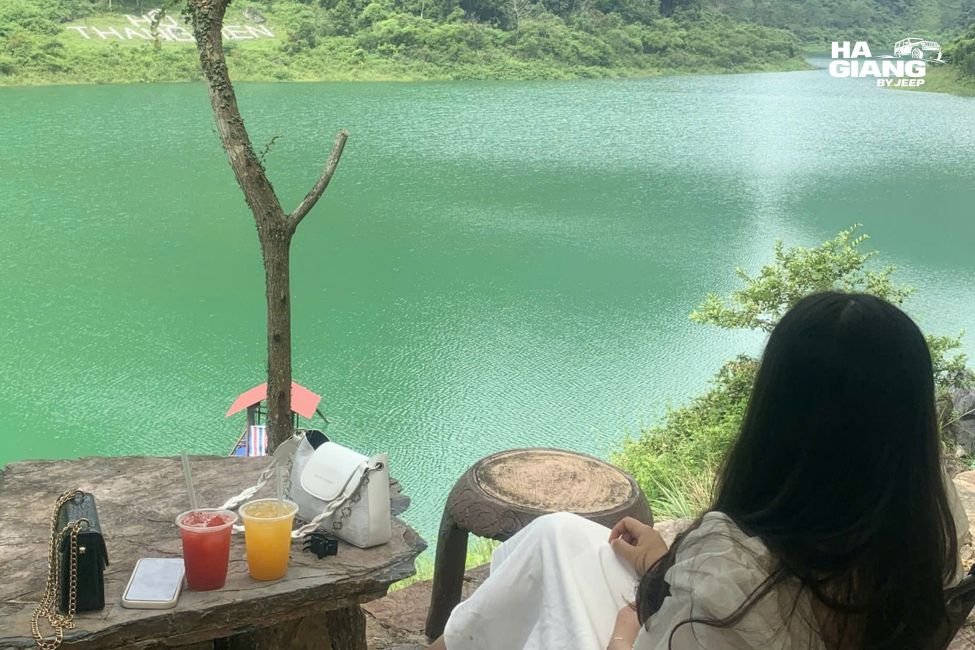
A limestone peak with a natural hole punched clean through it, standing above open grassland where horses graze, near the Thang Hen lake system. In the drier months the ground below is grassland. In the wet months water fills parts of it, and it looks like a different place.
The photograph is from the valley floor and requires no walking. Climbing up to the hole itself is a serious walk and entirely optional. This is the stop that surprises people most, because almost nobody arrives having heard of it.
Pac Bo Historical Site
A cave and stream complex in a quiet limestone valley northwest of Cao Bang City, significant in modern Vietnamese history as the place Ho Chi Minh returned to in 1941 after decades abroad.
Approach it as two things at once. It is a site of real national significance, treated with respect by Vietnamese visitors, and it also happens to sit in genuinely lovely countryside with a clear stream running through it. Paths and some steps, plus flat sections that work even if you skip the cave.
The 15 level pass, near Bao Lac
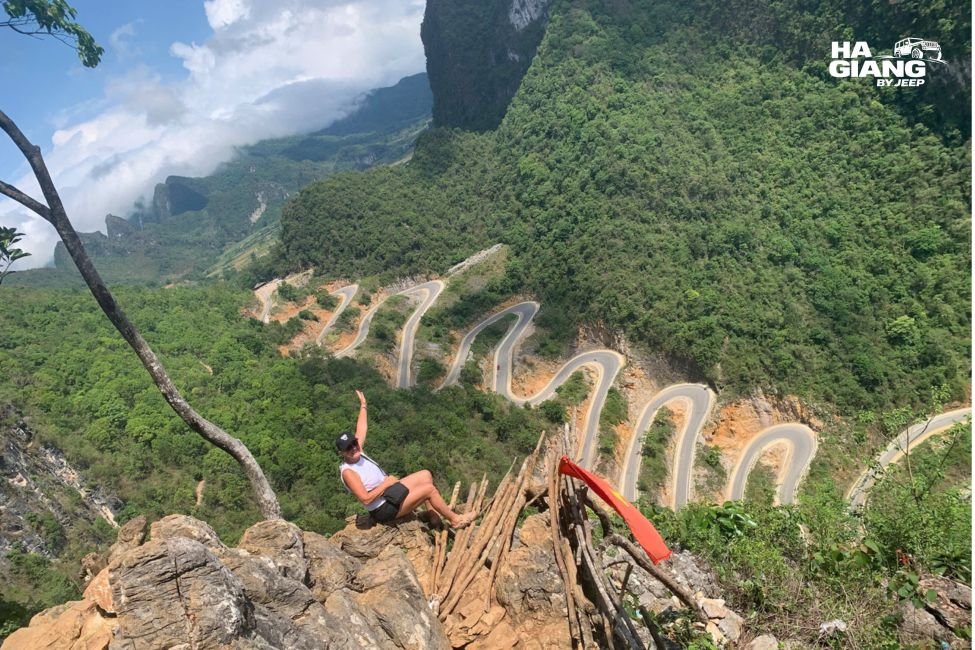
Out west, on the corridor between Cao Bang and Ha Giang, a road climbs a mountainside in a stack of hairpin bends piled almost directly above one another. Photographed from above it looks unreal.
This is a driving highlight rather than a stopping one, and you see all of it from your seat. It only appears on the 6 days routing, because it sits on the long western road that the 5 days version does not take.
Bao Lac and the western corridor
The market town on the western side, and the practical link between the two provinces. Quiet, working, few visitors. If your dates land on a market day it is a good one, and less visited than the Ha Giang markets.
Three route options that actually work
Sequences, not schedules. Build the specifics around your dates.
Option A. The eastern spoke, minimum viable Cao Bang
| Order | Where |
|---|---|
| 1 | Cao Bang City, base |
| 2 | Ma Phuc Pass |
| 3 | Trung Khanh and Ngoc Con Valley |
| 4 | Ban Gioc Waterfall |
| 5 | Nguom Ngao Cave |
| 6 | Back toward Cao Bang City |
The version most people do. Covers the headline sights, doubles back on one road, and works if Cao Bang is a short addition rather than the point of the trip.
Option B. Hub and spokes, the fuller province
| Order | Where |
|---|---|
| 1 | Cao Bang City, base |
| 2 | Thang Hen and God's Eye Mountain |
| 3 | Ma Phuc Pass, Trung Khanh, Ngoc Con |
| 4 | Ban Gioc and Nguom Ngao, night nearby |
| 5 | Back through Cao Bang City |
| 6 | Pac Bo, northwest spoke |
| 7 | Cao Bang City |
More complete, more repeated road. This is Cao Bang as a destination in its own right and it needs a good few days.
Option C. The through route from Ha Giang, which is how we run it
| Order | Where |
|---|---|
| 1 | Ha Giang Loop first, from Ha Giang City |
| 2 | East from Meo Vac toward Bao Lac |
| 3 | The 15 level pass, on the 6 days version |
| 4 | Into Cao Bang: Thang Hen, God's Eye |
| 5 | Ma Phuc Pass, Trung Khanh, Ngoc Con Valley |
| 6 | Ban Gioc and Nguom Ngao |
| 7 | Pac Bo, if the days allow |
| 8 | Finish in Cao Bang City |
One long line rather than a set of out and back runs. Very little repeated road, two Geoparks, and it finishes where the transfers back to Hanoi leave from.
How our combo tours run, and what we do not sell
Plain version, because it affects what you can book.
We do not sell a Cao Bang only tour. Our Cao Bang itineraries are the 5 days 4 nights and 6 days 5 nights combos, and both start with the Ha Giang Loop and then continue east. Both finish in Cao Bang rather than returning to Ha Giang.
That is not a sales tactic. Our office and our vehicles are in Ha Giang City, the western corridor is the natural connection between the two provinces, and Option C above is genuinely the best way to see Cao Bang from where we are. Running you out to Cao Bang alone would mean a long empty drive at each end that you would be paying for.
If Cao Bang alone is what you want, tell us and we will say honestly what we can and cannot do rather than pretending the combo is what you asked for. There is also the Wrangler Rubicon rental if you want to drive the province yourself.
The difference between 5 days and 6 days:
- 5 days 4 nights takes the shorter connection east and concentrates on the Ban Gioc corner: Trung Khanh, Ngoc Con, the waterfall, the cave.
- 6 days 5 nights takes the longer western road through Bao Lac and the 15 level pass, and has the time for Pac Bo, God's Eye Mountain and a slower run through the valleys. Shorter driving days across a longer trip, which most guests find easier rather than harder.
If Cao Bang is the reason you are interested rather than an afterthought, book the 6 days.
Getting there and getting away
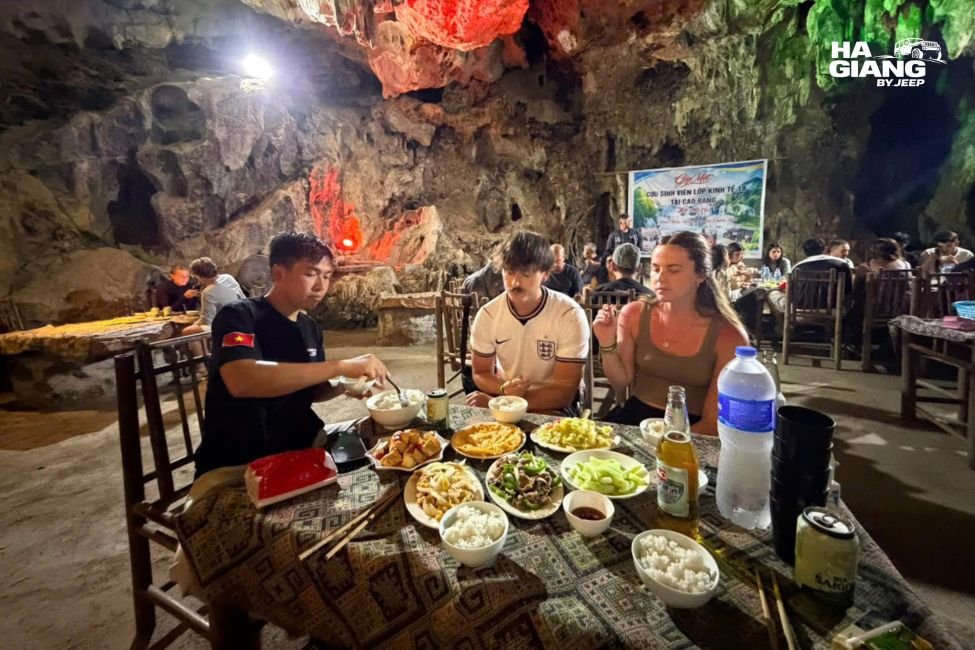
Cao Bang has no airport and no railway. Everything is by road.
Coming with us, you do not travel to Cao Bang independently at all. You are picked up to Ha Giang at the start and the tour delivers you to Cao Bang at the end, so the only transfer you book yourself is the one out.
Leaving Cao Bang. Transfers are per person, one way, and the same price to Hanoi Old Quarter or Noi Bai Airport:
| Departure | Type | Price per person |
|---|---|---|
| 16:00 | Limousine | 450,000 VND |
| 06:00 next day | Limousine | 450,000 VND |
| 11:30 next day | Limousine | 450,000 VND |
| 20:30 | Cabin Sleeper | 450,000 VND |
| 20:30 | VIP Cabin Sleeper | 500,000 VND |
Back to Ha Giang instead: 16:00 Limousine or 08:00 next day Limousine, both 450,000 VND.
Onward from Cao Bang to Ninh Binh, 19:00 Cabin Sleeper 550,000 VND. To Ha Long Bay or Cat Ba, 20:30 Regular Sleeper 600,000 VND.
The one thing to get right: build your onward flight around the departure that suits you, not the other way round. The 11:30 next day limousine, with a proper night's sleep in Cao Bang first, is the option we point most guests toward. Finishing a six day mountain trip by getting straight onto an overnight bus is a poor end to a good week.
Getting into Ha Giang at the start is the standard set. From Hanoi Old Quarter or Noi Bai Airport: 07:00 Limousine 400,000 VND, 10:30 VIP Sleeper 450,000 VND, 16:00 Limousine 400,000 VND, 20:30 Regular Sleeper 350,000 VND, 21:00 VIP Sleeper 450,000 VND, 21:00 Cabin Sleeper 400,000 VND.
When to go
Broadly, and with the honest caveat that weather does what it likes.
September to November. Rice turning gold in the valleys, generally clearer air, comfortable temperatures. The best all round window and the one to book early for.
December to February. Cold, sometimes very cold in the higher western districts. Quiet, atmospheric, bare. Waterfall flow is lower, which some people prefer for the shape of it.
March to May. Green coming through, quiet, pleasant. A good option if autumn is not available to you.
June to August. The wet months. Ban Gioc is at its most powerful and the valleys are at their greenest, and this is also when rain is heaviest and road repairs most likely. Enjoyable if you are flexible.
Ban Gioc specifically: volume in the wet season, clarity and shape in the dry. Ask us which your dates fall into so you know what you are going to see.
Practical notes for a border province
Border permits. Parts of both provinces run close to the Chinese border and foreign visitors need permits for the relevant areas. We arrange these from our Ha Giang City office and we need your passport details in advance. Carry your passport with you rather than leaving it at a hotel. Requirements and procedures can change, so confirm the current situation close to your travel date.
At the border itself. Ban Gioc sits on an international boundary, with markers, official areas and staff. Follow signage and instructions, do not wander past marked points to get a better photograph, and be sensible about what and where you photograph around official installations. This applies doubly to drones. Rules are strict, permissions are required, and we will not summarise them here because a stale summary is worse than none. Tell us at booking if you are hoping to fly.
Cash. Same as Ha Giang. Cao Bang City has reliable ATMs, and beyond it the villages and roadside stops are cash only. Draw enough for several days in small notes.
Phone coverage. Good in the towns, patchy on the western road. Expect stretches with nothing.
Accommodation. Small hotels in Cao Bang City and Trung Khanh, homestays in the villages. Base tour prices include a dorm bed. Private room upgrades are 500,000 VND per room per night for 1 to 2 people, 700,000 VND for a family room for 3 to 4. On a six day trip, the upgrade is worth it.
What to eat
Cao Bang cooks differently from the Ha Giang plateau. Lower, wetter, more rice and river.
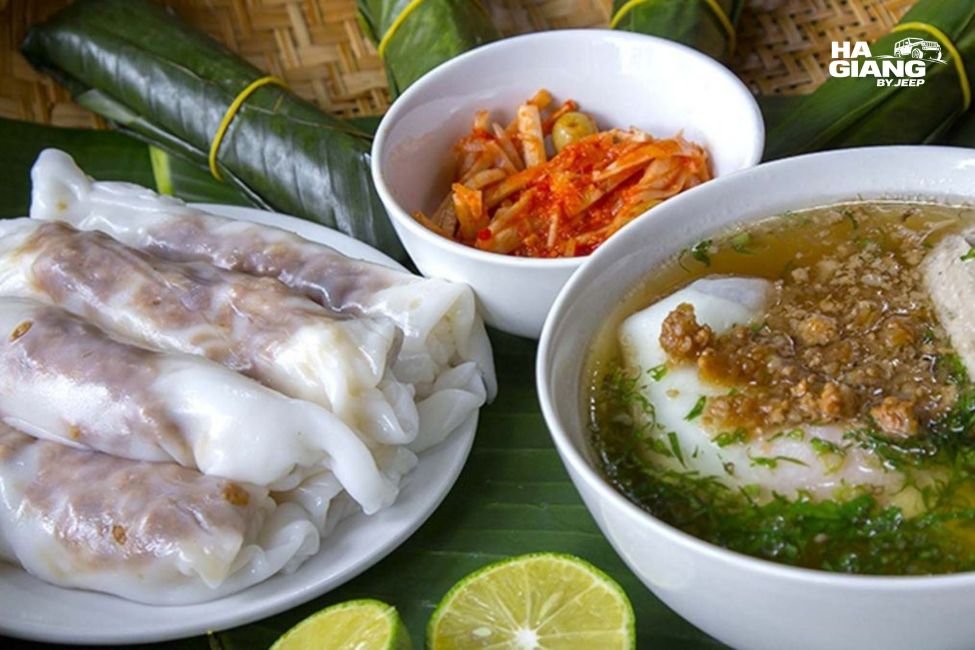
The ones to order: banh cuon Cao Bang, rice rolls served sitting in a bowl of bone broth rather than dipped into it. Vit quay bay vi, seven flavour roast duck, the signature dish of the province. Pho chua, sour pho served cool with roast pork, peanuts and herbs. And hat de Trung Khanh, Trung Khanh chestnuts, roasted and sold by the bag in autumn.
Our Ha Giang food guide covers the northern dishes in full, with a Cao Bang section at the end.
Mistakes people make
- Planning it like the Ha Giang Loop. It is not a circuit. Accept the doubling back or come through from Ha Giang.
- Giving it two days. Ban Gioc alone eats most of a day once you count the drive out and back from Cao Bang City. Two days gets you the waterfall and very little else.
- Skipping Ngoc Con Valley because it is not on a list. It is the best driving in the province.
- Assuming Ban Gioc looks the same year round. Flow varies hugely by season. Know which version you are booking.
- Not knowing the tour finishes in Cao Bang, then discovering the flight was booked from the wrong assumption.
- Leaving the return transfer to the last day. Give us the request at booking.
- Treating Pac Bo as just a scenic stop. It matters to people here. Read a paragraph about it before you arrive.
- Bringing a drone and assuming. Border province. Check first.
Ready to plan the route?
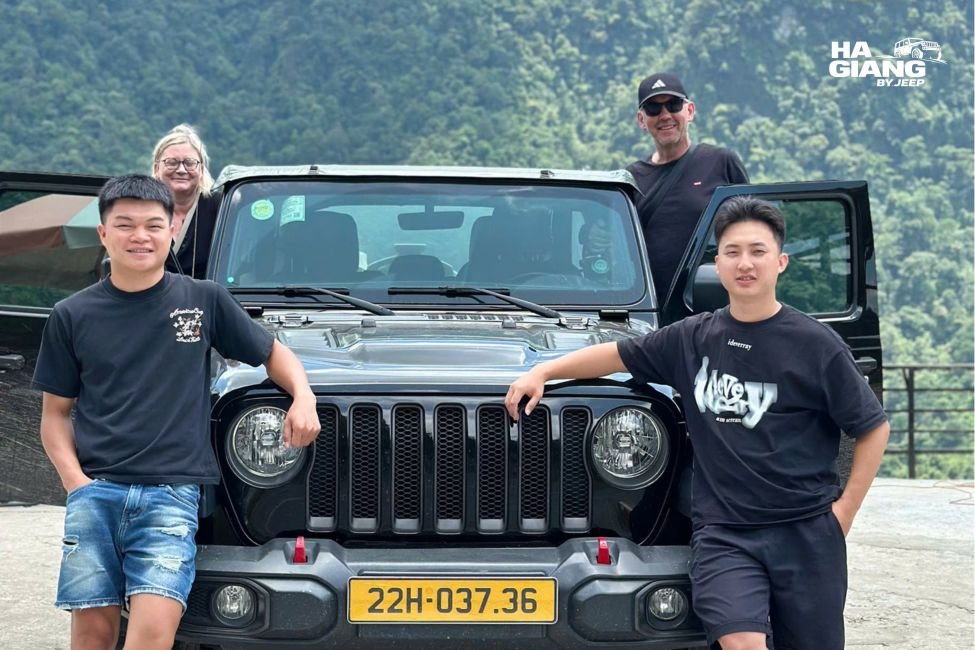
Send us your dates and we will lay out which version of Cao Bang fits, what you would see in your month, and the transfer options out. If your days are better spent on Ha Giang alone, we will tell you that instead. Email booking@hagiangbyjeep.com if you prefer.
Which jeep tour is right for you?
Ha Giang and Cao Bang, 6 days 5 nights. The one to book if Cao Bang is why you are here. The western road through Bao Lac and the 15 level pass, time for Pac Bo, God's Eye Mountain and Ngoc Con Valley, and the shortest driving days of any of our itineraries. See the 6 days tour
Ha Giang and Cao Bang, 5 days 4 nights. The shorter combo. Full Ha Giang Loop plus the Ban Gioc corner of Cao Bang. Good if you want both provinces and have a week rather than more. See the 5 days tour
Ha Giang Loop, 4 days 3 nights. If your dates cannot stretch to Cao Bang, do Ha Giang properly rather than doing both badly. See the 4 days tour
Ha Giang Loop, 3 days 2 nights. The short version, for fixed windows. See the 3 days tour
Jeep Wrangler Rubicon rental. 5,000,000 VND per day for the vehicle, about $192, for confident drivers who want to run the province themselves. Requirements for foreign drivers in Vietnam can change, so check the current rules first. See rental details
If this is your first trip to Vietnam, our first time visitors guide covers where the north fits in a wider itinerary and whether six days up here is the right call. If you are coming as a group, the groups guide has cost per person worked out for every size. Photographers should read the photography guide, since Cao Bang light behaves differently from the plateau.
Cao Bang Loop FAQ
What is the Cao Bang Loop?
It is the phrase people use for a road trip around Cao Bang province, but unlike the Ha Giang Loop it is not one continuous circuit. Cao Bang City sits at the centre with separate roads running out to Ban Gioc, Pac Bo, the Thang Hen lakes and west toward Bao Lac.
How many days do you need for Cao Bang?
Three days covers the eastern spoke and Ban Gioc. Four or more lets you add Pac Bo and God's Eye Mountain without rushing. Our combo tours give Cao Bang two to three days on top of the Ha Giang Loop.
Is Cao Bang worth visiting after Ha Giang?
They look completely different, so yes if you have the days. Ha Giang is vertical, bare and dramatic. Cao Bang is rivers, rice valleys and rounded karst, with far fewer visitors and easier driving.
Do you offer a Cao Bang only tour?
No. Our Cao Bang itineraries are the 5 days and 6 days combos, both starting with the Ha Giang Loop and finishing in Cao Bang. Our vehicles and office are in Ha Giang City, so a Cao Bang only trip would mean long empty drives you would be paying for. Ask us and we will be honest about the options.
How do you get from Ha Giang to Cao Bang?
By the western road through Bao Lac, which is the corridor our combo tours use. The 6 days version takes the longer route through the 15 level pass. There are also public limousines between the two cities at 450,000 VND per person.
How do I get back to Hanoi from Cao Bang?
Limousine or sleeper, 450,000 to 500,000 VND per person one way to Hanoi Old Quarter or Noi Bai Airport. Departures run at 16:00, 20:30, and at 06:00 and 11:30 the following day. We suggest the 11:30 next day option after a proper night's sleep.
What is the best time to visit Cao Bang?
September to November for gold rice, clear air and comfortable temperatures. June to August gives Ban Gioc its highest flow along with the heaviest rain. Winter is cold and quiet, spring is green.
When does Ban Gioc Waterfall have the most water?
The wet months, roughly June to August, give the most volume. The drier months give clearer water and a more defined shape. Neither is the wrong time, they are just different photographs. Ask us which your dates fall into.
Do I need a permit for Cao Bang?
Foreign visitors need permits for the areas close to the Chinese border, which includes parts of the route. We arrange them from our Ha Giang City office and need passport details in advance. Requirements can change, so confirm close to your travel date.
Can I fly a drone at Ban Gioc?
Do not assume so. This is an international border and drone rules in Vietnam are strict with permissions required. Check the current regulations before you travel and tell us at booking if you are hoping to fly.
Is the driving in Cao Bang difficult?
Easier than Ha Giang. The roads are lower and less exposed than Ma Pi Leng, and the driving days on the combo tours are shorter. If someone in your group found the Ha Giang passes hard, Cao Bang is the gentler half.
What should I not miss in Cao Bang?
Ban Gioc Waterfall and Nguom Ngao Cave in the same half day, God's Eye Mountain from the valley floor, and the drive through Ngoc Con Valley, which almost nobody stops for and probably should.