
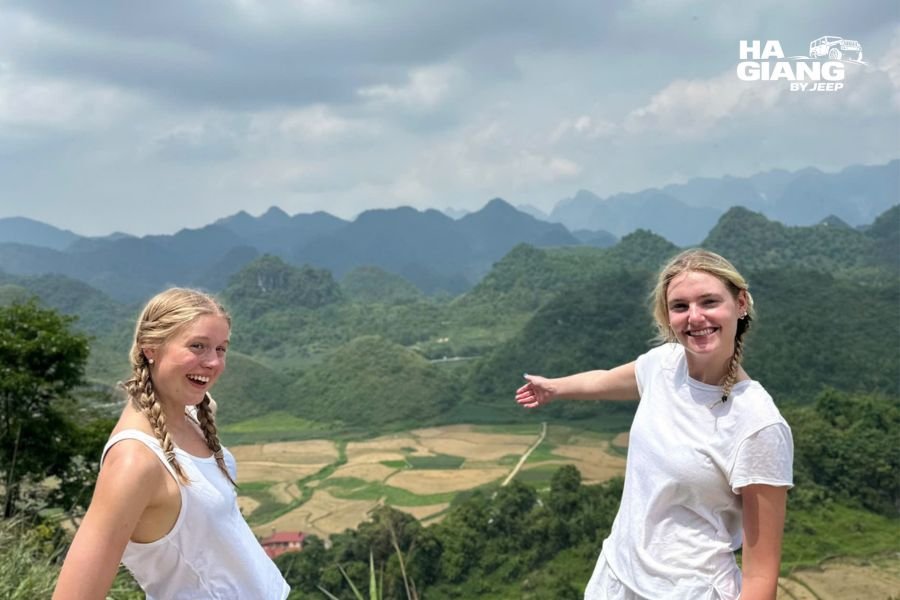
Ha Giang · The Gateway to the North
Quan Ba Heaven's Gate & Twin Mountains: A Guide
The first time the road tops out at Quan Ba and the whole valley drops away below you, most people go quiet. This is where the flat country ends and the real north begins.
Quan Ba Heaven's Gate is the doorway to the Ha Giang highlands, the first high pass you cross heading north from Ha Giang City, and the spot where the famous Twin Mountains sit in the valley below. It is where a trip up here stops being a drive and starts being an adventure. This guide covers what the pass and the mountains are, the story behind them, how to get there, what to expect at the viewpoint, the best time to go, what to pack, and the most comfortable way to see it all.
If you are planning the far north and want the views without the fatigue, you have probably already found Ha Giang by Jeep. Quan Ba is the opening act on every route we run, and it sets the tone for everything after. First, the pass itself.
In this guide
What is Quan Ba Heaven's Gate?
Quan Ba Heaven's Gate is a high mountain pass on the road north from Ha Giang City, sitting around 1,500 meters above sea level. It is the point where the highway climbs out of the lowlands and crosses into the Dong Van Karst Plateau, a UNESCO Global Geopark. The name says it plainly: this is the gate to the highlands.
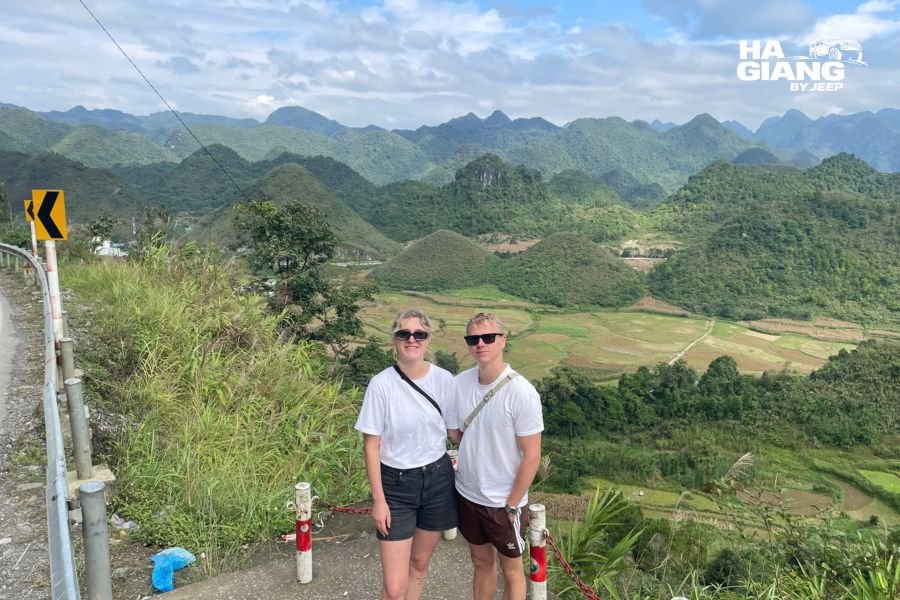
From the top there is a built viewpoint with a terrace and a small tower, and the reason everyone stops here becomes obvious in a second. The land opens into a wide green bowl, Quan Ba town sits in the middle of it, and rising out of the flat valley floor are the two rounded hills that made this view famous. On a clear day it is one of the great panoramas in northern Vietnam.
The Twin Mountains of Quan Ba
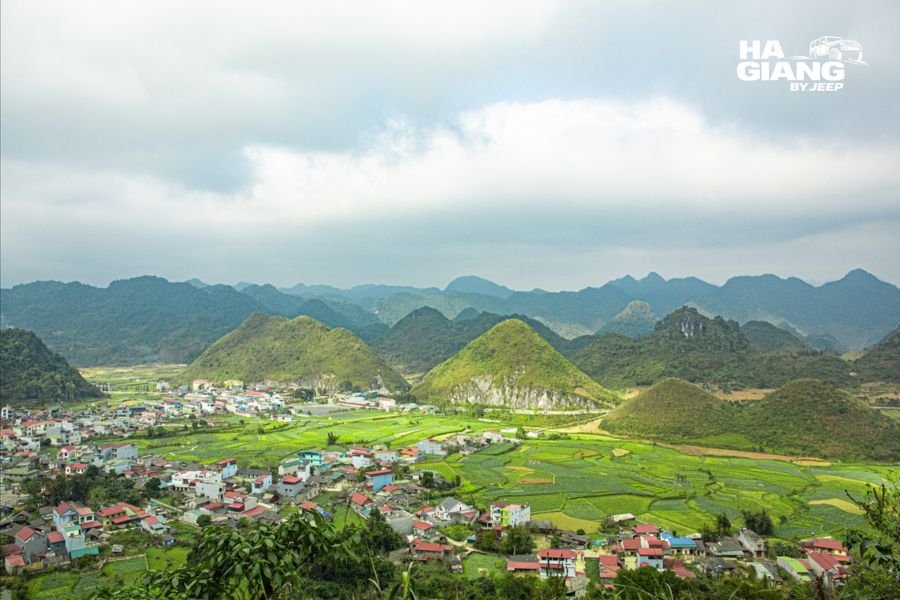
The Twin Mountains, known in Vietnamese as Nui Doi and often called the Fairy Mountains, are two remarkably symmetrical rounded hills that sit alone in the valley, quite unlike the jagged karst around them. Their soft, even shape against the flat rice fields is what makes them so striking, and so photographed.
The legend of the Fairy Mountains
Every local has a version of the story. The most common one tells of a fairy who came down from the heavens, fell in love with a young man of these mountains, and stayed to raise their child. When she was finally called back to the sky, she left part of herself behind so her baby would never go hungry, and those two soft hills are what remained. It is a tender bit of folklore, and it fits the gentle shape of the hills better than any geology lesson could.
You do not have to believe the legend to feel why it stuck. The mountains really do look like they were placed there on purpose.
For the best look at the Twin Mountains, the built terrace at Quan Ba Heaven's Gate is hard to beat, though you also catch them from the road as you drop into the valley. Locals are proud of these hills, so keep to the marked terraces and paths when you frame your shot. Early risers tend to win here: the light is softest not long after dawn, before the day visitors arrive and before the valley haze builds.
Where it is and how you reach it
Quan Ba is the first major stop on the northern loop, close enough to Ha Giang City that you reach it within the first stretch of the drive. Because it sits right on the main road to Dong Van and Meo Vac, you pass through it on the way into the plateau no matter which route you take. That makes it the natural first viewpoint of any trip up here.
Getting to Quan Ba Heaven's Gate
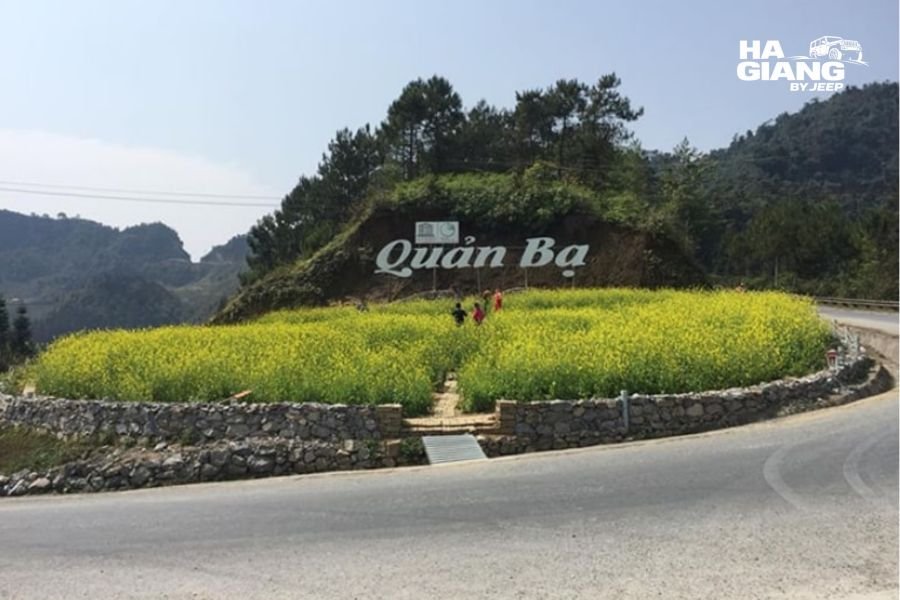
You start from Ha Giang City, the gateway to the whole region, reached from Hanoi by night bus, limousine van, or private transfer. From there the road climbs north and Quan Ba is the first pass you crest. There is no need to hunt for it: the viewpoint is signed and sits right beside the main road, so every tour and private vehicle heading into the plateau stops here.
A word on driving times
You will find pages that quote an exact number of minutes from Ha Giang City up to Quan Ba. Treat those with suspicion. Road conditions, weather, roadworks, and how long you linger over the view all change the timing, and a fixed figure on a page usually means someone copied it without driving it. Think of Quan Ba as an easy first stop rather than a stopwatch exercise, and leave room to enjoy it. On our tours the driver knows the current road and adjusts around it, which is exactly why we do not publish rigid stop to stop timetables ourselves.
Want the north without the fatigue? Our jeeps are private, so you are never grouped with strangers, and the soft top and heater keep the cabin comfortable when the pass is cool or misty. Quan Ba is the first stop on the Ha Giang Loop 3 days jeep tour, or message us with your dates.
What to expect at the viewpoint
The Heaven's Gate stop is easy and well set up. There is a terrace built for the view, a viewing tower you can climb for a higher angle, and usually a cafe or two where you can sit with a coffee and take your time. It suits everyone, including families and older travelers, because the effort is minimal and the reward is immediate.
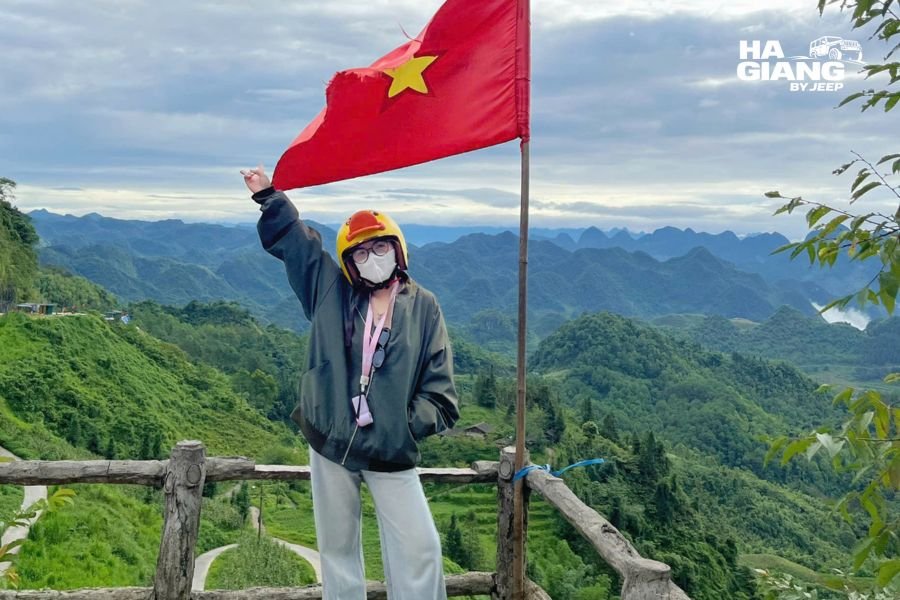
A few things worth knowing before you arrive:
- Mornings can be misty. Early cloud often sits in the valley and can hide the mountains, then burn off as the day warms. If it is socked in when you arrive, it is worth a coffee and a short wait.
- Light changes everything. Late afternoon light across the valley is soft and golden, while midday is bright and flat. Either can be beautiful, just different.
- It gets busy. This is a popular stop, so tour groups come and go. A few minutes either side of a crowd usually gives you a clear terrace.
- Bring a layer. The pass is higher and cooler than the city you left, even in warm months.
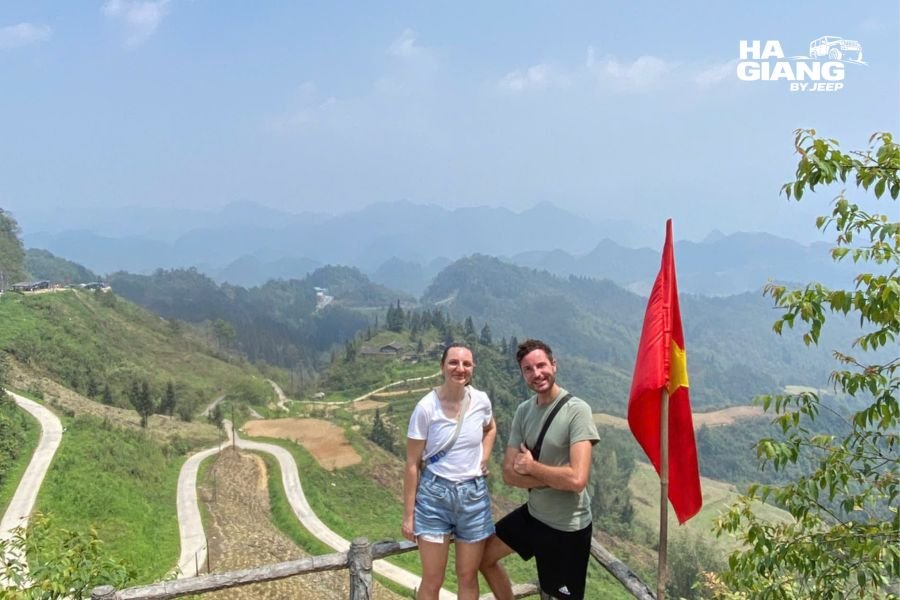
The classic photo looks straight down the valley with the two hills framed by the green fields. Give yourself a little time to walk the terrace and find your own angle rather than snapping the first one and moving on.
What else is around Quan Ba
Most people treat Quan Ba as a quick photo stop, but the district around it rewards a little more attention if your schedule allows.
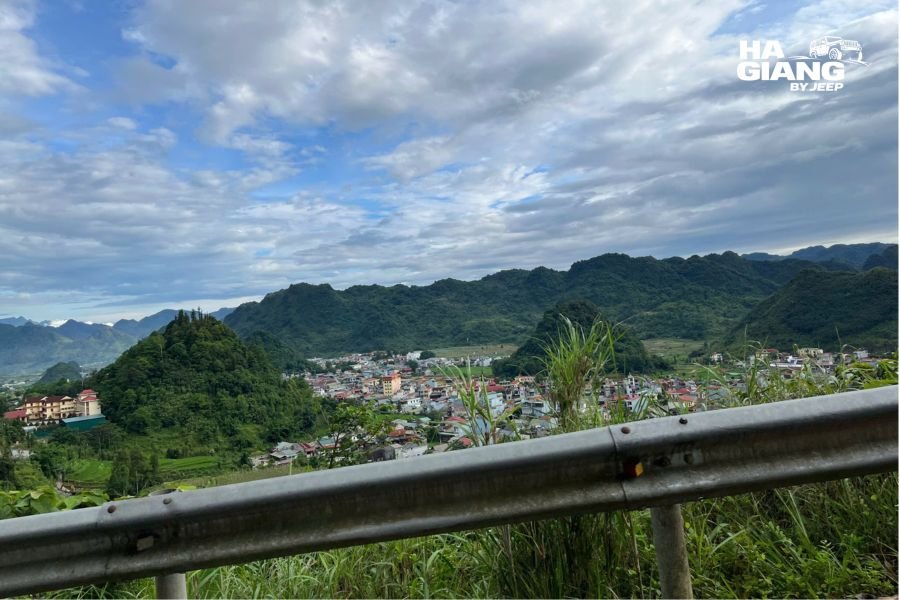
Quan Ba town and Lung Tam Linen Village
Down in the valley, Quan Ba town is a low key trading center with a weekend market worth catching if the timing lines up. Nearby, the H'mong village of Lung Tam is a genuine weaving cooperative where you can watch hemp turned into indigo dyed linen entirely by hand, from spinning to beeswax patterning to dyeing. It is one of the better places on the loop to buy something truly made here.
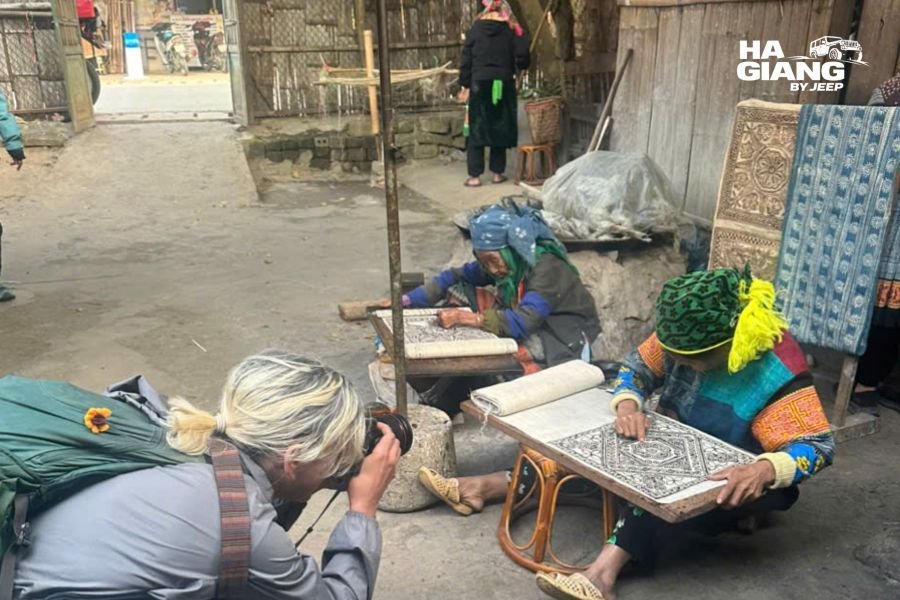
Caves and quiet corners
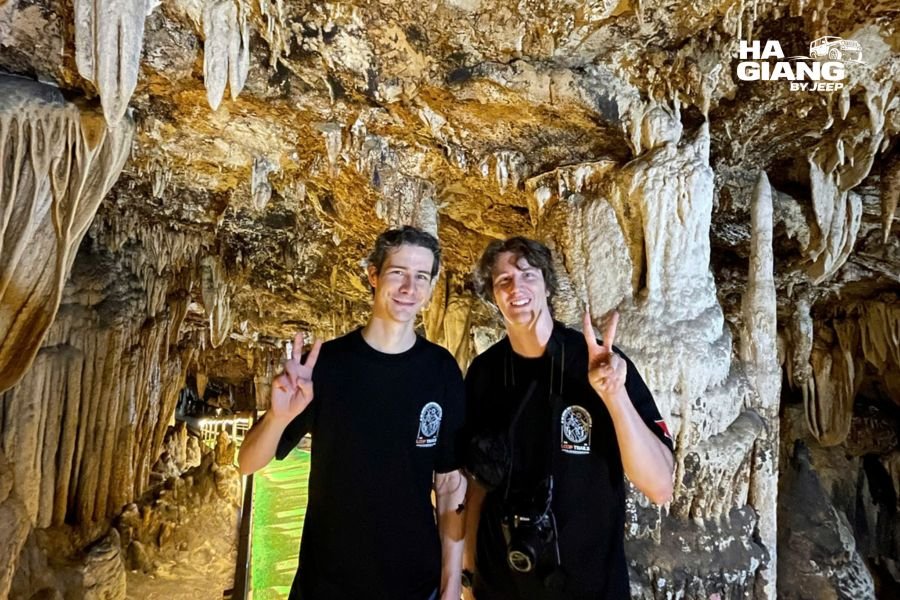
The area also hides Lung Khuy Cave, one of the more impressive show caves in the province, reached by a short uphill walk above the valley. It sees far fewer visitors than the viewpoint and makes a good addition if you want more than a photo stop out of Quan Ba.
From Quan Ba the road carries on north toward Yen Minh, Dong Van, and the higher, wilder stretches of the plateau. Quan Ba is the gentle opening; the drama builds from here.
Quan Ba town, sometimes called Tam Son, also makes a pleasant lunch stop, with simple local eateries and an unhurried pace well away from the tour bus circuit. If you are starting a longer trip, spending your first night around here rather than pushing straight on can take the edge off a long travel day up from Hanoi.
Best time to visit
Quan Ba is worth a stop in any season, but each one changes what you see, and the mountain weather can shift fast.
| Season | What to expect | Worth knowing |
|---|---|---|
| Spring (Mar to May) | Green valley, mild days, blossom in places | Pleasant and clear spells, some morning mist |
| Summer (Jun to Aug) | Lush rice, deep greens, big clouds | Wettest months, mist can hide the view, check conditions |
| Golden rice (Sep to early Oct) | Valley turning gold before harvest | Beautiful light, one of the best windows |
| Autumn to winter (Oct to Feb) | Crisp air, clear long views, cold snaps | Clearest panoramas but cold on the pass, pack layers |
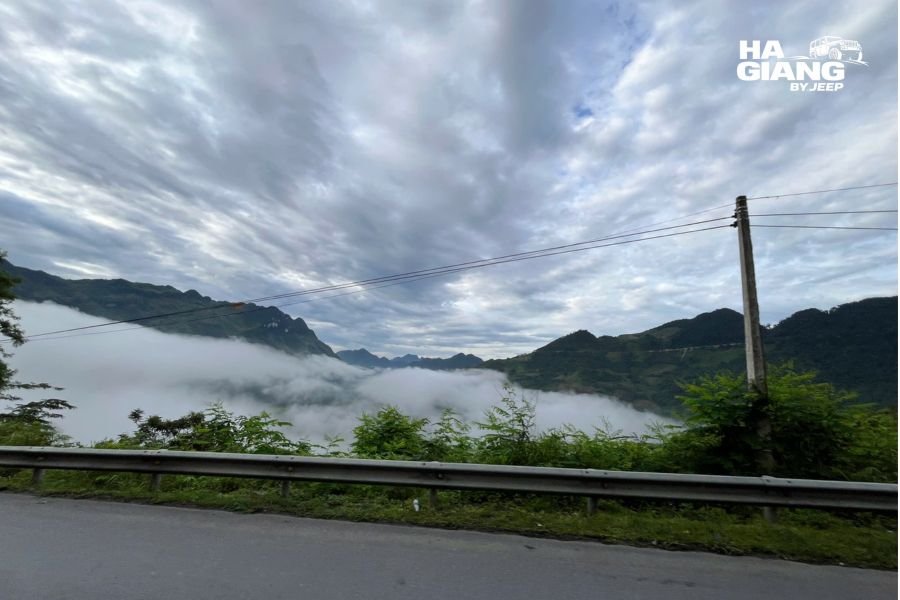
Clear mornings and late afternoons give the cleanest look at the Twin Mountains, and valley fog can hide them entirely for an hour and then lift, so treat any seasonal guide, including this one, as a rough map rather than a promise. If the view matters to you, build in a little flexibility.
What to pack and know before you go
Quan Ba is an easy stop, but a few small things make it more comfortable.
- A warm layer. The pass is cooler than the lowlands, and mornings can be genuinely chilly.
- Cash. For coffee, the viewing tower, and anything you buy at Lung Tam or the market.
- A little patience with the weather. If cloud is sitting in the valley, a short wait often pays off.
- Comfortable shoes. Handy if you add the climb to Lung Khuy Cave or wander the terrace and tower.
- Time. The best version of Quan Ba is unhurried, not a two minute photo dash.
Where Quan Ba fits in a Ha Giang trip
Quan Ba is almost always the first real stop on a northern loop, the moment the trip announces itself. Because it sits on the main road into the plateau, you will pass it on any route, short or long, so the question is not whether you see it but how much time you give it. On a compact trip it is a quick, memorable pause on the way to bigger things, while a slower trip can add the linen village, the cave, and the market around it.
We deliberately avoid printing hour by hour schedules, because the right pace depends on your group, the season, and how much you want to slow down. As a rule of thumb, do not rush Quan Ba just because it comes early. First impressions of the north are worth savoring.
Why a private jeep makes it easier
Quan Ba sets the tone for the whole trip, and how you experience it depends a lot on how you travel. A private jeep changes the day in a few concrete ways.
- All weather comfort. A soft top cabin with a heater keeps the cool pass air and any mist outside while you stay warm between stops.
- Views in every direction. Sitting up in an open sided jeep, you take in the climb and the valley properly rather than watching the road.
- Stop anywhere. A viewpoint, a market stall, a roadside grill: the driver simply pulls over and you get out. When you find food you like, you eat, and nobody has to get behind the wheel afterward, corn wine or not.
- Right for everyone. Families, couples, older travelers, and anyone who does not want to drive themselves are comfortable from the very first pass.
- Local knowledge. Our drivers grew up in these mountains and speak English, so Quan Ba comes with its stories, not just its view.
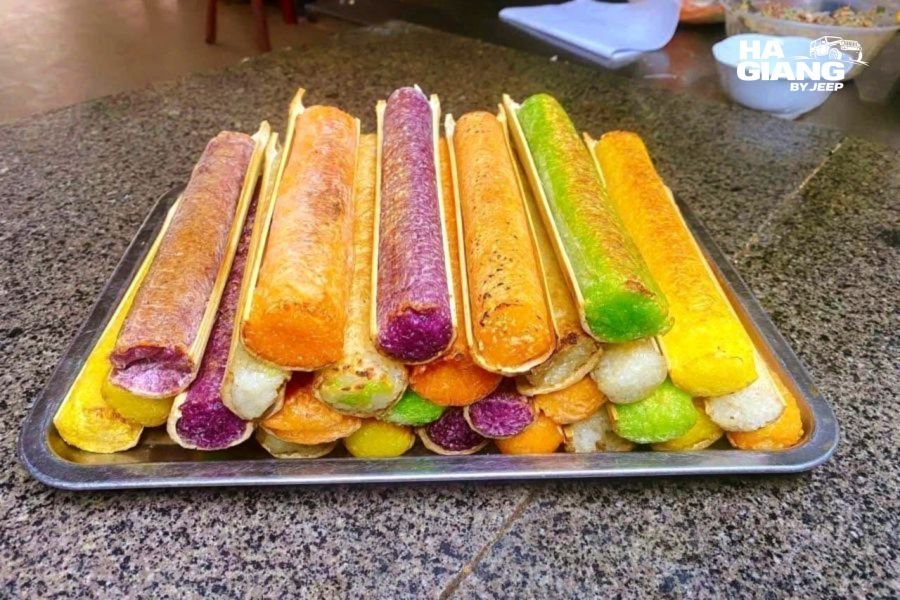
Adventure without exhaustion is the whole idea. You get the wow of the first pass; you skip the part that leaves you wrecked.
Which jeep tour is right for you?
Every route we run starts by crossing Quan Ba. The right length depends on how much time you have and how far north and east you want to go.
- Short on time, want the greatest hits. The Ha Giang Loop 3 days jeep tour opens at Quan Ba and covers the core plateau, including Dong Van and Ma Pi Leng, at a comfortable pace. Ideal for a first visit with limited days.
- Want to go slower and see more villages. The 4 days jeep tour gives Quan Ba, the linen village, and quieter corners like Du Gia and Pho Bang the time they deserve.
- Want the plateau plus Cao Bang and Ban Gioc. The Ha Giang and Cao Bang 5 days jeep tour continues east to Ban Gioc Waterfall, Nguom Ngao Cave, and the God's Eye Mountain and Ngoc Con Valley area.
- Want the fullest version. The 6 days jeep tour adds even more of Cao Bang, including Pac Bo, at the most relaxed pace of all.
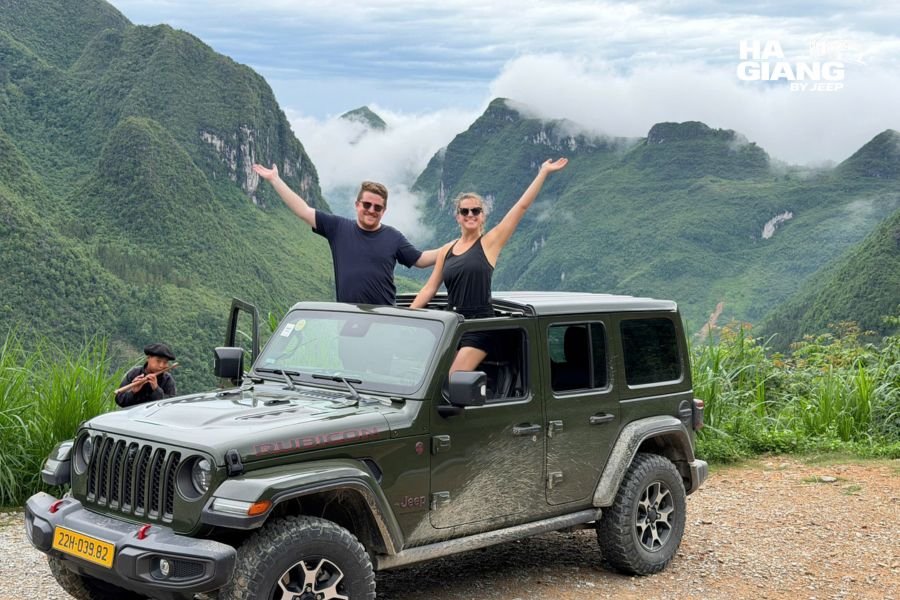
- Confident driver who wants the wheel. If you would rather self drive a proper 4x4, our Jeep Wrangler Rubicon rental lets you run your own route from Quan Ba onward with the same comfort and all weather cabin.
Not sure which fits? Message us on WhatsApp with your dates and group and we will point you to the right one honestly.
See Quan Ba for yourself
Quan Ba is the moment the north opens up in front of you, and it is a lovely, easy first taste of what the plateau has in store. The simplest way to enjoy it is to let someone else handle the roads and the timing while you sit back and take in the view.
We run private jeeps only, so you are never grouped with strangers, and we sort the permits, homestays, and drivers for you. To hold your dates, you secure your spot with a small deposit that lets us pre pay your homestays, drivers, and permits ahead of time, with the balance settled in cash on arrival. Most guests book one to three months in advance, and because every jeep is private, availability is limited, so earlier dates go first.
Ready to plan it?
Tell us your travel dates and group size and we will help you choose the right route, no pressure. Hold your spot now, or ask us anything first.
FAQ
It is a high mountain pass north of Ha Giang City, around 1,500 meters up, where the road crosses into the Dong Van Karst Plateau. A built viewpoint looks down over Quan Ba valley and the famous Twin Mountains.
They are two remarkably symmetrical rounded hills, known in Vietnamese as Nui Doi and often called the Fairy Mountains, sitting alone in the flat valley below the pass. Local legend links them to a fairy who stayed on earth to raise her child.
Quan Ba is the first major pass on the road north from Ha Giang City, reached from Hanoi by night bus, limousine van, or private transfer. The viewpoint sits right on the main road, so every tour and private vehicle heading into the plateau passes it.
Yes. The viewpoint is built up with a terrace, a tower, and cafes, and the effort is minimal, so it suits all ages. A private jeep keeps the drive up comfortable in any weather.
Clear mornings and late afternoons give the cleanest look at the Twin Mountains. Autumn brings crisp air and golden rice, spring is mild and green, and summer is lush but often misty. Valley fog can hide the view briefly, so a little patience helps.
If you have time, yes. The Lung Tam linen weaving village, Lung Khuy Cave, and the local market all sit nearby and turn a quick viewpoint into a proper half stop.
Quan Ba Heaven's Gate sits around 1,500 meters above sea level, noticeably cooler than Ha Giang City below. Heights vary a little by source, so treat that as a guide rather than an exact figure.
No. You stop at the same viewpoint, see the same Twin Mountains, and visit the same villages. A private jeep simply keeps you warm and comfortable on the climb and suits travelers who prefer not to drive themselves.
Most guests book one to three months ahead. Because every jeep is private, availability is limited, so earlier dates fill first. Once you have a confirmed travel date, booking sooner helps us arrange homestays, drivers, and permits properly.