
Ma Pi Leng Pass: The Complete Guide to Vietnam's Greatest Mountain Road
A road cut by hand into a cliff wall, a canyon dropping half a kilometre to a green river, and a view that stops conversation. This is the place people picture when they picture Ha Giang.
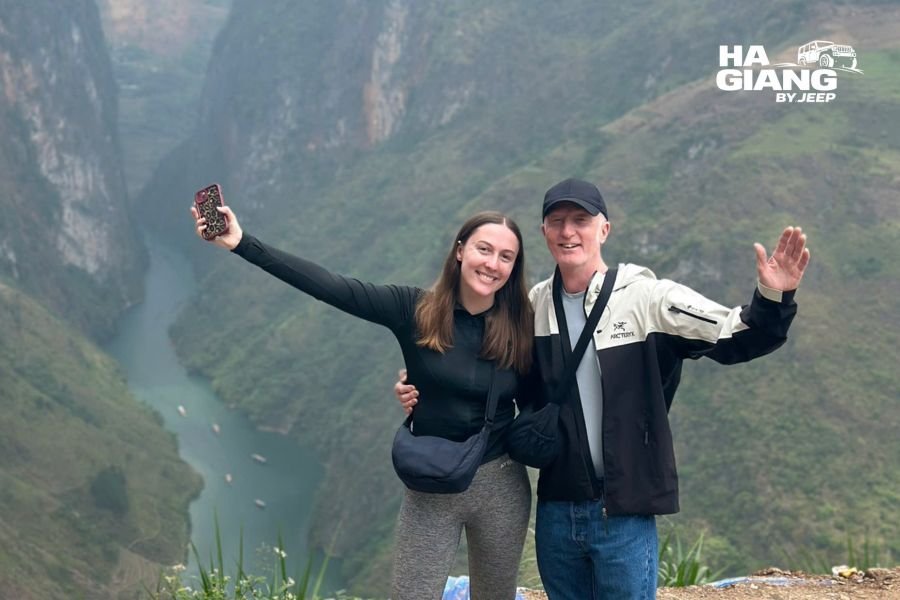
If you only stand in one spot on the entire Ha Giang Loop, make it here. Ma Pi Leng Pass is the high point of the whole region, literally and in every other way. It is where the mountains stop being pretty and become genuinely staggering, and it is the reason a lot of people come all the way to the far north of Vietnam in the first place.
This is the complete guide to Ma Pi Leng Pass: what it is, the extraordinary story of the road that crosses it, the canyon and river below, the best places to stand, when to come, and the most comfortable way to experience it. No hype it does not deserve, and no invented numbers, because the real thing needs neither.
Why Ma Pi Leng Pass Is the Highlight of Northern Vietnam
The pass is regularly called one of the great mountain roads of the world, and unlike a lot of travel claims, this one holds up when you are standing there.
The pass sits high on the road between Dong Van and Meo Vac, and it threads along the top of a cliff wall with the land falling away hundreds of metres to the Nho Que River below. On one side, rock going up. On the other, a drop into one of the deepest canyons in the region. Ahead, the road curling out of sight around the mountain.
What makes it special is not one thing but the combination: the scale of the canyon, the colour of the river, the drama of the road itself, and the fact that it is all real, working landscape rather than a fenced off attraction. People live here. Farm here. Drive this road to get to market. You are a guest in a place that is spectacular and lived in at the same time.
It also photographs like almost nowhere else, which is why your feed is probably full of it already. The difference between the photo and the place is the scale, and that is something you can only feel by being there, ideally with time to just stand and look. A private jeep tour of the Ha Giang Loop is built around exactly that kind of unhurried stop.
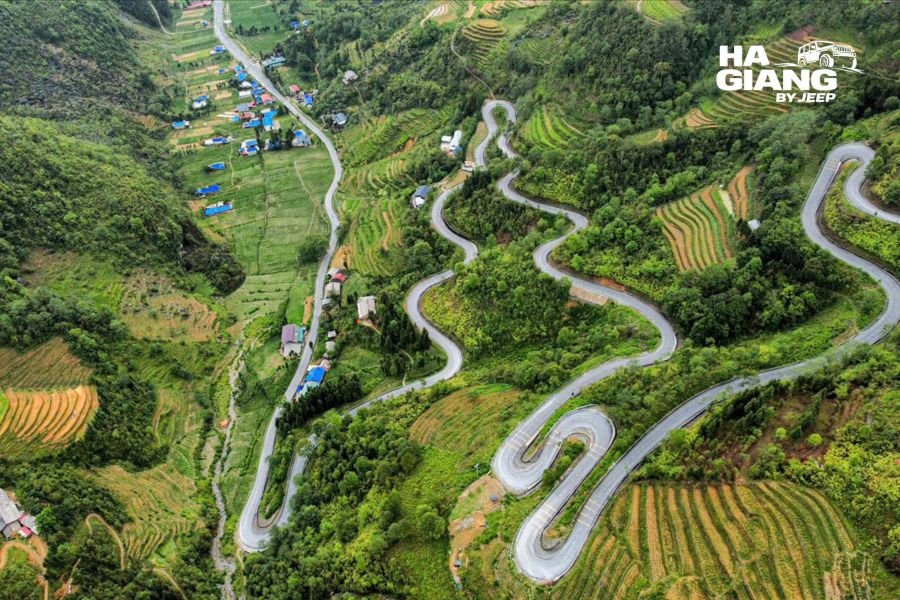
Where Ma Pi Leng Pass Is, and How It Fits the Loop
Ma Pi Leng sits in the northeast of Ha Giang province, on the section of road linking the towns of Dong Van and Meo Vac, deep inside the Dong Van Karst Plateau. It is part of the Dong Van Karst Plateau UNESCO Global Geopark, a protected landscape recognised for its limestone geology.
On a standard loop, the pass comes toward the far end of the circuit, after you have already climbed through Quan Ba, Yen Minh and Dong Van. That positioning is part of why it lands so hard: by the time you reach it, you think you have seen the big scenery, and then Ma Pi Leng raises the ceiling entirely.
You can see exactly how it connects to the rest of the route on our Ha Giang Loop map. The short version: it is unmissable, it is on every proper version of the loop, and it is the stretch people remember most.
The Happiness Road: The Story Behind the Pass
The road across Ma Pi Leng has a name, and a history that is worth knowing before you go, because it changes how the place feels when you stand on it.
The route is part of what is known as the Happiness Road, the highway that connects Ha Giang City with the far northern districts around Dong Van and Meo Vac. Before it existed, these communities were among the most isolated in Vietnam, cut off by the sheer limestone terrain.
Building it was an enormous undertaking. The Ma Pi Leng section in particular was carved into the cliff face largely by hand, by workers suspended on the rock over the canyon, using simple tools in brutally difficult and dangerous conditions. It took years, and it came at a real human cost. The exact figures for workers, time and lives lost vary between sources, so we will not state numbers as fact here, and we would encourage you to read up from reliable current sources if you want the detail. What is not in doubt is that this road was one of the hardest and most sacrificial infrastructure projects in the country's modern history.
Knowing that, the drive changes. The thin ribbon of tarmac clinging to the cliff is not just scenic. It is a monument to a staggering amount of human effort, and the people who built it opened up a whole region that had been locked away by the mountains. Your local driver, born in these mountains, can tell you what this road means to the communities it connects, which is the kind of context you simply do not get on your own.
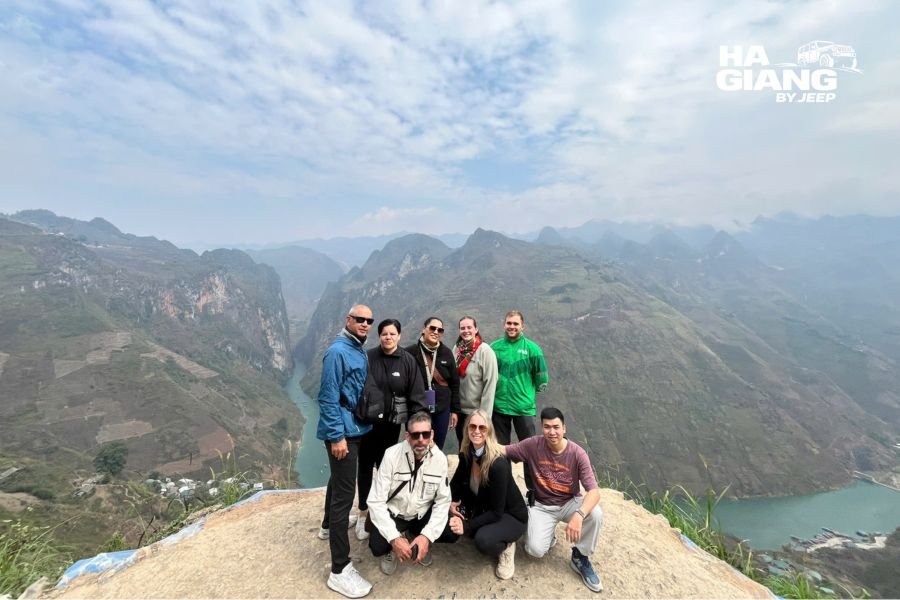
Tu San Canyon and the Nho Que River
The reason Ma Pi Leng is so overwhelming is what lies below it. This is not a viewpoint over rolling hills. It is a viewpoint over a genuine canyon.
The Deepest Canyon in the Region
Below the pass, the land splits open into Tu San Canyon, a vast cleft in the limestone with near vertical walls plunging to the river. It is frequently described as the deepest canyon in Vietnam and one of the deepest in Southeast Asia. Standing at the top and looking down into it, the sense of depth is the thing that gets people, that slightly vertiginous pull when your eye follows the wall all the way down.
The scale is genuinely hard to photograph, because there is often nothing in frame to give it away. It is only when you spot a tiny boat on the river far below, or a bird flying well beneath you, that the true depth registers.
The Emerald River Below
At the bottom runs the Nho Que River, and its colour is the detail nobody quite believes until they see it. In the right conditions it is a deep, vivid jade green, a bright thread winding through the grey and green of the canyon. After heavy rain it can run browner with silt, but in the drier, clearer months it is extraordinary.
The river is also the setting for one of the best add on experiences in the whole region, a boat trip through the canyon, which gets its own section below.
Want Ma Pi Leng done properly, with time to actually take it in? Tell us your dates on WhatsApp and we will build a trip that reaches the pass in good light, with the flexibility to wait out cloud and add the Nho Que boat trip if you want it. This is the stop worth getting right.
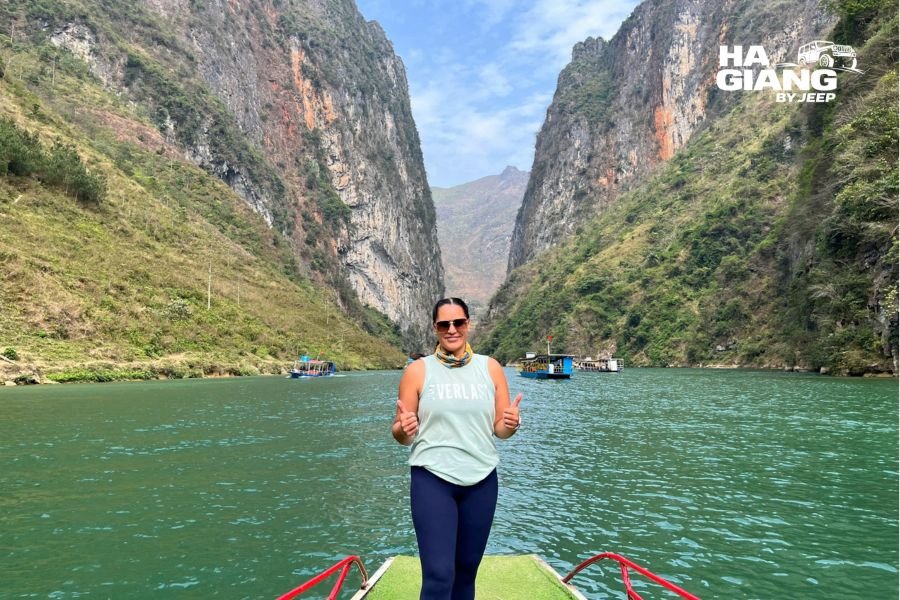
The Best Viewpoints on Ma Pi Leng Pass
Ma Pi Leng is not a single spot. It is a stretch of road with several places to stop, each with a slightly different angle on the canyon. Having a private vehicle means you can stop at all of them, in the light you want, rather than wherever a schedule dictates.
The Main Panorama Stop
There is a well known viewpoint area partway along the pass, with room to pull over, a monument marker, and the classic wide view down the canyon. It is the busiest spot, and for good reason, because the panorama from here is the postcard. Come early or late and you may have it nearly to yourself.
The Rocky Outcrops
Along the pass there are rocky spurs and ledges that jut out over the drop, and these give the most dramatic sense of standing above the void. Some have become popular photo spots. They are spectacular, and they are also exactly where you should respect the edge, which we come back to in the safety section. Enjoy the view, take the photo, but do it sensibly.
The Quiet Pull Offs
Between the famous spots are smaller, unmarked places to stop where almost nobody does, and these are often the best of all: the same canyon, the same river, and complete quiet. This is where a private trip earns its keep, because your driver knows the ones that are worth it and can pull in wherever the light and the view line up.
A Boat Trip on the Nho Que River
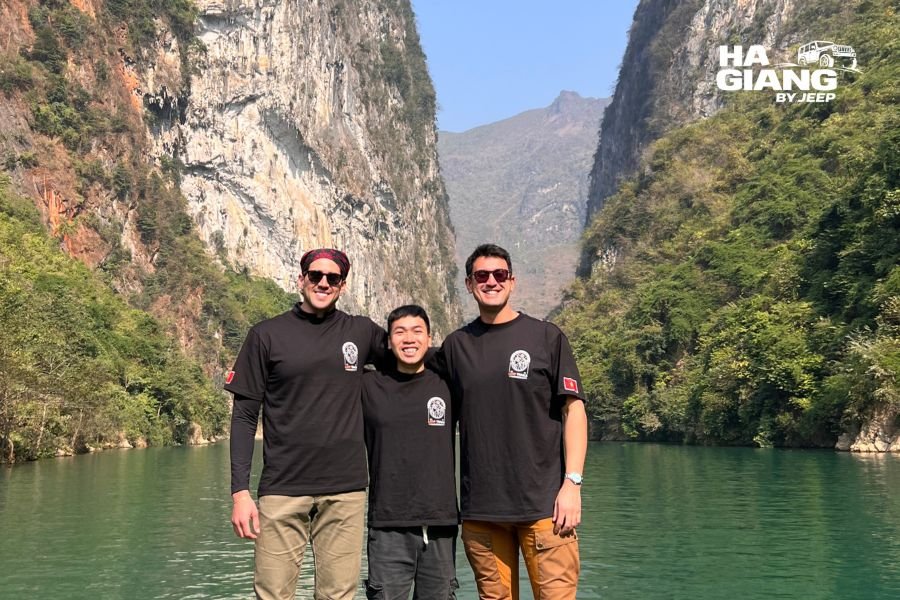
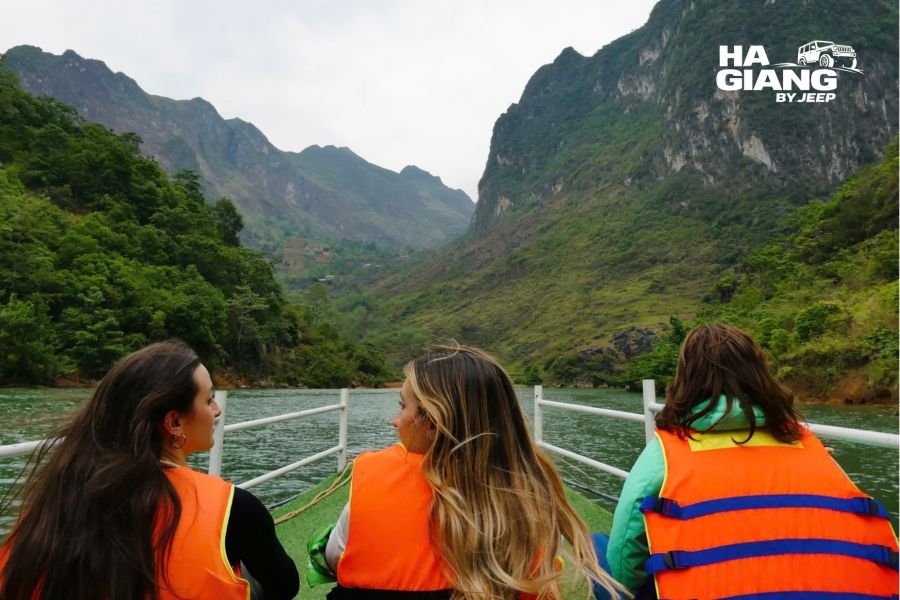
If you have the time, going down to the river and out onto it is one of the most memorable things you can do in Ha Giang, and it gives you the opposite perspective: instead of looking down into the canyon, you look up out of it.
Boats run on the Nho Que through the Tu San Canyon section, gliding beneath those enormous walls with the water a deep green around you. From down there the scale is even more overwhelming than from the top, because now the cliffs tower over you.
A few honest, practical notes:
- It takes extra time. Getting down to the river, out on the water and back up is a good chunk of a day, so it suits longer trips more than a rushed short one.
- Access and operations can change. Boat services, departure points and any access arrangements are run locally and can change with the season, the water level and current rules, so this is very much a "check the latest" item. We keep on top of what is currently running and can tell you whether it fits your dates.
- Water level matters. The experience is best when the river is high enough and calm, which varies through the year.
If a boat trip appeals, tell us early and we will build a trip with the time and the route to include it, most naturally on a 4 days loop or longer, where there is room to slow down.
The Best Time of Day and Year for Ma Pi Leng
The pass rewards good timing more than almost anywhere else on the loop, because the whole experience depends on being able to see.
Time of day. Early morning can bring a sea of cloud filling the canyon, which is magical if you are above it, and it usually burns off through the morning. Late afternoon brings warm, golden light onto the far canyon wall, which is arguably the most beautiful moment of all. The harsh flat light of the middle of the day is the least flattering, though the view is still enormous.
Time of year. This is where seeing the pass at its best connects to when you come:
- In the clear, dry months the air is sharp and the canyon has real depth, and the Nho Que runs its brightest green. Our guide to visiting Ha Giang in October covers this window.
- In winter you get the best odds of those cloud inversions, though it is cold and can be foggy. See Ha Giang in winter.
- In the wet season the canyon can be dramatic with mist and cloud, but low cloud can also hide the view entirely, and the river runs browner. Our guide to the Ha Giang Loop in the rainy season is honest about that gamble.
The single most important thing is flexibility. If the pass is socked in with cloud when you first arrive, the ability to wait, or come back later in better light, is what turns a missed view into an unforgettable one. That flexibility is only possible on a private trip.
How to Experience Ma Pi Leng Pass: The Comfortable Way
Here is the thing about the greatest view on the loop: you want to actually look at it, not manage it.
On the pass itself, the road demands full attention from whoever is driving. It is narrow, exposed, and busy with two way traffic at the popular spots. If you are the one driving, your eyes are on the tarmac and the blind corners, not the canyon. That is the trade off nobody mentions.
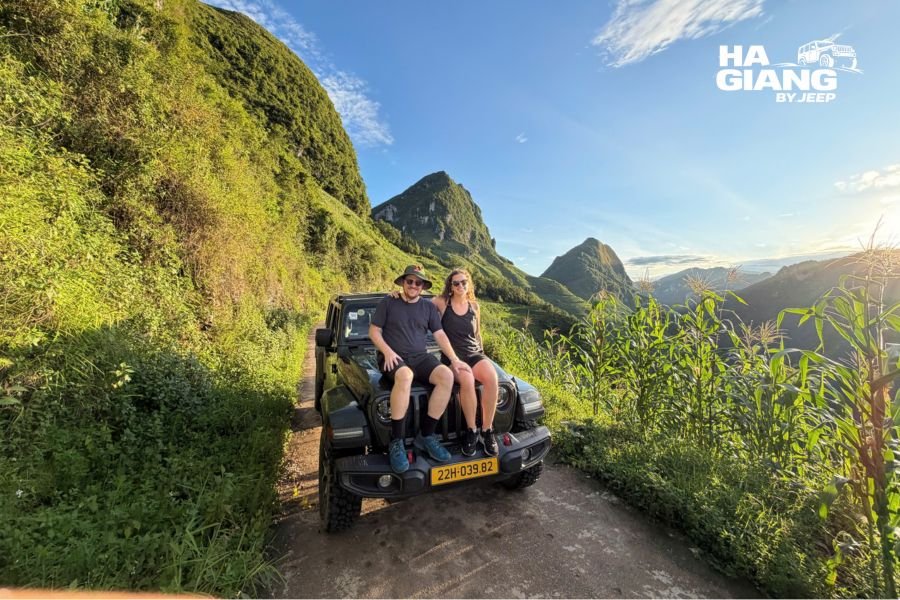
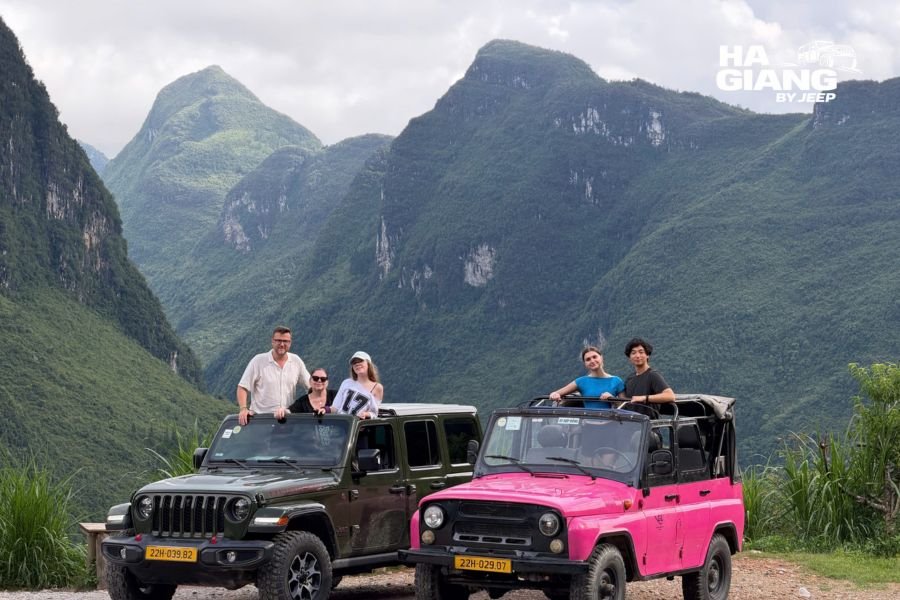
In a private jeep, the pass becomes something else entirely. Your local driver, who knows every bend, handles the road. You get the full view from a comfortable seat, with the soft top folded back for the whole open sweep of the canyon above and below. You stop wherever the view is best. You get out at the quiet pull offs. You have your hands free for a camera and your attention entirely on the place. And when the weather turns, the soft top goes up and the heating comes on, and you carry on in comfort.
For a family, an older traveller, or anyone who would rather experience the pass than negotiate it, that is the difference between a stressful highlight and a serene one. This is the essence of "adventure without exhaustion": the drama of the greatest road in Vietnam, without the white knuckles.
A Note on Safety and the Cliff Edge
Ma Pi Leng is safe to visit and enjoy, and millions of people do. It also deserves a clear head, because it is a real cliff with real drops.
A few sensible points:
- Respect the edge. The dramatic outcrops and ledges are stunning and have become popular photo spots, but there are no barriers on many of them, and the drop is severe. Take your photo from a stable, sensible position, and keep well back from crumbling or wet edges. No picture is worth a slip.
- Watch the traffic. The pull offs can be busy, and the road is narrow. Be aware of vehicles when you are getting in and out or crossing.
- Mind the weather. Wet rock is slippery, and low cloud can appear fast. In poor conditions, admire the view from a safe spot rather than scrambling for a better angle.
- The development question. There has been public debate in Vietnam about tourist construction on the pass, including a controversial building on the ridge, and about how to balance access with protecting the landscape. It is a live local issue, and as visitors the kindest thing we can do is tread lightly, follow local guidance, and respect that this is a protected geopark and a lived in place.
None of this should put you off. It is simply the difference between enjoying a great mountain landscape wisely and treating it carelessly.
What Else Is Nearby: Building Ma Pi Leng Into a Trip
The pass is the peak, but it sits among a whole cluster of things worth your time, which is why it works best as part of a proper trip rather than a single dash.
Close by you have the two towns that bookend the pass. Dong Van, with its old quarter and its famous Sunday market, sits to the west. Meo Vac, gateway to some of the wildest country on the plateau and its own memorable Sunday market, sits to the east. Around them are villages, viewpoints and quieter roads, and further out the flag tower at Lung Cu, the linen village at Lung Tam, and the old town of Pho Bang.
If you continue east past Meo Vac, the road eventually leads toward Cao Bang and Ban Gioc Waterfall, a whole second half to a trip covered in our guide to going from Ha Giang to Cao Bang. This is often the moment people decide they want more than a quick loop, and this is where the longer combined trips come in.
Which Jeep Tour Includes Ma Pi Leng Pass?
Every one of our tours crosses Ma Pi Leng, because no proper Ha Giang trip skips it. What changes is how much time you get there and what else you see around it. Every jeep is private, so you are never sharing the view with strangers on someone else's schedule.
| Your situation | The trip that fits | Ma Pi Leng experience |
|---|---|---|
| Short on time, want the essentials | Ha Giang Loop, 3 days | Crosses the pass with a proper stop at the main viewpoints. |
| Want time to linger and add the boat | Ha Giang Loop, 4 days | Room to wait for good light, hit the quiet pull offs, and add the Nho Que boat trip. |
| Want the loop plus Ban Gioc | Ha Giang and Cao Bang, 5 days | Ma Pi Leng plus the road east to the waterfall and a second geopark. |
| Want everything, unhurried | Ha Giang and Cao Bang, 6 days | The most time at the pass and everywhere else. |
| Confident driver, want the wheel | Jeep Wrangler Rubicon rental | Self drive, by the day, for experienced mountain drivers. |
Not sure how long you need? Our guide to how many days for the Ha Giang Loop breaks it down. For Ma Pi Leng specifically, if you want the boat trip and time to catch the pass in its best light, lean toward 4 days or more.
Mistakes to Avoid at Ma Pi Leng Pass
- Rushing through it. The biggest mistake. This is a place to stop, get out, and stand still, not to drive past for a phone snap through the window.
- Only seeing the main viewpoint. The quiet pull offs are often better and emptier. Give yourself the time to find them.
- Coming in the harsh midday light if you can help it. Morning cloud and late afternoon gold are far more rewarding.
- Taking risks at the edge for a photo. The drops are real and unbarriered in places. Be sensible.
- Trusting exact driving times to the pass. Weather, roadworks and stops all change the day, and we never publish precise timings between points for exactly that reason.
- Assuming you will definitely see it. Cloud can hide the whole canyon. Build in the flexibility to wait or return, which a private trip gives you.
- Doing it as a rushed day trip. Ma Pi Leng deserves to be part of a proper loop, not a box ticked in a hurry.
Ma Pi Leng Pass: FAQ
It is in Ha Giang province in far northern Vietnam, on the road between the towns of Dong Van and Meo Vac, within the Dong Van Karst Plateau UNESCO Global Geopark. It sits near the far end of the classic Ha Giang Loop.
For its scale and drama. The road is carved into a cliff high above the Nho Que River and Tu San Canyon, one of the deepest canyons in the region, and it is regularly ranked among the great mountain roads of the world. It is the highlight of the Ha Giang Loop.
It is the highway connecting Ha Giang City with the remote far northern districts, and the Ma Pi Leng section is its most dramatic stretch. It was built largely by hand in extremely difficult conditions and opened up a region that had been cut off by the mountains.
Tu San Canyon below the pass is frequently described as the deepest in Vietnam and one of the deepest in Southeast Asia, with near vertical walls dropping to the Nho Que River. The exact figures vary by source, but the sense of depth in person is enormous.
Yes, boats run through the Tu San Canyon section and give an incredible view up out of the gorge. It takes extra time and suits longer trips, and access can change with the season and current rules, so it is best to check what is running for your dates.
Early morning for possible cloud inversions and late afternoon for golden light are the best times of day. For clear views and the greenest river, the drier months are ideal. Flexibility to wait out cloud matters more than any fixed date.
Yes, for visitors it is safe and hugely popular. The main caution is the cliff edge itself, which is unbarriered in places with severe drops, so take photos from sensible positions and keep back from crumbling or wet edges.
Not at all, and many people prefer not to. As a passenger in a private jeep you get the full view without having to watch the road, with a local driver handling the narrow, exposed sections. It is the most relaxed and often the most memorable way to see it.
Very much so, as passengers. In a comfortable private jeep with proper seats, you get the whole experience without any of the driving stress, and you can stop and rest whenever you like.
Give it at least a couple of hours if you can, more if you want the boat trip. It rewards stopping at several viewpoints and waiting for good light, rather than a quick drive through.
Yes, every one of our Ha Giang Loop and Cao Bang tours crosses the pass with proper stops. Longer trips give you more time there and the option to add the Nho Que boat trip.
Yes. Our 5 days and 6 days combined tours take in Ma Pi Leng on the loop and then continue east to Ban Gioc and Cao Bang, covered in our Ha Giang to Cao Bang guide.
Secure Your Spot
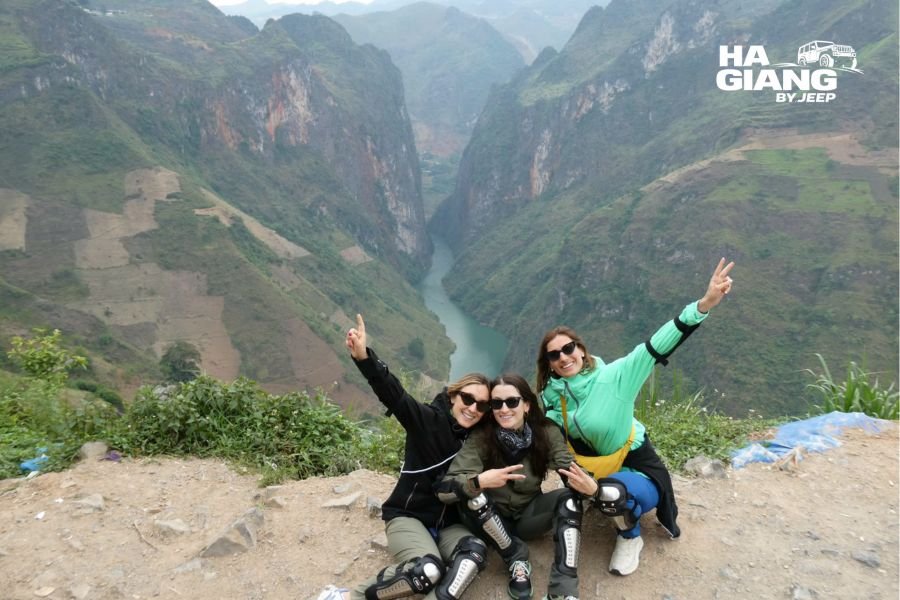
This is the view you will remember longest from Ha Giang, and it deserves to be seen properly: in good light, from the best spots, with time to just stand and take it in, and someone else handling the road.
Everything is private. Your driver was born in these mountains and knows every bend and every quiet pull off on the pass. The soft top folds back for the full open sweep of the canyon and goes up if the weather turns. Your luggage travels with you. And when you find a spot where the light and the view line up, you stop, for as long as you like.
Ma Pi Leng Pass, seen properly: let's get your dates held
Secure Your Spot with a 20 percent deposit. We use it to pre pay your homestays, your driver and your border permits, so everything on your route is genuinely held. The remaining 80 percent is cash on arrival, with nothing hidden behind it.
Questions about seeing Ma Pi Leng at its best? Tell us your dates and we will build a trip that gets you there in the right light.
Secure your spot WhatsApp us Contact pageWhatsApp: +84 862 379 288 or +84 938 988 593
Email: booking@hagiangbyjeep.com