
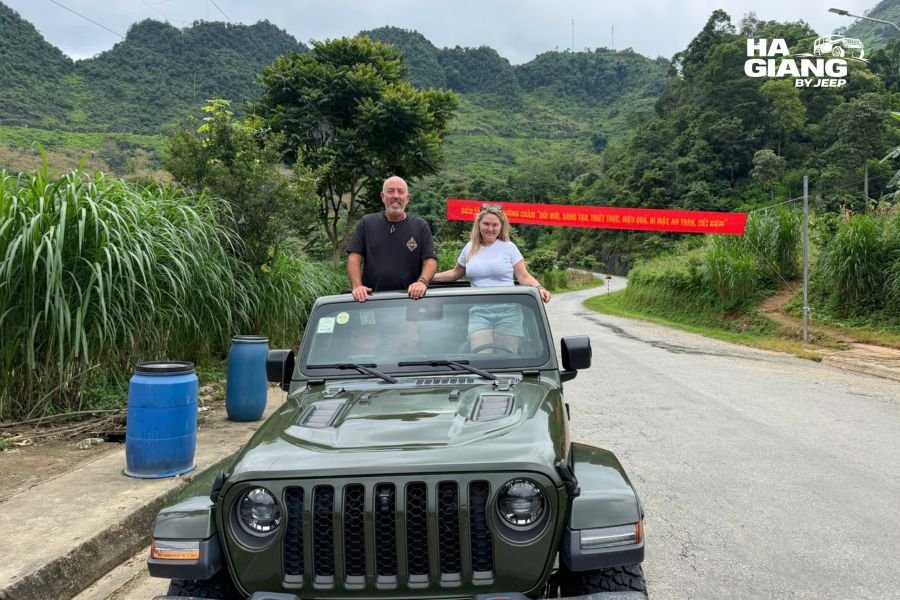
Ha Giang · The Top of Vietnam
Lung Cu Flag Tower: Vietnam's Northernmost Point
There is a particular feeling that comes with standing at the very top of a country, wind pulling at a huge red flag, China laid out in the hills just across the valley. Lung Cu delivers exactly that.
The Lung Cu Flag Tower is the symbol of the far north, the place travelers point to and say they stood at the top of Vietnam. It sits on a lonely hill above terraced valleys and Lo Lo villages, close to the Chinese border, and the short climb to its base is one of the most memorable stops on any Ha Giang trip. This guide covers what the tower is, how to reach it, what the climb and the view are actually like, the best time to go, what to pack, and the most comfortable way to fit it into your route.
If you are planning the far north and want to do it without wearing yourself out, you have probably already found Ha Giang by Jeep. Lung Cu is one of those stops a private jeep makes genuinely easy, and we will get to why. First, the tower itself.
In this guide
What is the Lung Cu Flag Tower?
The Lung Cu Flag Tower is a tall octagonal tower standing on the summit of Dragon Mountain, in the far northern commune of Lung Cu in Dong Van district, Ha Giang province. It marks the northern tip of Vietnam, the point most people mean when they talk about the top of the country, and it is one of the most recognizable landmarks in the whole region.
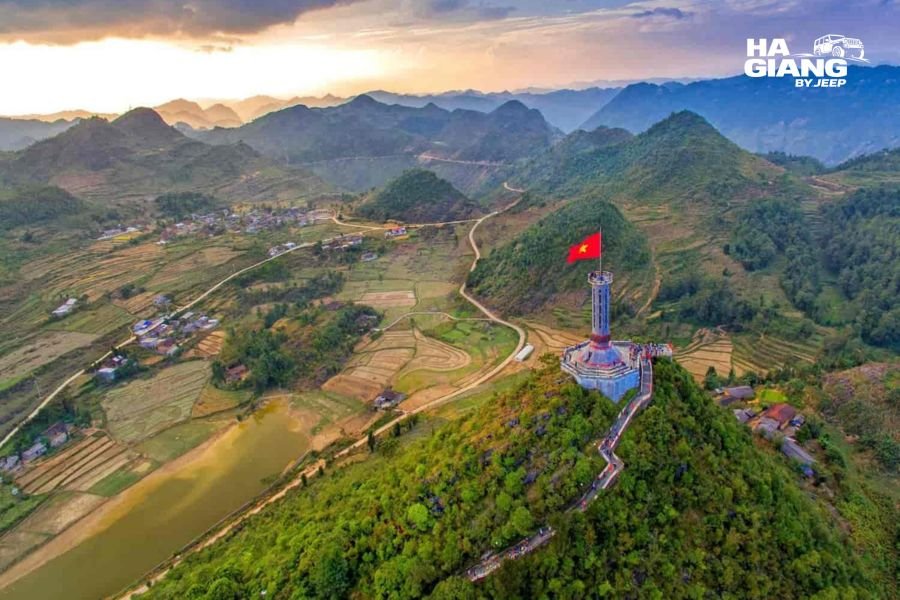
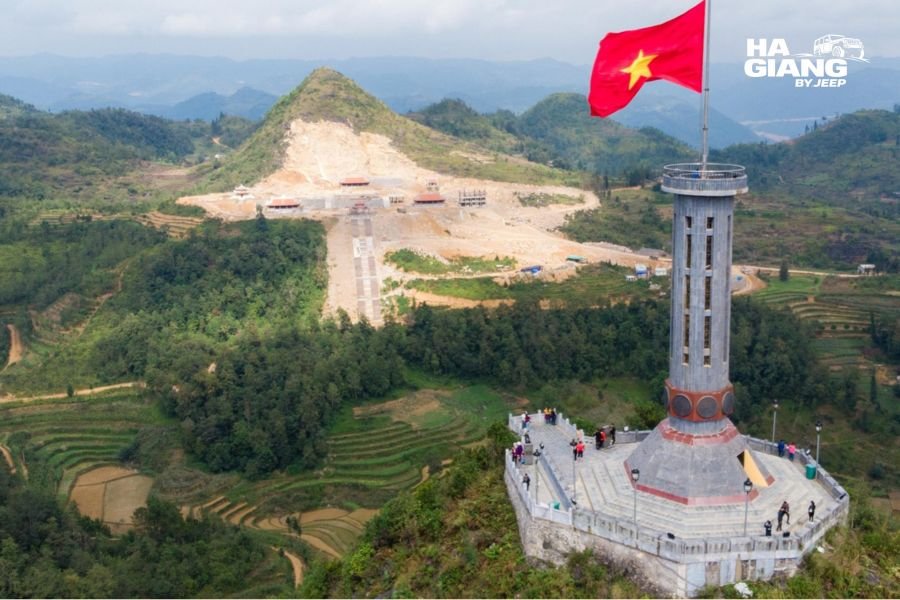
The design echoes the old flag tower in Hanoi, with a solid octagonal base and a viewing platform near the top. Flying above it is a large national flag, sized at 54 square meters to represent the 54 ethnic groups of Vietnam. On a windy day you hear that flag before you see it clearly, a steady snap and pull that carries across the hilltop.
This corner of the country sits inside the Dong Van Karst Plateau, a UNESCO Global Geopark, so the tower does not stand alone. It rises out of a landscape of grey limestone, terraced corn, and small border villages that is worth the drive on its own.
Where it is and how you reach it
Lung Cu is about as far north as you can go in Vietnam. It sits beyond Dong Van town, out toward the border, on a spur road that ends at the foot of the tower hill. You do not pass it by accident. Reaching it means a deliberate drive out to the edge of the country, which is part of what makes arriving feel like an achievement.
Getting to the Lung Cu Flag Tower
Almost everyone reaches Lung Cu as part of a bigger northern loop. You start from Ha Giang City, the gateway to the region, reached from Hanoi by night bus, limousine van, or private transfer. From there the road climbs north through Quan Ba, Yen Minh, and Dong Van, and Lung Cu is a spur trip out from the Dong Van area. There is no direct public transport to the tower, so most travelers arrive by private vehicle, on a tour, or self driving.
A word on driving times
You will see pages that quote an exact number of minutes from Dong Van to Lung Cu and back. Treat those with suspicion. Road conditions, weather, roadworks, and how long you linger at each viewpoint all change the timing, and a fixed figure on a page usually means someone copied it without driving it. Plan Lung Cu as a half day out from the Dong Van area rather than by the minute, and leave slack for the stops you will want to make along the way. On our tours the driver knows the current road and adjusts around it, which is exactly why we do not publish rigid stop to stop timetables ourselves.
Want the top of Vietnam without the tiring logistics? Our jeeps are private, so you are never grouped with strangers, and the soft top and heater keep the cabin comfortable when the border wind bites. The Ha Giang Loop 4 days jeep tour has the time to include Lung Cu properly, or message us with your dates.
Climbing to the top
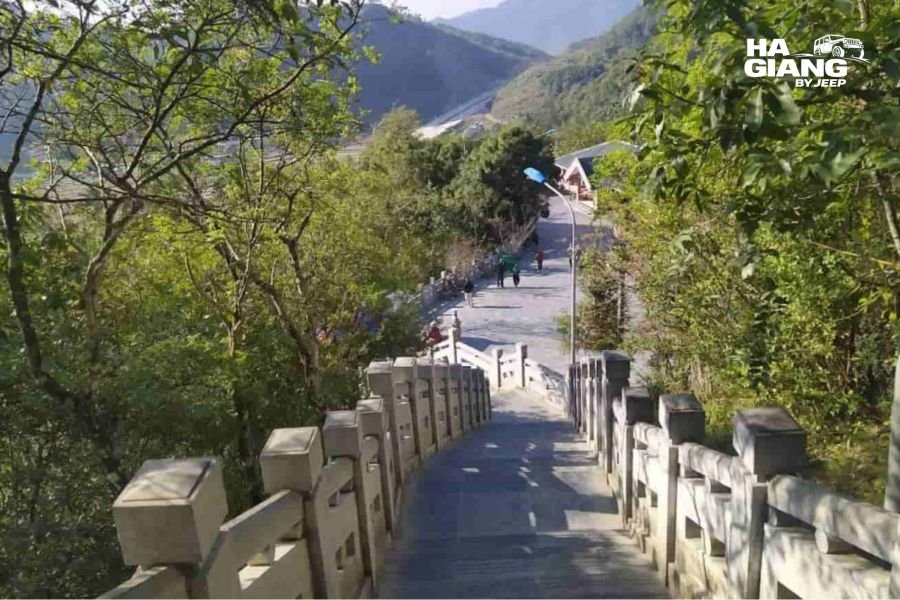
Reaching the Lung Cu Flag Tower is a two part effort, and neither part is extreme. From the car park at the base, a long staircase climbs the hillside to the tower itself. Take it slowly, stop for the views, and it is manageable for most reasonably mobile travelers, including older visitors who are happy to pause on the way up.
At the tower, a spiral staircase inside the base takes you up to the viewing platform just below the flag. It is a snug climb, one direction at a time when it is busy, but short. Then you step out beside the flagpole and the whole point of coming becomes obvious.
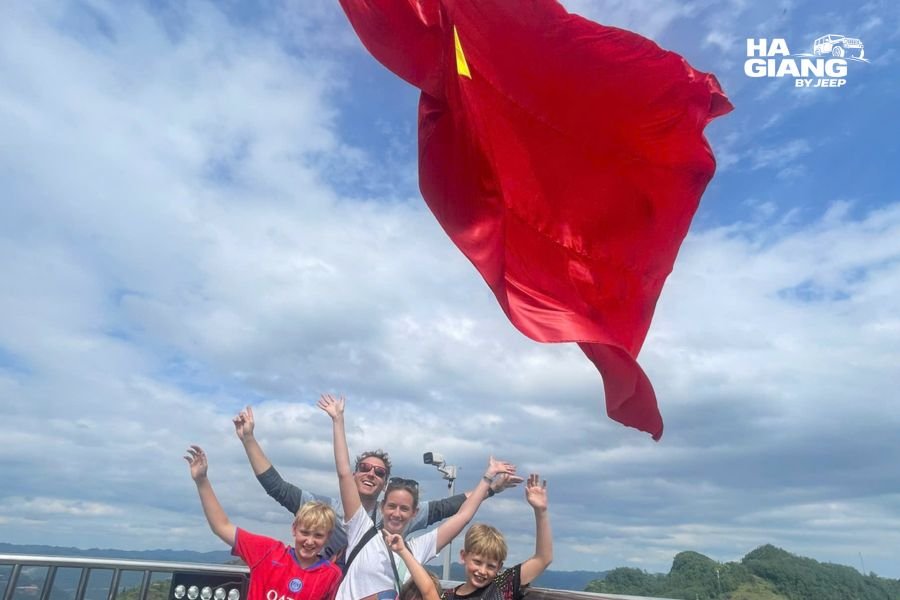
The view from the top
From the platform the land falls away in every direction. To the north, the hills roll on into China, close enough that the border feels real rather than abstract. Below, terraced fields and clusters of village houses fan out across the valleys, and on a clear day the view runs for miles.
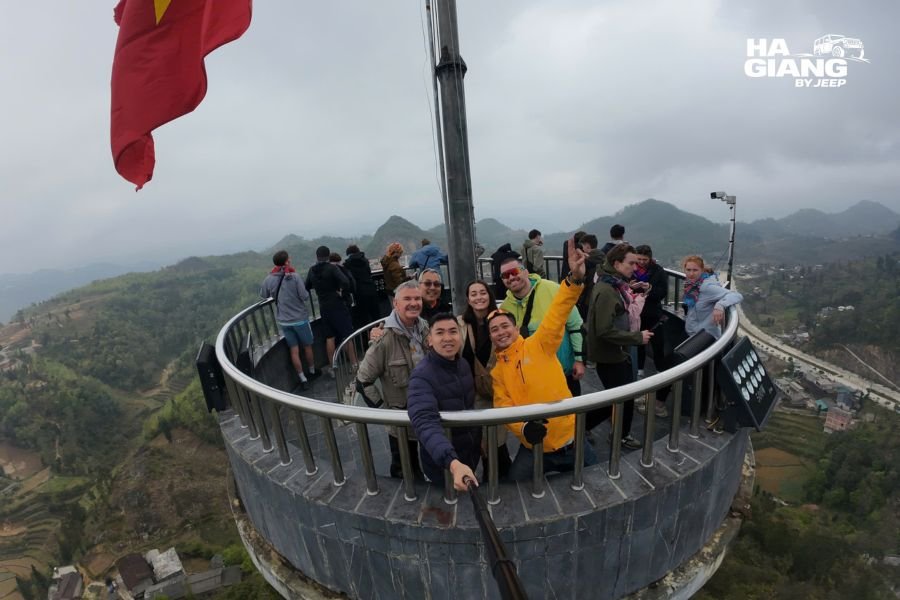
You do not need to be sentimental to feel something up here. Standing at the edge of a country, wind and flag and border all at once, tends to land on people.
Down at the foot of the mountain sit two small ponds, known locally as the Dragon Eyes, which are said never to run dry. They are a nice thing to look for from above and a pleasant spot to pass on the way in or out.
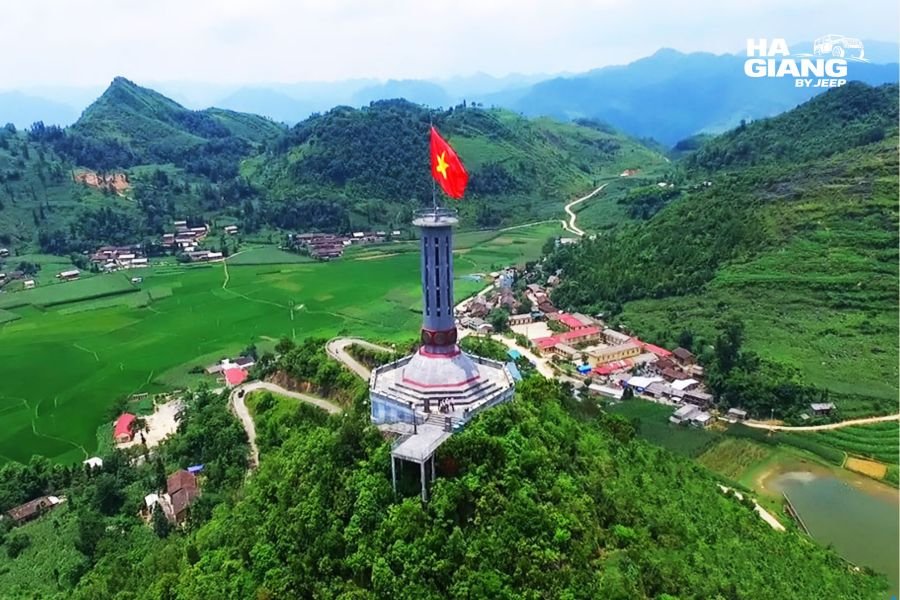
History and meaning
Lung Cu is more than a viewpoint. For Vietnamese visitors it carries real weight as the symbolic northern gate of the country, a place tied to centuries of frontier history and to the idea of the nation reaching all the way to its farthest edge. A flag has stood on this hill in various forms for a very long time, and the current tower is the modern expression of that long tradition.
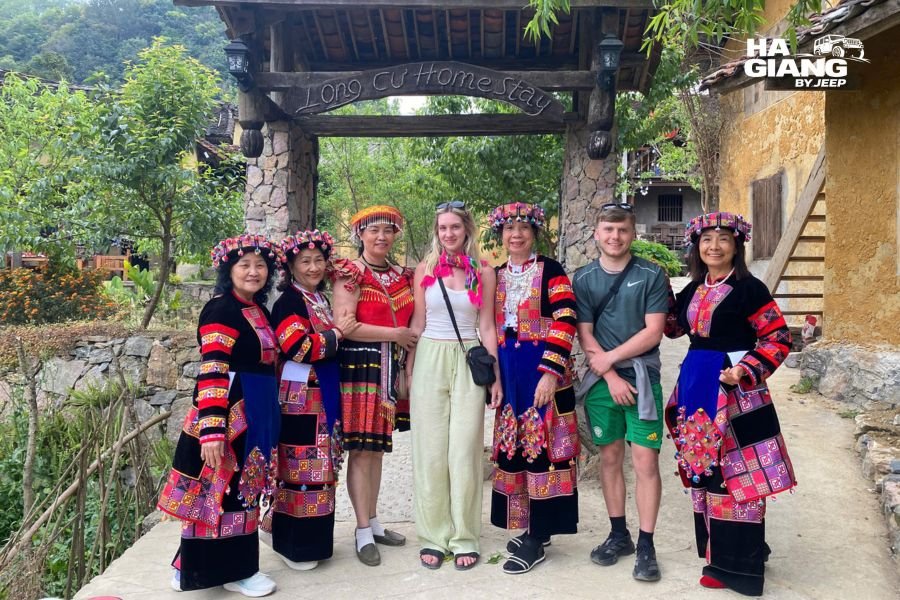
The flag itself, at 54 square meters, is a deliberate symbol of the 54 ethnic groups that make up the country, and that meaning is easy to feel here, where H'mong, Lo Lo, and other communities live right up against the border. As a foreign visitor you are welcomed into a place that means a great deal to the people around it, which is worth remembering as you take your photos.
What is nearby
Lung Cu is rarely done on its own. It slots into a rich cluster of stops around Dong Van, which is one reason it is worth building a couple of unhurried days into this corner of the plateau.
Lo Lo Chai village
At the very foot of the tower hill sits Lo Lo Chai, a village of the Lo Lo people with traditional earth walled houses and a growing handful of homestays and cafes. It is a lovely, low key place to pause after the climb, and staying a night here puts you at the top of the country as the day empties out.
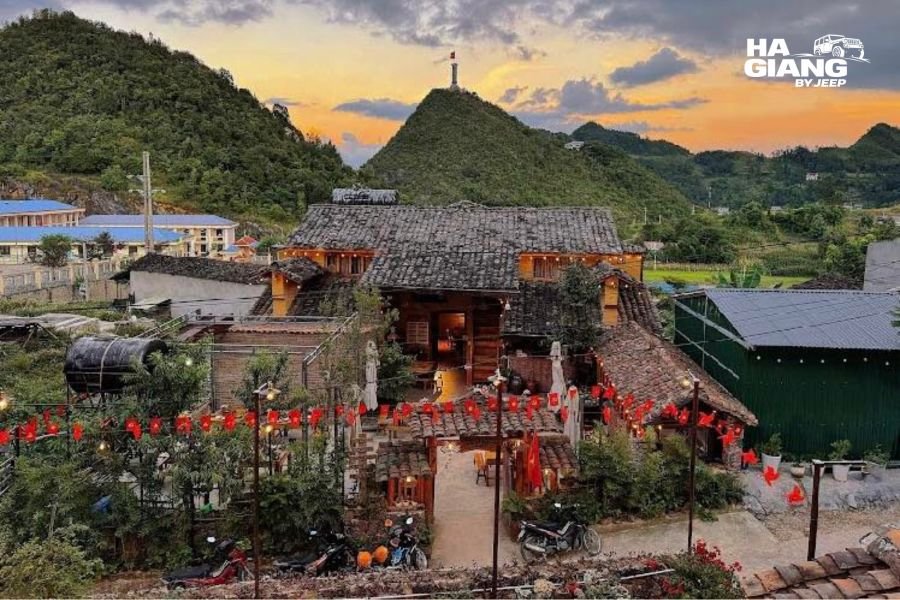
Dong Van Old Quarter and its market
The nearest real base is Dong Van, whose old quarter of century old stone houses and lantern lit cafes makes a natural overnight stop. Time your visit for a Sunday and you can pair Lung Cu with the famous Dong Van Sunday Market, one of the most colorful in the north.
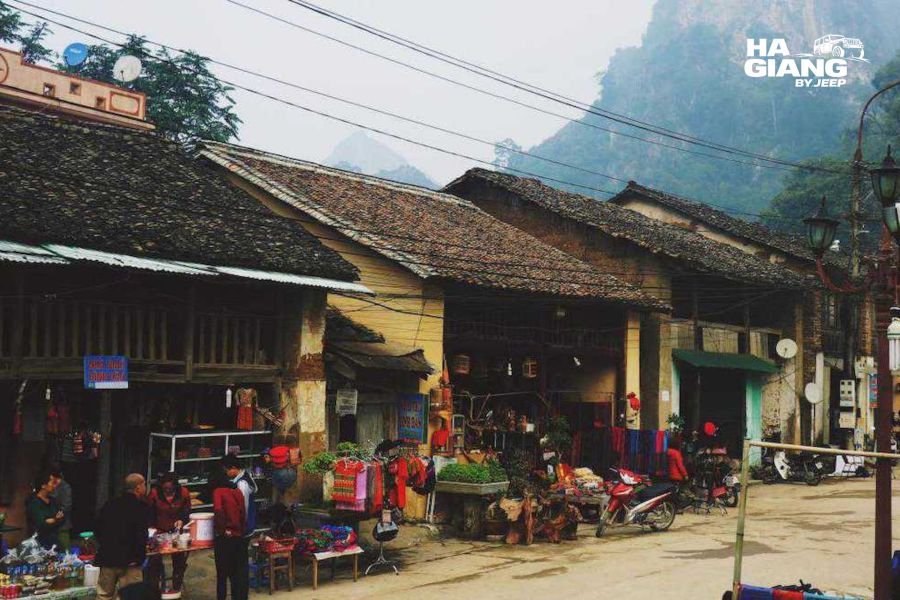
Ma Pi Leng, Sung La, and Pho Bang
Within the same few days you can add Ma Pi Leng Pass and the Nho Que River to the east, the pretty valley of Sung La with its H'mong king's palace nearby, and the quiet faded town of Pho Bang. It is an easy region to spend time in, and the short distances between these places are exactly what makes a slower trip rewarding.
Best time to visit
There is no single best month for the Lung Cu Flag Tower, only tradeoffs, and the weather up here at the border can shift fast.
| Season | What to expect | Worth knowing |
|---|---|---|
| Spring (Mar to May) | Mild days, green valleys, clearer skies | Pleasant and less crowded, some morning mist |
| Summer (Jun to Aug) | Lush and green, big skies | Wettest months, check conditions on border roads |
| Autumn (Sep to Nov) | Golden rice then buckwheat flowers, crisp air | The most popular window, clearer long range views |
| Winter (Dec to Feb) | Cold, sharp light, heavy fog on high ground | Can be genuinely cold and windy at the top, pack layers |
Clear days give the best long views into the border hills, and fog can close the whole panorama in minutes, so treat any seasonal guide, including this one, as a rough map rather than a promise. If the view is your main reason for coming, aim for a settled spell and be ready to be flexible.
What to pack and know before you go
Lung Cu is high, exposed, and colder and windier than most people expect. A little preparation makes the visit far more enjoyable.
- Warm and windproof layers. The hilltop catches the wind even on mild days. Bring a warm layer and a light shell whatever the season.
- Comfortable shoes. The climb is on steps, so proper footwear beats sandals.
- Cash. Card payment is limited out here. Carry small notes for entrance, parking, drinks, and the village.
- Water and sun protection. The sun is strong at altitude even when the air feels cool.
- Time to linger. The best visits are unhurried, with a coffee in Lo Lo Chai afterward rather than a dash back.
Border area and permits
Lung Cu sits right on the border, and areas near the frontier have required permits at various times. These rules can change, so we do not publish specific permit requirements that might be out of date by the time you travel. On our tours we handle the current paperwork for you as part of arranging the trip. If you are traveling independently, check the latest local requirements before you go rather than trusting an old blog post.
Where Lung Cu fits in a Ha Giang trip
Lung Cu is a spur trip, not a destination on its own, so how you reach it depends on how you are doing the wider loop. On a shorter route it may be skipped in favor of the core passes, while a longer, slower trip has the time to run out to the border and back without rushing. We deliberately avoid printing hour by hour schedules, because the right pace depends on your group, the season, and how much you want to slow down.
As a rule of thumb, if standing at the top of Vietnam matters to you, give yourself the extra day. It is the difference between a photo stop and an afternoon you remember.
Why a private jeep makes it easier
The run out to Lung Cu rewards comfort, because it is remote, high, and often cold and windy at the top. A private jeep changes the day in a few concrete ways.
- All weather comfort. A soft top cabin with a heater keeps the border wind and any rain outside while you stay warm between stops.
- Views in every direction. Sitting up in an open sided jeep, you see the karst and the valleys properly on the drive out instead of watching the road.
- Stop anywhere. A viewpoint, a village, a roadside grill: the driver simply pulls over and you get out. When you find a stall you like, you eat, and nobody has to get behind the wheel afterward, corn wine or not.
- Right for everyone. Families, couples, older travelers, and anyone who does not want to drive themselves are comfortable all the way to the border.
- Local knowledge. Our drivers grew up in these mountains and speak English, so Lung Cu comes with context, not just a car park.

Adventure without exhaustion is the whole idea. You get the top of Vietnam; you skip the part that leaves you wrecked.
Which jeep tour is right for you?
Lung Cu sits within reach on our longer northern routes. The right one depends on how much time you have and how far east you want to go.
- Short on time, want the greatest hits. The Ha Giang Loop 3 days jeep tour covers the core plateau, including Quan Ba, Dong Van, and Ma Pi Leng, at a comfortable pace. Ideal for a first visit with limited days.
- Want to add Lung Cu and go slower. The 4 days jeep tour has the breathing room to run out to Lung Cu and the border villages, plus quieter corners like Du Gia and Pho Bang.
- Want the plateau plus Cao Bang and Ban Gioc. The Ha Giang and Cao Bang 5 days jeep tour continues east to Ban Gioc Waterfall, Nguom Ngao Cave, and the God's Eye Mountain and Ngoc Con Valley area.
- Want the fullest version. The 6 days jeep tour adds even more of Cao Bang, including Pac Bo, at the most relaxed pace of all.
- Confident driver who wants the wheel. If you would rather self drive a proper 4x4, our Jeep Wrangler Rubicon rental lets you run your own route to the border with the same comfort and all weather cabin.
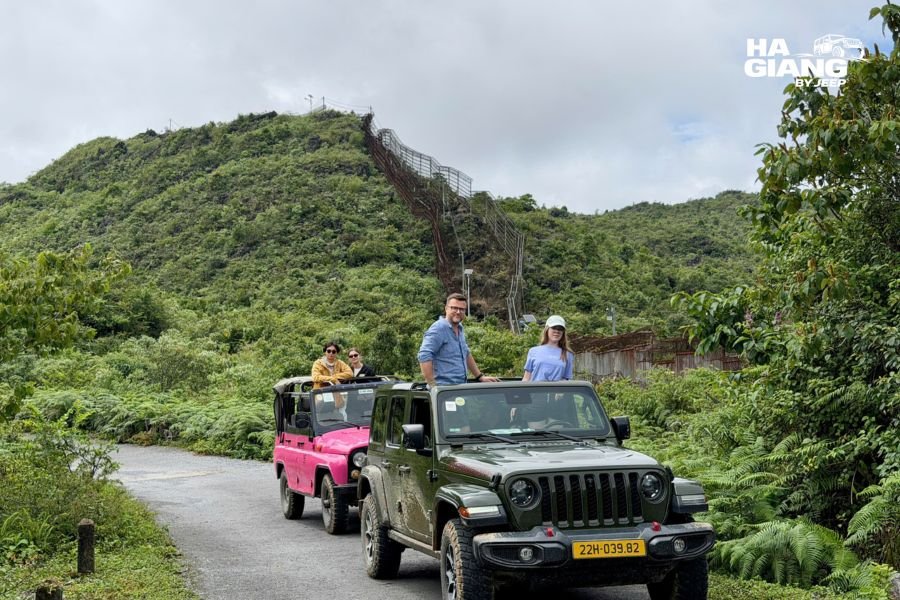
Not sure which fits? Message us on WhatsApp with your dates and group and we will point you to the right one honestly.
See Lung Cu for yourself
Standing at the top of Vietnam is one of those simple, memorable things that stays with people long after the trip. The easiest way to do it is to let someone else handle the roads, the timing, and the border area paperwork while you sit back and take it in.
We run private jeeps only, so you are never grouped with strangers, and we sort the permits, homestays, and drivers for you. To hold your dates, you secure your spot with a small deposit that lets us pre pay your homestays, drivers, and permits ahead of time, with the balance settled in cash on arrival. Most guests book one to three months in advance, and because every jeep is private, availability is limited, so earlier dates go first.
Ready to plan it?
Tell us your travel dates and group size and we will help you choose the right route, no pressure. Hold your spot now, or ask us anything first.
FAQ
It is a tall octagonal tower on Dragon Mountain in the far north of Ha Giang, flying a large national flag. It marks the northern tip of Vietnam and is one of the most iconic landmarks in the region.
The tower stands at the far northern edge of the country and is the recognized symbol of the top of Vietnam. The exact geographic northernmost point lies a little beyond it, but the flag tower is the spot everyone comes to see and stand at.
There is a staircase up the hill from the car park, then a spiral stair inside the tower to the viewing platform. Taken slowly with a few pauses, it suits most reasonably mobile travelers, including older visitors happy to rest on the way.
Most travelers reach it as a spur trip from the Dong Van area, having come north from Ha Giang City. There is no direct public transport, so people arrive by private vehicle, on a tour, or self driving.
Areas near the border have required permits at various times, and rules can change. On our tours we handle the current paperwork for you. If you travel independently, check the latest local requirements before you go rather than relying on old information.
Autumn, roughly September to November, gives the clearest long views and the golden rice and buckwheat seasons. Spring is mild and quieter, summer is lush but wet, and winter is cold and windy at the top. Pack warm layers year round.
Yes, with a relaxed pace. The main effort is the staircase, which most people manage with pauses. A private jeep handles the remote drive and keeps everyone comfortable between stops.
Yes. Lo Lo Chai village at the foot of the hill has homestays and cafes, and Dong Van town nearby has more options. Staying close lets you visit early or late when the crowds thin out.
No. You reach the same car park, climb the same tower, and see the same border views. A private jeep simply keeps you warm and comfortable on a remote, windy drive and suits travelers who prefer not to drive themselves.
Most guests book one to three months ahead. Because every jeep is private, availability is limited, so earlier dates fill first. Once you have a confirmed travel date, booking sooner helps us arrange homestays, drivers, and permits properly.