
Ha Giang Loop · Planning Guide
How Many Days for the Ha Giang Loop?
Everyone arrives at this question from the same direction: with a fixed number of days already in their hand, hoping somebody will tell them it is enough.
Sometimes it is enough. Sometimes it is not, and the useful thing is to know which before you book rather than after.
The Ha Giang Loop can be driven in two days. It is usually driven in three. It is at its best in four. And if you keep going east past Meo Vac into Cao Bang, it becomes a five or six days journey through two separate UNESCO Global Geoparks that most visitors to Vietnam never see.
None of those is the right answer on its own. How many days for the Ha Giang Loop you actually need depends on the road, on the season, on who is in the vehicle with you, and on what you came here for. Here is how to work it out.
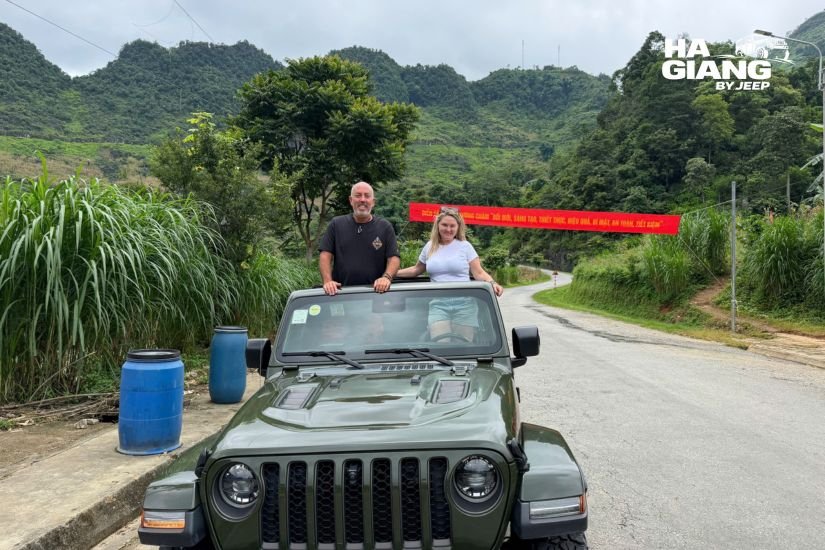
The short answer
If you want the fast version:
- 2 days. The core route and Ma Pi Leng Pass, driven at speed. No margin, no village time. A real trip, honestly compressed.
- 3 days. The standard, and the one most guests book. The full classic loop with time to stop at the viewpoints that matter.
- 4 days. The full loop plus Du Gia, more villages, more markets, and enough slack that a foggy morning does not ruin anything. The version people wish they had chosen.
- 5 or 6 days. Ha Giang and then east into Cao Bang: Ban Gioc Waterfall, the Ngoc Con valley, God's Eye Mountain, the Pac Bo historical site. Two geoparks, one continuous drive.
If somebody forced us to give one number and walk away: three days for most people, four if you can find the extra day.
Now the reasoning, because the number only means something once you understand what fills it.
What actually eats your time on the loop
The road, not the distance
Look at the loop on a map and it does not seem large. Drive it and the map turns out to be lying by omission.
The route climbs from Ha Giang City onto a limestone plateau, and it does not do so in a straight line. It switches back, drops into valleys, climbs out again, and clings to the side of gorges. Almost none of it is flat and almost none of it is straight. You do not cover ground here at the speed the distances imply, and any operator who promises you exact driving times is selling you a certainty that weather, road works and the occasional landslide will happily take away from them.
This is the single biggest reason people underestimate how many days for the Ha Giang Loop they actually need. They plan by kilometres. The road plans by hours.
The Hanoi journey nobody counts
Ha Giang City is not next door to Hanoi. Getting up there is its own journey, most commonly overnight so that you start the loop the following morning, though daytime transport exists too. Schedules and options change, so check the latest updates when you book.
The point is this: when you say "I have four days for Ha Giang," ask yourself whether you mean four days on the loop, or four days including getting there and back. Those are two very different trips. The second one is really a two days loop wearing a four days coat.
Be honest with yourself about the arithmetic before you choose the itinerary, not after.
The stops are the trip
Here is the part that people miss when they plan.
The loop is not a driving challenge with scenery attached. The driving is the connective tissue. What you actually remember is standing at the Quan Ba viewpoint watching the valley come out from under the cloud, or eating something unidentifiable and excellent at a market stall in Meo Vac, or sitting on a homestay floor while a family you met an hour ago pours you corn wine.
Every one of those things costs time. Add them up and you have your answer. A schedule with no room in it for stopping is a schedule that turns the best part of Ha Giang into scenery you drove past.
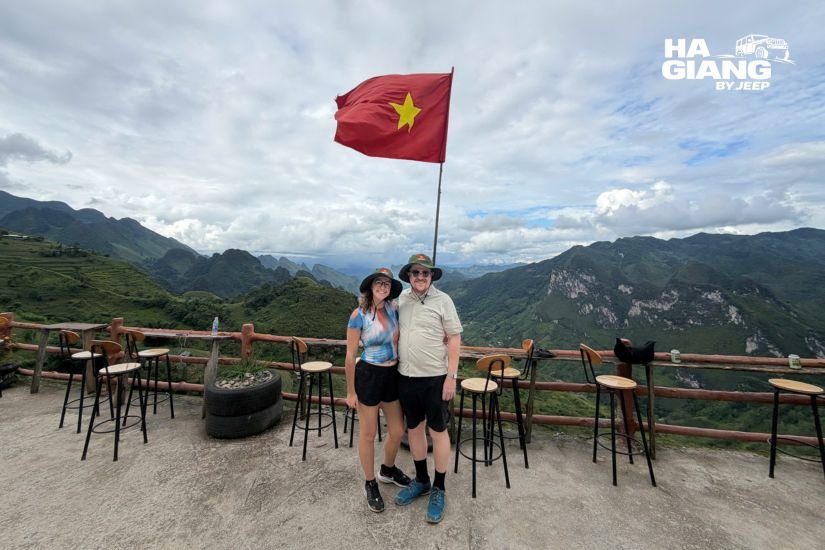
Ha Giang Loop in 2 days: the compressed version
Two days works. It is the honest minimum, and plenty of travelers do it because their calendar gave them nothing else.
You get Quan Ba, the climb through Yen Minh, a night in Dong Van Old Quarter, and Ma Pi Leng Pass on the second morning, which is the reason most people came in the first place. That is not a consolation prize. It is the spine of the route.
What you give up: Du Gia, Lung Cu, unhurried village time, and, most painfully, your weather margin. Ha Giang produces fog and low cloud that can erase a viewpoint entirely. On a three days loop that costs you a morning. On a two days loop it can cost you the pass.
If two days is genuinely what you have, do it. Start early both mornings and accept the edit. We wrote the whole thing up separately, including a realistic shape for both days, in our guide to the Ha Giang Loop in 2 days.
Ha Giang Loop in 3 days: the standard
Three days is where the loop stops feeling like a race.
This is the classic route, and it is what most of our guests book. Day one takes you up from Ha Giang City through Quan Ba and Yen Minh onto the Dong Van Karst Plateau. Day two is the plateau itself, the villages, and the crossing of Ma Pi Leng Pass. Day three brings you back, with time for the stops you did not know you wanted until you saw them.
What three days adds, compared with two:
- Time at the viewpoints. Not a photograph from the car window. Actually standing there.
- An evening in Dong Van that you are awake enough to enjoy. The old quarter, the stone houses, the square filling up after dark.
- Weather margin. One grey morning does not sink the trip.
- Village stops. Sung La, Lung Tam and the indigo linen workshop, Pho Bang if the timing works.
- A meal that is not eaten standing up.
Three days is also where the plateau starts to make sense as a place rather than a set of viewpoints. You see the same terraces in different light. You notice that the maize is planted in individual pockets of soil between the rocks, which tells you more about life up here than any museum could.
The Ha Giang Loop Jeep Tour 3 Days is the one we recommend most often, and that is not a sales position. It is what the road wants.

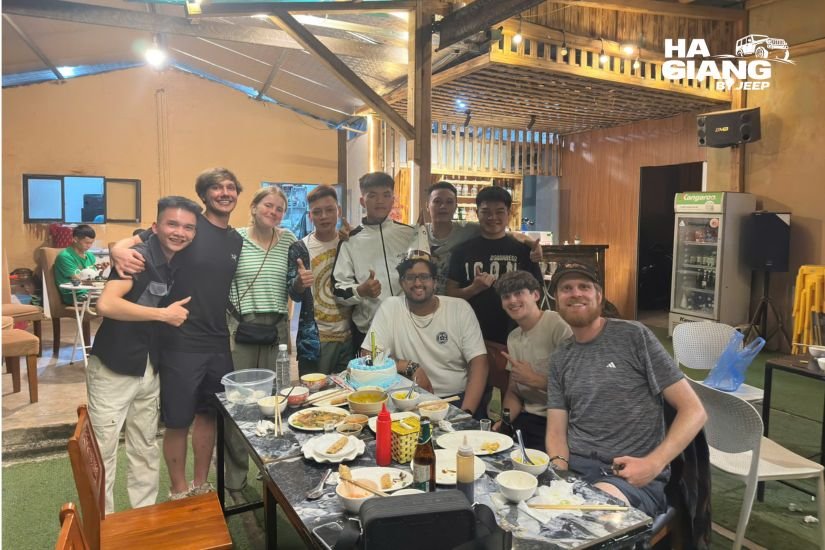
Still not sure which one fits?
Tell us your dates, your flights, and who is traveling with you. We will tell you honestly how many days the loop needs for your trip, even if the answer is a shorter tour than you were expecting to book.
Ha Giang Loop in 4 days: the version people wish they had booked
Ask guests at the end of a three days loop what they would change, and a good number of them say the same thing: one more day.
Four days is not three days with extra driving. It is three days with the pressure taken out, plus a whole arm of the loop that shorter itineraries cannot reach.
What the fourth day buys:
- Du Gia. The village on the eastern side of the loop, with its waterfall and its slow evening. It is the part of the route that people describe afterwards in a different tone of voice, and it does not fit into three days without breaking them.
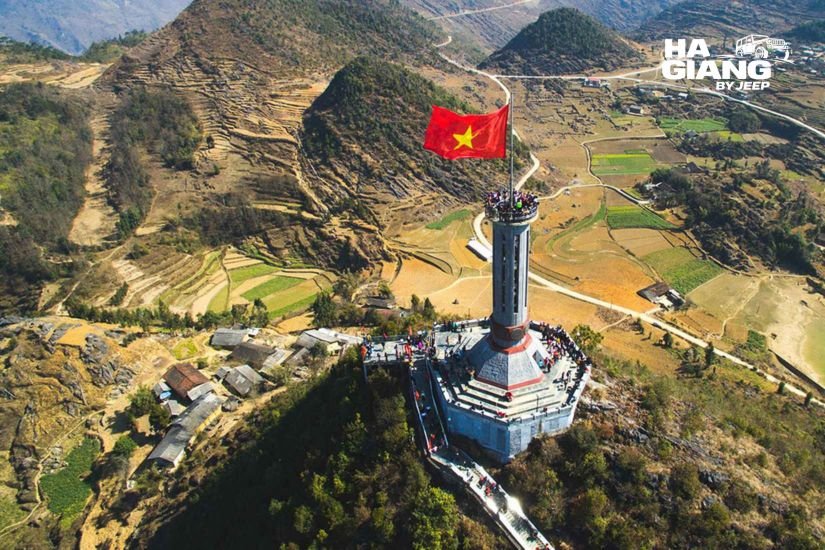
- Lung Cu. The flag tower at the northernmost point of Vietnam. Symbolic, beautiful, and a genuine detour in daylight terms.
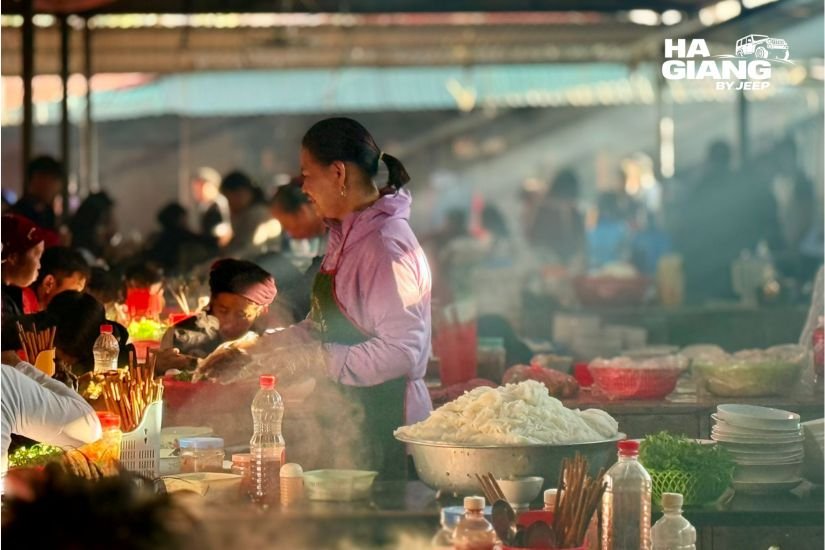
- Markets. With four days you have a real chance of your dates lining up with a market: Dong Van on a Sunday, Meo Vac, or if the calendar is extremely kind, Khau Vai. The markets are not staged for visitors. They are where people from the surrounding villages come to trade, and they are the most direct window into life on the plateau you will get.
- Slowness. An afternoon where nothing is scheduled. Sitting on a homestay terrace with a cup of tea while the valley fills with cloud below you. This is not filler. For a lot of people it turns out to be the trip.
The Ha Giang Loop Jeep Tour 4 Days is for travelers who came for the villages as much as the viewpoints, and for anyone traveling with children or with parents, where a slower rhythm is not a luxury but the difference between a good trip and a hard one.
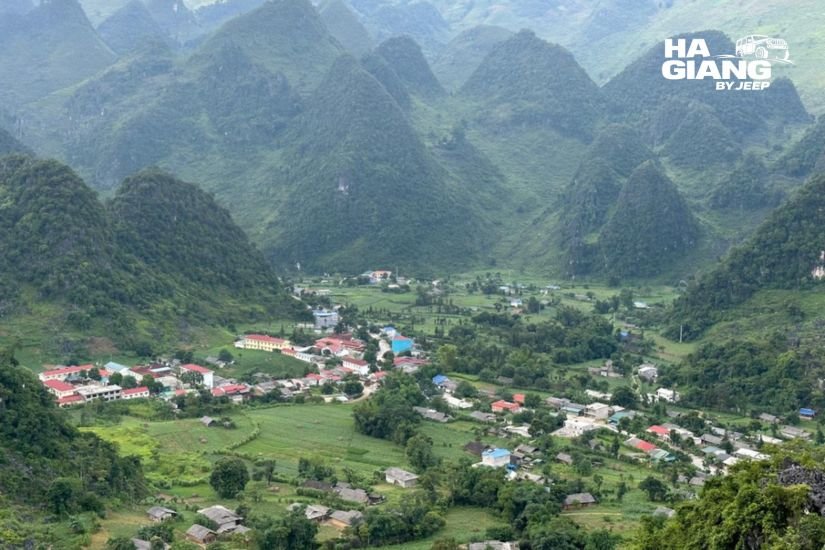
5 and 6 days: Ha Giang plus Cao Bang
Here is the thing almost nobody planning a Ha Giang trip realises: the mountains do not stop at Meo Vac.
Keep driving east and the limestone changes character. The plateau gives way to a softer, greener landscape of conical karst hills, rivers and valleys, and you cross into the second UNESCO Global Geopark in the region, Non Nuoc Cao Bang. Two geoparks, one road, one trip.
What the extension adds:
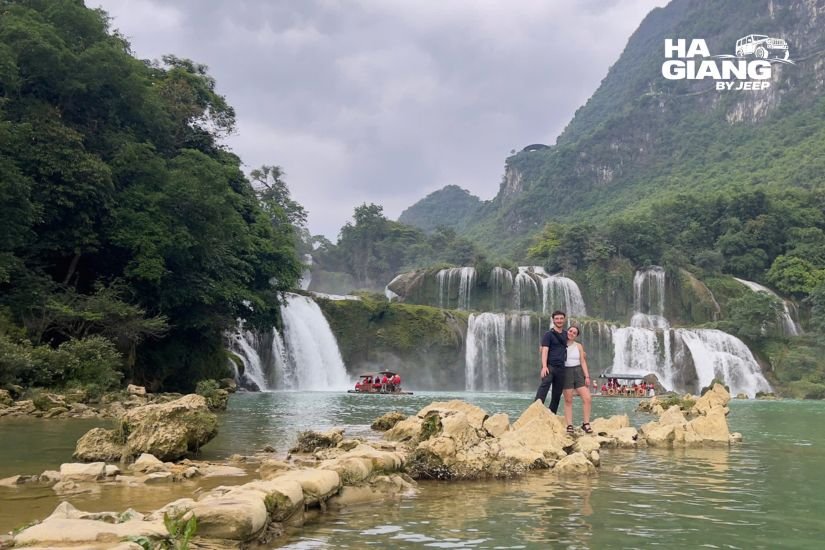
- Ban Gioc Waterfall, on the border, wide and tiered and genuinely enormous. Most travelers who make it here rate it as the single most impressive thing they saw in the north.
- The Ngoc Con valley, rivers and rice and limestone towers, a completely different rhythm from the bare rock of Dong Van.
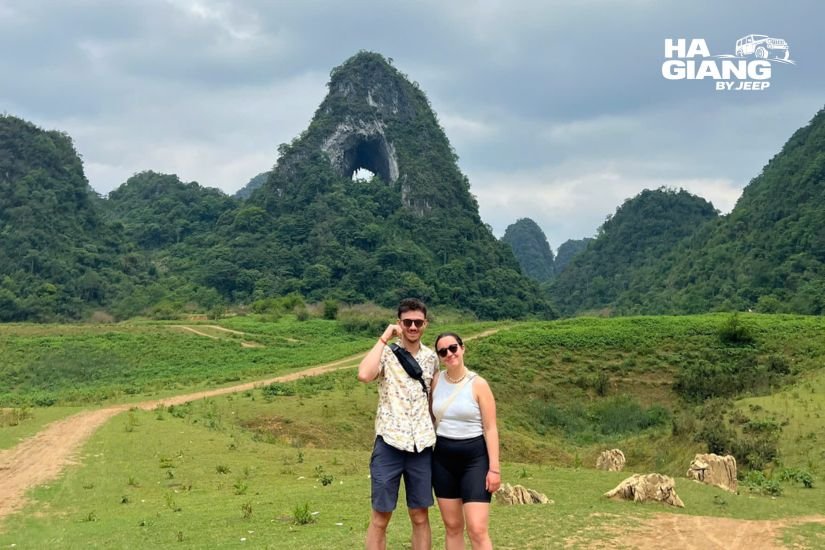
- God's Eye Mountain, the limestone peak with a hole punched straight through it, above a seasonal lake.
- The Pac Bo historical site, for anyone interested in the modern history of the country rather than only its landscapes.
- The 15 step pass, one of those roads that exists purely to remind you that engineers here have a sense of humour.
The Ha Giang and Cao Bang Jeep Tour 5 Days is the efficient version of this route. The Ha Giang and Cao Bang Jeep Tour 6 Days is the one that does it properly, with a night in the mountains between the two regions rather than a long transfer day.
If the north of Vietnam is the reason you came to the country at all, this is the trip. Everything else is a shorter version of it.
Side by side: what each duration buys you

| 2 days | 3 days | 4 days | 5 to 6 days | |
|---|---|---|---|---|
| Quan Ba, Yen Minh, Dong Van | Yes | Yes | Yes | Yes |
| Ma Pi Leng Pass | Yes, quickly | Yes | Yes | Yes |
| Meo Vac | Briefly | Yes | Yes | Yes |
| Village stops | One, maybe | Several | Many | Many |
| Lung Cu | Usually skipped | Possible | Yes | Yes |
| Du Gia | No | Sometimes | Yes | Route dependent |
| Market chance | Low | Moderate | Good | Good |
| Cao Bang and Ban Gioc | No | No | No | Yes |
| Weather margin | Almost none | Some | Comfortable | Comfortable |
| Pace | Fast | Balanced | Unhurried | Unhurried, with distance |
| Best for | Fixed short schedules | Most travelers | Families, photographers, slow travelers | Anyone who came to Vietnam for the north |
How many days for the Ha Giang Loop do you need? Pick by who you are
The honest way to answer this is not by the calendar. It is by the passenger list.
Couples on a longer Vietnam itinerary
Three days. You get the entire classic loop, the passes, an evening in Dong Van, and you are back with your schedule intact. If the north is the emotional centre of your trip rather than one stop among many, take four.
Families with children
Four days, and do not talk yourself out of it. Two days of mountain road is a long time for a child in a vehicle. A private jeep removes the physical strain, but it cannot shorten the road. Four days means shorter driving blocks, real breaks, a waterfall to swim near, and parents who are still enjoying themselves on day three.
Travelers in their fifties, sixties and beyond
Three days minimum, four if the trip matters to you. Comfort is the entire reason the jeep exists: you sit in a proper seat, the cabin can be closed and heated, and you step out at the viewpoints rather than climbing off anything. What the jeep cannot do is add hours to the day. The difference between three and four days for an older traveler is the difference between arriving at each stop ready to enjoy it and arriving at it merely relieved.
Photographers
Four days, or longer. Light on the plateau is the whole game, and light does not negotiate with a schedule. Four days means you can be at Ma Pi Leng in the morning rather than at midday, and it means a foggy dawn is a story rather than a disaster.
Foodies
Three days at an absolute minimum, four to do it justice.
The plateau feeds you specifically. Com lam, sticky rice cooked in bamboo over a fire at the roadside. Thang den, warm glutinous rice balls in ginger syrup, which is precisely what you want when the temperature drops in Dong Van after dark. Banh cuon trung, steamed rice rolls with egg, served here with a bowl of hot broth instead of a dipping sauce, which is better and which is worth arguing about. Chao au tau, a thick, faintly bitter porridge made from a local tuber, eaten in the evening. And ruou ngo, corn wine, which somebody will pour for you, probably more than once.
With a private jeep and a driver, none of that is a logistical problem. You stop at the stall that smells right. You sit down at the market because a woman is ladling something out of a pot and you want to know what it is. You accept the corn wine at the homestay, because you are not the one driving in the morning. Nobody is watching the clock, and nobody is watching where the vehicle is parked.
That freedom is worth an extra day on its own.
Confident drivers who want the road to themselves
However many days you like. The Jeep Wrangler Rubicon rental is available by the day, with route advice from people who drive these passes for a living. Rules, paperwork and requirements for driving in Vietnam can change, so check the latest updates and speak to us before you commit to a self drive plan.

The season changes the answer
The number of days you need is not fixed across the year, and this is the part most guides leave out.
In the wet months, low cloud and rain can sit on the plateau for a morning or a whole day. The viewpoints disappear. Roads occasionally need patience. A three days trip in this window has enough slack to survive one bad morning. A two days trip may not. If you are traveling in the rain, buy yourself the extra day. It is cheap insurance against flying home with photographs of fog.
In the dry, cooler months, the air is clearer, the passes behave, and a shorter itinerary carries less risk. It is also colder than travelers expect, particularly in the mornings and at the viewpoints. The jeeps have a soft top and heating, which handles the driving. The standing around is on you and your jacket.
Around the harvest and the flower seasons, the plateau is at its most photogenic and also its busiest. More people at the viewpoints means more time at each one. Build that into the plan.
Conditions vary year to year, so treat all of this as a way of thinking rather than a forecast. Ask us what your specific dates usually look like and we will tell you.
What the extra days actually feel like from inside a jeep
There is a version of the argument for more days that is purely about the itinerary: more stops, more villages, more kilometres covered. That version is true and it is also boring.
Here is the better version.
On a compressed trip, you spend the days in a state of low grade calculation. What time do we need to leave. Can we stop here. Will we make Dong Van before dark. It is not unpleasant, but it is a kind of background noise, and it sits between you and the place.
Give the trip an extra day and that noise switches off. You pull over because the light did something. The driver stops because there is a market happening that was not on any plan, and it turns out to be the best hour of your week. You get out at the top of Ma Pi Leng and just stand there, and nobody is quietly checking a watch.
Because the jeep is private, that decision is always yours to make. Nobody is grouped with strangers, nobody is negotiating with a convoy, and nobody in your vehicle is missing the valley because they are concentrating on the road. Everyone gets the view.
This is what we mean when we say adventure without exhaustion, and the number of days you choose is the biggest single lever you have over it. For a closer look at how a single day on the road actually unfolds, we broke it down in our guide to what to expect on a Ha Giang jeep tour.
Mistakes people make when choosing how many days
- Counting the travel days as loop days. The journey up from Hanoi and back is not part of the loop. Plan it separately or you will arrive at your itinerary a day short and not understand why.
- Choosing by budget alone, then rushing. A compressed trip you did not enjoy is not a saving.
- Planning by map distance. The road decides, not the ruler.
- Building the trip around a market without checking the market. Markets run on their own calendar. Ask before you commit.
- Assuming that more days means more driving. It usually means less driving per day, which is the opposite of what people fear.
- Booking too late. Jeep availability is limited. Once you have a confirmed travel date, book as soon as you reasonably can. Most guests book one to three months in advance, and on peak dates the longer itineraries fill first because they are the ones people plan around.
- Trusting anyone who gives you precise driving times. Weather, road works and landslides all get a vote. Anybody quoting you certainty does not have it.
Which jeep tour is right for you?
2 days if your schedule is fixed and immovable. The passes, driven quickly, honestly compressed. Read the full breakdown in our Ha Giang Loop in 2 days guide before you commit.
3 days if you want the classic loop done properly. The Ha Giang Loop Jeep Tour 3 Days is the sweet spot, and the one most of our guests choose.
4 days if you want the villages, Du Gia, the markets, and a trip with room in it. The Ha Giang Loop Jeep Tour 4 Days is the one people wish they had booked.
5 or 6 days if the mountains are the reason you came. The Ha Giang and Cao Bang Jeep Tour 5 Days and the Ha Giang and Cao Bang Jeep Tour 6 Days carry on east into Cao Bang: Ban Gioc Waterfall, God's Eye Mountain, the Ngoc Con valley, the Pac Bo historical site. Two UNESCO Global Geoparks in one continuous drive.
The rental if you are a confident driver who wants the road on your own terms. The Jeep Wrangler Rubicon rental goes by the day.
Ready to choose your days?
Every jeep is private. You are never grouped with strangers. Your driver was born in these mountains, speaks English, and knows which viewpoint has cleared and which one is still under cloud.
We are based in Ha Giang City, we are on WhatsApp 24 hours a day, and we handle the border area paperwork so you do not have to think about it. Tell us your dates and who is coming, and we will tell you honestly how many days the loop needs for your trip.
booking@hagiangbyjeep.com · +84 862 379 288 · +84 938 988 593
FAQ
Three days suits most travelers: the full classic loop, the passes, and time to stop properly. Four days is better if you want Du Gia, the markets, and an unhurried pace. Two days works if your schedule is fixed. Five or six days adds Cao Bang and Ban Gioc Waterfall.
It is enough for the core route and Ma Pi Leng Pass, but it leaves no weather margin and very little village time. If your dates are fixed, take it. If you have any flexibility, three days is a noticeably better trip.
Three days covers the classic route comfortably. Four days adds Du Gia, Lung Cu, a better chance of catching a market, and enough slack that a foggy morning costs you nothing. If you are traveling with children or older parents, choose four.
Yes, and this is the most common planning mistake. The journey up is usually made overnight so you start the loop the following morning, and you need a return journey afterwards. Neither counts as a loop day. Schedules change, so check the latest updates when you book.
Ban Gioc sits in Cao Bang, east of Meo Vac, so it needs the five or six days combo itinerary. It cannot be added to a standard loop. The six days version does it at a comfortable pace rather than with a long transfer day.
Yes. Many of our guests are in their fifties, sixties and beyond. You sit in a proper seat, the cabin closes and heats, and you step out at the viewpoints. We would still suggest three or four days rather than two, because the pace matters more than the terrain.
It does. In the wetter months, low cloud and rain can take a viewpoint away for a whole morning, so a longer itinerary carries less risk. In the drier, cooler months a shorter trip is safer, though it is colder than most travelers expect. Ask us about your specific dates.
Six days, if you continue east into Cao Bang. Beyond that you are into custom routing, which we are happy to build. For the Ha Giang Loop alone, four days is the point where extra time starts going into rest rather than new ground.
Once you have a confirmed travel date, as soon as you reasonably can. Most guests book one to three months in advance. Jeep availability is limited, and on peak dates the longer itineraries go first.
Parts of the region sit near the border and have required permits historically. Rules can change, so do not rely on secondhand information. When you book with us we handle the border area paperwork from our office in Ha Giang City. Bring your passport.