Ha Giang SIM Card and Internet on the Loop
Most travelers ask about a Ha Giang SIM card for one of two reasons. Either they need to stay reachable, or they have heard the mountains are a dead zone and want to know how cut off they are about to be.
The real answer sits between the two extremes. Northern Vietnam has better mobile coverage than most visitors expect, and Ha Giang is not the wilderness some blogs make it sound. But coverage on the Loop is patchy in a specific, predictable way, and knowing where and why saves a lot of frustration.
This guide covers where to buy a SIM, whether eSIM is worth it, what the signal is genuinely like along the route, what to download in advance, and how to keep everything charged for three or four days in the mountains.
What is in this guide
- The short answer
- Buying a SIM card in Vietnam
- eSIM or physical SIM: which makes more sense here
- What coverage is actually like on the Loop
- Where the signal reliably drops
- Wifi at homestays and hotels
- What to download before you leave the city
- Staying charged for three days in the mountains
- Working remotely from Ha Giang: an honest assessment
- Common mistakes and things to watch for
- A case for being offline
- Which jeep tour suits you best
- FAQ
The Short Answer
If you want the compressed version before the detail:
- Yes, get a local SIM or eSIM. Roaming from home is almost always the expensive option, and local data in Vietnam is cheap by international standards.
- Buy it in Hanoi or at the airport, not in Ha Giang. Selection is better and you will have working data for the transfer.
- Coverage on the Loop is decent in towns and villages, thin on the high passes. You will have signal at most places you sleep and eat.
- Homestay wifi exists but is not fast. Treat it as good enough for messages, not for uploading video.
- Download maps, translation and entertainment before you go. This is the single highest value preparation step.
- Bring a power bank. Cold weather and constant photography drain phones faster than you think.
Everything below is the long version.
Buying a SIM Card in Vietnam
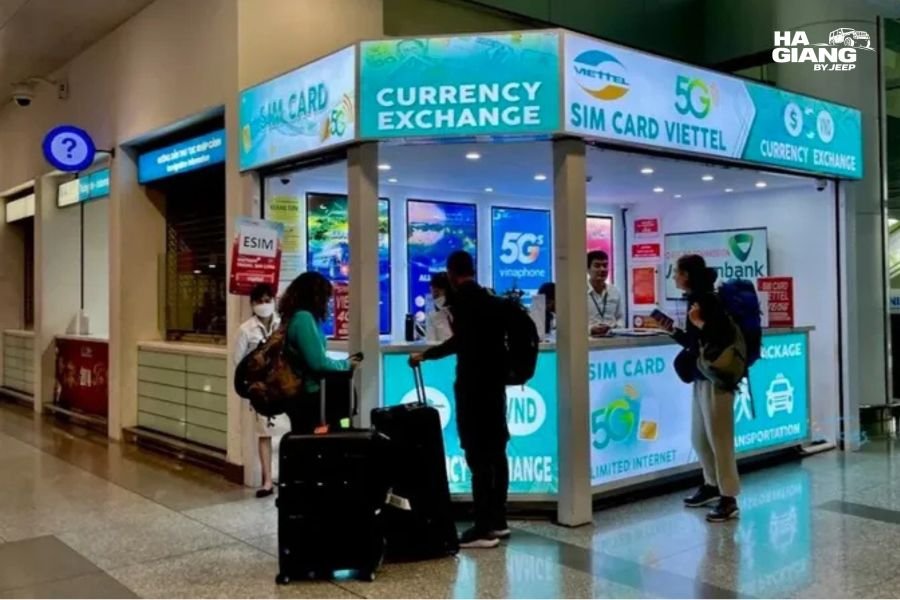
Where to buy. Airport arrival halls, official carrier stores in cities, and convenience shops all sell tourist SIMs. Official carrier stores and airport counters are the straightforward choices for visitors, because staff are used to registering foreign passports and setting the phone up before you walk away.
What you need. Vietnam requires SIM registration with identification, so bring your passport. Registration requirements and the documents needed can change, so treat this as a general expectation rather than a fixed rule and check the current position when you arrive.
Which carrier. The three main national networks are Viettel, Vinaphone and Mobifone. Among travelers who spend time in the northern mountains, Viettel has the strongest reputation for rural and highland coverage. That is a widely reported pattern rather than something we can verify network by network, and networks do upgrade infrastructure over time. If mountain coverage is your priority, it is the sensible default to ask about first.
What to buy. A tourist data package covering the length of your trip. Do not overthink the amount of data. Vietnamese data allowances are generous and the constraint on the Loop is signal, not gigabytes.
What we will not tell you: prices. SIM and package pricing changes constantly and varies by point of sale, and a stale number in a blog post is worse than no number. Ask at the counter and compare on the spot.
eSIM or Physical SIM: Which Makes More Sense Here
Both work. The choice comes down to your phone and your tolerance for admin.
| eSIM | Physical SIM | |
|---|---|---|
| Setup | Bought online, activated by QR code, works before you land | Bought on arrival, needs a shop and a passport |
| Keeps your home number | Yes, runs alongside your existing line | Only if your phone takes two SIMs |
| Requires compatible phone | Yes, many but not all recent models | No |
| Risk of losing a tiny piece of plastic on a mountain pass | None | Real |
| Local support if something breaks | Usually email or chat | Walk into a shop |
The case for eSIM. You arrive connected. No queue, no passport photocopying, no swapping your home SIM into a wallet where it will eventually vanish. For short trips this is genuinely easier.
The case for a physical SIM. If something goes wrong, a human being in a shop can fix it. If your phone is older or locked, eSIM may not be an option at all. And a local physical SIM gives you a Vietnamese phone number, which matters more than travelers expect for calling a homestay, a driver, or a restaurant.
Check compatibility before you buy an eSIM. Not every phone supports it, and some phones sold in some markets have it disabled. This is worth five minutes of checking at home rather than discovering it in an arrivals hall.
Not sure how connected you need to be?
Tell us your dates and what you need to stay on top of while you travel. We will tell you honestly where you will have signal on your itinerary and where you will not, so you can plan around it instead of hoping.
WhatsApp us See the 3 Days LoopWhat Coverage Is Actually Like on the Loop
The mental model that helps: signal follows people, not roads.
Where people live, there are towers. Ha Giang City, Quan Ba, Yen Minh, Dong Van, Meo Vac and the larger villages generally have usable mobile data. You can send photos, check messages, make a call, and load a map.
Where the road climbs away from settlements and runs along a cliff or through a high pass, coverage thins out and often disappears entirely. This is normal mountain behaviour anywhere in the world and it is not a Vietnam problem.
A rough picture along the route:
| Area | What to expect |
|---|---|
| Ha Giang City | Reliable, the strongest signal you will have on the trip |
| Quan Ba and Yen Minh | Generally usable in and around town |
| Dong Van and the Old Quarter | Usually solid, cafes and hotels have wifi |
| Meo Vac | Generally usable in town |
| Ma Pi Leng Pass | Patchy, comes and goes, sometimes surprisingly good at the viewpoints |
| Du Gia and smaller villages | Variable, often works but do not depend on it |
| High passes and remote valleys generally | Assume nothing |
Two honest caveats. Conditions change with weather, with your carrier, with your handset, and with network upgrades that happen without announcement. And a signal bar showing on screen does not always mean data is moving. Treat the table as a shape, not a guarantee.
Where the Signal Reliably Drops
The gaps that catch people out are less about remoteness and more about geometry. Deep valleys, the shadowed side of a ridge, and long tunnel like sections between rock walls all block signal even when a tower is close by.
Practical consequences:
- Do not plan to make an important call from a viewpoint. Make it from town, before or after.
- Do not rely on live navigation. Live maps fail exactly where you most want them.
- Tell people at home what to expect. A family member who has not heard from you in eight hours will worry. A family member who was told in advance that you will be offline between towns will not. This one sentence before you leave prevents a lot of unnecessary anxiety on both sides.
- Agree a check in rhythm rather than a schedule. Once a day from wherever you are sleeping is realistic. A promise to message at six every evening is not.
None of this is unique to Ha Giang. It is what mountains do.
Wifi at Homestays and Hotels
Almost every place you sleep on this route will have wifi. Managing your expectations about it is the useful part.
What it is usually good for. Messaging apps, email, checking a booking, sending a few photos, a short video call if the connection is having a good evening.
What it is usually not good for. Uploading video, large file transfers, streaming in high definition, or anything time critical that cannot survive a dropout.
Why it slows down at night. Everyone arrives, everyone connects at once, and a homestay connection is shared across the whole building. The hour after dinner is the worst time to attempt anything demanding. Early morning is the best.
Hotels in Dong Van and Ha Giang City are a step up. If you have something that genuinely must be done online, do it in a town rather than in a mountain village, and do it early.
Cafes are the quiet trick. Dong Van Old Quarter has cafes with better connections than most guesthouses, plus power sockets and coffee. If you need forty five minutes of real internet during a trip, this is where to find it.

What to Download Before You Leave the City
This is the section that actually changes your trip. Do this while you still have fast internet.
- Offline maps. Download the whole northern region, not just a corridor along your route. Offline maps keep working with no signal at all, using only the phone's own location. This is the single most useful thing on the list.
- A translation app with offline language files. Vietnamese offline packs are small and enormously useful in a village shop.
- Your accommodation and booking details as screenshots. Not links. Screenshots. A link is useless without data.
- Entertainment. Podcasts, playlists, episodes, a book. Evenings in the mountains are long, dark and cold, and the wifi will not stream what you want at nine in the evening.
- Any documents you might need. Insurance details, passport scan, emergency contacts, saved locally rather than in a cloud folder you cannot reach.
- Your driver's number and the office number, saved as contacts. Obvious, and regularly forgotten.
One note on navigation specifically. If you are travelling with a driver you do not need to navigate at all, which removes the whole problem. If you are driving yourself in a rented Wrangler Rubicon, offline maps stop being convenient and start being essential. Download them before you leave Ha Giang City.
Staying Charged for Three Days in the Mountains
Connectivity is useless with a flat battery, and phones drain fast here for three reasons: cold weather, constant photography, and the phone burning power hunting for signal it cannot find.
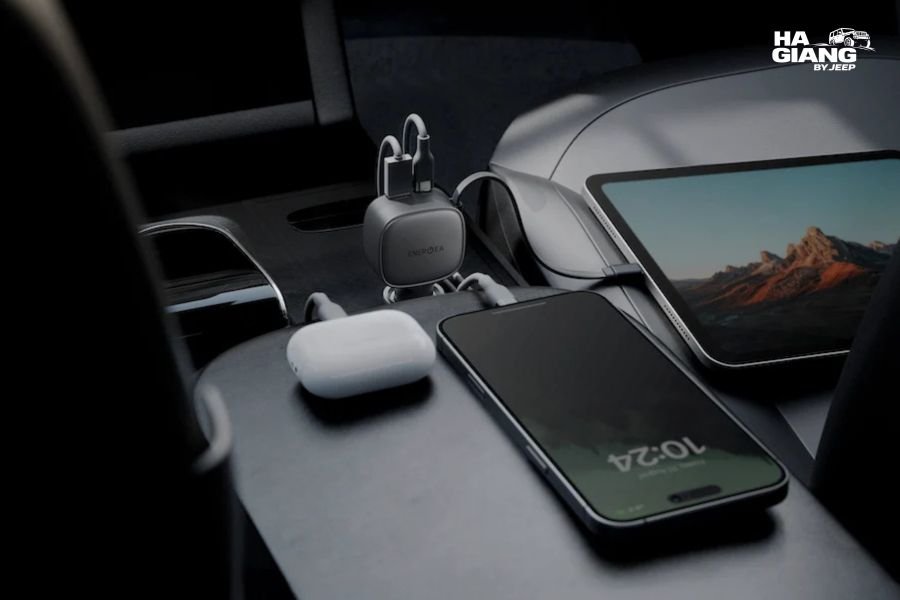
- Bring a power bank. One decent capacity unit is enough for a standard Loop trip. Two if you are filming a lot.
- Airplane mode is the biggest single saver. On the long stretches with no coverage, your phone is running its radio flat out searching for a tower. Turning it off between towns can transform how long a charge lasts.
- Homestay sockets are limited and shared. Charge overnight where you can, and bring a short cable rather than fighting for a well placed outlet.
- In a jeep you can charge as you go. Vehicle power means a phone or camera battery can top up during the drive rather than waiting for the evening. It sounds minor. Across three days with a family and several devices, it is not.
- Cold drains batteries faster. In the winter months keep the phone in an inside pocket rather than an outside one, especially overnight.
- Check airline rules for power banks before you fly. Rules on capacity and on carrying them in checked luggage vary by airline and change periodically. Confirm with your carrier rather than assuming.
Working Remotely from Ha Giang: An Honest Assessment
Some travelers need to keep working. Here is a realistic view rather than a sales pitch.
What works. Email, messaging, reading, writing, anything asynchronous. Scheduled calls from a town, planned in advance, with a backup time agreed. Short video calls in the evening from a hotel in Dong Van or Ha Giang City.
What is a gamble. A client call at a fixed hour that cannot move. Uploading anything large. Live presentations. Anything requiring a stable connection for more than ten minutes.
What does not work. Continuous availability during the day while travelling. You will be out of contact for stretches, and no SIM card fixes that.
The practical arrangement. Front load and back load. Do the demanding online work in Ha Giang City before you set off and after you return. Treat the days in between as offline with pockets of connectivity, and tell colleagues that in advance.
One real advantage of travelling by jeep. You can work in the vehicle. A back seat with your bag beside you, a charging point, a roof when it rains, and no need to concentrate on the road means the drive time between stops is usable in a way it simply is not otherwise. Travelers who need to stay reachable notice this difference immediately.
If your trip genuinely cannot absorb three days of patchy contact, the honest advice is to build the itinerary around towns and give yourself a longer trip rather than a shorter one, so there is slack to catch up in.

Common Mistakes and Things to Watch For
Written as general caution rather than accusations. Most people you deal with in Vietnam are straightforward.
- Buying from an unofficial stall without checking. Official carrier stores and airport counters remove most of the risk. Elsewhere, ask what package you are getting, how long it lasts, and how much data it includes, and have the seller show you it working before you leave.
- Not testing the SIM before walking away. Load a page. Send a message. Two minutes at the counter beats an hour in a hotel lobby.
- Assuming your phone is unlocked. Phones bought on contract in some countries are locked to a network and will reject a foreign SIM. Check before you travel, not on arrival.
- Buying a SIM in Ha Giang City instead of Hanoi. It is possible, but selection is narrower and you will have spent the whole transfer without data.
- Relying on roaming. Some plans include reasonable international data. Many do not, and the bill arrives later. Check your own plan's terms rather than assuming.
- Forgetting the SIM has an expiry. Tourist packages run for a set period. If your trip extends, top up before it lapses.
- Leaving your home SIM somewhere memorable. The number of travelers who lose a home SIM during a trip is remarkable. Tape it inside your passport cover.
A Case for Being Offline
A short argument against everything above.
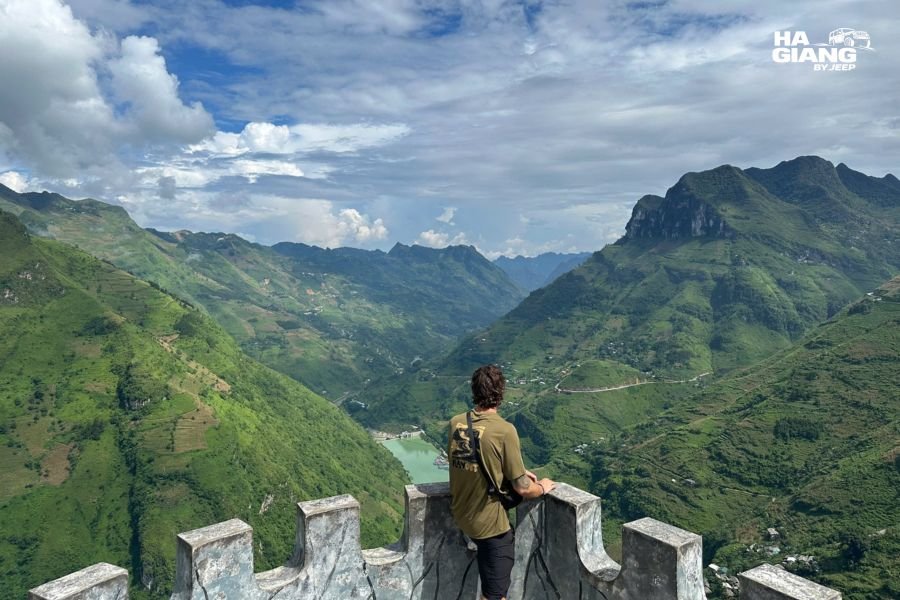
The stretches where the signal disappears on this route are the best parts of it. Ma Pi Leng with the Nho Que River far below. The road down toward Du Gia in late afternoon. A market morning in Meo Vac. These are places where a phone in your hand is a downgrade.
Most travelers who come to Ha Giang and end up loving it describe something similar afterwards: two or three days where nobody could reach them, and the relief of that being out of their hands rather than a decision they had to keep making.
You do not need to plan for this. It happens on its own the moment you leave town. The only preparation worth doing is telling the people at home in advance, so that being out of contact reads as expected rather than alarming.

Which Jeep Tour Suits You Best
Connectivity is not the reason to pick an itinerary, but trip length does change how much town time you get, and town time is where the internet lives.
| Option | Town time and connectivity | Best for |
|---|---|---|
| 3 Days 2 Nights Loop | Nights in towns, days mostly offline | Short trips, the core route, Ma Pi Leng and Dong Van |
| 4 Days 3 Nights Loop | More evenings in reach of decent wifi | A fuller Loop, slower pace, more villages |
| 5 Days 4 Nights to Cao Bang | Ends in Cao Bang City, good connectivity at the finish | The Loop plus Ban Gioc and the Quay Son valleys |
| 6 Days 5 Nights to Cao Bang | Most slack for catching up online | The unhurried version across two Geoparks |
| Jeep Wrangler Rubicon rental | Your call, but offline maps are mandatory | Confident self drivers who want full freedom |
The practical point for anyone who needs to stay reachable: with a driver, the hours in the vehicle are yours. You are not navigating, not concentrating on the road, and not stopping to check a map at every junction. If a work message needs answering between Dong Van and Meo Vac and there happens to be signal, you answer it from the back seat.
Plan a trip that fits how connected you need to be
Send us your dates and any fixed commitments you need to work around. We will be straight with you about where you will have signal and where you will not, and which itinerary gives you the most slack. Book early once your dates are set, jeep availability is limited and most guests book 1 to 3 months ahead.
WhatsApp us Book now Contact
Frequently Asked Questions
Do I need a SIM card for the Ha Giang Loop?
It is strongly recommended. A local SIM or eSIM gives you data in the towns and villages where you eat and sleep, plus a Vietnamese number for calling accommodation or your driver. Roaming from home is usually the more expensive route.
Where should I buy a Ha Giang SIM card?
Buy it in Hanoi, at the airport on arrival, or online as an eSIM before you fly. Selection is better in the cities, and you will have working data for the transfer up to Ha Giang.
Which network has the best coverage in the mountains?
Viettel has the strongest reputation among travelers for coverage in rural and highland Vietnam. Networks upgrade infrastructure over time, so ask at the counter about current mountain coverage rather than relying on older advice.
Is there mobile signal on the Ha Giang Loop?
Yes in Ha Giang City, Quan Ba, Yen Minh, Dong Van, Meo Vac and most larger villages. Coverage thins out or disappears on the high passes and in deep valleys between settlements.
Is there wifi at Ha Giang homestays?
Almost always. It is generally fine for messaging, email and a few photos, and generally not fine for uploading video or streaming in high quality. It slows noticeably in the hour after dinner when everyone connects at once.
Does eSIM work in Vietnam?
Yes, and it is a convenient option because you arrive already connected. Check that your specific phone supports eSIM before buying, since not all handsets do and some are disabled by the market they were sold in.
Do I need my passport to buy a SIM in Vietnam?
SIM registration with identification is standard, so bring your passport. Requirements can change, so confirm what is needed at the point of sale when you arrive.
Can I use offline maps in Ha Giang?
Yes, and you should download the region before you leave the city. Offline maps work with no signal at all. If you are self driving a rental jeep, treat this as essential rather than optional.
Can I work remotely from the Ha Giang Loop?
Asynchronous work is fine, and scheduled calls from a town with a backup time usually work. Continuous availability during travel days is not realistic, and no SIM card changes that.
How much does a SIM card cost in Vietnam?
Prices vary by carrier, package and point of sale, and they change. We do not publish figures we cannot stand behind. Compare at the counter or when buying an eSIM online.
Will my phone battery last on the Loop?
Bring a power bank. Cold weather, heavy photography and the phone searching for signal all drain it faster than usual. Switching to airplane mode between towns makes a large difference.
Can I charge my phone in the jeep?
Yes. Vehicle power means phones and camera batteries can top up during the drive rather than competing for a homestay socket in the evening.