
Ha Giang Loop · Route Direction
Ha Giang Loop Clockwise or Counterclockwise?
One of the most asked questions about the route, and it usually gets one of two answers: a confident wrong one, or a shrug.
Here is the useful version.
Yes, there is a standard direction. Yes, there are good reasons for it, and they are more specific than "everyone does it this way". And yes, there are days when your driver will look at the sky, or at the calendar, and decide to run a section backwards, and they will be right to.
The question is worth taking seriously, because direction changes what light you see the best road in the country under. It just does not change it in the way most travelers assume.

The short answer
Take the standard direction unless you have a specific reason not to. It runs north first, then east, then back down the southern arm.
The reasons it exists are real: it puts Ma Pi Leng Pass on a morning rather than in flat midday light, it builds the landscape rather than spending it early, and the overnight stops fall in places that can actually host you.
The reasons to break it are also real: a market that falls on the wrong day, weather sitting on one half of the plateau and not the other, or a crowd you would rather not stand in.
If someone else is driving, the direction should be a decision made on the day, not printed on a page three months earlier.
If you are driving yourself, take the standard direction and do not overthink it. That flexibility is worth more than any fixed answer.
Ha Giang Loop clockwise or counterclockwise: what the terms actually mean
The labels cause more confusion than they solve, because people hold different mental maps and half the internet uses them inconsistently.
So forget the words for a second. Define it by the road.
The standard direction, by sequence
Ha Giang City, then Quan Ba, then Yen Minh, then up onto the Dong Van Karst Plateau through Sung La and Pho Bang, then Dong Van, then east over Ma Pi Leng Pass to Meo Vac, then southwest down the far arm through Du Gia, and back to Ha Giang City.
North first, east across the top, south and west for home. On a standard map with north at the top, that traces a clockwise circle, and that is what most operators mean when they say clockwise.
The reverse direction, by sequence
Ha Giang City, then straight out along the southern arm to Du Gia, then up to Meo Vac, then west over Ma Pi Leng to Dong Van, then back down through Yen Minh and Quan Ba to Ha Giang City.
Same road, same stops, opposite order.
Ask for the sequence, not the label
Whenever you are talking to an operator about this, ignore the label and ask them for the sequence. Two people using the word clockwise can mean opposite things. Nobody can misunderstand a list of towns.
Why the standard direction exists
Ma Pi Leng lands on a morning
This is the big one, and it is the argument that would survive on its own if all the others disappeared.
Ma Pi Leng Pass is the best thing on the route. The road is carved into the wall of a gorge with the Nho Que river far below, and the difference between seeing it at nine in the morning and seeing it at two in the afternoon is not small. Morning light comes across the gorge and picks out the depth of it. Midday light flattens the whole thing into haze.
In the standard direction, you sleep in Dong Van and cross the pass the next morning. That is not a coincidence. The route was shaped around it.
Reverse the loop on a short trip and Ma Pi Leng often lands in the afternoon, and you will have driven a very long way to look at a grey wall.
The landscape builds instead of peaking early
Driving north from Ha Giang City is a climb, and it is a climb through changing country: farmland, then the gate at Quan Ba, then pine forest at Yen Minh, then the bare grey plateau, then the gorge.
Each stage escalates. By the time you reach Ma Pi Leng you have earned it, and it lands the way it is supposed to.
Run the loop backwards and you get the biggest thing early, and everything afterwards is quieter. Some people like that. Most do not, and they usually cannot say why. This is why.
The overnight stops fall where they can host you
Dong Van has a stone old quarter, a square, places to eat, and places to sleep. It sits at the natural end of a day of climbing, in the standard direction.
Reverse the route and the day lengths change, and the places you arrive at in the evening are not always the places you would choose to spend one. This is more of a constraint than travelers expect, and it is the least romantic argument on this list, which is exactly why it is worth stating.
You climb while you are fresh
The northern arm is the hardest driving of the trip. In the standard direction, you do it on the first day, when nobody in the vehicle is tired yet.

Not sure which way your trip should run?
Send us your dates. We will tell you which direction makes sense for that week, and whether a market or the forecast is a reason to flip it.
When reversing the loop is the better call
The standard direction is a default, not a law. Here is when a good driver breaks it.
A market falls on the wrong day
The markets are the best thing on this route that is not a road, and they run on their own calendar. Dong Van on a Sunday. Meo Vac. Khau Vai, which keeps a rare schedule of its own.
If your dates put you in the wrong town on market day, reversing a section fixes it. This is the most common legitimate reason to flip the route, and it is not a compromise: it is an upgrade. A market morning beats a viewpoint morning more often than people expect.
Verify the market day before building anything around it. Schedules can shift and secondhand information is wrong surprisingly often.
The weather has picked a side
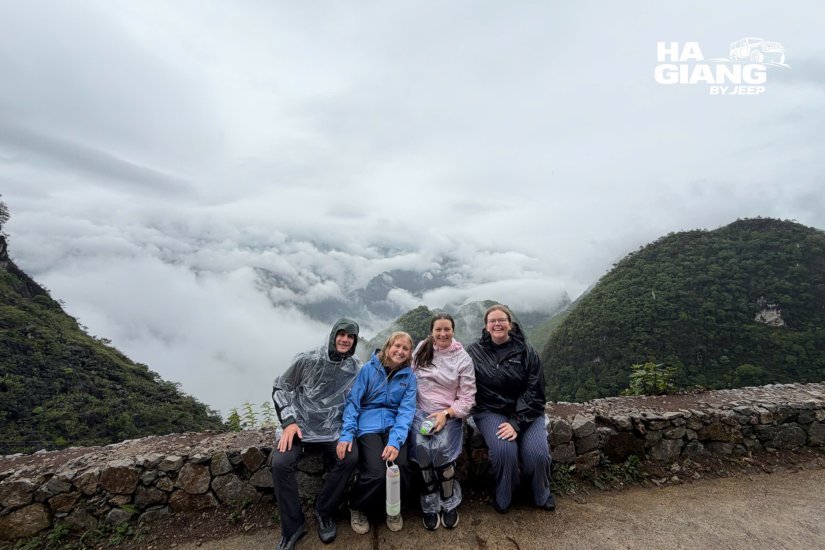
Cloud does not sit evenly on the plateau. It settles into one valley and leaves another alone. A morning that is hopeless on the pass can be perfectly clear forty minutes away.
A driver who has looked at the sky, made a phone call, and reordered the day is doing the single most valuable thing available to anyone on this route. No itinerary printed in advance can do it. No map can do it.
This is the argument for having a local driver rather than a plan, and on a foggy week it is worth more than everything else in this article combined.
The crowds are somewhere and you would rather not be
Ha Giang is busier than it was. On peak dates the viewpoints have a rhythm to them, and a driver who knows that rhythm can put you on the pass either before it or after it. Sometimes that means running the day backwards.
You are not starting from Ha Giang City
Less common, but it happens. If your trip is shaped differently, the loop can be entered at a different point and the direction follows from that rather than from tradition.
Does direction matter more if you are driving yourself?
Yes, and here is the honest reason: you do not have anyone reading the day for you.
A driver who was born here can look at the cloud on one ridge and know what the pass is doing. They know that a market is running because they know somebody who is at it. They can flip the day at eight in the morning and lose nothing.
Driving yourself, you have none of that. What you have is a route you decided on last night, and it is the best information you have.
So: take the standard direction and stick to it. It is the one that works most reliably without local knowledge, and it puts Ma Pi Leng in the morning without you having to think about it.
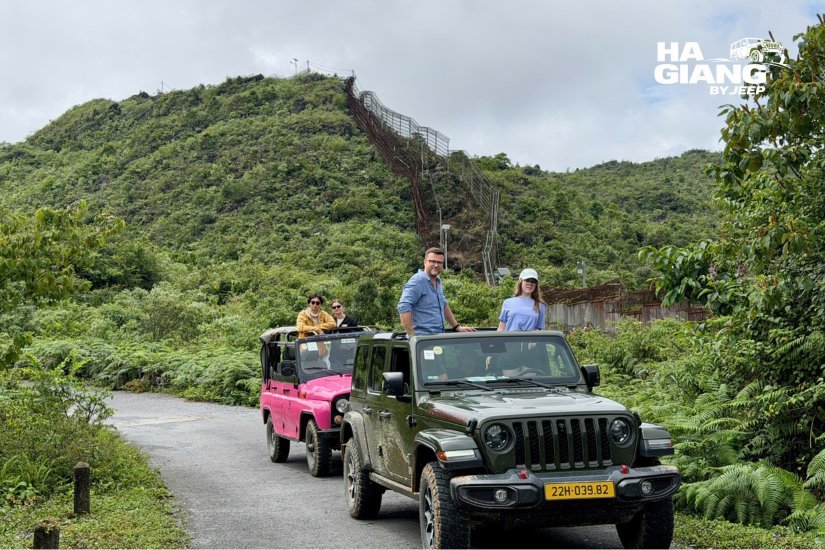
The Jeep Wrangler Rubicon rental goes by the day, and we will brief you on the route and the direction before you leave, including which sections are worth an early start. Rules and requirements for driving in Vietnam can change, so check the latest updates and talk to us first.

Direction on the longer routes
On a 3 days loop, direction matters most, because there is no slack. One misjudged morning is a meaningful fraction of the trip. Take the standard direction and start early.
On a 4 days loop, direction matters less, because you have margin. If the pass is under cloud, you have room to come back to it. This is one of the quieter arguments for the Ha Giang Loop Jeep Tour 4 Days: you stop being at the mercy of a single morning.
On the 5 and 6 days routes east into Cao Bang, the question changes shape entirely. You are not driving a circle. You are driving a line: Ha Giang, then east past Meo Vac, then into the Non Nuoc Cao Bang geopark toward Ban Gioc Waterfall. There is no clockwise or counterclockwise, only forward. The Ha Giang and Cao Bang Jeep Tour 5 Days and the Ha Giang and Cao Bang Jeep Tour 6 Days both end somewhere new rather than back where they started, which is a large part of the appeal.
How many days you actually need is a separate question, and we answered it in our guide to how many days for the Ha Giang Loop.
What direction does not change
Worth saying plainly, because people work themselves up about this.
- You see the same places. Every version of the loop includes Quan Ba, Dong Van, Ma Pi Leng and Meo Vac. Direction changes the order and the light. It does not change the list.
- The road is the road. It is no easier or harder in one direction than the other.
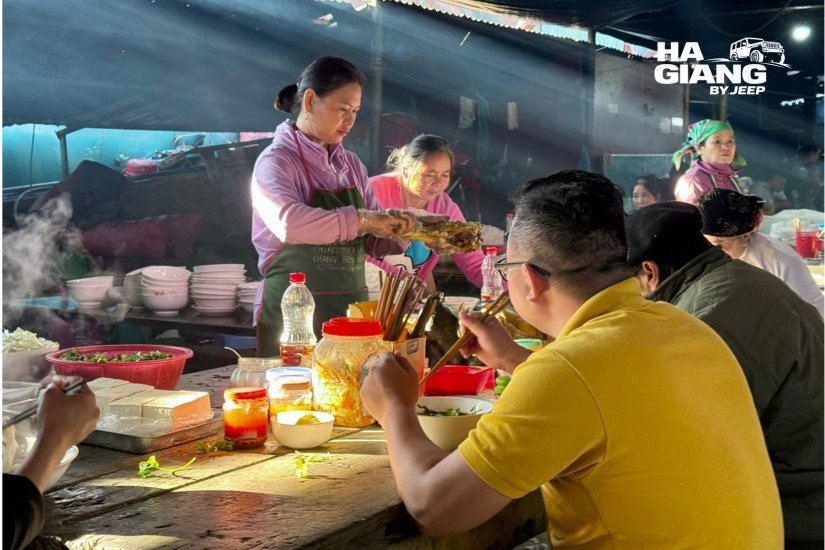
- The food does not care. Com lam at the roadside, banh cuon trung with hot broth for breakfast, thang den in Dong Van when the temperature drops after dark, chao au tau in the evening, and ruou ngo whenever somebody decides it is time.
That last one is worth a practical note. In a private jeep, you stop at the stall that smells right, whichever direction you are travelling. You sit down at a market because a woman is ladling something out of a pot and you want to know what it is. You accept the corn wine at the homestay, because you are not the one driving in the morning.
The best stops on this route are unplanned. Direction has nothing to do with whether you can take them. The vehicle does.
Mistakes people make about loop direction
- Arguing about the label instead of the sequence. Two people saying clockwise can mean opposite things. Ask for the list of towns.
- Locking the direction in months ahead. The right direction for your trip depends on weather and markets, neither of which you can know in advance. Keep it flexible.
- Reversing the loop for no reason. Some travelers flip it purely to be different. It usually costs them Ma Pi Leng in good light and buys them nothing.
- Assuming direction will save a rushed trip. It will not. If the schedule is too tight, no ordering of the stops fixes that.
- Believing a driving time attached to a direction. Nobody can give you honest driving times here, in either direction, and anyone who does is guessing. Weather, road works and landslides all get a vote.
- Booking too late and losing the choice entirely. Jeep availability is limited. Once you have a confirmed travel date, book as soon as you reasonably can. Most guests book one to three months ahead.
Which jeep tour is right for you?
3 days if your schedule is fixed. The Ha Giang Loop Jeep Tour 3 Days runs the classic route in the standard direction, which is exactly what a tight trip needs.
4 days if you want margin, villages, and Du Gia. The Ha Giang Loop Jeep Tour 4 Days gives your driver room to flip a day for weather or a market without anything being lost.
5 or 6 days if you want to stop driving in circles altogether. The Ha Giang and Cao Bang Jeep Tour 5 Days and the Ha Giang and Cao Bang Jeep Tour 6 Days run east into Cao Bang: Ban Gioc Waterfall, God's Eye Mountain, the Ngoc Con valley, the Pac Bo historical site. Two UNESCO Global Geoparks, one direction, forward.
The rental if you would rather make the call yourself. The Jeep Wrangler Rubicon rental goes by the day.
If you want to know how a day on the road actually runs before you worry about which way round it goes, we wrote that up in our guide to what to expect on a Ha Giang jeep tour.
Let someone else decide the direction
Every jeep is private. You are never grouped with strangers. Your driver was born in these mountains, speaks English, and knows on any given morning which side of the plateau has cleared and which one has not.
That is the entire answer to this question, and it is not one you can print on a page in advance. We are based in Ha Giang City, we are on WhatsApp 24 hours a day, and we handle the border area paperwork so you do not have to think about it.
booking@hagiangbyjeep.com · +84 862 379 288 · +84 938 988 593
FAQ
Take the standard direction unless you have a reason not to. It runs north from Ha Giang City through Quan Ba and Yen Minh to Dong Van, east over Ma Pi Leng Pass to Meo Vac, then back down the southern arm. It puts the pass on a morning and builds the landscape rather than spending it early.
Ha Giang City, Quan Ba, Yen Minh, Dong Van, Ma Pi Leng Pass, Meo Vac, Du Gia, and back to Ha Giang City. Ask any operator for the sequence rather than the label, because clockwise means different things to different people.
Mainly light. Ma Pi Leng in morning light is a different pass from Ma Pi Leng at midday, and the standard direction is built to put you there in the morning. Direction also affects where you sleep and how the landscape unfolds.
No. The road is the same road. What changes is the order of the stops and the light you see them in.
Three good reasons: a market falling on the wrong day, weather sitting on one half of the plateau and not the other, or crowds you would rather avoid. A local driver makes that call on the morning, not months in advance.
It matters most on a short trip, because there is no slack. Take the standard direction, start early, and give yourself the best chance of clear light on the pass.
You can ask for either. Our advice is to let the driver read the day, because they know what the cloud is doing and which markets are running. If you have a strong preference, tell us and we will build around it.
Not really. That route is a line rather than a circle: Ha Giang, then east past Meo Vac into Cao Bang, ending at Ban Gioc. There is only forward.
No. Every version includes Quan Ba, Dong Van, Ma Pi Leng and Meo Vac. Direction changes the order and the light, not the list.
With a private jeep, yes, and that is the point of one. Nothing is locked, no group is waiting on you, and the day can be rebuilt over breakfast if the weather makes that the right thing to do.