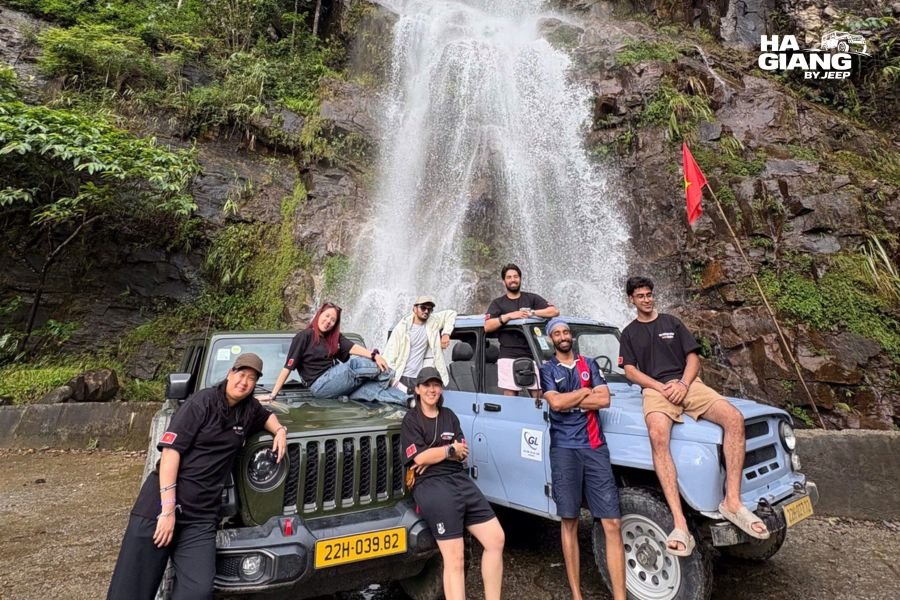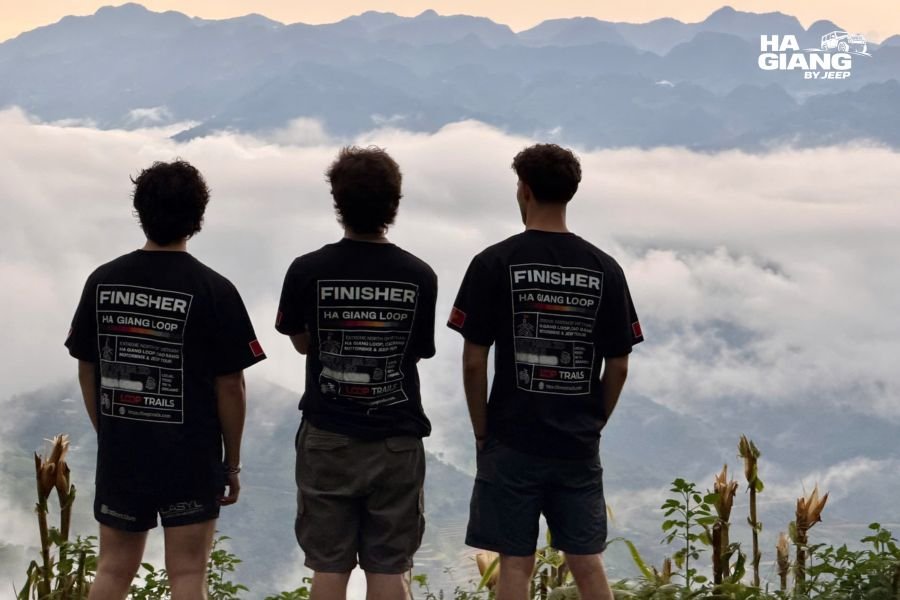
Ha Giang Jeep Tour: What to Expect
People book a Ha Giang jeep tour without a clear picture of what they have booked. They know it involves mountains, a vehicle and a driver. The rest is guesswork until the morning it starts.
This guide is the plain version. What the jeep is actually like, who is driving it, how a day is shaped, where you sleep, what the food is, what happens when it rains, and the parts that are genuinely hard. Including the bits that are not in a brochure.
We wrote it because managing expectations properly produces happier guests than overselling does. A traveler who knows the road takes longer than the map says, that the homestay bathroom is basic, and that February on the plateau is cold, has a much better trip than one who finds all of that out on the second afternoon.
What is in this guide
- The short version
- The vehicle
- Your driver
- How a day actually runs
- Where you sleep
- What you eat
- Weather, and what it does to a trip
- Who this suits, and who it does not
- What is included and what is not
- What surprises people
- What is genuinely hard about it
- Which jeep tour suits you best
- FAQ
The Short Version
If you read nothing else:
- It is a private vehicle. Your group only. You are never put in with strangers.
- A local driver handles the road. You do not drive, navigate, or make route decisions unless you want to.
- The jeep is open top with a soft top and heating for cold and wet weather. You get 360 degree views without a helmet or a windscreen frame in the way.
- The pace is yours. Stop where you like, for as long as you like. This is the single biggest practical difference from any other way of doing the Loop.
- You sleep in homestays and small hotels. Base rate includes dorm beds, with private rooms available as an upgrade.
- Days are long but not exhausting. You are sitting down, out of the weather when you want to be, and not concentrating on a road.
- The promise is adventure without exhaustion. That is the actual product.
The Vehicle
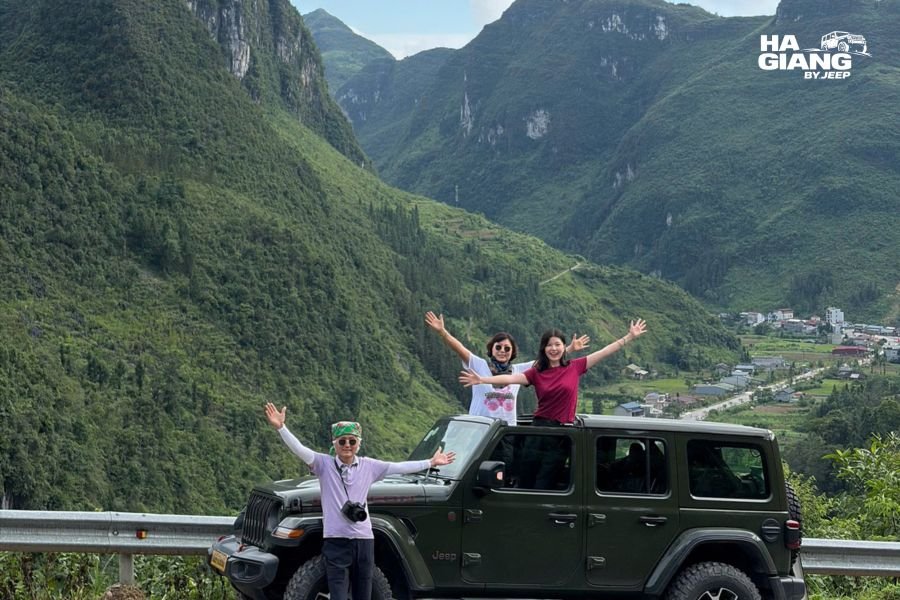
Open top, with a top. The jeeps run open in good weather, which is the point: uninterrupted views in every direction, nothing between you and the mountains. When it rains or turns cold, the soft top goes on and the heating comes on.
Room to sit properly. You are in a seat, not on one. Your bag is beside you rather than on your back or strapped to anything.
It goes where the road goes. The Wrangler Rubicon has genuine off road capability, which matters on rough sections and in wet conditions rather than as a showroom claim.
It stops anywhere. Sounds minor and is not. Most of the memorable moments on this route happen at unmarked places: a bend in the road, a woman selling something outside her house, light doing something on a hillside. A vehicle that can pull over on the spot is the whole difference between passing those and stopping at them.
Charging as you go. Phones and camera batteries top up in the vehicle rather than competing for a homestay socket at nine in the evening.
What it is not. It is not a luxury car and it is not silent. It is an open sided 4x4 on mountain roads. Wind, noise and a bit of dust are part of it. If you want a quiet air conditioned cabin, this is not the right product and we would rather tell you now.
Your Driver
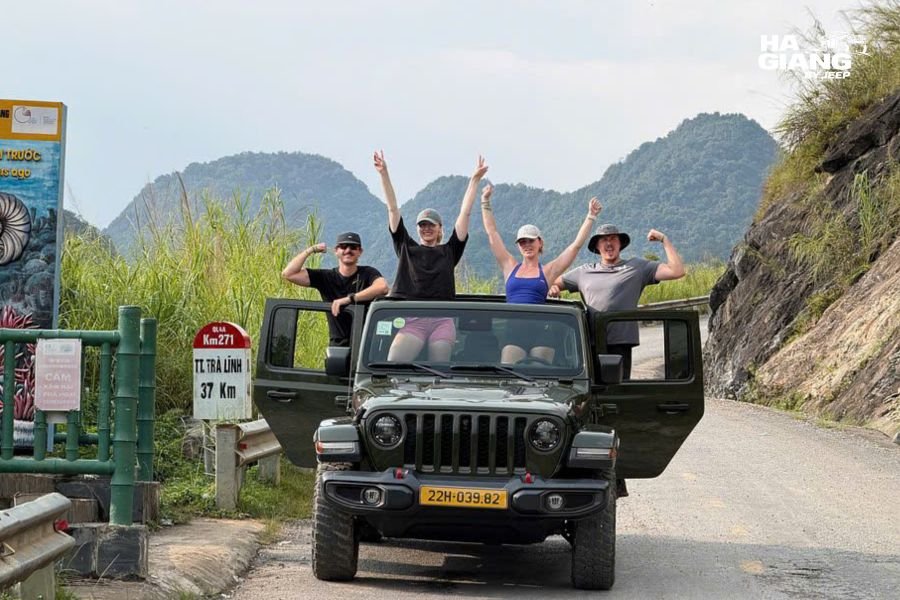
The driver is the part of the trip travelers underestimate before they arrive and talk about most afterwards.
He is local. Our drivers grew up in these mountains. They know the road in every condition, which is not a marketing line when a section is wet and a bus is coming the other way.
He speaks English. Enough to explain, answer questions and translate a conversation at a market. Fluency varies between drivers, which we will be straight with you about if you ask.
He is not a formal guide. He is a driver who knows the region deeply, which in practice is better. You get answers to what you actually ask rather than a script.
He translates. This is the underrated part. Without it a village stop is looking at people. With it, it is a conversation. Almost everything interesting about this region is in the answers to questions you cannot ask yourself.
He manages the day. Timing, road conditions, where to eat, when to leave to catch light somewhere, whether the market is worth the early start. Handing that over is a significant part of what you are buying.
What to do with him. Ask questions. Ask about his village, what a crop is, what a building is for, how to say something. Most guests are too polite for the first day and then wish they had started earlier.
Ask us anything before you book
If something in this guide raises a question, ask it now rather than wondering. We would rather talk you out of the wrong trip than sell you one.
WhatsApp us See the 3 Days LoopHow a Day Actually Runs
Every itinerary differs and every day differs, so this is the shape rather than a schedule. Your driver confirms the actual plan each morning.
- Early start. Mountain light is best early, roads are quieter, and the day gets more done. Market mornings start very early indeed.
- Breakfast before or shortly after setting off. Often at the homestay, sometimes at a place in town, which in Dong Van means banh cuon trung.
- A long morning of driving and stopping. Twenty minutes moving, a stop, ten minutes moving, another stop. The driving between stops is not dead time, because you are looking at the thing you came for the whole way.
- Lunch somewhere local. Roadside restaurants, small places in towns, whatever fits the route and the day.
- An afternoon with a bigger stop or two. A viewpoint, a village, a cave, a walk, a craft stop, depending on the itinerary.
- Arrive before dark. Mountain roads at night are avoidable and we avoid them.
- Evening at the homestay. Dinner, usually shared, usually long. Corn wine may appear. Nobody has to drink it.
How much of the day is in the vehicle? More than you might expect, and less tiring than you might expect, because you are sitting comfortably and looking at the reason you came. Travelers who dread the drive time almost always report afterwards that it was among the best parts.
On timings. We do not publish driving times, because the answer depends on the road on the day, the weather and how often your group wants to stop. Ask your driver in the morning and you will get the real answer.
Where You Sleep
Homestays, mostly. Family run houses in villages along the route, with rooms given over to guests.
The base rate includes a dorm bed. Shared sleeping space, mattress on a raised platform, mosquito net, blankets. Clean, simple, and social.
Private rooms are available as an upgrade, including family rooms for three or four people. Worth booking in advance rather than deciding on the road, particularly in busy periods.
Facilities are basic and functional. Shared bathrooms in many places, hot water usually available but not always instant, and the electricity in remote villages is occasionally temperamental. This is a farming village, not a hotel district.
Wifi exists and is slow. Fine for messages, not for uploading video. It slows further in the hour after dinner when everyone connects at once.
It gets cold. Between roughly November and February, genuinely cold at night on the plateau. Blankets are provided and more are available if you ask. Lạnh quá, roughly lang wah, means it is very cold, and usually produces another blanket.
Some nights are in small hotels depending on the itinerary, particularly in Dong Van or at the start and end in Ha Giang City.
The honest note. The homestays are the part guests are most nervous about beforehand and most positive about afterwards. The dinners in particular. But if you need a private bathroom and reliable hot water every night, say so before you book and we will tell you what is realistic.
What You Eat
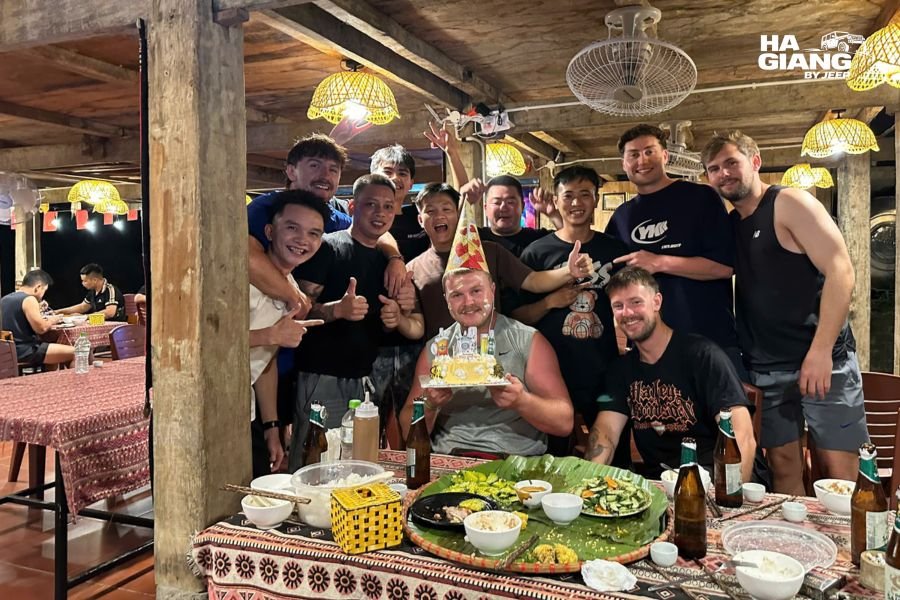
Homestay dinners are shared. Dishes in the middle, rice, everybody helps themselves. Home cooking rather than restaurant food, and usually more of it than you can eat.
Breakfast is simple. Noodles, eggs, bread, coffee. In Dong Van, banh cuon trung is the local institution and worth going out for.
Lunch is on the road. Small restaurants in towns and villages, chosen by your driver, and generally better than anything with an English menu.
Things worth trying. Com lam, sticky rice cooked in bamboo. Thang co at markets, which is genuinely divisive and worth one honest attempt. Chao au tau in the cold months. Thang den, sweet rice balls in ginger syrup, on a cold evening.
Corn wine appears at dinner. Local spirit, small cups, poured for you. Joining in is welcomed. Declining is completely fine and nobody is offended.
Dietary needs are manageable with notice. Vegetarian is workable. Allergies and stricter requirements need telling us in advance, in writing, so the homestays can be told. Do not rely on explaining it at the table on the night.
Weather, and What It Does to a Trip
The weather here does what it likes, and no operator controls it.
| Period | Roughly what to expect |
|---|---|
| Sep to Nov | The popular window. Drier, clearer, rice turning gold, comfortable temperatures |
| Dec to Feb | Cold, sometimes very cold on the plateau. Mist. Quiet. Atmospheric |
| Mar to May | Warming, green, flowers, generally pleasant |
| Jun to Aug | Hot and wet. Very green. Rain can be heavy, and roads can be affected |
Treat that as a shape rather than a forecast. A dry October week and a wet October week both happen.
What rain actually means in a jeep. The top goes on, the heating goes on, and the day continues. This is the single clearest practical advantage of the vehicle. Wet weather changes the photographs, not the plan.
What heavy rain means. Occasionally, road conditions change and a route has to be adjusted. Your driver makes that call, and it is a safety decision rather than a preference.
Cold is the underestimated one. Guests pack for Vietnam and arrive on a plateau in January. In an open vehicle, moving, at altitude, it is colder than the number suggests. Bring layers.
Who This Suits, and Who It Does Not
Being straight about this saves everyone trouble.
It suits:
- Couples, including where one person does not ride and the other does
- Families, including with young children and with grandparents
- Travelers in their forties, fifties, sixties and beyond. A large share of our guests, and the route is entirely manageable seated
- Non riders, obviously
- Anyone with a back, knee or joint issue that makes hours on a motorbike a bad idea
- Photographers, because the vehicle stops where the picture is
- Groups who want to actually talk to each other during the trip
It suits less well:
- Travelers on the tightest possible budget. A private vehicle with a driver costs more than the alternatives. That is honest arithmetic
- People who want to be in control of the vehicle. If that is you, the Wrangler Rubicon rental is the right product
- Anyone expecting hotel standards every night. The homestays are simple
- People who dislike being in a vehicle. Days involve real driving time
On accessibility. We are asked about mobility limitations regularly and the honest answer depends on the specifics. Getting in and out of a jeep involves a step up. Some stops involve uneven ground. Others involve none at all. Tell us the actual situation and we will tell you plainly what works and what does not, rather than promising and hoping.
What Is Included and What Is Not
Exact inclusions depend on the itinerary and are set out on the tour pages. The general shape:
Generally included. Private jeep, driver, fuel, accommodation on the nights of the tour, meals as specified in the itinerary, and the permits required for restricted border areas.
Generally not included. Bus transfers to and from the region, which are booked separately. Personal spending: drinks, snacks, souvenirs, market purchases. Some entrance fees. Room upgrades. Travel insurance. Tips.
On the transfers. Loop tours are picked up to Ha Giang and return from Ha Giang. Combo tours are picked up to Ha Giang and return from Cao Bang, because the trip ends there. There is no transfer that takes you directly to Cao Bang at the start, so plan your arrival into Ha Giang.
On money. Bring cash in small notes for on trip spending, and withdraw in Ha Giang City before the Loop starts. Our ATM and cash guide covers this properly.
On tipping. Discretionary, common at the end of a multi day trip, and we deliberately do not publish an amount. Ask us if you want a sense of what is normal.
On border permits. Parts of this region are frontier areas with access arrangements. Handling that is part of what an operator based here does. You do not need to organise it, but you do need to bring your passport.
The rule we work to. If you are unsure whether something is included, ask before you book rather than discovering it on the road. We would rather answer twenty questions than have one guest surprised.
What Surprises People
- How much of it is the road. People expect destinations and get a journey. The drive is the trip.
- How good the food is. Consistently the most common positive surprise.
- How cold it gets. Consistently the most common negative one, in winter.
- How little English is spoken outside towns. And how much difference the driver makes because of it.
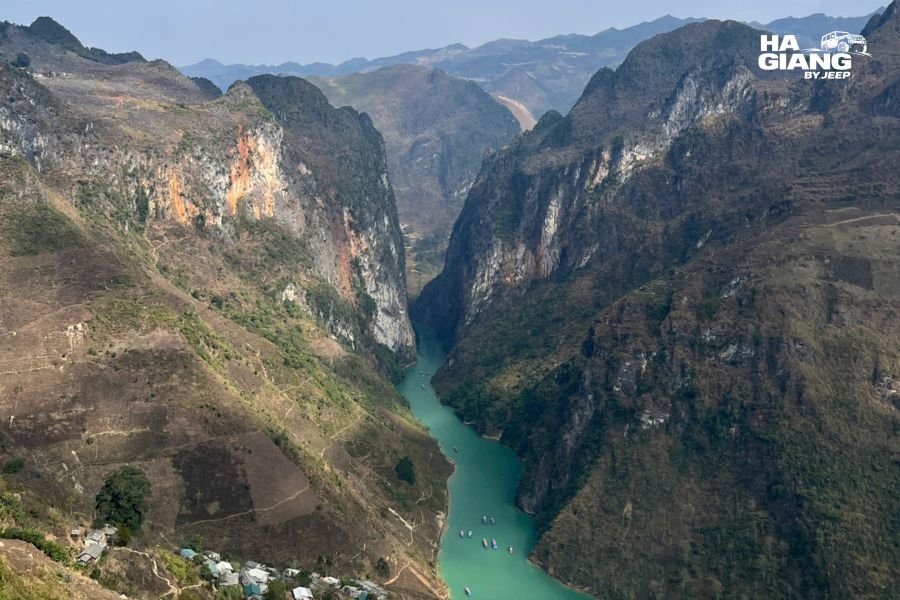
- How steep and how high it is. Photographs do not convey Ma Pi Leng properly. Nothing does until you are standing at it.
- How many people live up there. Travelers expect wilderness and find farming, villages, schools and markets in country that looks impossible to farm.
- How social the homestay evenings are. Strangers at a table, and by the second round of dinner it is not a quiet meal.
- How much they wanted to stay longer. The most common regret is booking three days when four would have fitted.
What Is Genuinely Hard About It
Every honest review has this section.
- The early starts. Especially for markets. They are worth it and they are still early.
- The days are long. Sitting down, but long.
- The bathrooms. Basic in homestays, and shared in many. Fine, but not what everyone is used to.
- The cold, in winter. Already said twice, which tells you something.
- Motion sensitivity. These are mountain roads with a lot of bends. If you are prone to travel sickness, take something before you set off rather than after you feel it, and sit forward where you can. Tell your driver, and he will drive accordingly.
- Being unreachable. Signal drops out between towns. Tell people at home in advance so nobody worries.
- The altitude and the effort of doing nothing. Sun, wind, cold and long days add up even when you are seated. Most guests sleep extremely well.
- The last morning. Trips end in the middle of somewhere you have got used to, and the transfer out is always a bit deflating. Nothing to be done about that one.
Which Jeep Tour Suits You Best
| Option | What it covers | Best for |
|---|---|---|
| 3 Days 2 Nights Loop | The core Loop: Quan Ba, Yen Minh, Dong Van, Ma Pi Leng, Meo Vac | Tight schedules, the essential route |
| 4 Days 3 Nights Loop | The full Loop with a slower pace, more villages, room for a market | Most people. The one we recommend most often |
| 5 Days 4 Nights to Cao Bang | The Loop plus Cao Bang, Ban Gioc and the Quay Son valleys | Travelers with the extra days and two Geoparks in mind |
| 6 Days 5 Nights to Cao Bang | The unhurried version of the same, with mornings in the valleys | Anyone who would rather see less, properly |
| Jeep Wrangler Rubicon rental | The vehicle, you drive | Confident self drivers who want total freedom |
The honest recommendation. Four days is the sweet spot for the Loop. Three days works and moves quickly. The extra day buys you a market morning, a craft village, and time to sit somewhere instead of arriving at it.
On the combo trips. Cao Bang is a genuinely different landscape, flat valleys and tower karst rather than the vertical country of Ha Giang, and Ban Gioc is worth the journey. Five days covers it. Six days lets you do the valleys in the morning light, which is when they are worth photographing.
Book early. Jeep availability is limited and most guests book 1 to 3 months ahead. Autumn and public holiday periods go first.
Tell us what you are worried about
Send us your dates, your group and anything you are unsure about, mobility, kids, cold, food, whatever it is. We will give you a straight answer, including if the answer is that a different trip suits you better.
WhatsApp us Book now Contact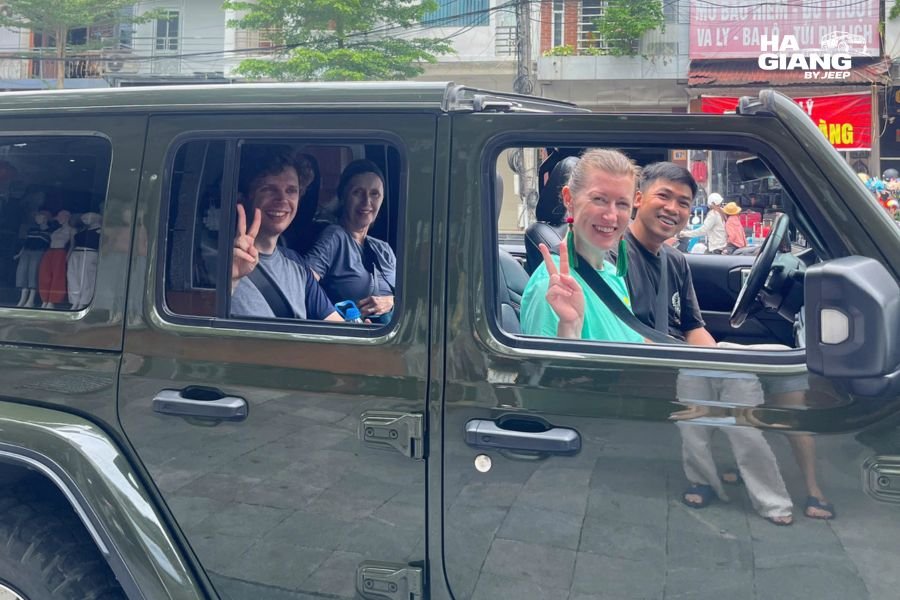
Frequently Asked Questions
What should I expect on a Ha Giang jeep tour?
A private open top jeep with a local driver, days built around driving and stopping wherever you like, homestay nights with shared dinners, and simple facilities. Long days, but you are seated and out of the weather when you want to be.
Do I need any driving experience?
None. Your driver handles the entire route. This is the main reason non riders, families and older travelers choose a jeep.
Is the jeep really open top?
Yes, and it has a soft top and heating for cold or wet weather. It runs open when the weather allows, which is what gives you views in every direction.
Will I be sharing the jeep with strangers?
No. Every tour is private to your group.
How long are the days?
Long, usually starting early and finishing before dark, with a lot of stopping in between. We do not publish driving times because they depend on the road, the weather and how often your group wants to stop.
Where will I sleep?
Mostly in family run homestays along the route, with some nights in small hotels depending on the itinerary. Base rates include dorm beds and private rooms are available as an upgrade.
What is the food like?
Home cooking at homestays, shared dishes at dinner, simple breakfasts, and local restaurants for lunch. Vegetarian is workable. Tell us about allergies in writing before you travel.
What happens if it rains?
The soft top goes on, the heating goes on, and the day continues. In heavy rain your driver may adjust the route, which is a safety decision.
Is a Ha Giang jeep tour suitable for older travelers?
Yes, and a large share of our guests are over fifty. The route is manageable seated. If you have specific mobility limitations, tell us the details and we will give you a straight answer.
Is it suitable for children?
Yes. Families are a significant part of who we drive. Tell us ages and we will advise on itinerary length.
What is not included in the price?
Generally the bus transfers to and from the region, personal spending, some entrance fees, room upgrades, insurance and tips. Exact inclusions are on each tour page, and ask us if anything is unclear.
How far in advance should I book?
Most guests book 1 to 3 months ahead. Jeep availability is limited and autumn and public holiday periods fill first.