
Ha Giang in January: Cold, Clear, and Worth It
Most of the travel content about Ha Giang focuses on October and November, the buckwheat season, when pink flowers cover the plateau and every guesthouse is full. January is the other side of that story. Quiet. Cold. And for a certain kind of traveler, genuinely better.
The plateau in January has a stripped-back quality that the busy season does not. The landscape is all rock, sky, and shadow. The passes are crisp and empty. The Dong Van Sunday Market feels like the actual market, not a performance of one. You drive roads where the only other vehicles are locals going about their day.
It comes with real cold, though. The kind that makes your breath visible at 8am on Ma Pi Leng Pass. Plan for it and January on the Ha Giang loop is one of the best decisions you can make.
What January Actually Feels Like on the Loop
Ha Giang spans a significant range of altitudes, and January temperature varies dramatically depending on where you are on the route.
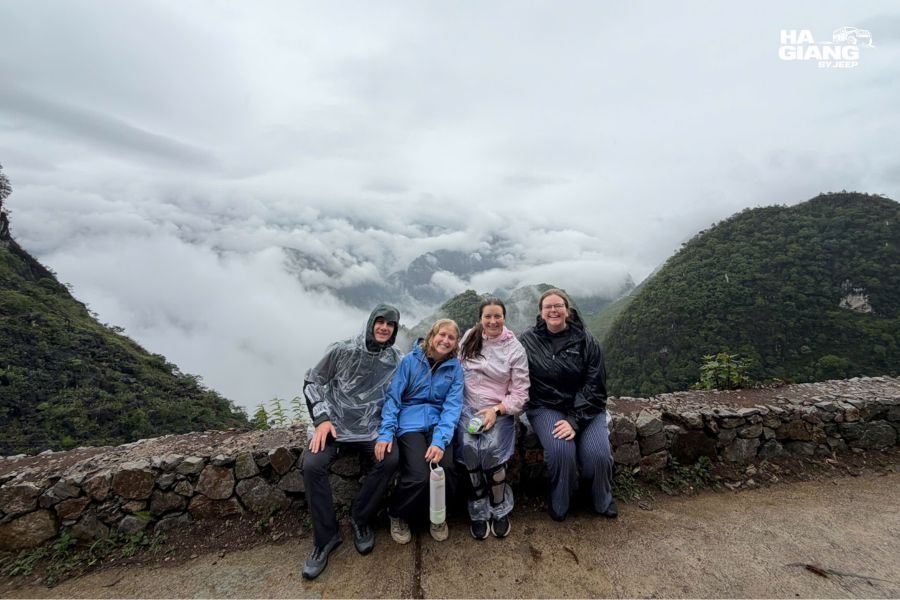
Ha Giang City, your starting point, sits low in the valley. January mornings here are cool and sometimes foggy, but the city warms up through the day and rarely feels brutal. Nights are cold but manageable with a decent jacket.
The further north and higher you climb, the more you feel it. Yen Minh sits in a pine-covered valley at mid-altitude. Dong Van is up on the plateau proper, somewhere around 1,600 metres, and nights there in January can drop to near-freezing or below. The first morning you step outside in Dong Van in January and see frost on the wall of the guesthouse courtyard is a moment you remember.
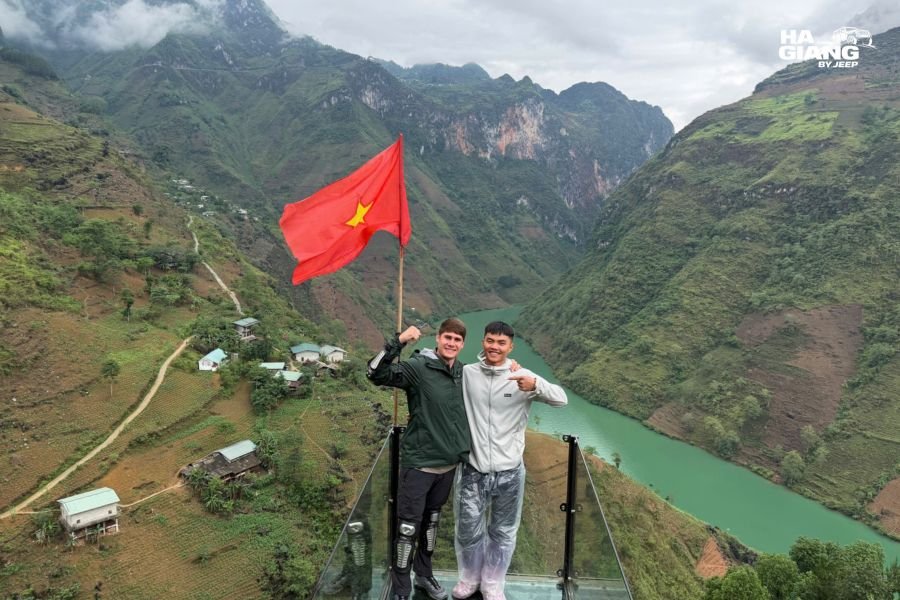
Ma Pi Leng Pass, at over 1,500 metres, catches wind off the plateau. On a clear January day the view from the summit across the Nho Que River canyon is extraordinary, the kind of visibility you only get in cold, dry air. But that same wind is sharp. A fleece is not enough.
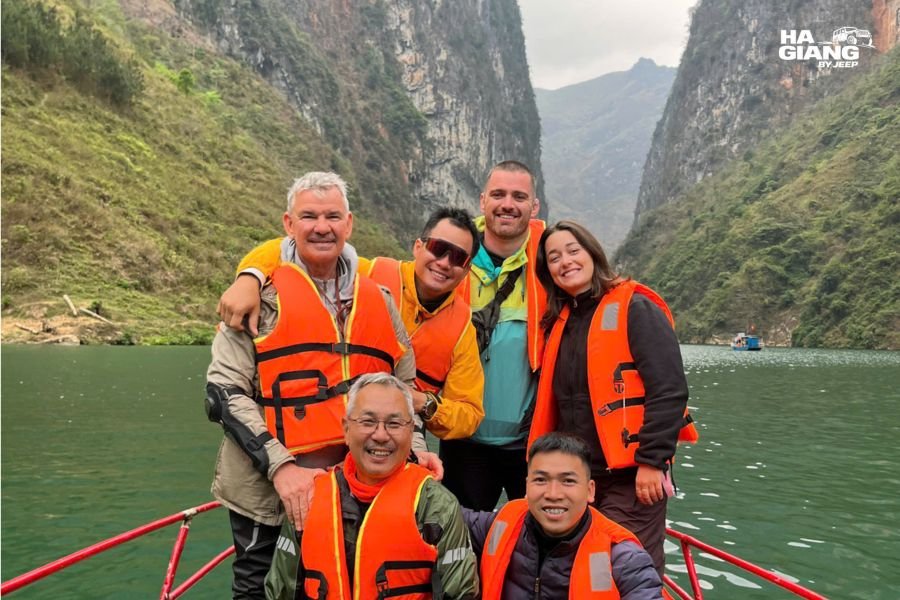
The weather pattern in January is typically dry, clear days interrupted by cold foggy mornings that burn off by 9 or 10am. The fog is part of the appeal: the Nho Que River valley below Tu San Canyon in morning mist is one of the more beautiful natural scenes on the loop.
Rain is possible in January but it is not the defining feature. You are more likely to deal with cold and wind than with sustained rain. That said, weather in the mountains is never guaranteed. Check the forecast for Dong Van specifically before you go, and always be ready to adjust.
Temperature by altitude (general guide)
| Zone | Altitude (approx.) | January days | January nights |
|---|---|---|---|
| Ha Giang City | ~100m | Cool, 15–20°C | Chilly, 10–15°C |
| Yen Minh | ~700m | Cool, 12–17°C | Cold, 5–10°C |
| Dong Van plateau | ~1,600m | Cold, 8–14°C | Near freezing, 0–5°C |
| Ma Pi Leng Pass | ~1,500m | Cold with wind | Very cold |
These are general ranges based on typical conditions. Check the forecast closer to your travel dates. Conditions can vary significantly year to year.
Why Some Visitors Love January
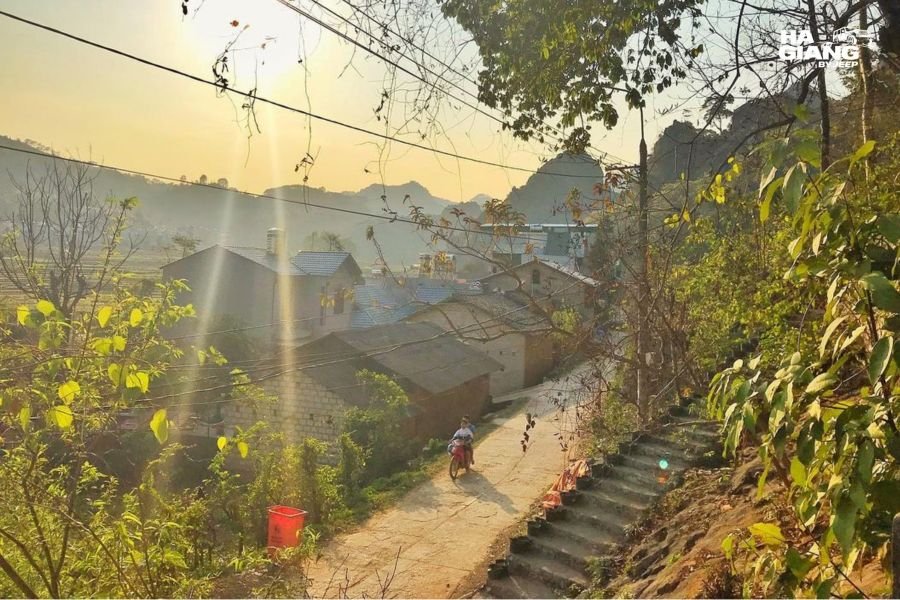
Fewer people is the first reason. January is genuinely the off-season. The accommodation crunch of October and November does not apply. You can stop at any viewpoint on Ma Pi Leng and not wait in line. The guesthouses that stay open in Dong Van are not packed with large group tours. The roads through the limestone valley are quiet.
The second reason is light. January light in Ha Giang is extraordinary: low-angled and golden even at midday, casting long shadows across the karst formations and turning the stone from grey to warm amber in the late afternoon. Photographers who know this tend to plan around it.
The third reason is clarity. After the summer rains and the humid post-harvest season, January air is dry and cold. Visibility on clear days is exceptional. You can stand on a pass and see ridge after ridge receding to the horizon, each one a slightly lighter shade of grey. That is not something you always get in April or October.
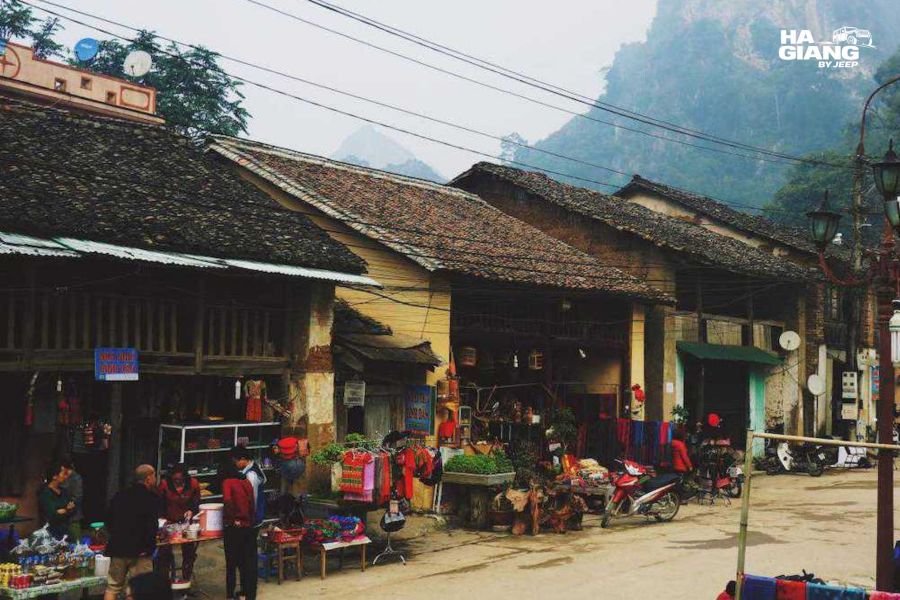
The fourth reason, and arguably the most unexpected: the people. With fewer tour groups on the road, interactions with local communities feel less managed. A morning at the Dong Van Sunday Market in January is unhurried. You can sit with a bowl of chao au tau (black-boned chicken porridge) and watch the Hmong traders come in from the hills without anyone else pressing in around you.
Planning a January loop? The 4 days loop gives you the most flexibility if weather shifts during your trip, with a more relaxed pace at the high-altitude stops. Get in touch and we can advise on timing and current conditions.
Plum Blossom: Ha Giang's Winter Bonus
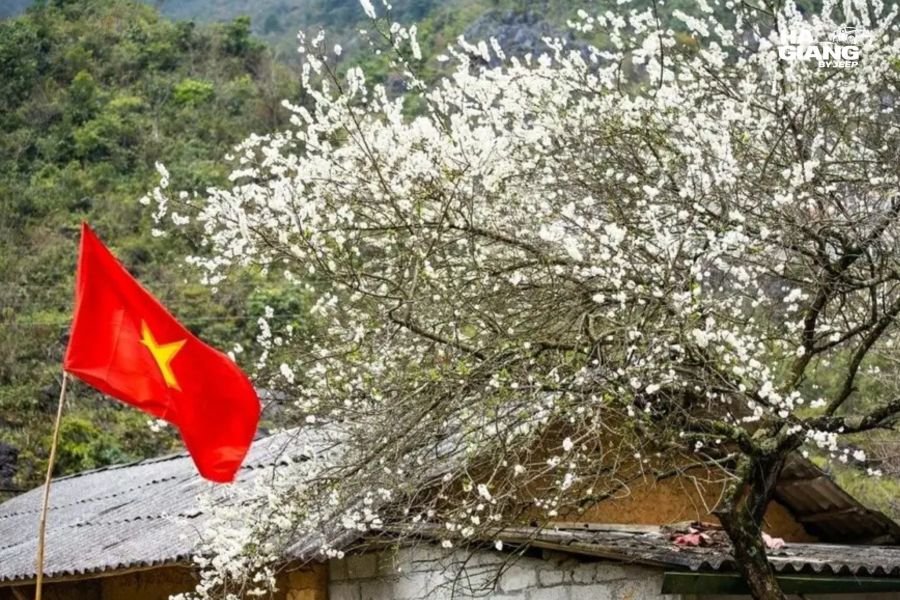
Late January is when something unexpected happens on the plateau: plum blossom.
The plum trees (hoa mận) that grow between limestone outcroppings on the Dong Van plateau bloom in late January, sometimes spilling into early February depending on the year. The blossoms are white and delicate, scattered across a rocky landscape that looks as though nothing soft could grow there. The contrast with the grey limestone is striking.
This is a genuine phenomenon, not a manufactured tourist event. The trees blossom according to the temperature and the calendar, and when they do, the plateau looks like a completely different place from the rocky grey terrain you see in photos from other seasons.
Timing is not guaranteed. A warm spell can push blossom earlier; a cold snap can delay it. If you are visiting in late January specifically hoping to catch the blossom, check recent reports from Ha Giang closer to your travel dates. But even if the blossom has not yet opened when you arrive, the bare-tree version of the plateau in January has its own austere beauty.
Peach blossom (hoa đào) typically follows in February, concentrated around the Tet holiday period. If your January trip runs to the end of the month and into early February, you may catch both, though again: conditions vary year to year.
What to Pack for Ha Giang in January
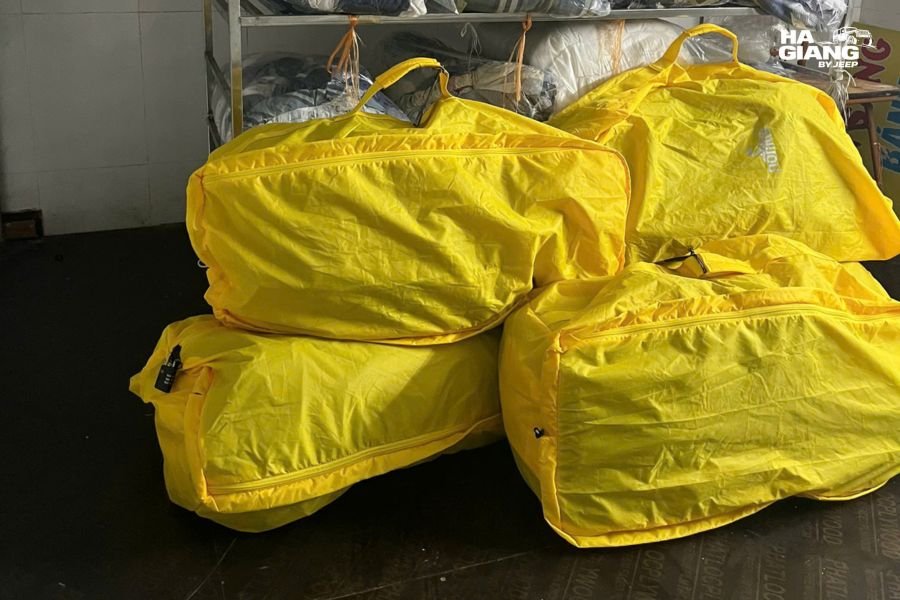
January in Ha Giang requires actual winter gear, not just a light jacket. Here is what to bring:
The non-negotiables:
- Thermal base layer (top and bottom). This is what makes everything else work. Merino wool or a synthetic equivalent.
- Down or insulated mid-layer. Something that packs small. You will take it on and off throughout the day as altitude and activity change.
- Waterproof outer shell. Wind-resistant and water-resistant. January is mostly dry but mountain wind is cutting, and occasional mist or drizzle happens.
- Warm hat and gloves. Not optional. Your ears and fingers will let you know very quickly if you skip these at the passes.
- Warm socks. Two or three pairs. Merino if you have them.
- Sturdy, warm footwear. Insulated hiking boots are ideal. Trail runners work if they are warm enough and you know the cold.
Useful additions:
- Neck gaiter or scarf. The passes have wind. A gaiter covers your neck and can pull up over the lower face.
- Hand warmers. Small, inexpensive, and genuinely useful at Dong Van before sunrise.
- Lip balm and hand cream. The air at altitude in January is very dry. You will want both.
- Sunscreen. The UV at 1,600 metres in clear air is higher than it feels. Cold does not mean no sun.
- Sunglasses. The January light is sharp.
A practical note: if you arrive in Ha Giang City underprepared, there are clothing shops in the city that sell basic winter gear. The prices are reasonable. But buying before you travel and arriving equipped is easier than shopping in a new city on day one.
January on the Road: Conditions and the Jeep Advantage

The roads on the Ha Giang loop are paved, including the main route through the plateau and the passes. January does not bring the same road challenges as the monsoon season. The main concern is ice on the highest passes at dawn, when overnight temperatures drop low enough to freeze moisture on the road surface.
This is something local drivers know and plan for. The standard approach is to depart from Dong Van a little later in the morning when there is ice risk, allowing the dawn temperature to climb before you hit the pass. Your driver handles this. You do not need to worry about it, but it is worth knowing that your departure time on certain mornings may be adjusted for conditions.
The open top Jeep Wrangler Rubicon has a soft top that goes up in cold or wet conditions, which means you are not exposed to the full plateau cold while driving. There is also cabin heating. You can drop the top and stand through the roof for viewpoints and photo stops, then close it back up for the drive between them. This combination, open when you want it and closed when you need it, is genuinely useful in January in a way it is not in October.

The roads are also less trafficked in January. The peak-season convoy of tour vehicles that can stack up behind viewpoints does not exist in winter. You arrive somewhere, you are often alone, and you leave when you feel like it.
Road and permit rules can change. For the most current information on conditions and any access requirements, your driver or our team will be the best source.
Food in Winter: What Hits Differently in the Cold
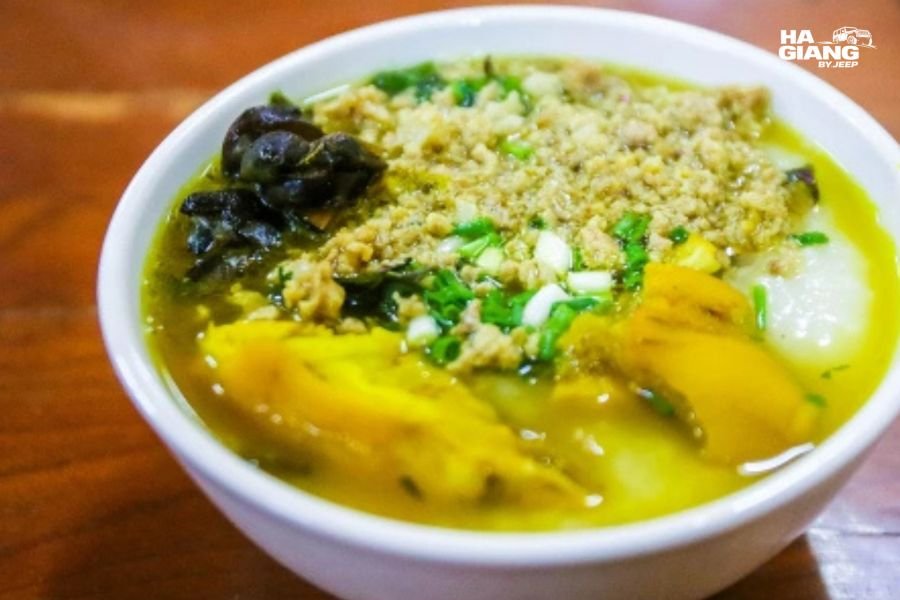
Cold weather and highland food are a good match.
Chao au tau (black-boned chicken porridge) is the January breakfast. It is slow-cooked, rich, and warming in a way that sits with you for hours. The best bowls are at small stalls around the morning markets in Dong Van and Meo Vac, served with herbs and a drizzle of fat. In January, when you have been up since early and the air outside is still cold, it is the right thing.
Ruou ngo (corn wine) takes on a different role in winter. A small glass while you are waiting for the fog to clear at a plateau guesthouse in the morning is accepted practice. With a private jeep, you can drink without having to drive anything, which is the point.
Com lam (bamboo rice) is available year-round at roadside stalls but seems to taste better in cold weather. The bamboo holds the heat, the sticky rice is dense and sustaining, and the act of peeling back the bamboo to eat it is satisfying in a simple way.
Thang den (sweet sticky rice balls in ginger broth) is another winter staple. The ginger broth is warming and the black sesame filling in the rice balls is rich. You find it at market stalls and small local eateries.
Banh cuon trung (steamed rice rolls with egg) at a Dong Van morning stall. Simple, cheap, and very good with a cup of hot green tea on a cold day.
One of the advantages of a private jeep is that your driver knows where to eat. Roadside stalls that serve the local market are not always easy to find from a map. Your driver grew up eating this food. They know which stall opens earliest, which bowl of chao au tau in Dong Van is worth stopping for, and when a roadside woman with a thermos of warm something is worth pulling over for. In January, when hot food is more than a preference, this local knowledge genuinely matters.
Which Jeep Tour for January?
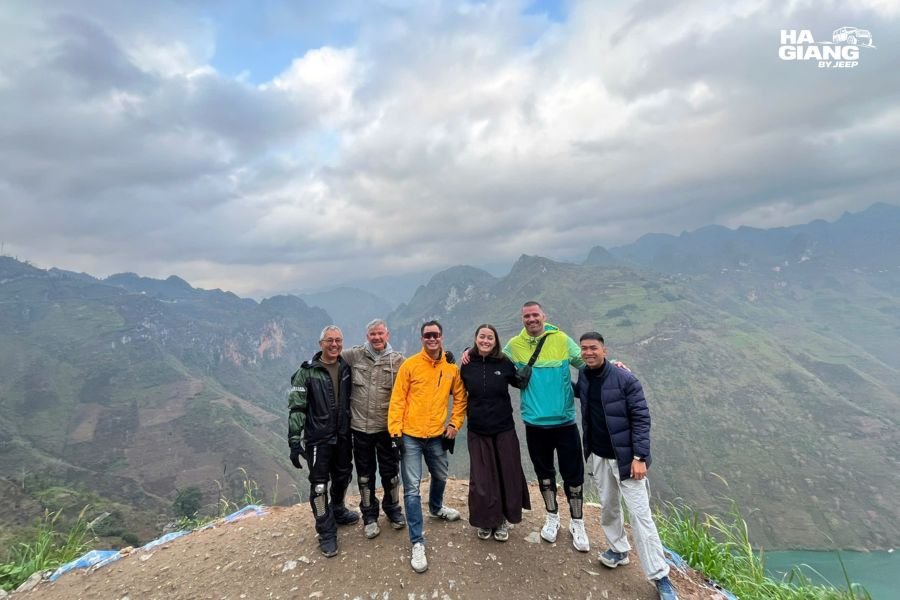
All of the jeep tour options run in January. The question is which suits you.
Which tour is right for you?
- 3 days 2 nights loop: Efficient and complete. You see the main highlights: Quan Ba, Ma Pi Leng, Dong Van, Meo Vac. In January the shorter route means fewer nights exposed to the full cold of the plateau. A good choice if your time is limited or if you want to experience Ha Giang in winter without committing to a long trip.
- 4 days 3 nights loop: The version that fits January best. The extra day allows for later morning departures on days when ice is a consideration, a longer stay at viewpoints when the light is exceptional, and more time in Dong Van if the Sunday Market happens to fall during your visit. Du Gia waterfall on the return leg is also on this route, a cold-water swim that is memorable in any season.
- 5 days 4 nights Ha Giang and Cao Bang: Extends north into Cao Bang province, adding Ban Gioc Waterfall, Pac Po Historical site, Ngoc Con Valley, and the 15 step pass. In January Cao Bang is also cold and quiet. The route passes through the Non Nuoc Cao Bang UNESCO Geopark. A longer trip but one where winter conditions actually suit the landscape well.
- 6 days 5 nights Ha Giang and Cao Bang: The full version of the Cao Bang extension, with more time at each stop. For travelers who want to spend a week in the north of Vietnam and see both UNESCO Geoparks at a genuinely relaxed pace.
- Jeep Wrangler Rubicon self-drive rental: If you are an experienced driver confident in cold mountain conditions and want to plan your own January itinerary, the rental is available. January roads are generally in good condition. Be aware of the dawn ice risk on the high passes and plan departure times accordingly. Permit requirements for border areas: check with us before you book, as rules can change.
Practical Notes for January
Accommodation: Not every guesthouse in Dong Van and Meo Vac stays open through the full winter. Some family-run places close or reduce capacity after the peak season ends. The guesthouses that stay open are generally the more established ones. If you are traveling independently, confirm in advance. On a jeep tour with Ha Giang by Jeep, accommodation is arranged as part of your booking and we handle this for you.
Crowds: January is genuinely quiet. You are unlikely to face any full-guesthouse issues on a booked tour. At viewpoints and markets, the visitor numbers are low. This is the season for slow travel, long stops, and conversations that are not competing with other tour groups.
Lunar New Year (Tet): The exact Tet date shifts year to year (check the current year's date, as it falls on a different January or February day each year). The week before and after Tet sees an increase in domestic travel and some service disruptions. For international visitors, the Tet period in Ha Giang has its own appeal: traditional celebrations in Hmong and Tay communities and a festive atmosphere very different from peak-season Ha Giang. But plan carefully and discuss timing with us when you book.
Permits: Ha Giang province requires a permit to enter certain districts near the northern border. This applies to all visitors including internationals. Ha Giang by Jeep handles this for you: permits are arranged as part of every tour booking. If you are self-driving, you need to arrange permits in advance. Rules can change, so confirm with our team for the current process.
Sunrise and sunset: January days are short in Ha Giang. Plan your itinerary so the best viewpoints fall in the good light windows, not in flat midday light. Your driver knows which stops reward early arrival and can time the day accordingly.
FAQ
Yes. January is one of the best months for visitors who want quiet roads, clear skies, and genuine local atmosphere. It is cold, especially on the plateau, but the cold is manageable with the right gear and it comes with real advantages: exceptional visibility, photographic light, no tourist crowds, and the possibility of catching the first plum blossom of the season.
It varies a lot by altitude. Ha Giang City is cool but not extreme. Dong Van, at around 1,600 metres on the plateau, can drop to near or below freezing at night in January. The passes, including Ma Pi Leng, are cold and windy in the morning. Pack thermal layers, a down jacket, hat, and gloves. This is genuinely necessary, not just cautionary padding.
Rarely, but it does happen at the highest elevations in the coldest years. Frost on the limestone is much more common and happens most mornings at altitude. Snow, when it occurs, is usually light and brief. It is not something you can plan for, but if you happen to be on the plateau on a morning it snows, the landscape is extraordinary.
Yes. The main concern is ice on the highest passes at dawn, and this is something your driver knows and plans for (later morning departures, slower speeds). The roads are paved and in generally good condition in January. Your driver handles route and timing decisions; you do not need to manage this yourself.
All tours run year-round. January is not a closed season. The jeep with its soft top and heater is well suited to cold conditions. Many visitors find January one of the most enjoyable months precisely because the weather is stable, the roads are quiet, and the conditions do not require any special modification to the standard itinerary.
The 4 days loop is the most flexible option for January. The extra day compared to the 3 days loop allows for morning schedule adjustments if ice is a consideration on the passes, and more time at each stop when conditions are exceptional. The 5 days and 6 days Cao Bang tours are also excellent in winter if you want to extend north.
January is one of the best months for landscape photography in Ha Giang. The light is low-angled and warm, the air is clear, and the absence of haze means visibility across the karst plateau is outstanding. Morning fog in the valleys adds atmosphere. Frost on the limestone in early morning is a distinctive January image. The main challenge is getting your hands warm enough to work a camera at dawn on Ma Pi Leng.
Yes. The Dong Van Sunday Market operates year-round. In January it is less crowded with tour groups and more genuinely local in character. Ethnic Hmong, Dao, and Tay traders come in from surrounding villages regardless of the season. Check that your itinerary day falls on a Sunday if you specifically want to visit the market; your driver can confirm.
Not necessarily avoid, but plan carefully. The exact Tet date shifts year to year. In the few days immediately around the main Tet holiday, some local businesses close and transport can be busy. But Ha Giang during the Tet period has a distinctive atmosphere in Hmong and Tay communities. If your timing overlaps with Tet, discuss it with us when booking so we can build an itinerary that works with the holiday rather than around it.
Yes. Every tour with Ha Giang by Jeep is fully private. You never share the vehicle with other guests. In January this means your itinerary pacing, stop durations, and morning departure times are entirely yours to decide in discussion with your driver. This flexibility matters more in winter than in other seasons, when conditions can vary by the hour.
Secure Your Spot on the January Loop
Cold, clear, quiet. January in Ha Giang is a stripped-back, beautiful version of the loop with the roads to yourself. A private jeep, a driver who knows every pass in winter, and a fully private itinerary that adjusts when the weather calls for it.
View 4 Days Loop WhatsApp Us Book Now