
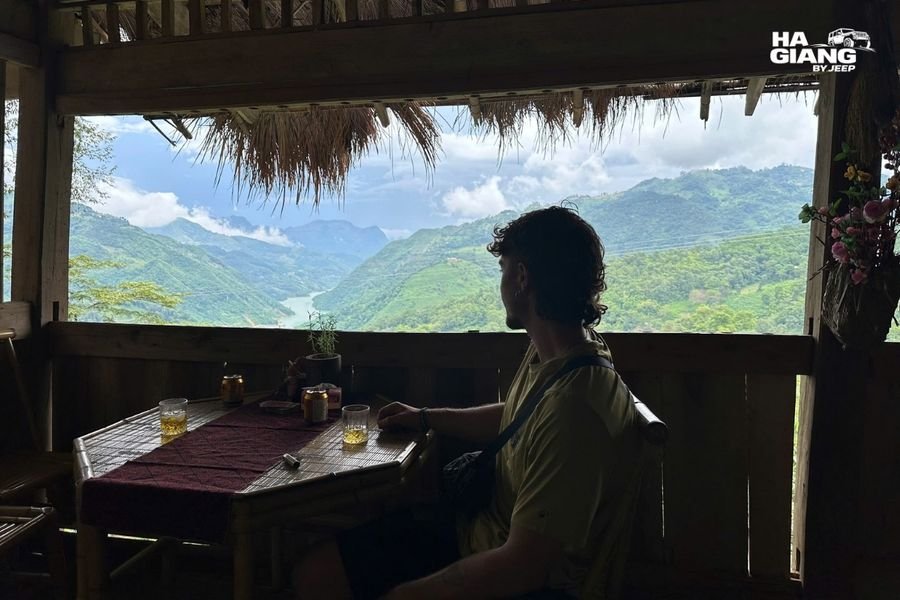
Ha Giang Homestay Guide: What to Expect, and How to Be a Good Guest
You are not checking in. You are being let into somebody's house.
A Ha Giang homestay is the part of the trip guests talk about afterwards, more often than Ma Pi Leng and more often than the markets. It is also the part people arrive least prepared for, because almost every article describes the scenery and almost none describes the night.
This guide covers what actually happens between arriving in the late afternoon and leaving after breakfast: where you sleep, how dinner works, what the corn wine involves, which parts of the house are not yours to wander into, and the handful of small things hosts genuinely notice.
None of it is complicated. Most of it is the kind of thing you would work out by the second night anyway. Knowing it on the first night is better.
What is in this guide
- What a Ha Giang homestay actually is
- Where you sleep
- Should you upgrade to a private room?
- Arrival: the first ten minutes
- The house, and the parts of it that are not yours
- Bathrooms, hot water and the cold
- Dinner
- Corn wine, and how to decline it
- The evening ends early
- Morning
- Money, tipping and what your stay pays for
- What to pack for the night
- Mistakes guests make
- Which jeep tour is right for you?
- FAQ
What a Ha Giang homestay actually is
Set your expectations here, because the word means different things in different countries.
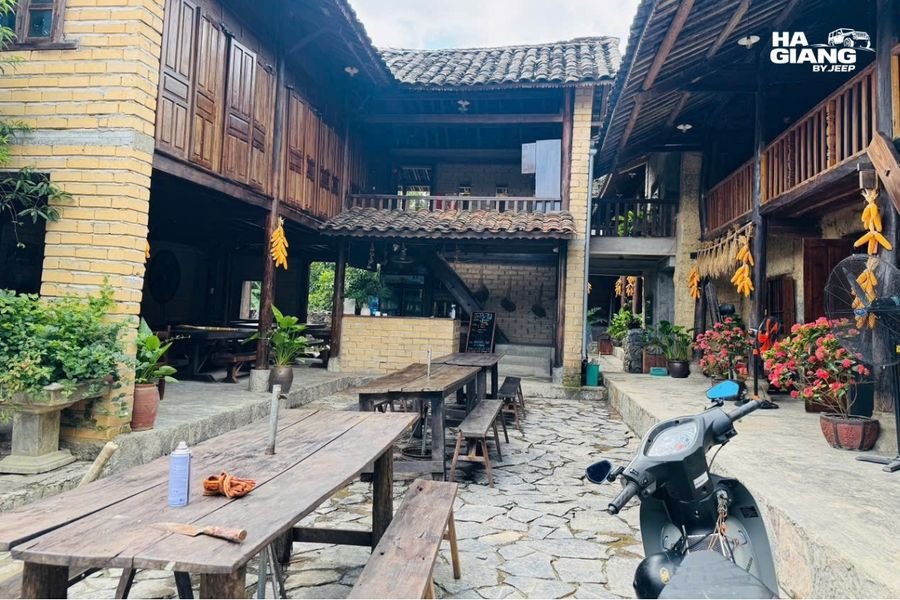
A homestay on the Ha Giang plateau is a family house that also takes guests. The family lives there. They cook your dinner in the same kitchen they cook their own, they eat at the table with you, and their children are doing homework somewhere in the building while you are drinking corn wine.
It is not a boutique hotel with a rustic theme. It is not glamping. There is no reception desk, often no wifi worth using, and the shower may be a tank of water heated by whatever the family heats water with.
What you get instead is an evening inside a household in a village where almost nobody speaks your language, and it is genuinely one of the best things available to a traveler in Vietnam.
If that trade does not appeal, say so at booking. Small hotels exist in Dong Van and Meo Vac and we can route you through those instead. There is no shame in wanting a proper bathroom, and it is a much better conversation to have in advance than at seven in the evening in a courtyard.
Where you sleep
Two options, and the base price of every tour we run includes the first one.
The dorm. A raised wooden platform running along one side of a large room, with mattresses laid out in a row and a mosquito net over each one. Blankets provided. Everyone staying that night is in the same room, which may be your group alone or may include other travelers.
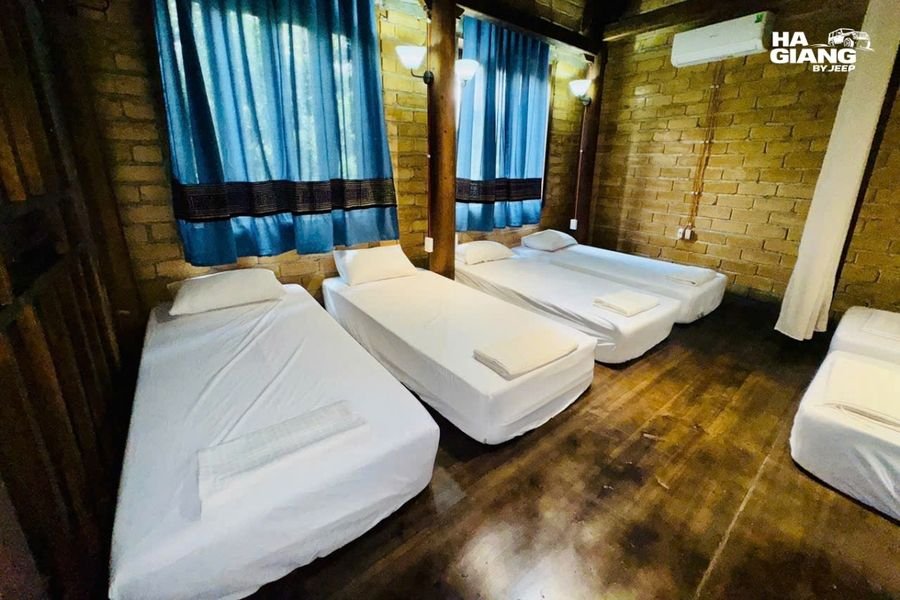
It is clean, it is warm enough with the blankets, and the mattress is thinner than you are used to. That is the honest summary. Plenty of guests love it and a few do not sleep well.
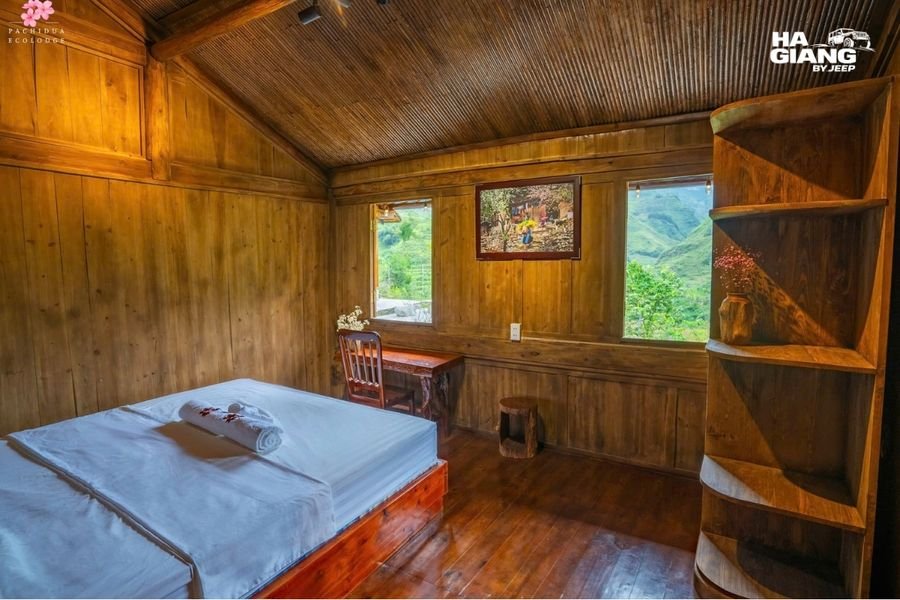
The private room. A separate room with a proper bed, sometimes twin beds, usually with a window and occasionally with its own bathroom. Available at most but not all homestays we use.
- Private room for 1 to 2 people: 500,000 VND per room per night
- Private family room for 3 to 4 people: 700,000 VND per room per night
Should you upgrade to a private room?
Our honest answer, guest by guest.
Upgrade if: you are a light sleeper, you are travelling as a couple, you are over sixty, you need the bathroom during the night, you snore, or the idea of a shared room is going to sit badly with you for three nights.
Stay in the dorm if: you are travelling as a group of friends, you are on a budget, or you actively want the sociable version. For groups the dorm is often the better option rather than the cheaper one, because the evening carries on rather than dissolving into separate doors closing.
The maths: on a 4 days 3 nights tour, three nights of private room is 1,500,000 VND, roughly $58 for a couple across the whole trip. For most travelers that is the highest value line item on the booking.
If any of your party are older, our senior travelers guide covers this in more detail, including what to ask us about bathrooms and heating for your specific route.
Tell us your preference at booking, not on arrival
We reserve specific rooms in advance and homestay capacity in a village is finite. A room split decided a month out is easy. The same conversation in a courtyard at 6pm, in front of the host family, is not.
Arrival: the first ten minutes
Most of the etiquette that matters happens here, and it takes about ninety seconds to get right.
Take your shoes off. At the door, on the step, wherever the other shoes are. This is not optional and it is the first thing anyone notices.
Greet the oldest person in the room first. A nod and a smile is enough. Your driver will handle the actual conversation, but the direction of your first greeting is noticed.
Accept the tea. It will be offered almost immediately. Refusing hospitality on arrival is a bigger deal than being tired.
Do not start photographing. Put the camera away for the first half hour. You will get better photographs later and from people who have decided they like you.
Let your driver do the logistics. Rooms, dinner time, what happens in the morning. That is their job and they will have sorted it before you have found your bag.
Say your dietary needs now if you have not already told us. Better late than at the table, though telling us at booking is better than both.
The house, and the parts of it that are not yours
An open door in a Vietnamese village house is not an invitation in the way it is in a hotel.
The household altar. Most homes have a place of ritual significance, often on the main wall of the central room. The specifics vary between communities and we are not going to summarise beliefs we do not hold. The safe rule is simple: do not touch it, do not put anything on it or in front of it, do not photograph it without asking, and do not sit with your feet pointing at it.
Feet generally. Pointing the soles of your feet at people, at the altar or at food is rude in Vietnam. Tuck them under you or to the side when sitting on the floor.
Heads. Do not touch anyone's head, particularly a child's, however affectionate you mean it.
The kitchen. Often you will be welcomed in and it is one of the best places in the house. Wait to be invited rather than wandering in, and once you are in, offer to help.
Bedrooms and back rooms. The family lives here. If a door is closed, it is closed.
Dress. Modest inside the house as well as outside. Nobody will say anything and everybody will notice.
Bathrooms, hot water and the cold
The practical stuff people wish they had known.
Bathrooms are usually shared, and standards vary widely between villages. Some are western style with a hot shower. Some are a squat toilet and a tank of water with a plastic scoop. Both are normal and both are clean at the places we use.
Hot water is often limited rather than absent. If there are eight guests, showering last is a different experience from showering first. Not a rule, just a fact worth knowing.
Ask us before you book if a western style toilet or a reliable hot shower matters to you. It depends on your exact route and we can plan around it.
Bring your own towel unless you have checked. Some provide, some do not.
It gets cold. Rammed earth walls hold temperature well but village houses are not centrally heated, and from late autumn through winter the plateau is genuinely cold at night. Sleep in a layer. Nobody will think it is strange.
Dinner
The best part of the night, and it works differently from a restaurant.
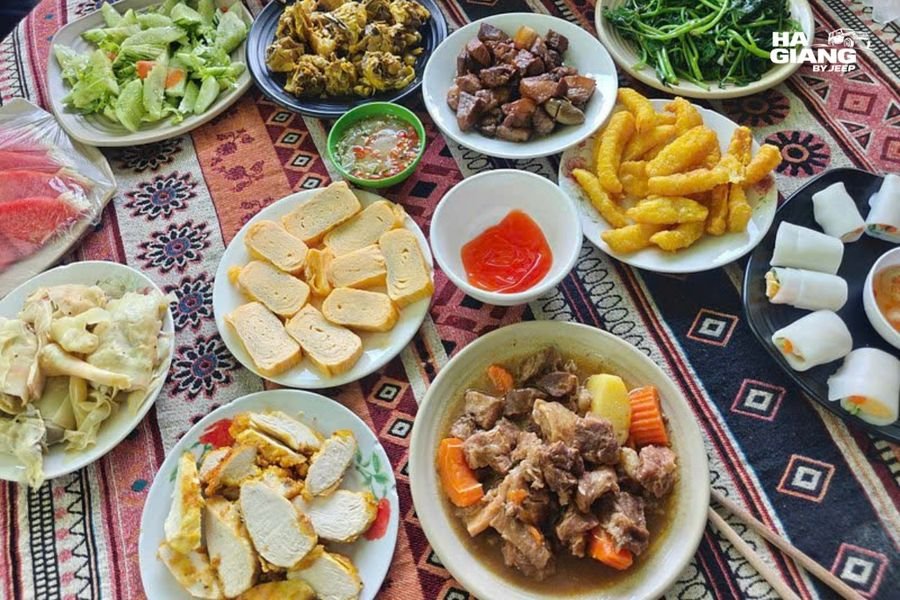
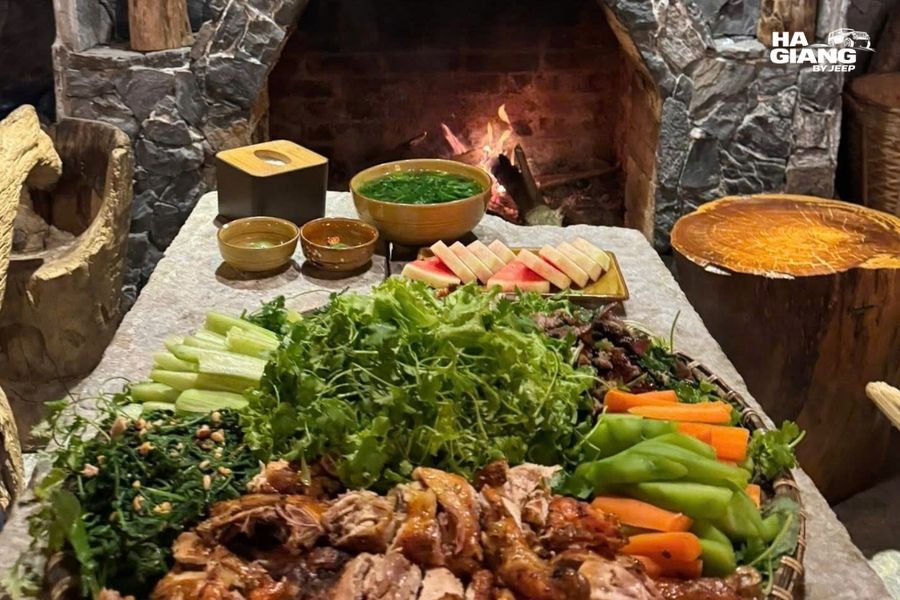
Food arrives as shared plates in the middle of the table. Rice, a grilled meat, tofu, wild greens, a soup, sometimes a chicken, sometimes smoked buffalo pulled off the string above the fire. There is no menu and no ordering. It is almost always better than what you would have chosen.
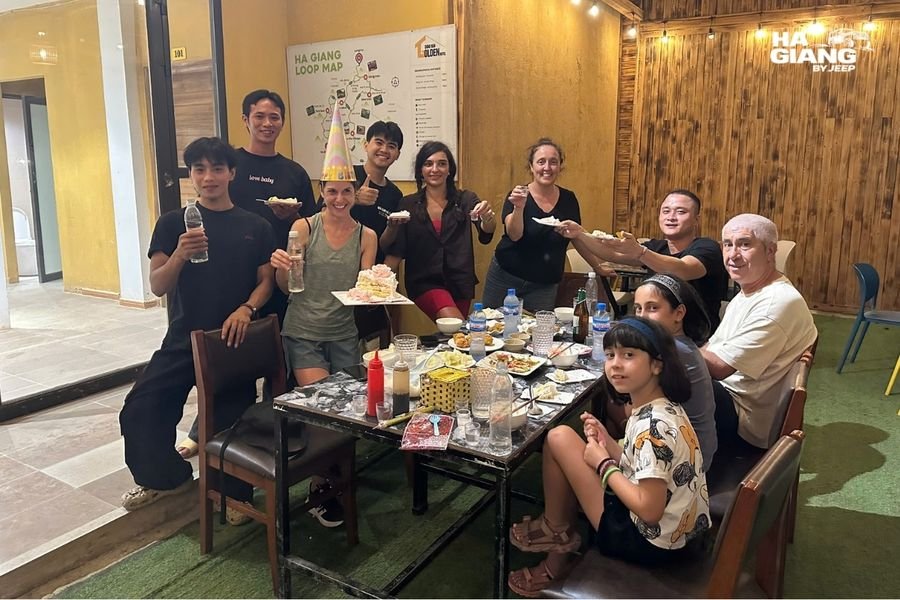
The host family eats with you, usually at the same table. So do any other guests staying that night. One long table, everybody together.
How to do it well:
- Wait for the host to start, or follow whoever moves first.
- Use the serving spoon where one is provided, and the reverse end of your chopsticks where one is not.
- Take small amounts and go back. A loaded plate you cannot finish is worse than four trips.
- Try everything, or explain why not. A polite "I cannot eat this, sorry" through your driver is fine. Silently leaving food is what reads badly.
- Do not be the person who eats only rice. If you are a nervous eater, tell us in advance and the kitchen will cook something you will actually enjoy.
- Offer to help clear up. You will usually be refused. Offer anyway.
Dietary requirements go in the booking. Vegetarian, vegan, allergies, no pork, soft food. A village kitchen can accommodate almost anything with notice and almost nothing improvised at seven in the evening. Our food guide covers the regional dishes in full.
Corn wine, and how to decline it
Ruou ngo is corn wine, distilled in the village, served from a plastic bottle into small cups. It appears at most homestay dinners without anybody asking whether you would like some.
Toasting is the social form. Someone raises a cup, everyone drinks, then somebody else raises one. There is usually a count and a shout to go with it. It is how the evening opens up and it is one of the genuinely lovely things about staying with a family here.
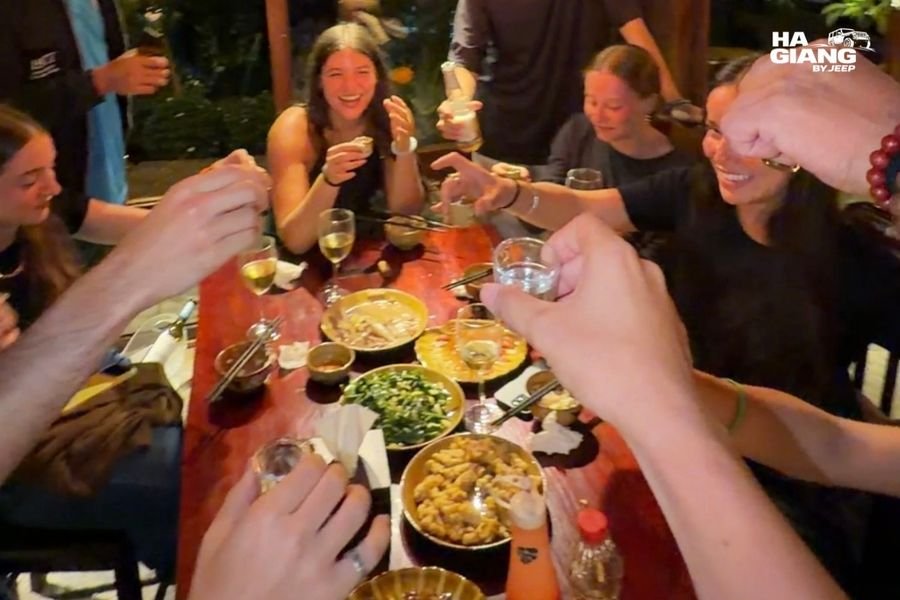
Two practical notes. Receive a poured cup with both hands, or with your right hand and your left touching your forearm, which is the polite form. And it is stronger than it tastes, with strength varying village to village because it is made at home rather than in a factory.
How to decline without it being awkward, because plenty of people want to and think they cannot:
- Take the first toast and then nurse it. Nobody counts. This works for almost everyone.
- Say no clearly and warmly, once. A smile and a hand over the cup. Firm and friendly beats vague and repeated.
- Give a reason if you want one. Health, medication, an early start. All accepted without further discussion.
- Ask your driver to explain. Two seconds in Vietnamese and the matter is closed.
Nobody will be offended. What is slightly awkward is accepting six toasts and then disappearing, so decide early which evening you are having.
The quiet advantage of having a driver: you can accept the third toast without doing arithmetic about tomorrow morning. That is a real thing guests mention.
The evening ends early
Villages here get up early because there is work to do, and they go to bed accordingly.
Sound carries. Wooden walls, thin partitions, an open plan house. A conversation at normal volume in the courtyard at eleven is audible in every room.
Wind it down when the family does. You will feel it happen. Follow it.
If you are a group, this is the single most common complaint hosts have. A group of ten enjoying themselves at midnight in somebody's home is a different thing from ten people in a bar. Our groups guide covers this and the rest of the group specific logistics.
Charging points are limited and shared. Bring a multi way adapter and you will be popular.
Wifi is often absent or very slow. Do not ask about it twice and definitely do not complain about it. You are in a village on a limestone plateau.
Morning
The family will be up before you. Someone has been cooking since before it was light.
Breakfast is savoury and early. Often banh cuon trung, rice rolls with egg dipped in hot bone broth. Sometimes noodle soup, sometimes sticky rice. Nothing sweet, nothing baked.
Fold your blanket and tidy your space in the dorm. Small, noticed, takes ten seconds.
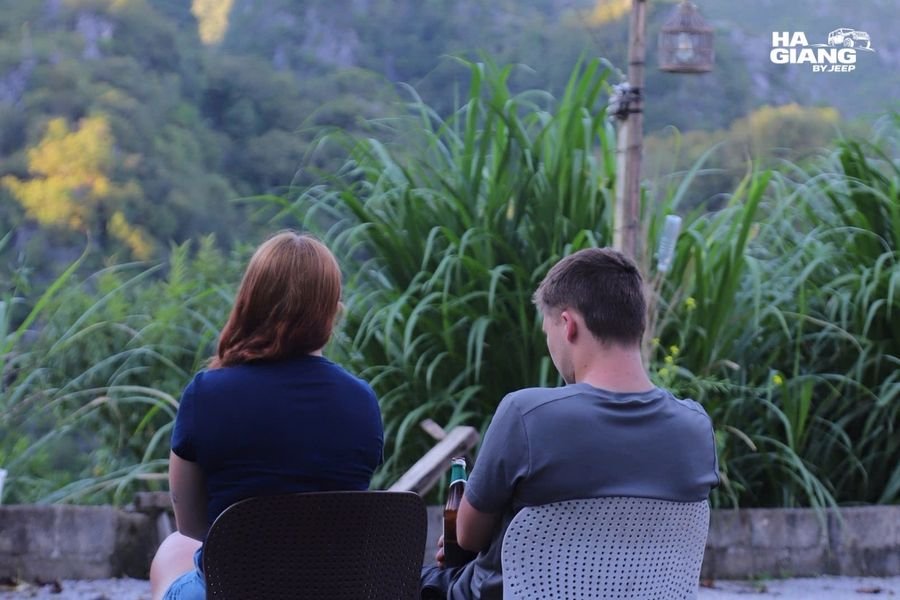
Go outside before you eat. Cold clear mornings put cloud in the valleys below the house and it is gone by mid morning. This is the best light of the day and the reason our photography guide tells people to set an early alarm.
Say goodbye properly. To the host, by name if your driver has told you it. It matters more than anything else on this page.
Money, tipping and what your stay pays for
Your accommodation is already paid as part of the tour. You do not settle a bill at the homestay.
Extras are paid directly and in cash. Beer, extra bottles of water, snacks. Small amounts, and nobody is going to chase you for them, which is exactly why you should remember to pay before you leave.
On tipping. Tipping is not built into Vietnamese hospitality the way it is in some countries, and no host will expect one. If you want to leave something because the night was good, that is welcome. Ask your driver the appropriate way and amount for that particular household rather than guessing, and hand it to the host rather than leaving it on a bed.
Do not tip children. Same reason as everywhere else in this region: it creates an expectation for every traveler behind you.
What your stay actually does. Homestay income goes directly to a village family on a plateau where farming means carrying soil into cracks in the limestone by hand. It is one of the few forms of tourism money that lands in the household rather than passing through several companies first. Our Hmong culture guide explains the farming and why that matters.
Buying a bottle of beer, eating what is cooked and paying for your extras is a bigger contribution than it looks.
What to pack for the night
Small list, disproportionate effect.
- Earplugs. The single most useful item on this page if you are in a dorm.
- A headlamp or phone torch. Getting to the bathroom at 2am in a house you do not know.
- Warm layer to sleep in, from late autumn through winter.
- Your own towel, unless you have checked.
- Flip flops or slides. Shoes come off at the door and floors are cold.
- Multi way charging adapter. Outlets are few and shared.
- Hand gel and tissue. Not every bathroom has soap or paper.
- Cash in small notes for extras.
- Any medication in your day bag, not buried in luggage.
Mistakes guests make
Collected from hosts and drivers rather than invented.
- Treating it like a hotel. Asking for things to be brought, complaining about the mattress, expecting a check in process.
- Keeping shoes on. The one everybody sees.
- Photographing the family before speaking to them. Wrong order, and it shows in the photographs.
- Staying up loudly. The most common host complaint by a distance.
- Not eating what is served and not saying why. Silence reads as rejection. A sentence through your driver fixes it entirely.
- Wandering into rooms. An open door is not an invitation.
- Accepting endless corn wine to be polite, then having a miserable next morning.
- Leaving without saying goodbye because the vehicle is loaded and everyone is ready.
- Not saying about the dorm in advance, then discovering on night one that it is not for them.
Booking soon?
Tell us whether you want dorm or private rooms, any dietary needs, and anything about bathrooms or heating that matters to you. We reserve the specific rooms rather than hoping on the day, and homestay capacity in a village runs out well before hotel rooms do. Email booking@hagiangbyjeep.com if you prefer.
Which jeep tour is right for you?
Ha Giang Loop, 4 days 3 nights. Three homestay nights, which is where the evenings stop being novel and start being the reason you came. Also the itinerary with room to land a market morning. See the 4 days tour
Ha Giang Loop, 3 days 2 nights. Two nights, the classic loop, a fuller schedule. Book private rooms if the evenings are going to be the difference between resting and not. See the 3 days tour
Ha Giang and Cao Bang, 5 days 4 nights. Four nights across two provinces, with accommodation in Cao Bang running to small hotels in Cao Bang City and Trung Khanh as well as village homestays. See the 5 days tour
Ha Giang and Cao Bang, 6 days 5 nights. Five nights, the slowest pace we run, and the most time actually spent in the places you sleep rather than arriving after dark. The Cao Bang Loop guide covers that half. See the 6 days tour
Jeep Wrangler Rubicon rental. 5,000,000 VND per day for the vehicle, about $192, for confident drivers arranging their own accommodation. Worth knowing that the good village homestays are booked through relationships rather than through booking sites. Requirements for foreign drivers in Vietnam can change, so check the current rules. See rental details
If you are travelling alone, the solo travel guide covers why the dorm is often the better option for one person. If this is your first trip to Vietnam, the first time visitors guide sets expectations for the whole trip.
Ha Giang homestay FAQ
What is a Ha Giang homestay like?
A family house that also takes guests. The family lives there, cooks your dinner in their own kitchen and eats at the table with you. Sleeping is either a shared dorm platform with mattresses and mosquito nets or a private room, and bathrooms are usually shared.
Is the homestay included in the tour price?
Yes, on a dorm bed basis. Private rooms are an upgrade at 500,000 VND per room per night for 1 to 2 people, or 700,000 VND for a family room for 3 to 4 people.
Should I book a private room or the dorm?
Private if you are a light sleeper, a couple, over sixty, or you need the bathroom at night. Dorm if you are a group of friends or you want the sociable version. Three nights of private room on the 4 days tour is about $58 for a couple across the whole trip.
Are Ha Giang homestay bathrooms shared?
Usually yes, and standards vary between villages. Some are western style with a hot shower, some are a squat toilet and a water tank. Ask us before booking if this matters and we will plan the route around it.
Do I need to take my shoes off?
Yes, at the door where the other shoes are. It is the first thing anyone notices and it is not optional.
What happens at dinner?
Shared plates in the middle of one long table, with the host family and any other guests eating together. No menu and no ordering. Follow the host's lead, take small amounts and go back, and offer to help clear up.
Do I have to drink the corn wine?
No. Take the first toast and nurse it, or decline warmly and once with a hand over your cup. A reason is accepted without further discussion and your driver can explain in two seconds. Nobody is offended.
Is there wifi and hot water?
Wifi is often absent or very slow. Hot water is usually available but limited, so showering last is a different experience from showering first. Neither is worth complaining about and both are worth planning around.
How cold does it get at night?
Cold from late autumn through winter, and village houses are not centrally heated. Sleep in a layer. Rammed earth walls hold temperature well but they do not produce it.
Should I tip at a Ha Giang homestay?
Not expected, and no host will look for one. If you want to, ask your driver the appropriate way and amount for that household and hand it to the host directly. Do not tip children.
Can homestays cater for vegetarians or allergies?
Yes, with notice. Village kitchens accommodate almost anything if they know in advance and almost nothing improvised at seven in the evening. Put it in your booking rather than mentioning it at the table.
What should I pack for a homestay night?
Earplugs, a headlamp, a warm layer to sleep in, your own towel, flip flops, a multi way charging adapter, hand gel and tissue, and cash in small notes for extras.