
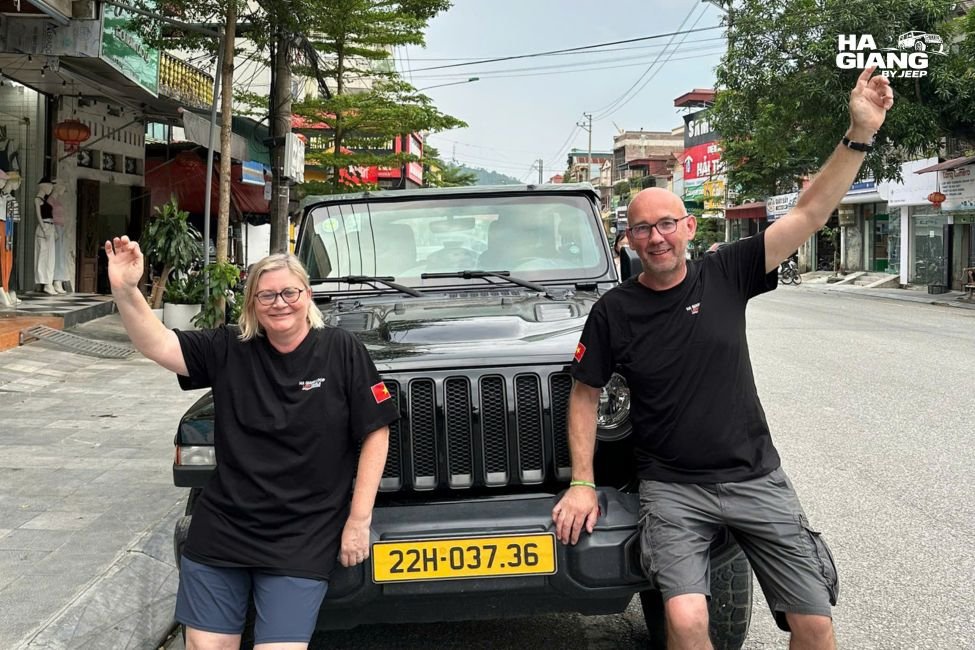
Ha Giang for First Time Visitors: Whether It Belongs on Your First Vietnam Trip
We would rather talk you out of a trip that will not suit you than sell you one that does not.
Ha Giang for first time visitors is a genuine question, not a rhetorical one. The province sits in the far north against the Chinese border, it takes most of a day to reach from Hanoi in each direction, and it competes for space in an itinerary with Ha Long Bay, Ninh Binh, Hoi An and everything else people fly to Vietnam for.
So this guide does something most operator blogs avoid. It tells you who Ha Giang suits, who it does not, what it will displace in your plan, and how to slot it in if you decide it belongs there. We run jeeps out of Ha Giang City and we would still rather you skipped it than arrived with three days, a fixed flight and an itinerary that was never going to work.
What is in this guide
- Should Ha Giang be on your first trip to Vietnam?
- Who should skip it, honestly
- Where Ha Giang fits in a Vietnam itinerary
- Three itineraries that work
- Vietnam is not one climate, and this catches people out
- The practical things nobody tells first timers
- Getting to Ha Giang from Hanoi
- What Ha Giang actually is
- How many days you need up there
- Mistakes first timers make
- Being a decent guest in the villages
- What it costs
- Which jeep tour is right for you?
- FAQ
Should Ha Giang be on your first trip to Vietnam?
Yes, if two things are true: you have at least two weeks in the country, and mountains and villages interest you more than beaches and cities.
That is the whole test. Everything else is detail.
What you get for the time it costs is the Dong Van Karst Plateau, a UNESCO Global Geopark of limestone towers with maize planted in the cracks between the rock, mountain passes that run along cliff faces above a turquoise river, and villages holding weekly markets that function exactly as they did before anyone came to look at them. It is the least developed and least visited part of northern Vietnam that still has a road through it.

It is also, and this matters for a first trip, the part of Vietnam most people come home talking about. Not because it photographs better than Ha Long Bay, but because a homestay dinner in a village where nobody speaks your language is a different order of experience from a boat with forty other tourists on it.
Who should skip it, honestly
We would rather say this now than have you find out on day two.
Skip Ha Giang if you have under ten days in Vietnam. The round trip from Hanoi eats roughly two days of travel before you have seen anything. On a short trip that is a very large fraction of your holiday, and Ninh Binh gives you limestone scenery at a fraction of the travel cost.
Skip it if you are here for beaches, food cities and comfort. Hoi An, Da Nang, Hue and Ho Chi Minh City are a completely different and entirely valid trip. There is no rule saying a good Vietnam itinerary must include mountains.
Skip it if you need international hotel standards every night. Accommodation up here is family homestays and small town hotels. Private rooms are available and we recommend them, but this is not a region with a Hyatt in it.
Think carefully if long days in a vehicle are difficult for you. Several hours a day on winding mountain roads is the physical fact of the trip. It is very manageable for most people, including guests well into their seventies, but it is worth an honest assessment first. Our guide for senior travelers has the effort level for every major stop.
Think carefully if your dates fall in the wettest months and you have no flexibility. June to August is green and dramatic and also the period when landslide repairs are most likely to affect the route.
If none of that rules you out, keep reading, because the rest is logistics and logistics are solvable.
Where Ha Giang fits in a Vietnam itinerary
Here is the thing nobody says plainly: Ha Giang does not get added to an itinerary. It replaces something.
Most first trips to Vietnam are built from the same components. Hanoi and the north. Ha Long Bay or Cat Ba. Ninh Binh. The central strip of Hue, Da Nang and Hoi An. Ho Chi Minh City and the Mekong Delta. Somewhere in there, people also consider Sapa.
Ha Giang most often replaces Sapa. Both are northern mountain destinations, both take a road trip from Hanoi, and very few people have room for both on a first visit. The honest difference: Sapa is far more developed, easier to reach, and has a large hotel scene, which makes it simpler and also busier. Ha Giang is rawer, quieter, and needs more days. Neither is the correct answer for everyone.
If you want the full comparison rather than two paragraphs from an operator with an obvious preference, read a dedicated Ha Giang versus Sapa piece rather than trusting this one on that specific question.
The sequencing point. Do the north first. Jet lag matters less on a road trip than on a beach, mountain weather is more likely to force a reshuffle than coastal weather, and if something does go wrong up there you still have the rest of your trip to absorb it. Ending a three week holiday with a rushed dash to Ha Giang is the version that goes badly.
Three itineraries that work
Day counts, not schedules. Build the specifics around your flights.
Ten days, if you are determined to include it
| Days | Where |
|---|---|
| 1 to 2 | Hanoi, recover and eat |
| 3 | Transfer to Ha Giang, night there |
| 4 to 6 | Ha Giang Loop, 3 days 2 nights |
| 7 | Return transfer to Hanoi |
| 8 to 9 | Ninh Binh |
| 10 | Hanoi, fly out |
This works but it is tight and it means skipping the centre and south entirely. We would honestly suggest either accepting that, or leaving Ha Giang for a second trip.
Two weeks, the version that works best
| Days | Where |
|---|---|
| 1 to 2 | Hanoi |
| 3 | Transfer to Ha Giang, night there |
| 4 to 7 | Ha Giang Loop, 4 days 3 nights |
| 8 | Return transfer to Hanoi, night flight or train south |
| 9 to 11 | Hoi An and Da Nang |
| 12 to 13 | Ho Chi Minh City or Ninh Binh |
| 14 | Fly out |
Three weeks, no compromises
| Days | Where |
|---|---|
| 1 to 2 | Hanoi |
| 3 | Transfer to Ha Giang |
| 4 to 9 | Ha Giang and Cao Bang, 6 days 5 nights, finishing at Ban Gioc |
| 10 | Transfer from Cao Bang to Hanoi |
| 11 to 12 | Ninh Binh |
| 13 to 14 | Ha Long Bay or Cat Ba |
| 15 to 18 | Hue, Da Nang, Hoi An |
| 19 to 21 | Ho Chi Minh City and the Mekong |
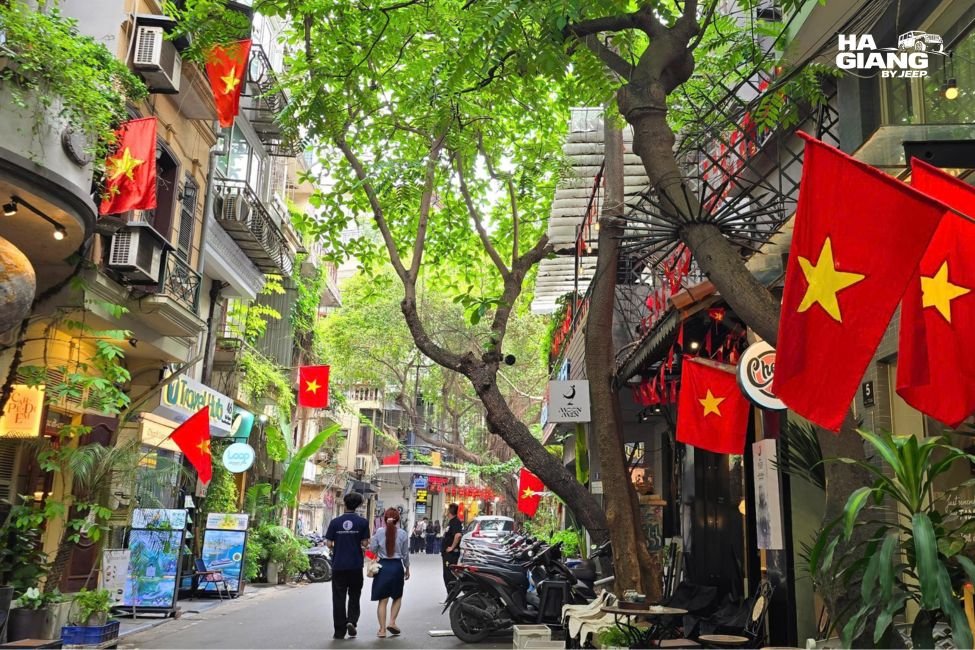
Not sure your dates work?
Send us your arrival and departure days and what else you want to see in Vietnam. We will tell you honestly whether Ha Giang fits, and if it does not, we will say so rather than squeezing you into a 3 days tour that ruins the rest of your trip.
Vietnam is not one climate, and this catches people out
The single most common first timer mistake, and it has nothing to do with Ha Giang specifically.
Vietnam runs a very long way north to south. The north has four seasons including a genuinely cold winter. The centre has its own rain pattern. The south is warm all year with a wet season and a dry season. These do not line up, so there is no single best month for the whole country, and a month that is perfect in one region can be the worst choice in another.
Broadly, and with the caveat that weather does not read guidebooks:
- The north, including Ha Giang, Hanoi and Sapa. Cold from December to February, sometimes very cold at altitude. Hot and humid with heavy rain from roughly June to August. The shoulder months in spring and autumn are the comfortable ones.
- The centre, Hue, Da Nang and Hoi An. Has a distinct wet period in the later part of the year when storms and flooding are most likely.
- The south, Ho Chi Minh City and the Mekong. Warm year round, with a wetter half and a drier half. Rain in the wet season tends to arrive hard and pass.
For Ha Giang specifically, late September through November is the most popular window: cooler, generally clearer, and buckwheat flowers appear across the plateau, usually from around late October. March to May is quieter and green. Check a current forecast close to your dates and expect it to be wrong at least once.
One more timing note: Tet. Vietnamese lunar new year moves each year and much of the country closes and travels at once. It is a fascinating time to be here and a difficult time to move around. Look up the dates for your year before you book anything.
The practical things nobody tells first timers
Visas and entry rules. We are not going to summarise these, because they change and a stale summary is worse than none. Check the official Vietnamese immigration channels and your own government's travel advice, and do it close to your travel date rather than trusting a blog post or a forum thread from last year. Whatever you need, sort it well before you fly.
Cash. Vietnam runs on cash outside the cities, and Ha Giang runs on cash almost entirely. Draw money in Ha Giang City before the loop, take small notes, and do not expect card acceptance in villages. ATMs are reliable in towns and absent between them.
Phone and data. A local SIM or an eSIM is cheap and worth arranging on arrival. Coverage is good in towns and patchy on the mountain passes, so plan on being unreachable for stretches of the day up there.
Traffic. Vietnamese city traffic looks alarming and works on its own logic. Cross the road at a steady, predictable pace and let it flow around you. Do not stop halfway and do not run.
Bargaining. Normal at markets, not at restaurants or shops with prices displayed. Keep it good humoured. The amounts in dispute are usually small.
Book the internal legs early. Domestic flights, trains and popular bus departures fill up, particularly around holidays. A group of four wanting the same sleeper bus at short notice is a harder problem than it sounds.
Travel insurance. Get it. Check it covers you for a road trip in a remote mountain region.
Getting to Ha Giang from Hanoi
No airport, no railway. Everyone arrives by road, roughly 300 kilometres from Hanoi.
Transfers are not included in tour prices. They are booked one way, per person, and cost the same from Hanoi Old Quarter or from Noi Bai Airport.
Hanoi to Ha Giang:
| Departure | Type | Price per person |
|---|---|---|
| 07:00 | Limousine | 400,000 VND |
| 10:30 | VIP Sleeper | 450,000 VND |
| 16:00 | Limousine | 400,000 VND |
| 20:30 | Regular Sleeper | 350,000 VND |
| 21:00 | VIP Sleeper | 450,000 VND |
| 21:00 | Cabin Sleeper | 400,000 VND |
Ha Giang back to Hanoi:
| Departure | Type | Price per person |
|---|---|---|
| 16:00 | Limousine | 400,000 VND |
| 18:00 | Regular Sleeper | 350,000 VND |
| 21:00 | VIP Sleeper | 450,000 VND |
| 21:00 | Cabin Sleeper | 400,000 VND |

Our advice for a first visit: take a daytime limousine and add a night in Ha Giang City before the tour starts. The overnight sleeper saves you a hotel night and costs you day one, because arriving unslept for the first morning of a four day mountain trip is a poor trade. If you do travel overnight, the cabin sleeper gives you an enclosed berth rather than an open shared one.
Coming from Sapa instead: 11:00 VIP Sleeper 450,000 VND, 11:00 Cabin Sleeper 400,000 VND, or 17:00 Limousine 400,000 VND. Returning to Sapa: 18:00 VIP Sleeper 450,000 VND or 18:00 Cabin Sleeper 400,000 VND. Ha Long Bay, Ninh Binh and Cat Ba connections exist and we quote them on request.
If you take the longer Cao Bang tours, they finish in Cao Bang rather than Ha Giang. Returns from there to Hanoi Old Quarter or Noi Bai Airport are 16:00 Limousine 450,000 VND, 06:00 next day Limousine 450,000 VND, 11:30 next day Limousine 450,000 VND, 20:30 Cabin Sleeper 450,000 VND, or 20:30 VIP Cabin Sleeper 500,000 VND. Build your onward flight around that, not the other way round.
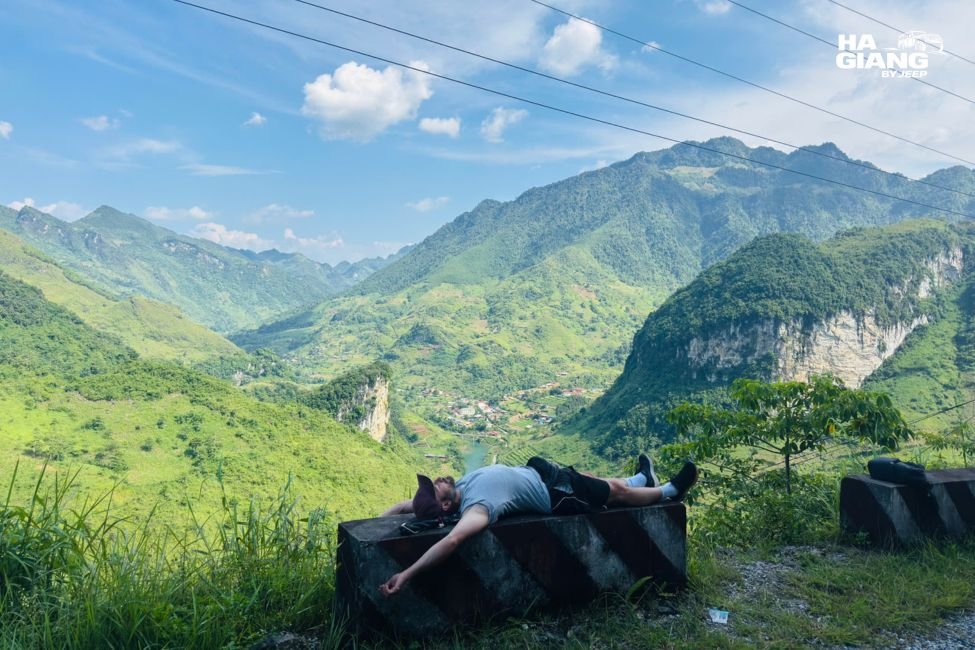
What Ha Giang actually is
For orientation, because most first timers arrive with a vague idea from photographs.
The loop is a road circuit starting and ending in Ha Giang City, climbing north through Quan Ba and its twin conical hills, past Lung Tam where Hmong women weave indigo hemp on wooden looms, up through the pine country around Yen Minh into the heart of the plateau.
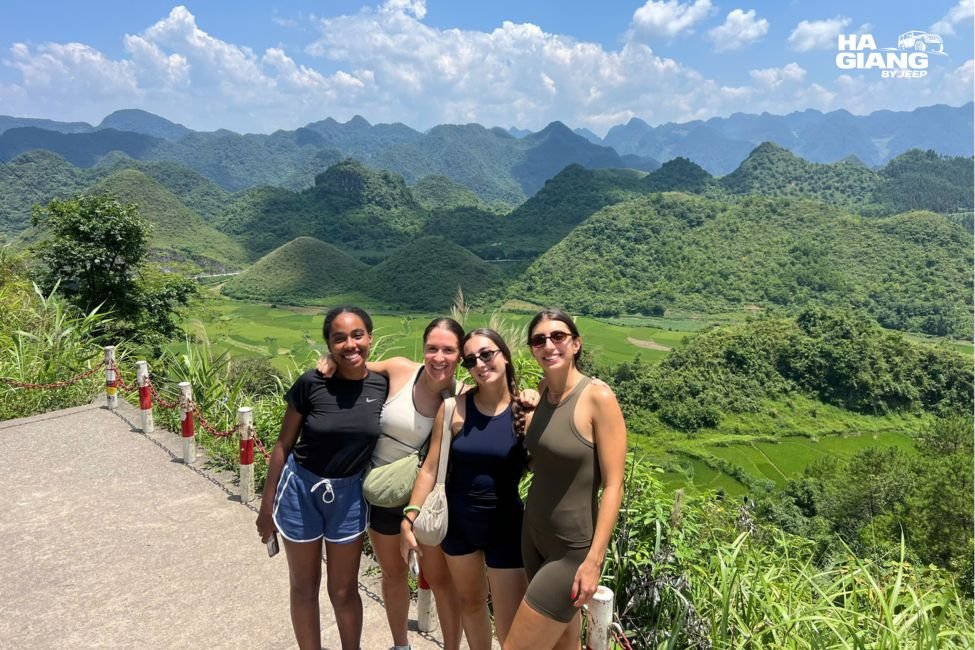
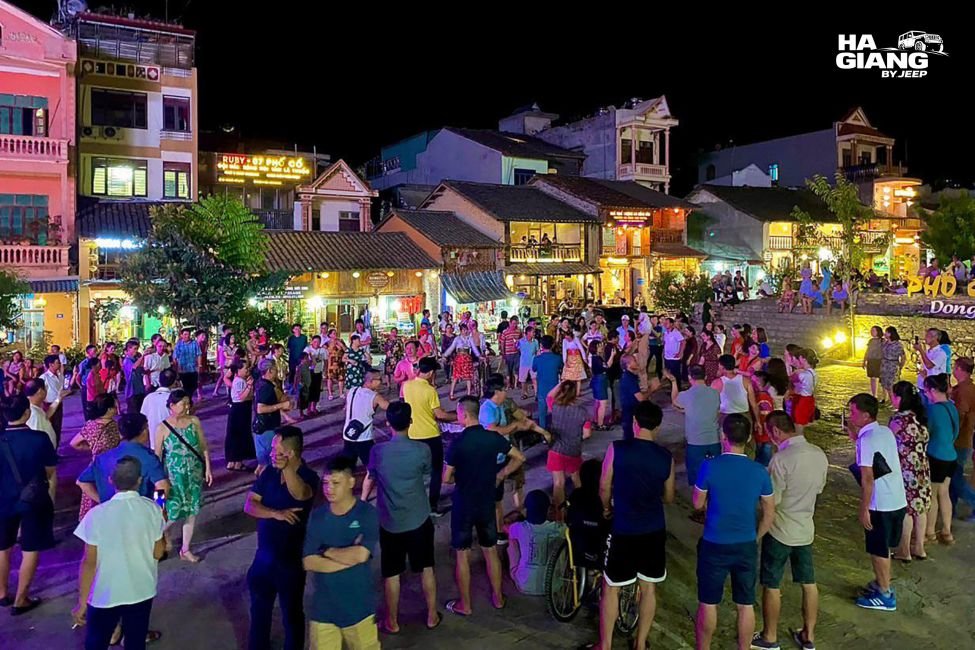
Sung La sits in a bowl of maize fields with old clay houses. Pho Bang is a faded former trading town most itineraries skip. Dong Van Old Quarter is the best evening base on the loop, a small grid of century old stone houses under a limestone wall, and its Sunday market is the single morning worth planning your dates around.
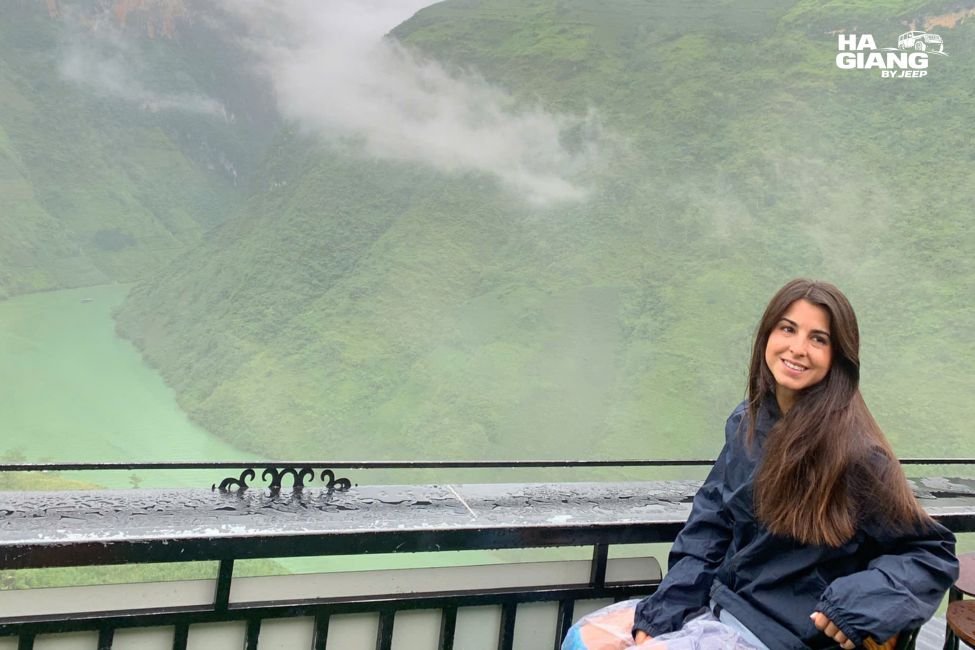
Ma Pi Leng Pass connects Dong Van and Meo Vac along a road cut into the canyon wall above the Nho Que River, with an optional boat trip at the bottom of the canyon. Lung Cu Flag Tower marks the northernmost point of the country, and Du Gia is the quiet valley on the longer route back. Khau Vai Market near Meo Vac happens once a year in spring on a lunar date.
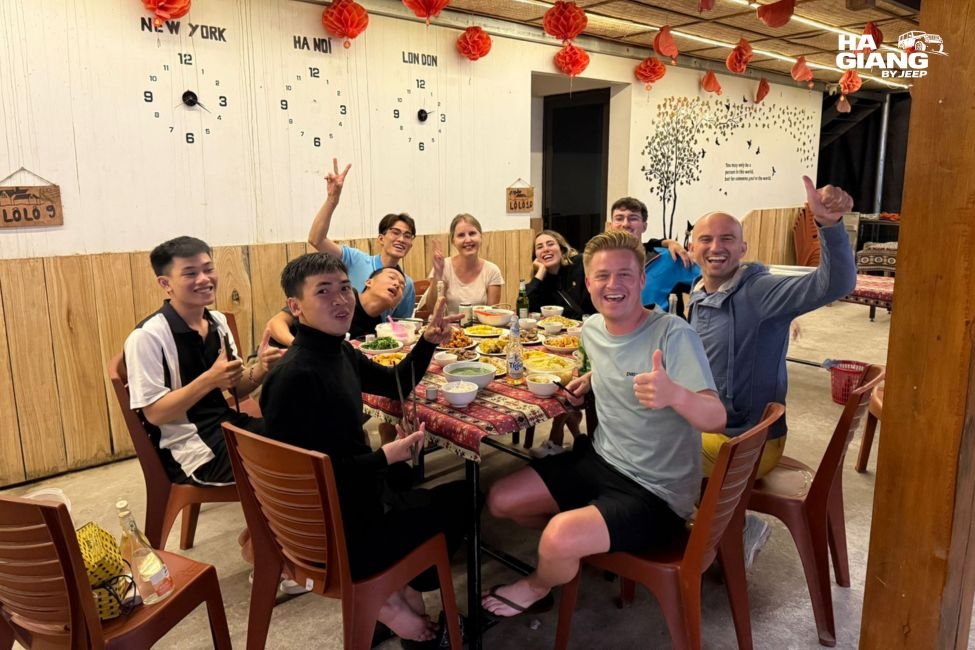
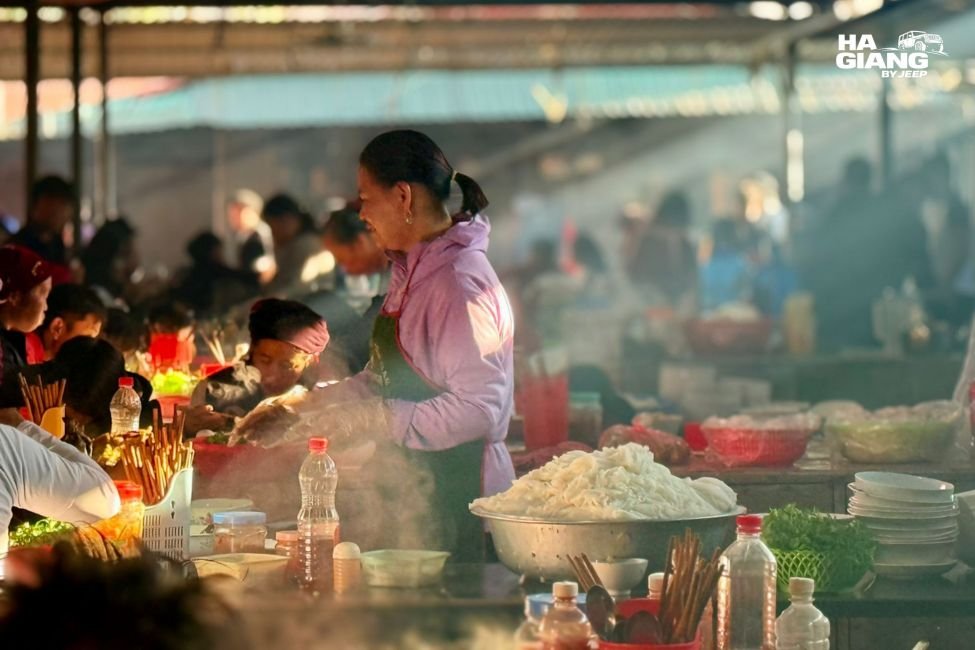
You sleep in family homestays. Dinner is shared plates at one long table with the host family and whoever else is staying: rice, grilled pork, tofu, wild greens, soup, and usually a bottle of ruou ngo, the local corn wine. Breakfast is banh cuon trung, rice rolls with egg dipped in hot bone broth. Our food guide covers what to eat in detail.
Border permits are needed for the sections near the Chinese border. We arrange those from our office in Ha Giang City. Bring your passport and carry it with you. Requirements can change, so confirm current procedures close to your travel date.
How many days you need up there
Three days, two nights. Covers the classic loop. Works if your dates are fixed. Full, but not frantic.
Four days, three nights. What we recommend to most first time visitors. Same roads, one more night, plus Lung Cu and Du Gia. The extra day is where the unplanned stops and the slow mornings live, and on a first trip those are usually the parts you remember.
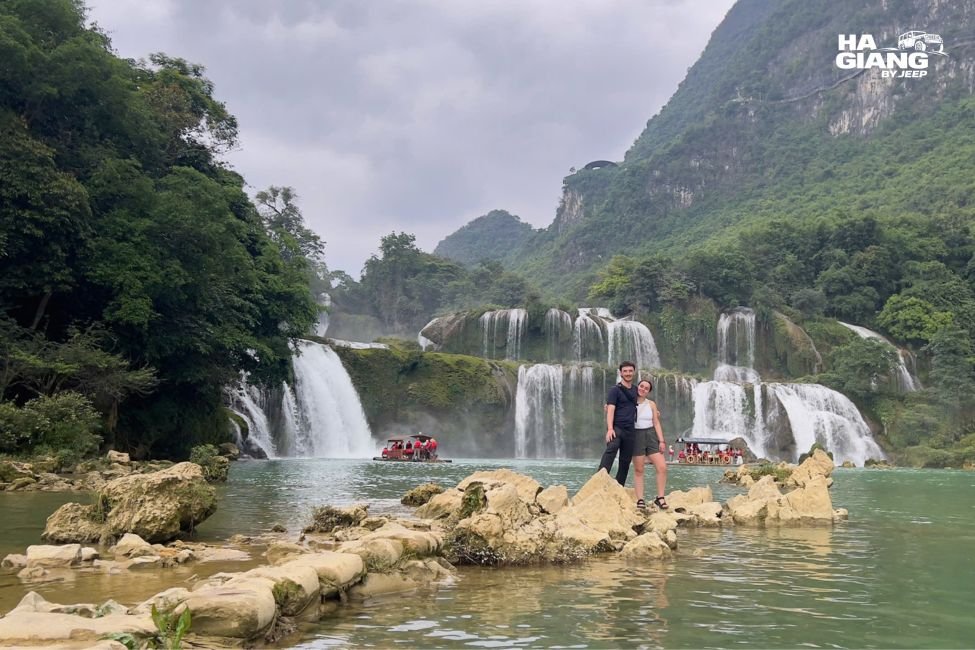
Five or six days. The Cao Bang combos, continuing east into a second UNESCO Global Geopark, Non Nuoc Cao Bang, finishing at Ban Gioc Waterfall. Also takes in Pac Bo Historical Site, God's Eye Mountain, Ngoc Con Valley and the 15 level pass near Bao Lac. Two Geoparks in one trip, and the second sees a fraction of the visitors. Worth it if you have three weeks in Vietnam.
Add one night in Ha Giang City before the tour to every one of these, and remember the transfer days at each end.
Mistakes first timers make
- Underestimating the transfer. Two days of your holiday, one at each end. Plan for it rather than discovering it.
- Booking the overnight bus both ways to save two hotel nights, then spending four days tired.
- Packing for the tropics. Dong Van gets genuinely cold from late autumn through winter. People arrive with shorts and a rain jacket and buy a fleece in the market on day one.
- Assuming the whole country has the same weather. Covered above, and it is the most expensive planning error people make.
- Leaving the market day to chance. Dong Van Sunday Market is one of the best mornings in northern Vietnam and it happens on Sundays. Plan around it.
- Booking too late for the autumn peak. Late October and November fill up well in advance.
- Trying to do the loop and Sapa and Ha Long Bay in ten days. Pick two.
- Not carrying enough cash. No cards in the villages and no ATMs between towns.
- Sorting the visa late. Requirements change and you do not want to be checking a week out.
Being a decent guest in the villages
You will be in people's homes and at markets where daily life is happening, not at an attraction with a ticket office.
- Ask before photographing anyone. A gesture at the camera works in any language, and your driver can ask properly in seconds. Do not photograph children without a parent's agreement.
- Do not hand money or sweets to children. It creates an expectation for every visitor after you.
- Take shoes off where your hosts do.
- Learn two words. Hello and thank you. The bar is low and the return is high.
- Buy something at markets. A scarf, a bag of tea, lunch. It is the simplest way to leave money in the village you are standing in.
- Dress modestly in villages and at any temple or memorial site.
- Keep the corn wine sensible on night one in someone's family home. Traditional dress at markets is worn because it is worn, not for your photograph.

What it costs
Every tour is private. Nobody is added to your vehicle. Prices are for the whole group, in Vietnamese dong with an approximate US dollar figure.
| Tour | 1 person | 2 people | 3 people | 4 people |
|---|---|---|---|---|
| Ha Giang Loop, 3 days 2 nights | 15,990,000 VND ($615) | 19,990,000 VND ($769) | 23,990,000 VND ($923) | 25,990,000 VND ($1,000) |
| Ha Giang Loop, 4 days 3 nights | 19,990,000 VND ($769) | 25,990,000 VND ($1,000) | 30,990,000 VND ($1,192) | 33,990,000 VND ($1,307) |
| Ha Giang and Cao Bang, 5 days 4 nights | 27,990,000 VND ($1,077) | 36,990,000 VND ($1,423) | 41,990,000 VND ($1,615) | 46,990,000 VND ($1,807) |
| Ha Giang and Cao Bang, 6 days 5 nights | 36,990,000 VND ($1,423) | 44,990,000 VND ($1,730) | 49,990,000 VND ($1,923) | 54,990,000 VND ($2,115) |
Budget for on top of that:
- Room upgrades. Base price includes a dorm bed. A private room for 1 to 2 people is 500,000 VND per room per night, a family room for 3 to 4 people is 700,000 VND. On a first trip we recommend it.
- Transfers. 350,000 to 500,000 VND per person each way.
- Food, entrance tickets and the optional Nho Que boat, paid locally in cash.
Cost per person drops sharply with each person in the jeep, since you are paying for the vehicle rather than the seat. If you are travelling as a larger group, the groups guide has the cost per person worked out for every size from four to twelve.
Send us your Vietnam dates
Tell us what else is on your itinerary and we will tell you where Ha Giang fits, which length works, and whether your transfer plan holds up. If it does not fit, we will say so. Email booking@hagiangbyjeep.com if you prefer.
Which jeep tour is right for you?
Ha Giang Loop, 3 days 2 nights. For a first trip with a fixed window. Covers Quan Ba, Yen Minh, Dong Van, Ma Pi Leng and Meo Vac. See the 3 days tour
Ha Giang Loop, 4 days 3 nights. The one we recommend to most first time visitors. Same route with room in it, plus Lung Cu and Du Gia. See the 4 days tour
Ha Giang and Cao Bang, 5 days 4 nights. Two Geoparks, finishing at Ban Gioc. For three week trips. See the 5 days tour
Ha Giang and Cao Bang, 6 days 5 nights. The full version with the shortest driving days, through Bao Lac and the 15 level pass. See the 6 days tour
Jeep Wrangler Rubicon rental. 5,000,000 VND per day for the vehicle, about $192. For confident drivers with the right paperwork. We would not usually recommend self driving on a first visit to Vietnam, since unfamiliar mountain roads and unfamiliar traffic conventions are a lot to take on at once. Requirements for foreign drivers can change, so check the current rules. See rental details
For a picture of how a day actually runs, see what a jeep tour is actually like. Coming alone on your first trip is more common than you would think, and the solo travel guide has the costs for one person laid out.
Ha Giang for first time visitors FAQ
Is Ha Giang worth visiting on a first trip to Vietnam?
Yes, if you have at least two weeks in the country and mountains and villages appeal to you more than beaches and cities. On a shorter trip the round trip from Hanoi eats too much of your time, and Ninh Binh gives you limestone scenery much closer to base.
How many days do I need for Ha Giang?
Four days on the loop is what we recommend to most first time visitors, plus a night in Ha Giang City beforehand and a transfer day at each end. Three days works if your dates are fixed. Five or six days adds Cao Bang and Ban Gioc.
Should I choose Ha Giang or Sapa?
Most first time visitors have room for one. Sapa is more developed, easier to reach and busier. Ha Giang is quieter, rawer and needs more days. Read a dedicated comparison rather than taking our word for it, since we are not a neutral source on that question.
How do I get from Hanoi to Ha Giang?
By road, roughly 300 kilometres, by sleeper bus or limousine van. Departures from Hanoi Old Quarter or Noi Bai Airport run from 350,000 to 450,000 VND per person one way. We suggest a daytime limousine plus a night in Ha Giang City rather than arriving unslept.
When is the best time to visit Ha Giang?
Late September through November is the most popular, cooler and generally clearer, with buckwheat flowers usually from around late October. March to May is quieter and green. Winter is cold and dramatic. June to August is the wettest.
Do I need a visa for Vietnam?
Almost certainly something, but requirements vary by nationality and change, so check the official Vietnamese immigration channels and your own government's travel advice close to your travel date. Sort it well before you fly rather than close to departure.
Do I need a permit for Ha Giang?
Foreign visitors need a border area permit for the sections of the loop near the Chinese border. We arrange it from our Ha Giang City office. Bring your passport and carry it with you on the road.
Is Ha Giang difficult for first time visitors to Vietnam?
Not with a driver. The hard parts are the mountain roads and the logistics, and both are handled for you. The genuine adjustments are the cold, the basic accommodation and the long days in a vehicle.
What should I pack for Ha Giang?
Warm layers and a windproof outer even in summer, a rain jacket, sun protection, cash in small notes, your passport, a power bank and any medication you take. Add thermals, a hat and gloves from November to March.
Can I do the Ha Giang Loop without riding a motorbike?
Yes. A private jeep with a local driver covers the same route and the same stops in any weather, with no riding experience needed. This is why most of our guests contact us.
How much cash should I bring?
Enough for several days of meals, drinks, entrance tickets and the optional Nho Que boat, drawn in Ha Giang City in small notes. Villages and roadside stops are cash only and there are no ATMs between towns.
Where does Ha Giang fit in a two week Vietnam itinerary?
Early. Two days in Hanoi, a transfer day, four days on the loop, a transfer day back, then fly or take the train south for the centre and the south. Doing the north first means weather disruption up there does not wreck the rest of the trip.