Ha Giang Corn Wine and Happy Water: A Traveler's Guide
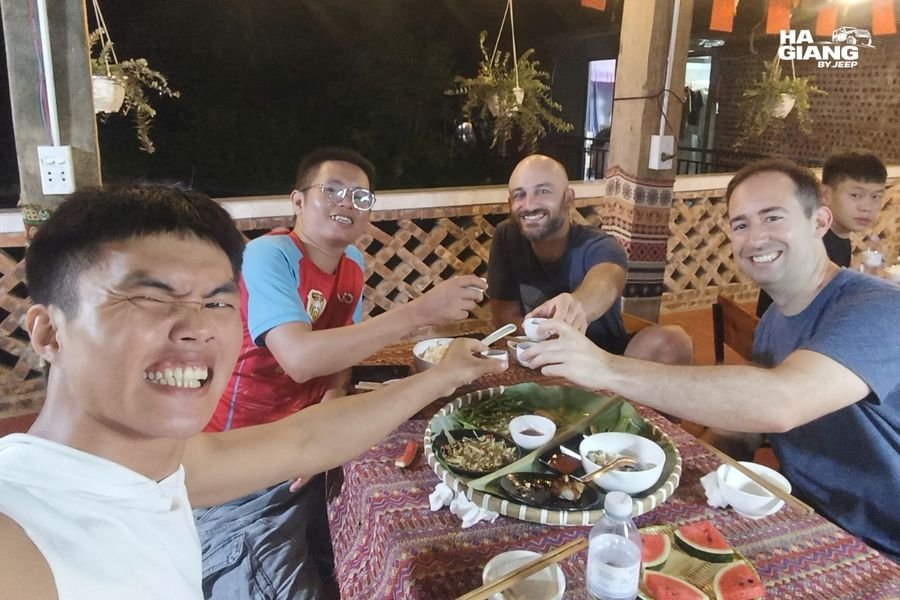
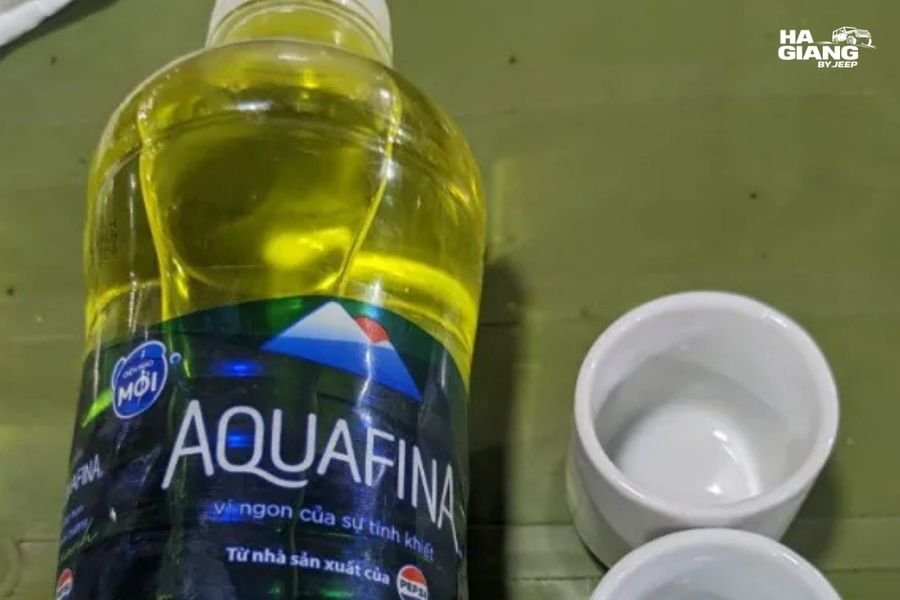
Somewhere on your second evening in the mountains, a small cup will appear in front of you. Nobody will announce it. The host will fill it from a plastic bottle that once held cooking oil, raise their own cup, look you in the eye, and wait.
That cup is Ha Giang corn wine, and how you handle the next thirty seconds will shape the whole evening.
This guide covers what the drink is, how it is made, where you will run into it, how to join in properly, and how to decline without embarrassing anyone. It also covers the part most travel writing skips: what happens the next morning, and why the vehicle you travel in changes the calculation entirely.
What is in this guide
- What Ha Giang corn wine actually is
- Why travelers call it happy water
- How corn wine is made in the mountains
- What it tastes like, honestly
- Where you will meet corn wine on the Loop
- Market days: Dong Van, Meo Vac, Khau Vai
- Drinking etiquette in a local home
- How to say no without causing offence
- What to eat with it
- Pacing, strength and staying sensible
- Buying a bottle to take home
- Which jeep tour suits you best
- FAQ
What Ha Giang Corn Wine Actually Is
Corn wine, called ruou ngo in Vietnamese, is a clear distilled spirit made from mountain corn. Despite the English name, it is not wine in any sense a European would recognise. There is no fermentation in a barrel, no ageing, no cork. It is closer to a farmhouse spirit: distilled, clear, poured at room temperature, drunk in small cups.
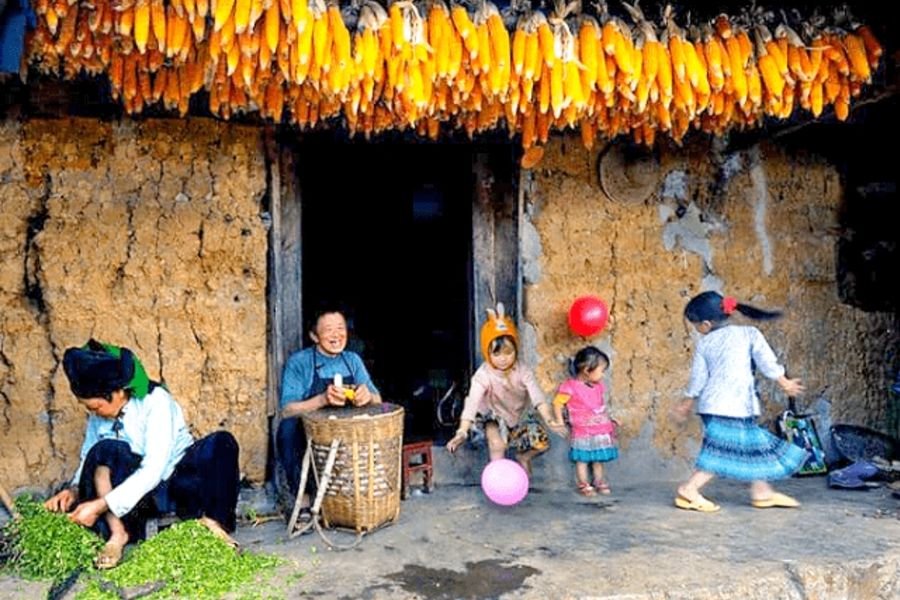
The corn matters. Up on the Dong Van Karst Plateau, families grow corn in pockets of soil wedged between limestone rocks, sometimes carrying earth uphill by hand to fill the gaps. That corn is a staple food, animal feed, and the base of the household spirit. Making wine from it is not a novelty product for tourists. It is what a family does with a crop that grows where rice will not.
You will find versions of it across northern Vietnam, but the plateau versions carry a particular reputation. Each valley claims a slightly different character, and each family will tell you theirs is the good one.
Why Travelers Call It Happy Water
Happy water is a nickname, not a translation. It spread through the backpacker and tour community in northern Vietnam over the past decade or so, and it now gets used loosely for any strong homemade rice or corn spirit served at a homestay dinner.
The name comes from what the drink does to a table. Dinner starts quiet. People are tired, a little shy, sitting in a room where they do not speak the language. Two or three rounds later the room is loud, the host is teaching everyone a toast, and someone is singing badly. That is the whole mechanism behind the nickname.
Worth knowing: local people do not call it happy water. If you say the phrase to a Hmong or Tay host, some will recognise it from travelers and smile, others will have no idea what you mean. The local word is ruou ngo for corn, ruou gao for rice. Using the real word tends to land better than the tourist nickname.
How Corn Wine Is Made in the Mountains
The process is old and simple in outline, though every household has its own quiet variations.
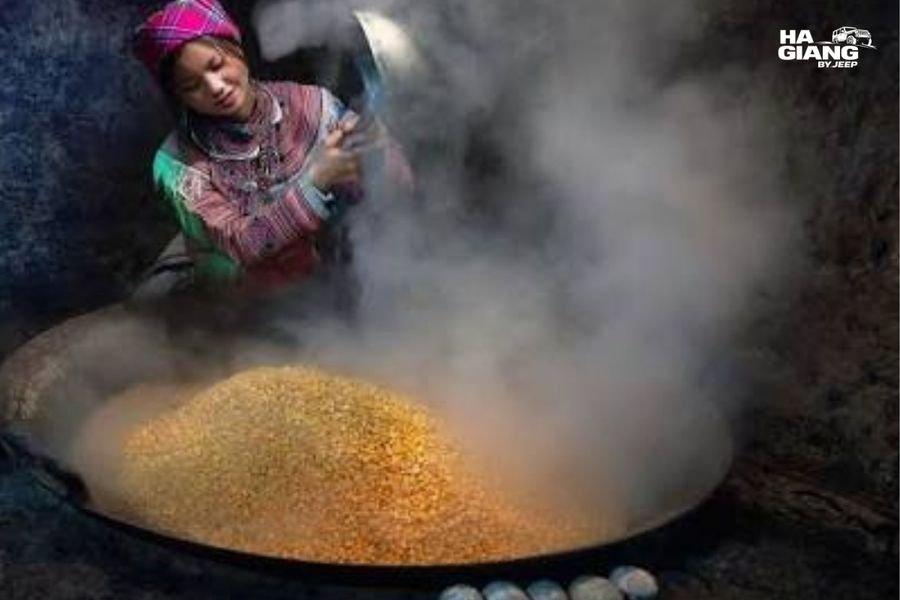
- Corn is boiled or steamed until soft, usually in a large pot over a wood fire.
- A yeast starter is added. In many Hmong households the starter is made with local leaves and herbs, formed into small cakes and dried. Recipes for the starter are often the family secret, not the corn itself.
- The mash ferments in a covered container for a period of days. Timing depends on the household, the season, and the weather.
- It is distilled over a wood fire, with vapour condensed through a cooling tube and collected drip by drip.
- It is stored in whatever the family has. Glass jars, plastic jerrycans, reused soft drink bottles.
If you want the specifics of a particular batch, your driver is the person to ask. He grew up in these valleys, he knows which families in which villages are known for it, and he can ask the questions that get real answers rather than polite ones. That kind of access is not something you can look up in advance.
There is one important thing this guide will not do: give you numbers. You will see claims online about exact alcohol percentages, exact fermentation days, exact yields. Homemade spirits vary enormously between households and batches, and there is no standard label on the bottle. Treat any specific figure you read as a guess.
What It Tastes Like, Honestly
Clear in the glass, sharp on the first contact, then a warmth that sits in the chest rather than the throat. Good batches have a faint sweetness underneath and a corn note on the finish. Rough batches taste like solvent and burn all the way down.
The range is wide. This is the single most useful thing to understand: quality is not consistent. One homestay pours something smooth enough that you happily take a second cup. The next village pours something you struggle to finish. Neither is a scam. It is simply the reality of a product made in a home kitchen with no quality control, no laboratory, and no label.
If it tastes harsh or chemical, you are allowed to stop. That is not rudeness. That is sense.
Serving is always the same shape: small cups, poured for you by someone else, drunk together rather than sipped alone. Nobody nurses a glass of corn wine through an evening. It comes in rounds.
Try it without worrying about the ride home
On a private jeep tour your driver handles every kilometre of road, which means dinner can go however it goes. No helmet, no night riding, no one at the table doing the maths on whether they are fit to ride in the morning.
WhatsApp us See the 3 Days LoopWhere You Will Meet Corn Wine on the Loop
It shows up in more places than travelers expect.
At homestay dinners. The most common setting. Food comes out on a shared mat or low table, and somewhere between the second and third dish the bottle appears. This is where most people have their first cup.
At roadside stops. Small shops along the passes sell it by the litre, decanted from a larger container. Some will offer you a taste from a shot glass kept on the counter.
At markets. Sellers pour samples freely. Buying is normal, tasting is normal, and refusing after tasting is also normal.
At celebrations. If your visit coincides with a wedding, a new house, a funeral, or a village festival, corn wine will be central to it. These are not events you can plan around. They happen or they do not.
In Ha Giang City and Dong Van Old Quarter. Bars and restaurants in the old quarter serve it, sometimes infused with honey, herbs or fruit. This is the softest introduction if you want to try it before a homestay dinner puts you on the spot.
The route itself puts you within reach of most of these. A standard Loop passes through Quan Ba, Yen Minh, Pho Bang, Sung La, Lung Cu, Dong Van, Ma Pi Leng and Meo Vac, with Du Gia and Lung Tam Linen Village added on longer itineraries. Every one of those places has a household making its own.
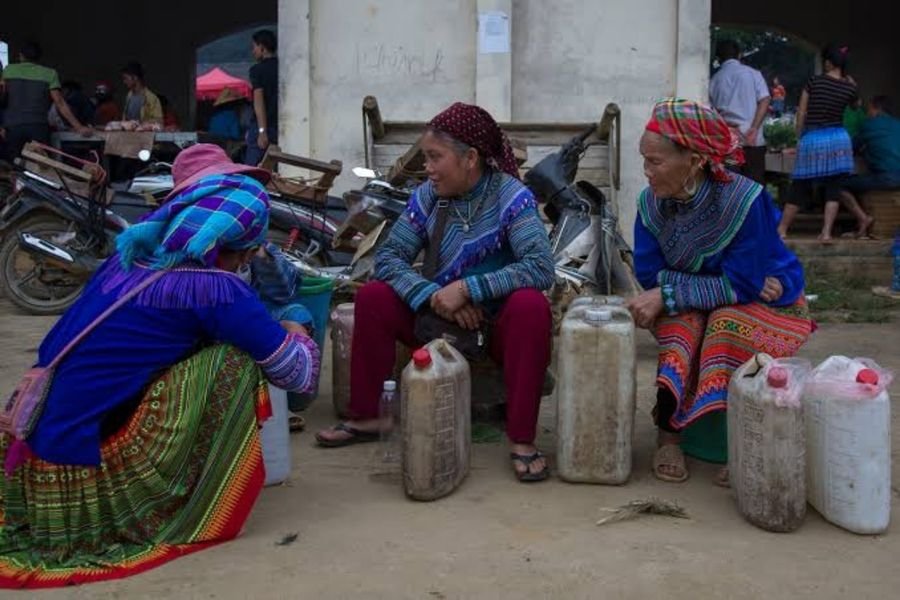
Market Days: Dong Van, Meo Vac, Khau Vai
Markets are the best place to see corn wine as a normal part of life rather than an evening ritual for guests.
| Market | Typical day | What to look for |
|---|---|---|
| Dong Van Market | Sunday morning | Wine sellers among food stalls, buyers filling their own containers |
| Meo Vac Market | Sunday morning | Livestock trading alongside food and drink, busiest very early |
| Khau Vai Love Market | Once a year, spring | A large gathering, wine central to it, dates set by the lunar calendar |
Market timing shifts, and lunar calendar events move every year. Check current dates with your driver or with us before building a trip around a specific market. Arriving on the wrong day is the most common avoidable disappointment on this route.
At a market you will see people drinking at eight in the morning. This is not unusual and it is not a problem to be commented on. Traders come from villages hours away on foot, the market is a social event as much as a commercial one, and a shared cup is part of how business gets done.
If you want the market experience without the early alarm being wasted, this is a strong argument for a 4 day itinerary, which gives the route enough slack to line up with a Sunday.
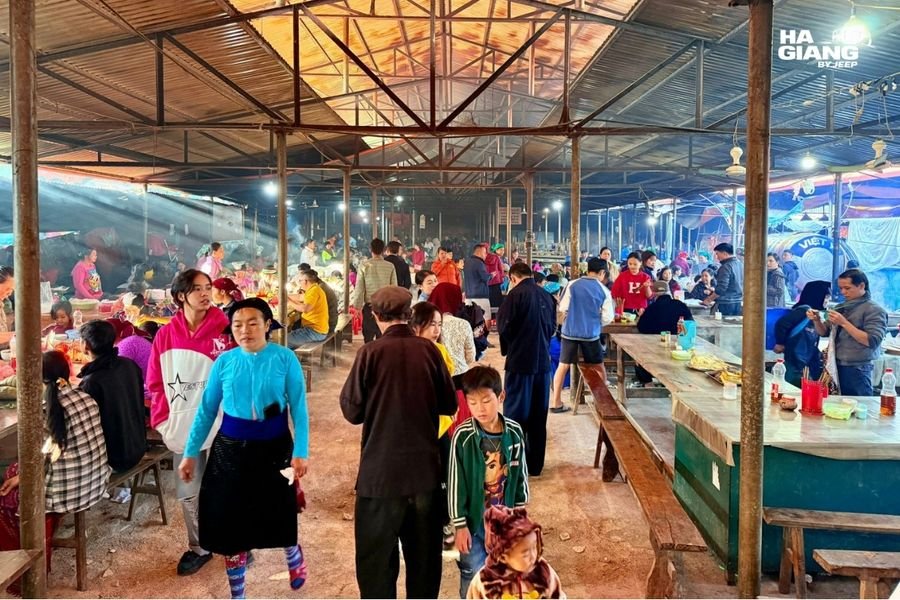
Drinking Etiquette in a Local Home
The rules are not complicated, but they are real. Getting them roughly right earns a lot of goodwill.
- Wait to be poured. You do not pour your own. Someone will fill your cup, and you should keep an eye on nearby cups to return the favour.
- Toast before drinking. Cups are raised together and a host will usually lead. Your driver will teach you the version used locally.
- Two hands show respect. When receiving a pour or clinking with someone noticeably older than you, use two hands or support your cup with your left hand. Lowering the rim of your cup slightly below theirs is a gesture of deference.
- Drink the round, not the bottle. Cups are small and finished in one. The pace is set by the group, not by you.
- Expect to be a focus. If you are the guest, more people will want to toast with you than with each other. This is hospitality, and it is also how a cup count climbs faster than you intended.
- Eat while you drink. Food is always on the table for a reason. Locals eat continuously through the drinking.
A note on scope: hospitality customs vary between Hmong, Tay, Dao, Lo Lo and other communities along the route, and between generations within the same village. We run jeep tours, we are not an authority on ethnography. Your driver, who lives here, is the right person to read the room and tell you what fits the house you are sitting in.
How to Say No Without Causing Offence
This section matters more than any other for a lot of travelers. People who do not drink, cannot drink for medical reasons, or simply do not want to drink on holiday often worry about this before they arrive.
Here is the reassuring part: refusing is completely normal and nobody will be upset. The pressure travelers imagine is mostly imagined.
Things that work well:
- Say so early, before the first pour. Declining a cup that is already full is awkward. Declining a cup that has not been poured is nothing at all.
- Give a reason people recognise. Health, medication, driving, or simply that you do not drink. Any of these is accepted immediately.
- Take the cup, do not finish it. Accepting the pour and raising it for the toast satisfies the social part completely. Sipping or leaving it is fine.
- Have your driver explain. One sentence in the local language removes any ambiguity, and it comes from someone the host already trusts.
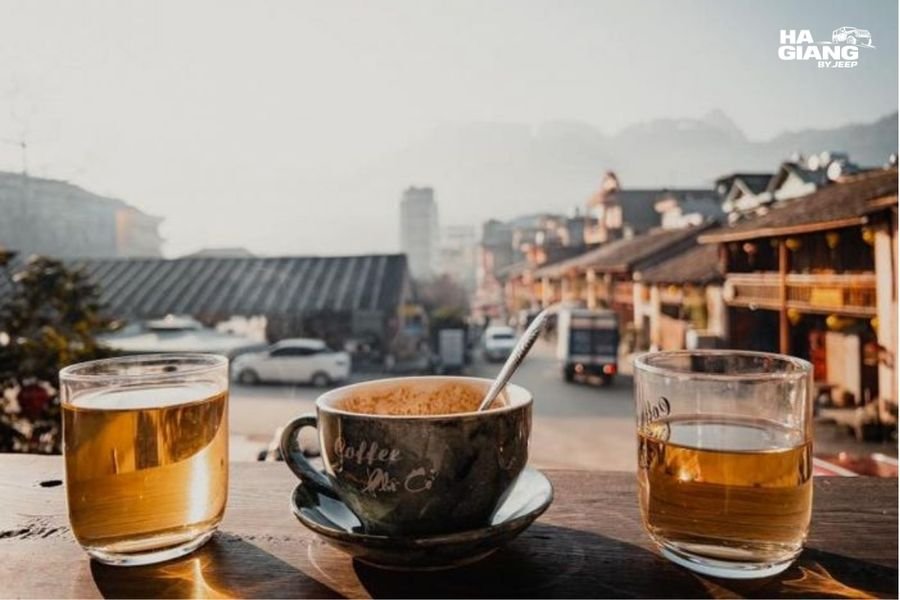
- Offer tea instead. Green tea is on every table. Toasting with tea is a real option and it is not treated as a lesser choice.
What does not work: making it a performance. Long apologetic speeches about not drinking draw more attention than a simple "not for me, thank you" and a smile.
Families with children, travelers in their sixties and seventies, and guests observing religious restrictions all pass through these villages regularly. Homestay hosts have seen every version of this. You are not the first.
What to Eat With It
Corn wine on an empty stomach is a bad plan anywhere in the world, and up here the food is half the point anyway.
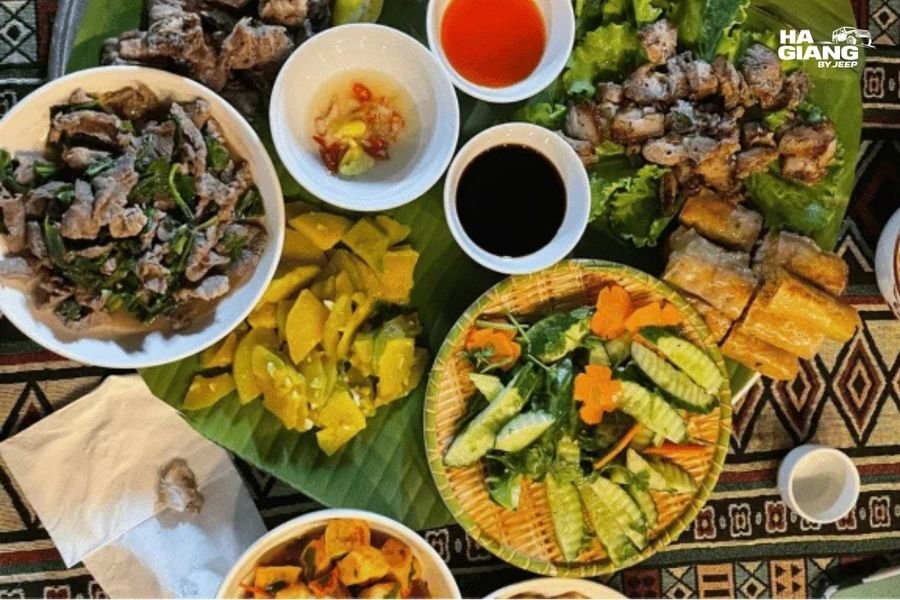
Thang co. A slow cooked stew, traditionally made with horse and using the whole animal. It is the definitive market day dish in Meo Vac and Dong Van, and it is genuinely divisive among travelers. Some love it. Some manage two spoonfuls. Try it at least once and decide honestly.
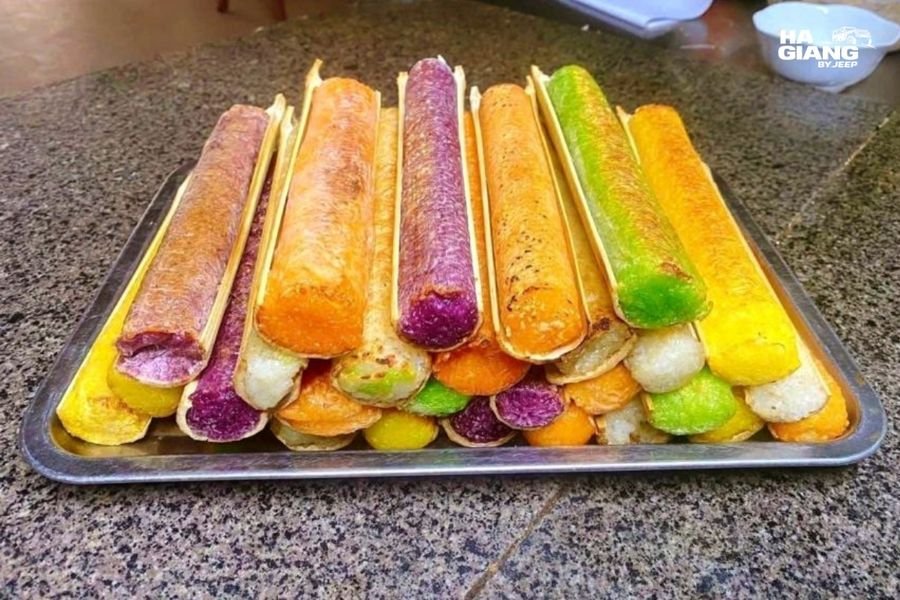
Com lam. Sticky rice cooked inside a bamboo tube over a fire, then split open at the table. Mild, smoky, and the easiest thing to reach for between cups.
Banh cuon trung. Thin steamed rice rolls with egg, served with a bowl of broth rather than a dipping sauce. This is a breakfast institution in Dong Van, and it is also the single best recovery food on the entire route.
Chao au tau. A dark, slightly bitter porridge made with a mountain tuber, usually eaten in the evening and mostly found in the cold months. Distinctive and worth ordering once.
Thang den. Warm glutinous rice balls in ginger syrup. Sweet, hot, and a fitting end to a cold evening.
Grilled skewers and hotpot. Standard at homestays and evening stalls, and standard alongside the wine.
Ask your driver what is good in the specific town you are stopping in. Menus in the mountains are not fixed, seasons change what is available, and the best stall in Meo Vac is rarely the one with an English sign.
Pacing, Strength and Staying Sensible
Some honest practical notes.
- Assume it is strong. There is no label, no verified percentage, and no consistency between households. Treat every new bottle as an unknown.
- Cups are small, rounds are not. The volume in a single cup is modest. The number of cups in an evening is what catches people out. Count rounds, not sips.
- Drink water alongside. Bottled water is available everywhere on the route. Alternate.
- Altitude and cold change how you feel. You are higher and colder than you are used to, often after a long day. The same amount of alcohol lands differently.
- Homemade spirits are unregulated. If something tastes wrong, smells chemical, or gives you an immediate headache, stop drinking it.
- Never drink and drive anything. This is the part where the vehicle you chose actually matters.
That last point is worth being direct about. On a private jeep tour, a local driver handles the road for the entire trip. Your evening has no consequences for tomorrow beyond how you feel in the morning, and the jeep has a roof, heating and a back seat if the morning is rough. Travelers who ride themselves have to end the evening early and make a genuine judgement call the next day. That is a real difference, and it is the honest reason many couples, families and older travelers end up choosing four wheels.
If you are renting the Jeep Wrangler Rubicon and driving yourself, the same rule applies as anywhere: the person driving does not drink. Traffic rules and enforcement can change, so check current local regulations rather than relying on anything you read in a blog, including this one.
Buying a Bottle to Take Home
Tempting, and a nice gift. A few things to think through first.
- Presentation is basic. Most wine is sold in reused plastic containers. If you want something giftable, buy in Ha Giang City or Dong Van Old Quarter where bottled versions with labels are sold, or bring a bottle to fill.
- Seal it properly. Wrap it, bag it, then wrap it again. Plastic caps on reused bottles leak, and a jeep boot is not a stable environment.
- Flying with it is a separate question. Airlines and customs have their own rules on carrying alcohol, on limits, and on unlabelled products, and those rules change. Check with your airline and with the customs rules of your destination country before you buy. Do not put it in hand luggage.
- Taste before you buy. Sellers expect it. Buying a litre of something you have not tried is how people end up gifting a bottle nobody drinks.
Which Jeep Tour Suits You Best
Food and drink experiences depend heavily on how much time your itinerary leaves for sitting still. Here is a plain comparison.
| Option | Best for | Food and drink angle |
|---|---|---|
| 3 Days 2 Nights | Travelers on a tight schedule | Two homestay dinners, the core of the Loop, efficient pacing |
| 4 Days 3 Nights | Anyone who wants a market morning | Slower pace, more villages, best chance of lining up with a Sunday market |
| 5 Days 4 Nights to Cao Bang | Adding Ban Gioc and a second Geopark | Two regions, two food cultures, ends near Ban Gioc Waterfall |
| 6 Days 5 Nights to Cao Bang | The unhurried version | Most time for markets, Pac Bo, Ngoc Con Valley and long dinners |
| Jeep Wrangler Rubicon rental | Confident self drivers | Full freedom, but the driver stays sober, every day |
The practical advantage of a private jeep for anything food related is simple. You can stop when you want. A stall on a pass looks good, you stop. The market is busier than expected, you stay longer. Nobody in your group has to think about parking a bike, riding in the rain afterwards, or being the designated rider.
Ready to plan the trip around the food?
Tell us your dates and we will tell you honestly whether they line up with a Sunday market, and which itinerary fits. Once you have a confirmed travel date, book as soon as you can. Most guests book 1 to 3 months ahead, and jeep availability is limited.
WhatsApp us Book now Contact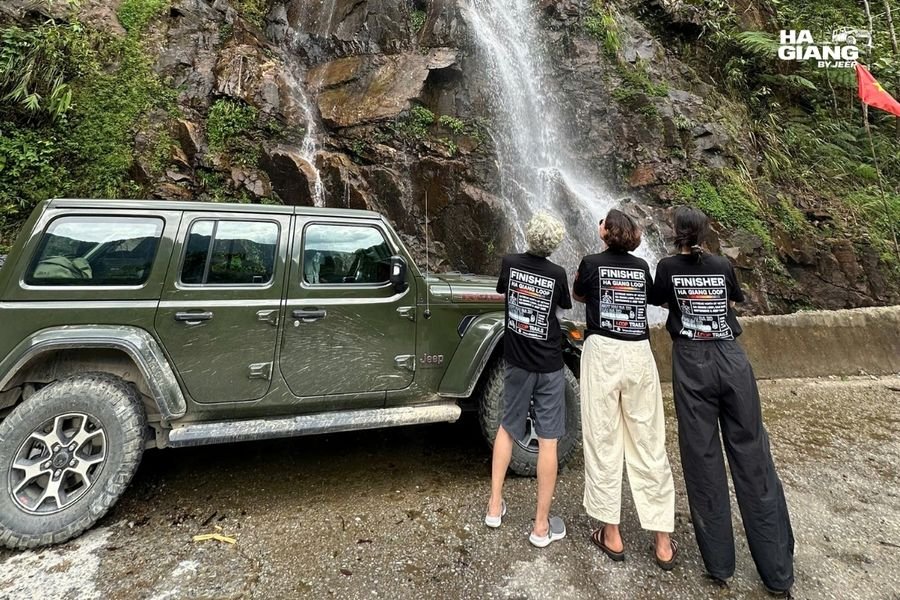
Frequently Asked Questions
What is Ha Giang corn wine?
It is ruou ngo, a clear spirit distilled from mountain corn by families across the Dong Van Karst Plateau. It is not wine in the European sense. It is served in small cups at room temperature, usually with food.
Why do travelers call it happy water?
The nickname spread through the traveler community in northern Vietnam because of how quickly a quiet homestay dinner becomes a loud one. Local people do not use the term. They say ruou ngo.
How strong is Ha Giang corn wine?
There is no reliable answer, and anyone giving you an exact percentage is guessing. It is homemade, unlabelled, and varies between households and batches. Treat every bottle as strong until proven otherwise.
Is it safe to drink?
It is what local families drink every day. That said, it is produced outside any regulated facility, so quality varies. Drink in moderation, eat while you drink, and stop if a batch tastes chemical or harsh.
Do I have to drink it if I am offered some?
No. Refusing is normal and nobody will be offended. Say so before the pour, give a simple reason, or accept the cup for the toast without finishing it. Toasting with green tea is completely acceptable.
Where can I try corn wine on the Ha Giang Loop?
Homestay dinners are the most common setting. You will also find it at roadside shops on the passes, at markets in Dong Van and Meo Vac, and in restaurants in Dong Van Old Quarter and Ha Giang City.
What food goes with corn wine?
Thang co at markets, com lam sticky rice, grilled skewers and hotpot at homestays, chao au tau in the cold months, and thang den for something sweet. Banh cuon trung the next morning is the local recovery breakfast.
When is Dong Van market?
Dong Van and Meo Vac markets run on Sunday mornings and start very early. Schedules can shift, and lunar calendar events like Khau Vai move each year, so confirm current dates with us before planning around one.
Can I buy corn wine to take home?
Yes, and sellers expect you to taste first. Buy a bottled version in Ha Giang City or Dong Van if you want something giftable. Check your airline and destination customs rules on carrying alcohol before you fly, and never pack it in hand luggage.
Is it a problem to drink if I am doing the Loop by jeep?
No, because you are not driving. Your local driver handles the road. This is one of the practical reasons couples, families and older travelers pick a private jeep over riding themselves.
What if I am renting the Wrangler Rubicon and driving myself?
Then the same rule applies as anywhere in the world. The driver does not drink. Traffic rules and enforcement can change, so check current local regulations before your trip.
Is corn wine suitable for travelers who do not drink alcohol at all?
Yes. Homestay hosts along this route regularly welcome families, older travelers and guests who do not drink. Green tea is always on the table, and joining the toast with tea is a normal thing to do.