
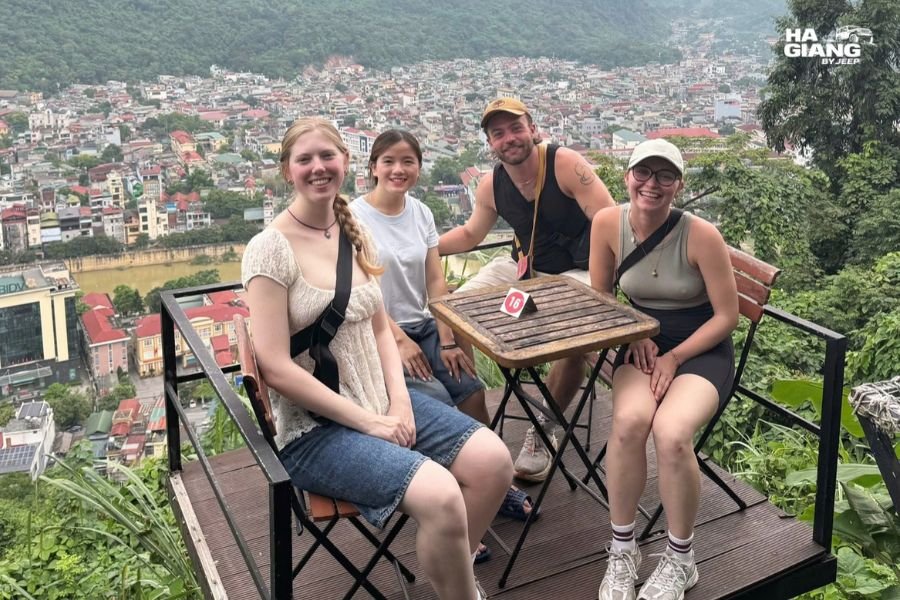
The sleeper bus from Hanoi pulls into Ha Giang City sometime between 4am and 7am, depending on traffic and road luck. You step out into a quiet provincial capital on the Lo River, the highland air noticeably cooler than anything you felt in Hanoi. The loop starts tomorrow. This guide covers what to do with the time in between.
Ha Giang City is not the destination — it is the door. What matters about spending time here is the transition it offers: from Hanoi's noise to highland quiet, from the highway to the loop road, from whatever your life was before to three or four days on a highland circuit that will rearrange how you think about northern Vietnam. The city earns its place in the itinerary not because of its own sights but because a good night here makes the loop itself better.
Getting to Ha Giang City from Hanoi

Ha Giang City sits roughly 300 kilometers north of Hanoi, well past the point where the flatlands give way to hills and the hills give way to the full northern highlands. There is one main road (National Highway 2) that connects the two cities, and the journey time varies depending on how you go.
By Sleeper Bus: The Traveler's Standard
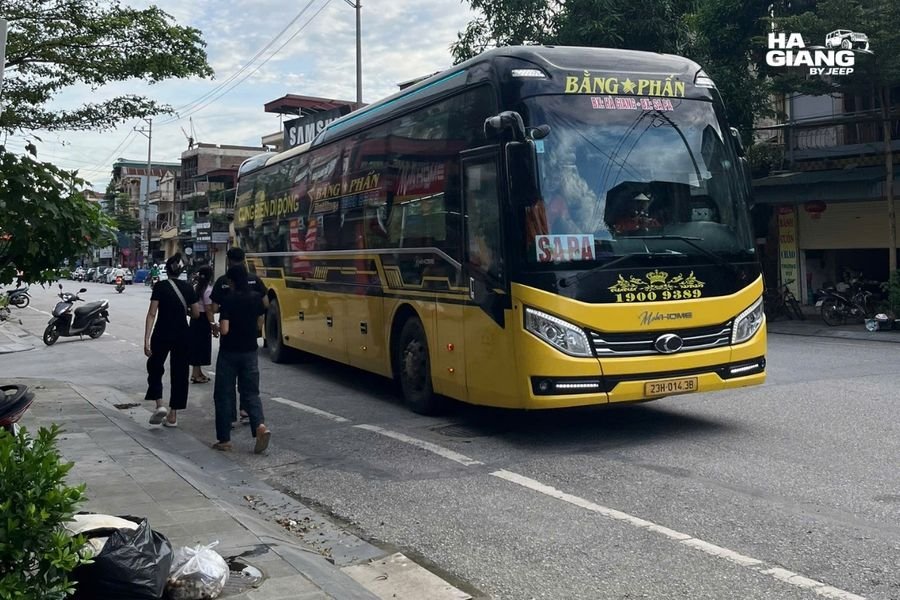
The overnight sleeper bus from Hanoi's My Dinh Bus Station is the route most travelers use. Buses depart in the evening — typically between 6pm and 9pm — and arrive in Ha Giang City between 4am and 7am the following morning. The sleeper berths are narrow but functional, and the buses cover the route consistently. Book your ticket online or at the station; in peak season (September to November) the buses fill up and booking a day or two ahead is wise.
When you arrive, the bus usually drops passengers at the Ha Giang Bus Station or in the city center area. From there, any guesthouse is within a short distance by taxi or on foot if you are traveling light. Many guesthouses near the market will accept early check-ins or at minimum hold your bags while you sleep in the common area until a room is ready.
By Private Car or Transfer
Private car transfers from Hanoi to Ha Giang City are available and cover the same route in roughly 5 to 6 hours, depending on departure time and traffic around Hanoi. The advantage is departure flexibility and door-to-door service. Some travelers arrange a transfer as part of a broader booking with their jeep tour operator. If you are traveling in a group and dividing the cost, it can work out efficiently.
| Option | Departs | Arrives | Notes |
|---|---|---|---|
| Overnight sleeper bus | Hanoi evening (6–9pm) | Ha Giang City 4–7am | Book in advance Sep–Nov; My Dinh Station |
| Private car transfer | Flexible (day or night) | 5–6 hrs after departure | Door to door; best for groups |
| Shared van | Morning (varies by operator) | Ha Giang City afternoon | Check current operators; schedules change |
What Happens on Arrival
If you arrive on the overnight bus, you will be in Ha Giang City before most of the city is awake. The bus station area has a few food stalls that open early for drivers and arriving passengers — this is a reasonable place to get your first pho in Ha Giang Province. Otherwise, check into your accommodation, leave your bag, and either sleep for a few hours or start the day with a walk.
Ha Giang City center is small enough to walk across in twenty minutes. The Lo River runs along the edge of the downtown area, and the central market is a ten-minute walk from most guesthouses. Getting oriented takes almost no time.
Your Evening in Ha Giang City
If you arrive the evening before your tour — which is the recommended approach — the city gives you exactly what you need: enough to do to feel present, not so much that you exhaust yourself before the loop begins.
Walk the Lo River Embankment
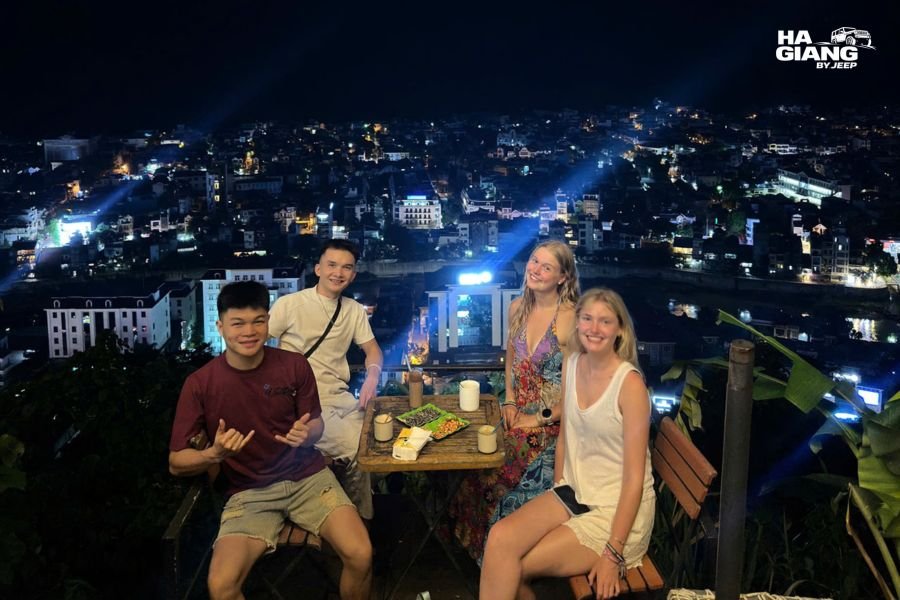
The Lo River embankment in Ha Giang City is the most natural place to spend an hour in the late afternoon or early evening. The river is wide and calm at this point, the mountains visible from the embankment give the first real sense of the highland landscape ahead, and the foot traffic is local rather than tourist-focused. You will see families out walking, vendors with street food carts, and the kind of unhurried evening pace that characterizes small Vietnamese provincial cities well away from the tourist trail.
Walk south along the river toward the bridge, then loop back through the market area to cover the main drag of the city center. This is roughly a 45-minute walk at an easy pace, and it covers most of what Ha Giang City has to offer on foot.
The Central Market Area
The central market (Cho Ha Giang) is worth a short walk through in the early evening while vendors are still set up. You will find fresh produce, dried highland herbs and spices, local fabric, and a mix of goods that look different from anything on sale at a Hanoi or Ho Chi Minh City market. The market itself closes in the early evening, but the food stall area around it stays active later and transitions into the main eating area for local families.
The market area is also where you will find the best concentration of pharmacies, small shops selling sunscreen and outdoor supplies, and the ATMs you need to draw cash before the loop.
Dinner the Night Before
Eat near the market or along the main street parallel to the river. The food in Ha Giang City is highland Vietnamese rather than the more uniform restaurant food you encounter on the tourist trail — earthier, heavier, more reliant on fermented and preserved ingredients. This is the first hint of what the highland food culture on the loop will taste like.
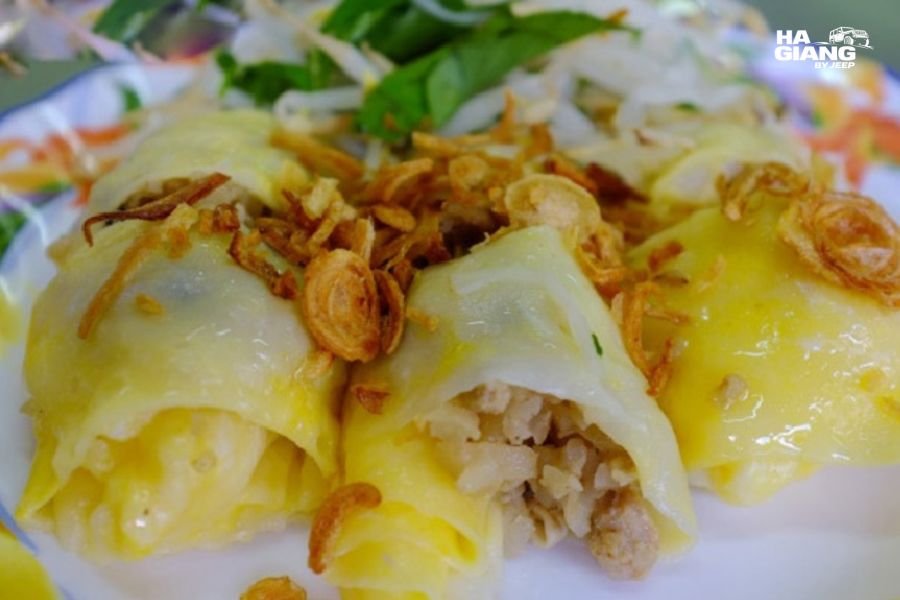
Banh cuon trung is the evening food to look for: steamed rice paper rolls filled with egg, served with herbs and dipping sauce. It is lighter than it sounds, quick to make, and sold from small carts near the market. If you want something more substantial, local pho shops are open in the evenings and serve pho with highland beef — a noticeable step up from the highway pho you might have encountered on the way in from Hanoi.
What to Buy Before the Loop
Ha Giang City is the last place with reliable access to pharmacies, supermarkets, and ATMs until you return. This is not a panic-buy situation — most essentials are available at guesthouses and small shops along the loop — but buying in Ha Giang City is cheaper, more reliably stocked, and less time-consuming than hunting for things in Dong Van or Meo Vac.
-
Cash (Vietnamese Dong) — ATMs in the city center are plentiful; on the loop they are rare and often out of service. Draw enough for accommodation, food, and market stops for your entire trip.
-
Sunscreen (SPF 50 or higher) — UV intensity increases significantly at highland altitude. Even in cool weather, you will burn on open-air viewpoint stops. This is non-negotiable for the loop.
-
Local SIM card (Viettel) — available at phone shops in the city center. Viettel has the best coverage along the Ha Giang Loop. Activate and test your SIM before you leave the city.
-
Layers and rain jacket — even in peak autumn season, highland passes at 1,500 to 2,000 meters are cold in the early morning. If you did not bring a windbreaker, the market sells them. A compact rain layer takes almost no space and covers you in sudden highland rain.
-
Motion sickness tablets — the loop road involves many hours of tight mountain switchbacks. If you have any history of car sickness, buy tablets at the pharmacy now. Take them the night before departure so they are active in your system by morning.
-
Snacks and water — the jeep stops frequently, but having your own snacks and a reusable water bottle means you are never caught on a long highland stretch between stops with nothing. Electrolyte sachets are available at pharmacies and are useful for the first day on the road.
-
Basic medications — antihistamine, diarrhea tablets, ibuprofen. Highland food is generally safe but the change in diet and altitude can affect some travelers. Having basics on hand means a rough stomach does not derail a day on the loop.
-
Portable battery bank — available at electronics shops in the city center. The jeep has USB charging but it is shared between passengers. A power bank means your phone never reaches zero on a long day.
Ha Giang by Jeep picks up guests at their hotel in Ha Giang City on the morning of departure. The team can answer last-minute questions about what to bring, the weather forecast for the loop, and the day's first stop. Send them a message the evening before to confirm your pickup time and hotel address.
Food to Try in Ha Giang City
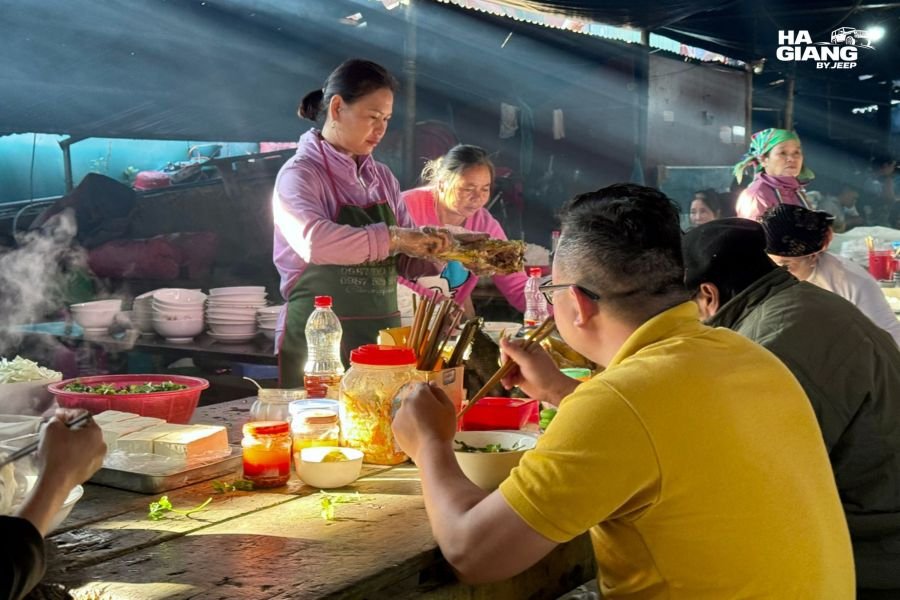
The highland food culture around Ha Giang Province is distinct from Vietnamese cuisine in the cities, and Ha Giang City gives you the first taste of it. The flavors here lean toward fermented, preserved, and slow-cooked rather than fresh and light — a reflection of a highland community that historically had limited access to fresh ingredients outside what it grew and stored locally.
Banh Cuon Trung
The city's most distinctive everyday food: thin steamed rice paper wrapped around a filling that includes egg, eaten with fresh herbs and a light dipping sauce. It is sold from early morning through late evening at small stalls in the market area and near the river embankment. Order it twice — once the night before for a light dinner, once the morning of departure for breakfast. It sits well on a stomach that will be dealing with highland roads for the next several hours.
Pho and Bun Bo
Ha Giang City pho is worth trying before the loop starts because the beef broth reflects the highland cattle-rearing culture of the region rather than the more standardized pho you find in Hanoi. Heavier, slightly more mineral, and served with herbs that differ from the southern pho spread. Bun bo (spicy beef and rice noodle soup) is available at the same type of small pho shops and makes a more warming choice in cold morning weather.
Chao Au Tau
The aconite tuber congee more famous in Dong Van later on the loop is occasionally available in Ha Giang City restaurants that specialize in highland food. If you see it on a menu board, it is worth trying — the aconite root has a subtle numbing quality that is intentional and quite different from anything else in Vietnamese cuisine. Do not confuse it with standard rice congee; ask a local or your guesthouse to point you to a restaurant that actually makes it properly.
Corn Wine
Ruou ngo (corn wine distilled from highland corn) is sold in small bottles at markets and guesthouses throughout Ha Giang Province. The version you encounter in Ha Giang City before the loop is usually from local producers in the surrounding mountain villages. It is worth a small cup at a local restaurant in the evening — the flavor is dry and clean, nothing like the harsh grain spirits sold to tourists in the lowlands. The same wine will appear repeatedly along the loop at markets and homestays, and knowing what it tastes like makes it easier to judge what you are being offered.
The Morning of Departure
Breakfast Options
Eat before the jeep arrives, not after. The first section of the Ha Giang Loop leaves the city and climbs into the highlands reasonably quickly, and the highland road begins before there is a natural stop for food. Getting a proper breakfast — not just coffee — before departure means you are not hungry and slightly altitude-pressed by the time the loop reaches its first significant pass.
Banh mi vendors are usually out from around 6am near the market area. The same pho shops that serve breakfast in every Vietnamese town open by 6am and have tables available. Banh cuon trung stalls are another option — lighter than pho but substantial enough to last until the first proper stop on the road.
Confirm Pickup with Ha Giang by Jeep
The evening before departure, confirm two things with the team: your pickup time and your exact accommodation address. Pickup times vary depending on the tour and the day's planned route. The team at Ha Giang by Jeep will tell you the specific time when you finalize your booking, but a quick WhatsApp message the night before removes any uncertainty about the morning.
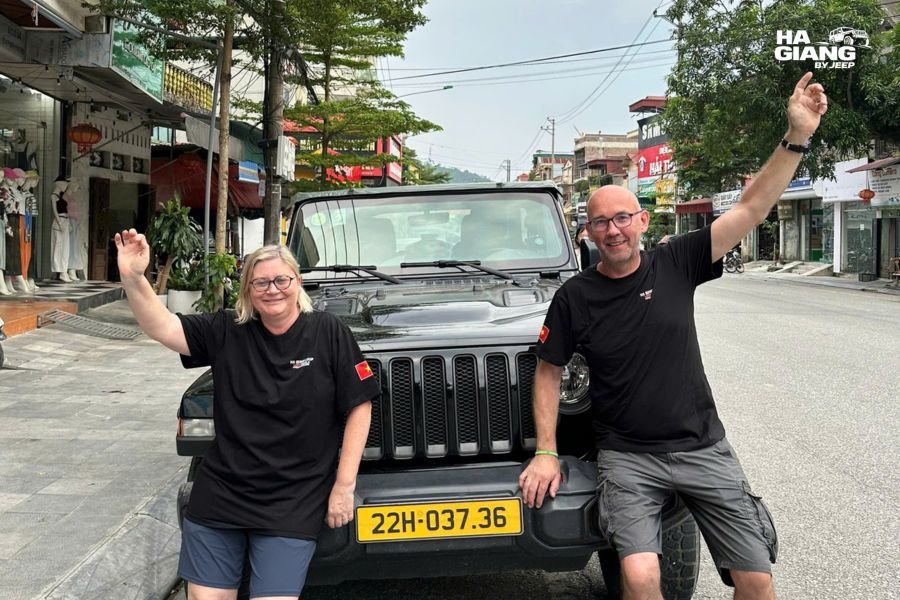
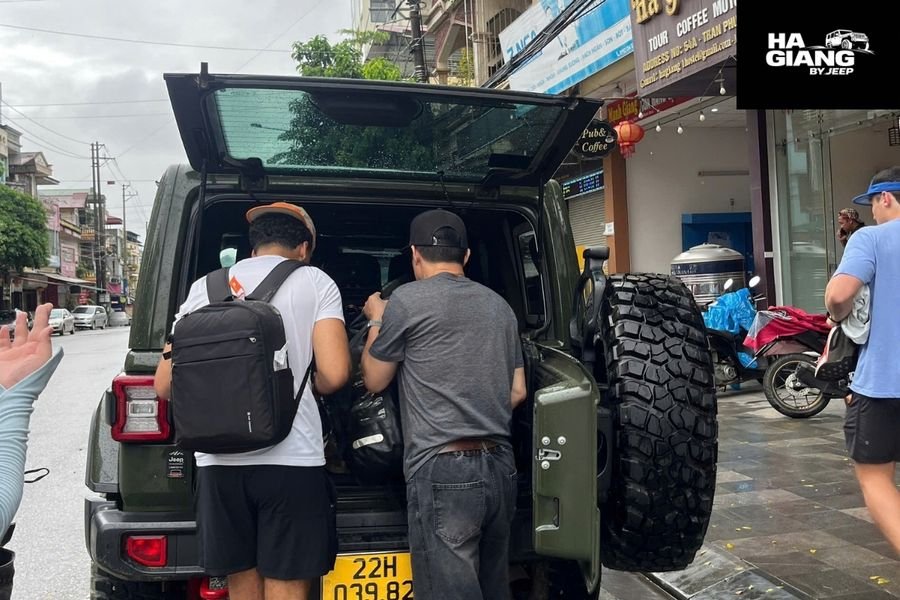
The Rubicon arrives at your guesthouse or hotel door — not at a central pickup point. Make sure your accommodation address is confirmed and the number is easy to find. If you change guesthouses the night of arrival (which sometimes happens when buses arrive very early and original plans shift), update the team.

Last Things to Do Before the Rubicon Arrives
- Pack your bag the night before — do not leave it for the morning rush
- Keep a day bag with water, sunscreen, motion sickness tablets, your camera, and a layer for the first highland pass
- Check the weather forecast for the loop's first day — the driver will know, but it is useful context for what to wear in the morning
- Confirm your phone is charged and the local SIM is active
- Have your passport or ID accessible — border area permits near Lung Cu and certain highland checkpoints may require identification. The Ha Giang by Jeep team handles the loop permit logistics, but having your passport accessible is good practice
Practical Notes for Ha Giang City
- ATMs: Vietcombank, Agribank, and BIDV branches in the city center. Draw all the cash you need for the full loop here.
- Pharmacy (nha thuoc): Several along the main street and near the central market. Open from early morning through late evening. English is limited but showing a product on your phone usually works.
- SIM cards: Phone shops near the market sell Viettel and Vietnamobile SIMs. Viettel has better highland coverage.
- Currency: Vietnamese Dong only for most transactions on the loop. Card acceptance is minimal outside of a few hotels in Ha Giang City itself.
- Hospital: Ha Giang Provincial General Hospital is in the city. For minor ailments, the pharmacies handle most travelers' needs. For serious issues, the hospital is the resource.
- Internet: Most guesthouses in Ha Giang City have wifi. The local SIM gives better reliability on the move.
A Note on Weather Before You Leave
Ha Giang City sits at a lower elevation than the loop itself, and the weather in the city can be meaningfully different from what you will encounter on Ma Pi Leng Pass or the Dong Van plateau. A clear morning in Ha Giang City does not guarantee clear weather at 1,800 meters on the same day. The driver will monitor conditions and can close the soft-top on the Rubicon in cold or rainy highland sections. Pack a layer regardless of what the morning looks like from your guesthouse window.
Road and permit conditions in the highland areas near the northern border can change, and some sections involve checkpoints. Ha Giang by Jeep handles all loop permits as part of the tour — but if you are planning any independent travel beyond what is covered by the tour, check for the latest local updates before departing.
Which Tour Leaves from Ha Giang City?
All Ha Giang by Jeep tours begin and end in Ha Giang City, with one exception: the Cao Bang combination tours end in Cao Bang Province (near Ban Gioc Waterfall), which connects back to Hanoi by sleeper bus from that region. If you are doing a Cao Bang combo, the team will brief you on the return logistics before departure.
Here is a quick guide to choosing which tour departs from Ha Giang City based on how much time you have:
Frequently Asked Questions
What is Ha Giang City like?
Ha Giang City is the provincial capital of Ha Giang Province and the gateway to the Ha Giang Loop. It sits on the Lo River in a valley surrounded by forested hills. The city itself is small and relaxed — it functions primarily as a transit point for travelers heading into the highlands. There is a central market, a river embankment for evening walks, local food stalls, pharmacies, ATMs, and guesthouses of all types. It is not a destination in itself, but it is a genuinely pleasant place to spend a night before the loop begins.
How do I get from Hanoi to Ha Giang City?
The most common route is an overnight sleeper bus from My Dinh Bus Station in Hanoi, departing in the evening and arriving in Ha Giang City in the early morning — journey time is roughly 5 to 7 hours. Private car transfers are also available. Check current bus schedules and book in advance during peak season from September to November.
What time does Ha Giang by Jeep pick up guests in the morning?
Pickup time is confirmed directly with Ha Giang by Jeep when you finalize your booking, typically the day before departure. The team picks up guests from their hotel in Ha Giang City. Contact them on WhatsApp the evening before to confirm the time and your exact accommodation address.
What should I do the night before the Ha Giang Loop?
Walk the Lo River embankment in the evening, eat at a local food stall near the central market, buy any supplies you still need (sunscreen, cash, snacks, medicine), and confirm your pickup time and hotel address with Ha Giang by Jeep. Getting to bed reasonably early helps — the first day of the loop is long and covers significant highland road.
Are there ATMs in Ha Giang City?
Yes. Ha Giang City has ATMs from major Vietnamese banks in the city center. Cash in Vietnamese Dong is essential for the Ha Giang Loop — once you leave the city, ATMs become sparse. Withdraw enough for your entire trip before departing. Cards are not widely accepted at guesthouses, food stalls, or village stops along the loop.
Can I get a local SIM card in Ha Giang City?
Yes. Local SIM cards (Viettel is recommended for coverage) are available at phone shops in the city center. Buy and activate your SIM in Ha Giang City before departure — signal is intermittent in highland sections and you will not find a phone shop until you return to the city.
What food should I eat in Ha Giang City before the loop?
Banh cuon trung (steamed rice rolls with egg) is the most distinctive local food in Ha Giang City and worth trying the evening before or the morning of the loop. Pho, bun bo, and banh mi are available early in the morning near the central market. The area around the market also has evening food stalls. Chao au tau (aconite tuber congee) is sometimes available at highland-focused restaurants in the city.
What should I pack for the Ha Giang Loop that I can buy in Ha Giang City?
Sunscreen (factor 50 or higher), insect repellent, motion sickness tablets if needed, electrolyte sachets, snacks for long driving sections, a rain jacket or windbreaker, and cash. Pharmacies in Ha Giang City carry all of these. Bring layers regardless of the season — highland passes are cold in the early morning even in autumn.
Is Ha Giang City safe for travelers?
Yes. Ha Giang City is a small provincial capital and generally considered safe. Exercise normal precautions: keep valuables secure, be aware in crowded market areas, and do not leave bags unattended. The city is accustomed to international travelers passing through on the way to the loop.
What time should I arrive in Ha Giang City before the tour?
Arriving the evening before your tour departs is strongly recommended. This gives you time to check in, rest, do a short evening walk, pick up supplies, eat a proper meal, and confirm your pickup time with Ha Giang by Jeep. Arriving on the morning of departure is possible but leaves no margin if the overnight bus is delayed.
Your Loop Starts in Ha Giang City
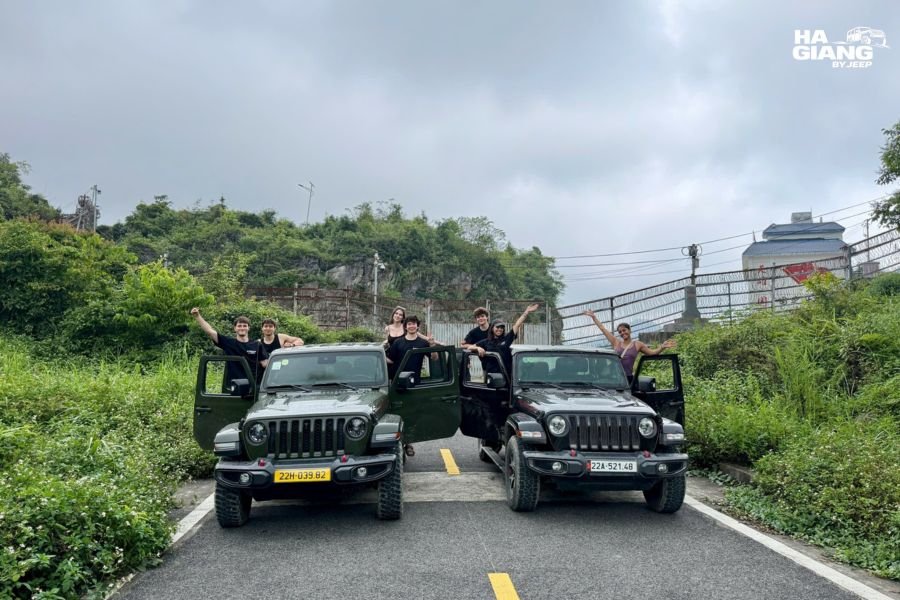
Ha Giang by Jeep runs private Jeep Wrangler Rubicon tours departing from Ha Giang City every morning. Your group only, a local English-speaking driver who grew up in these mountains, and a schedule that stops wherever the view or the food stall demands it. Contact the team to check availability and confirm your departure date.