
Du Gia Village and Waterfall Guide (Ha Giang Loop)
Some stops on the Ha Giang Loop are famous because everyone photographs them. Du Gia is famous for a different reason: it is where travelers finally slow down.
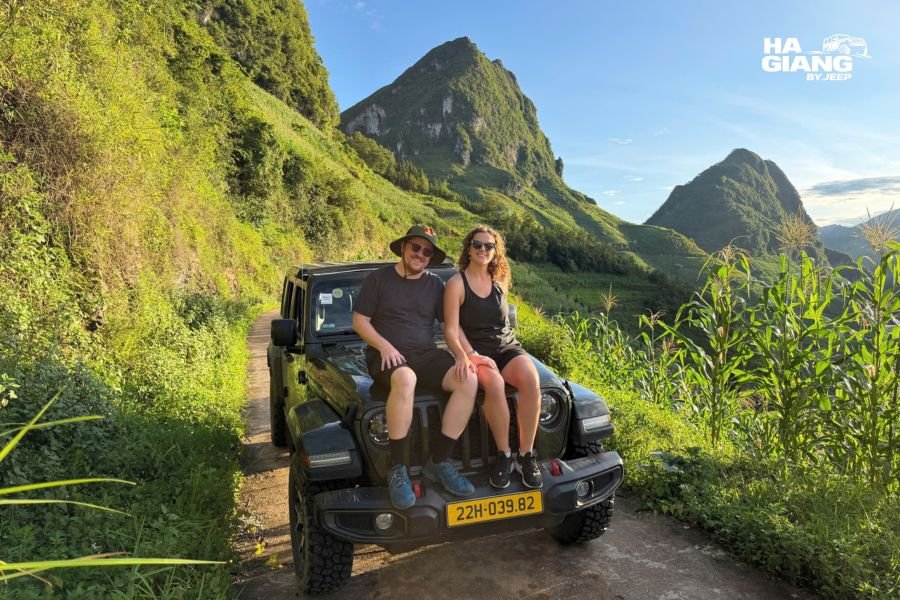
Tucked into a green valley on the quieter eastern side of the loop, Du Gia village is the place where a fast trip exhales. There is a waterfall you can swim in, homestays that feed you like family, and evenings that end with corn wine instead of a checklist. This guide covers what to expect at Du Gia village: the waterfall and its natural pool, the best months to visit, where to stay, what to eat, how to get there, and which jeep tour makes the detour easy. No invented numbers, no rushing. Just the honest version you would want from a friend who made the trip in a comfortable 4x4.
Where Is Du Gia Village?
Du Gia village sits in Yen Minh district on the eastern arc of the Ha Giang Loop, inside the Dong Van Karst Plateau Geopark, a UNESCO Global Geopark of limestone peaks, hidden valleys, and terraced fields. It is not on the busiest section of the loop, which is exactly the point. While the northern towns of Dong Van and Meo Vac pull most of the day trippers, Du Gia stays calm, green, and local.
Because it sits slightly off the main clockwise route, Du Gia works best when your itinerary has room to breathe. Rushed trips skip it. Slower trips treasure it.
How Du Gia Fits Into the Loop
Think of Du Gia as a reward stop rather than a checkpoint. Travelers usually reach it after the big northern highlights like Quan Ba, Yen Minh, Dong Van, and the Ma Pi Leng pass, then swing east and drop into the valley. It is a natural place to spend a night, wash off the road at the waterfall, and remember that Ha Giang is about more than passes and photo points.
If you are still deciding how much time to give the region, our guide on how many days you need for the Ha Giang Loop breaks down the trade offs.
Du Gia vs the Northern Loop Towns
It helps to know how Du Gia feels different from the loop's headline towns. Dong Van and Meo Vac are the market hubs, busier and built around their Sunday markets, the old quarter streets, and the drama of the Ma Pi Leng pass. Du Gia is the opposite mood: no crowds, no through traffic, just a farming valley, a waterfall, and homestays. Many travelers pair them on purpose, spending the day among the northern highlights and the night unwinding in Du Gia. If your trip only has room for the classic north, you will still have a wonderful time. But if you can add Du Gia, it becomes the part of the loop where you actually rest.
Du Gia Waterfall: The Star of the Stop
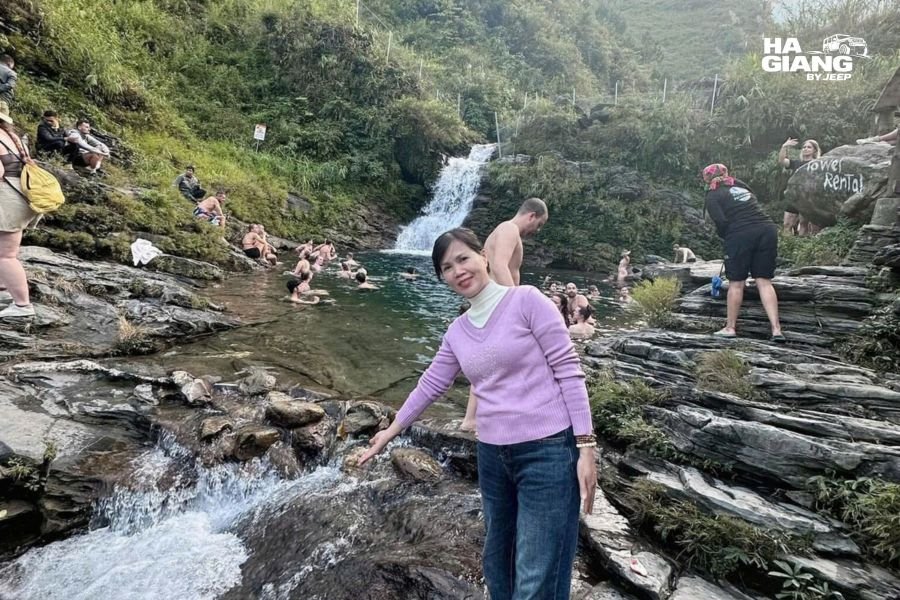
The Du Gia waterfall is the reason most people build the detour into their plan. A short walk from the village center leads to a wide curtain of water dropping into a natural pool the color of jade. On a warm afternoon, that pool is the best cold plunge in the province.
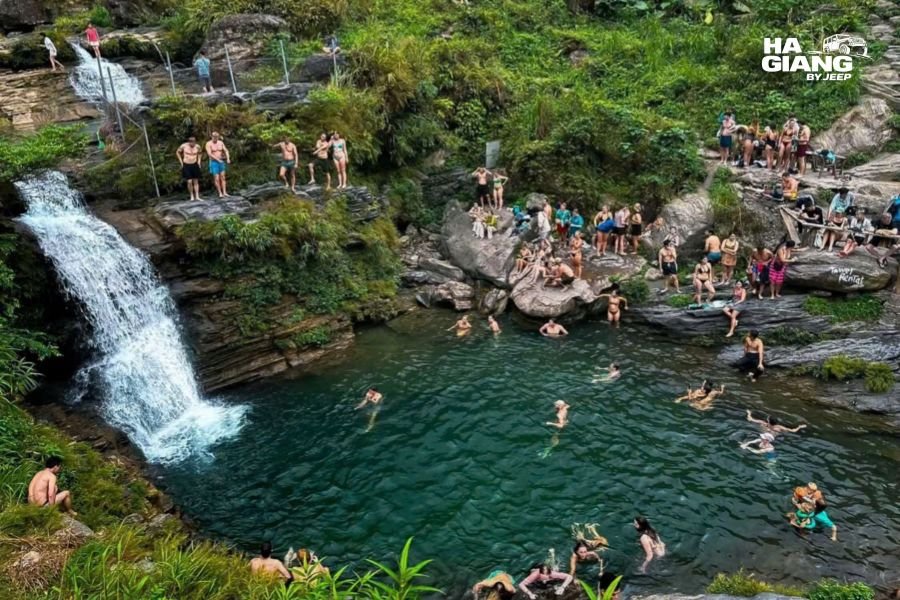
This is a real swimming spot, not just a photo stop. Locals swim here, backpackers swim here, and families with older kids swim here too. The water runs from refreshing to genuinely cold depending on the season, so wade in slowly. There are usually flat rocks for sitting, small platforms for jumping when the level is safe, and shade for anyone who would rather watch than swim.
When Du Gia Waterfall Is at Its Best
Water levels and clarity shift through the year, so set expectations by season:
- Roughly May to September (green season): the falls run full and powerful after rain, and the valley is at its most lush. Water can be cloudier and the current stronger, so swim with care and follow local advice.
- Roughly October to April (dry season): flow is gentler and the pool is often clearer, though mornings and evenings turn cold up here. The swim is bracing rather than lazy.
Conditions change with the weather and can shift year to year, so treat any fixed measurement you read online with suspicion. Ask your driver or homestay host on the day. They will know if the water is high, safe, and worth the walk.
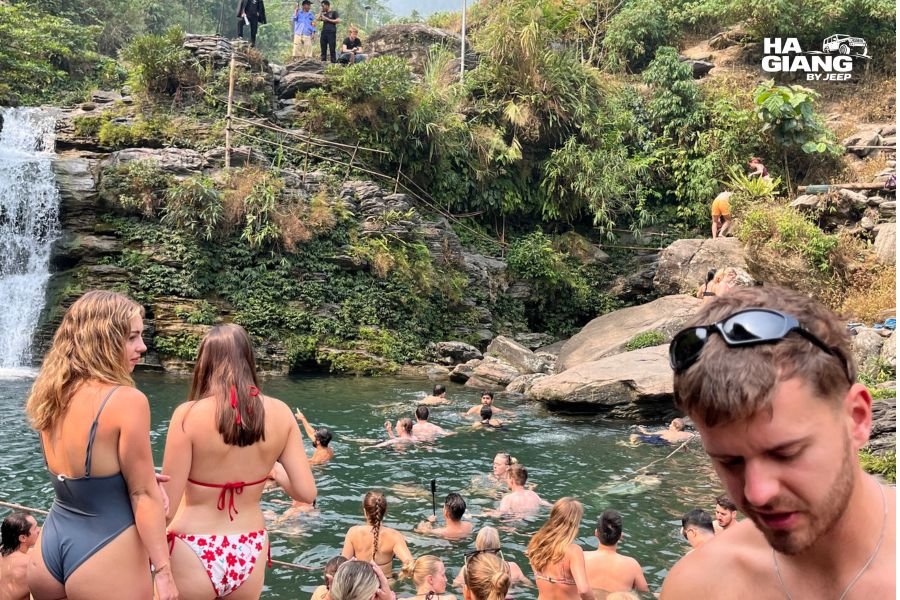
The walk to the falls is part of the fun. A modest path leads out from the village, past fields and a few homes, and the sound of water grows as you go. It is short and manageable for most fitness levels, though it can be muddy after rain, so wear shoes you do not mind getting dirty. Take it slowly and you will pass small everyday scenes that never make it onto a postcard.
What to Bring for the Waterfall
- Swimwear worn under your clothes, so you are ready when you arrive
- A quick dry towel and a dry bag for your phone
- Sandals or shoes with grip, because the rocks near the water get slippery
- A light layer for after the swim, since the valley cools fast once the sun drops
Things to Do in Du Gia (Beyond the Waterfall)
The waterfall is the headline, but Du Gia rewards people who linger. This is a farming valley, so the best activity is often the slowest one: walking.
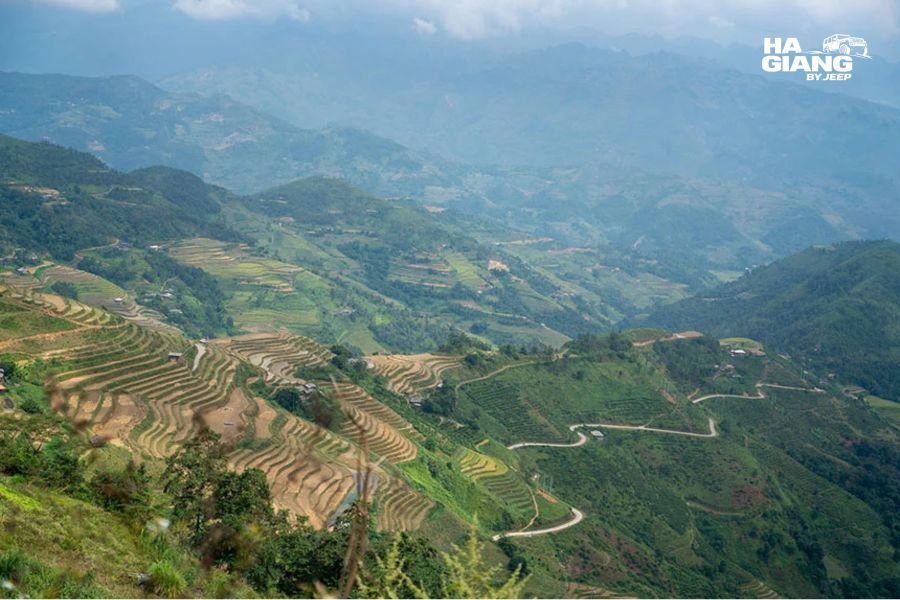
- Wander the rice terraces: green and glowing from roughly June, then gold near harvest around September and October.
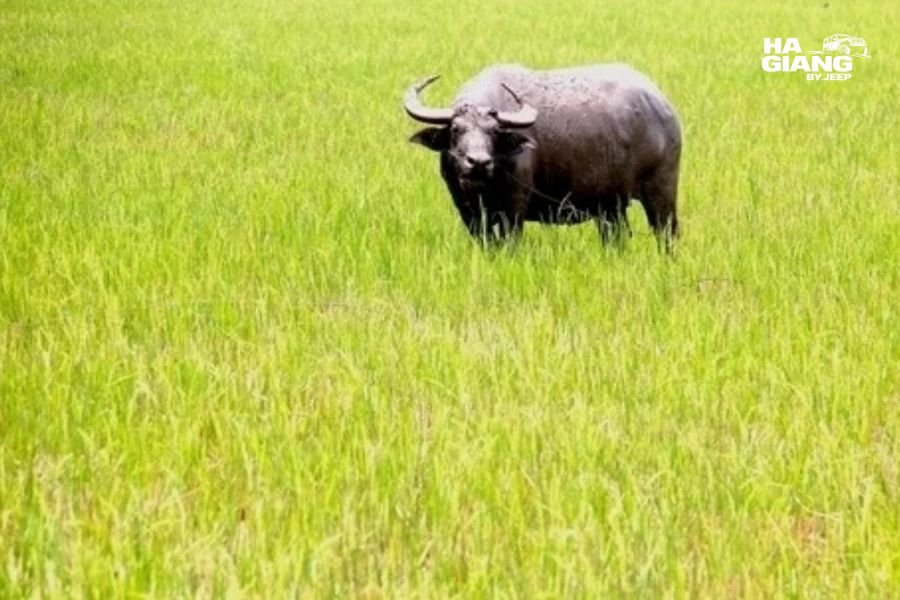
- Follow the valley paths past stilt houses, buffalo, and families working the fields. A short walk in any direction turns up a view worth stopping for.
- Chase the light at dawn or dusk, when mist pools in the valley and the terraces catch the sun.
- Simply sit. Du Gia is one of the few loop stops where doing nothing feels like the correct plan.
Where to Stay: Du Gia Homestays
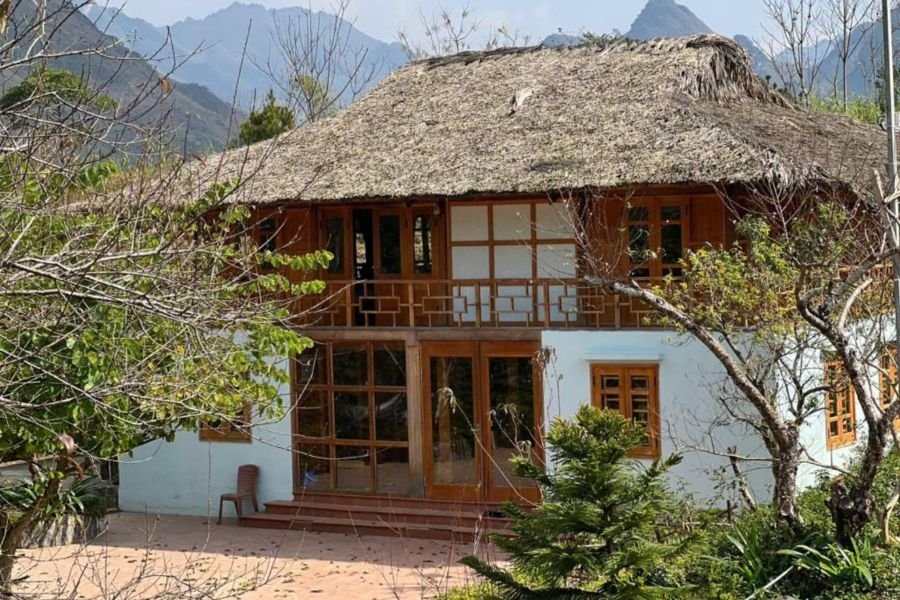
Du Gia is known for its homestay culture, and staying with a local family is the whole experience, not a fallback. Most places are simple: a bed or a mattress in a traditional stilt house, shared bathrooms, hot water, and a big communal dinner cooked by the family.
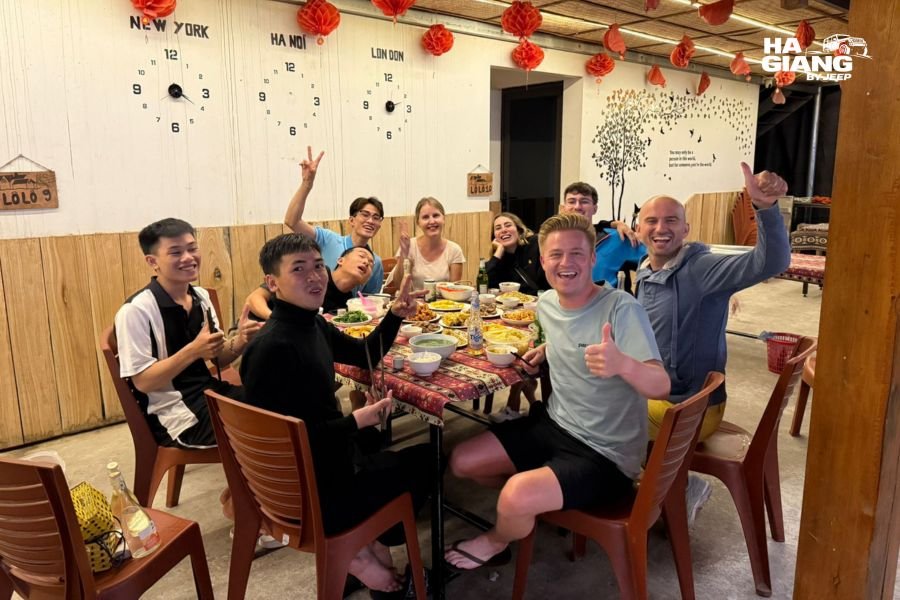
The evenings are what people remember. Dinner is served family style with rice, fresh vegetables, tofu, and local dishes, followed almost inevitably by ruou ngo, the homemade corn wine, and a round of toasts with whoever else is staying that night. It is warm, loud, and genuinely local.
A night here has a rhythm. You arrive dusty from the road, wash up, and wander out for the last light on the terraces. Dinner appears in waves, someone pours the first glass of corn wine, and within an hour you are trading travel stories with strangers who will feel like friends by morning. It is not polished, and that is the charm. Few things on the loop beat waking up to mist in the valley and the smell of breakfast cooking downstairs.
A few honest notes:
- Rooms are basic by design. Come for the atmosphere, not for luxury fittings.
- Nights get cold in the cool season, so ask for extra blankets.
- Book ahead in peak months. Du Gia is small and fills up.
We do not publish homestay prices here, because they change and vary by room and season. Check current rates directly, or let us arrange a vetted stay as part of a tour.
What to Eat in Du Gia (and Along the Way)
Food in this corner of Ha Giang is simple, hearty, and tied to the season. Around Du Gia and on the drive in, keep an eye out for:
- Com lam: sticky rice grilled inside bamboo, smoky and satisfying.
- Banh cuon trung: silky steamed rice rolls with egg, usually served with a warm dipping broth. A classic Ha Giang breakfast.
- Thang co and chao au tau: bolder local specialties for the curious eater, more common at markets and in town.
- Ruou ngo: the corn wine that appears at every homestay dinner. A little goes a long way.
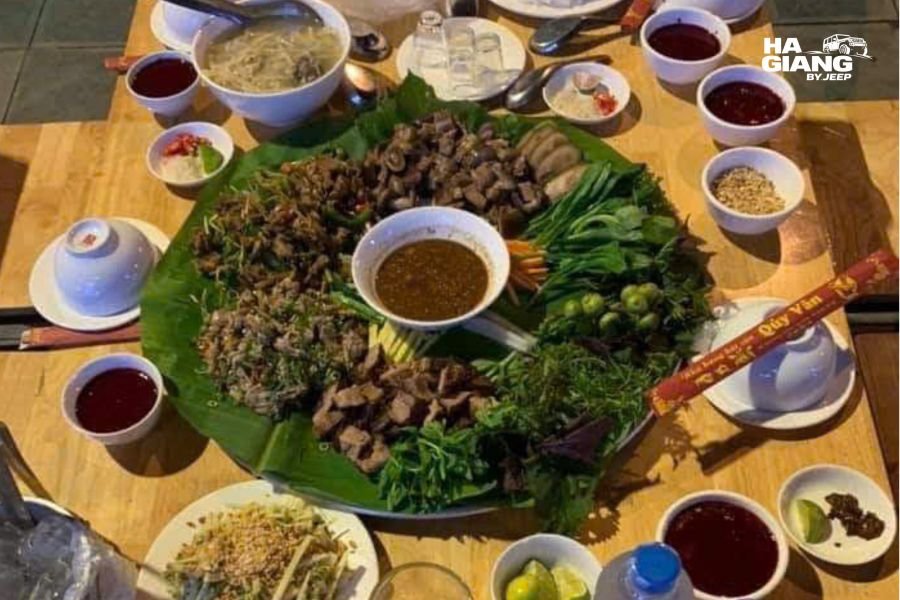
Here is where the jeep quietly wins. In a private 4x4 you can pull over at any roadside stall, any market, or any homestay kitchen that smells good, without hunting for parking or worrying about the road after a glass of corn wine. Your local driver does the driving, so dinner can end with a toast instead of an early night. Hungry travelers tend to love this part.
How to Get to Du Gia
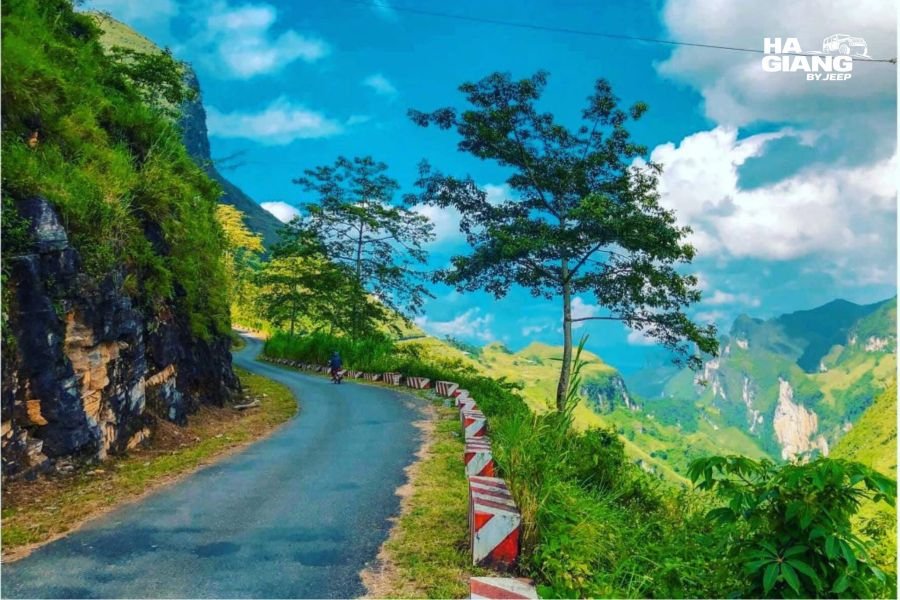
Du Gia sits off the main loop, reached along the eastern route through Yen Minh and the Mau Due area. The roads in are scenic and, in places, narrow and rough, winding through valleys and small villages. Surfaces and conditions change constantly with weather and repair work, so the honest answer to how long it takes is: it depends, and any source that quotes you an exact drive time between two loop stops is guessing. Plan by daylight and comfort, not by a stopwatch.
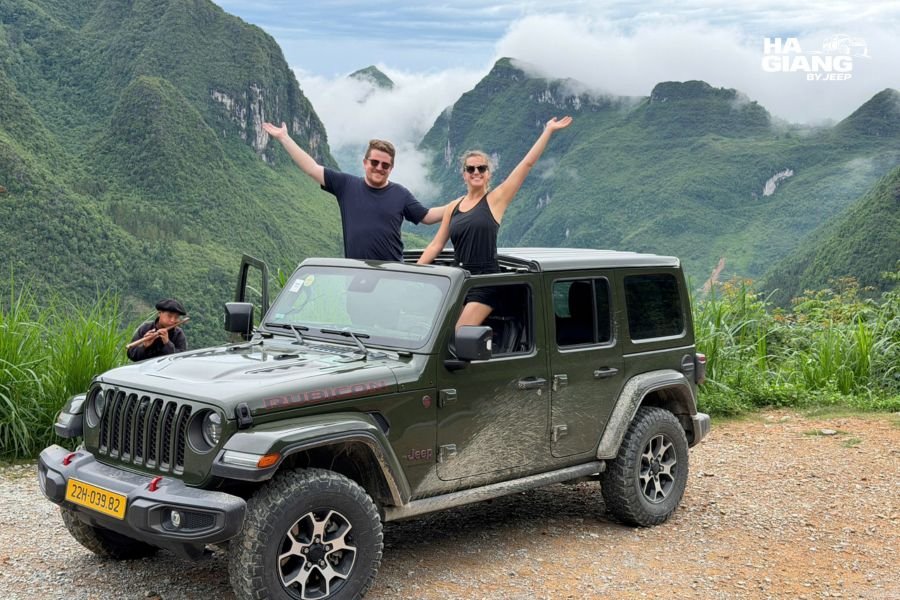
This is also where the choice of vehicle matters. The eastern approach to Du Gia is far less tiring in an all weather 4x4 than it is exposed to sun, dust, or rain for hours. For families, couples, older travelers, and anyone who would rather look at the view than concentrate on a road surface, a jeep turns the journey into part of the holiday.
Getting to Ha Giang City First
Most trips begin in Hanoi. From there, travelers reach Ha Giang City by overnight sleeper bus, a daytime limousine van, or a private transfer, and the loop starts from there. Schedules and journey times change with the season and the operator, so check current options when you book rather than trusting old blog figures. If you travel with us, we help you line up the Hanoi leg so the handover to your jeep is smooth.
Who Du Gia Suits Best
Du Gia is a joy for almost anyone, but it shines for a few kinds of traveler. Couples come for the slow evenings and the walk to the falls. Families like the swimming and the space for kids to roam. Older travelers appreciate that the hard part, the long scenic drive in, can be handled from a comfortable seat rather than on two wheels. And anyone who does not want to drive at all can hand the wheel to a local driver and simply take in the valley. If comfort and a gentle pace are what make a trip enjoyable for you, Du Gia by jeep is close to ideal.
Which Ha Giang Jeep Tour Includes Du Gia?
Because Du Gia sits off the busiest section of the loop, it fits best into itineraries with a little extra time. Here is a simple way to choose:
The classic short loop hits the northern highlights efficiently. Du Gia is possible but tight, so this suits travelers who want the greatest hits without a rushed detour. See the Ha Giang Loop jeep tour over 3 days.
The sweet spot. The extra day is what lets you slow down, add the waterfall, and spend a proper evening in the valley. If Du Gia is a priority, start with the Ha Giang Loop jeep tour over 4 days.
For travelers who want it all, these longer trips can weave in Du Gia and then continue east to Cao Bang and the Ban Gioc waterfall. Compare the 5 days combo and the slower 6 days combo.
Confident drivers who want their own pace can take the wheel of a Jeep Wrangler Rubicon and build Du Gia into a custom route.
Not sure which fits your group? Send us a quick message on WhatsApp and we will help you match the right trip to your dates, pace, and travelers.
Practical Tips for Visiting Du Gia
- Best time overall: the green season (roughly May to September) is lush and the waterfall runs full; the dry season (roughly October to April) brings clearer pools and crisp air but colder nights. There is no wrong season, only different moods.
- Pack layers: valley evenings get cold even after warm days. A warm layer and a rain layer cover most of the year.
- Bring cash: small villages run on cash. Do not count on card machines or reliable ATMs once you leave the bigger towns.
- Respect the village: ask before photographing people, dress modestly away from the waterfall, and keep noise down at night in homestays.
- Border area paperwork: parts of Ha Giang near the frontier require permits, and rules can change. A good operator handles this for you; if you travel independently, check the current requirements before you go.
- Expect patchy signal: mobile coverage comes and goes in the valley. Download your maps in advance and let people know you may be offline for a while. It is part of the appeal.
Common Mistakes to Avoid
- Treating Du Gia as a quick photo stop. It rewards an overnight, not a drive by.
- Skipping the waterfall walk because you are tired from the road. This is the payoff, so do the walk.
- Believing exact drive times you read online. Ask locally on the day.
- Under packing warm clothes. The valley is colder than the coast you flew in from.
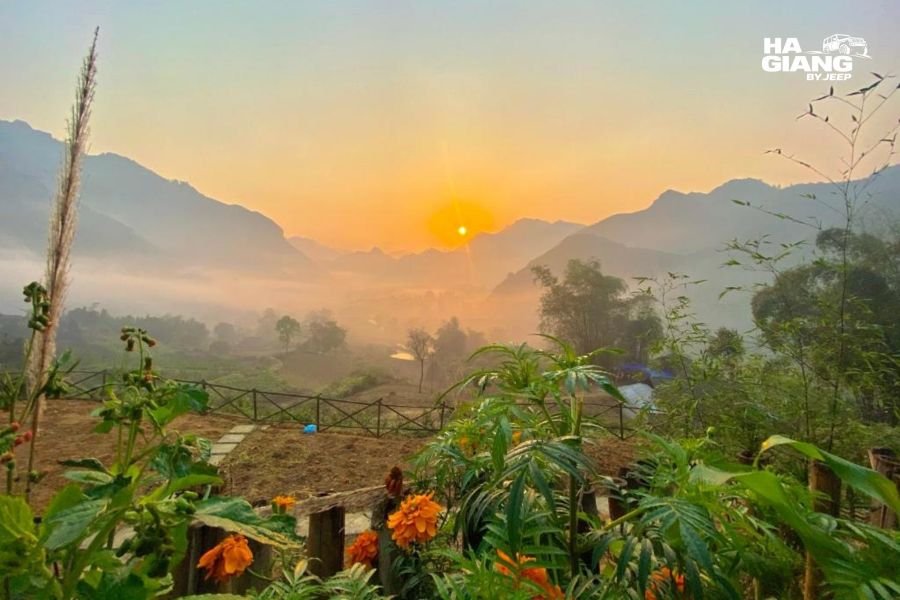
Du Gia is the stop that turns a Ha Giang trip into a memory: a swim under a waterfall, a valley that glows at sunset, and a homestay dinner that runs late. Do it at a comfortable pace and it becomes the highlight everyone talks about afterward.
Ready to Add Du Gia to Your Trip?
Du Gia sits inside our slower, more comfortable jeep itineraries. Every jeep is private and availability is limited, so the best dates go first. Secure your spot early and we will build a trip around the valley you will not want to leave.
Chat on WhatsApp Start Your Booking View the 4 Day LoopFAQ
Yes, if you have the time. Du Gia is quieter and greener than the busy northern towns, and the waterfall plus the homestay evenings give it a relaxed, local feel you do not get on a rushed schedule. It suits travelers who want to slow down rather than tick off viewpoints.
Yes. The Du Gia waterfall drops into a natural pool where locals and travelers swim. It is refreshing to cold depending on the season, so wade in slowly and follow local advice on the day, especially after heavy rain when the current is stronger.
There is no bad season. Roughly May to September is lush and green with a full waterfall; roughly October to April brings clearer pools and crisp air but colder nights. Choose green scenery or clear swimming and pack accordingly.
Du Gia sits off the main loop on the eastern side, reached through the Yen Minh and Mau Due area. Roads are scenic and in places rough, and conditions change with the weather, so plan by comfort and daylight rather than trusting exact drive times online.
On our jeep tours you never need a license or to drive at all: a local, English speaking driver handles the whole route while you relax. If you rent a Jeep Wrangler Rubicon to self drive, you are responsible for the correct, valid license, and requirements can change, so check the current rules before you travel.
Very much so, especially by jeep. The comfort of a private all weather 4x4, an English speaking local driver, and a gentle pace make Du Gia easy for couples, families, and older travelers who prefer not to be on a motorbike.
Simple and social. Expect a bed or mattress in a stilt house, shared bathrooms, hot water, and a big family style dinner, often followed by corn wine and toasts with other guests. Come for the atmosphere rather than luxury, and book ahead in peak months.
A 4 day loop is the sweet spot, since the extra day lets you add the detour without rushing. A 3 day loop can include it but feels tight, while 5 and 6 day Ha Giang and Cao Bang combos can weave it in alongside more of the region.
Small local fees can apply and may change, so bring cash and check on the day. We do not publish a fixed figure here, because these things vary and any exact number you read online may already be out of date.
Du Gia fits most naturally into our 4 day loop, and can also be built into 5 and 6 day Ha Giang and Cao Bang combos. If Du Gia is a priority for your group, message us and we will match it to the right itinerary.