
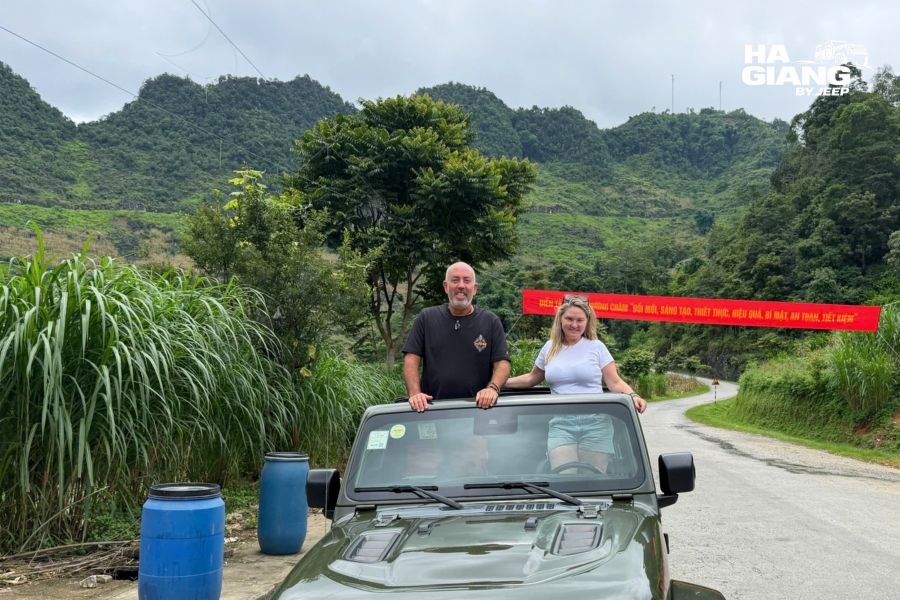
Ha Giang · The Heart of the Plateau
Dong Van Old Quarter: A Traveler's Guide
After a day of high passes and open valleys, rolling into Dong Van at dusk feels like arriving somewhere that has been waiting a hundred years for you. Lanterns come on, the karst goes dark, and the old square settles into its evening rhythm.
Dong Van Old Quarter is the historic heart of the far north, a cluster of century old houses and a stone market hall tucked beneath jagged limestone peaks. It is the most atmospheric place to spend a night on the plateau, and the natural base for exploring everything around it. This guide covers what the old quarter is, its history, how to get there, what to do, where to eat and stay, the best time to visit, and the most comfortable way to see it all.
If you are planning the far north and want the atmosphere without the fatigue, you have probably already found Ha Giang by Jeep. Dong Van is where most of our routes pause for the night, and it is worth every minute. First, the old quarter itself.
In this guide
What is Dong Van Old Quarter?
Dong Van Old Quarter, sometimes called Dong Van Ancient Town, is a small historic district in the town of Dong Van, deep in the Dong Van Karst Plateau, a UNESCO Global Geopark. It is a compact grid of old houses gathered around a stone market hall and a central square, hemmed in on all sides by grey limestone mountains.
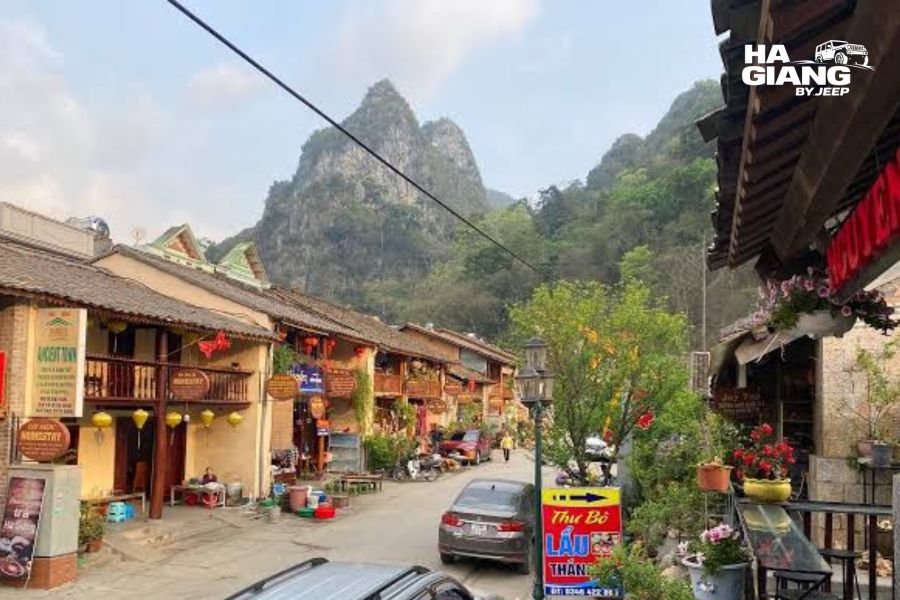
What sets it apart is the architecture. Many of the houses are around a century old, built with thick earth walls, wooden shutters, and heavy tiled roofs, in a style that blends local H'mong, Tay, and Chinese influences. Ochre walls glow in the late light, red lanterns hang from the eaves, and the whole place has a lived in, unpolished charm that is increasingly rare.
A short history
Dong Van grew up as a trading crossroads, a meeting point where highland communities and traders from across the border came to do business. The old market hall at its center, a solid stone structure roughly a century old, was the beating heart of that trade, and the houses around it belonged to the merchant families who ran it. Today the town is much quieter than its trading heyday, but the bones of that old commercial life are still standing, which is exactly what makes it so atmospheric to walk.
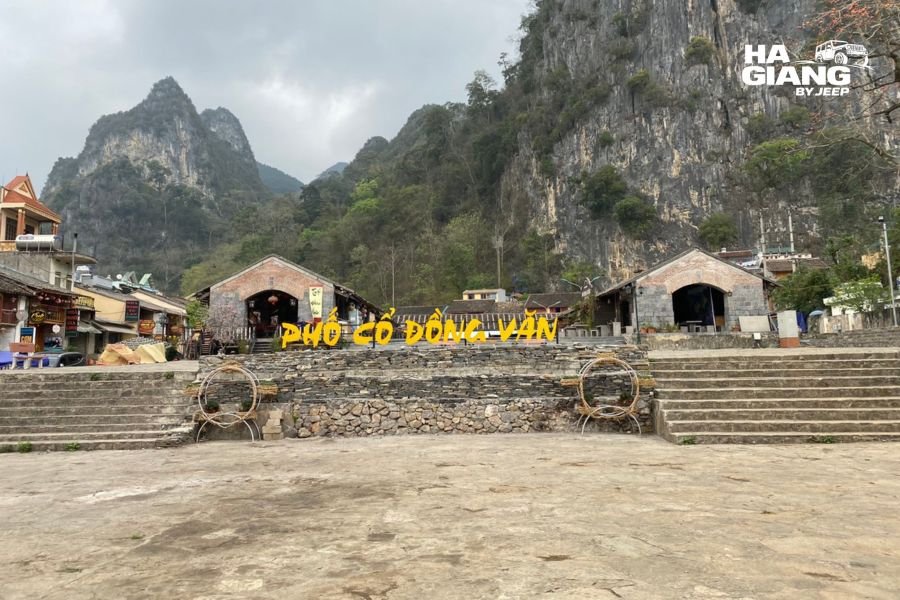
Most of the plateau is about landscape. Dong Van is about atmosphere, the rare feeling of a mountain town that still looks like itself.
Where it is and how you reach it
Dong Van sits toward the northern edge of the plateau, past Quan Ba, Yen Minh, Tham Ma, and the Sung La valley on the road north from Ha Giang City. It is one of the two main overnight towns up here, along with Meo Vac just east over Ma Pi Leng Pass, and it makes a natural base for a night or two.
Getting to Dong Van Old Quarter
You start from Ha Giang City, the gateway to the region, reached from Hanoi by night bus, limousine van, or private transfer. From there the road climbs north through the plateau, and Dong Van is the far point of the classic loop before it turns east over Ma Pi Leng toward Meo Vac. The old quarter sits in the center of Dong Van town, easy to find once you arrive.
A word on driving times
You will find pages that quote an exact number of minutes from Yen Minh or Ha Giang City to Dong Van. Treat those with suspicion. Road conditions, weather, roadworks, and how many stops you make along the way all change the timing, and a fixed figure on a page usually means someone copied it without driving it. Think of Dong Van as a place to arrive at with time to spare in the afternoon, not a checkpoint to hit by the clock. On our tours the driver knows the current road and adjusts around it, which is exactly why we do not publish rigid stop to stop timetables ourselves.
Want the plateau without the fatigue? Our jeeps are private, so you are never grouped with strangers, and the soft top and heater keep the cabin comfortable when the mountain evening turns cold. Dong Van is the overnight base on the Ha Giang Loop 3 days jeep tour, or message us with your dates.
Things to do in Dong Van Old Quarter
The old quarter is small, and the joy of it is in slowing down. You can see the highlights in an evening and a morning, but it rewards an unhurried pace.
Wander the old houses and the square
Start simply, on foot. Walk the lanes off the main square, look up at the tiled roofs and carved wooden fronts, and duck into the courtyards that are open to visitors. Early morning and late afternoon are the best light, and the quietest times, before and after the day trippers.
The old market hall and its cafes
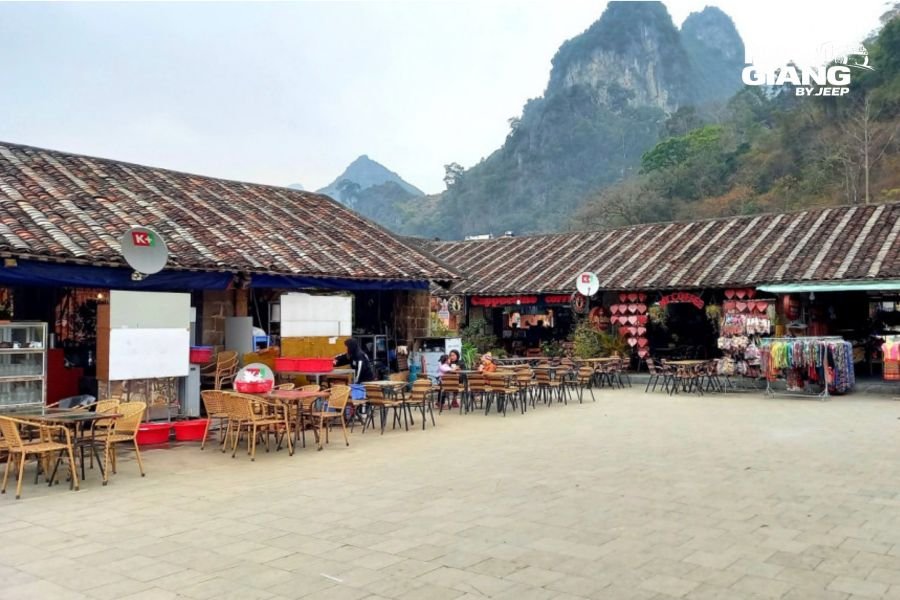
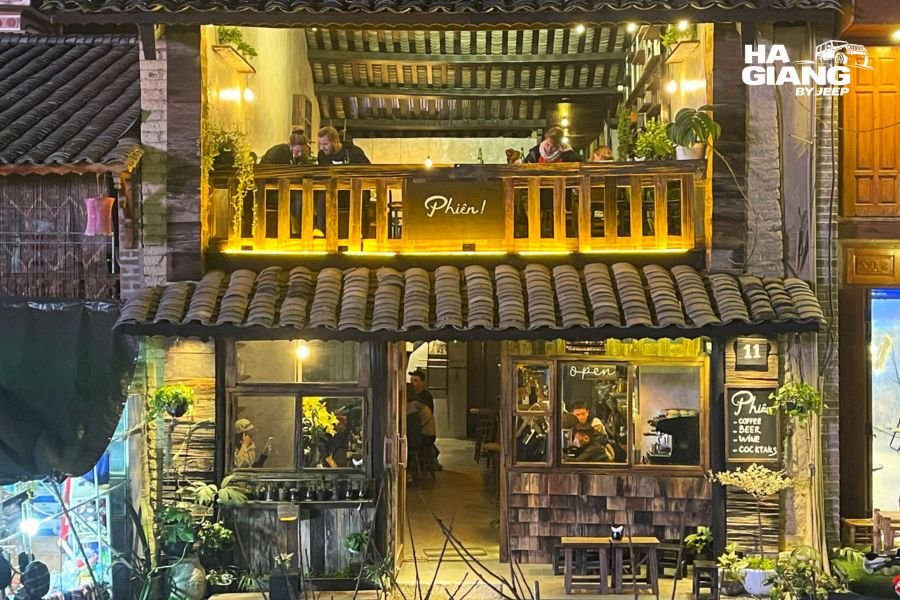
The stone market hall is the centerpiece, and these days its arches shelter a scatter of cafes as well as traders. It is the natural place to sit with a coffee, watch the square, and let the town come to you. Some of the old houses nearby have been turned into charming cafes too, with courtyards and upper floors worth seeking out.
Dong Van Sunday Market
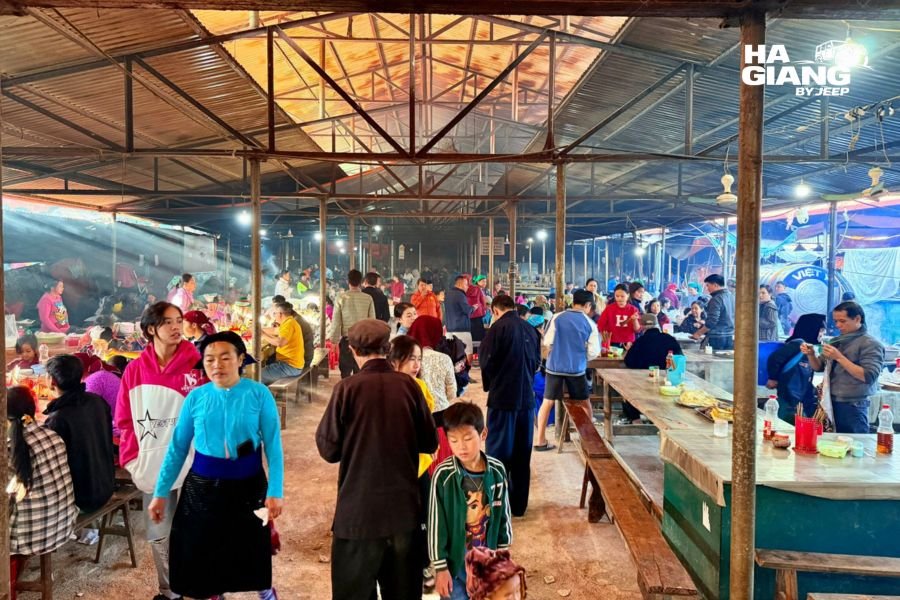
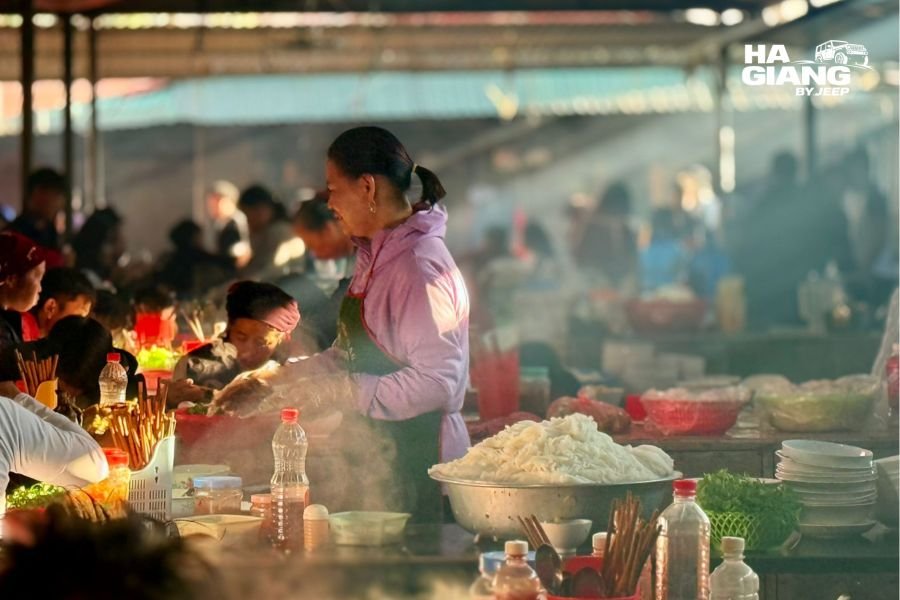
If your timing lines up, the Sunday market is the highlight. From early morning the area fills with families from the surrounding hills in bright traditional dress, livestock changing hands, food stalls steaming, and a wonderful buzz of trade and gossip. Come early, before the crowds, and eat breakfast in the middle of it.
Weekend nights in the old quarter
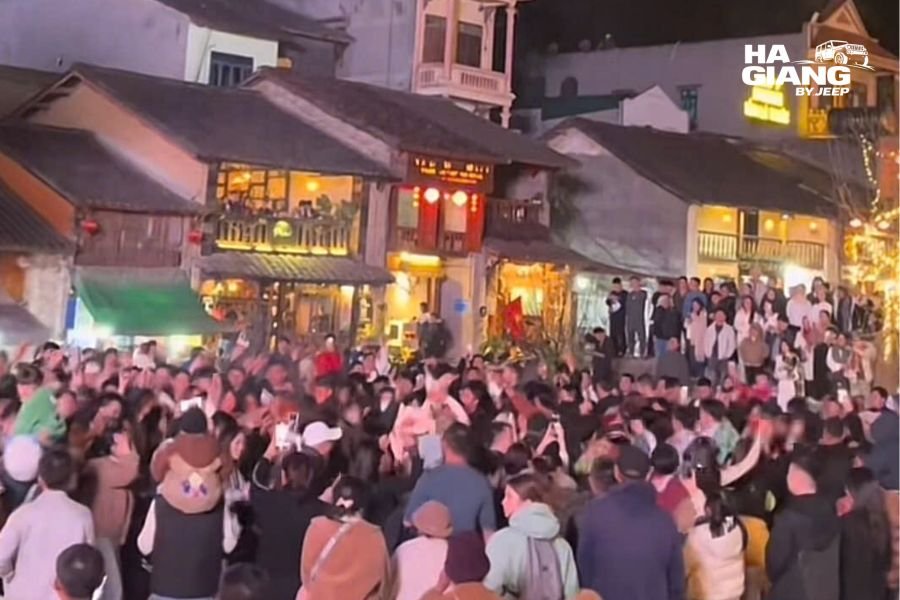
On weekend evenings the old quarter often comes alive with cultural nights: traditional music, the reedy sound of the H'mong khen pipe, and stalls around the square. Dates and programs can change, so check the latest locally, but if you are here on the right night it is a lovely, low key scene.
Where to eat and drink
Dong Van is a fine place to eat your way through the flavors of the plateau. The food is hearty, cheap, and tied to the mountains around it.
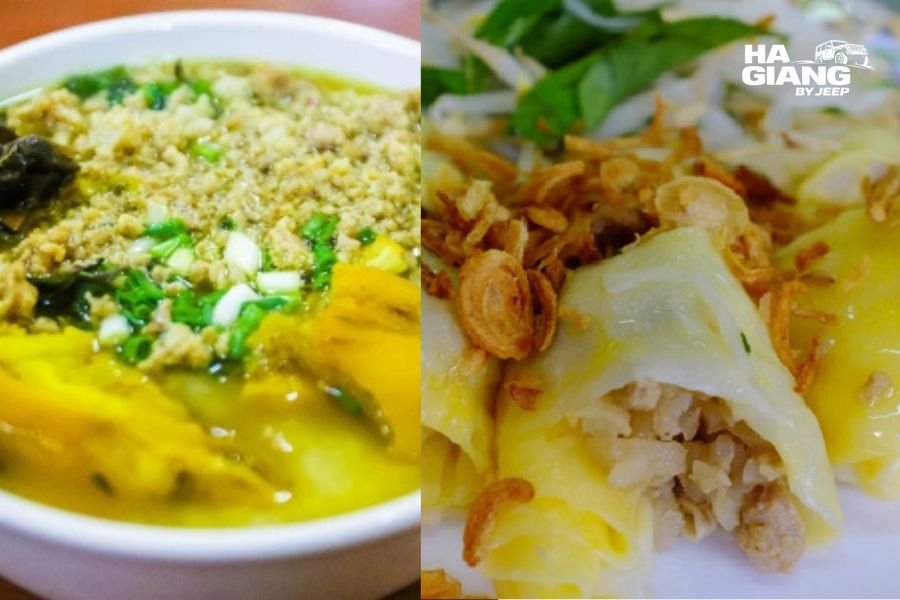
- Banh cuon: silky steamed rice rolls, a Dong Van breakfast favorite, often served with a warm bone broth to dip rather than the usual fish sauce.
- Chao au tau: a bittersweet porridge made from a mountain tuber, an acquired taste that locals swear by after a cold day.
- Com lam: sticky rice grilled inside a bamboo tube, smoky and good with meat.
- Thang den: soft glutinous rice balls in warm ginger syrup, the perfect end to a chilly evening.
- Ruou ngo: corn wine, distilled in the villages and poured generously wherever there is a reason to celebrate.
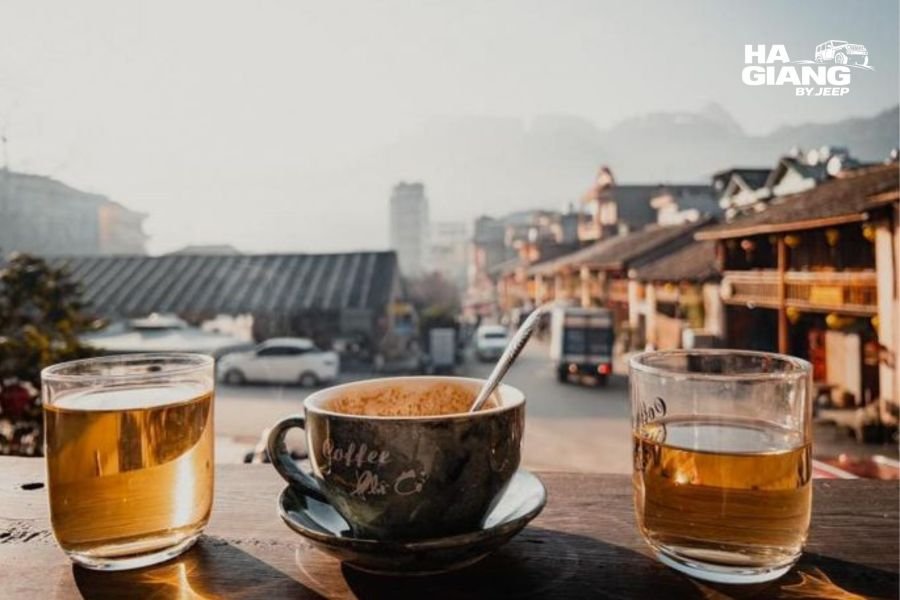
For drinks, the old house cafes are the draw. A slow coffee in a century old courtyard, or a small glass of corn wine with dinner, is part of the Dong Van experience. And here is where traveling by jeep quietly helps: when the corn wine comes out, nobody in your group has to worry about getting behind the wheel afterward, because your driver has it covered.
Where to stay
Staying the night is what makes Dong Van Old Quarter special, because the town is at its best once the day visitors leave. You have a few broad options:
- Old house homestays. A handful of the historic houses take guests, and sleeping inside one of these century old buildings is a memorable experience in itself.
- Small hotels and guesthouses. Dong Van town has a good range of comfortable, simple places within walking distance of the square, suiting couples, families, and older travelers who want a proper bed and hot water.
- Nearby villages. If you prefer real quiet, there are homestays in the surrounding area, though the old quarter itself is hard to beat for atmosphere.
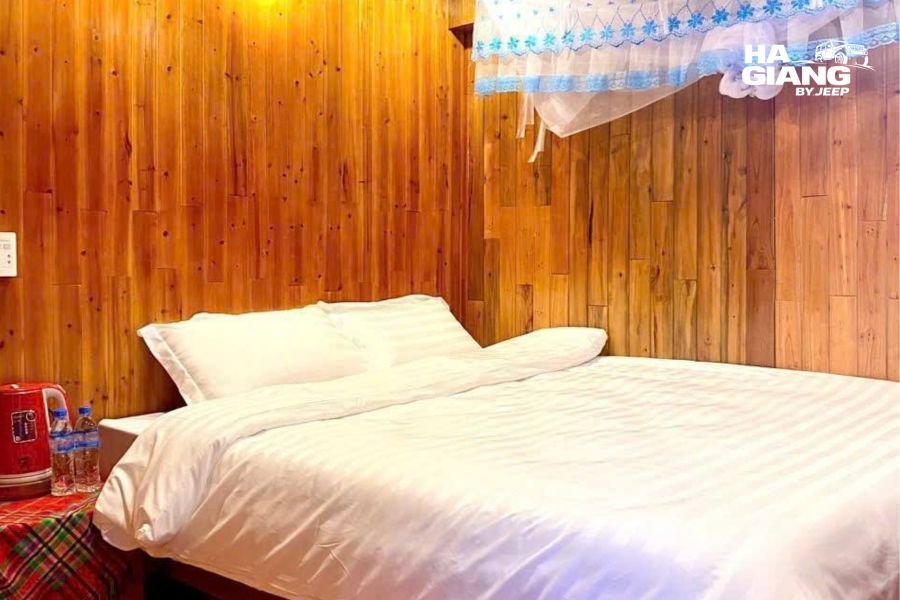
On our tours we arrange your homestays and hotels for you as part of the trip, matched to the comfort level you want, so you arrive to a room that is already sorted rather than hunting for a bed at the end of a long day.
What is nearby
One of the best things about Dong Van is how much sits within easy reach, which is why it works so well as a base for a night or two.
- Lung Cu Flag Tower: the symbolic northern tip of Vietnam, a spur trip out toward the border.
- Ma Pi Leng Pass and the Nho Que River: the great cliff drive east toward Meo Vac, with the option of a boat trip on the river below.
- Sung La valley and the H'mong king's palace: just to the west, on the way in from Yen Minh.
- Pho Bang: a sleepy, faded old town on a short detour, for anyone who likes places off the main track.
Best time to visit
Dong Van is worth a night in any season, but each one gives the town a different feel, and the mountain weather can shift fast.
| Season | What to expect | Worth knowing |
|---|---|---|
| Spring (Mar to May) | Mild days, green hills, blossom in places | Pleasant and clearer, comfortable evenings |
| Summer (Jun to Aug) | Lush and green, dramatic skies | Wettest months, warm but can be misty, check conditions |
| Autumn (Sep to Nov) | Golden rice, then buckwheat flowers, crisp air | The most popular window, book ahead |
| Winter (Dec to Feb) | Cold, clear light, atmospheric fog | Genuinely cold evenings, pack warm layers |
Weekends bring the Sunday market and the cultural nights but also more visitors, while weekdays are quieter. Treat any seasonal guide, including this one, as a rough map rather than a promise, and if a market or a festival is your reason for coming, confirm the dates locally before you build a trip around them.
What to pack and know before you go
Dong Van is comfortable to visit, but a few small things help.
- Warm layers. Evenings on the plateau are cold, more than the daytime suggests, even outside winter.
- Cash. Card payment is limited. Carry small notes for cafes, food stalls, the market, and homestays.
- Comfortable shoes. The old quarter and the market are best explored slowly on foot.
- An early alarm on market day. The Sunday market is at its best, and least crowded, first thing.
- Time to linger. The town rewards an evening and an unhurried morning far more than a flying visit.
Where Dong Van fits in a Ha Giang trip
Dong Van is the far corner of the classic loop and the most natural place to spend a night, so almost every well planned trip passes through and pauses here. On a shorter route it is your main overnight base before the drive back, while a longer trip can give you two nights, time for the Sunday market, a run out to Lung Cu, and the crossing of Ma Pi Leng at a relaxed pace.
We deliberately avoid printing hour by hour schedules, because the right pace depends on your group, the season, and how much you want to slow down. As a rule of thumb, if you can arrange to be in Dong Van on a Saturday night into Sunday, do it, for the nightlife and the market both.
Why a private jeep makes it easier
Getting to Dong Van and using it as a base is exactly where comfort pays off, because the days are full and the evenings are cold. A private jeep changes the trip in a few concrete ways.
- All weather comfort. A soft top cabin with a heater keeps the cold plateau evenings and any rain outside while you stay warm between stops.
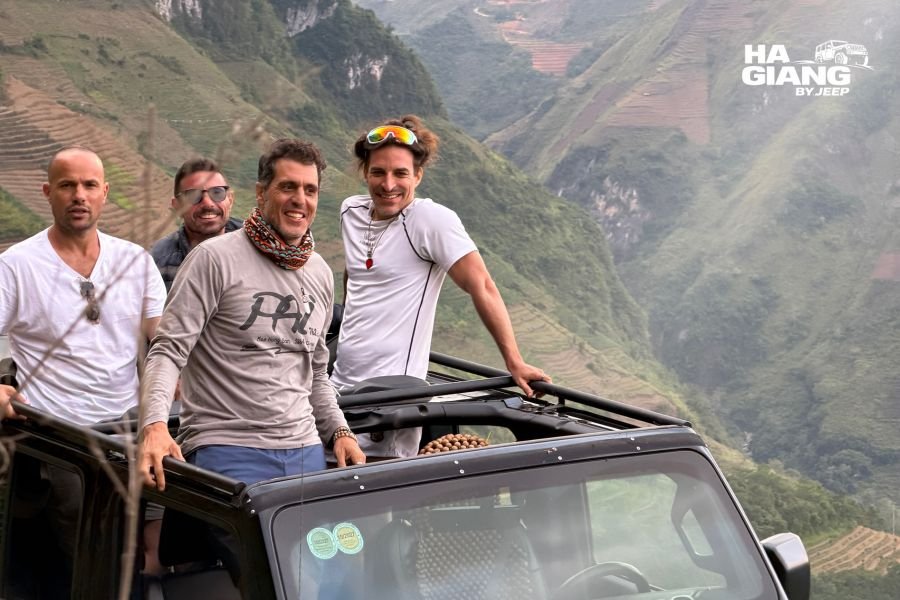
- Views in every direction. Sitting up in an open sided jeep, you take in the passes and valleys on the way in properly rather than watching the road.
- Stop anywhere. A market, a viewpoint, a roadside grill, a village you did not plan on: the driver pulls over and you get out.
- Everything sorted. Homestays, permits, and drivers are arranged for you, so you arrive to a room and a plan rather than logistics.
- Local knowledge. Our drivers grew up in these mountains and speak English, so Dong Van comes with its stories and the best places to eat, not just a car park.
Adventure without exhaustion is the whole idea. You get the atmosphere of the old quarter; you skip the part that leaves you wrecked.
Which jeep tour is right for you?
Every route we run pauses in Dong Van. The right length depends on how much time you have and how far east you want to go.
- Short on time, want the greatest hits. The Ha Giang Loop 3 days jeep tour uses Dong Van as its overnight base and covers the core plateau, including Ma Pi Leng, at a comfortable pace. Ideal for a first visit with limited days.
- Want to go slower and see more villages. The 4 days jeep tour gives you more time in Dong Van, plus Lung Cu, Sung La, Pho Bang, and quieter corners like Du Gia.
- Want the plateau plus Cao Bang and Ban Gioc. The Ha Giang and Cao Bang 5 days jeep tour continues east to Ban Gioc Waterfall, Nguom Ngao Cave, and the God's Eye Mountain and Ngoc Con Valley area.
- Want the fullest version. The 6 days jeep tour adds even more of Cao Bang, including Pac Bo, at the most relaxed pace of all.
- Confident driver who wants the wheel. If you would rather self drive a proper 4x4, our Jeep Wrangler Rubicon rental lets you run your own route and base yourself in Dong Van with the same comfort and all weather cabin.
Not sure which fits? Message us on WhatsApp with your dates and group and we will point you to the right one honestly.
See Dong Van for yourself
Dong Van is the kind of place that turns a scenic drive into a real journey, a mountain town with a century of stories still standing around its old square. The easiest way to enjoy it is to let someone else handle the roads, the timing, and the room while you settle in with a coffee and watch the lanterns come on.
We run private jeeps only, so you are never grouped with strangers, and we sort the permits, homestays, and drivers for you. To hold your dates, you secure your spot with a small deposit that lets us pre pay your homestays, drivers, and permits ahead of time, with the balance settled in cash on arrival. Most guests book one to three months in advance, and because every jeep is private, availability is limited, so earlier dates go first.
Ready to plan it?
Tell us your travel dates and group size and we will help you choose the right route, no pressure. Hold your spot now, or ask us anything first.
FAQ
It is the historic district of Dong Van town, deep in the Dong Van Karst Plateau. A cluster of century old houses and a stone market hall sit around a central square, surrounded by limestone mountains. It is the most atmospheric town on the plateau.
Many of the houses and the central market hall are around a century old, built by the merchant families who ran the town's trade. Exact dates vary by building, so treat any single figure as a guide rather than a precise record.
You travel north from Ha Giang City, itself reached from Hanoi by night bus, limousine van, or private transfer, through Quan Ba, Yen Minh, and the Sung La valley. Dong Van is the far point of the classic loop, and the old quarter sits in the center of town.
Very much so. The town is at its best in the evening and early morning, once the day visitors have gone. Staying lets you enjoy the lantern lit square, the cafes, and, if the timing is right, the Sunday market and weekend cultural nights.
The main market runs on Sunday mornings and is one of the most colorful in the north. Market days and any special events can shift, so confirm the current schedule with your driver or homestay before building a day around it.
Try banh cuon with warm broth for breakfast, chao au tau porridge and com lam for something local, and thang den in ginger syrup on a cold evening. A slow coffee in an old house cafe is part of the experience too.
Yes. The old quarter is flat, walkable, and easygoing, with comfortable places to stay and eat. A private jeep keeps the drive up and around the plateau comfortable in any weather.
No. You explore the same old quarter, market, and cafes on foot, and see the same passes on the way in. A private jeep simply keeps you warm and comfortable and suits travelers who prefer not to drive themselves.
Most guests book one to three months ahead. Because every jeep is private, availability is limited, so earlier dates fill first. Once you have a confirmed travel date, booking sooner helps us arrange homestays, drivers, and permits properly.