

Two northern Vietnam destinations. Both remote by any reasonable standard. Both worth a dedicated trip. And yet they feel so completely different that travelers who love one sometimes struggle to understand the appeal of the other.
Ha Giang is a loop of mountain passes through the Dong Van Karst Plateau UNESCO Global Geopark — one of the most photographed highland circuits in Southeast Asia. Ba Be Lake is a quiet freshwater lake inside a national park in Bac Kan province, surrounded by old-growth jungle and traditional Tay villages. Both sit in the northern highlands. Both take roughly a full day to reach from Hanoi. Beyond those two things, the comparison mostly diverges.
This guide covers what each destination actually delivers, who each one suits, and whether combining them in a single trip is worth the logistics.
| Feature | Ha Giang Loop | Ba Be Lake |
|---|---|---|
| Landscape | Mountain passes, karst peaks, highland valleys | Jungle lake, waterways, dense forest |
| Vibe | Epic, stimulating, adventurous | Peaceful, serene, restorative |
| Main activity | Driving the loop, village visits, markets | Boat trips, kayaking, forest walks |
| Recommended time | 3 to 6 days | 2 to 3 days |
| Distance from Hanoi | Around 320 km | Around 240 km |
| Best for | Highland culture, photography, bucket list roads | Birding, slow travel, genuine homestay |
What Ha Giang Really Is
Ha Giang is not a single attraction. It is a circuit of several hundred kilometers through the Dong Van Karst Plateau UNESCO Global Geopark, one of only a handful of places on earth recognized jointly for geological significance and living cultural heritage. The route passes through territory belonging to H'mong (Black, Flower, and White), Lo Lo, Nung, Phu La, and Dao ethnic minority communities. That density of distinct cultures within a few days of driving is unusual by any standard.
The landscape changes dramatically within a single hour. From Quan Ba, where the Twin Mountains rise from the valley floor as near-perfect green domes, to the deep canyon road leading down toward Meo Vac with the Nho Que River far below — these are not minor scenic variations. They feel like different countries.

The Roads and the Passes
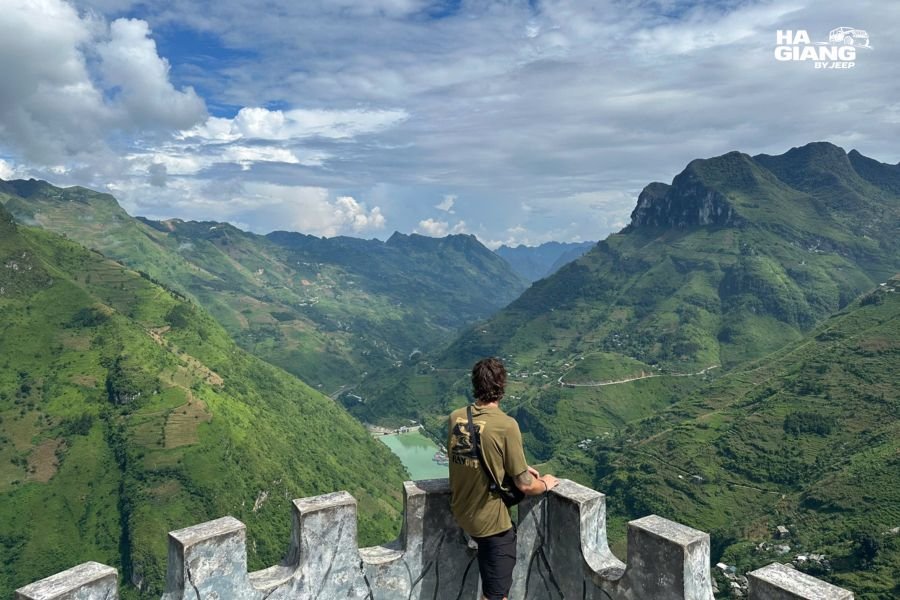
Ma Pi Leng Pass is the most famous stretch of the Ha Giang Loop. The road runs along the canyon wall above the Nho Que River gorge, with sheer drops on one side and limestone walls pressing in on the other. Looking down at the turquoise ribbon of river hundreds of meters below is the kind of view that photographs badly and lands properly in person.
The 15 step pass near Meo Vac adds more technical hairpin turns before the descent toward Dong Van. The road between Yen Minh and Dong Van is a quieter stretch with rice terraces, pine forest, and far fewer vehicles. Du Gia, southeast of Ha Giang City, offers a greener, less-visited alternative start to the loop for travelers with extra time.
What makes all of this work is that the road itself is the experience. You are not driving between places — you are on the loop the entire time. The destination is the journey, which is a cliche that happens to be accurate here.
The Culture Underneath the Passes
Dong Van Old Quarter combines French colonial architecture with H'mong construction: slate roofs, stone walls, and a market town that has existed for centuries before anyone thought to photograph it. The Sunday market still draws vendors from surrounding mountain villages, and the streets fill with colors from traditional clothing early in the morning before the day crowds arrive.
Khau Vai Love Market, held annually near Meo Vac, is one of the most distinctive events in the northern highlands. Pho Bang and Sung La are quieter stops where daily life continues at its own pace. Lung Tam Linen Village, between Ha Giang City and Quan Ba, is where the local linen and hemp weaving tradition is best preserved and where you can watch the process from raw plant to finished cloth. Lung Cu Flagpole marks the northernmost point of Vietnam: the view from the top takes in the border and the terraced fields on both sides.
Food and Stops on the Loop
The loop has its own food culture. Com lam is bamboo sticky rice, cooked inside the bamboo joint and cracked open at the table — available at nearly every roadside stall and something worth stopping for even if you have just eaten. Thang den are black sesame rice balls, dense and warming. Banh cuon trung is a steamed egg and pork crepe that appears mainly near Dong Van and tastes better than any description of it. Chao au tau is an aconite root porridge, warming in a way that makes sense at altitude in cold weather. Ruou ngo is corn wine — strong, locally distilled, worth trying once at a roadside pour.
Most of these stops do not appear on maps or in any app. With a private vehicle and a driver who grew up in the region, the approach is simply: when something looks right, you stop. That flexibility changes what eating on the road feels like.
What Ba Be Lake Really Is
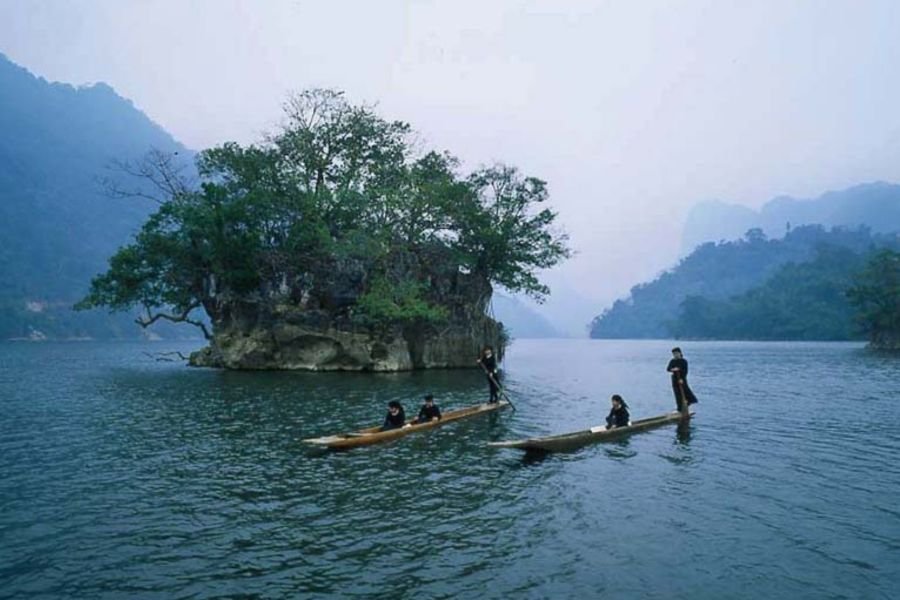
Ba Be sits inside Ba Be National Park in Bac Kan province, around 240 kilometers north of Hanoi. The name translates roughly as "three lakes" in the Tay language — three connected bodies of water totaling about 500 hectares, surrounded by old-growth forest and karst limestone hills. It is Vietnam's largest natural freshwater lake and genuinely beautiful in a way that is nothing like Ha Giang.
The Lake and the National Park
The main activities at Ba Be are water-based. Boat trips on the lake take visitors to Puong Cave, a limestone cavern along the Nang River home to thousands of bats and accessible only by boat, and to Dau Dang Waterfall at the northern end of the lake. The national park has walking trails through forest with reasonable birdwatching — over 300 species have been recorded in the area. Kayaking is available from some guesthouses near the lakeshore.
The pace is slow by design. There is no road drama, no dramatic pass to clear, no sense that you are racing the light. The appeal is in the stillness: reflections on the water in the morning, the bat exodus at dusk from Puong Cave, the sound of the forest at night. If you arrived from Hanoi exhausted and need the countryside to slow you down rather than stimulate you, Ba Be does that well.
Pac Ngoi Village and the Tay People
Pac Ngoi is a Tay ethnic minority village on the southern shore of the lake. Traditional stilt houses, fishing boats, and hand-weaving. Homestay accommodation is available in the village and is among the better authentic homestay options in northern Vietnam — the village has not been built up or themed for mass tourism in the way that some more famous destinations have. Arriving by boat from across the lake rather than by road adds to the sense of genuine arrival.
The Tay are Vietnam's second-largest ethnic group and have a strong tradition of water-related culture — the lake setting here is not incidental to their history, it is central to it.
If Ha Giang is sounding more like your trip than Ba Be — the passes, the markets, the highland culture — a private jeep tour is the way to do it properly. Ha Giang by Jeep runs the full loop in a Jeep Wrangler Rubicon, privately, with an English speaking local driver who was born in the region.
Side by Side: How the Two Destinations Actually Feel
The clearest way to understand the difference is not through a list of attractions — it is through the question of what you want your body and your attention to do for three to four days.

Landscape and Scale
Ha Giang is vast and overwhelming in the best sense. The karst peaks keep coming for days, the horizon is always dramatic, and the sense of scale is hard to absorb. Even experienced travelers who have seen a lot of Southeast Asia tend to find Ha Giang genuinely surprising. Ba Be is intimate — contained within the lake basin, with the forest pressing close on all sides and the water always nearby. The scale is human-sized in a way Ha Giang deliberately is not.
Pace and Energy
Ha Giang at the right tempo — stopping when something catches your attention, taking the smaller roads, spending an afternoon in Dong Van Old Quarter — is not exhausting. But it is stimulating. There is always something to look at. By the end of four days on the loop you will have seen a lot and thought about it. Ba Be is genuinely restorative. If you are carrying any stress from city life or a long itinerary before this, the lake will absorb it. Ha Giang will not — it asks something of your attention, which is the trade-off and also the point.
Who Each Destination Suits
Ha Giang suits: travelers who want their northern Vietnam trip to be visually memorable and culturally dense, couples or groups who want something to talk about afterward, anyone who has wanted to see ethnic minority highland culture firsthand rather than through a museum exhibit, and travelers who have heard about Ma Pi Leng and want to know if the reputation is deserved. It is.
Ba Be suits: travelers who want to slow down in a genuinely beautiful natural setting, serious birdwatchers, solo travelers who want a low-key homestay experience, anyone already doing the northern loop and looking for a different register before or after the highland intensity.
Can You Do Both?
Technically yes, and some travelers do exactly this. Ba Be and Ha Giang are roughly on the same northern arc from Hanoi, which means you can visit Ba Be on the way to Ha Giang or as a return stop. The practical constraint is time. A proper Ha Giang loop needs 3 to 4 days minimum to be worthwhile. Ba Be deserves at least 2 nights. Adding both makes for a 6 to 7 day northern Vietnam trip, which is entirely reasonable if that is what the schedule allows.
The routing from Ba Be to Ha Giang City is the least convenient leg — there is no direct bus at time of writing and the connection usually involves Bac Kan City. Check current transport options locally when planning, as schedules and routes change. The route in full: Hanoi, then Ba Be for 2 nights, then Ha Giang City and 3 to 4 days on the loop, then back to Hanoi.
The Case for Ha Giang
Ha Giang has a reputation that is both well-earned and slightly misleading. The reputation is for dramatic roads and scenery, which is accurate. The misleading part is the idea that it is only for adventurous travelers or people comfortable on challenging terrain. With a private jeep, it is accessible to anyone — no fitness requirement, no road experience needed, and the ability to stop, turn back, or slow down at any point.

What Ha Giang offers that cannot be found elsewhere in Vietnam is the specific combination of landscape and living culture at this altitude and in this geography. The H'mong highlands of Dong Van, the canyon roads, the weekly markets, the food — these things exist in this form here and not in approximate versions somewhere more convenient.
Ma Pi Leng, Meo Vac, and the Nho Que Canyon
The classic view — from the edge of the road looking down into the turquoise ribbon of the Nho Que River far below — appears on every best-of list of highland drives in Asia. It lands differently in person. The road runs along the canyon wall at a height that makes the river look implausibly small, and the limestone walls rising on the opposite side complete a view that photographs at a fraction of its actual scale.

The descent from the Ma Pi Leng section into Meo Vac passes through the 15 step pass and several more switchbacks before the town appears below. By the time you reach Dong Van for the night, the day has had genuine arc. The Ha Giang Loop is not a list of stops — it is a sequence, and Ma Pi Leng is the climax rather than the opening.
Dong Van, Khau Vai, and the Markets
Dong Van Sunday Market is the most photographed of the weekly markets on the loop — vendors arrive from surrounding mountain villages in traditional dress, and the range of goods reflects the actual daily needs of highland communities rather than a curated tourist market. Arriving early matters: by mid-morning the character of the market has changed.
Khau Vai Love Market happens once a year near Meo Vac and brings thousands of people from across the region. The timing varies — check locally when planning. Dong Van Old Quarter itself has a few good guesthouses and restaurants. Staying in town rather than rushing back toward Meo Vac or Yen Minh gives you the Old Quarter after the day visitors have left, which is a different and quieter experience.
Extending to Cao Bang: Pac Po and Ban Gioc
The Ha Giang and Cao Bang combination extends the trip by one or two days beyond the standard loop and adds some of the most distinctive landscapes in northern Vietnam. Ban Gioc Waterfall, on the border with China, is the largest waterfall in Vietnam and visually unlike anything on the Ha Giang Loop — wider, greener, and viewed from a boat trip on the river below the falls. Pac Po Historical Site in Cao Bang province is where Ho Chi Minh spent years during the resistance period, in a cave beside a stream that he named Lenin Creek. God's Eye Mountain and the Ngoc Con Valley offer more highland scenery in a less-visited setting. These sites are most practical on the 5 days tour or 6 days tour packages that continue from Ha Giang into Cao Bang.
Which Jeep Tour Is Right for You?
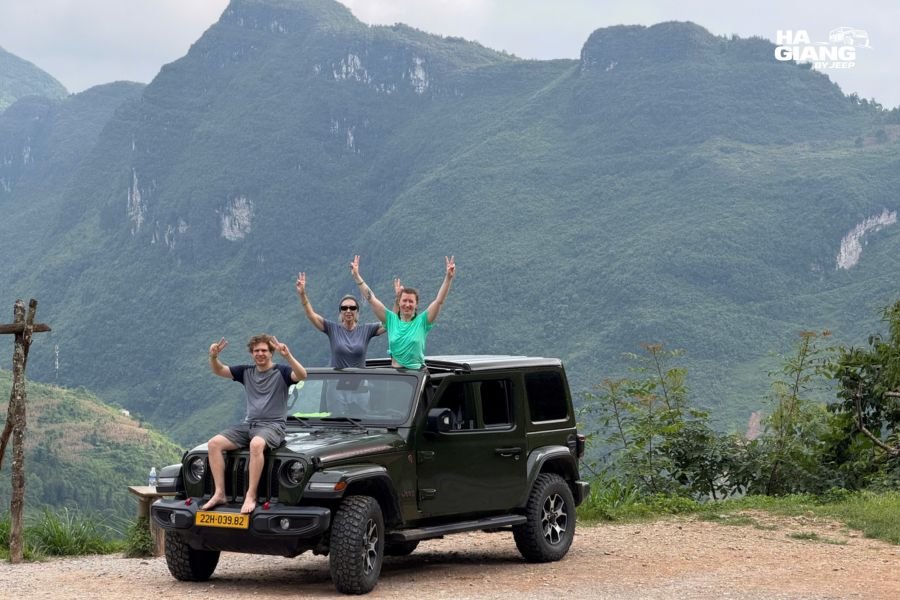
If you have decided on Ha Giang — and reading this far suggests you have — the main choice is how much time you want to spend on the loop. All Ha Giang by Jeep tours are private: your group only, a Jeep Wrangler Rubicon, an English speaking local driver, and a flexible schedule. No strangers in the vehicle, ever.
3 Days on the Ha Giang Loop
The 3 days tour covers the core loop from Ha Giang City: Quan Ba, Yen Minh, Dong Van, Ma Pi Leng, Meo Vac, and back. It is the right choice for travelers with limited time who want to see the main highlights without rushing. You will see Ma Pi Leng, spend a night in Dong Van, and hit the significant passes. What you will not have is much time to slow down or take detours. From 17,490,000 VND per group.
4 Days on the Ha Giang Loop
The 4 days tour is the most popular option and for good reason. The extra day makes the loop feel like a journey rather than a sprint. You have time for Lung Tam Linen Village, Sung La, Pho Bang, and the smaller roads that the 3 days tour skips. Market days can be timed more easily. From 21,990,000 VND per group.
5 Days: Ha Giang and Cao Bang
The 5 days tour continues from the Ha Giang Loop into Cao Bang province, adding Ban Gioc Waterfall, the Pac Po Historical Site, and the Ngoc Con Valley. It ends in Cao Bang City, which connects back to Hanoi by bus. The right choice for travelers who want the full northern highlands experience across both UNESCO Global Geoparks — the Dong Van Karst Plateau and Non Nuoc Cao Bang. From 32,990,000 VND per group.
6 Days: The Full Northern Circuit
The 6 days tour gives the most time to both destinations — a relaxed Ha Giang loop followed by a thorough Cao Bang section including Ban Gioc, God's Eye Mountain, Pac Po, and Ngoc Con Valley. The slowest and most complete option. From 37,990,000 VND per group.
Jeep Wrangler Rubicon Rental
For travelers confident in their off road driving experience and familiar with the northern highlands, Jeep Wrangler Rubicon rental is available on a daily basis from Ha Giang City. This option suits experienced drivers who want to set their own pace entirely. Ha Giang by Jeep handles the border area permits and the vehicle handover logistics.

All prices are per group. For groups of 2 or more, the per-person cost drops significantly — a 4 days loop tour for 4 people works out to under 10,000,000 VND per person. Contact the team for a full price breakdown by group size.

Frequently Asked Questions
Is Ha Giang or Ba Be Lake better for families with children?
Both destinations work well for families. Ha Giang by private jeep involves no physical exertion — children of all ages travel comfortably in a Jeep Wrangler Rubicon and the vehicle can stop whenever needed. Ba Be involves calm boat trips on the lake and optional short walks. Neither destination requires significant hiking or fitness. For families who want their children to experience something visually dramatic and culturally specific, Ha Giang is the stronger choice.
Can I do both Ha Giang and Ba Be Lake in one trip?
Yes. Two nights at Ba Be followed by 3 to 4 days on the Ha Giang Loop makes for a good 6 to 7 day northern Vietnam trip. The two destinations sit roughly on the same northern arc from Hanoi. The Ba Be to Ha Giang City connection is the least convenient leg — check current bus and transport options locally before you travel, as schedules change frequently.
Which destination is less crowded?
Ba Be Lake is significantly quieter year round. Ha Giang has grown considerably in popularity and can feel busy at key viewpoints during peak season from September to November. A private vehicle with a local driver helps — leaving early, taking smaller roads, and skipping the most popular pull-off points at peak hours makes a real difference to the experience.
Can I do the Ha Giang Loop without a motorbike?
Absolutely. Ha Giang is fully accessible by 4x4 jeep. Ha Giang by Jeep runs private tours in a Jeep Wrangler Rubicon — you are driven the entire loop, so no licence, no road experience, and no fatigue from handling a vehicle on highland mountain passes. The jeep goes everywhere on the loop.
How do I get from Hanoi to Ba Be Lake?
Buses run from Hanoi to Cho Ra, the nearest town to Ba Be Lake, with the journey taking roughly 5 to 6 hours. Local minibuses cover the final stretch to the lake. Schedules change — verify current options locally before you travel. Many visitors book a guesthouse at Ba Be in advance and arrange transport from there.
How do I get from Hanoi to Ha Giang?
Overnight sleeper buses and daytime coaches depart from My Dinh bus station in Hanoi, with the journey to Ha Giang City taking roughly 6 to 7 hours. Ha Giang by Jeep begins all tours from Ha Giang City and can advise on current transport options when you book. Contact the team for logistics advice.
What is the best time of year for Ha Giang?
September to November brings golden rice terraces and clear skies — this is peak season for good reason and the roads and guesthouses fill up. March to April sees buckwheat flowers bloom near Dong Van, turning the fields purple. Winter from December to February is cold but visually clear, with far fewer visitors. Each season offers a genuinely different version of the loop.
What is the best time of year for Ba Be Lake?
October to April offers drier conditions and clearer skies. The lake levels rise after summer rains, changing the landscape but not blocking access. Ba Be is accessible and worth visiting year round — the forest is green and the lake is beautiful regardless of season.
How long do I need for the Ha Giang Loop?
Three days is the minimum for the core loop from Ha Giang City, covering the main passes and reaching Dong Van. Four days is more comfortable with time for smaller villages, market days, and slower stretches. Five or six days adds the Cao Bang extension with Ban Gioc Waterfall and the Pac Po Historical Site.
Is Ba Be Lake worth visiting on its own or only combined with Ha Giang?
Ba Be is worth its own trip. Two nights on the lake, a boat trip to Puong Cave and Dau Dang Waterfall, and a night at Pac Ngoi village adds up to a complete and genuinely memorable experience. It does not need Ha Giang to justify itself — the two destinations simply appeal to different travel modes, and both are worth the journey from Hanoi.
Which destination is better for older travelers or those who prefer not to hike?
Both destinations suit travelers of all ages who prefer not to hike. Ha Giang by private jeep involves no physical exertion — you are driven the entire loop and stop at viewpoints and villages at your own pace. Ba Be involves calm boat trips on the lake and optional short walks on flat or gentle terrain. Neither destination requires significant physical effort to enjoy fully.
Ready for Ha Giang?
Ha Giang by Jeep runs private Jeep Wrangler Rubicon tours on the Ha Giang Loop and the Cao Bang extension. Your group only, your pace, an English speaking driver who grew up here. 3 days to 6 days tours available, plus daily jeep rental from Ha Giang City.