
Ha Giang with Limited Mobility: Can You Do the Loop by Jeep?
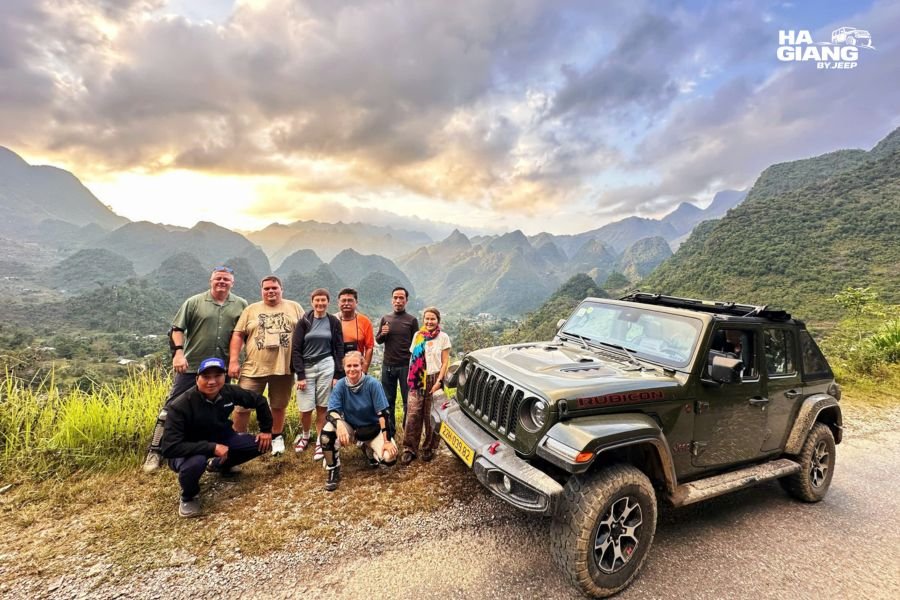
Ha Giang gets described as one of the most dramatic road journeys in Southeast Asia. The pass at Ma Pi Leng, the switchbacks above Meo Vac, the karst peaks rising from terraced rice paddies — the visuals alone justify the journey. But the word that follows all of this is usually something like "grueling," which puts many travelers in a difficult position.
If you have limited mobility — a bad knee, a hip replacement, reduced stamina, a cane or walker, or any condition that makes standing, climbing and walking unpredictable — you may have already written Ha Giang off your list. This guide makes the case for reconsidering. Not an unconditional one: there are real limitations, and they deserve honest acknowledgment. But a private jeep tour changes the equation more than most people expect.
Who This Guide Is For
This guide does not address wheelchair accessibility in the clinical or regulatory sense. Vietnamese highland infrastructure is not designed to any standardized accessibility framework, and claiming otherwise would be inaccurate. What it addresses is the practical question that many travelers face: can someone who cannot walk long distances, who needs to sit frequently, who cannot navigate steep hills or uneven terrain, still have a meaningful experience of the Ha Giang highlands?
The honest answer is yes, with some specifics. Travelers who have done the Ha Giang Loop with limited mobility and found it manageable include people in their 70s with joint issues who can walk short distances on flat ground; people recovering from hip or knee surgery who can sit comfortably for several hours at a stretch; travelers who use a cane or walking stick; people with fatigue-related conditions who need frequent rest but can be mobile in short bursts. The common thread is not any particular diagnosis or device: it is the ability to spend time in a vehicle comfortably and to move on flat, paved or compacted ground for short distances.
The people who would genuinely struggle: those who cannot sit for extended periods — daily driving on the Ha Giang Loop typically runs three to five hours in a vehicle; those who require a fully accessible vehicle with a hydraulic ramp or lift; those who cannot step in and out of a taller vehicle even with support. If you are unsure which category you fall into, the most useful thing is to describe your specific situation to us directly before booking.
What Makes Ha Giang Challenging for Mobility
Understanding the actual challenges helps calibrate expectations. Some of what makes Ha Giang sound difficult for limited mobility is real. Some of it is irrelevant if you are in a private vehicle rather than on foot.
The Roads
The Ha Giang Loop involves mountain roads, some of which are well-paved and some of which are rougher, particularly on sections of the western loop and on some detour roads to secondary viewpoints. The vehicle absorbs most of this, but the experience across a rough section is different from a smooth highway. If vibration or jarring motion is a specific medical concern for you — for example, if you have recently had spinal surgery or have a condition that makes jolting movements painful — this is worth flagging when you book. Your driver can choose routes and driving styles accordingly and will typically avoid the roughest secondary roads if that is what you need.
The main sealed road through the loop — Ha Giang City to Quan Ba, Yen Minh, Dong Van and Meo Vac — is in generally good condition. It is a mountain road, so there are curves, elevation changes and occasional rough patches, but it is not an off-road track. Most of the journey is straightforward driving.
Accommodation
Most guesthouses on the Ha Giang Loop range from basic to comfortable, but very few are designed with accessibility in mind. Stairs are common. Bathrooms may be small. Beds may be low. Grab rails and shower seats are rare outside hotels in Ha Giang City. The practical approach is to communicate your needs to your driver before the trip and let him help choose guesthouses that work for your situation. He can call ahead and request specific rooms. This does not guarantee an ideal setup, but it significantly improves it.
Viewpoints and Getting Around
Most of the iconic viewpoints on the Ha Giang Loop are accessible by vehicle, in the sense that the road goes to them or very near them. Reaching the actual edge of a viewpoint — not just the road — may involve walking a short distance across uneven ground. The roadside view is frequently spectacular on its own. Some specific sites involve significant stairs or trail walking. These are covered in the section on what is harder below.
Why a Private Jeep Tour Changes the Equation
The practical advantages of a private jeep tour for travelers with limited mobility are not incidental to the product. They follow directly from what makes a private tour different from group travel or independent travel on the loop.
The Vehicle Itself
The Jeep Wrangler Rubicon has rear seating that is wide and comfortable for extended hours. The soft-top can be fully opened at viewpoints and highland passes without anyone needing to leave the vehicle: you get the view, the wind and the landscape from your seat, which matters when getting out and back in is an effort. The vehicle sits higher than a standard car, which means boarding and alighting requires a step up — your driver assists — but it also means better visibility from the seat itself. The rear cabin is spacious enough that most passengers can adjust their seating position throughout the day, which helps with joint stiffness on longer driving sections.
The vehicle also comes with heating for the cold months, which matters for highland temperatures and for joints that respond badly to cold. If you are traveling in October through February, the ability to stay warm without layering up and down every time you stop is a practical comfort that group travel rarely offers.

The Driver Makes the Difference
Your driver is from these highlands. He knows every stop, every flat area where it is easy to get out of the vehicle, every guesthouse that reliably has a ground-floor room, every viewpoint where the walk from the car to the actual view is short and on level ground. He has had passengers with mobility challenges before. If you tell him your situation clearly, he will plan accordingly — not in a vague, reassuring way, but specifically: which sections of road are rougher and can be driven more slowly, which stops are worth the effort to get out and which are better viewed from the vehicle, which guesthouses to call ahead to, what pace to set for the day.
This is the actual value of a local driver for someone with mobility needs. It is not just about getting from point A to point B. It is about someone who knows every kilometer of the route and can make real-time decisions about when to push on and when to stop, based on your actual state at that moment in the trip.
No Group Schedule
Group tours, by their nature, run to a timetable. The group gets out at a viewpoint, photographs it, and moves on. If you need more time to get out of the vehicle, to walk to the viewpoint, to rest before getting back in, the group has already moved. The private format removes this entirely. If a stop is taking more time than expected, the driver waits. If you need to rest for forty-five minutes at a guesthouse midway through the day, you rest. If you want to spend an extra hour at Dong Van Old Quarter because you found a weaving stall worth looking at, you stay. The pace of the day is determined by what you need and want, not by what fourteen other people voted for.
What You Can Realistically Do
The majority of what makes Ha Giang compelling as a destination is accessible from a vehicle or with short walks on flat or gently sloped ground. This is worth stating plainly, because the reputation of Ha Giang as a physically demanding destination can obscure how much of it requires nothing more demanding than getting out of a car.

Drive-to Viewpoints
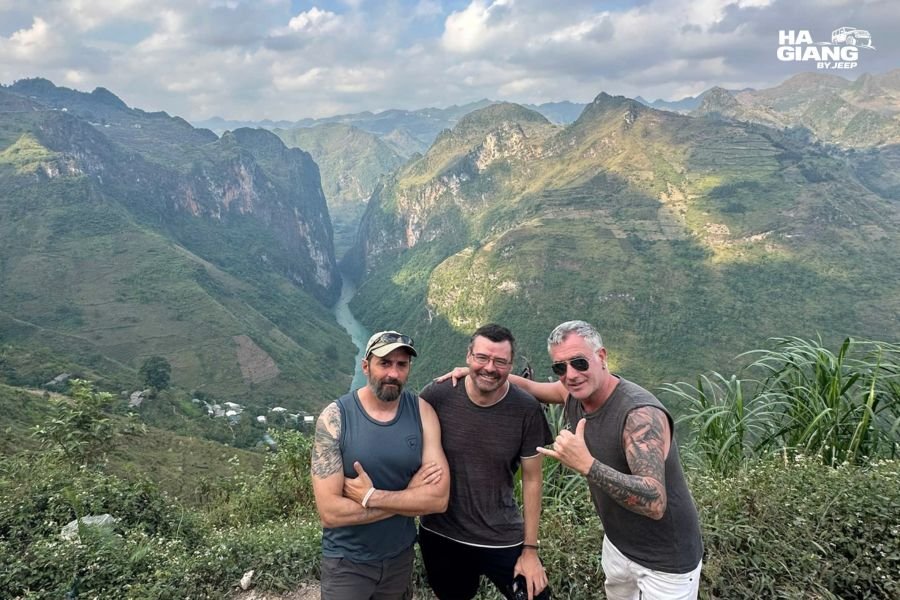
Ma Pi Leng Pass is a road. The view from the vehicle window and from roadside pullouts along the pass is extraordinary: the Nho Que River far below in the canyon, the karst ridges rising on both sides, the switchbacks of the road visible ahead and behind. At the main pullout points, the walk from where the vehicle parks to the viewpoint edge is short and on relatively level ground. You do not need to hike to anything to have one of the great viewpoint experiences of Southeast Asia.
Quan Ba Twin Mountains — the Fairy Mountains — are visible from a roadside viewpoint in the Quan Ba district that requires a brief walk from the car park on flat ground. Heaven's Gate, the high point before Quan Ba, has roadside viewing areas with minimal walking. The road between Dong Van and Meo Vac, which runs high above the deep Nho Que River canyon, delivers its drama continuously from the vehicle itself. Du Gia, in the southeast section of the loop, sits in a valley where the landscape can be appreciated from the vehicle and from roadside flat areas.
Town Centers and Markets

Dong Van Old Quarter is a town, not a trail. The original tile-roofed houses that give Dong Van its character are on the main streets of the town center, which are paved and relatively flat. Walking the main street of Dong Van for twenty or thirty minutes is enough to see the core of what makes it notable. If you use a cane or walking stick and can manage that distance on a paved surface, Dong Van is accessible.
Dong Van Sunday Market happens on and around the main street of the town. Meo Vac town center is similarly flat and explorable on foot for short distances. Khau Vai Market, held near Meo Vac, takes place on flat market ground. Your driver knows the layout and can position the vehicle close to whatever section is most relevant to you.

Markets are, in practical terms, one of the best experiences on the loop for travelers with limited mobility: they come to you, they happen on flat ground, and you can sit at a stall with a bowl of pho or a glass of corn wine and have the whole market come past without walking more than a few meters from the vehicle. If your driver knows you have limited mobility, he will park accordingly.
Villages, Food Stops and Cultural Pauses
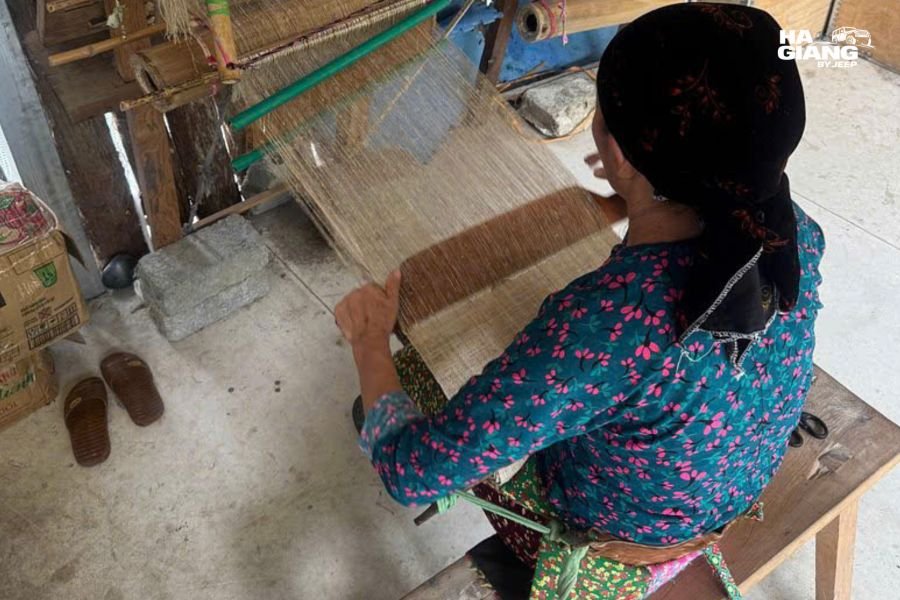
Lung Tam Linen Village in Quan Ba district, where Hmong women weave traditional hemp-linen fabric, is typically accessible with short flat walking. Roadside food stalls — com lam (bamboo tube sticky rice), banh cuon trung (steamed rice rolls with egg), thang den (sticky rice balls in ginger syrup) — are by definition at the roadside. Your driver stops at these places that he knows personally, and they tend to have flat ground parking and stall access that requires nothing more than stepping out of the vehicle.
Some villages have uneven terrain, and your driver will know which ones are more navigable. Pho Bang, a historic town in the east of the loop, has sections that are easier to navigate than others. Sung La valley, associated with the film-famous A Phu house, is approached by a road and can be appreciated largely from the vehicle itself.
The 4 days Ha Giang Loop tour works especially well for travelers who need a slower pace. An extra day compared to the 3 days option means less rushing between stops, more flexibility to rest at a viewpoint, and no pressure to make each driving hour count. If mobility is a factor, start with 4 days rather than 3.
See the 4 Days Ha Giang Loop Tour WhatsApp Us to Discuss Your NeedsHonest About What Is Harder
The Ha Giang Loop has specific sites where limited mobility creates genuine difficulty, and naming them is more useful than glossing over them.
Stairs and Trails
Lung Cu Flagpole, at the northernmost tip of Vietnam in Lung Cu district, sits on a hill reached by a substantial number of stairs. For most travelers with significant mobility limitations, the flagpole itself is not accessible. The surrounding village and the road to Lung Cu are accessible by vehicle. Many travelers who cannot climb to the flagpole still find the drive to Lung Cu worthwhile for the highland border landscape.
Some viewpoints off the main sealed road require walking trails to reach the actual viewpoint. These vary: some are short walks on packed dirt; others are longer trails on rough ground. Your driver knows which is which and can give you a realistic picture of what each involves before you decide whether to attempt it.
The Meo Vac to Ha Giang City road — the western section of the loop — passes through dramatic highland scenery but is also one of the rougher sections of the route. If vibration is a concern, this section can be discussed when planning the driving days.
Accommodation Realities
The guesthouses in Dong Van and Meo Vac are generally two or three stories with stairs. Ground-floor rooms exist but are not universal, and they book out. Requesting a ground-floor room through your driver — with enough advance notice — works most of the time, but cannot be guaranteed at every stop. If a shower chair or grab rail is a medical necessity, bring a portable one, because you will not reliably find them on the loop.
Ha Giang City at the start and end of the tour has hotels with lifts and larger accessible bathrooms. If you need a full recovery day at any point, Ha Giang City is the most practical place to do it.
Planning Your Trip
Tell Your Driver Everything in Advance
Before the trip, communicate specifically: what mobility aid you use; how far you can walk comfortably on flat ground; what terrain is manageable (paved, compacted gravel, uneven stone); how long you can sit before needing to get out and move; whether you need help boarding and alighting the vehicle; any medical considerations that affect driving or stop time. The more specific you are, the more precisely the driver can plan each day.
This conversation is best had before you book, not after. We can then match the right driver, suggest the right tour length, and flag in advance which stops may need to be adapted or skipped. A WhatsApp message with your specific situation is the most efficient way to start this conversation.
Packing for Mobility Needs
Pack whatever you use at home: folding walking stick, knee brace, compression socks, joint supports. All of these fit easily in the rear of a Wrangler. Add a small travel cushion or lumbar support if prolonged sitting on rough road sections is a concern. Cold-weather joint medication if relevant — the highlands reach cold temperatures, particularly at night and at the higher elevation sections of the loop. The temperature at Dong Van and the high passes can drop significantly below what you experience in Ha Giang City.
Layers are important, and the ideal setup is layers you can add without getting out of the vehicle. The soft-top of a Wrangler can be opened at good-weather viewpoints and closed again when the temperature drops, so you have some flexibility without having to manage this entirely through clothing. That said, a windproof outer layer that you can pull on in the vehicle is worth packing regardless.
Weather and Season
If road conditions and mud are a concern for your mobility — specifically, if walking on slippery ground is more of a risk for you than for the average traveler — the heaviest rainy season months (roughly June through August) are worth avoiding. The roads themselves are managed, but roadside ground at stops and markets can be muddy after heavy rain.
October through early December is generally excellent for the Ha Giang Loop: the rice terraces are at harvest color in October, the air is clear, and the temperatures are cooler but not yet biting. This is the most popular window for good reason, and accommodation books out earlier than usual. November and December are good alternatives; the landscape is drier, the light is different, and the crowds thin out. January and February bring cold highland winters, which can be compelling (frost on the karst, occasional mist) but also more challenging for joint-related conditions.
Which Tour Is Right for You?
Tour length is probably the most practical decision for travelers with limited mobility. The core question is not which tour covers the most ground: it is which tour gives you enough time at each stop to do it at your pace without feeling rushed.
The 3 days Ha Giang Loop tour covers the main highlights of the loop in a compact schedule. It is manageable with mobility needs if your situation is relatively mild and you are comfortable with longer driving days. The 4 days Ha Giang Loop tour is the recommended option for most travelers with mobility considerations: the extra day allows for a genuinely slower pace, more flexibility to extend a rest, and less pressure to push on from any stop that is working well.
For the Cao Bang extension, the 6 days Ha Giang Cao Bang tour is preferable over the 5 days option for the same reason: more time means less rushing, and two UNESCO Global Geoparks — the Dong Van Karst Plateau and the Non Nuoc Cao Bang — deserve time to appreciate at a sensible pace rather than a rushed one.

If you would prefer to plan your own driving pace entirely, the Jeep Wrangler Rubicon rental is available as a self-drive option. This works best for travelers with mobility needs who are confident drivers and want complete control over their daily schedule — stopping whenever they need to, spending as long as they like at any point, without coordinating with anyone.
Ha Giang Loop
3 Days 2 Nights
- Quan Ba, Yen Minh, Dong Van
- Ma Pi Leng Pass, Meo Vac
- Manageable with good planning
Ha Giang Loop
4 Days 3 Nights
- Full loop, unhurried pace
- Extra day for rest and flexibility
- More time at each accessible stop
Ha Giang and Cao Bang
5 Days 4 Nights
- Full loop plus Cao Bang
- Ban Gioc, Non Nuoc Geopark
- Two UNESCO Global Geoparks
Ha Giang and Cao Bang
6 Days 5 Nights
- Maximum flexibility, minimum pressure
- Full day each major landmark
- Best for mobility needs on the combo
Frequently Asked Questions
Yes, with the right planning. A private jeep tour removes most of the constraints that make Ha Giang difficult for people with limited mobility: you have your own vehicle, your own schedule, and a driver who can plan stops and accommodation around your specific situation. The experience will differ from someone who can hike to every viewpoint, but the core of what makes Ha Giang extraordinary — the landscape, the highland communities, the road through the karst — is accessible from a vehicle.
The Wrangler is not a purpose-built accessible vehicle: it does not have a wheelchair ramp or lift. For travelers who use a folding wheelchair and can transfer to a seat with assistance, it may be workable — but this should be discussed directly with us before booking so we can assess your specific situation honestly. For travelers who use a cane, walking stick or walking frame and can step up into the vehicle with support, it is straightforward.
Yes. A folding wheelchair or walker can be stored in the rear of the vehicle. A cane or walking stick is entirely straightforward. Tell your driver in advance so the boot space can be arranged accordingly and so he knows what to expect when helping you in and out at stops.
Ma Pi Leng Pass is a road: the view is from the vehicle and from roadside pullouts that require only a short walk on relatively flat ground. Quan Ba Twin Mountains viewpoint involves brief flat walking from the car. The road between Dong Van and Meo Vac is itself the main event — dramatic canyon views from the vehicle window. Most of the loop's visual highlights are accessible without hiking.
Not in the clinical sense. Most guesthouses on the loop have stairs and no lift. Ground-floor rooms exist in many guesthouses and can be specifically requested through your driver, who can call ahead. In Ha Giang City, hotels with lifts are available. In Dong Van and Meo Vac, options are more limited, but ground-floor or low-floor rooms can usually be arranged with advance planning.
Yes. Ma Pi Leng is a mountain pass: the road goes through it. The view from the vehicle window at key sections of the pass is extraordinary on its own. At roadside pullouts, the walking from car to viewpoint edge is short — typically across compacted or paved ground. You do not need to hike to experience Ma Pi Leng.
Completely honest, and as specific as possible. The more detail you give, the better your driver can plan guesthouses, stops and the day's pace. He is not making a judgment: he is building a practical plan. Understating your limitations to avoid appearing like a burden produces a less appropriate trip. His job is to make the tour work for you as you are, not as you wish you were.
Yes. Many of Ha Giang by Jeep's guests are in this age range, including travelers in their 70s. The private jeep format with a local driver is better suited to older travelers than any group tour format. The key practical questions are how much walking you can manage comfortably and how you handle multiple hours in a vehicle each day — both of which can be discussed and planned around.
Lung Cu Flagpole involves significant stair climbing to reach the hilltop and is not practical for most people with mobility limitations. Some viewpoints accessed via walking trails are not manageable. Certain river sections involve an uneven landing area. Your driver can advise on specific sections based on your situation and can plan alternative stops where you skip the difficult access and see something equally worth seeing from the car.
Longer is better. The 4 days Ha Giang Loop tour is recommended over the 3 days option: the extra day allows for a slower pace, more rest stops, and more time at any location that is worth extra time. If you are adding Cao Bang, the 6 days tour is preferable over 5 days for the same reason. Trying to fit the experience into the minimum time creates pressure that is not helpful when mobility requires more careful planning at each stop.
Yes. The Cao Bang section of the tour adds Ban Gioc Waterfall, Pac Bo Historical Site and the Non Nuoc Cao Bang Geopark. Many of these stops are accessible with short walks on relatively flat ground. Ban Gioc Waterfall involves a walk from the car park to the viewing area on largely flat terrain. Discuss your specific situation with your driver and the Cao Bang section can be planned accordingly.
Pack whatever you use at home: folding walking stick, knee brace, compression socks, joint support. Add a small cushion or lumbar support if prolonged sitting on rougher road sections concerns you. Cold-weather joint medication if relevant — the highlands get cold, particularly at night and at elevation. Pack layers you can add without getting out of the vehicle, since the temperature changes significantly between valley driving and highland passes.
Ha Giang is not off-limits. The right setup — the right vehicle, the right driver, the right pace — makes the difference. Tell us your situation when you book and we will plan around it.
Secure Your Spot WhatsApp: +84 938 988 593