
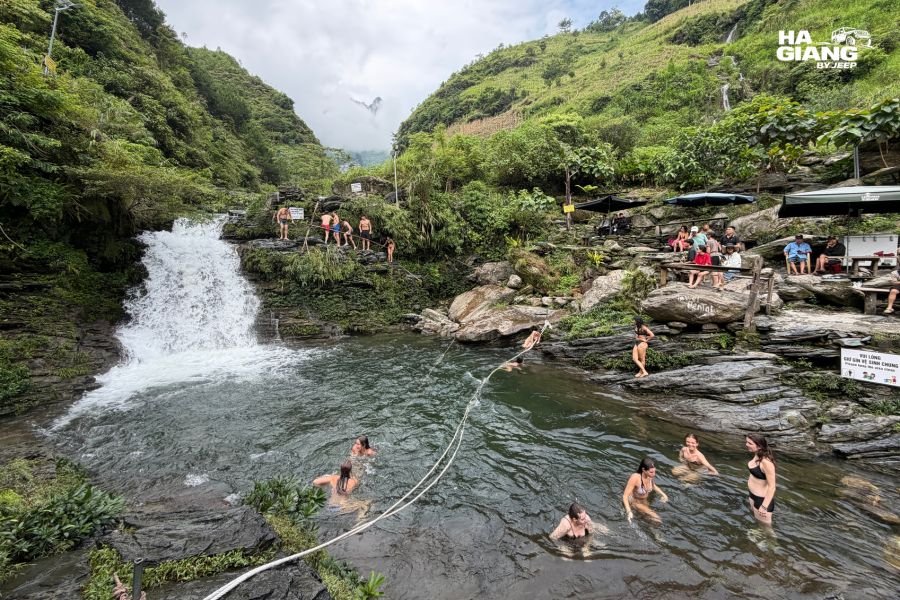
Du Gia Waterfall, Ha Giang: The Loop's Best Swimming Stop
Most people planning a Ha Giang loop have the big names circled on their map: Ma Pi Leng Pass, Dong Van Old Quarter, Tu San Canyon, Lung Cu. Du Gia waterfall is rarely on that list. It should be.
Tucked into a forested valley in Vi Xuyen district, Du Gia is where the Ha Giang loop quietly exhales. After days on the high karst plateau, this is cool shade, green water, cold mountain air, and a pool deep enough to swim in. It is one of those places where you pull up, see the waterfall through the trees, and quietly decide this was the best stop of the whole trip.
It is also only on the 4 days loop, which is one of the better arguments for choosing that itinerary over the shorter version. More on that below.
Where Du Gia Sits on the Ha Giang Loop
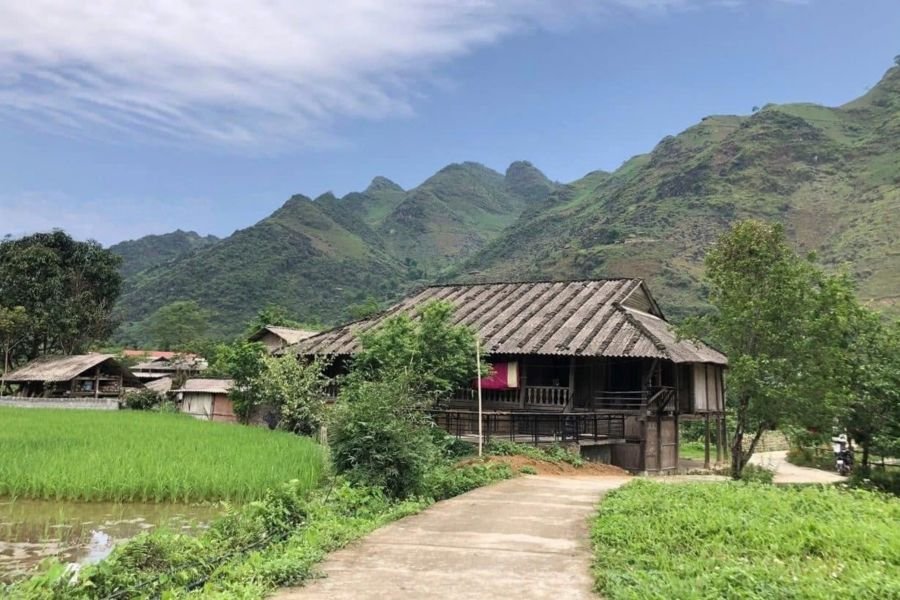
The Ha Giang loop is not a simple circle. Depending on which route you take, you can go deeper into the karst plateau and return through a completely different landscape. On the 4 days loop, the third day takes you from Dong Van or Meo Vac back toward Ha Giang City, but not via the same road you came up on.
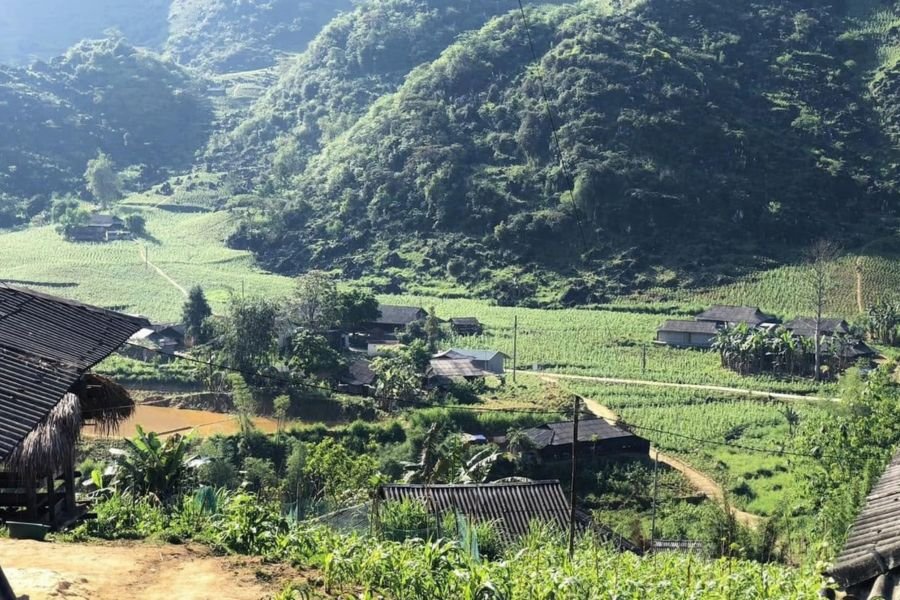
That return leg is its own experience. You drop out of the rocky highland terrain, the air gets warmer and heavier, bamboo replaces bare limestone, and the road follows a river valley south. Du Gia village sits in that valley, in Vi Xuyen district, roughly a day's drive from Meo Vac with stops along the way.
By the time you reach Du Gia, you have already had your dramatic pass moments, your canyon overlooks, your plateau viewpoints. Du Gia is the tonal shift: lower altitude, green and river-fed, a different kind of beautiful. The transition is part of the experience.
It is worth saying clearly: Du Gia is not on the 3 days loop. The shorter route takes a tighter circuit that does not come through Vi Xuyen on the return. If Du Gia is something you specifically want, the 4 days loop is the itinerary you need.
The Waterfall and the Pool Below It
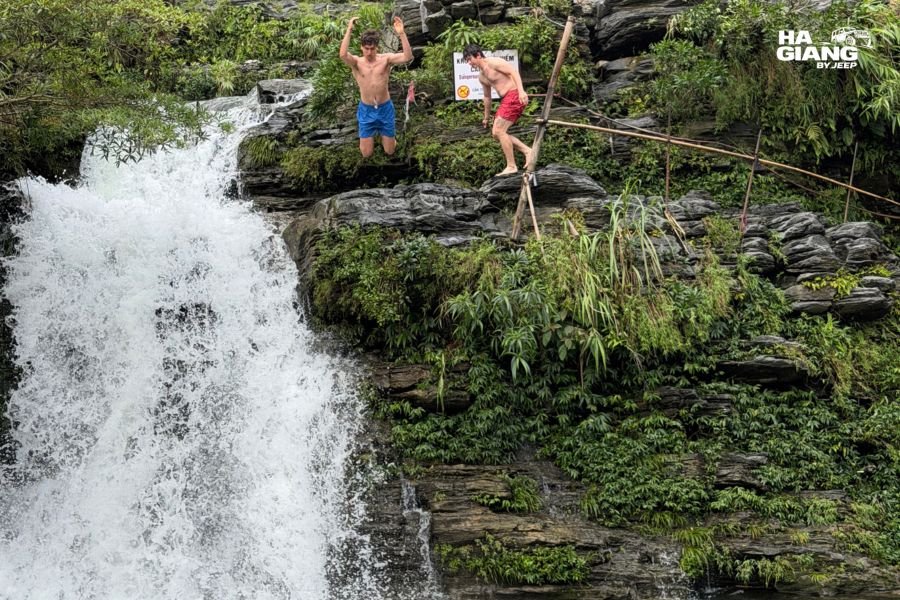
Du Gia waterfall drops in tiers over a limestone face, feeding a natural pool at the base. The water comes from the mountains above Vi Xuyen and runs cold and clear most of the year, the kind of clarity where you can see the bottom in the shallows and the colour goes from pale blue to deep jade in the centre.
The setting is what makes it. Dense forest presses in on both sides, the cliff face above drips fern and moss, and the sound of the falls carries before you see the water. It does not feel like a tourist attraction that has been managed and tidied. It still has a raw, found quality, the sort of place that feels like you wandered into it.
A short trail leads from the road down to the pool level. The path involves some steps and some uneven ground, but it is not a trek. Most visitors in reasonably good shape will manage it without difficulty, though it can be slippery after rain. The descent takes a few minutes, and the waterfall comes into full view as you round the final bend.
The pool itself is wide enough that a dozen swimmers fit comfortably without feeling crowded. On quiet weekdays it can just be your group and the sound of falling water.
What the Swim Is Actually Like
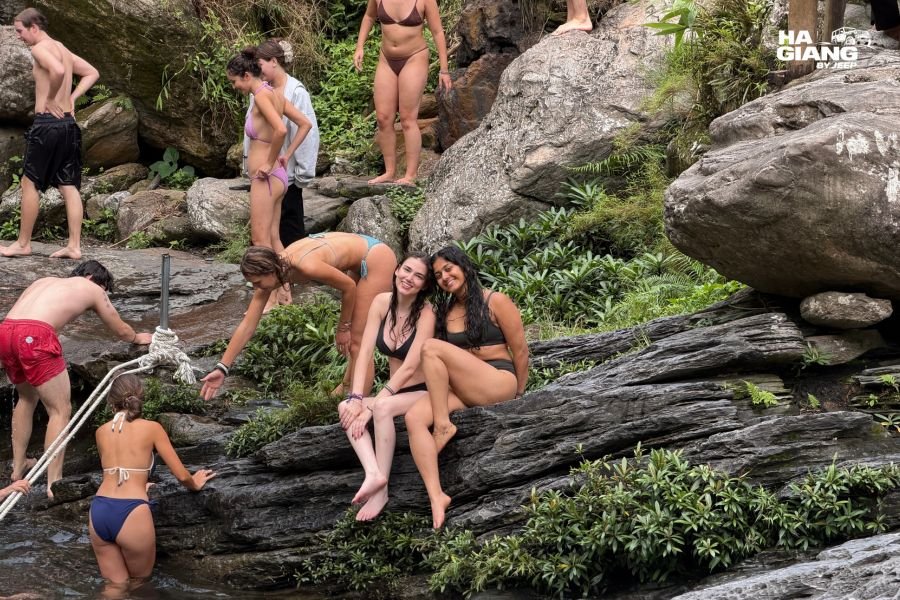
Cold. That is the first word.
This is mountain water sourced high in the limestone hills, and it has not had time to warm up on its way down. Step in and you will feel it immediately, the kind of cold that makes you gasp slightly and then, after twenty seconds, feels extraordinary. After two or three days driving the exposed plateau in sun and wind, it is a reset button.
The pool is deep enough to swim in the centre, with shallower entry points around the edges where the rock slopes gradually into the water. Getting in involves a bit of picking your way across wet limestone at the edge. Grip footwear matters here, which is why sandals with a sole (not flip flops) are worth packing.
The water itself is clean. Du Gia sits well upstream from any significant settlement, and the limestone geology does a lot of natural filtration. On clear-weather days the colour of the pool is one of those blue-green shades that photographs well but looks even better in person.
Local families come here on weekends, especially in summer. Children swim, adults sit on the rocks and eat, someone always has corn on a portable grill. On weekday mornings in shoulder season you may have it close to entirely to yourself.
A note on the cold: it gets colder in winter (December to February). Some visitors still swim, it is a bracing few minutes. In summer the air temperature helps make the cold water feel like relief rather than punishment. Know yourself and plan accordingly.
Du Gia Village: More Than a Waterfall
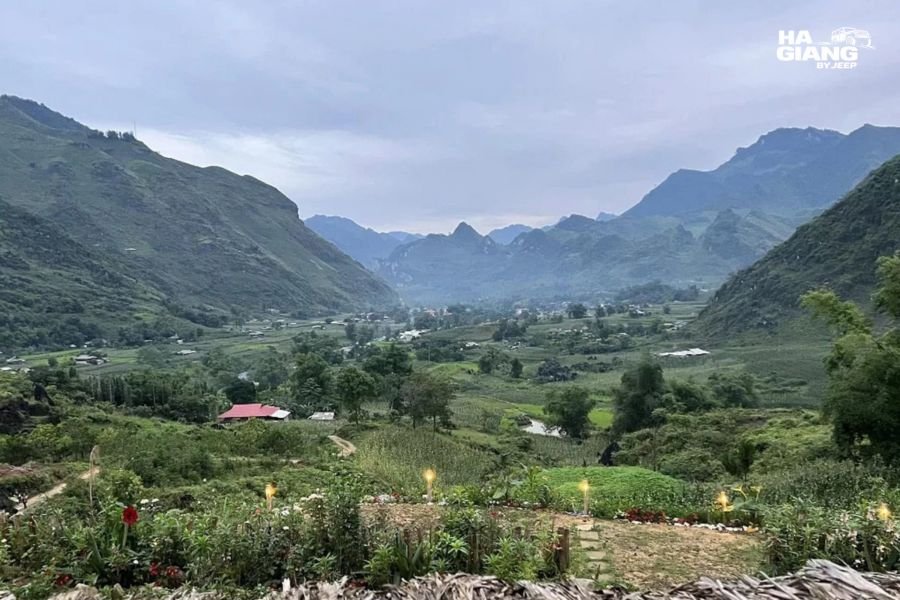
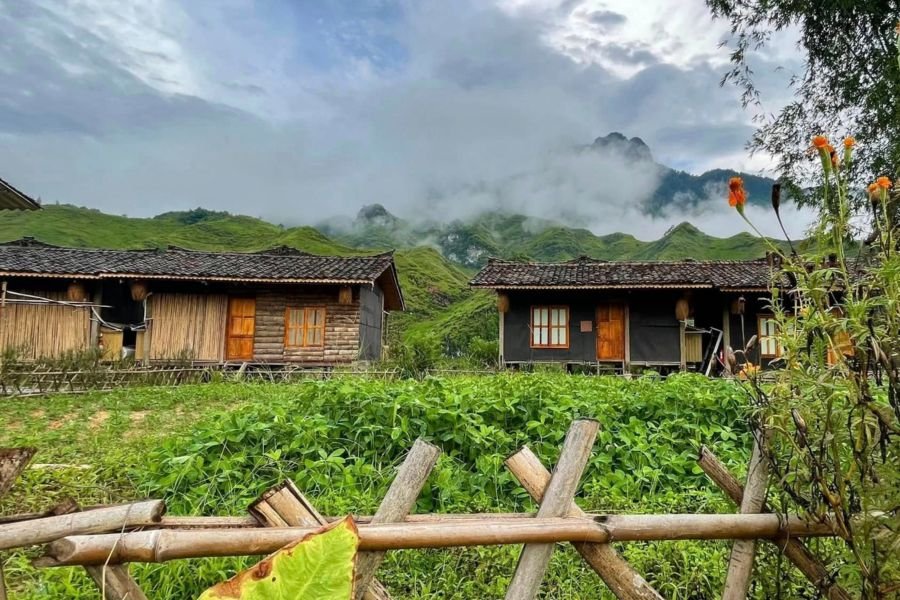
Du Gia is a village before it is a waterfall stop. The community here is mainly Tay ethnic people, one of Vietnam's larger minority groups, with their own textile traditions, agricultural calendar, and architecture. Stilt houses line the river, gardens run down to the water, and the pace is noticeably slower than the market towns higher on the loop.
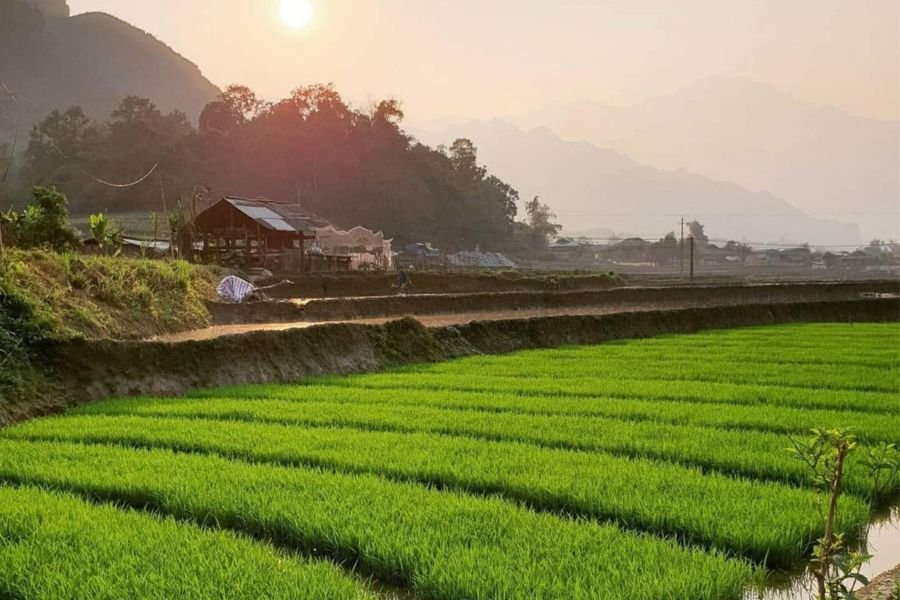
The suspension bridge over the river is worth the short walk. It sways a little as you cross, enough to make it memorable, with a view downstream of the valley and the hills closing in on both sides. It is also a useful bridge for the village: locals cross it with motorbikes loaded with produce, and that scene is one of those everyday-life moments that stays with you longer than a viewpoint photograph.
Du Gia has a local market that operates on set days. The specifics change, so ask your driver for the current schedule. If the market is running when you visit, it is a small one, nothing like Khau Vai or the Dong Van Sunday Market, but that is exactly the point. Fewer tourists, more of the actual commerce of a farming village: fresh produce, homegrown chili, river fish, simple prepared food.
The food near the waterfall area is also worth mentioning. Small stalls sell grilled corn, fresh fruit, and in some cases simple rice dishes. After a swim, eating something warm and simple at a plastic table by the river is one of those underrated travel experiences.
When to Visit Du Gia Waterfall
Ha Giang has a clear seasonal rhythm, and it affects Du Gia differently from the plateau stops higher on the loop.
September to November is the sweet spot. The rainy season has ended, which means the waterfall is running strong but the pool is clear, not silted. The surrounding forest is at its most vivid green, the air is cool at altitude but warm in the valley, and rice terraces elsewhere on the loop are in harvest gold. This is when the whole loop is at its most photogenic, and Du Gia is no exception.
March to May is the second-best window. Dry season means clear water and reliable weather. The buckwheat and plum blossom higher on the plateau (late January to March) has passed by this point, but the loop is quiet and the valley feels lush after the brief highland spring.
June to August (rainy season) changes the character of the waterfall significantly. Flow is dramatically higher, the cascade is louder and more powerful, and the visual impact is different. But the pool can run brown or cloudy after heavy rain, making swimming less appealing. The path down can be slippery enough to be genuinely tricky. Some visitors still go in; adjust expectations accordingly. If the pool is murky when you arrive, the waterfall itself (viewed from the path) is still impressive.
December to February (winter) brings cold, clear water to the pool and cold, clear air to the valley. The loop in winter has a particular stillness that regular visitors love. Swimming at Du Gia in December takes more commitment, but the waterfall is beautiful under grey winter light. Pack a warm layer to pull on immediately after you get out.
Conditions vary year to year. For current water levels or any changes to access, ask your driver. They know this route.
What to Bring to Du Gia
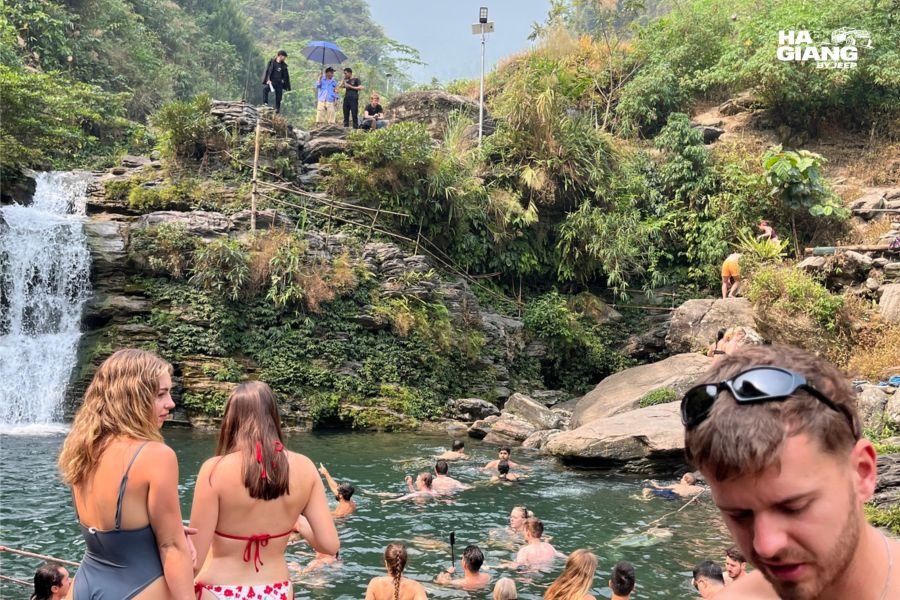
The swim at Du Gia is the kind of spontaneous highlight that rewards a small amount of advance packing. Here is what to have in your day bag:
- Swimwear. Pack it accessible, not buried in your main luggage in the jeep. You will not want to dig through bags at the trailhead. A light layer of clothing over the top means you can walk to the pool ready to go.
- Quick-dry towel. Microfibre towels that pack to the size of a rolled sock are ideal. You will be glad you have one and will not care about carrying it for the rest of the trip.
- Grip footwear. Water sandals (with a proper sole) are the best option. The rocks at the pool edge are wet and limestone, which is smooth and slick. Flip flops are fine for the path but not ideal for entering the water. Barefoot works in some spots but not all.
- Dry bag for electronics. A small 5L or 10L dry bag handles your phone and camera. Even if you are not swimming, the spray from the falls can reach sitting areas close to the pool.
- A light layer for after. Post-swim, the air at Du Gia feels cooler. A long-sleeved shirt or thin fleece goes on fast and makes the walk back comfortable.
- Cash. There may be a small entrance or parking fee for the waterfall area. These amounts change, so carry enough small bills to cover incidentals. Check current updates with your driver or our team before the visit.
- Sunscreen. The walk in has some exposed sections, and you may be spending an hour or more near reflective water. Apply before you set off.
One thing you do not need: a tour pack or a long list of permits. Du Gia waterfall is accessible, the visit is self-contained, and your driver handles everything logistical on the day.
Getting to Du Gia on a Jeep Tour
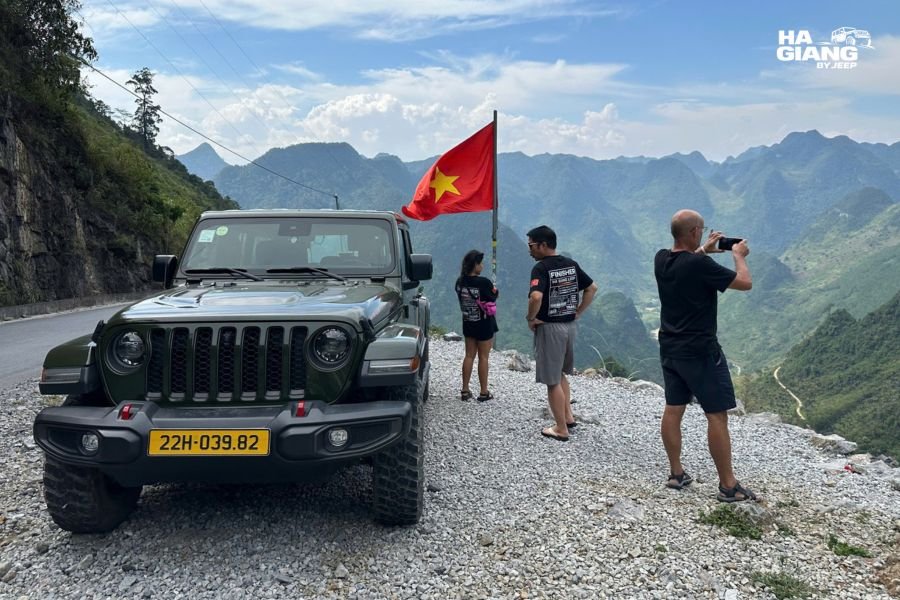
The road into Du Gia is fully accessible by vehicle, including a full-size 4x4. Your driver knows the route and the parking area near the waterfall trailhead. You park, you walk down, you swim. The logistics are simple.
What makes a private jeep the right way to do this stop is the flexibility around it. You can spend 45 minutes at the pool, or you can spend two hours. If you are there on a weekday morning and have the place to yourselves, you will probably want to stay longer. If it is a rainy afternoon and the pool is running brown, you can look, take photos of the falls from the path, and leave in twenty minutes. The decision is yours.
Your driver also knows the waterfall in different seasons. If you are visiting during or just after heavy rain, they will tell you what to expect before you get there. No surprises.
The approach road through the Vi Xuyen valley is itself a scenic corridor. The open top Jeep Wrangler Rubicon lets you take in the forest canopy and river glimpses along the way. The drive in from the plateau feels like a geographic sigh, the landscape changing from rock and sky to green and water, and it pairs well with knowing there is a swim at the end.
Thinking about the 4 days loop? Du Gia waterfall is built into the itinerary on day 3. See the full route and what else is included on the Ha Giang Loop Jeep Tour 4 Days page.
Which Jeep Tour Includes Du Gia?
Here is the short version: the 4 days loop includes Du Gia. The 3 days loop does not.
The 3 days loop is a complete Ha Giang Loop experience and covers all the major highlights: Quan Ba Twin Mountains, Yen Minh pine forest, Dong Van Old Quarter, Ma Pi Leng Pass, Tu San Canyon, Meo Vac. It just follows a return route that does not come through Vi Xuyen, so Du Gia waterfall is not on that itinerary.
If Du Gia is specifically something you want, and we think it should be, the 4 days loop is the one to book.
Which tour is right for you?
- 3 days 2 nights loop: The core Ha Giang loop experience, Ma Pi Leng, Dong Van, Meo Vac, covered at a pace that still feels right. Good if you have limited time. Du Gia is not on this route.
- 4 days 3 nights loop: The full loop with more time at each stop and Du Gia waterfall on the return leg. The extra day is not filler: it means a slower pace at Dong Van, a more complete visit to Meo Vac, and the waterfall swim. If you are asking yourself whether the 4 days is worth it, the answer is yes.
- 5 days 4 nights and 6 days 5 nights Ha Giang and Cao Bang tours: These routes extend the trip into Cao Bang province, adding Ban Gioc Waterfall, Pac Po Historical site, Ngoc Con Valley, God's Eye Mountain, and the 15 step pass. Du Gia is typically included on the Ha Giang portion of these tours; confirm with our team when you enquire, as routing can vary.
- Jeep Wrangler Rubicon self-drive rental: If you are an experienced driver and want to plan your own route, a 4 day or longer self-drive plan can absolutely include Du Gia. The rental team can advise on routing. Note that some areas near the border require permits, so check requirements with us in advance.
A word on spontaneous food stops
One small thing that gets underappreciated: on the road to and from Du Gia, your driver can stop at any roadside stall. A bowl of pho in a village at 7am, a glass of ruou ngo (corn wine) with a local family at lunch, a bag of fresh-picked persimmon from a woman selling by the roadside. None of this is on a schedule. With a private jeep and a driver who grew up in these mountains, every food stop is on the table. Just say the word.
FAQ
Yes. It is not the most dramatic stop on the loop (Ma Pi Leng holds that title) but it offers something different: a genuinely swimmable waterfall pool in a forest setting, after days in high-altitude rocky terrain. The contrast is part of the appeal. Most people who visit Du Gia on the 4 days loop say it was one of their favourite stops.
Cold, year-round. The waterfall is fed by mountain streams running through limestone, and the pool does not get much direct sun due to the surrounding forest. In summer the cold is refreshing. In winter it is bracing. Either way, you will notice it the moment you step in.
Yes, swimming is the main draw. The pool at the base of the waterfall is deep enough in the centre to swim freely. The entry points around the edges are shallow and involve stepping across wet rock, so grip footwear helps. In rainy season the pool can run turbid; check conditions with your driver before the visit.
There may be a small local fee for parking or access. These amounts change and are not managed centrally, so we recommend carrying small bills and asking your driver for the current situation when you arrive. It is never a significant amount.
September to November is ideal: strong water flow from the rainy season but clear pool, comfortable temperatures, and the surrounding forest at its most vivid. March to May is the second-best window. Rainy season (June to August) means heavier flow but potentially cloudy water for swimming. Winter (December to February) is cold but clear.
On the 4 days loop with Ha Giang by Jeep, the time at Du Gia is flexible. Most groups spend between 45 minutes and two hours, depending on whether they swim, explore the village, or eat at a local stall. Because your jeep is private and your itinerary is your own, you can stay as long as makes sense for the day.
It is a short trail with some steps and uneven ground. Most visitors manage it comfortably without any hiking experience. After rain the path can be slippery, so footwear with grip is worth having. It is not suitable for anyone with significant mobility challenges without extra assistance.
The suspension bridge over the river is worth a walk across for the views. There is a local market on set days (ask your driver for the schedule). The village itself, a Tay community with traditional stilt houses, is pleasant to walk through. Small food stalls near the waterfall area serve grilled corn, fruit, and simple rice dishes.
No. The 3 days loop covers the main highlights of the Ha Giang Loop (Quan Ba, Yen Minh, Dong Van, Ma Pi Leng, Meo Vac) but follows a route that does not come through Vi Xuyen on the return. Du Gia waterfall is specific to the 4 days loop.
Technically yes: Du Gia is accessible by road and has no special permit requirement. But getting there from Ha Giang City independently requires either renting your own vehicle or arranging private transport, navigating roads with limited signage, and having no local knowledge of current conditions. Most visitors find it far more practical to include it as part of an organised jeep tour rather than trying to arrange it separately.
Secure Your Spot on the 4 Days Loop
Du Gia waterfall is the kind of stop that does not make the headline but makes the trip. Private jeep, local driver, flexible timing on the day, and everything from border permits to accommodation sorted in advance.
View 4 Days Loop WhatsApp Us Book Now