
Ban Gioc Waterfall Water Levels: Month by Month Guide
The same waterfall in September and the same waterfall in February are not the same waterfall.
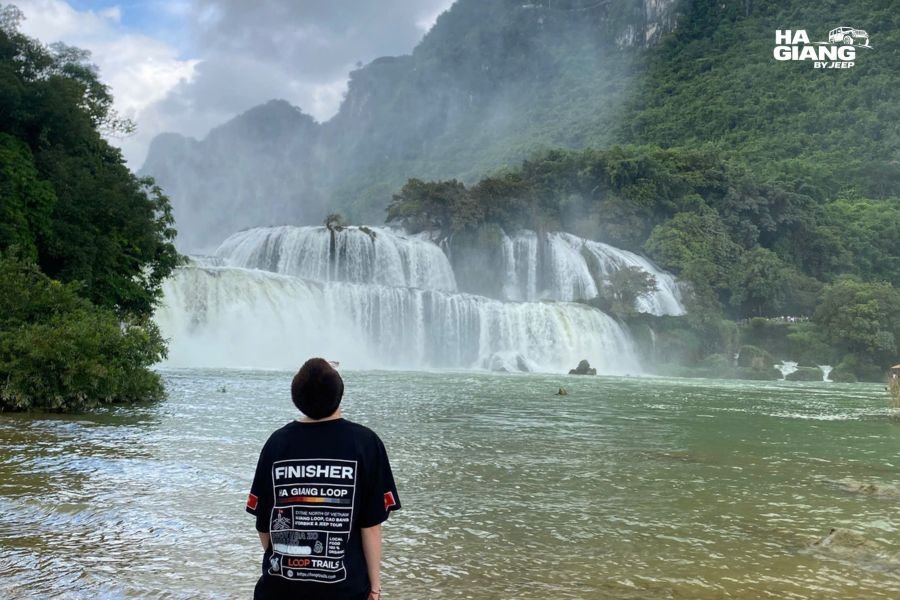
Ban Gioc Waterfall sits on the Quay Son River on the border between Vietnam and China. It is wide, tiered, and the water levels change dramatically across the year. More than at almost any other waterfall in the region, what you see at Ban Gioc depends entirely on when you arrive.
This guide covers the ban gioc waterfall water levels month by month: what the falls look like at each stage, what changes about the experience, and how to decide which version of the waterfall is worth making the trip for.
Table of Contents
1. Why water levels matter so much here 2. The waterfall at full flood: August to October 3. The transitional months: November and May 4. The dry season falls: December to April 5. Rising water: June and July 6. Month by month summary table 7. The colour of the water 8. The three tiers and what you see at each level 9. Crowd levels through the year 10. The bamboo boat experience by season 11. How to reach Ban Gioc Waterfall 12. Which jeep tour is right for you 13. Frequently asked questions
Why Water Levels Matter So Much Here
Most waterfalls change with the season. Ban Gioc changes more dramatically than most, for a specific reason: the Quay Son River drains a large catchment that extends into southern China. The rainfall that reaches Ban Gioc does not come only from Cao Bang province. It comes from a wide highland catchment on both sides of the border, which means the falls can be running powerfully even in periods when local Cao Bang weather has been stable.
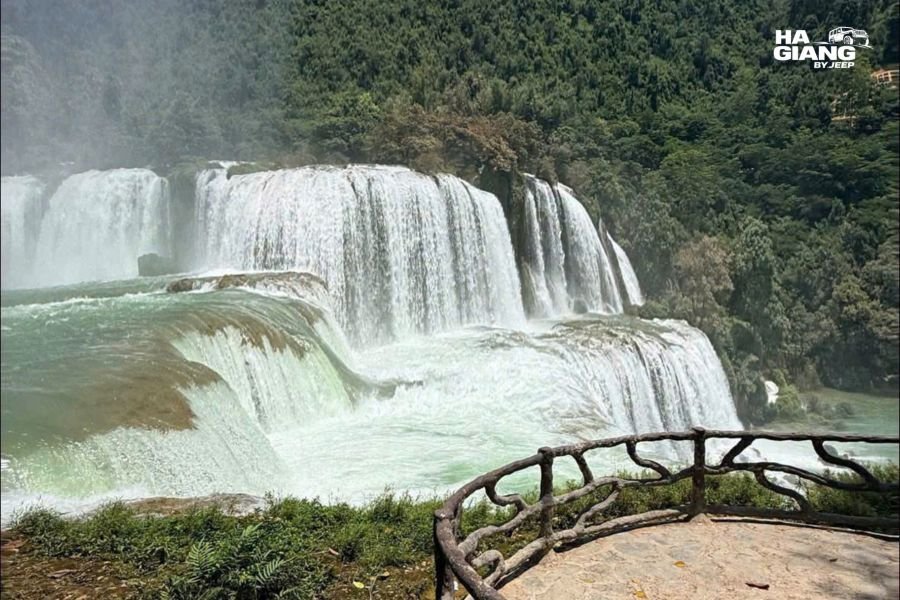
The practical result is that Ban Gioc in full flood and Ban Gioc in dry season look like different places. The full flood version is wide and loud, all three tiers running white, the mist from the base reaching the viewing area on the bank. The dry season version exposes the rock structure behind the curtains of water, shows the distinct step between each tier, and runs with a clarity and green that the turbid flood season water does not have.
Both versions are genuine and worth seeing. Neither is a disappointment as long as you know which one you are getting.
The Waterfall at Full Flood: August to October
This is the version that drives most of the travel photography you will see of Ban Gioc. All three tiers run at full volume. The river in front of the falls is powerful. The mist from the base creates its own microclimate near the viewing area.
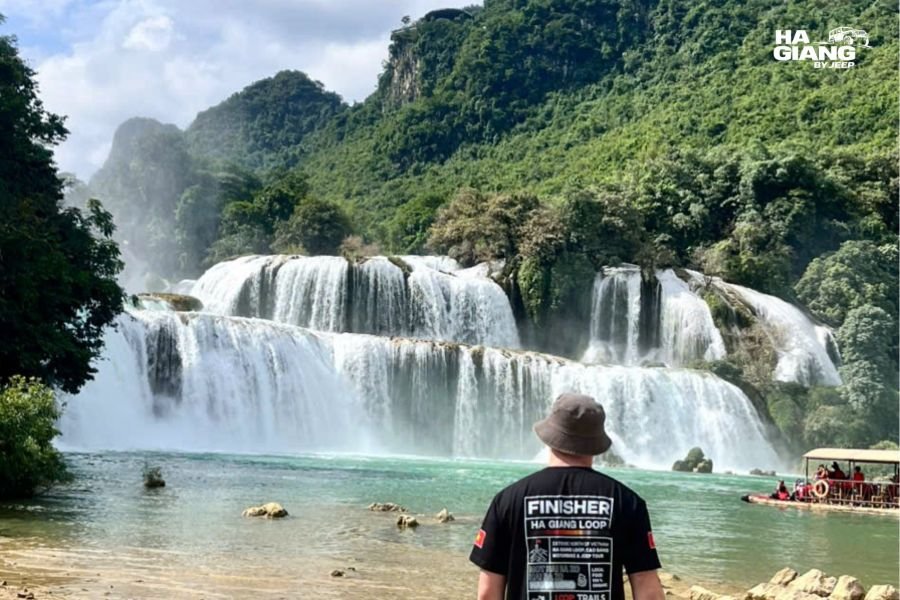
August is typically peak volume. The monsoon catchment has been filling for months. The water is brown and fast, heavy with sediment from the summer rains. The scale is at its most dramatic. The colour is not at its most beautiful.
September is the sweet spot for many travelers. Water levels are still very high but the sediment is beginning to clear. The river starts to show green between the brown, and on some days the falls run with a colour that is between the two. The volume is still extraordinary.
October is the month most people who have researched Ban Gioc carefully choose. The monsoon is ending. The sky is clearing. The water is at or near its annual maximum and the clarity is coming back. October days at Ban Gioc can produce the version of the waterfall that photographs show: full, white, wide, under a clearing sky.
The trade-off is crowds. October is the peak domestic tourism month in northern Vietnam. The viewing area at Ban Gioc can be very busy, particularly on weekends. Weekday visits in October are significantly less crowded than weekend ones.
See the Ha Giang and Cao Bang 5 day tour
The Transitional Months: November and May
November: Falling Water, Clearing Air
November is the month after the peak. Water levels are dropping from October's high. They are not low, but they are visibly less than October. The sky has cleared and the air is clean and cool. The crowds from October are dispersing.
The chestnut harvest in nearby Trung Khanh district runs through October and November, which adds a specific seasonal dimension to any visit in this window. Roasted Trung Khanh chestnuts at a roadside stall on the way to or from the falls are something that most travelers who encounter them do not forget.
November is the month for travelers who want good water levels, clear air, and fewer people than October delivers.
May: Rising Water, Warming Air
May is the equivalent transition on the way up rather than the way down. Water levels are rising from their dry season minimum. The falls are building toward the summer volume. The vegetation around the falls is at its most lush. The weather is warm and clear before the rains arrive.
May has a specific quality of green around Ban Gioc that is different from any other month: the hillsides behind the falls are fully covered, the rice paddies upstream are being planted and the whole landscape is in peak growing season colour.
The Dry Season Falls: December to April
The dry season version of Ban Gioc is the one that most photographs undersell.
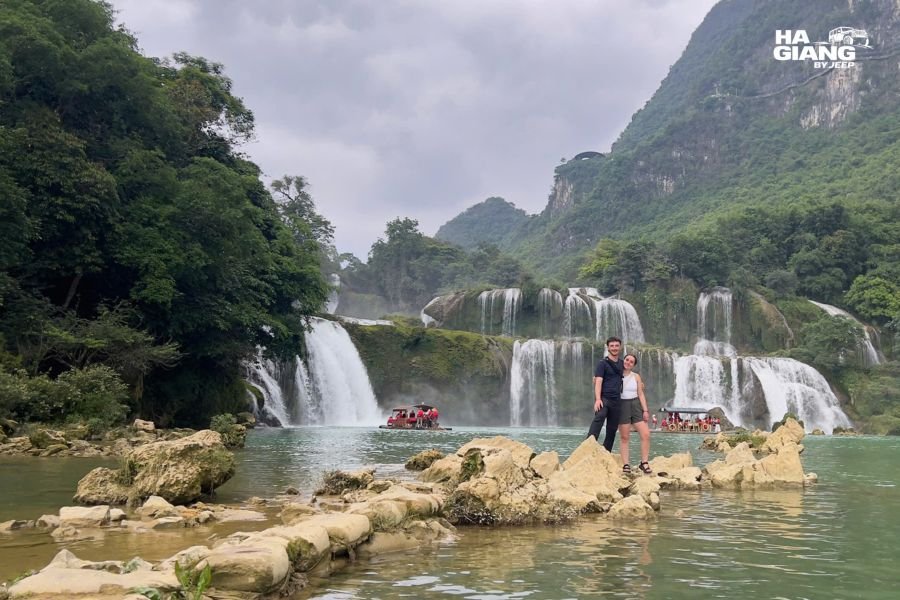
With lower water levels, the rock architecture of the falls becomes visible. The three tiers are distinct. The limestone steps between them are exposed. The curtains of water fall in channels rather than as a solid wall. Behind those channels, the layered rock structure of the falls appears in detail that the flood season water covers completely.
This is also when the water colour is at its clearest and most green. The pool at the base of the falls in dry season is a specific shade that is calmer and cleaner than the turbid flood season version.
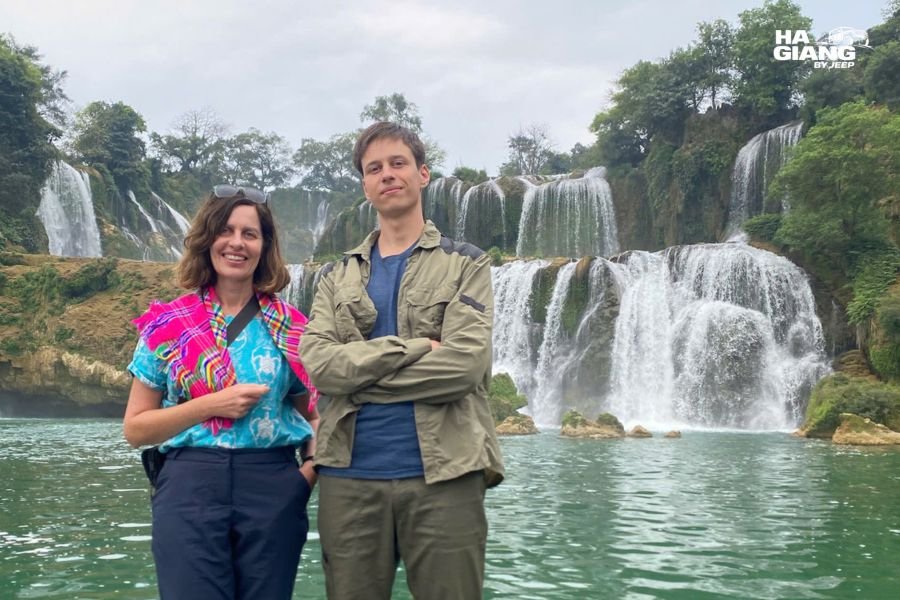
December and January are cold and very low. The falls are at or near their annual minimum. Tourist numbers are also at their lowest. The experience is of a quiet, beautiful, slightly austere waterfall rather than a spectacle.
February and March are the hidden window that most international travelers miss. Cold is softening. The dry season water levels are still low but the air is exceptionally clear. The region has almost no visitors in these months. The Cao Bang landscape in February has a specific quality: bare hillsides and orchards coming into blossom against a winter blue sky.
April marks the start of warming and the beginning of the rise toward the wet season. Water levels start building. The falls are thicker than in February. The air is still clear.
Rising Water: June and July
June and July bring the start of the monsoon to the Cao Bang catchment. The falls are building in volume. The water is beginning to run faster and darker. The colour transitions from dry season green toward the turbid brown of peak monsoon.
This is the least visited period, which is both a trade-off and an advantage. Accommodation is easily available. The crowds are absent. The falls are running with more power than the dry season but without the full flood drama of September and October.
The practical consideration is weather. June and July in Cao Bang can bring heavy rain and reduced visibility. Road conditions on the mountain routes to Ban Gioc can be affected. Confirm current conditions before travel.
Month by Month Summary Table
| Month | Water level | Colour | Crowds | Overall |
|---|---|---|---|---|
| January | Very low | Clear, green | Very few | Quiet, beautiful |
| February | Low | Clear, green | Very few | Hidden gem window |
| March | Low, rising | Clear | Few | Underrated |
| April | Rising | Clear to moderate | Light | Good conditions |
| May | Moderate | Moderate | Light to moderate | Lush and clear |
| June | Building | Moderate, darkening | Few | Variable weather |
| July | High | Brown to dark green | Few | Variable weather |
| August | Peak volume | Brown, turbid | Moderate | Maximum drama |
| September | Peak to post-peak | Clearing brown | Moderate | Sweet spot |
| October | High, clearing | Green-brown clearing | High | The classic window |
| November | Falling | Clear | Moderate | Underrated |
| December | Low | Clear | Few | Quiet season |
The Colour of the Water
The colour of the Quay Son River at Ban Gioc changes significantly through the year and is worth understanding because it affects everything from photographs to the swimming experience below the falls.
Dry season (October to April running clear): the water shows its limestone character. A turquoise to jade green depending on the depth, sky conditions and time of day. This is the colour that appears in many of the most striking photographs of the falls when the light is right.
Peak monsoon (July to August): brown to dark brown, carrying sediment from the entire catchment. The falls are powerful and loud. The colour is not at its most appealing.
Transition (September, May): a mix. Green begins to appear within the brown as the season changes. Some days are closer to green, some closer to brown, depending on recent rainfall.
The colour of the water is one of the hardest things to predict in advance for any specific date. What a trip advisor post says about the colour in September 2025 may not match September 2026 if upstream rainfall patterns differ. The best approach is to set a seasonal window based on the guidance above and arrive expecting the average rather than a specific day's conditions.
The Three Tiers and What You See at Each Level
Ban Gioc is a tiered waterfall. The three tiers run at different relative volumes depending on the water level, and each level of water changes what you can see.
At full flood: all three tiers merge visually into one curtain of white. The volume is such that distinguishing individual steps is difficult. The effect is overwhelming rather than detailed.
At moderate levels (April, May, November): all three tiers are visible and distinct. The waterfall has its most recognisable structure. This is the version that shows the full character of the falls.
At low levels (January to March): the tiers are very clearly separated. The rock steps between them are exposed. The water falls in channels with visible gaps. This version is the most detailed and the least impressive to visitors expecting the full volume version.
Each tier has a viewing angle that works best from the main viewing area on the Vietnamese bank. The lower tier, closest to the viewer, dominates at all water levels. The upper tiers are more visible from the far end of the viewing area.
Crowd Levels Through the Year
Ban Gioc is one of the most visited sites in Cao Bang province, but visitor density varies sharply by month.
October weekends: the busiest single period. Domestic tour groups from Hanoi arrive by bus. The viewing area is full. Arriving early in the morning, before 9, is the practical mitigation. The falls in the first two hours of morning light are also at their most photogenic regardless of season.
October weekdays: significantly quieter than weekends. If your schedule allows weekday flexibility in October, the experience changes substantially.
November through September (excluding October): progressively quieter as you move away from the October peak. February and March are the quietest months for international visitors. June and July are quietest overall.
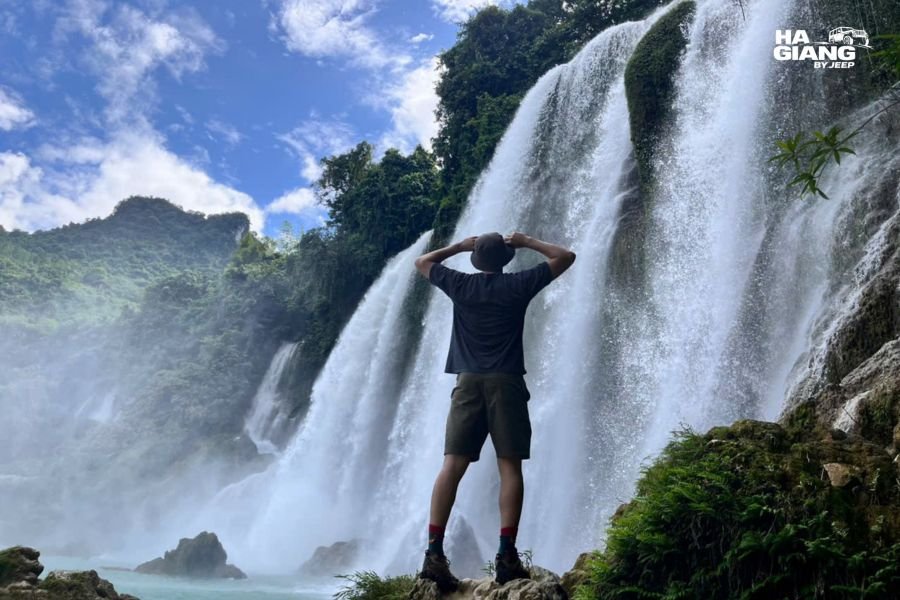
With a private vehicle and a local driver, the timing flexibility of arriving early in the morning is built in. The falls at dawn, before the main visitor wave, are worth the early start in any season.
The Bamboo Boat Experience by Season
Bamboo raft or boat trips on the Quay Son River near Ban Gioc are available in most seasons, with some variation.
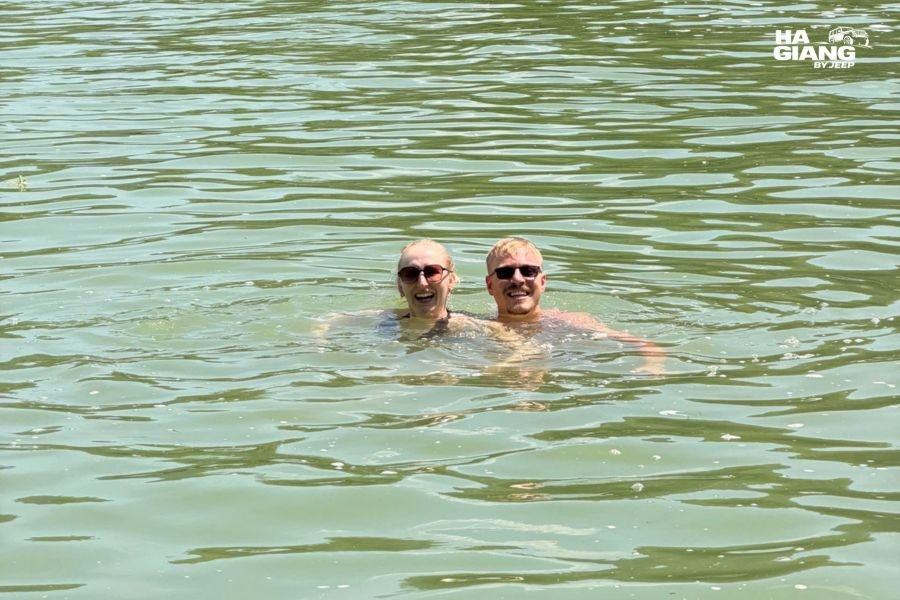
Best for boats: October through May, when the water is clear enough to see the river bottom, and the current is manageable for the flat boats used. The pool at the base of the lower tier is accessible and, in dry season, the water colour from boat level is extraordinary.
Peak monsoon July to August: the current is faster, the water is brown, and the boat experience is different in character. Boat trips may still be available depending on water conditions. Confirm on site.
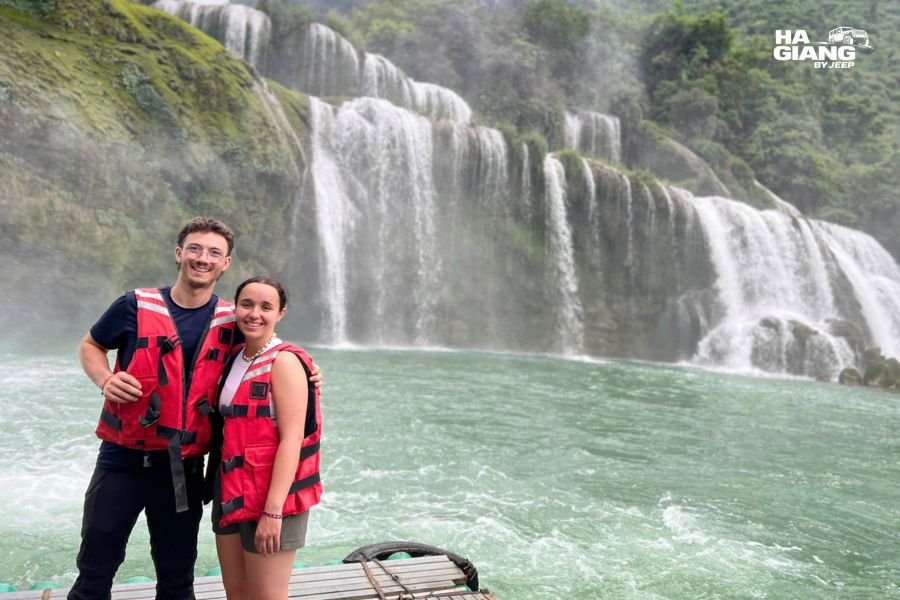
The boat rides bring you close to the base of the falls. The view from water level, looking up at the cascades and the cliffs behind them, is one of the experiences at Ban Gioc that photographs taken from the viewing area do not capture. If you have time for one additional activity after seeing the falls, the boat is the most valuable use of it.
How to Reach Ban Gioc Waterfall
Ban Gioc sits near Trung Khanh district, approximately four to five hours from Ha Giang City via Meo Vac. Most travelers who visit the falls are doing so as part of a combined Ha Giang and Cao Bang tour rather than as a standalone trip from Hanoi, because reaching it independently from Hanoi requires a full day of travel in each direction.
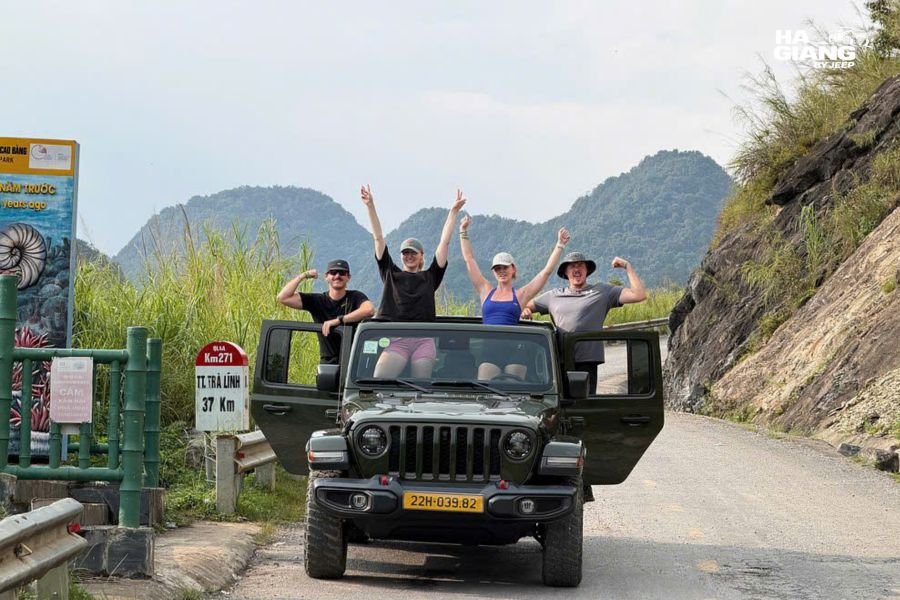
The most efficient route is to complete the Ha Giang Loop and then continue east from Meo Vac into Cao Bang, arriving at Ban Gioc without doubling back to Hanoi. This is the logic behind our combined tours.
The road to Trung Khanh and Ban Gioc passes through the Non Nuoc Cao Bang UNESCO Geopark, with God's Eye Mountain and Ngoc Con Valley visible from the road. The drive is part of the experience rather than a necessary inconvenience.
Which Jeep Tour Is Right for You?
Ban Gioc Waterfall is the destination that makes the Cao Bang extension of the Ha Giang Loop worth its extra days for most travelers.
Ha Giang and Cao Bang, 5 days reaches Ban Gioc on day four or five, with a full day at the falls and time for the boat trip. This is the standard version.
Ha Giang and Cao Bang, 6 days has more time at the falls and more of the Cao Bang Geopark landscape on the way. The 15 step pass, God's Eye Mountain and Ngoc Con Valley all get more than passing stops.
Jeep Wrangler Rubicon rental if you want to drive the route yourself and time the falls visit for the morning light.
Timing your visit for the October window requires booking well in advance. November is easier to arrange. February and March are the most flexible for last minute planning.
Questions about water levels for your specific travel dates? Message us on 📍 WHATSAPP. We can tell you what conditions have been like recently and what to expect for your window.
Frequently Asked Questions
When are Ban Gioc Waterfall water levels at their highest?
August and September are the peak volume months, driven by monsoon rain across the entire Quay Son River catchment including the Chinese side of the border. October is when the falls run high and clear simultaneously, which is why it attracts the most visitors.
What do Ban Gioc water levels look like in dry season?
Significantly lower. The three tiers become clearly distinct, the rock structure between them is visible, and the water colour shifts from brown flood season water to a clear turquoise green. The dry season version is a different experience rather than a lesser one.
Is it worth visiting Ban Gioc in the dry season?
Yes, for the right reasons. The water colour in dry season is often more beautiful than flood season. The rock architecture of the falls is fully visible. Tourist numbers are much lower. The experience is quieter and more intimate. What you do not get is the full volume and power of the flood season falls.
What colour is the water at Ban Gioc?
It depends on the season. Dry season water is clear turquoise to jade green. Flood season water runs brown to dark brown with monsoon sediment. October is when the falls most often combine high volume with improving clarity, which is one reason October is the most popular month.
Are boat rides available at Ban Gioc in all seasons?
Boat rides are generally available from October through May. During peak monsoon in July and August, water conditions can affect availability. Confirm on site or with your operator close to your travel dates.
How crowded is Ban Gioc at peak season?
October weekends can be very busy, particularly with domestic tour groups. Arriving early in the morning, before 9, reduces the crowd significantly regardless of season. Weekday visits in October are noticeably quieter than weekend ones.
Does Ban Gioc Waterfall have an entry fee?
Entry fees apply. Fees can change, so confirm current pricing on site or with your operator rather than relying on any figure published in advance.
How do Ban Gioc water levels compare to other waterfalls in Vietnam?
Ban Gioc is distinctive because its catchment extends into China, which means water levels respond to rainfall patterns on both sides of the border. It runs fuller for longer into the dry season than most waterfalls fed by a purely local catchment, and it drops more slowly after the monsoon ends.
Ha Giang by Jeep runs private 4x4 tours across the Dong Van Karst Plateau and Non Nuoc Cao Bang Geoparks, with English speaking local drivers and 24/7 support from our office in Ha Giang City. Email booking@hagiangbyjeep.com or WhatsApp +84 862 379 288.