
Can You Do the Ha Giang Loop Without Driving?
Yes. And for a great many travelers, it is the better version of the trip, not the compromise.
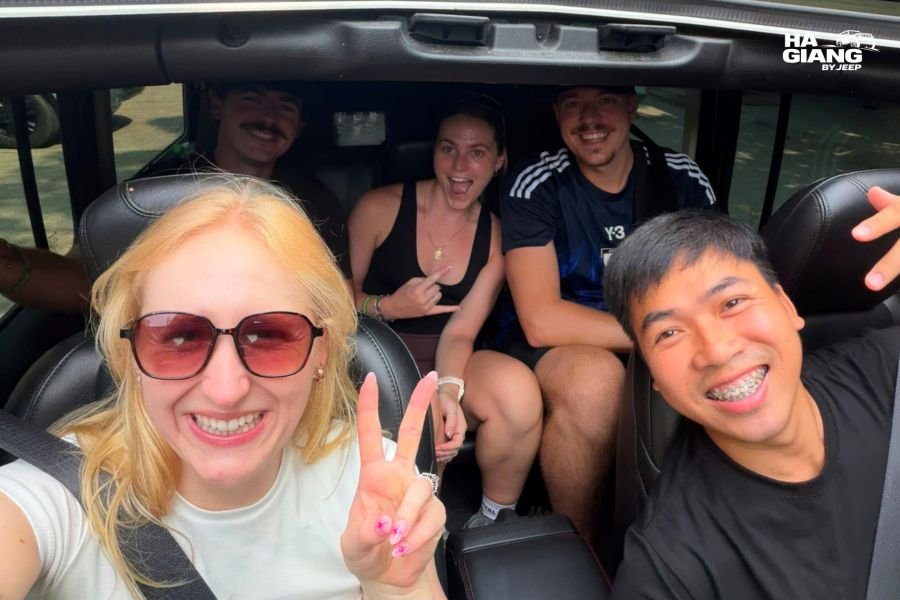
This question arrives in our inbox almost every day, usually with an apology attached. People explain that they do not have the confidence, or the experience, or that their knees are not what they were, as if the region were reserved for a particular kind of traveler.
It is not. Doing the Ha Giang Loop without driving is a completely normal way to see this region, and the people who do it tend to come home with more of it in their heads, because they spent the whole journey looking outward instead of at the road surface.
Here is how it actually works, what your options are, what a day looks like from the passenger seat, and the honest trade offs.
The Short Answer
You can do the entire Ha Giang Loop without touching a steering wheel, at any age, with no licence and no experience of mountain roads.
The standard way is a private vehicle with a local driver. You sit, you look, you stop wherever you want, and someone who has driven these passes for years handles everything else. The route is identical. Quan Ba, Yen Minh, Dong Van, Ma Pi Leng Pass, Meo Vac, Du Gia: nothing is off limits because you are a passenger.
The question is never whether you can do the Ha Giang Loop without driving. It is which way of not driving suits you.
Why People Assume They Have to Drive
Most of the writing about this region is aimed at one kind of traveler: young, independent, comfortable operating a vehicle on unfamiliar mountain roads. That audience is real and they have a wonderful time.
The problem is that their version became the default story. Search for this region and you find endless accounts of self operated journeys, which quietly suggests that anyone who cannot or does not want to do that should look elsewhere.
That is simply wrong, and it costs a lot of people a trip they would have loved. Couples in their sixties. Families with small children. Travelers who have never driven anywhere outside a city. People with a knee, a back or a balance issue that makes long days at the controls a bad idea. All of them can see every part of this region.
Who Asks This Question
Almost always one of these:
- Travelers in their 50s, 60s and beyond who want the landscape without the exertion or the risk
- People who have never held a licence, or let one lapse decades ago
- Nervous drivers who are fine at home and not fine on a cliff road in a foreign country
- Families where one adult would have to drive and therefore see nothing
- Couples where only one person drives, which means one of them spends the trip concentrating
- Travelers with a health condition that makes long hours at the wheel unwise
- People who simply do not want to, which is a complete answer on its own
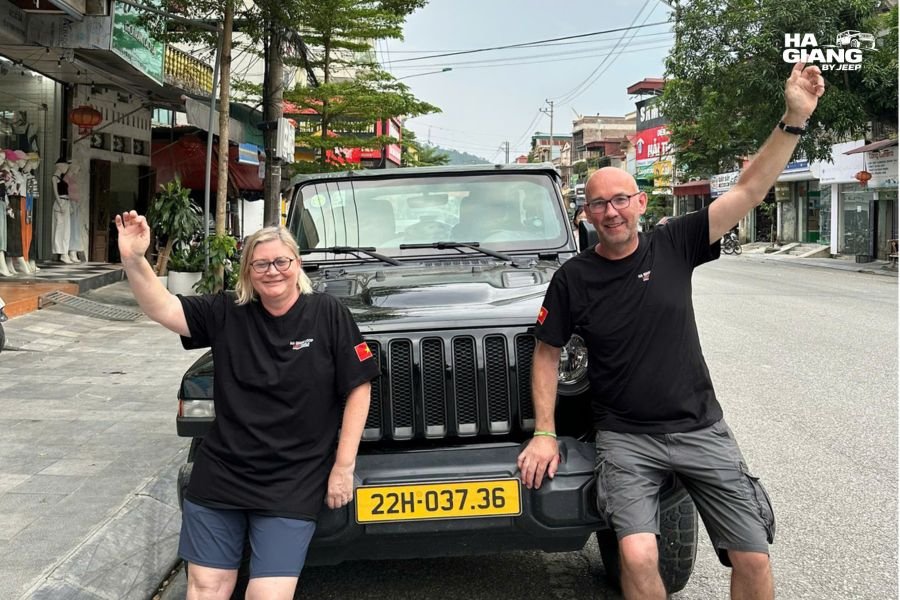
If you recognise yourself anywhere in that list, the rest of this article is written for you.
Your Options If You Are Not Driving
1. A Private Vehicle With a Local Driver
The most common answer, and the one most people end up choosing.
You get a 4x4 and a driver for the whole trip. Nobody else is in the vehicle unless you brought them. The itinerary is yours, the stops are yours, and the schedule bends around you rather than a group.
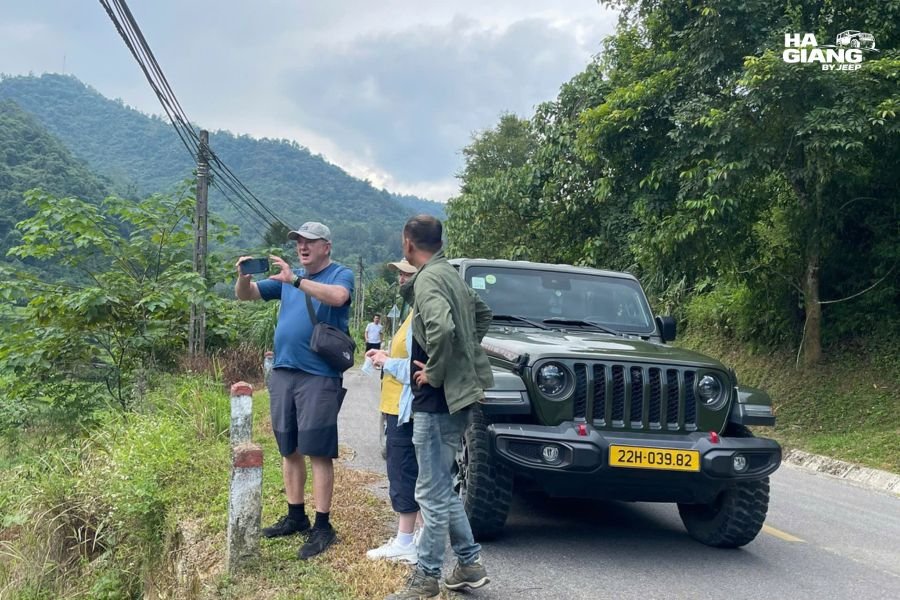
What makes this more than a taxi is the driver. Someone who grew up on this plateau knows which viewpoint is clear when the cloud sits low, which market is running on the day you pass, which family homestay is genuinely good rather than merely listed, and when to stop because the light has done something. He also speaks the local languages, which turns a market from a photograph into a conversation.
Best for: couples, families, older travelers, anyone who wants control over the day.
2. A Shared or Group Vehicle
The same idea, cost spread across other travelers. You still drive nothing, and you still see the main route.
What you trade is control. The vehicle leaves when the group is ready, stops where the group stops, and moves at the pace of whoever is slowest in the morning. If a market is wonderful and you want another half hour, that becomes a negotiation.
Best for: solo travelers on a tighter budget who are comfortable with a fixed schedule and unfamiliar company for several days.
3. Independent Travel by Public Transport
Possible, with real limits worth understanding before you commit.
Buses connect the main towns, and you can reach Ha Giang City, Dong Van and Meo Vac without a private vehicle. What you cannot easily do is the parts that make the Loop worth doing: stopping at viewpoints between towns, reaching villages off the main road, timing your arrival for a market, or getting to the places where nobody else is. Services are built around local needs rather than sightseeing, and schedules can change.
Best for: travelers with plenty of time, flexibility and patience who value independence over coverage.
4. A Standard Car With a Driver
Worth knowing about, because it is a real way to do the Ha Giang Loop without driving and nobody mentions it.
A saloon or minivan with a driver will get you around the main Loop on the sealed sections, and it is the most sheltered way to travel if weather is your main concern. What it does not give you is the view. You are looking through side windows rather than sitting in the landscape, the vehicle sits lower, and rougher access roads to villages and viewpoints are off the table.
It also changes the character of the trip. A standard car is transport. An open vehicle built for this terrain is part of why people come.
Best for: travelers who want maximum shelter and are content with the main road sights.
Comparing the Four
| Option | You drive | Stops | Access off the main road | Cost per person |
|---|---|---|---|---|
| Private jeep with driver | No | Unlimited, yours | Yes | Falls sharply with group size |
| Shared vehicle | No | Group decides | Limited | Lowest of the driven options |
| Public transport | No | Bus stops only | No | Lowest overall |
| Standard car with driver | No | Yours | Limited | Similar to a private jeep |
What a Day Looks Like as a Passenger
Concretely, because this is what people actually want to know.
You have breakfast wherever you slept, usually with the family who hosted you. Your bag goes in the vehicle and stays there. You get in, and from that point until the evening your only decisions are where to stop and how long for.
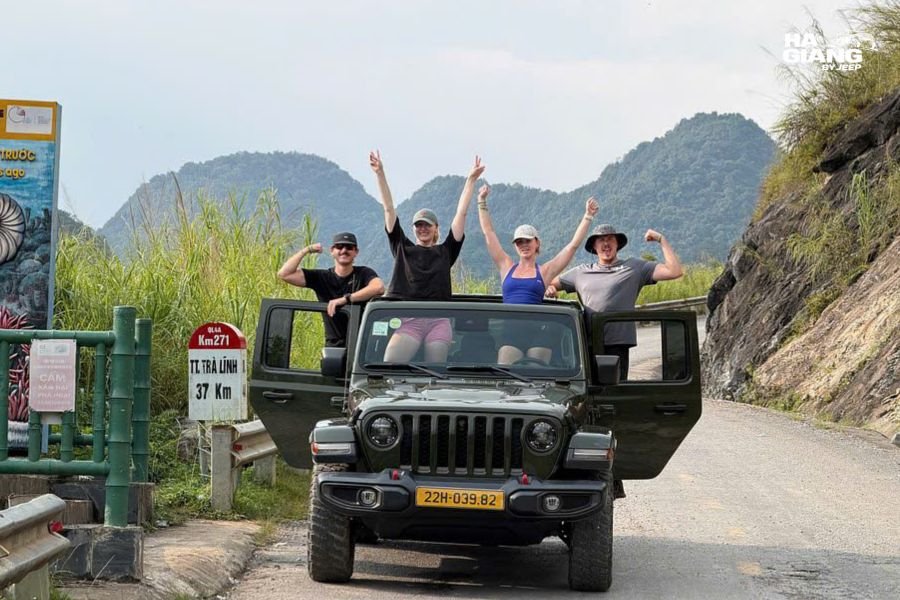
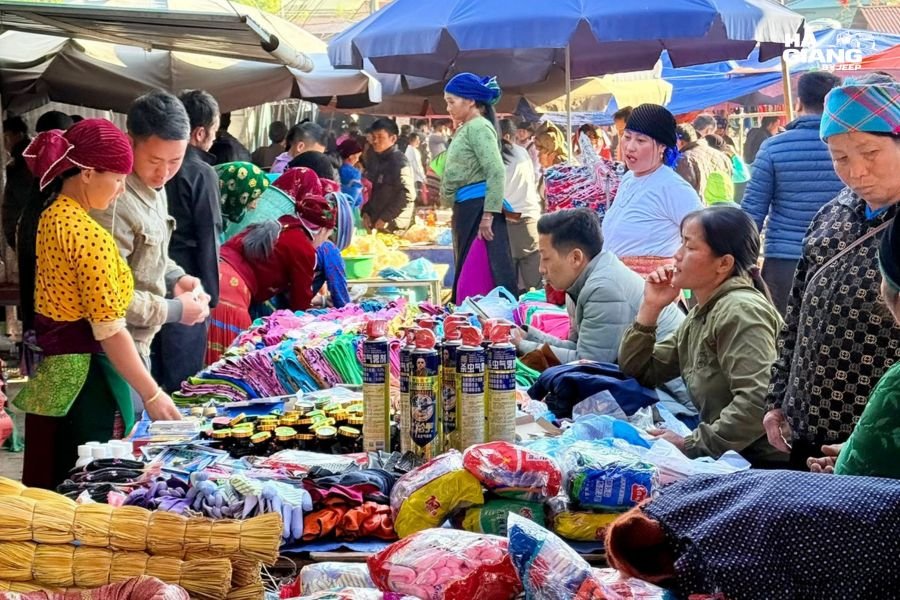
The morning is climbing and looking. The road bends constantly, so the view changes every minute or two. You are not tracking the gravel in front of you or judging a blind corner, which means you notice things: a woman carrying a load up a slope you would struggle to walk empty handed, children walking to school, buffalo on the road, corn planted in a pocket of soil the size of a table.
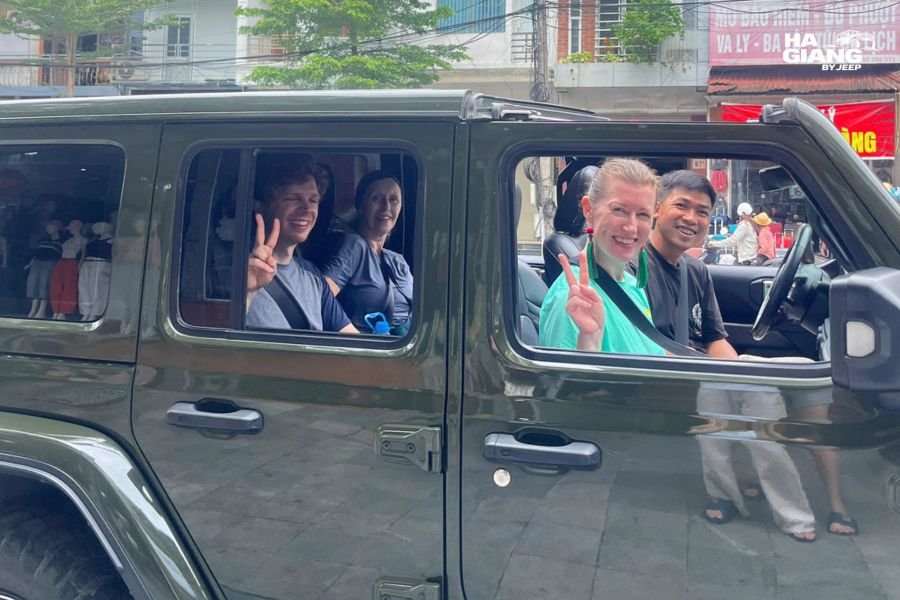
You stop when something looks worth stopping for. Sometimes that is a named viewpoint. More often it is a stall, a village, a stretch of road where the cloud is doing something.
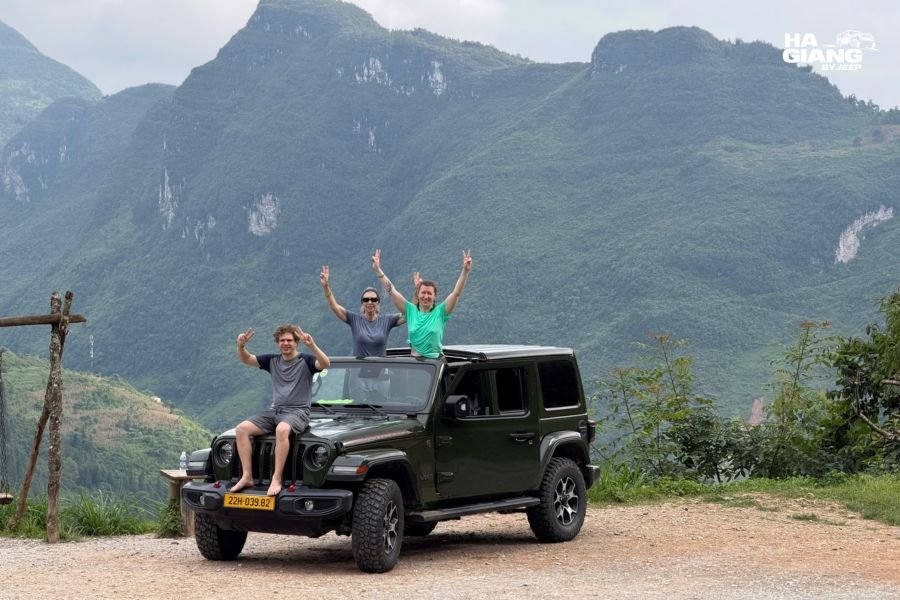
Lunch is somewhere your driver knows. Afternoon is more of the same, usually with the best light of the day. By evening you are at a homestay or small hotel, and the only tired thing about you is your eyes.
The Corn Wine Test
There is a small moment on most trips that makes the whole point.
At dinner in a homestay, your host pours ruou ngo, the local corn wine. It arrives whether or not anyone asked. If you were driving in the morning, you have to decline, or nurse one glass and feel awkward about it.
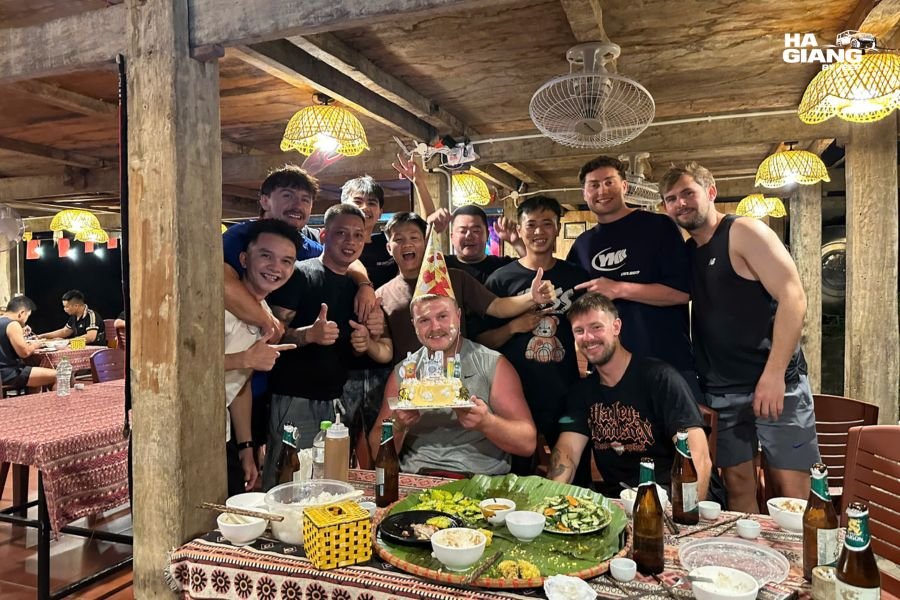
As a passenger, you can just say yes. Small thing. It changes the evening.
What You Gain by Not Driving
You actually see the landscape. This is the big one. Driving a road like this demands your full attention. Everything you look at is a glance.
Photographs. Not the posed ones. The ones you take because the vehicle stopped when you asked, at a moment nobody planned.
Local knowledge, continuously. A good driver narrates without being asked. What the corn is for. Which group lives in this valley. Why that house is built from earth rather than stone. Why the market is on today.
Weather stops mattering so much. Rain, cold and cloud are manageable from inside a vehicle with a soft top and heating. They are a different proposition when you are exposed to them all day.
Energy at the end of the day. People who drive these roads arrive at dinner drained. Passengers arrive ready to eat, talk and walk around the town.
Genuine safety margin. These are mountain roads with switchbacks, blind corners and drops. Somebody who does this weekly is a different proposition from somebody doing it for the first time. If safety is on your mind, our guide on how safe the Ha Giang Loop is by jeep goes into it properly.
What You Give Up
An honest article has to include this.
Total spontaneity. You can stop anywhere and stay as long as you want, but you are still coordinating with another person. If your idea of freedom is leaving at 4am on a whim with no conversation, a driver is not that.
Cost. A vehicle and a driver for several days is the largest line in a Ha Giang budget. It buys real things, and it is not free. Our full cost breakdown explains what should be inside a proper quote.
A certain kind of pride. Some people want to have done it themselves, and that is a legitimate thing to want. If it is what you want, take it seriously and prepare properly.
Sharing the day with someone. For most travelers this becomes a highlight rather than a cost, but if you were hoping for complete solitude, know that you will have company.
Comfort Details That Matter
If you are not driving, comfort is decided by the vehicle and the pace rather than by your skill. Worth asking about:
| What to check | Why it matters |
|---|---|
| Seat comfort and legroom | Several hours a day, most days |
| Soft top and heating | The plateau is genuinely cold from late autumn onward |
| Open air option | The reason to be in an open vehicle at all on clear days |
| Freedom to stop | Ask whether stops are unlimited or scheduled |
| Daily distance | Fewer kilometres and more stops is the better trip |
| Motion sickness | Front seat, ventilation and regular stops all help; bring something if you are prone to it |
| Luggage | Confirm your main bag stays in the vehicle |
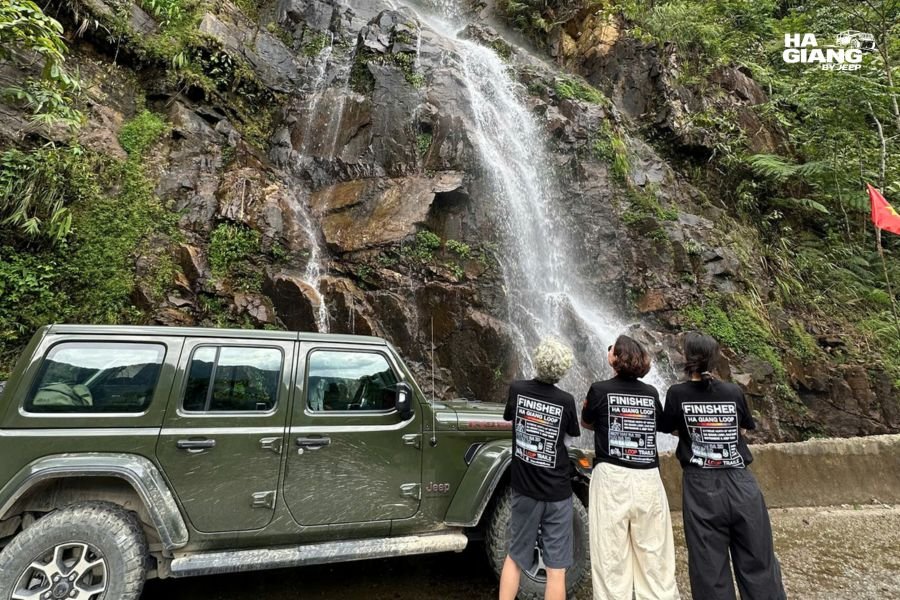
On motion sickness specifically: constant switchbacks affect people who are normally fine. Travelers who are prone to it should say so when booking rather than discovering it on day one. A driver who knows can adjust the pace, take corners differently and stop more often.
Common Worries, Answered
"Will I be bored sitting for hours?"
Almost nobody is. The road bends constantly and the landscape changes completely between regions. Boredom happens on motorways, not here.
"Will the driver speak English?"
He should. Ask specifically, because it is the difference between a transfer and a trip. Our drivers are from this region and speak English.
"Can we really stop whenever we want?"
In a private vehicle, yes. Confirm it before you book, because this is the single biggest practical difference between operators.
"Are we too old for this?"
No. The physical demand is low and the walking is optional and short. This age group is consistently the most enthusiastic afterwards, provided the vehicle is comfortable and the pace is theirs.
"Is it suitable for children?"
Yes, and better than a shorter, tighter itinerary. A private vehicle means you stop when the smallest person needs to stop.
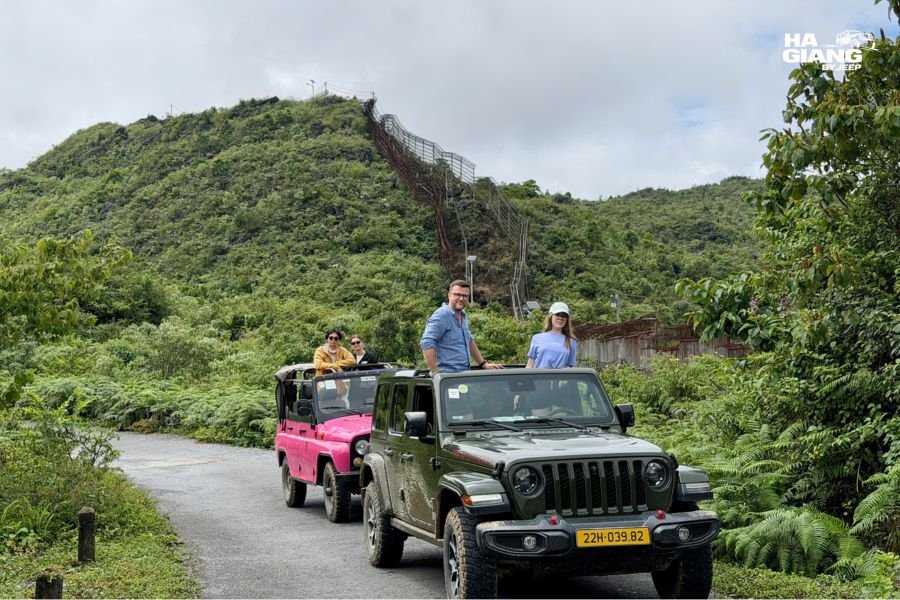
"Do I need any kind of licence or permit as a passenger?"
Not as a passenger. Parts of the route sit inside a border zone and require a permit, which a reputable operator arranges for you. Requirements are set locally and can change, so confirm close to your travel dates.
"Are the roads frightening?"
They are genuine mountain roads with switchbacks and drops beside them, and they look dramatic. Most passengers find that within an hour or two they stop noticing and start enjoying it, largely because the person driving is completely unbothered.
If You Do Want to Drive Yourself
Some travelers read all of the above and still want the wheel. That is a good instinct if you have the experience for it.
We rent the Jeep Wrangler Rubicon for self drive, by the day. It suits confident drivers who are comfortable with mountain roads, unfamiliar traffic and making their own decisions about weather and timing.
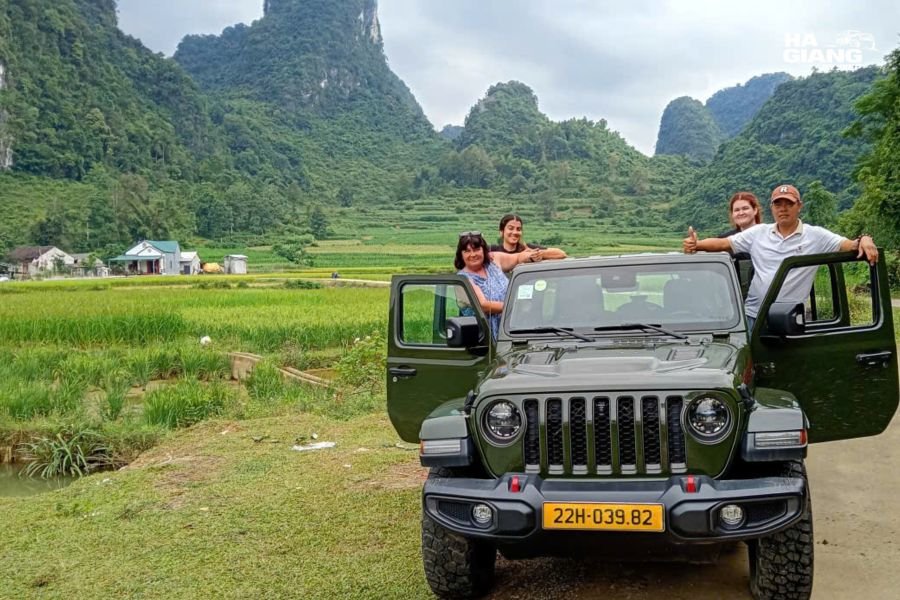
Be honest with yourself about experience rather than enthusiasm. Requirements for driving in Vietnam are set by the authorities, can change, and are your responsibility to verify before you travel. If there is any doubt in your mind while reading this paragraph, take the driver.
Which Jeep Tour Is Right for You?
Ha Giang Loop, 3 days if your calendar is fixed. Quan Ba, Yen Minh, Dong Van, Ma Pi Leng, Meo Vac.
Ha Giang Loop, 4 days if you can find one more day. Du Gia, Pho Bang, Sung La and more village time. The one we recommend most often, especially for travelers who want a slower pace.
Ha Giang and Cao Bang, 5 days if Ban Gioc Waterfall is on your list. Two UNESCO Global Geoparks in one continuous journey.
Ha Giang and Cao Bang, 6 days the full northeast unhurried, including God's Eye Mountain, Ngoc Con Valley and the 15 step pass.
Jeep Wrangler Rubicon rental if you are a confident driver and want the vehicle without the driver.
Every tour we run is private. We do not put strangers together, which means the answer to "can we stop here" is always yes.
Tell us who is travelling and how many days you have. If you are nervous about any part of this, say so. We have arranged trips for travelers who had not sat in a vehicle on a mountain road in their lives, and it went fine.
Questions first? Contact us or message +84 938 988 593 on WhatsApp.
Frequently Asked Questions
Yes. A private vehicle with a local driver covers the entire route, and you need no licence and no experience. Shared group vehicles are the cheaper version of the same idea.
No part of the route is inaccessible to passengers. If anything you see more, because you spend the journey looking at the landscape rather than the road.
On a guided jeep tour, yes. On a self drive rental, no. Check which you are booking, because both exist and the difference is the whole trip.
In a private vehicle, yes, and unlimited stops should be standard. In a shared vehicle, stops are decided by the group and the schedule.
Very much so. The physical demand is low and the walking is optional. Seat comfort, weather protection and control over the pace matter far more than fitness.
Constant switchbacks affect people who are normally fine. Say so when booking so your driver can adjust the pace and stop more often, and bring whatever usually works for you.
Ask specifically when you book. Ours are from this region and speak English, which also means they can talk to the people you meet at markets and villages.
Partly. Buses link the main towns, but you will miss viewpoints between them, villages off the main road and the freedom to stop. It suits travelers with lots of time and flexibility.
Parts of the route sit inside a border zone and require a permit, which reputable operators arrange. Rules are set locally and can change, so confirm close to your travel dates.
It depends on group size, because a large share of the cost is per vehicle rather than per person. Compare inclusions rather than headline prices before deciding.
Ha Giang by Jeep runs private 4x4 tours across the Dong Van Karst Plateau and Non Nuoc Cao Bang Geoparks, with English speaking local drivers and 24/7 support from our office in Ha Giang City. Email booking@hagiangbyjeep.com or WhatsApp +84 862 379 288.