Useful Vietnamese Phrases for Ha Giang
You do not need Vietnamese to travel in Ha Giang. But learning even a handful of useful Vietnamese phrases changes the texture of the trip in a way that is difficult to describe until it happens to you.
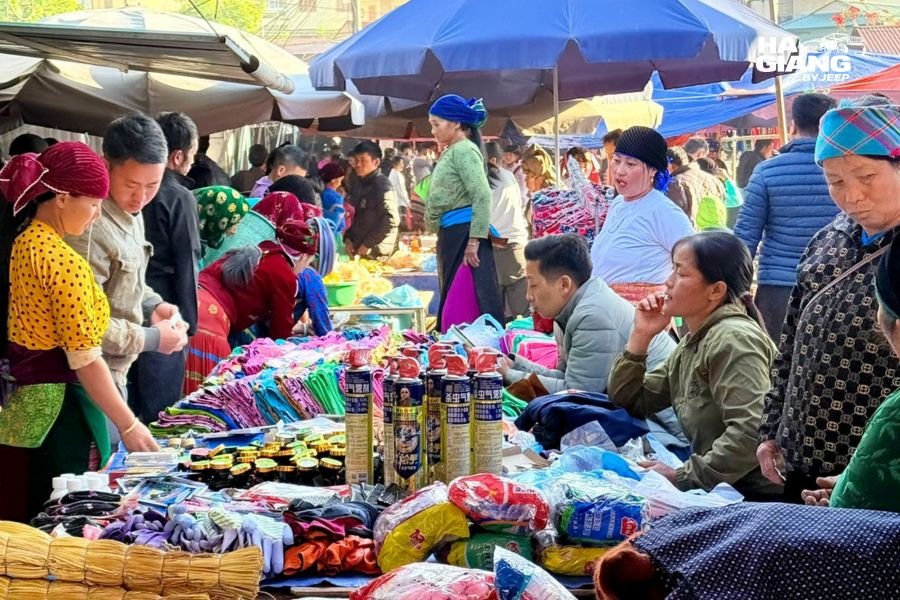
The moment is usually small. You say thank you properly at a market stall and the woman selling you tea stops, looks up, and answers you. Something shifts. You have gone from being a person walking past to a person she is talking to.
This guide covers the phrases that actually get used on this route, how to pronounce them well enough to be understood, and one important thing about language in these mountains that most guides leave out.
What is in this guide
- Why even a few words change the trip
- Pronunciation: the honest version
- The ten phrases that do the most work
- Greetings and getting names right
- Numbers and money
- At the market
- Eating and drinking
- At a homestay
- On the road
- Asking for help
- The local languages nobody tells you about
- Which jeep tour suits you best
- FAQ
Why Even a Few Words Change the Trip
Two practical reasons and one that matters more.
English is limited outside the towns. In hotels in Ha Giang City and Dong Van you will find English. In a village shop, at a roadside stall, or at a family homestay in Du Gia, often you will not. A few words fill a real gap.
It signals effort. Trying is the whole point. Nobody expects you to be fluent, and the attempt itself is what gets the warm response, not the accuracy.
And the real reason. People here meet a lot of travelers who pass through without ever addressing them. Saying hello in someone's language is a small act of respect that costs nothing and is noticed every single time.
You will get the tones wrong. People will understand you anyway from context, or they will laugh kindly and correct you, which is its own good moment.
Pronunciation: The Honest Version
Vietnamese is a tonal language. The northern dialect spoken in Ha Giang uses six tones, and the same syllable said with different tones means completely different things. This is why travelers who read a word off a page sometimes get a blank look.
What this means practically: you are not going to master the tones from a blog post, and you do not need to. Aim for close enough that context does the rest.
Three things that help more than tone drills:
- Learn from a voice, not from text. Ask your driver to say a phrase and copy him. Thirty seconds of imitation beats an hour of reading.
- Keep sentences short. A single word said clearly works better than a long sentence said uncertainly.
- Use gestures without embarrassment. Pointing, counting on fingers, holding up an object. This is normal communication here, not a failure.
A note on the phonetic guides below. They are rough approximations written for English speakers, not a formal transcription system. They will get you understood. They will not make you sound like a local, and no written guide can. Download an offline Vietnamese language pack before you leave the city, since you will want it exactly where there is no signal.
The Ten Phrases That Do the Most Work
If you learn nothing else, learn these.
| Vietnamese | Meaning | Rough pronunciation |
|---|---|---|
| Xin chào | Hello | sin chow |
| Cảm ơn | Thank you | gam un |
| Không, cảm ơn | No, thank you | khom, gam un |
| Xin lỗi | Sorry / excuse me | sin loy |
| Bao nhiêu tiền? | How much? | bao nyew tien |
| Ngon quá | Delicious | ngon wah |
| Đẹp quá | Beautiful | dep wah |
| Tôi không hiểu | I do not understand | toy khom hyew |
| Nhà vệ sinh ở đâu? | Where is the toilet? | nya vay sing uh dow |
| Tạm biệt | Goodbye | tam byet |
Cảm ơn is the single highest value word on the list. Use it constantly.
Ngon quá and đẹp quá are the two that produce the biggest reactions. Saying the food is delicious at a homestay dinner, or that the view is beautiful to the person who lives with it every day, lands well every time.
The easiest translator is the person driving
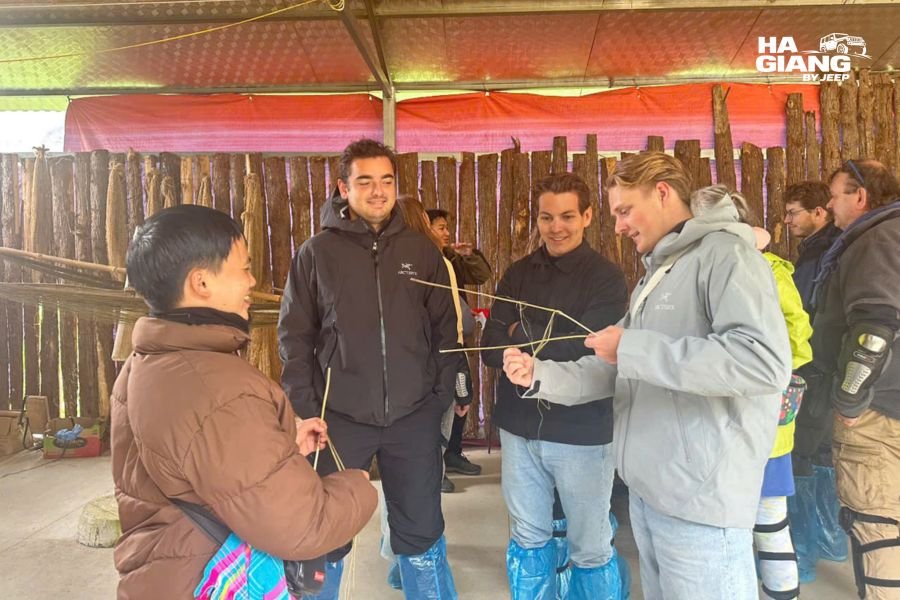
Our drivers grew up in these valleys and speak English alongside Vietnamese and their own local language. Ask them how to say something and you will learn it properly, in context, from someone who knows the room.
WhatsApp us See the 3 Days LoopGreetings and Getting Names Right
Here is the thing about Vietnamese that surprises most travelers: there is no single word for "you". The word changes depending on the age and gender of the person you are speaking to, relative to you.
This is genuinely complicated, and you do not have to master it. But knowing it exists explains a lot.
| Term | Roughly used for | Pronunciation |
|---|---|---|
| Anh | An older man, or a man your age | ang |
| Chị | An older woman, or a woman your age | chee |
| Em | Someone younger than you | em |
| Cô | A woman around your parents' age | koh |
| Chú | A man around your parents' age | choo |
| Bà | An older woman, grandmother age | bah |
| Ông | An older man, grandfather age | ohm |
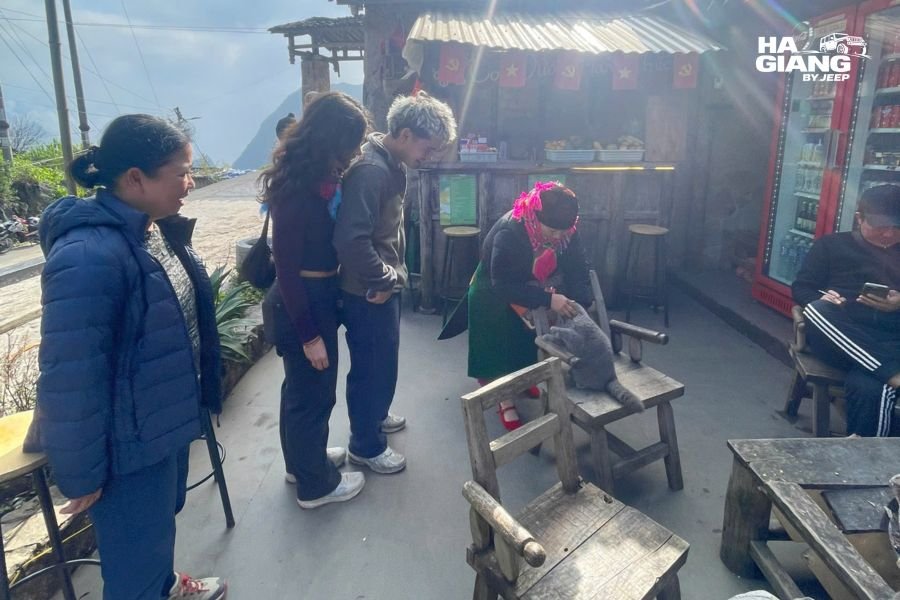
How to use them. Attach to the greeting. "Xin chào chị" to a woman your age. "Xin chào bà" to an older woman at a market. It sounds like a small thing. It is not.
If you get it wrong, nobody will be offended. Guessing somebody's age bracket in a language you do not speak is not a crime.
The safe default. Plain "xin chào" on its own works with anyone and is always acceptable. Add the term when you feel confident.
Two hands. When giving or receiving something from someone noticeably older, use two hands. This is a gesture, not a word, and it communicates more respect than most sentences you could construct.
Numbers and Money
Numbers come up constantly at markets and stalls.
| Number | Vietnamese | Pronunciation |
|---|---|---|
| 1 | Một | mote |
| 2 | Hai | high |
| 3 | Ba | bah |
| 4 | Bốn | bone |
| 5 | Năm | nam |
| 6 | Sáu | sow |
| 7 | Bảy | bye |
| 8 | Tám | tam |
| 9 | Chín | chin |
| 10 | Mười | muh-uh-ee |
The two you actually need are nghìn (ngin), meaning thousand, and trăm (chum), meaning hundred. Prices in Vietnam are usually quoted in thousands, so numbers combine with nghìn constantly.
The practical shortcut. Ask "bao nhiêu tiền?" and then ask the seller to write the number down or show it on a phone. Everyone does this. Nobody thinks it is strange, and it removes any chance of misunderstanding. Counting on fingers is universal and works fine.
For everything about withdrawing cash, carrying small notes and paying at markets, that is covered properly in our ATM and cash guide rather than repeated here.
At the Market
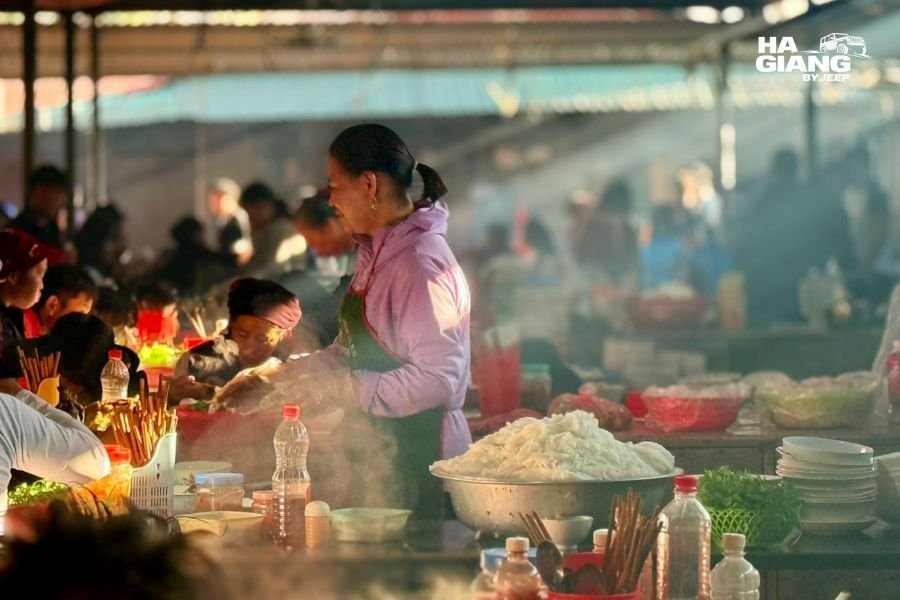
Markets are where you will use the most Vietnamese, and where the reward is highest.
| Vietnamese | Meaning | Pronunciation |
|---|---|---|
| Cái này là gì? | What is this? | kai nay la zee |
| Bao nhiêu tiền? | How much? | bao nyew tien |
| Đắt quá | Too expensive | dat wah |
| Giảm giá được không? | Can you lower the price? | zam zah duc khom |
| Tôi lấy cái này | I will take this one | toy lay kai nay |
| Chụp ảnh được không? | May I take a photo? | choop ang duc khom |
| Đẹp quá | Very beautiful | dep wah |
On bargaining. Some negotiation is expected, and "đắt quá" said with a smile is the normal opening. Pushing hard over a small amount for something handmade is not a good look, and the sums involved matter more to the seller than to you.
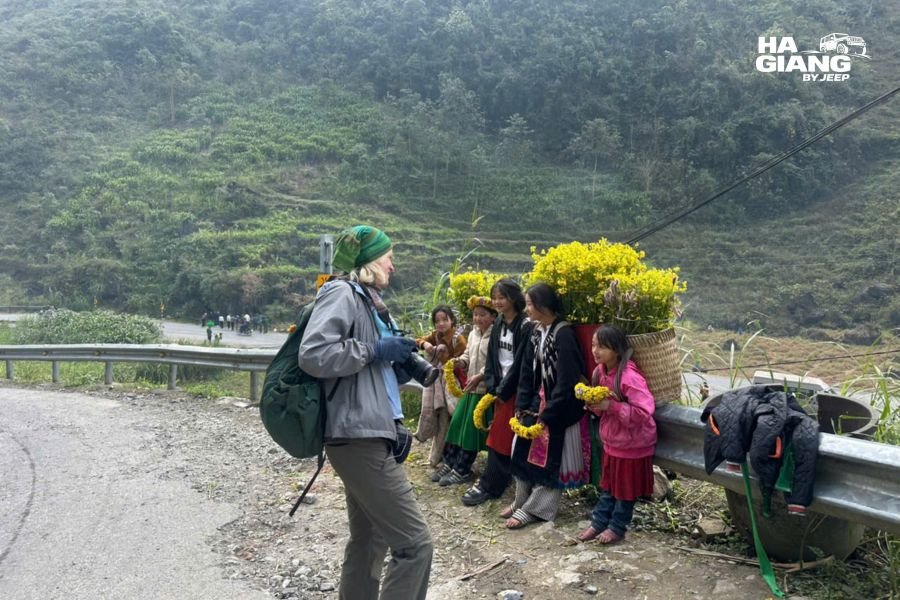
Chụp ảnh được không? is arguably the most valuable phrase in this whole guide. People at markets are working, not posing. Asking first, in their language, changes the entire interaction, and it means the answer you get is a real one. Sometimes it is no. Accept that immediately and cheerfully.
Cái này là gì? opens more conversations than any other phrase here. Ask what something is and you will usually get an explanation, sometimes a demonstration, occasionally a taste.
Eating and Drinking
| Vietnamese | Meaning | Pronunciation |
|---|---|---|
| Ngon quá | Delicious | ngon wah |
| No rồi | I am full | naw zoy |
| Tính tiền | The bill, please | ting tien |
| Nước | Water | nook |
| Cho tôi một... | Give me one... | chaw toy mote |
| Không cay | Not spicy | khom kai |
| Tôi ăn chay | I am vegetarian | toy an chai |
| Tôi bị dị ứng | I have an allergy | toy bee zee ung |
| Tôi không uống rượu | I do not drink alcohol | toy khom oong zee-oo |
| Một hai ba, dô | Cheers, the drinking toast | mote high bah, yoh |
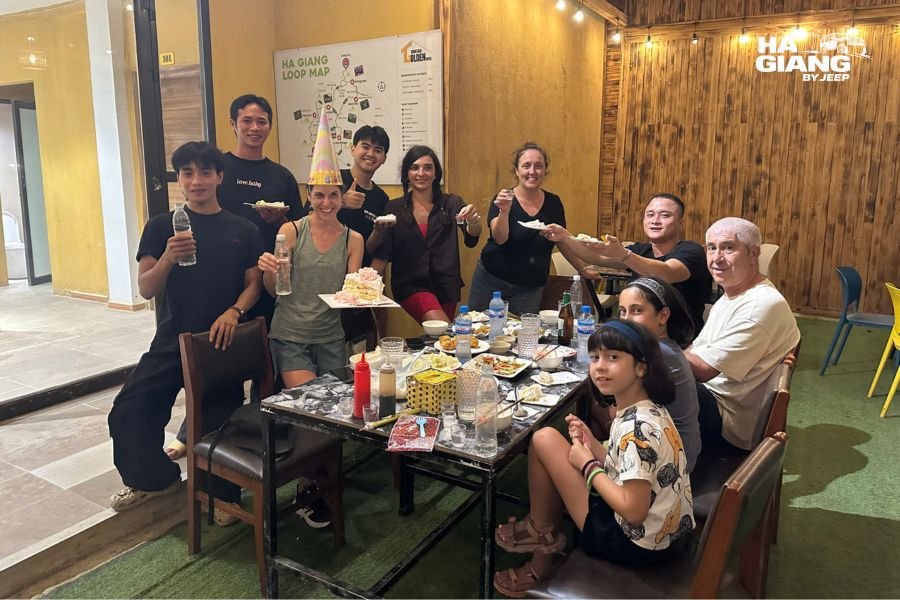
No rồi is worth learning before your first homestay dinner. Hosts will keep serving you. This is hospitality, not a hint, and a polite "no rồi" with a hand over the bowl is the accepted way to stop it.
Tôi không uống rượu is the phrase for anyone who does not drink. It is understood immediately, nobody argues with it, and it saves the awkward version of that conversation. More on drinking culture and how to decline gracefully in our corn wine guide.
Tôi bị dị ứng is important enough to also carry written down. If you have a serious allergy, have it written in Vietnamese on your phone and on paper, and show it rather than pronouncing it. Do not rely on spoken Vietnamese for something that matters medically.
Một hai ba, dô is literally counting one two three before drinking together. It is the single fastest way to become part of a table.
At a Homestay
| Vietnamese | Meaning | Pronunciation |
|---|---|---|
| Nhà đẹp quá | Your house is beautiful | nya dep wah |
| Nhà vệ sinh ở đâu? | Where is the toilet? | nya vay sing uh dow |
| Có nước nóng không? | Is there hot water? | kaw nook nom khom |
| Wifi mật khẩu là gì? | What is the wifi password? | wifi mat kow la zee |
| Chăn | Blanket | chan |
| Lạnh quá | It is very cold | lang wah |
| Mấy giờ ăn sáng? | What time is breakfast? | may zuh an sang |
| Cảm ơn nhiều | Thank you very much | gam un nyew |
Lạnh quá will get used more than you expect between roughly November and February. Say it and a blanket usually appears.
Nhà đẹp quá said to a homestay host is the equivalent of complimenting somebody's cooking. Houses here are often built by the family living in them.
Cảm ơn nhiều on the morning you leave is the right note to end on.
On the Road
Mostly relevant if you are driving yourself in a rented Wrangler Rubicon. With a driver, you will not need these.
| Vietnamese | Meaning | Pronunciation |
|---|---|---|
| Đi thẳng | Go straight | dee tang |
| Rẽ trái | Turn left | zeh chai |
| Rẽ phải | Turn right | zeh fai |
| Dừng lại | Stop | zoong lai |
| Chậm thôi | Slower, please | cham toy |
| Đường này đi đâu? | Where does this road go? | duong nay dee dow |
| Còn bao xa? | How far is it? | kon bao sah |
| Cây xăng ở đâu? | Where is the petrol station? | kay sang uh dow |
Asking directions in the mountains has a catch. People are extremely willing to help, and answers about distance and time can be optimistic, because a distance that is short on foot for a local is not the same as a distance in a vehicle on that road. Ask two people if it matters.
Cây xăng ở đâu? is worth memorising if you are self driving. Fuel stops are further apart than in most places travelers are used to.
Asking for Help
Learn these before you need them.
| Vietnamese | Meaning | Pronunciation |
|---|---|---|
| Giúp tôi với | Help me | zoop toy voy |
| Tôi bị lạc | I am lost | toy bee lak |
| Gọi bác sĩ | Call a doctor | goy bak see |
| Bệnh viện ở đâu? | Where is the hospital? | bang vien uh dow |
| Tôi bị đau | I am in pain | toy bee dow |
| Cảnh sát | Police | kang sat |
| Điện thoại | Telephone | dien twai |
The most useful thing in an emergency is not a phrase. It is having your driver's number and your operator's number saved as contacts in your phone, and a local person who can make a call on your behalf. Someone who speaks both languages solves a problem in one call that a phrasebook cannot solve at all.
Write down what matters. Allergies, medical conditions, medications, your accommodation for the night. Written and translated, on your phone and on paper. This is a five minute job before you travel that occasionally matters enormously. Save it offline, since signal disappears on the passes.
The Local Languages Nobody Tells You About
Here is the part most phrase guides for this region leave out entirely.
Vietnamese is the national language, but it is not the first language of many of the people you will meet on the Ha Giang Loop. This region is home to a large number of ethnic communities, including Hmong, Tay, Dao, Lo Lo, Nung and others, and in many villages people speak their own language at home and Vietnamese as a second language, sometimes not much of it.
What this means for you:
- The older woman at a market stall may speak little Vietnamese herself. Your carefully practised phrase may land no better than English would.
- Younger people, who go through Vietnamese language schooling, generally speak it more fluently than their grandparents.
- None of this makes learning Vietnamese pointless. It is still the shared language, and it still opens doors.
Why we are not printing Hmong or Tay phrases here. These languages have multiple dialects, several competing written systems, and enormous regional variation. Publishing a phonetic guess in a blog post would be worse than useless, and getting a phrase wrong in a way that means something unintended is a real risk. We would rather tell you honestly that we are not qualified to write it down.
What to do instead. Ask your driver. Ours come from these communities, and being taught a greeting in Hmong by someone who actually speaks it, in the village where you are going to use it, is a far better experience than reading it off a page. It is also one of the most reliably delightful moments of a trip. A traveler saying hello in the local language rather than in Vietnamese gets a reaction people remember for days.
Which Jeep Tour Suits You Best
Language is not why anyone chooses an itinerary. But the amount of contact you have with people who are not working in tourism does vary by trip length.
| Option | Language and contact notes | Best for |
|---|---|---|
| 3 Days 2 Nights Loop | Two homestay dinners, town stops, the core route | Short trips, Ma Pi Leng and Dong Van |
| 4 Days 3 Nights Loop | More villages, better chance of a market morning | Travelers who want the villages, not just viewpoints |
| 5 Days 4 Nights to Cao Bang | Two regions, different communities in each | The Loop plus Ban Gioc and the Quay Son valleys |
| 6 Days 5 Nights to Cao Bang | Most time in villages and at markets | The unhurried version across two Geoparks |
| Jeep Wrangler Rubicon rental | You handle every conversation yourself | Confident self drivers |
The honest advantage of a guided trip on this particular subject is not that you avoid needing Vietnamese. It is the opposite. A driver who grew up here can introduce you to people you would otherwise walk past, translate a conversation that would otherwise be three words long, and tell you what a market seller just said that made everyone laugh.
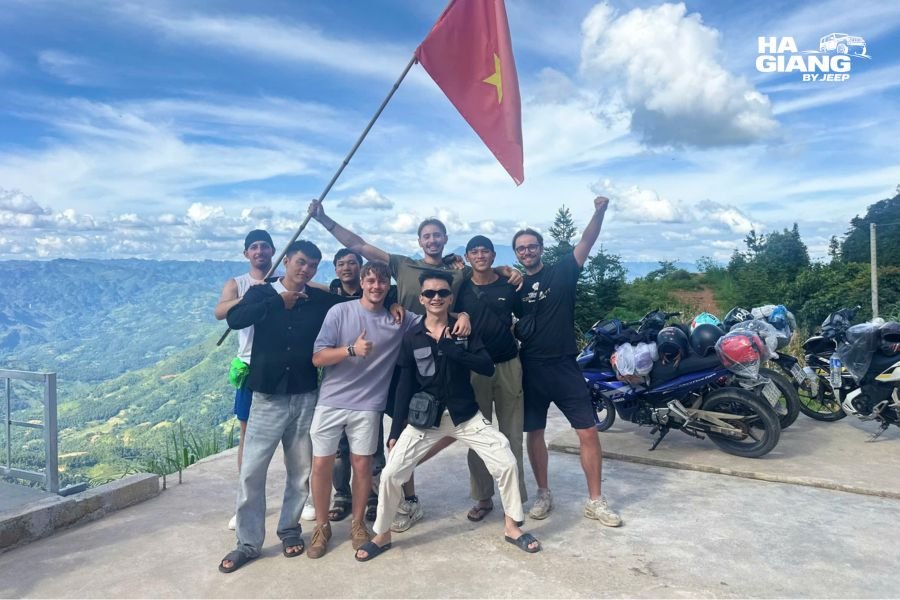
Travelers consistently report that the conversations, not the viewpoints, are what they remember. Having someone who can open those conversations is the difference between watching a place and meeting it.
Learn a few words from someone who actually lives here
Tell us your dates and we will match you with a local driver who can do a lot more than handle the road. Book early once your dates are set, jeep availability is limited and most guests book 1 to 3 months ahead.
WhatsApp us Book now Contact
Frequently Asked Questions
Do I need to speak Vietnamese to visit Ha Giang?
No. Many travelers come without a word and manage fine, particularly on a guided trip. Learning a handful of phrases changes the quality of the interactions rather than the practicality of the trip.
What are the most useful Vietnamese phrases for travelers?
Xin chào for hello, cảm ơn for thank you, bao nhiêu tiền for how much, ngon quá for delicious, and chụp ảnh được không for may I take a photo. Those five cover most situations.
Is English spoken in Ha Giang?
In hotels and tourist facing businesses in Ha Giang City and Dong Van, generally yes. In villages, at roadside stalls and at family homestays, often not. This is where a few Vietnamese words or a local driver makes a difference.
How hard is Vietnamese pronunciation?
The northern dialect uses six tones, and the same syllable means different things depending on the tone. You will not master this quickly, but context carries most conversations. Learn from someone speaking rather than from text.
Do people in Ha Giang speak Vietnamese?
Many people in this region speak an ethnic minority language at home, including Hmong, Tay, Dao and others, with Vietnamese as a second language. Younger people generally speak more Vietnamese than older generations.
Should I learn Hmong phrases before visiting?
Ask a local rather than learning from a written guide. These languages have several dialects and competing written systems, and a phonetic guess from a blog post is unreliable. Your driver can teach you properly.
How do I politely refuse food or drink?
No rồi means you are full and is the accepted way to stop a host from refilling your bowl. Tôi không uống rượu means you do not drink alcohol and is understood immediately without argument.
How do I ask permission to photograph someone?
Chụp ảnh được không, pronounced roughly choop ang duc khom. Ask before raising the camera, and accept a no cheerfully. People at markets are working, not posing.
Can I bargain in Vietnamese?
Đắt quá means too expensive and is the normal, gentle opening at a market. Keep it light, since the amounts involved usually matter far more to the seller than to you.
What Vietnamese do I need for emergencies?
Giúp tôi với for help, bệnh viện ở đâu for where is the hospital, and gọi bác sĩ for call a doctor. More useful than any phrase is having your driver's number saved and a local who can make the call.
Is a translation app good enough?
It helps a great deal, especially for written text and menus. Download the Vietnamese offline pack before you leave the city, since signal disappears on the passes exactly where you may want it.
Will people mind if I get the words wrong?
No. The attempt is what gets the response, not the accuracy. Expect gentle laughter and corrections, which are among the better moments of a trip.