
Pac Bo Historical Site: What Happened Here and How to Visit It Well
Two things are true at once. It is a place of real national significance, and it is a genuinely beautiful valley with a clear stream running through it.
The Pac Bo historical site sits in a quiet limestone valley in Ha Quang district, northwest of Cao Bang City and close to the Chinese border. Foreign visitors often arrive with a vague idea that it is a museum stop and leave surprised by two things: how lovely the setting is, and how much the place clearly means to the Vietnamese families walking the same path.
This guide covers what happened here, what you will actually see, how much walking it involves, and how to be there without being the visitor everyone notices for the wrong reasons.
What is in this guide
What Pac Bo is
A protected historical site built around a cave, a stream and a valley, with a museum, marked paths and a monument area.
It is designated a national special historical relic, which is the highest heritage category in Vietnam and puts it in a very small group of sites. It is on almost every Vietnamese school trip and family itinerary through Cao Bang.
For a foreign visitor arriving on a road trip through the northeast, it functions as two stops in one: a piece of modern Vietnamese history, and a walk through a quiet green valley that would be worth stopping at regardless of what happened in it.
Why it matters to the people you will be standing next to
This is the part most guides skip, and it is the single most useful thing to understand before you arrive.
Vietnamese visitors do not come to Pac Bo the way they come to a viewpoint. They come the way people visit a place of national origin. There are school groups, veterans, families with three generations, people in formal dress, people leaving flowers. The mood is quiet and it is respectful and it is noticeably different from a scenic stop.
Knowing that in advance changes your visit for the better. You are not being asked to share anyone's politics or convictions. You are being asked to notice that the place means something to the people around you and to behave accordingly, which is the same courtesy you would extend at a memorial or a place of worship anywhere in the world.
Guests who arrive with that understanding tend to find it one of the more interesting stops of the trip. Guests who arrive expecting a photo opportunity tend to find it flat, and occasionally make themselves conspicuous.
What happened here
Briefly and plainly, because the museum on site does this properly and we are a jeep company.
Ho Chi Minh returned to Vietnam in 1941, after roughly thirty years abroad. He crossed into the country in this area and based himself in this valley.
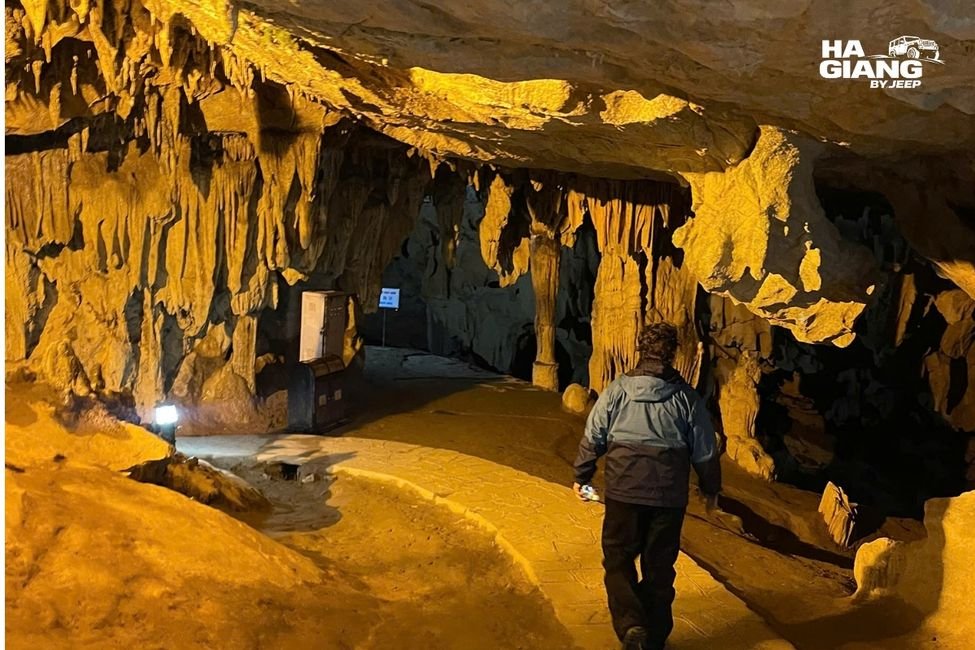
He lived and worked in Coc Bo cave, a rock chamber in the hillside above the stream. Conditions were basic. That is the point of it, and it is what the site is built around.
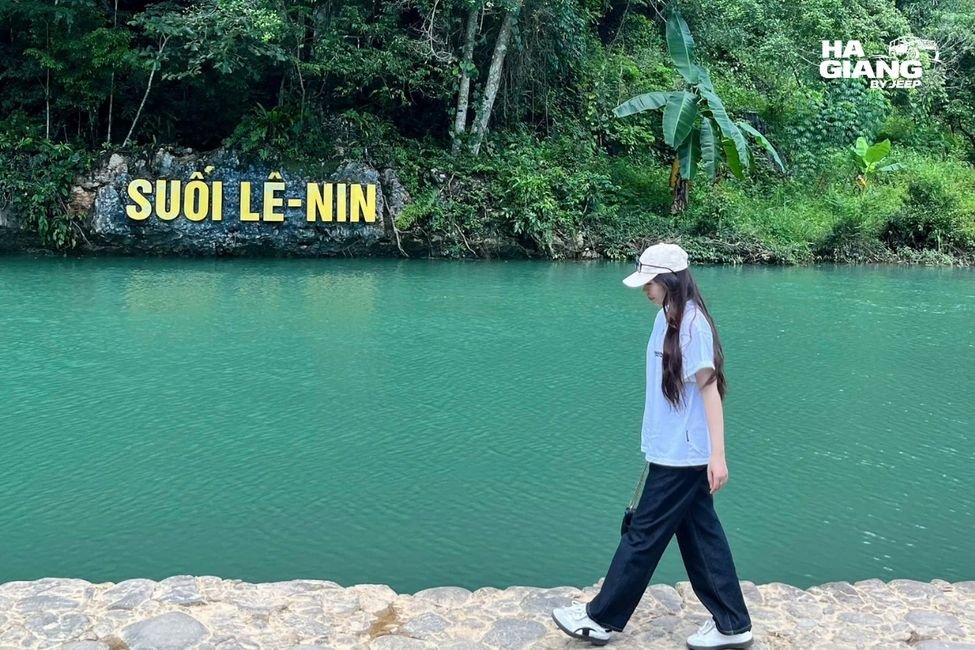
He named the stream and the mountain. The stream became Lenin stream and the peak above it became Karl Marx mountain. Those names are still used and they are on the signage.
A decisive meeting of the Communist Party leadership took place in this area in 1941, and the Viet Minh was formed out of it. That meeting is the reason the site carries the significance it does rather than being simply the place somebody once lived.
Pac Bo is also marked as the starting point of the Ho Chi Minh Road, the network of routes that ran the length of the country, with a marker on site.
If you want the full account rather than five paragraphs from a tour operator, the museum at the site covers it in detail and your driver will know a great deal more than this page does.
What you actually see
The site is walkable in an hour and rewards two if you are not in a hurry.
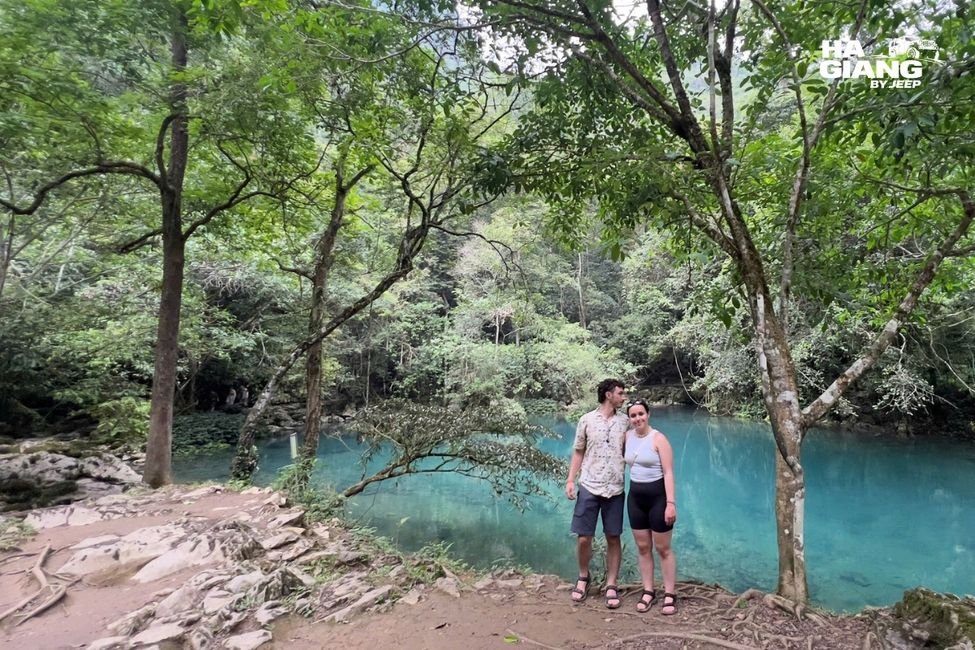
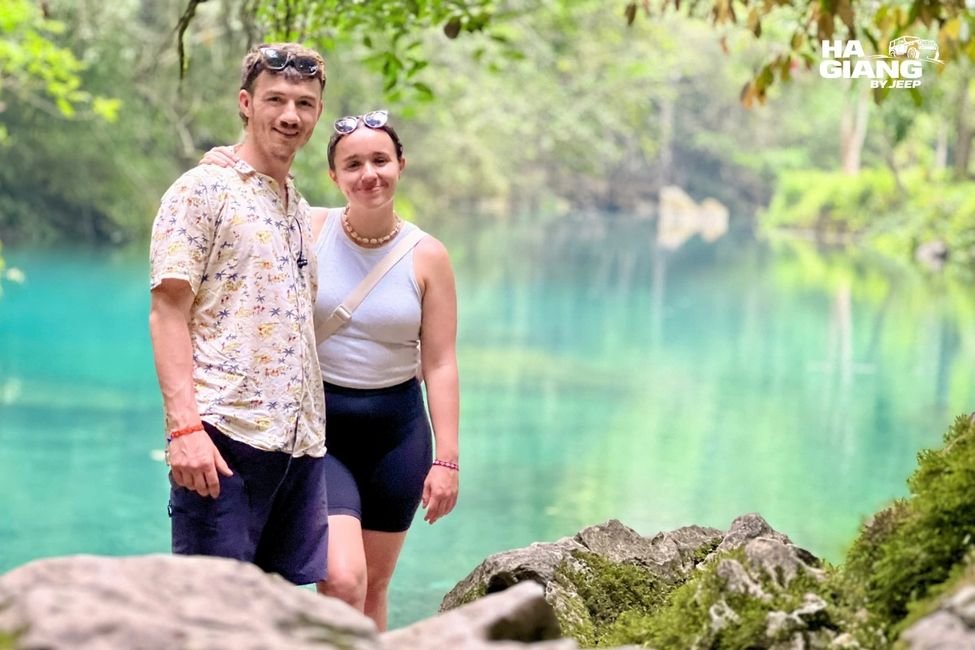
The stream. Clear, pale green, running fast over stones through the valley. It is the thing photographers stop for and it is genuinely lovely in any weather. Clearest in the drier months.
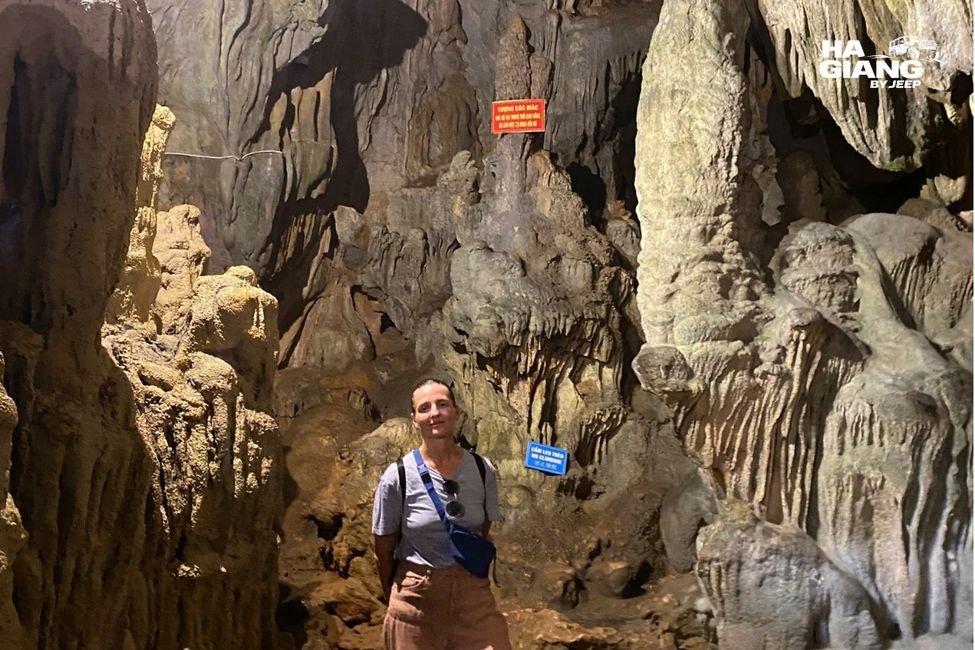
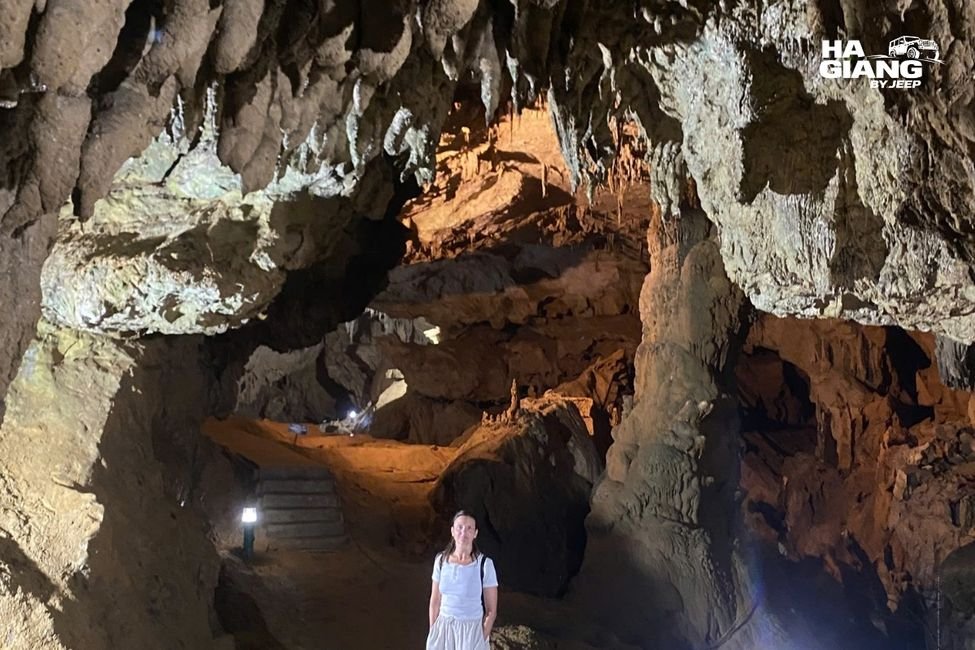
Coc Bo cave. A rock chamber reached by a path and steps up the hillside. Small, dark and cool inside, with very little in it, which is appropriate. Do not expect a display. The interest is in standing in the space.
Karl Marx mountain. The limestone peak rising directly above the valley. You look at it rather than climb it.
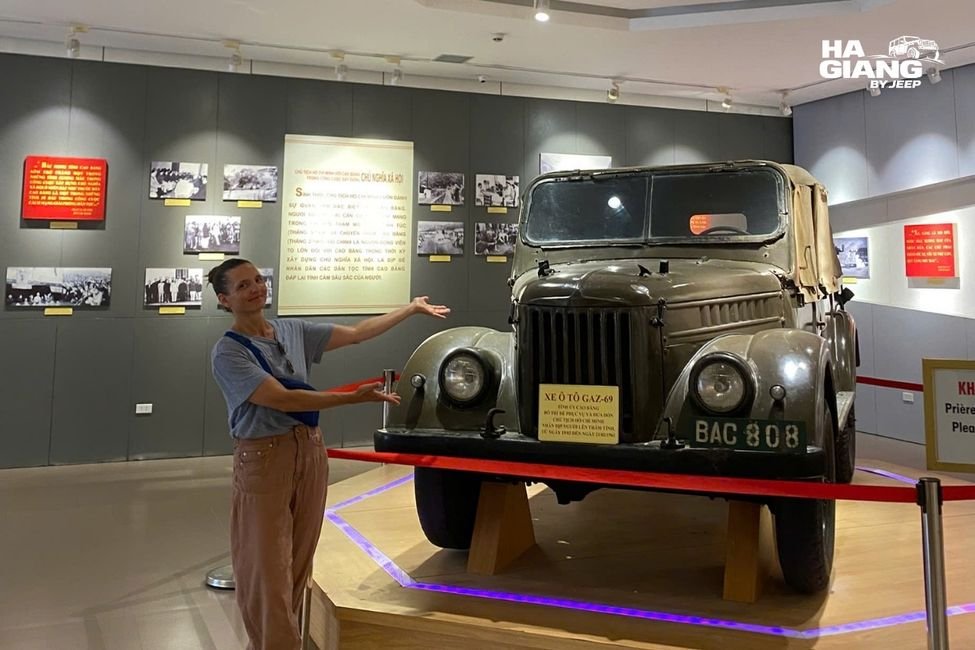
The museum. Documents, photographs and objects from the period, with signage. Worth twenty minutes even if history is not why you came, because it explains what you are looking at outside.
The monument and marker area, including the marker for the start of the Ho Chi Minh Road.
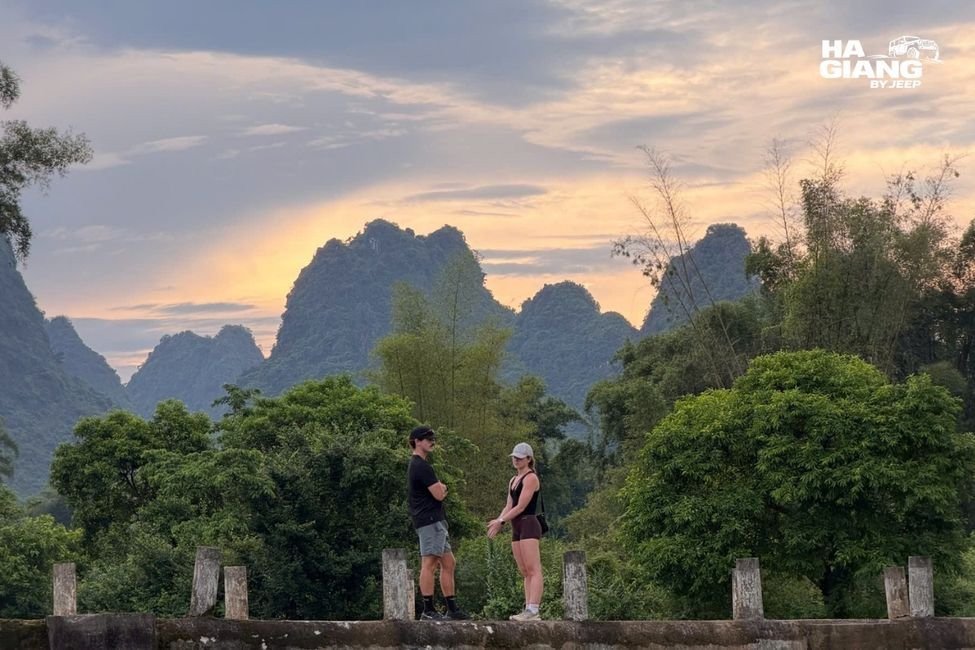
The valley itself. Paved paths under trees, water alongside, limestone walls on both sides. If you took the history away entirely, this would still be a pleasant hour.
Adding Cao Bang to a Ha Giang trip?
Tell us your dates and we will tell you whether Pac Bo fits your route, since it sits on its own road northwest of Cao Bang City rather than on the way to anything else.
How much walking it involves
Consistent with how we describe every stop, because guests ask and vague answers are useless.
| Part of the site | Effort | What is involved |
|---|---|---|
| The valley paths and the stream | Low | Paved, shaded, mostly flat. Benches. Fine for almost anyone |
| The museum | Low | Indoors, level |
| The monument and marker area | Low | Flat approach |
| Coc Bo cave | Moderate | A path and steps up the hillside. Uneven in places, and the rock can be slippery after rain |
| The full site at an unhurried pace | Low to moderate | An hour of gentle walking with somewhere to sit whenever you want it |
The honest summary: if steps are difficult, you can skip the cave and still have a complete visit. The valley, the stream, the museum and the monument area are all flat and paved, and they are most of what makes the stop worthwhile. Our senior travelers guide has the same treatment for every major stop on the wider route.
Bring shoes with grip if you intend to do the cave, particularly in the wet months.
How to visit respectfully
None of this is complicated and all of it is noticed.
- Dress modestly. Covered shoulders and knees. This is the single most common thing foreign visitors get wrong at Vietnamese sites of significance.
- Keep your voice down. The default volume at this site is low. Match it.
- Do not pose for jokey photographs at the monument, the cave or the marker. Take the picture, take it quietly, move on.
- Ask before photographing other visitors. Especially veterans, school groups and families leaving flowers. Our photography guide covers consent properly.
- Follow the signage and the barriers. Some areas are marked off and some are close to a border zone. Do not step over a rope for a better angle.
- Do not eat or smoke on the paths or in the monument area.
- Let people through. School groups move in large blocks and they are on a schedule.
- Ask your driver questions rather than announcing conclusions. They will know the site and the history far better than any article, and the conversation is more interesting than the monologue.
Practical notes
Tickets and opening hours. Both exist and both can change, so we do not publish figures that would be wrong by the time you read this. We will confirm the current position when you book, and your driver will handle it on the day.
Border proximity. Pac Bo is close to the Chinese border. Foreign visitors need a border area permit for the relevant zones, which we arrange from our Ha Giang City office and which needs your passport details in advance. Carry your passport with you. Procedures can change, so we confirm current practice close to your travel date.
Drones. Do not assume. This is a border area and a protected national site, which is two reasons to check rather than one. Rules are strict, permissions are required, and we are not going to summarise regulations that change. Tell us at booking if you are hoping to fly.
Time needed. An hour covers it. Two hours is comfortable and lets you do the cave, the museum and a slow walk along the stream without rushing.
Best time of day. Earlier is quieter. School groups and coach parties tend to arrive through the middle of the day.
Season. The stream is clearest in the drier months and fullest in the wet ones. The valley is green year round and shaded, which makes it a reasonable stop even in warm weather.
Facilities. Basic. Bring water, and use the facilities before you leave rather than assuming there will be somewhere on the road.
Cash. Small notes, as everywhere outside the cities in this region.
Where it fits in a Cao Bang trip
An important routing point, because it affects whether it goes in your itinerary at all.
Pac Bo is on its own road. It sits northwest of Cao Bang City, on a spoke that runs out and comes back. It is not on the way to Ban Gioc, which is east, and it is not on the way to anywhere else you are likely to be going.
That means visiting it costs you a there and back leg rather than being a stop you pass through. Our Cao Bang Loop guide explains why the whole province works as a hub with spokes rather than as a circuit, and Pac Bo is the clearest example of it.
In practice:
- On the 5 days combo, Pac Bo usually does not fit, because those days concentrate on the Ban Gioc corner.
- On the 6 days combo, it does, and it is one of the things the extra day buys you.
- If Pac Bo specifically matters to you, say so at booking and we will build the route around it rather than treating it as optional.
What this page will not tell you
Worth saying plainly.
We are a jeep tour company, not historians. This page is orientation for a visitor. The museum on site does the history properly, published historical work does it properly, and your driver knows more about it than we can fit here.
We are not going to offer political commentary. It would be out of place coming from a tour operator and it is not what you came to this page for. What we will do is tell you what is there, what it means to the people who visit it, and how to be a decent guest at it.
We are not going to publish ticket prices or opening hours that will be wrong later. Ask us and we will tell you the current position.
If those omissions are frustrating, they are deliberate. Everything on this page is something we can stand behind.
Planning a Cao Bang trip and want Pac Bo in it?
Send us your dates and say so. It sits on a spoke rather than on a through route, so it needs to be planned in rather than added on. We will tell you honestly whether your days allow for it. Email booking@hagiangbyjeep.com if you prefer.
Which jeep tour is right for you?
Ha Giang and Cao Bang, 6 days 5 nights. The itinerary that fits Pac Bo. The western road through Bao Lac and the 15 level pass, then Cao Bang with time for Pac Bo, God's Eye Mountain, Ngoc Con Valley and Ban Gioc. If this site is on your list, this is the tour. See the 6 days tour
Ha Giang and Cao Bang, 5 days 4 nights. Both provinces, with Cao Bang concentrated on the Ban Gioc corner. Pac Bo usually does not fit, so tell us at booking if you want us to try. See the 5 days tour
Ha Giang Loop, 4 days 3 nights. Ha Giang only, no Cao Bang. The classic plateau circuit with room in it. See the 4 days tour
Ha Giang Loop, 3 days 2 nights. The short version of the loop, for fixed dates. See the 3 days tour
Jeep Wrangler Rubicon rental. 5,000,000 VND per day for the vehicle, about $192, for confident drivers running their own route. Requirements for foreign drivers in Vietnam can change, so check the current rules first. See rental details
If you are weighing the two provinces against each other, the Ha Giang versus Cao Bang guide compares them honestly. If this is your first trip to Vietnam, the first time visitors guide covers where the north fits in a wider itinerary.
Pac Bo historical site FAQ
What is the Pac Bo historical site?
A protected site in a limestone valley in Ha Quang district, Cao Bang province, built around Coc Bo cave, a stream and a museum. It is where Ho Chi Minh returned to Vietnam in 1941, and it is designated a national special historical relic.
Where is Pac Bo?
Northwest of Cao Bang City, in Ha Quang district, close to the Chinese border. It sits on its own road rather than on the route to Ban Gioc, so visiting it means a leg out and back.
How long do you need at Pac Bo?
An hour covers the site. Two hours is comfortable and lets you do the cave, the museum and a slow walk along the stream without rushing.
Is Pac Bo worth visiting for a foreign traveler?
Yes, for two reasons that stand independently. It is a significant piece of modern Vietnamese history explained properly on site, and it is a quiet green valley with a clear stream that is pleasant to walk through regardless.
How much walking is involved at Pac Bo?
The valley paths, the stream, the museum and the monument area are flat and paved. Coc Bo cave involves a path and steps up the hillside and can be slippery after rain. Skipping the cave still leaves a complete visit.
What is Coc Bo cave?
A rock chamber in the hillside above the stream where Ho Chi Minh lived and worked after returning to Vietnam in 1941. It is small, dark and largely empty, which is appropriate to what it is.
Why are there a Lenin stream and a Karl Marx mountain?
Ho Chi Minh gave the stream and the peak those names during the period he was based in the valley. The names are still in use and appear on the signage at the site.
How should I behave at Pac Bo?
Dress modestly, keep your voice down, do not pose for jokey photographs at the monument or the cave, and ask before photographing other visitors. Vietnamese people visit this site in a way closer to pilgrimage than to sightseeing.
Do I need a permit to visit Pac Bo?
Foreign visitors need a border area permit for the zones near the Chinese border, which includes this area. We arrange it from our Ha Giang City office and need your passport details in advance. Carry your passport with you.
Can I fly a drone at Pac Bo?
Do not assume so. It is both a border area and a protected national site. Check current regulations well before you travel and tell us at booking if you are hoping to fly.
What does it cost to enter Pac Bo?
There is a ticket, and we do not publish the figure because it can change and a stale number is worse than none. Ask us and we will confirm the current position, and your driver will handle it on the day.
Which of your tours includes Pac Bo?
The 6 days Ha Giang and Cao Bang combo. It usually does not fit the 5 days version, which concentrates on the Ban Gioc corner. If Pac Bo matters to you, say so at booking and we will plan around it.