
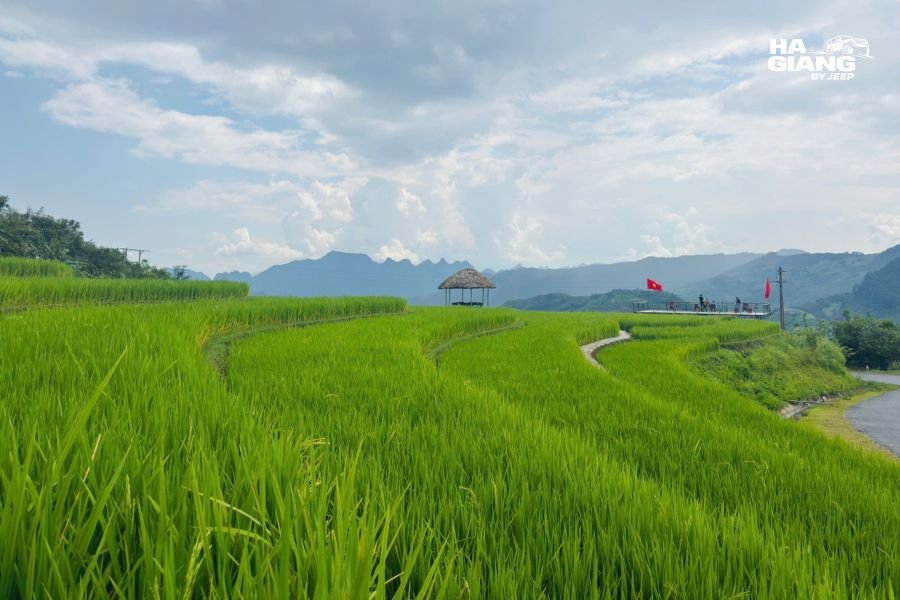
Ha Giang Loop Photography: Where the Light Lands and How to Be There for It
The landscape does most of the work here. Your job is mostly logistics: being in the right place at an hour when nobody sensible is awake.
Ha Giang Loop photography is not difficult in the way that mountain photography usually is. You are not carrying forty kilos up a ridge at 4am. The great viewpoints on the Dong Van Karst Plateau are roadside, the passes are the subject rather than the approach to the subject, and the whole thing is a UNESCO Global Geopark of limestone towers, terraced maize and villages that photograph beautifully in almost any weather.
What is difficult is timing. Mountain light here is short and it moves fast. Valleys hold mist until mid morning and then lose it in twenty minutes. Markets peak early and dissolve by lunch. The good hour at Ma Pi Leng is genuinely an hour. Most travelers arrive at each place when a schedule puts them there, which is usually the worst light of the day.
This guide is about fixing that. It covers what to shoot and when, how the light behaves on the plateau, what gear survives the cold and the dust, how to photograph people here without being the person everyone dreads, and the drone situation, which you need to read properly before you pack one.
What is in this guide
- Why Ha Giang Loop photography works better from a vehicle
- Light on the plateau: how it actually behaves
- The shot list, location by location
- Photographing people, and doing it decently
- Season by season, from a photographer's point of view
- Gear for cold, dust, and mountain roads
- Drones: read this before you pack one
- A photographer's day, planned properly
- How many days you actually need
- Cao Bang, if you want water and rice fields
- What it costs
- Which jeep tour is right for you?
- FAQ
Why Ha Giang Loop photography works better from a vehicle
Setting aside comfort, which is a separate argument, there are five specific reasons a private 4x4 changes what you come home with.
You can stop anywhere, for as long as you want. This is the whole thing. Photography is mostly waiting: for cloud to move, for a figure to walk into frame, for the light to come round a ridge. On a fixed schedule you photograph what is in front of you at the time you arrive. In your own vehicle you say "give me twenty minutes here" and the day absorbs it.
Pre dawn and post sunset become available. Being on a mountain road in the dark is a different proposition when someone else is driving and the vehicle has four wheels and headlights. Blue hour at both ends of the day opens up, which is where a lot of the best frames on this loop live.
Gear travels properly. Two bodies, a full lens set, a tripod, filters, a laptop and a hard drive all sit in the back, dry and unstrapped. Nothing is bungee corded to anything. Nothing gets soaked because the weather turned.
You shoot from the vehicle. The roof comes off. That gives you a raised platform above roadside walls and vegetation, which matters more than it sounds, because a lot of the good views on this road are blocked at head height from a normal car.
You watch the light instead of the road. Six hours of concentrating on a mountain road is six hours of not noticing what the cloud is doing. Having a driver means the entire drive becomes scouting time.
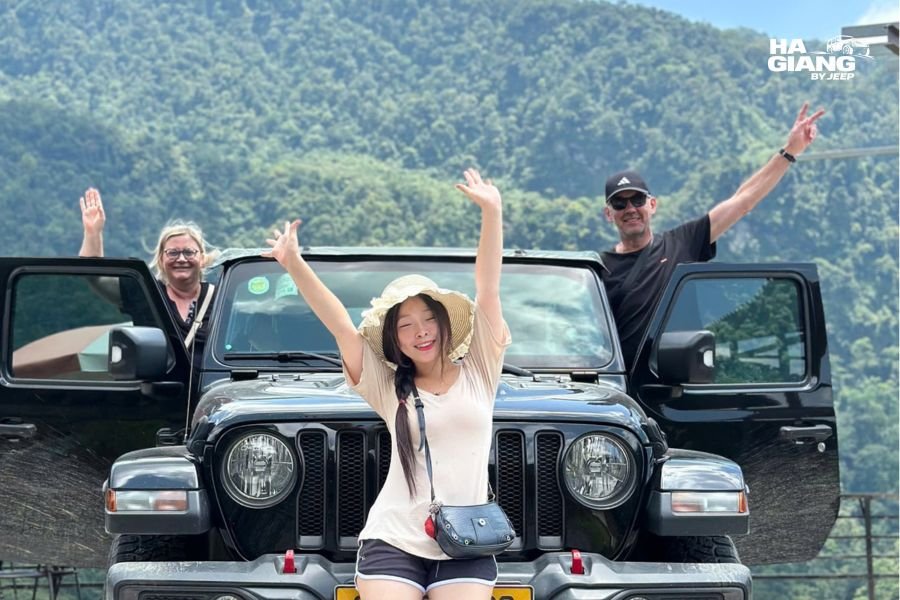
There is a sixth reason that only becomes obvious on day two: your driver grew up here. Ask where the mist sits on a cold morning, which side of a pass catches first light in November, which village has a market tomorrow, and you get an answer from someone who has watched it happen for thirty years. That is worth more than any amount of scouting on satellite images.
Planning a shooting trip, not a sightseeing trip?
Tell us your dates and what you want to shoot. We will plan pre dawn starts, build in waiting time at the locations that need it, and tell you honestly which viewpoints will be working in your month.
Light on the plateau: how it actually behaves
A few patterns worth knowing before you plan a single day. Weather here is genuinely variable, so treat all of this as tendencies rather than guarantees, and check a current forecast close to your dates.
Golden hour is short and it is cut early. You are surrounded by ridges. The sun clears them late and drops behind them early, so the warm window at any given viewpoint may be twenty minutes rather than an hour. Plan one location per golden hour, not three.
Mist and valley cloud are the prize. On cold clear mornings, particularly from autumn through winter, cloud settles into the valleys overnight and sits there until the sun burns it off. This is the single most photogenic thing that happens in Ha Giang and it is over by mid morning. Being at a high viewpoint before sunrise is the entire game.
Midday is not wasted, it is just different. Harsh overhead light is bad for landscape and fine for everything else. Use it for markets, village streets, interiors, workshops, food, and portraits in open shade. Save the wide open views for the ends of the day.
Overcast is not a write off. Flat cloud is excellent for the villages, the old quarter, textiles, portraits and anything with colour in it. Some of the best frames from this region are made on grey days, when the limestone goes blue and the green reads properly.
Rain gives you the road. Wet tarmac reflects, mist clings to the cliffs, and Ma Pi Leng in cloud looks like nowhere else. It is also the moment nearly everyone else stops shooting. A vehicle with a roof is what lets you keep going.
Nights are dark. Away from the towns there is very little light pollution up here. If astro is your thing, bring a fast wide lens and ask your driver to stop somewhere with a foreground.
The shot list, location by location
Use this to build a plan, then send it to us and we will tell you what is realistic on your dates.
| Location | Best time | What it gives you |
|---|---|---|
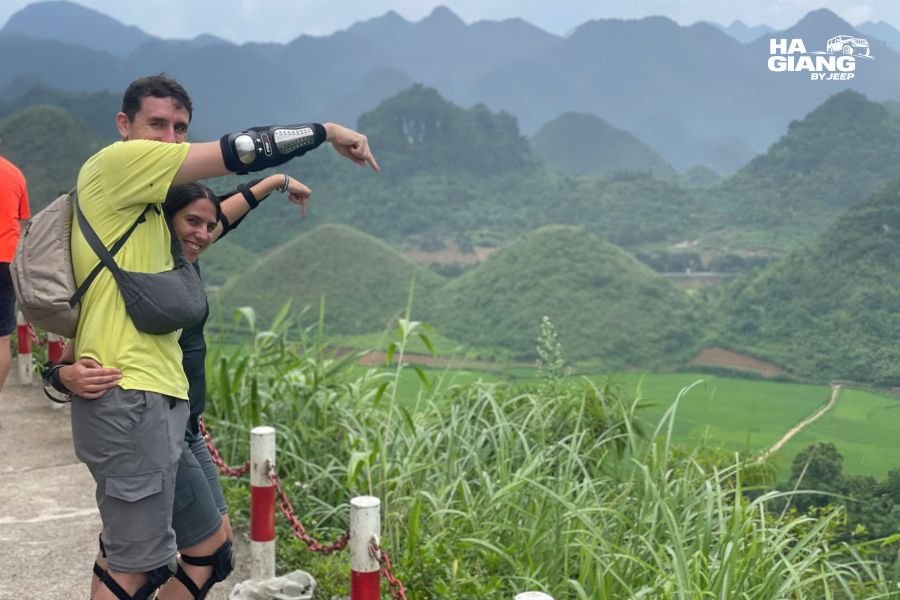
| Quan Ba viewpoint | Sunrise, especially cold clear mornings | Twin conical hills above a valley that holds mist. The classic first frame of the loop |
| Switchback passes toward Yen Minh | Mid morning or late afternoon | Layered ridges and stacked hairpins. This is a long lens subject, not a wide one |
| Yen Minh pine road | Late afternoon | Backlit pines and haze, a change of texture from all the limestone |
| Sung La | Morning or late afternoon | Clay walled houses, maize drying, a valley floor that reads well from slightly above |
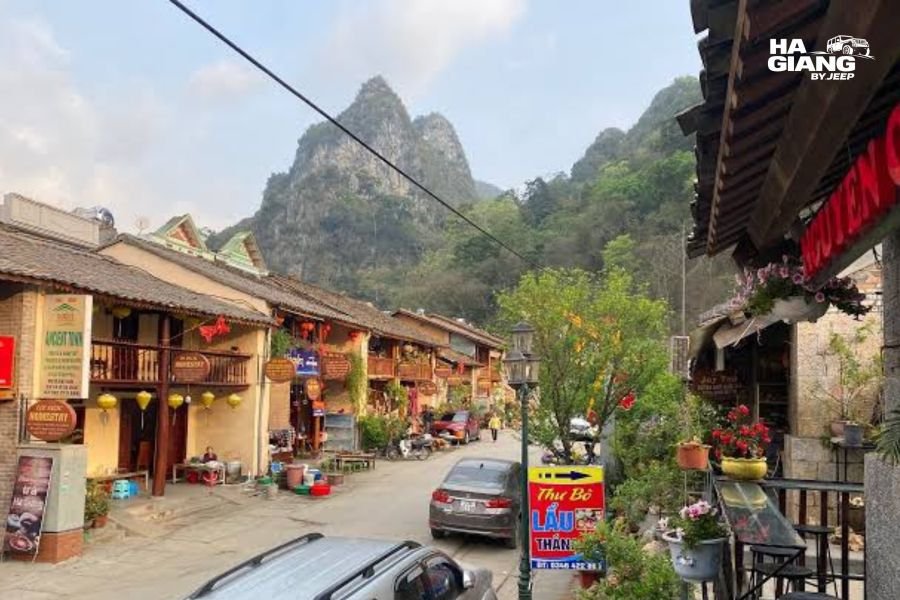
| Pho Bang | Any time, better overcast | Faded shophouses, almost no other visitors, the best street photography on the loop |
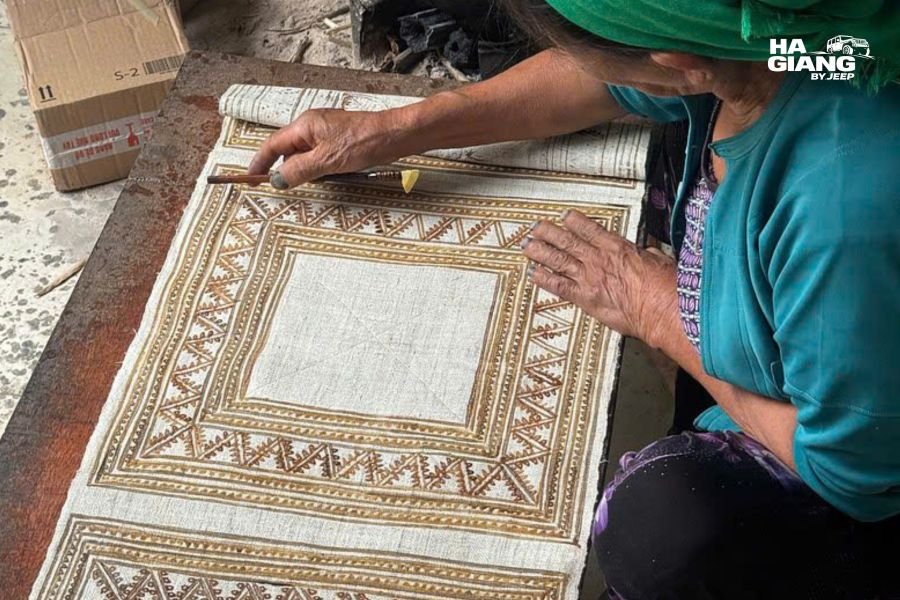
| Lung Tam linen village | Midday, indoors | Indigo, wooden looms, hands at work, window light. Ideal for a harsh light hour or a rainy one |
| Lung Cu Flag Tower | Late afternoon | Wide farmland running to the border, the flag against sky. High contrast subject, worth a long lens |
| Dong Van Old Quarter | Blue hour and early morning | Old stone under a limestone wall, lantern light, market square. The best blue hour location on the loop |
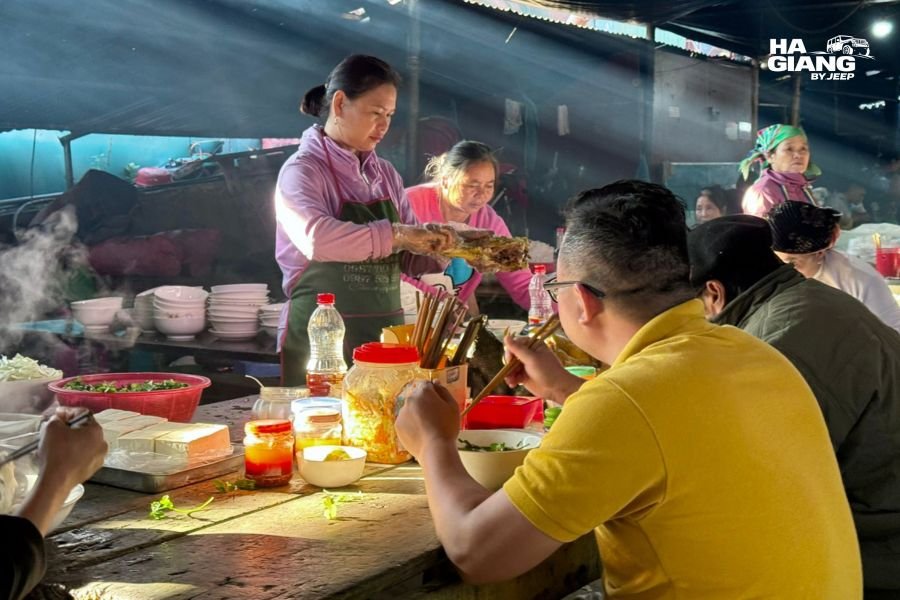
| Dong Van Sunday Market | Sunday, early | People, textiles, livestock, produce. Arrive at opening. It thins out by late morning |
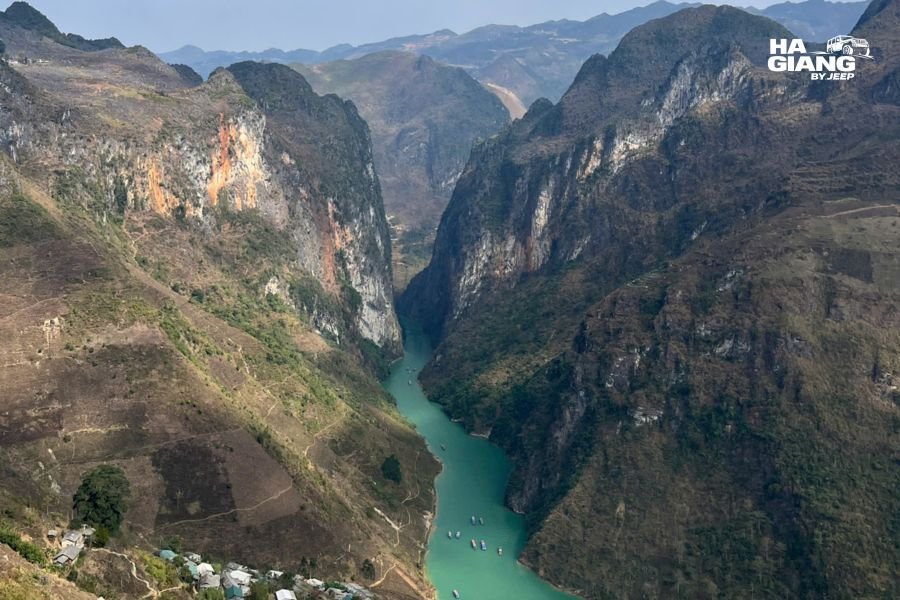
| Ma Pi Leng Pass | Sunrise, and again at sunset | The canyon, the Nho Que far below, and the road itself as a leading line. Multiple pull offs, so try more than the first one |
| Nho Que River boat | Late morning, when light reaches the water | Low angle inside the canyon, turquoise water, walls rising out of frame. Completely different from the view above |
| Meo Vac | Early morning | Working market town, less photographed than Dong Van |
| Khau Vai Market | Once a year in spring, lunar date | Dense, colourful, crowded. Worth rearranging a whole trip around if your dates land near it |
| Du Gia | Midday to afternoon | Waterfall and pools, a long exposure subject, and a green valley that suits flat light |
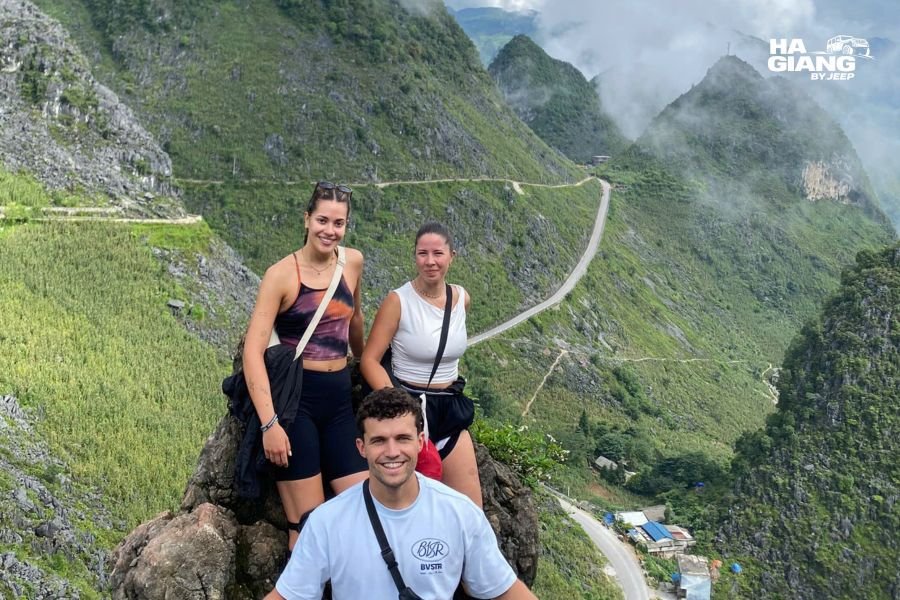
Two notes that will improve your Ma Pi Leng frames more than any gear decision. First, the obvious pull off is the crowded one. Ask to continue a few hundred metres in either direction and you will usually find a cleaner composition with nobody in it. Second, put something in the frame for scale. The canyon is so large that without a vehicle or a figure on the road, the photograph flattens into an abstract and loses the drop entirely.
Photographing people, and doing it decently
The villages on this plateau are home to Hmong, Tay, Dao, Lo Lo and other communities, and they are not a set. This region gets a lot of visitors with cameras and the difference between a welcome one and a tiresome one is small and entirely within your control.
What works:
- Ask. A gesture at the camera and a raised eyebrow does the job in any language. Your driver can ask properly in seconds.
- Buy something first at markets. Not as payment. As a reason to be standing there having a conversation rather than pointing a lens at strangers.
- Show the picture. People almost always want to see it. This turns a transaction into an exchange and it usually gets you a better second frame.
- Learn two words of Vietnamese. A hello and a thank you. The bar is low and the return is high.
- Get closer and shoot fewer frames. Long lens portraits taken from across a market square are the ones that feel extractive, and they usually look it.
What to avoid:
- Photographing children without a parent's agreement. Simple rule, no exceptions.
- Handing money or sweets to children for photographs. It creates an expectation for every traveler behind you and it is not a good thing to leave behind.
- Photographing inside a home or a shrine without being invited in.
- Treating anyone's clothing as a costume. Traditional dress at markets is worn because it is worn, not for your frame.
If you want to do something genuinely appreciated: bring a small photo printer, or take names and send prints to us afterwards and we will get them to the right village. Very few people in these communities have a good photograph of themselves.
Season by season, from a photographer's point of view
Different months give you genuinely different photographs. Nothing here is a guarantee, because weather does what it likes.
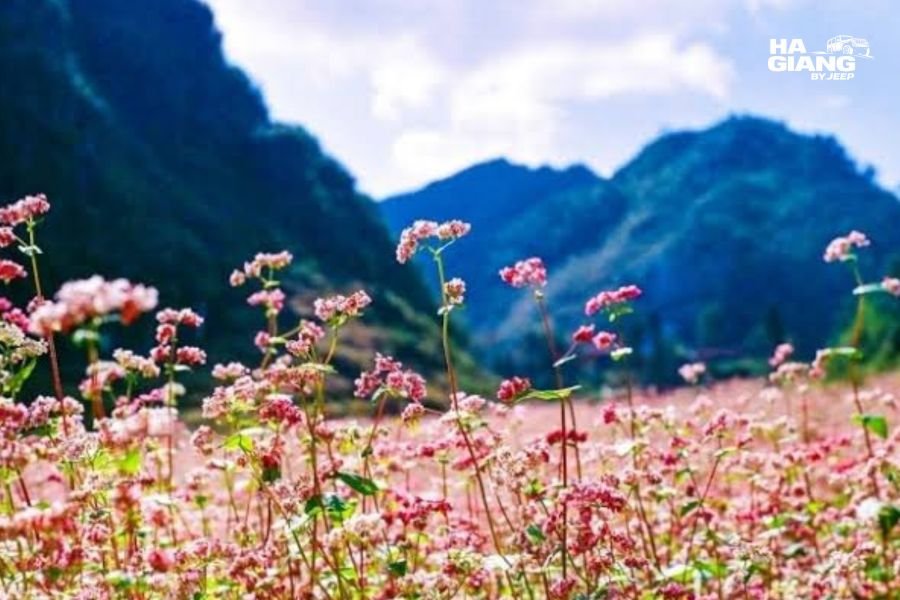
September to November. The most popular window, and for good reason. Buckwheat flowers spread across the plateau, usually from around late October into November. Maize harvest colour, generally clearer air, and the start of the cold morning mist season. Book early, because everyone else wants these weeks too.
December to February. Cold, sometimes very cold. Fog, low cloud, and the best chance of valley inversions at sunrise. The landscape is bare rather than green, which suits black and white and suits anyone who likes structure over colour. Heated vehicle earns its keep. Fewer visitors in your frames.
March to May. Plum and pear blossom early in the season, then green coming through. A gentle, quiet time to shoot. Haze can be an issue for distant ridges, so favour closer subjects and layered compositions.
June to August. Fullest green, terraces at their most graphic, waterfalls at maximum flow, and the most dramatic storm light of the year. Also the wettest, with the highest chance of landslide repairs affecting the route. Road conditions change through the season, so check current local updates rather than assuming.
Gear for cold, dust, and mountain roads
Nothing exotic. A few things specific to this environment.
Lenses. A wide for the canyon and the villages, a standard zoom as the workhorse, and something long. The long lens is the one people leave at home and regret, because the stacked ridges and the switchback roads are compression subjects. A fast prime is worth carrying for market interiors and homestay evenings, which are darker than you expect.
Tripod. Bring one. Blue hour in Dong Van, the waterfall at Du Gia, and pre dawn at Ma Pi Leng all need it, and in a jeep the weight penalty is zero.
Filters. A polariser for the green and for cutting haze, an ND for moving water, and a grad if you like them. Screw on or square, both fine.
Batteries. Cold eats them. Bring more than you think, keep spares in an inside pocket rather than a camera bag, and charge everything every night. Homestay power points are limited and shared, so a multi way adapter makes you popular.
Dust. The roads are dusty in the dry months and you will be tempted to change lenses in the open air on a pass. Do it inside the vehicle with the doors shut. Two bodies with two lenses beats one body and constant swapping.
Rain protection. A rain cover or a bin liner and a rubber band. Microfibre cloths, more than one, because a wet one is useless.
Storage and backup. Bring more cards than you need. You will not find a decent card up here. Back up to a laptop or a portable drive every night, because a single card failure on day four of a five day trip is a trip lost.
Charging in the vehicle. Bring a car adapter for your power bank and ask us in advance about charging on the road, since it depends on the vehicle assigned to you.
Drones: read this before you pack one
Straight version, because this is where people get into trouble.
Drone regulations in Vietnam are strict, permissions are required, and Ha Giang runs along an international border, which makes it more sensitive rather than less. Do not assume the rules you read on a forum are current, and do not assume that because you saw drone footage of Ma Pi Leng online, flying there was permitted or that the person flying had permission.
What to do:
- Check the current Vietnamese regulations and permit requirements well before you travel. Rules in this area change and we will not summarise them here, because a summary that goes out of date is worse than none.
- Tell us at the booking stage if you are hoping to fly. We can tell you what we know about the current situation on the ground and what the practical realities are around the border zones on your route.
- Assume nothing at the roadside. Border areas, checkpoints and official sites are not places to find out by experiment.
Plan your trip so that it works without a drone. If flying turns out to be possible for you, treat it as a bonus rather than the foundation of your shot list.
A photographer's day, planned properly
This is roughly how we run a day for guests who are here to shoot rather than to sightsee. It looks nothing like a standard itinerary.
05:00. Leave the homestay in the dark. Coffee in a flask. Nobody else is on the road.
05:40. In position at a high viewpoint before the sky starts. Tripod up, composition set while there is still time to change your mind. If the valley has cloud in it, this is the frame you came for.
06:30 to 07:30. Work the light as it comes round. Move once, not four times.
08:00. Back for breakfast, or eat what you brought. Review, dump cards, charge.
09:30. Villages and roads. Sung La, Pho Bang, the switchbacks with a long lens. Stop whenever something appears, because it will.
12:00. Harsh light. Go indoors or go to people. Lung Tam and its looms, a market, a workshop, lunch somewhere with a view you can shoot from a table.
15:00. Reposition for the afternoon. Drive slowly, scout as you go, mark two options for sunset in case the cloud moves.
17:00. In position early for the second golden hour. Then stay for blue hour, because most people leave and blue hour at Dong Van or above the canyon is often the best twenty minutes of the day.
19:30. Dinner at the homestay, corn wine at the table if you want it, since nobody has to drive. Back up your cards before you sleep, not in the morning.
The reason this works is that nothing in it is negotiated with anyone else. That is the practical difference a private vehicle makes to a photography trip.
How many days you actually need
Three days is enough to see the loop and not enough to photograph it. You get one shot at each location, at whatever the weather does that morning, with no second chance.
Four days is the realistic minimum for a photography trip. It gives you two mornings on the plateau and enough slack to return to a location that did not work.
Five or six days, on the Cao Bang combos, is where it becomes comfortable. Repeat visits, weather contingency, and a second landscape entirely.
If you are travelling in the wet months or in winter fog, weight your plan toward more days. Bad mornings happen and the only real insurance is another morning.
Cao Bang, if you want water and rice fields
The 5 days and 6 days tours continue east into Cao Bang province and a second UNESCO Global Geopark, Non Nuoc Cao Bang. Photographically it is a completely different palette: rivers, rice valleys and rounded karst rather than the bare grey limestone of the plateau.
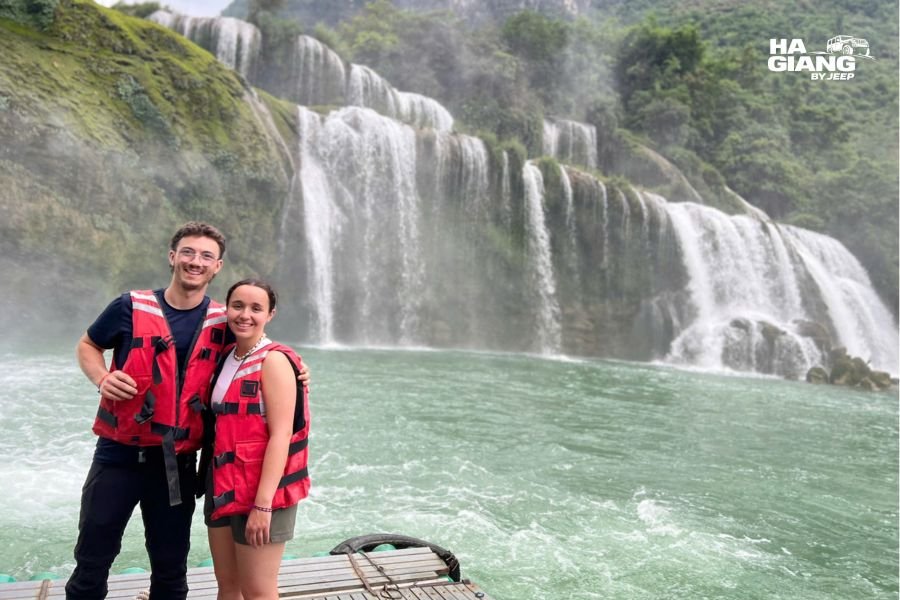
- Ban Gioc Waterfall. Wide and tiered, on the border river, with bamboo rafts that give you scale and colour in the frame. A long exposure subject, and one where getting there for the first light matters.
- Ngoc Con Valley. Rice fields, buffalo, a slow river and old villages. Gentle, layered, and the sort of place that rewards a long lens and an hour of patience.
- God's Eye Mountain. A limestone peak with a hole punched through it above a small lake with horses grazing. The photograph is from the valley floor.
- Pac Bo Historical Site. A quiet limestone valley with a clear stream, good in flat light.
- The 15 level pass near Bao Lac, on the 6 days routing. Stacked hairpins up a mountainside, and a compression subject if ever there was one.
What it costs
Every tour is private. Nobody is added to your vehicle, which for a photography trip is not a comfort feature, it is the feature. Prices are for the whole group, in Vietnamese dong with an approximate US dollar figure.
| Tour | 1 person | 2 people | 3 people | 4 people |
|---|---|---|---|---|
| Ha Giang Loop, 3 days 2 nights | 15,990,000 VND ($615) | 19,990,000 VND ($769) | 23,990,000 VND ($923) | 25,990,000 VND ($1,000) |
| Ha Giang Loop, 4 days 3 nights | 19,990,000 VND ($769) | 25,990,000 VND ($1,000) | 30,990,000 VND ($1,192) | 33,990,000 VND ($1,307) |
| Ha Giang and Cao Bang, 5 days 4 nights | 27,990,000 VND ($1,077) | 36,990,000 VND ($1,423) | 41,990,000 VND ($1,615) | 46,990,000 VND ($1,807) |
| Ha Giang and Cao Bang, 6 days 5 nights | 36,990,000 VND ($1,423) | 44,990,000 VND ($1,730) | 49,990,000 VND ($1,923) | 54,990,000 VND ($2,115) |
Worth budgeting for on top:
- Private room upgrade, 500,000 VND per room per night for 1 to 2 people, 700,000 VND for a family room for 3 to 4 people. Base price includes a dorm bed. For a photographer this upgrade is about somewhere to spread gear out, charge everything and back up cards without waking anyone at 5am. We recommend it.
- Transfers, not included, 350,000 to 500,000 VND per person each way depending on route and vehicle. From Hanoi Old Quarter or Noi Bai Airport to Ha Giang the options run from a 20:30 Regular Sleeper at 350,000 VND up to a 10:30 or 21:00 VIP Sleeper at 450,000 VND, with 07:00 and 16:00 Limousines at 400,000 VND. Returning from Ha Giang, 16:00 Limousine 400,000 VND, 18:00 Regular Sleeper 350,000 VND, 21:00 VIP Sleeper 450,000 VND, 21:00 Cabin Sleeper 400,000 VND.
- Food, entrance tickets and the Nho Que boat, paid locally in cash. Draw cash in Ha Giang City.
The 5 days and 6 days tours finish in Cao Bang rather than Ha Giang. Return transfers from there to Hanoi Old Quarter or Noi Bai Airport are 16:00 Limousine 450,000 VND, 06:00 next day Limousine 450,000 VND, 11:30 next day Limousine 450,000 VND, 20:30 Cabin Sleeper 450,000 VND, or 20:30 VIP Cabin Sleeper 500,000 VND.
The Jeep Wrangler Rubicon is also available to rent at 5,000,000 VND per day, about $192 for the vehicle. Requirements for foreign drivers in Vietnam can change, so confirm the current rules before planning around this.
Send us your shot list
Give us your dates and the locations you want, and we will come back with a route built around light rather than distance, including which mornings to prioritise and where we would put the spare day. Email booking@hagiangbyjeep.com if you prefer.
Which jeep tour is right for you?
Ha Giang Loop, 3 days 2 nights. Enough to see the loop, tight for shooting it. Take it if your dates are fixed and treat it as a scouting trip you happen to photograph. See the 3 days tour
Ha Giang Loop, 4 days 3 nights. The realistic minimum for a photography trip. Two mornings on the plateau, room to go back to a location that failed, plus Lung Cu and Du Gia. See the 4 days tour
Ha Giang and Cao Bang, 5 days 4 nights. The plateau plus a second, softer landscape of rivers and rice valleys, finishing at Ban Gioc. Good weather insurance, because two regions rarely have a bad week at the same time. See the 5 days tour
Ha Giang and Cao Bang, 6 days 5 nights. The one to book if photography is the reason for the trip. Bao Lac and the 15 level pass, Pac Bo, God's Eye Mountain and Ngoc Con Valley, with shorter driving days and more time standing still. See the 6 days tour
Jeep Wrangler Rubicon rental. For confident drivers with the right paperwork who want to run their own schedule entirely. Worth noting that driving yourself costs you the scouting time and the local knowledge. See rental details
For a general picture of how a day runs, see what a jeep tour is actually like. If you are shooting alone, the solo travel guide has costs for one person laid out honestly.
Tell us at the booking stage that this is a photography trip. It changes what we plan: earlier starts, longer stops, market days prioritised over distance, and homestays chosen for where they let you be at sunrise rather than for where the day naturally ends.
Ha Giang Loop photography FAQ
When is the best time for Ha Giang Loop photography?
Late October into November for buckwheat flowers and generally clearer air, or December to February if you want cold morning mist and valley inversions. June to August gives the greenest terraces and the most dramatic storm light, along with the most rain. Every season photographs well, they just photograph differently.
What are the best photography spots on the Ha Giang Loop?
Ma Pi Leng Pass at sunrise, the Quan Ba viewpoint on a misty morning, Dong Van Old Quarter at blue hour, the Sunday market in Dong Van, Pho Bang for street work, and the switchback passes shot with a long lens. The full list with timings is in the shot list table above.
Can I fly a drone on the Ha Giang Loop?
Do not assume so. Drone rules in Vietnam are strict, permissions are required, and this is a border region. Check the current regulations well before you travel and tell us at booking if you are hoping to fly, so we can tell you what we know about the situation on your route.
Is a jeep better than other options for a photography trip?
For most photographers, yes, and mainly for two reasons: you can stop for as long as you like anywhere you like, and your gear travels dry and unstrapped. Pre dawn and after dark shooting also becomes practical when someone else is driving.
Can we do sunrise starts?
Yes. Tell us at booking that you want them and we will plan the homestays around the viewpoints rather than the other way round. Departures before dawn are normal for our photography guests.
What lenses should I bring to Ha Giang?
A wide, a standard zoom, and something long. The long lens is the one most people leave behind and miss, because the stacked ridges and switchback roads are compression subjects. Add a fast prime for market interiors and homestay evenings.
Do I need a tripod?
Bring one. Blue hour in Dong Van, the waterfall at Du Gia and pre dawn at Ma Pi Leng all want it, and in a vehicle there is no weight penalty for carrying it.
Where can I charge and back up?
Homestay power points are limited and shared, so bring a multi way adapter and power banks. Back up to a laptop or portable drive every night rather than trusting a single card. Bring a car adapter and ask us about charging in the vehicle when you book.
Is it acceptable to photograph people at the markets?
With permission, yes, and most people are relaxed about it. Ask with a gesture or have your driver ask, buy something first, and show people the picture afterwards. Do not photograph children without a parent's agreement and do not hand out money or sweets for photographs.
How many days do I need to photograph the Ha Giang Loop properly?
Four days is the realistic minimum. Three gives you one attempt at each location with no weather contingency. Five or six days on the Cao Bang combos gives you repeat mornings and a second landscape.
Will bad weather ruin the trip?
Rarely. Mist, rain and low cloud produce some of the strongest images from this region, and a vehicle with a roof means you keep shooting when others stop. The one thing weather genuinely costs you is a clear sunrise, which is the argument for booking an extra day.
Can you plan a custom photography route?
Yes. Send your shot list and dates and we will build the route around light and market days rather than around distance covered. Every tour is private, so the schedule is yours.