
Ha Giang Border Permit 2026: Complete Guide + How to Get It
Table of Contents
- Introduction: The Border Area Adventure
- What Exactly is a Ha Giang Border Permit?
- Why Do You Need One? (And Which Areas Are Restricted)
- Who Actually Needs a Border Permit?
- Which Areas Require the Permit?
- How to Get Your Border Permit (Step-by-Step)
- Cost, Validity & Important Details
- Common Mistakes & How to Avoid Them
- Which Tour Option Works Best for You?
- FAQ: Border Permit Questions Answered
- Ready to Explore Ha Giang's Border Region?
Introduction: The Border Area Adventure
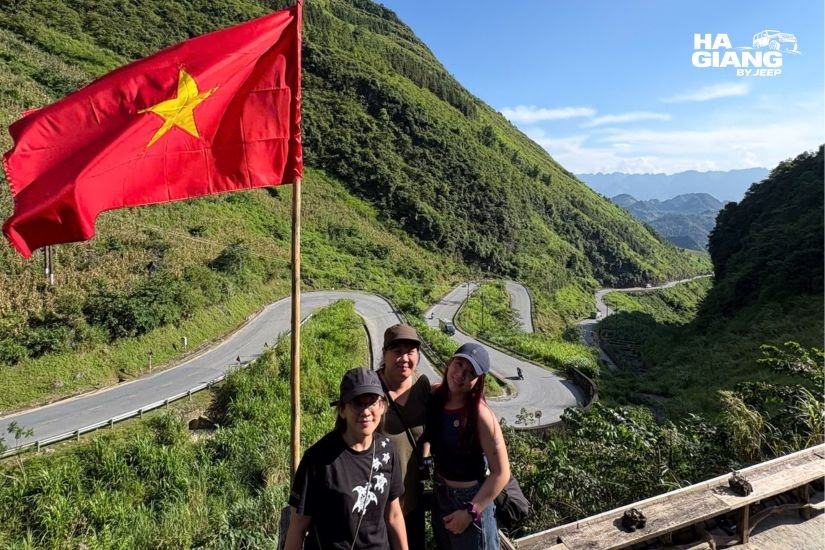
The iconic Ma Pi Leng Pass with its legendary switchbacks
You've heard about Ha Giang Loop. Maybe you've seen the photos of Ma Pi Leng Pass, watched someone else's vlog about Dong Van, or heard stories about hairpin turns and epic views. Now you're ready to book your trip. But then you see something that stops you cold: "border permit required."
What does that even mean? Do you actually need one? Is it a pain to get? Can you just, well, skip it?
Here's the honest answer: yes, you likely need one. No, it's not complicated. And no, you definitely shouldn't skip it.
I've seen travelers stress over this requirement way more than necessary. Some show up thinking it's no big deal, only to hit a checkpoint and realize they need paperwork they don't have. Others book self-drive motorbike rentals without understanding where they can actually ride. A few end up paying bribes or facing awkward situations that could have been avoided with five minutes of clarity.
This guide will tell you exactly what a border permit is, why it exists, who needs it, how to get it, and what happens if you don't. I'll also walk you through which tour option makes this whole process seamless, so you can focus on enjoying one of Vietnam's most stunning regions.
What Exactly is a Ha Giang Border Permit?
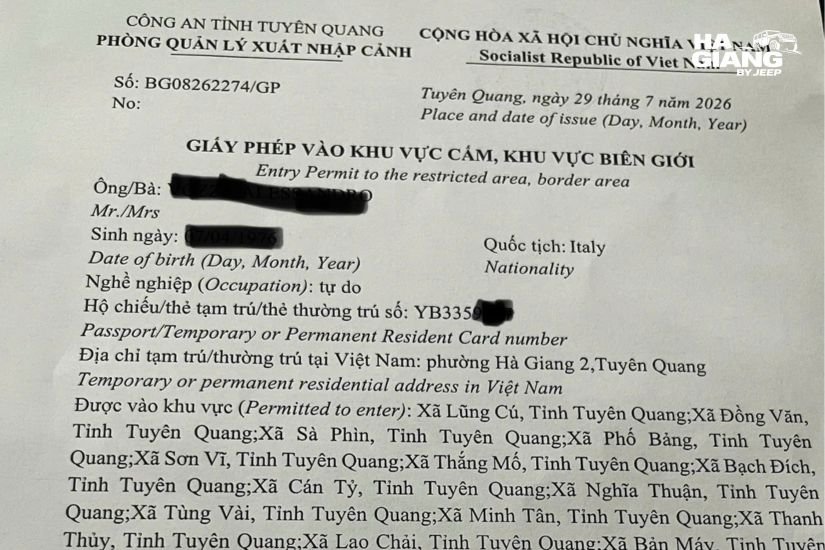
A border permit is your official permission to visit restricted zones
Let's start with the basics. A border permit (officially called a "Certificate of Temporary Residence" or sometimes just a "border pass") is a document issued by Vietnamese police that allows foreign visitors to enter specific areas near the Vietnamese-Chinese border.
It's not a visa. It's not a new stamp in your passport. It's a separate piece of paper that says: "This foreign visitor is allowed to be in this restricted zone on this date."
The permit usually looks like a simple form with your name, passport number, and the date range for which you're allowed in the restricted area. That's it. Nothing fancy. You'll typically get one per trip, or sometimes per tour itinerary if you're doing multiple legs of travel.
Think of it like this: certain mountainous regions near the border have been designated as sensitive by the Vietnamese government for security reasons. To protect those areas and keep tabs on who enters, they require visitors to have official permission. The permit is that permission slip.
Why Do You Need One? (And Which Areas Are Restricted)
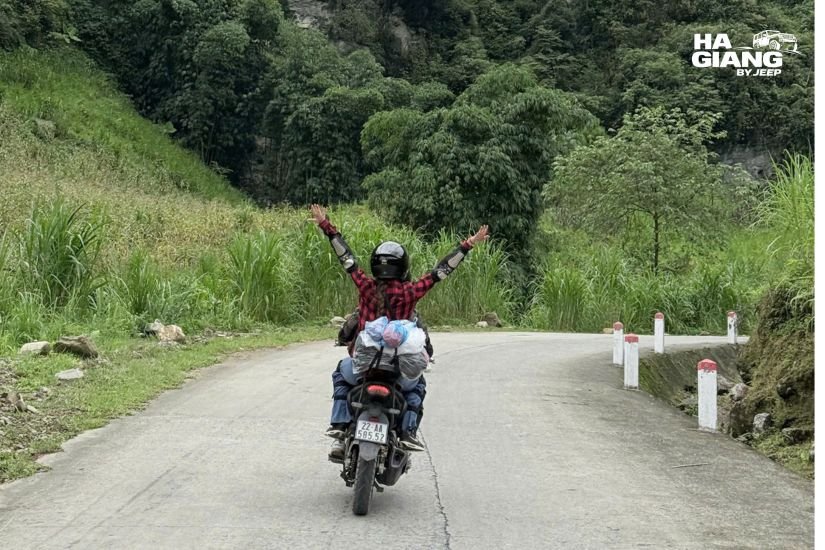
Restricted areas are concentrated along the most remote mountain routes
Vietnam shares a border with China to the north. Ha Giang province sits right along that border, which is why this regulation exists at all. The government wants to know who's visiting these zones and why.
These aren't brand-new restrictions. They've been in place for years. But they're also not completely rigid, and they're not as restrictive as they sound. You're not being forbidden to visit. You're just being asked to go through a simple registration process.
The restricted zones aren't the entire Ha Giang Loop. You can drive through most of the province without any permit issues. But specific areas, especially the highest passes and the furthest northern points, do require documentation. These areas are beautiful, remote, and genuinely close to the border, which is why they're monitored.
Common restricted areas include:
- Ma Pi Leng Pass and the surrounding region
- The highest sections of the Ha Giang Loop road
- Dong Van Old Quarter and the Dong Van Karst Plateau area
- Meo Vac district
- The area around Lung Cu Flag Tower (Vietnam's northernmost point)
- Parts of the Nho Que River valley
- Specific mountain villages and homestays in remote northern areas
That said, rules can change based on security assessments or policy updates. If you're planning a trip in 2026, double-check the latest requirements with your tour operator or the local police station before you go.
Who Actually Needs a Border Permit?
This is where it gets straightforward: if you're a foreign visitor (any nationality), and you're planning to visit the restricted areas I mentioned above, you need a border permit.
If you're a Vietnamese citizen visiting these same areas, you typically don't need special permission beyond your national ID.
The key scenarios:
Scenario 1: You're booking a guided tour (Easy Rider, Jeep tour, group motorbike tour)
Your tour operator handles the permit for you. This is hands-down the easiest option. You show up, they take care of all the paperwork, and you ride.
Scenario 2: You're renting a motorbike and self-driving
You'll need to get the permit yourself, either before arrival or at the local police station in Ha Giang. More on that below.
Scenario 3: You're hiring a private driver
Same as a guided tour. The driver's company or your booking agent sorts it out.
Scenario 4: You're traveling solo, going off-the-beaten-path, staying in remote villages
You may need a permit depending on which villages you're visiting and how you're traveling. It's worth checking in advance.
The bottom line: if you're visiting the famous spots (Ma Pi Leng Pass, Dong Van, Meo Vac, Lung Cu), expect to need one. If you're sticking to main towns and lower-elevation routes, you might be fine without it, but I'd still recommend getting one just to be safe.
Which Areas Require the Permit?
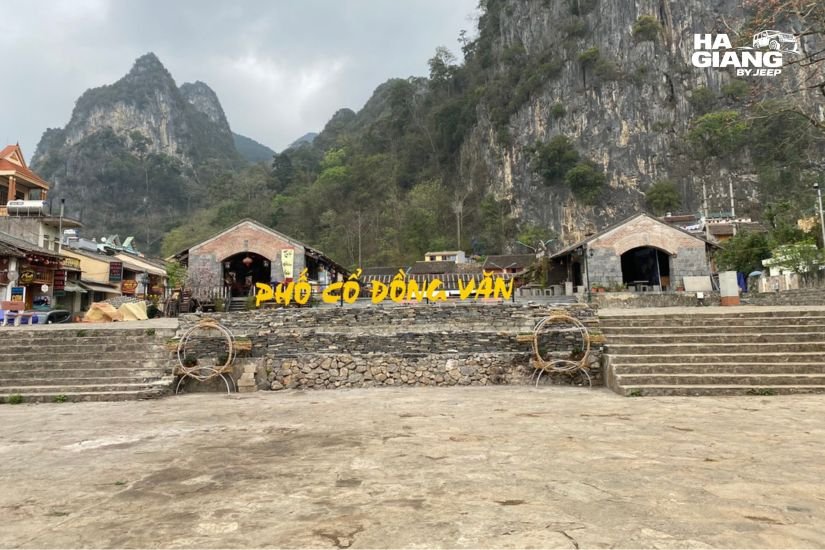
Dong Van Old Quarter is one of the main attractions requiring a border permit
To help you understand exactly where you need permission, here's a breakdown of the main areas that typically require a border permit:
Ma Pi Leng Pass Area
This is the most famous section of the Ha Giang Loop, with those legendary switchbacks and jaw-dropping views. Getting a photo here? You need the permit. Riding through? Permit required. The police do check at checkpoints along this stretch.
Dong Van Karst Plateau
This UNESCO-recognized geological site is stunning, and it's also in a sensitive zone. If you're planning to visit Dong Van Old Quarter, explore the plateau, or stay overnight in that area, you'll need documentation.
Meo Vac & Surrounding Districts
This remote, beautiful district sits high in the northern mountains. Visiting requires the permit.
Lung Cu Flag Tower
Vietnam's northernmost flag tower is a popular photo spot. If you're heading there, you'll need the permit. The road leading up has checkpoints.
Nho Que River Valley
Parts of this valley, especially near specific villages, require permits for boat trips or trekking.
Remote Mountain Villages
Homestays and villages like Du Gia, Khau Vai, and others in the far north often fall under restricted areas. If you're planning to stay in these villages, get the permit first.
Less Restricted Areas
Towns like Ha Giang city, Yen Minh, or the lower sections of the loop usually don't require the permit. Locals and repeat visitors know where the line is, but when in doubt, ask your operator.
Again, these guidelines can shift. Always check the current status with locals or your tour company if you're planning independent travel.
How to Get Your Border Permit (Step-by-Step)
Now for the practical part. There are two main ways to handle this:
Option A: Let Your Tour Operator Handle It (Recommended for most travelers)
This is the stress-free option. When you book a guided tour with Loop Trails or any established operator, here's what happens:
- You book your tour (Easy Rider, Jeep, motorbike group tour, whatever suits you)
- The operator collects your passport info (usually when you book or a few days before your trip)
- They handle the permit process with the local police
- You pick up or are given the permit on your tour start day
- You ride with confidence, knowing everything's legal and sorted
The whole thing takes maybe five minutes of your time. You literally just need to provide your name and passport number. The operator does the legwork.
Why this works: tour companies have relationships with local authorities and do this dozens of times per month. It's streamlined. There are no surprises.
Option B: DIY Permit at the Police Station (For self-drive renters)
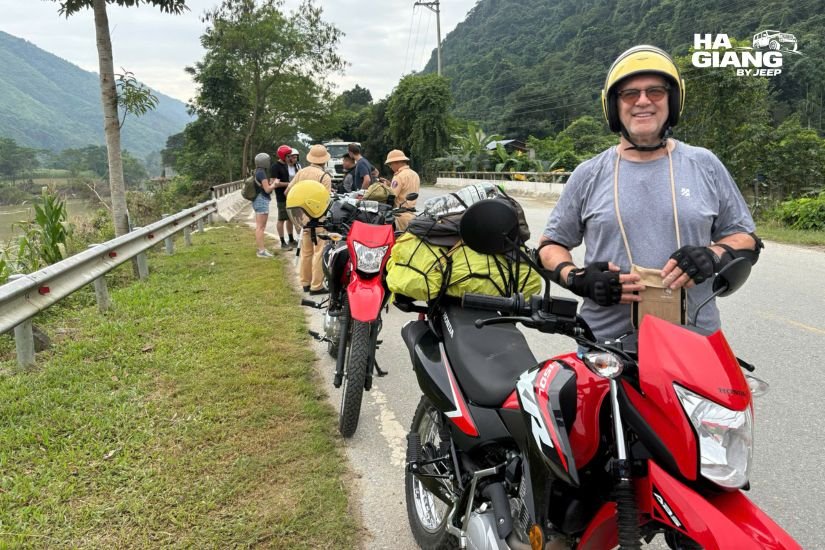
The local police station handles border permit applications
If you're renting a motorbike and riding solo or with friends, you'll need to get the permit yourself. Here's how:
Step 1: Go to the local police station
In Ha Giang city, head to the Tourist Police office. Your hotel or motorbike rental shop can point you there. It's usually not hard to find. If you're in Hanoi, some travel agencies can also handle this before you pick up your rental.
Step 2: Bring your passport
That's the main requirement. Have it with you.
Step 3: Tell them your route and dates
You'll fill out a simple form stating which areas you're planning to visit and for how long. Be honest about your itinerary.
Step 4: Wait and pay
Processing is usually same-day or the next day. Cost ranges from 150,000 to 300,000 VND (about $6 to $12 USD), depending on the area and length of your trip. Pay in cash, usually in Vietnamese Dong.
Step 5: Get your paperwork
You'll receive the permit. Keep it on you at all times during your trip. Checkpoints may ask to see it.
Timeline: If you're arriving in Ha Giang, you can often get the permit the same day you rent your bike. Best practice: arrive a day early or plan to get it first thing when you land.
For longer trips: If you're doing a multi-day Ha Giang Loop on a rental bike, most permits are valid for 3 to 7 days. Tell the police officer your exact end date.
Cost, Validity & Important Details
How Much Does It Cost?
The cost depends on which areas you're visiting and how long you're staying in the restricted zone:
- Single-area permit (Ma Pi Leng Pass only): Around 150,000 VND
- Multi-area permit (full Ha Giang Loop): 200,000 to 300,000 VND
- Extended permits (5-7 days): Up to 350,000 VND
If you're booking a tour, the permit fee is sometimes included in the tour price. Always check when you book. If it's not included, it's usually so cheap that it's negligible compared to the overall trip cost.
How Long is the Permit Valid?
Most permits are valid for 3 to 7 days from the date of issue. So if you get one on a Monday, it's good through Thursday or Sunday, depending on how long you requested. A typical Ha Giang Loop tour (2 to 4 days) is well within that window.
What's the Actual Punishment if You Don't Have One?
Here's the thing: I'm not going to make up scary stories or invent fines to scare you into compliance. The truth is less dramatic than some travelers think.
If you're stopped at a checkpoint without a permit, police will usually just ask you to go back and get one before continuing. They might give you a fine (this varies hugely depending on the officer's mood and where exactly you are), but it's not a standard, fixed penalty.
The worst-case scenario for most travelers is turning around, losing a few hours, and getting the permit sorted. It's annoying, not catastrophic.
That said, why risk it at all? Getting the permit is cheap, easy, and legal. Just do it.
Common Mistakes & How to Avoid Them
I've talked to dozens of travelers who've done the Ha Giang Loop, and certain mistakes come up again and again. Let me save you from these:
Mistake 1: Thinking the permit is optional or not checking before you go
Some travelers see online forums where someone says "I went through without a permit and nobody cared," and they assume it's fine. Don't be that person. Rules and enforcement change. Your experience isn't guaranteed to be theirs.
Solve this: Check with your tour company or the local police station one week before your trip. Literally send one message asking "Do I need a border permit for my Ha Giang Loop tour in [month]?" You'll get a yes or no.
Mistake 2: Renting a bike without planning how to get the permit
Some backpackers rent motorbikes without realizing they need to handle the permit themselves. Then they show up at a checkpoint and panic.
Solve this: When you rent the bike, ask the rental shop "Do I need a border permit for the Ha Giang Loop?" They'll tell you yes, and often they'll point you to the police station or even help arrange it.
Mistake 3: Going too far north without the right documentation
There are areas beyond the main Ha Giang Loop (getting closer to the Chinese border) that have different rules than the Loop itself. Lung Cu Flag Tower and remote villages can have stricter checkpoints.
Solve this: If you're doing independent travel beyond the typical loop route, inform the police when you apply for the permit. Give them your actual itinerary, not a guessed one.
Mistake 4: Losing the permit mid-trip
It happens. Someone puts it in a jacket pocket, the bike bounces around, paperwork flies off. If you lose it mid-trip, you're stuck.
Solve this: Take a photo of your permit on your phone the moment you get it. If you lose the physical copy, the photo is usually enough at checkpoints to explain what happened. Then pop into the police station to report the loss and get a replacement.
Mistake 5: Assuming all "border permit" zones are the same
Ha Giang has restricted zones, but so do other border provinces. The rules for Cao Bang, or Lao Cai, or border areas in the northwest aren't identical to Ha Giang.
Solve this: If you're combining Ha Giang with Cao Bang or other border regions, check the permit rules for each area separately. Sometimes one permit covers multiple zones, sometimes you need separate paperwork.
Mistake 6: Not keeping the permit accessible during your ride
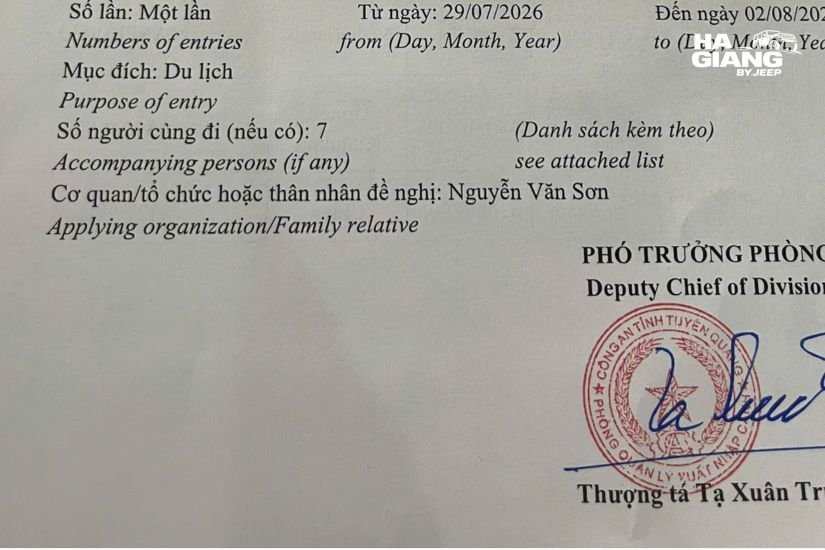
Keep a backup photo of your permit on your phone
Your permit is in your backpack. A police officer stops you. You have to dig through three bags to find it. Meanwhile, the officer is getting impatient.
Solve this: Keep it in a pocket, a small travel document pouch, or your jacket. Somewhere you can grab it in under five seconds.
Which Tour Option Works Best for You?
Now that you understand the permit situation, let's talk about which way to experience the Loop makes the most sense for you.
Because here's the thing: the permit isn't really the bottleneck. The real question is what kind of experience do you want? Once you answer that, the permit piece sorts itself out.
Option 1: Easy Rider Tour (You + Local Driver)
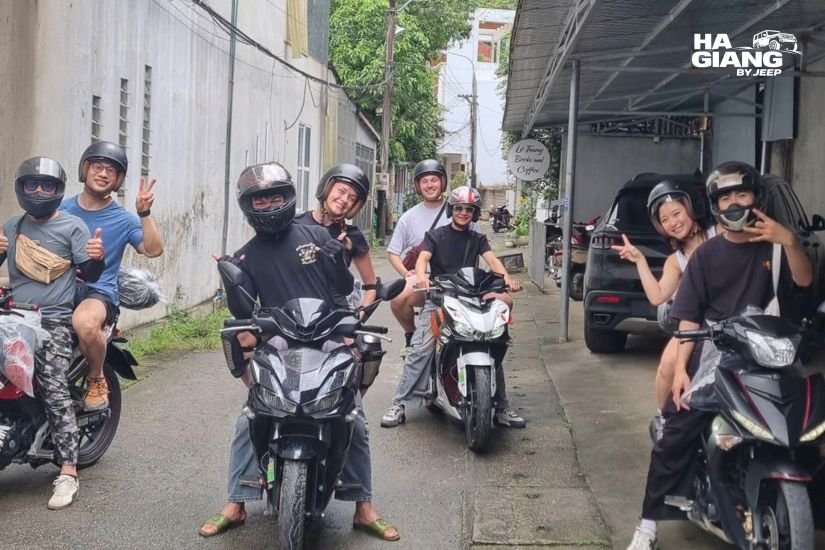
Easy Rider tours are the most popular choice for first-time visitors
This is the most popular choice for first-time visitors who want a guided experience but also want the motorbike authenticity.
You ride pillion (back seat) on a semi-automatic motorbike while your driver handles navigation, road conditions, and all the riding. Your driver is usually a local who knows the roads intimately and can share stories about the region. The operator handles the border permit for you before you even start.
Best for: Couples, nervous riders, travelers who want to enjoy scenery without concentrating on the road, anyone who wants a mix of independence and local insight.
Permit situation: Completely handled by the operator. You show up ready to ride.
Learn more: Ha Giang Loop Easy Rider
Option 2: Self-Drive Motorbike Rental (You're in Control)
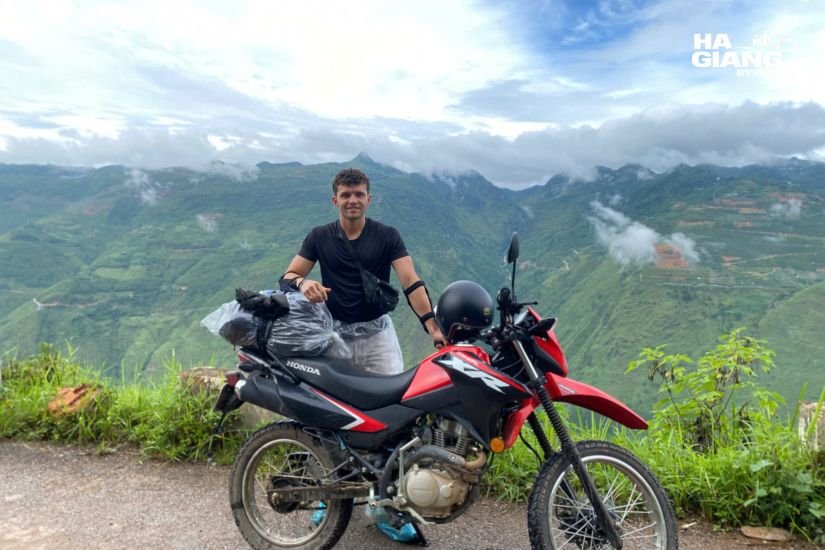
Self-drive rentals give you complete freedom to explore at your own pace
You rent a bike and ride yourself. This is for travelers with some motorbike experience who want total freedom and the adrenaline rush of conquering those roads solo.
You'll need to get the border permit yourself, but the rental shop usually guides you through it. You follow your own pace, take detours, stop wherever you want.
Best for: Experienced riders, solo travelers, people who've ridden bikes before and want the adventure and control.
Permit situation: You handle it yourself at the police station, usually same-day. Takes 30 minutes to an hour.
Learn more: Ha Giang Loop Self-Drive
Option 3: Jeep Tour (Wrangler Rubicon)
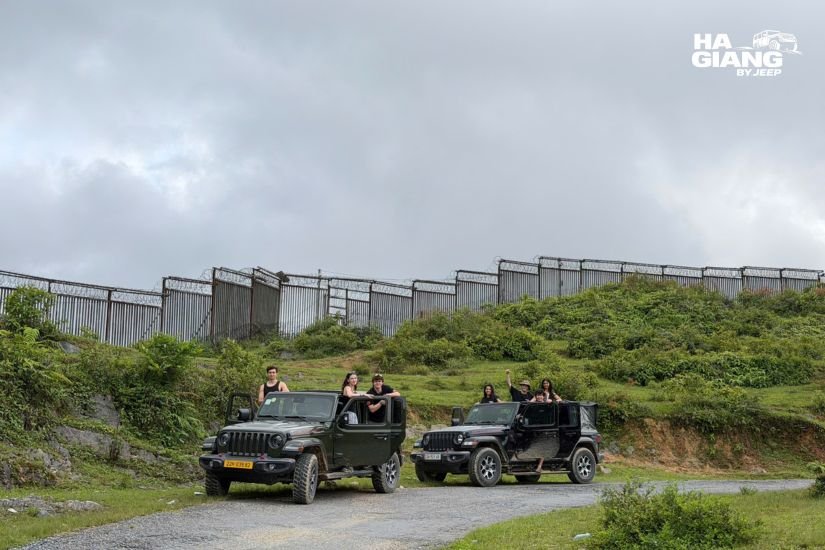
Jeep tours offer comfort without sacrificing adventure
Sit back, enjoy the ride, see everything without worrying about operating a vehicle on challenging terrain.
A professional driver handles the Jeep while you focus on the landscape. These tours often include more stops for photos and exploration, and small groups mean you get personalized attention. The operator handles all permits.
Best for: Groups, families, couples who want comfort without sacrificing adventure, anyone concerned about motorbike safety.
Permit situation: Completely sorted by the operator.
Learn more: Ha Giang Loop by Wrangler Rubicon Jeep
Option 4: Group Motorbike Tour (You Ride, We Guide)
You ride your own bike in a guided group. Your guide leads the way, handles logistics, and everyone stays together. The permit is handled by the tour operator.
Best for: Intermediate riders, people who want to ride but also want expert guidance and the safety of a group.
Permit situation: Handled by the operator.
My honest take: If the border permit is your main concern, pick a guided tour. It disappears as a problem. You book, you show up, you ride. Done.
If you want to be completely independent and the permit process feels like a small price to pay for total freedom, rent a bike and handle the permit yourself. It's genuinely quick.
Ready to Experience Ha Giang?
Choose your adventure and let us handle the logistics, including your border permit.
Explore Tour OptionsFAQ: Border Permit Questions Answered
A: If you're going through Ma Pi Leng Pass, yes. It's one of the most monitored checkpoints on the loop. Checkpoints there do stop travelers and ask for permits.
A: Ask the police station for an extended permit when you apply. You can usually get one valid for the full month. Tell them upfront that you're staying long-term and will be doing multiple loop rides.
A: Some tour operators can arrange it for you online before you arrive (if you book with them). If you're doing it DIY, you'll need to go to the police station in person once you're in Vietnam. Can't do it online directly.
A: Vietnamese citizens typically don't need the permit for these areas. She can ride with you or her own bike without needing one. But honestly, have her check with the rental shop or police to confirm, because rules around this can be inconsistent.
A: If you book a tour, it's usually included in the price or adds only 100,000 to 300,000 VND ($4-12 USD). Barely noticeable. If you're doing DIY, it's the same cost.
A: If you're stopped and ask "Can I visit this village even though it's not listed on my permit?", local police are usually fine with it if you explain yourself. The permit is more about your general itinerary than a rigid lockdown. That said, don't deliberately hide where you're going. Be honest about your route.
A: Cao Bang has its own border rules, separate from Ha Giang. If you're doing a Ha Giang + Cao Bang tour, the operator will sort out any needed permits for both areas. If you're doing them separately, check the rules for each.
A: Take a photo of it on your phone immediately after you get it. If you lose the physical copy, the photo usually satisfies police at checkpoints. You can also go to the police station to report the loss and request a replacement.
A: Some guesthouses, hotels, and rental shops have relationships with the police and can speed up the process. Ask when you arrive. It'll cost the same but saves you time.
A: No. Some checkpoints are stricter than others, and enforcement varies. That doesn't mean you shouldn't get one—it means don't gamble on avoiding them. Get the permit and eliminate the risk entirely.
Ready to Explore Ha Giang's Border Region?
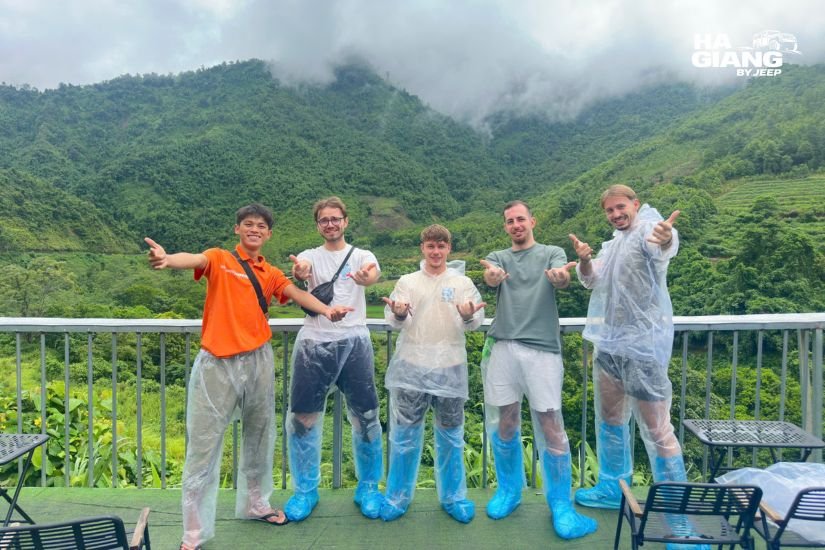
Travelers from around the world experience Ha Giang safely with the right preparation
The border permit shouldn't be a barrier to visiting Ha Giang. It's a formality, designed to keep things organized and safe. Once you understand how it works, it's genuinely simple.
Here's your next step: Decide which way you want to experience the Loop. Want a guide handling everything? Book a tour and let our team take care of the permit for you. Want to ride yourself and handle the logistics independently? Rent a motorbike, get your permit at the police station, and go.
Either way, you'll have the documentation you need, the peace of mind that comes with being legal, and the freedom to enjoy one of Vietnam's most breathtaking regions.
Ready to ride?
Get in Touch with Loop Trails
WhatsApp/Call: +84862379288 or +84938988593
Email: looptrailshostel@gmail.com
Office Address: 54A Tran Phu, Ha Giang 2, Tuyen Quang
Social Media:
- Facebook: Loop Trails Tours Ha Giang
- Instagram: Loop Trails Tours Ha Giang
- TikTok: Loop Trails
We're here to make sure your Ha Giang adventure is seamless from permit to departure.
This article was written by Thúy Kiều (Grace), a travel blogger and content contributor for Loop Trails Tours Ha Giang. She holds a bachelor's degree in Sustainable Tourism from Vietnam National University, Hanoi, and has a strong passion for exploring and promoting responsible travel experiences in Vietnam's northern highlands.