
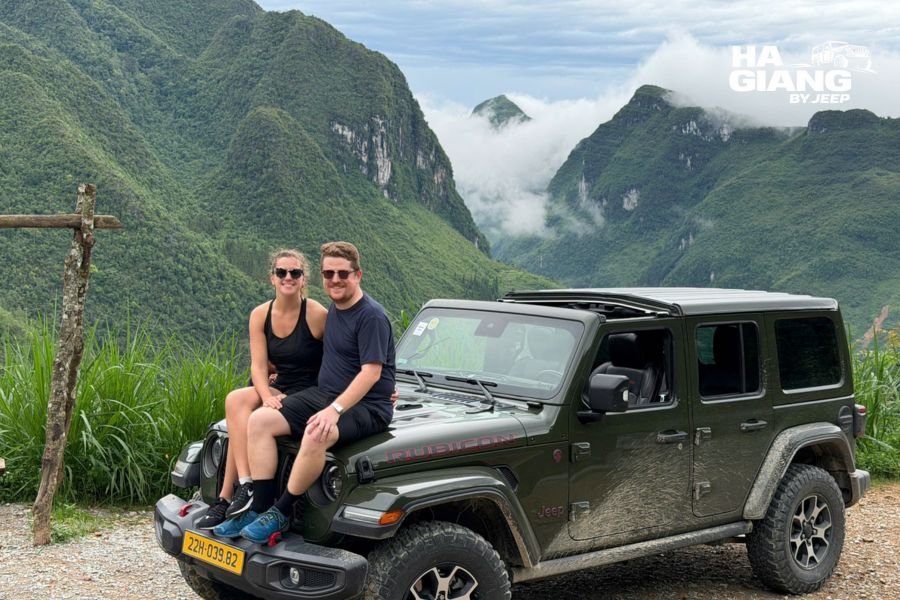
Ha Giang · Far North Vietnam
Dong Van Karst Plateau Geopark: A Complete Guide
The far north of Ha Giang does not ease you in. One bend you are in green valley country, the next you are surrounded by grey limestone towers that run to the horizon like a frozen sea.
The Dong Van Karst Plateau Geopark is the reason so many travelers point their whole trip at the top of Vietnam. It is a vast upland of stone, terraced valleys, hidden villages, and some of the most dramatic mountain roads in the country. This guide covers what the geopark actually is, the sights that make it famous, the towns and markets worth your time, what to eat, the best time to visit, what to pack, and the most comfortable way to see it all without turning your holiday into an endurance test.
If you have been researching how to see this region in comfort, you have likely already found Ha Giang by Jeep. The plateau is exactly the kind of place a private jeep was made for, and we will come back to why. First, the land itself.
In this guide
What is the Dong Van Karst Plateau Geopark?
The Dong Van Karst Plateau Geopark is a huge limestone highland in the far north of Ha Giang province, right up against the Chinese border. It was recognized as a UNESCO Global Geopark in 2010, the first in Vietnam, and it remains one of the most striking geological landscapes in Southeast Asia.
The word geopark can sound technical, so here is the plain version. It is a large protected area where the rock itself tells a story worth preserving, and where that geology is tied closely to the culture of the people living on it. The limestone here records hundreds of millions of years of history. Fossils, ancient sea beds, and weathered pinnacles all sit in plain view once you know to look for them.
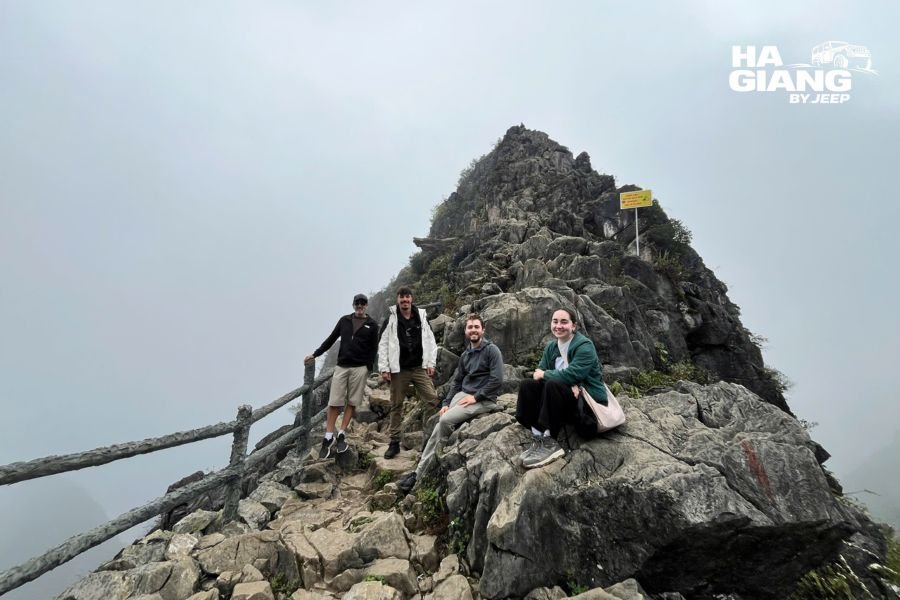
The geopark spreads across four northern districts: Quan Ba, Yen Minh, Dong Van, and Meo Vac. Most of it sits well above 1,000 meters, which is why the air feels cooler and thinner up here and why the weather can turn quickly. It is also home to many ethnic groups, including the H'mong, Lo Lo, Tay, and Dao, whose villages, markets, and terraced fields give the stone landscape its warmth and life.
Up here the rock is the headline, but the people are the reason the place feels alive rather than lunar.
Where it is and how you reach it
The plateau begins north of Ha Giang City and stretches to the border. You do not fly in or take a train to the middle of it. You start from Ha Giang City, the gateway to the whole region, and climb north by road, gaining altitude as the valleys narrow and the stone closes in.
Getting to the Dong Van Karst Plateau Geopark
Almost every traveler reaches Ha Giang City first, usually from Hanoi by night bus, limousine van, or private transfer. From there the road climbs through Quan Ba, then Yen Minh, then into the districts of Dong Van and Meo Vac, which hold most of the famous sights. There is no shortcut. Getting there is half the experience, and the drive up is genuinely part of what people come for.
A word on driving times
You will find pages that quote an exact number of minutes between every stop on the plateau. Treat those with suspicion. Weather, roadworks, landslides in the wet months, market day traffic, and how many times you stop for photos all change the timing, and a fixed figure on a page usually means someone copied it without driving the road. Plan your days in loose half day blocks and leave slack. On our tours the driver knows the current road conditions and adjusts the day around them, which is exactly why we do not publish rigid stop to stop timetables ourselves.
Coming for the comfort, not the exhaustion? Our jeeps are private, so you are never grouped with strangers, and the soft top and heater keep the cabin comfortable when the mountain weather turns. See the Ha Giang Loop 3 days jeep tour for the core plateau, or message us with your dates.
The landscapes that define the plateau
The plateau is not one view. It is a sequence of them, and they change character as you move north and east. These are the ones that stay with people.
Quan Ba Heaven's Gate and the Twin Mountains
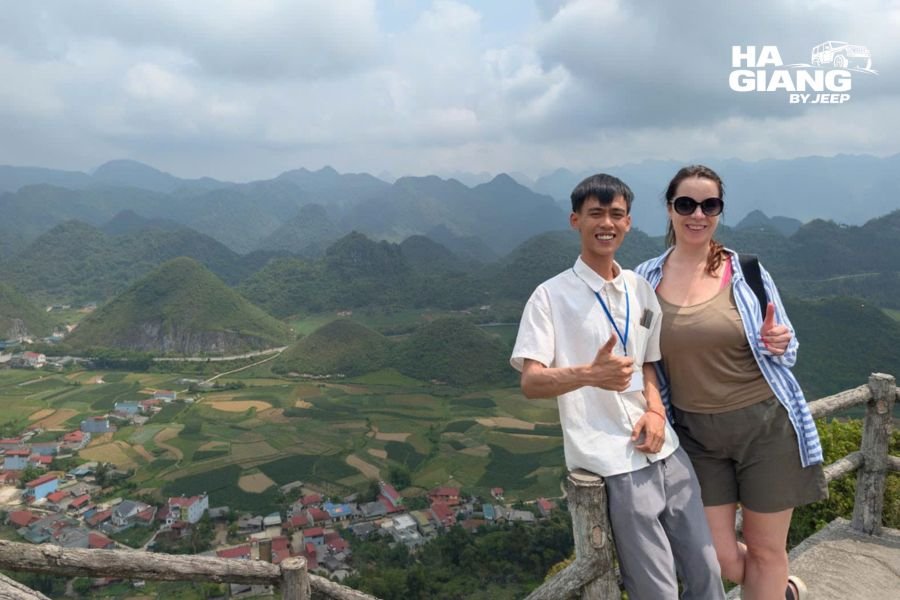
The first real gasp usually comes at Quan Ba. Heaven's Gate is a mountain pass where the road tops out and the valley opens below you, and just beyond it are the Twin Mountains, two perfectly rounded hills rising out of the flat rice fields. It is the moment most people realize they have left ordinary Vietnam behind.
Yen Minh and the pine forests
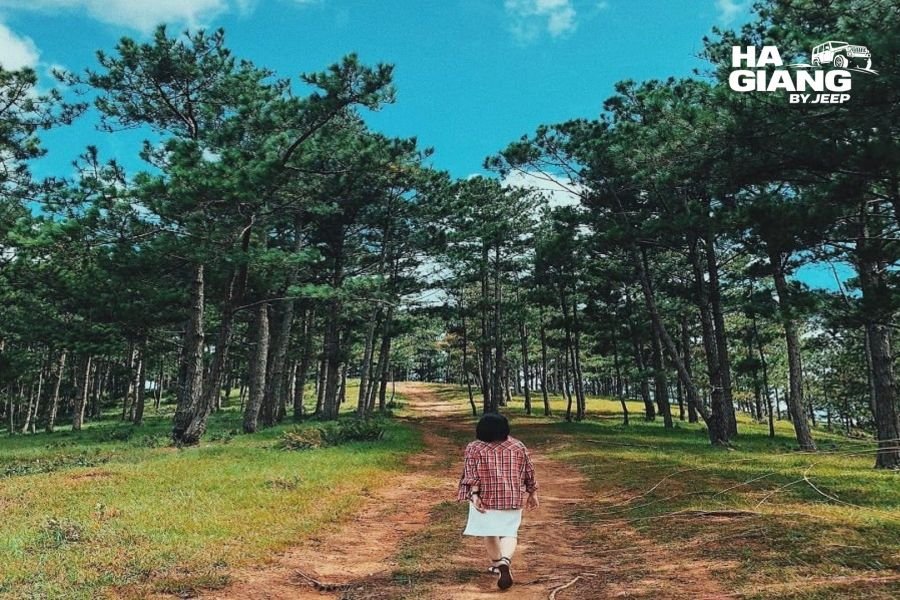
Between Quan Ba and Dong Van the road runs through Yen Minh, where the bare karst gives way to unexpected stands of pine. It is a gentle, green stretch, a quiet breather between the more dramatic sections, and a favorite spot for a roadside stop.
Ma Pi Leng Pass and the Nho Que River
Ma Pi Leng is the headline drive of the whole north, a high pass carved into the cliff between Dong Van and Meo Vac, with the Tu San Canyon dropping away beneath it and the jade green Nho Que River threading the bottom. Many travelers add a boat trip on the river to see the canyon from the water. It is covered on our 3 days jeep tour and every longer route.
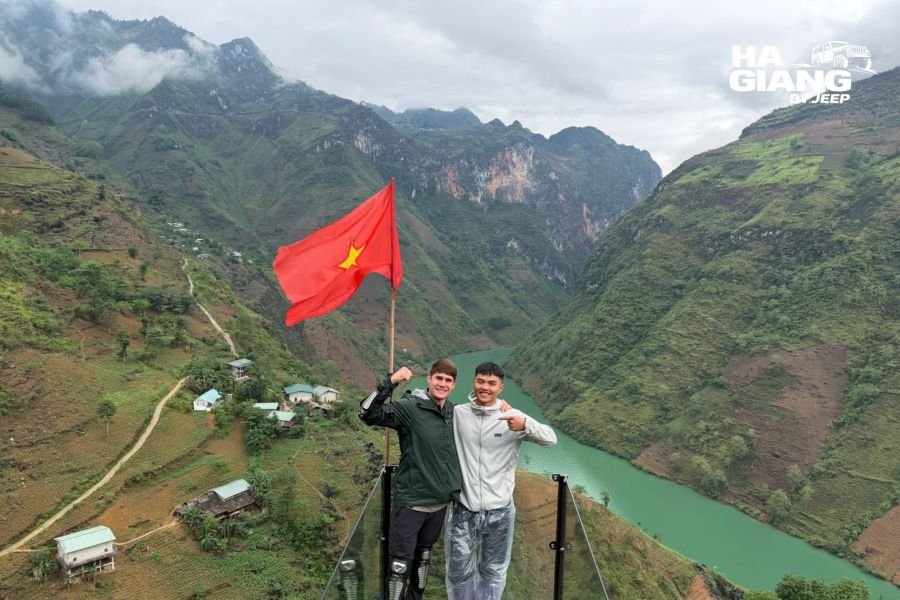
The sea of stone
Everywhere in between, the karst itself is the attraction. Locals call parts of it the sea of stone: mile after mile of grey limestone teeth, with tiny plots of corn and buckwheat wedged into every pocket of soil. It is harsh and beautiful at once, and it is unlike anything else in Vietnam.
Towns and villages worth your time
The stone would be impressive on its own, but the villages are what make the plateau feel human. A few stand out.
Dong Van Old Quarter
Dong Van Old Quarter is the historic heart of the plateau, a cluster of century old houses with ochre walls, wooden shutters, and stone courtyards, gathered around a small market square. In the evening the cafes light up with lanterns and it becomes one of the nicer places in the north to slow down with a coffee or a corn wine. It makes a natural overnight base.
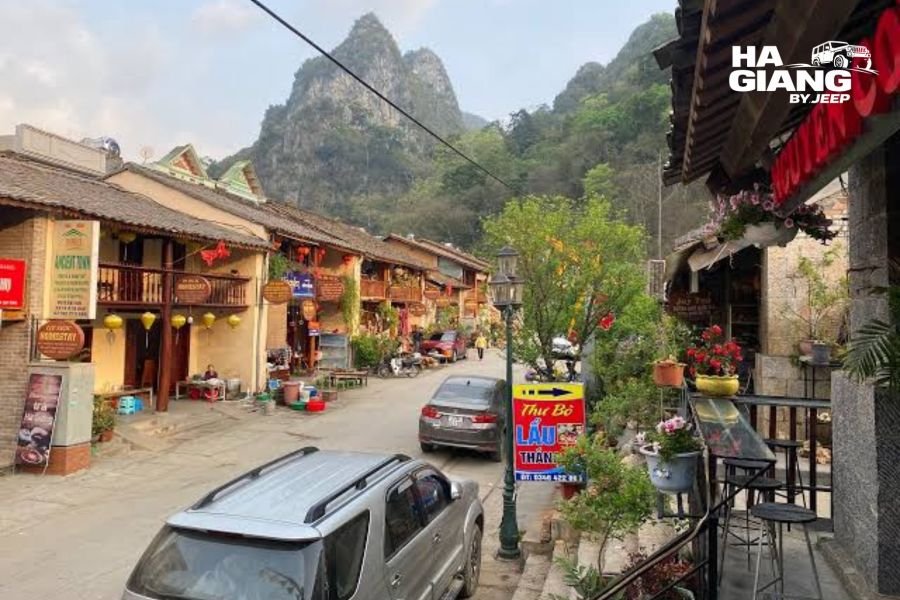
Pho Bang, the sleepy old town
A short detour off the main road, Pho Bang is a quiet, faded town of old adobe houses tucked in a hollow, with far fewer visitors than Dong Van. If you like places that feel like they have been left alone, this one rewards the stop.
Sung La and the H'mong King's Palace
Sung La is a valley famous for its beauty, often called one of the prettiest in the region, with a traditional H'mong house at its center that many people recognize from Vietnamese film. Nearby, in Sa Phin, stands the old palace of the H'mong king, a fortified compound that tells the story of who ran this frontier a century ago.
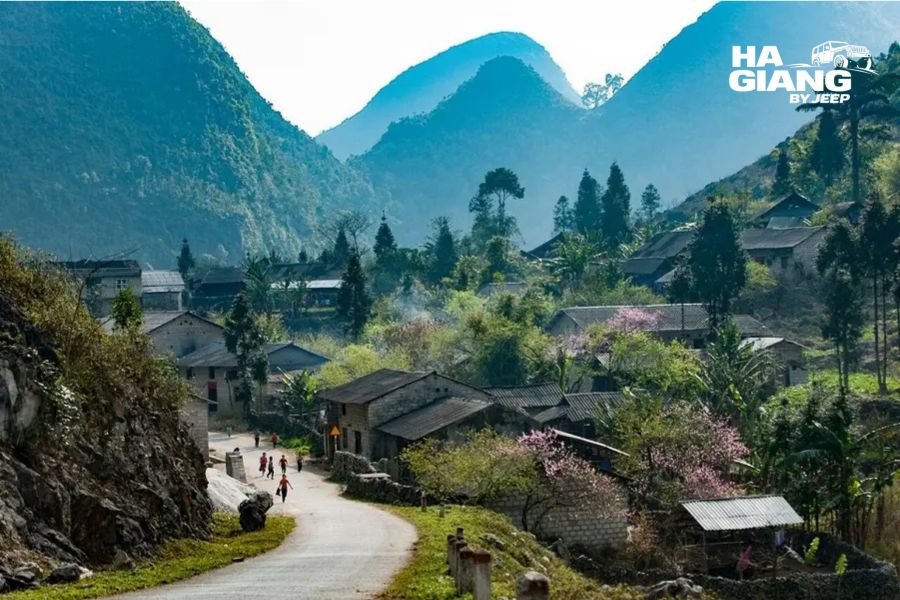
Lung Cu and the northernmost point
Lung Cu is where Vietnam ends. The flag tower here marks the northernmost point of the country, and the climb to the base gives you a sweeping look across the border hills. It is a moving spot for many travelers, part geography lesson, part quiet patriotism, and worth the short walk up.
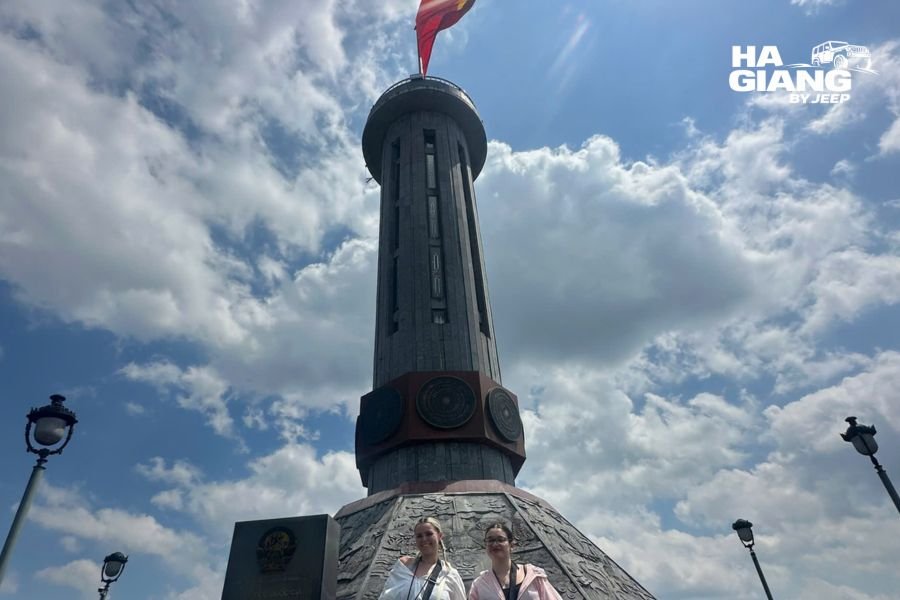
Meo Vac
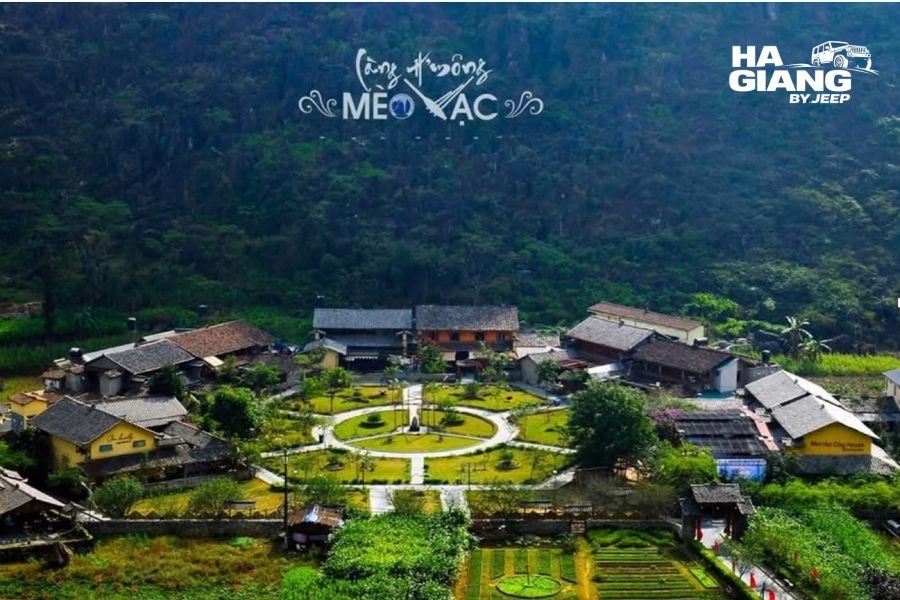
On the eastern edge, Meo Vac sits in a bowl of mountains just past Ma Pi Leng. It is smaller and rawer than Dong Van, with one of the best markets in the region and easy access to the Nho Que boat trip. Many routes overnight here after crossing the pass.
Lung Tam Linen Village
Near Quan Ba, the H'mong weaving village of Lung Tam is where you can watch the whole process of turning hemp into indigo dyed linen by hand, from spinning to beeswax patterning to dyeing. It is a genuine craft cooperative, not a staged show, and a good place to buy something made on the plateau itself. A private jeep makes these small off road villages easy to include without a rushed schedule. The slower 4 days jeep tour is built for exactly this kind of unhurried village stop.
Markets of the plateau
If you can time your trip around a market, do it. The plateau's markets are where the whole region comes down from the hills to trade, eat, and socialize, and they are among the most colorful you will see anywhere in Vietnam.
Dong Van Sunday Market
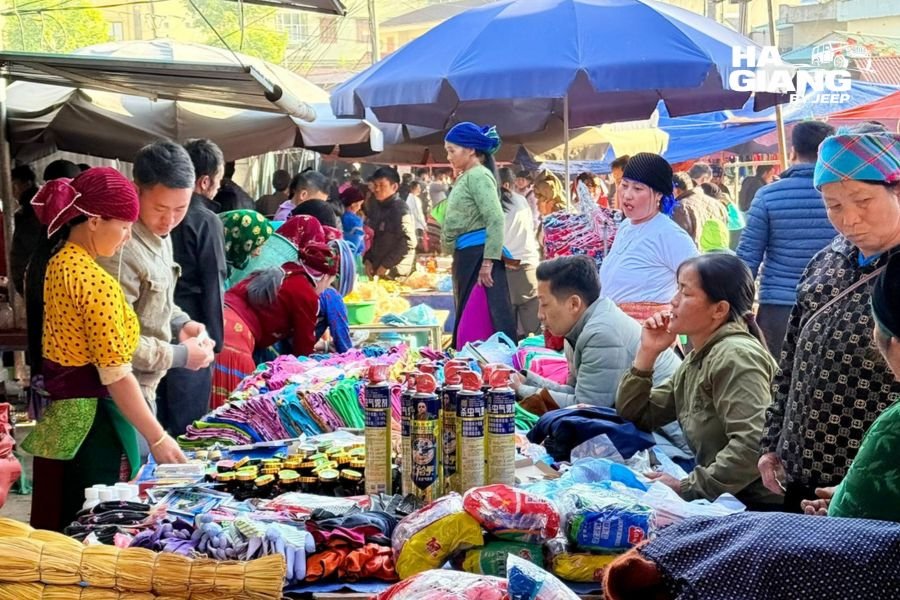
The Sunday market in Dong Van is the classic. From early morning the square fills with families in bright traditional dress, livestock changing hands, steaming food stalls, and the low buzz of a dozen languages. Come early, before the tour crowds, and eat breakfast in the middle of it.
Meo Vac Market and Khau Vai Love Market
Meo Vac holds its own busy Sunday market, often quieter with foreign visitors than Dong Van and all the better for it. The region is also known for Khau Vai, the famous love market that traditionally meets just once a year and draws people from across the highlands. Market days and dates can shift, so check the latest before you build a day around one.
A practical note: markets run on their own calendar and some rotate location. Confirm current market days with your driver or homestay rather than trusting an old blog post.
What to eat on the Dong Van Karst Plateau
Mountain food up here is hearty, cheap, and tied to the seasons. A few things are worth going out of your way for.
- Com lam: sticky rice cooked inside a bamboo tube over a fire, smoky and good with grilled meat.
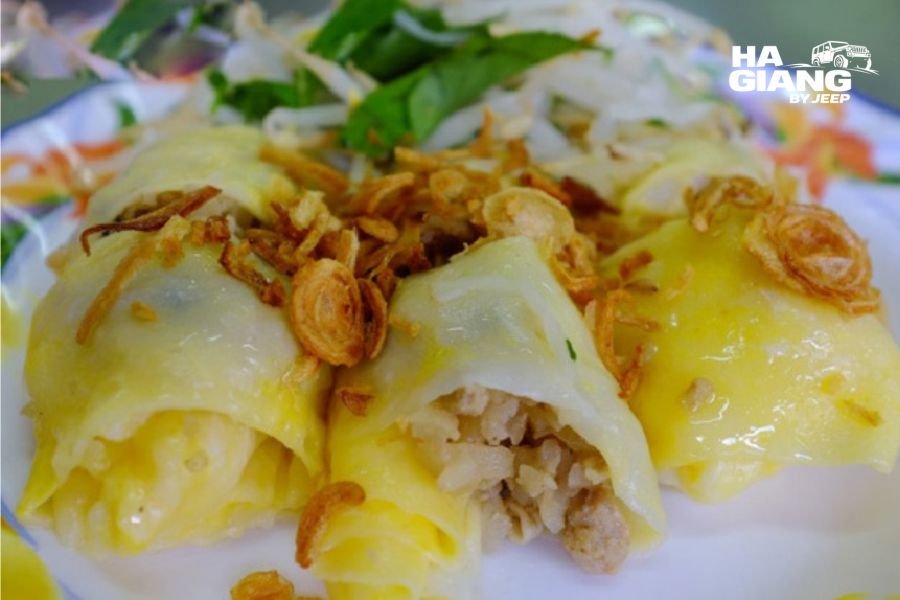
- Banh cuon trung: silky steamed rice rolls with egg, usually served with a warm dipping broth, a classic Ha Giang breakfast.
- Thang den: soft glutinous rice balls in warm ginger syrup, the local answer to a cold evening.
- Chao au tau: a bittersweet porridge made from a mountain tuber, an acquired taste that locals swear by after a long day.
- Ruou ngo: corn wine, distilled in the villages and poured generously at any celebration.
Here is where traveling by jeep quietly wins. When you spot a market stall or a roadside grill you like the look of, the driver simply pulls over and parks, and the whole group eats together. You never worry about where to leave a vehicle, and if the corn wine comes out at lunch, nobody has to get behind the wheel afterward. It turns eating your way across the plateau into the relaxed part of the day rather than a logistics problem.
Best time to visit
There is no single best month, only tradeoffs. Each season shows the plateau in a different mood.
| Season | What it looks like | Worth knowing |
|---|---|---|
| Spring (Mar to May) | Fruit blossom, green terraces filling in, mild days | Pleasant and less crowded, some lingering mist |
| Summer (Jun to Aug) | Lush and green, dramatic clouds | Wettest months, occasional landslides, check conditions |
| Golden rice (Sep to early Oct) | Terraces turning gold before harvest | One of the most photogenic windows, busier |
| Buckwheat flower (Oct to Nov) | Pink and white buckwheat fields across the stone | Iconic plateau season, very popular |
| Winter (Dec to Feb) | Cold, clear light, heavy fog on high passes | Can be genuinely cold up high, pack layers |
Weather in the mountains changes fast and none of this is a guarantee, so treat any seasonal guide, including this one, as a rough map rather than a promise. If a specific bloom or the golden harvest is your main reason for coming, message us close to your dates and we will tell you honestly how things are looking on the ground.
What to pack and know before you go
The plateau is high, remote, and colder than most people expect. A little preparation goes a long way.
- Layers. Mornings and high passes can be cold even in warmer months. Bring a warm layer and a light rain shell whatever the season.
- Cash. Card payment is limited outside the bigger towns. Carry enough small notes for markets, food stalls, and entrance fees.
- Comfortable shoes. Several highlights, including Lung Cu and viewpoints, involve short walks or steps.
- Sun and altitude. The sun is strong at elevation even when the air is cool. Sunscreen and water matter.
- A relaxed schedule. The best plateau days have gaps in them for a market you did not plan on or a viewpoint you did not want to leave.
Border permits and the northern edge
Parts of the plateau sit close to the border, and some areas have required permits at various times. These rules can change, so we do not publish specific permit requirements that might be out of date by the time you travel. On our tours we handle the current paperwork for you as part of arranging the trip, which is one less thing for you to research. If you are traveling independently, check the latest local requirements before you go.
How long do you need for the plateau?
You can see the core of the plateau in a compact loop, or you can slow right down and let it unfold. As a rough guide, a shorter trip hits the headline sights of Dong Van and Meo Vac, while a longer one adds quieter villages, extra viewpoints, and more time to simply be there. We deliberately avoid printing hour by hour schedules, because the right pace depends on your group, the season, and what you care about most.
If you want to think it through properly before booking, our tour pages break down what fits into each length, and our team is happy to talk it over with you directly.
Why a private jeep makes the plateau easier
The Dong Van Karst Plateau Geopark rewards comfort more than almost anywhere else in Vietnam, because the distances are real, the altitude is high, and the weather does what it likes. A private jeep changes the trip in a few concrete ways.
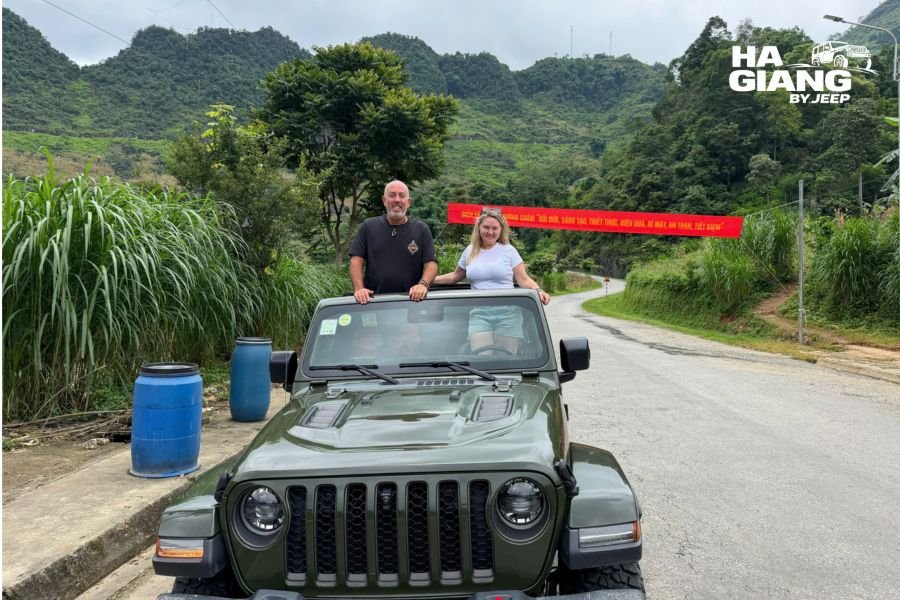
- All weather comfort. A soft top cabin with a heater means fog, cold, and rain stay outside while you stay warm and dry.
- Views in every direction. Sitting up in an open sided jeep, you see the passes and valleys properly instead of watching the road.
- Stop anywhere. A market, a viewpoint, a roadside grill, a village you did not plan on: the driver pulls over and you get out.
- Right for everyone. Families, couples, older travelers, and anyone who does not want to drive themselves are all comfortable in a jeep.
- Local knowledge. Our drivers grew up in these mountains and speak English, so the plateau comes with context, not just transport.
Adventure without exhaustion is the whole idea. You get the wild north; you skip the part that leaves you wrecked.
Which jeep tour is right for you?
The plateau anchors every route we run. The right length depends on how much time you have and how far east you want to go.
- Short on time, want the greatest hits. The Ha Giang Loop 3 days jeep tour covers the core plateau, including Quan Ba, Dong Van, Ma Pi Leng, and Meo Vac, at a comfortable pace. Ideal for a first visit with limited days.
- Want to go slower and see more villages. The 4 days jeep tour opens up quieter corners like Lung Cu, Pho Bang, Du Gia, and the linen village, with more breathing room at every stop.
- Want the plateau plus Cao Bang and Ban Gioc. The Ha Giang and Cao Bang 5 days jeep tour continues east to Ban Gioc Waterfall, Nguom Ngao Cave, and the God's Eye Mountain and Ngoc Con Valley area.
- Want the fullest version. The 6 days jeep tour adds even more of Cao Bang, including Pac Bo, at the most relaxed pace of all.
- Confident driver who wants the wheel. If you would rather self drive a proper 4x4, our Jeep Wrangler Rubicon rental lets you run your own route with the same comfort and all weather cabin.
Not sure which fits? Message us on WhatsApp with your dates and group and we will point you to the right one honestly.
See the Dong Van Karst Plateau for yourself
The plateau is one of those landscapes that looks impressive in photos and genuinely overwhelming in person. The easiest way to do it justice is to let someone else handle the roads, the timing, and the border area paperwork while you sit back and take it in.
We run private jeeps only, so you are never grouped with strangers, and we sort the permits, homestays, and drivers for you. To hold your dates, you secure your spot with a small deposit that lets us pre pay your homestays, drivers, and permits ahead of time, with the balance settled in cash on arrival. Most guests book one to three months in advance, and because every jeep is private, availability is limited, so earlier dates go first.
Ready to plan it?
Tell us your travel dates and group size and we will help you choose the right route, no pressure. Hold your spot now, or ask us anything first.
FAQ
It is known for its dramatic limestone karst scenery, the Ma Pi Leng Pass and Nho Que River, ethnic minority villages and markets, and its status as Vietnam's first UNESCO Global Geopark. It is the scenic heart of the far north.
You start from Ha Giang City, reached from Hanoi by night bus, limousine van, or private transfer, then travel north by road through Quan Ba, Yen Minh, Dong Van, and Meo Vac. There is no airport or train into the plateau itself.
Yes. The main effort is time on winding mountain roads, which a private jeep with a soft top and heater makes comfortable. Most sights need only short walks, so families, couples, and older travelers manage the plateau well.
There is no single best month. The golden rice around September and the buckwheat flowers in October and November are the most photogenic. Spring is mild and quieter, summer is lush but wet, and winter is cold and clear. Pack for cold at altitude year round.
Some border areas have required permits at various times, and rules can change. On our tours we handle the current paperwork for you. If you travel independently, check the latest local requirements before you go rather than relying on old information.
A shorter trip covers the headline sights of Dong Van and Meo Vac, while a longer one adds quieter villages and viewpoints and a more relaxed pace. The right length depends on your group and the season. Our tour pages and team can help you decide.
For many travelers, yes. The Dong Van and Meo Vac Sunday markets are among the most vivid in Vietnam. Market days and locations can shift, so confirm the current schedule with your driver or homestay before planning a day around one.
No. You see exactly the same passes, villages, markets, and viewpoints and stop in the same places. A private jeep simply keeps you comfortable and warm, handles the driving for you, and suits travelers who prefer not to drive themselves.
Yes. Ma Pi Leng sits between Dong Van and Meo Vac, within the geopark, above the Tu San Canyon and the Nho Que River. It is one of the most famous drives in the whole country and a highlight of any plateau route.
Most guests book one to three months ahead. Because every jeep is private, availability is limited, so earlier dates fill first. Once you have a confirmed travel date, booking sooner helps us arrange homestays, drivers, and permits properly.