
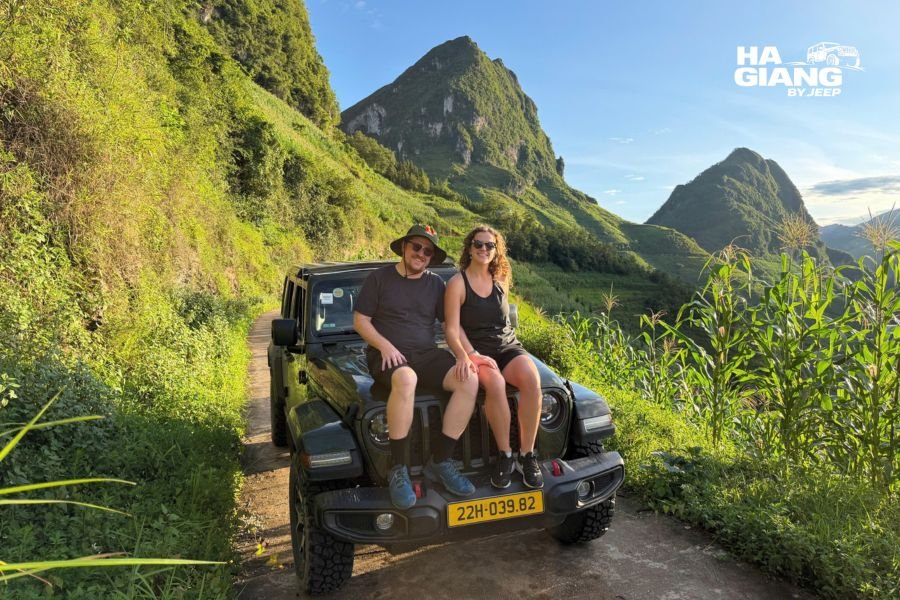
Ha Giang · Tu San Canyon
Nho Que River Boat Trip: A Complete Ha Giang Guide
The Nho Que River is that impossible shade of green you have already seen on a hundred travel feeds. Seeing it in person, from the water, is a completely different thing.
A Nho Que River boat trip is one of the real highlights of any Ha Giang journey, and it earns that reputation. You leave the high passes behind, drop down toward the canyon floor, and glide along a ribbon of jade water with limestone walls rising almost straight up on both sides. This guide walks through what the trip is actually like, the best time to go, roughly what it costs, what to pack, and the easiest way to fit it into your route without turning your day into a logistics puzzle.
If you are already deep into planning a trip to the far north, you have probably found Ha Giang by Jeep while searching for a comfortable way to see all of this. The river is a big part of why people come, so let us start there.
In this guide
What is a Nho Que River boat trip?
The Nho Que River runs along the bottom of the Tu San Canyon, directly below the famous Ma Pi Leng Pass in the far north of Ha Giang province. The canyon is often called the deepest in Vietnam, and standing at the pass and looking down at that thin line of green water is one of the classic views of the whole region.
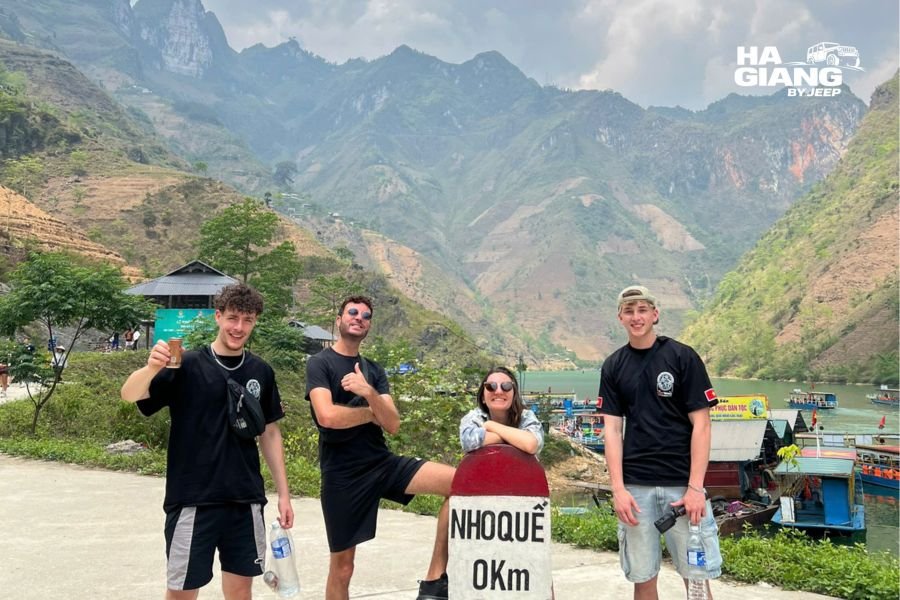
A Nho Que River boat trip takes you off the road and onto the water itself. You board a small motorboat at a pier near the base of the canyon, then cruise upstream between the cliffs for a while before turning back. The water sits so still and so green in the calm season that the reflections look almost fake in photos. From the boat you get a sense of scale that you simply cannot get from the viewpoint above: the walls tower over you, the sound softens, and the whole place feels quiet in a way the passes never are.
This stretch of country is part of the Dong Van Karst Plateau Geopark, a UNESCO Global Geopark, which is one reason the landscape looks so unlike anywhere else in the country. The limestone here has been carved over millions of years, and the river is the payoff at the bottom of it all.
Where the Nho Que River sits on the Ha Giang Loop
The river sits on the eastern side of the loop, between Dong Van and Meo Vac, right where the road crosses Ma Pi Leng. Most travelers reach it on the third or fourth day of a typical loop, after they have already passed through Ha Giang City, Quan Ba, Yen Minh, and Dong Van Old Quarter.
That location matters for planning. The Nho Que boat trip is not a standalone day out from a beach town. It is one stop on a bigger route through the mountains, so how you get to it depends entirely on how you are doing the loop as a whole. Nearby, you can pair it with Dong Van Sunday Market, the Sunday session at Meo Vac, a look at the H'mong King's Palace in Sung La and Sa Phin, or the old French era houses in Pho Bang. Foodies usually build the day around com lam, thang den, or a bowl of chao au tau in the evening.
The road down to the boarding pier
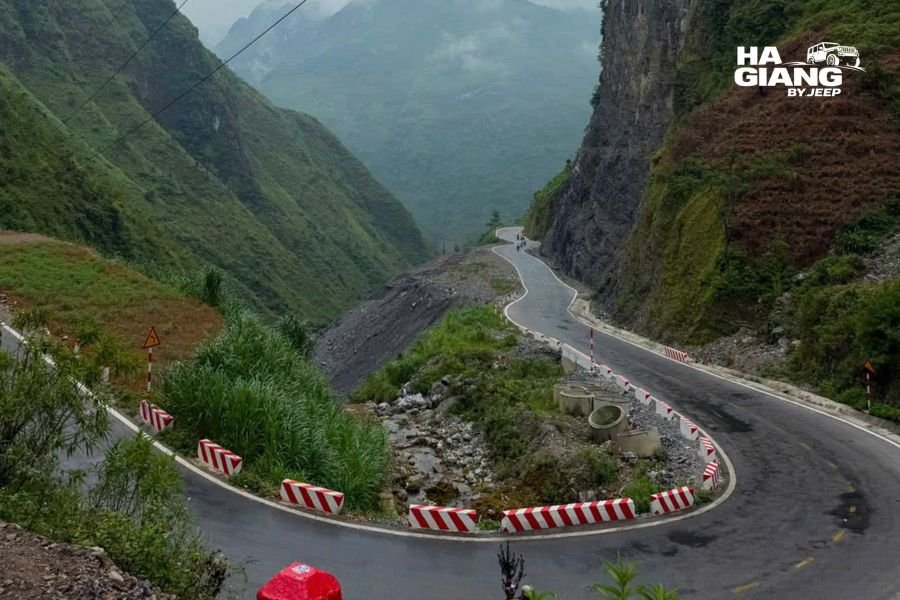
Here is the part a lot of guides gloss over. The pier is not on the main pass road. To reach the water, you turn off near the pass and follow a steep, narrow switchback road that drops down the side of the canyon to the boarding area. It is short, but it is genuinely steep, with tight bends and drop offs, and it can get busy with vehicles coming up and down at the same time.
You will see websites that quote exact driving times between every stop on the loop. Treat those with suspicion. Road conditions, roadworks, weather, market day traffic, and how many photo stops you make all change the timing, and a fixed number on a page usually means someone copied it without driving it. Plan by half days, not by minutes, and leave yourself slack. On our tours the driver handles this descent so you can look at the view instead of the road, which is the whole point of coming by jeep.
What to expect on a Nho Que River boat trip
Once you are at the pier, the process is simple. You buy a ticket, put on a life vest, and wait for the next boat to fill. Boats are shared and leave when they have enough people, so at quiet times you may wait a little and at peak times you may join a full boat quickly. Bring the vest whether or not the staff insist, and keep it on. The water is calm but deep and cold.
The boat and the canyon walls
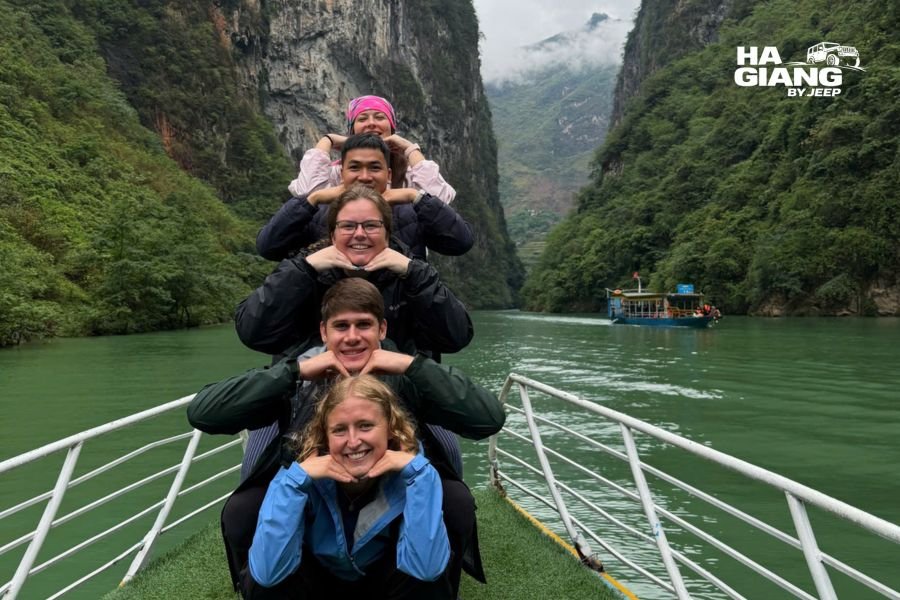
The boats are small covered motorboats, low to the water, which is exactly what you want for photos. As you pull away from the pier the canyon opens up ahead of you. The cliffs of Tu San rise on both sides, sometimes almost vertical, and the further you go the more enclosed and dramatic it feels. Drivers usually slow down at the best spots so people can take pictures, and most turn the boat so both sides get the light.
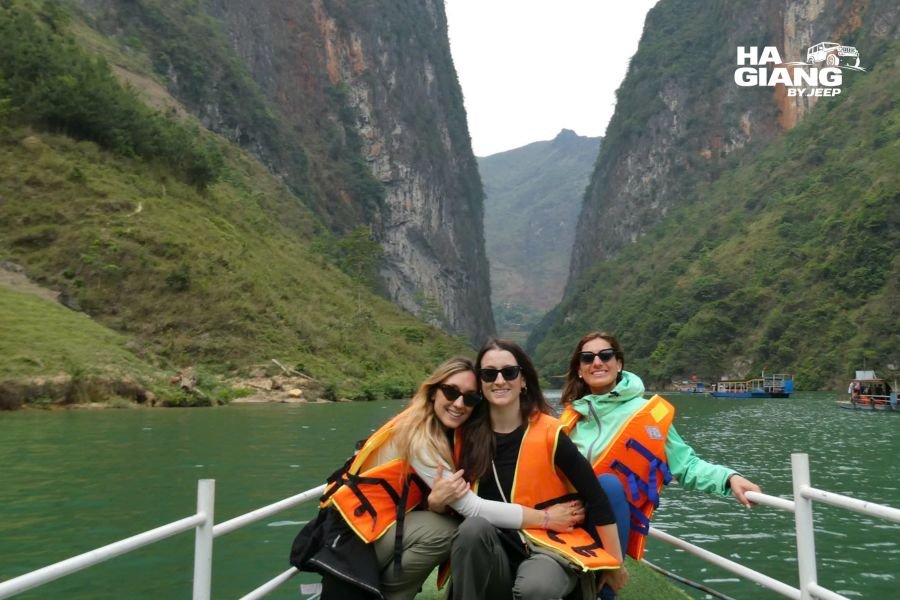
The engine cuts out at the turnaround point on some boats, and the silence between those walls is the thing people remember.
The water is the star. In the right season it is a deep, clear jade green that photographs beautifully. It is worth putting the phone down for a minute in the middle of the canyon and just listening.
How long is the trip?
The time on the water is short, usually under an hour, though it varies by operator and water level. Do not expect an all day cruise. This is a concentrated, high impact stop: you go in, you get the views, you come back. Because it is short, it slots neatly into a driving day without eating the whole afternoon.
Arrive fresh, not frazzled
That short window on the water lands best when you are not worn out from the drive to reach it. See the whole loop from a private jeep with a local driver, so the canyon is a thrill instead of a relief. Adventure without exhaustion.
When is the best time for a Nho Que River boat trip?
There is no single perfect week, but there are clear trade offs by season. The two things you are balancing are water color and weather.
Season and water color
The river looks its most famous shade of green in the drier, cooler months, roughly from autumn through spring. In the wet season, heavier rain upstream can lift the water level and turn the color murkier and browner for a while. That does not mean the wet season is bad, the canyon is still huge and impressive, but if the jade green water is the main reason you are going, aim for a drier stretch and check recent photos before you commit.
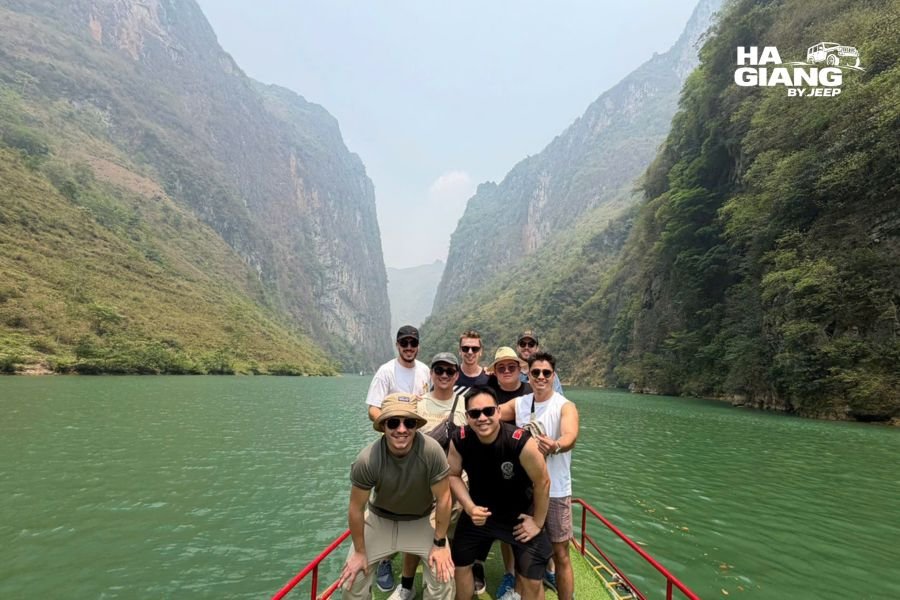
Weather in the mountains changes fast and forecasts here are rough at best, so treat any month by month rule as a guide, not a guarantee. Conditions and boat schedules can shift, so it is always worth confirming close to your date.
Time of day
Light in a deep canyon is tricky. When the sun is low, much of the water sits in shadow. The window when the sun is high enough to reach the canyon floor, roughly the middle of the day, tends to give the brightest green in photos. Earlier and later, the mood is moodier and cooler, which some people prefer. If you have a private vehicle you can time your arrival for the light you want instead of racing to fit a group schedule.
How much does the boat trip cost?
Prices change, so we will not print a number that goes stale. There is a separate boat ticket, usually paid at the pier, and it is not normally included in a standard loop tour price unless a specific package says so. Budget a modest extra amount per person for the boat on top of your tour, bring some cash, and confirm the current rate on the day. Kayak and longer options cost more than the standard shared boat. If exact figures matter for your budget, message us before you travel and we will give you the latest.
Kayaking on the Nho Que River
If a short motorboat trip is not enough, kayaks are available at the pier area for people who want more time on the water and a slower, quieter experience. Paddling gives you total control of the pace and gets you closer to the base of the cliffs, and it is a favorite for couples and more active travelers. It takes longer and needs a bit of fitness, so factor that into your day. Life vests apply here too, and the same season advice holds: calmer, clearer water makes for a far better paddle.
What to bring
- A light layer or windproof jacket. It is cooler on the water than on the road, even on warm days.
- Sun protection. The middle of the day is when the canyon lights up, and there is little shade on the boat.
- Cash for the boat ticket. Card payment is not something to rely on at the pier.
- A phone or camera with room to spare. You will take more photos than you expect.
- A dry bag or zip bag for electronics, just in case of spray.
- Sensible shoes for the walk down to and around the pier.
Common mistakes to avoid
Rushing the descent. That switchback road down to the pier is not the place to hurry. If you are self driving anything, take it slowly and give way on the blind bends.
Trusting fixed driving times online. As above, the loop does not run on a stopwatch. Build in buffer and you will never feel rushed.
Going only for the green and ignoring the season. If jade water is the whole reason for your trip, check recent conditions rather than an old photo, and be ready for a different color in the wet months.
Skipping cash. There is a ticket to pay and roadside food to try, and you do not want to be the person holding up the boat because you only have a card.
Trying to see everything in one blurry day. The Nho Que boat trip is better as one clear highlight in a well paced day than as stop number nine on a mad dash. Slow down and it rewards you.
Why a private jeep makes the Nho Que River simple
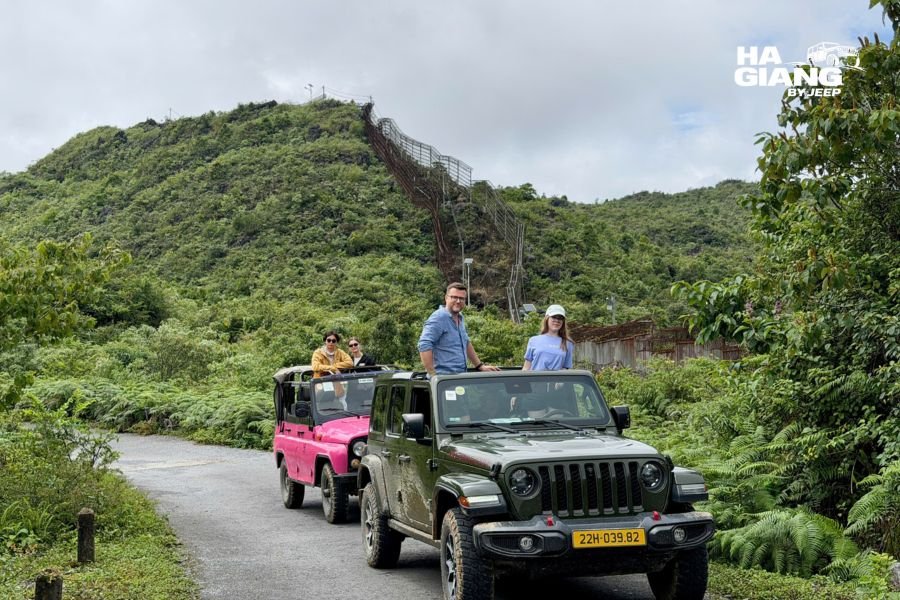
Here is where the way you travel really shows. The Nho Que River sits at the end of steep mountain roads, in weather that swings from hot sun to cold cloud in an hour. In a private jeep, none of that is your problem. You have a soft top and heating if the weather turns, 360 degree views when it is clear, and a driver who was born in these mountains and knows exactly where to stop for the best angle on the canyon.
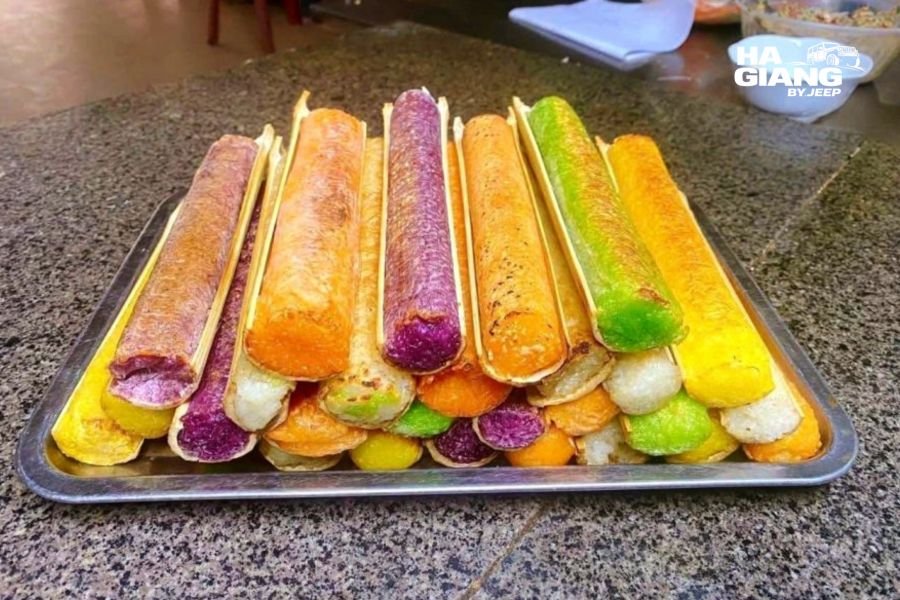
The freedom to stop anywhere is the underrated part. See a roadside stall selling banh cuon trung or a jug of ruou ngo, corn wine, at a mountain market? You just pull over. You are not hunting for somewhere to park, and nobody has to stay sober to drive a two wheeler down a mountain pass afterward. For families, couples, older travelers, and anyone who would simply rather not drive themselves through the far north, that combination of comfort and flexibility is the whole reason to come by jeep.
It also means the boat trip lands the way it should. You arrive warm, unhurried, and with energy to spare, so the canyon is a thrill instead of a relief. That is what we mean by adventure without exhaustion.
Which jeep tour is right for you?
Every route below passes through the Ma Pi Leng and Nho Que area, so you will get the river on all of them. The difference is how much time you have and how far you want to go.
- Short on time, want the greatest hits. The Ha Giang Loop 3 days jeep tour covers the core loop, including Ma Pi Leng and the Nho Que area, at a comfortable pace. Ideal for a first visit with limited days.
- Want to go slower and see more villages. The 4 days jeep tour opens up quieter corners like Du Gia and Lung Cu and gives you more breathing room at each stop.
- Want the loop plus Cao Bang and Ban Gioc. The Ha Giang and Cao Bang 5 days jeep tour continues east to Ban Gioc Waterfall, Nguom Ngao, and the God's Eye Mountain and Ngoc Con Valley area.
- Want the fullest version. The 6 days jeep tour adds even more of Cao Bang, including Pac Bo and the quieter passes, at the most relaxed pace of all.
- Confident driver who wants the wheel. If you would rather self drive a proper 4x4, our Jeep Wrangler Rubicon rental lets you run your own route with the same comfort and all weather cabin.
Not sure which fits? Message us on WhatsApp with your dates and group and we will point you to the right one honestly.
See the Nho Que River for yourself
The Nho Que River is one of those places that looks good in photos and better in person. The easiest way to see it well is to let someone else handle the roads, the timing, and the border area paperwork while you sit back and take it in.
We run private jeeps only, so you are never grouped with strangers, and we sort the permits, homestays, and drivers for you. To hold your dates, you secure your spot with a small deposit that lets us pre pay your homestays, drivers, and permits ahead of time, with the balance settled in cash on arrival.
Ready to plan it?
Spaces are limited because every jeep is private, so earlier dates go first. Hold yours now, or ask us anything first.
FAQ
Yes, for most people it is a clear highlight. Seeing the Tu San Canyon from the water gives you a sense of scale you cannot get from the pass above, and the green water is genuinely striking in the right season.
The standard shared boat is usually bought at the pier on the day, so advance booking is not normally required. Bring cash and confirm the current arrangement with your driver or guide, since operations can change.
The boat ticket is usually a separate cost paid at the pier and is not automatically part of a standard tour price unless a package states so. Ask us before you travel and we will tell you exactly what is and is not included.
The time on the water is short, usually under an hour, though it varies by operator and conditions. It fits easily into a driving day without taking the whole afternoon.
The river is at its greenest in the drier, cooler months. In the wet season, heavier rain can raise the level and cloud the color. Check recent photos before you commit if the jade water is your main goal.
It is a calm, short trip on still water with life vests provided, which suits families and older travelers well. The main effort is the walk down to the pier and the steep access road, both of which a private jeep and driver make far easier.
Yes, kayaks are available at the pier area for a longer, quieter experience. It needs a bit of fitness and time, but it is a favorite for active travelers and couples.
No. You can reach the Nho Que River entirely by jeep, and you see exactly the same canyon and take the same boat as anyone on two wheels. A private jeep simply handles the steep access road for you.
Prices change, so we do not publish a fixed figure. Budget a modest extra amount per person, bring cash, and confirm on the day. Message us for the latest rate if you need it for your budget.
Most travelers take a night bus or a limousine van from Hanoi to Ha Giang City, or arrange a private transfer. We can advise on the best current option for your dates when you book.