
Ha Giang Loop Rainy Season: What to Really Expect, and Whether to Come
This is the season the mountains turn their greenest, the waterfalls run hardest, and the roads empty out. It is also the season with the most weather. Here is the honest version, so you can decide for yourself.
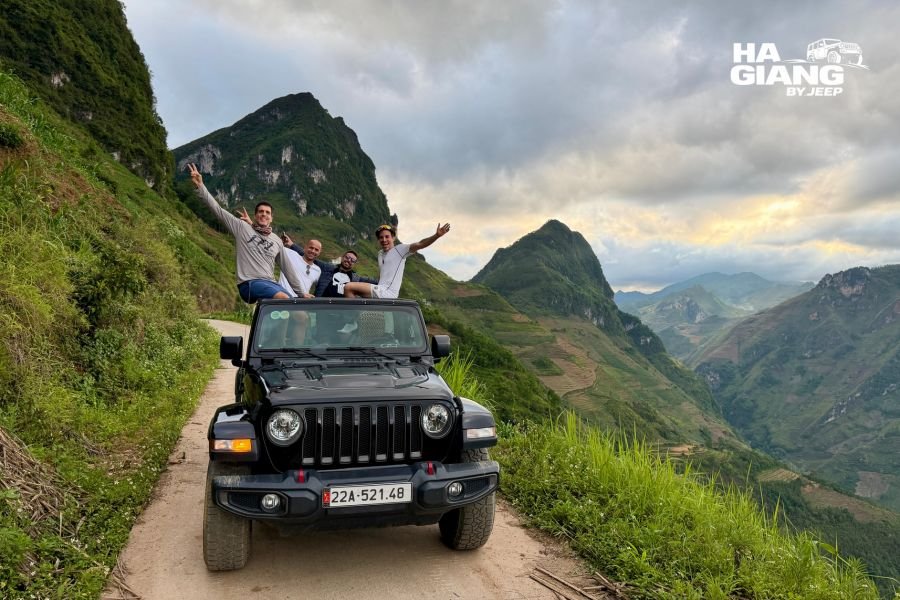
Most guides quietly skip this season, or wave you off it in a sentence. We are going to do the opposite and tell you exactly what it is like, because plenty of people have a genuinely great trip up here in the wet months, and plenty of others would be happier coming another time. Which one you are depends on facts, not marketing.
The Ha Giang Loop rainy season is a real trade off. You get the most dramatic, greenest, emptiest version of the region for the lowest prices of the year. You also take on rain, the chance of storms, and a genuine risk of landslides and short road closures. None of that is a reason to stay away by itself. It is a reason to come prepared, with the right vehicle and the right expectations.
Let's go through all of it.
When the Rainy Season Actually Is, and Why People Still Come
Northern Vietnam's wet season broadly runs across the summer months, roughly from May or June into September, with the heaviest rain usually landing around the middle of that window. Exact timing shifts every year, and climate patterns are less predictable than they used to be, so treat any calendar as a guide rather than a promise and check current conditions close to your dates.
So why do people deliberately come now?
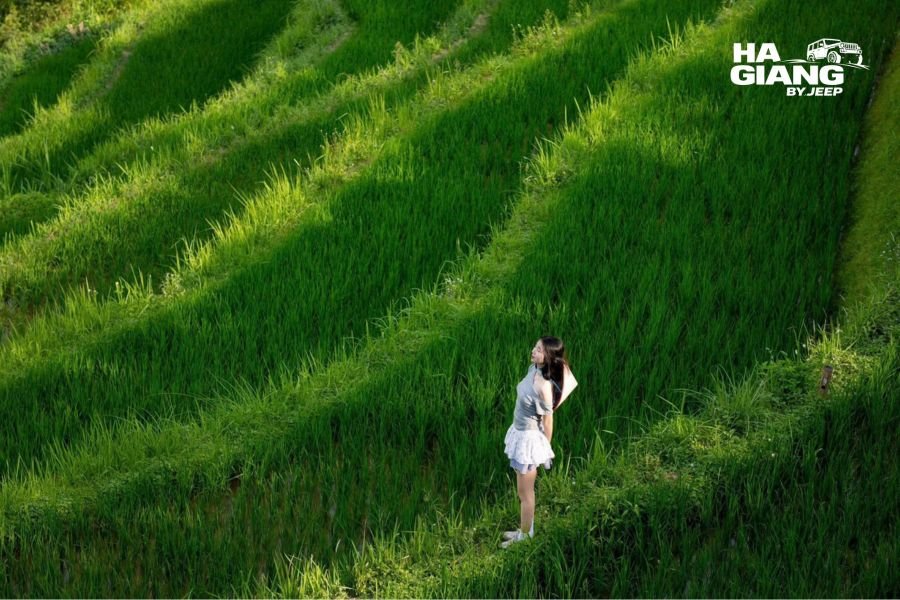
- The landscape peaks. The rice terraces are full, flooded and then blindingly green. This is the lush, postcard version of Ha Giang.
- The waterfalls are at their most powerful. Every roadside stream is running, and the big falls thunder.
- The roads are quiet. International visitors thin right out, so the viewpoints and homestays are yours.
- Prices are at their lowest. This is the cheapest time of year to travel here.
- The air after rain is extraordinary. When a storm clears, the light and the clarity can be the best you will see all year, for an hour or a day.
The people who love the rainy season are usually flexible travellers who care more about atmosphere, green and solitude than about a guaranteed blue sky. If that is you, a private jeep tour of the Ha Giang Loop now can be the best value trip of the whole year. If a rained out afternoon would ruin your holiday, read on carefully before you book.
Ha Giang Loop Rainy Season Weather: What to Really Expect
People imagine a wall of rain for a week. That is almost never what actually happens.
It Rarely Rains All Day
The typical rainy season pattern up here is not constant rain. It is heavy bursts, often in the afternoon or overnight, separated by dry and even bright spells. A day can start clear, cloud up, dump rain hard for an hour, and then clear again into a fresh, washed afternoon.
That rhythm is workable, especially with a flexible plan. You do not lose the whole day to weather. You lose an hour here and there, and you plan around it.
The Real Risk Is the Road, Not the Rain
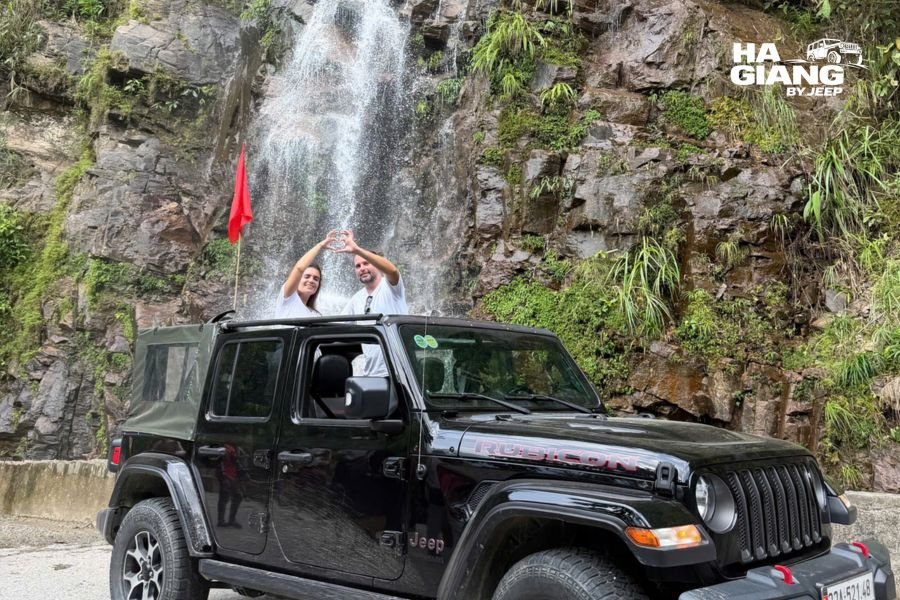
Getting wet is not the problem. Our jeeps have a soft top and heating, so sitting out a downpour is comfortable. The thing that actually affects a rainy season trip is what heavy rain does to the roads, which we cover in full in its own section below because it matters that much.
Visibility Is a Gamble
This is the honest downside. On a bad day, cloud sits low on the passes and Ma Pi Leng can be a wall of white. On a good day, right after rain, the air is so clean you can see further than any other season. You are trading reliability for the chance of something exceptional.
More days in your trip is the single best hedge. A one day dash in the rainy season is a coin flip on views. A 4 days loop almost always hands you at least one of those brilliant post storm days.
What the Rainy Season Gives You That No Other Season Does
The Terraces Are at Their Greenest
If you have seen photographs of Ha Giang looking impossibly, electrically green, they were almost certainly taken in the wet months. The terraces are full of water early in the season, mirroring the sky, and then the rice grows in thick and vivid. Nothing in the dry season looks like this.
Waterfalls at Full Power
Ha Giang is full of water in these months. Streams that are dry in winter come alive, temporary falls appear on cliff faces, and the big set pieces run hard. If you are continuing to Cao Bang, this is the season Ban Gioc is at its most overwhelming, which we come back to.
Empty Roads and Low Prices
The crowds that fill the plateau in autumn are simply not here. You get the passes, the markets and the viewpoints without the queue, homestay hosts have time for you, and it is the most affordable time of year to do the whole thing. For the right traveller that combination is hard to beat.
Weighing up a rainy season trip? Tell us your dates on WhatsApp and we will give you the honest current picture: how the roads are holding up, how green it is, what the forecast looks like. We would genuinely rather tell you to come another month than sell you a trip you will not enjoy.
Landslides, Closures and Safety: The Honest Version
We are not going to soften this, because it is the part that matters most and the part other sites skip.
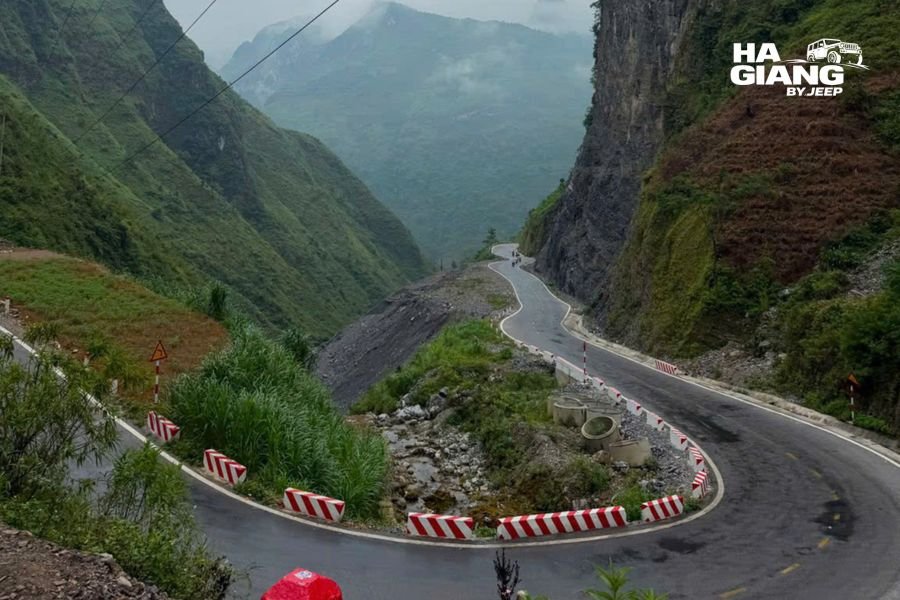
Heavy mountain rain can trigger landslides and rockfalls, and it can wash out or temporarily close sections of road. In the wettest stretches of the season this is a real and recurring thing, not a rare freak event. It is part of what living and travelling in these mountains involves.
Here is how we deal with it, and how you should think about it:
- Local knowledge is everything. Our drivers were born in these mountains and drive these roads year round. They know which sections are prone to slides, who to call for current conditions, and when a plan needs to change. That judgement is not something you can get from an app.
- The plan flexes. In the rainy season a fixed, rigid itinerary is a liability. If a pass is blocked, we reroute, reorder the days, or wait it out somewhere comfortable. A private trip can do this instantly, because it is only ever about your group.
- Sometimes waiting is the right call. Occasionally the safe and sensible thing is to sit tight for a few hours until a road clears or a storm passes. We would always rather do that than push into something risky, and we will tell you straight when that is the situation.
- Conditions change fast, so we check constantly. Rules, road status and weather can all shift within a day. We monitor it and we do not guess. If something is genuinely unsafe, we do not do it.
The takeaway is not "the rainy season is dangerous, stay away." It is "the rainy season demands respect, real local judgement, and a vehicle and plan that can adapt." With those three things, it is a rewarding time to be here. Without them, it is a gamble we would not take.
Why the Vehicle Matters Most in This Season
Every season here has its reasons for choosing a jeep. The rainy season is the one where it stops being about comfort and starts being about the trip actually working.
Think about what wet weather in the mountains asks of you. You want to stay dry and warm across a long day. You want a vehicle with the clearance and stability to handle a muddy, rutted, streaming road. You want a driver reading the conditions rather than a plan you made from home. And you want the freedom to change everything at short notice when a road closes.
That is exactly the combination a private jeep gives you:
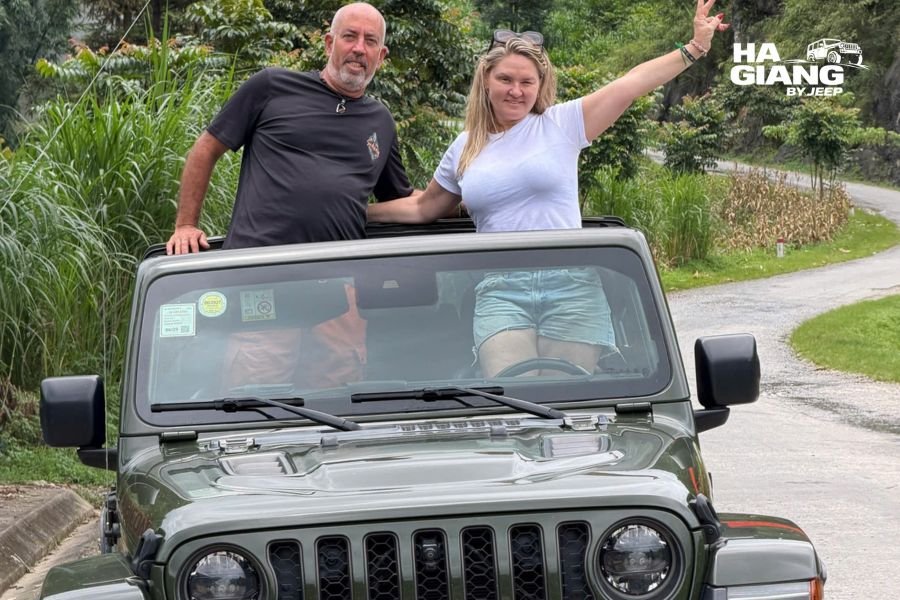
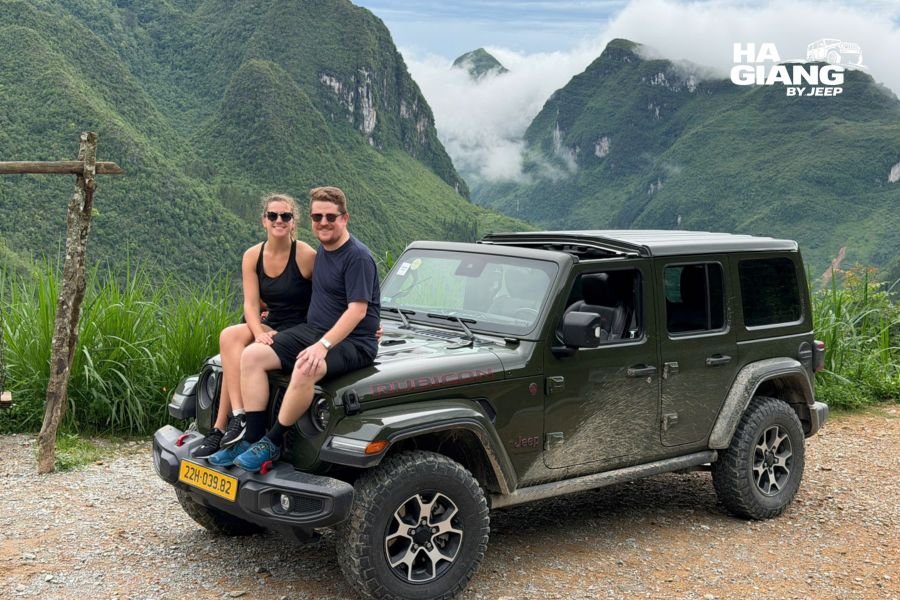
- A soft top and heating turn a downpour from a day ruining event into an hour behind glass with the wipers going.
- A proper 4x4 with clearance takes the wet, churned up sections in its stride rather than getting bogged down.
- A local driver at the wheel means the person deciding what is safe grew up on these passes.
- Your luggage stays dry inside with you, not strapped to the outside in the rain.
- A private, flexible plan can reroute the moment conditions change, because it is only ever about you.
None of this is a knock on any other way of travelling. It is simply that the wetter the weather, the more those advantages compound, until in the heart of the rainy season they are the difference between a great trip and a miserable one. If you want the green, the waterfalls and the empty roads without gambling your whole holiday on the sky, this is the season the jeep earns its keep most.
A Rainy Season Day in Ha Giang, From a Dry Seat
Morning: Read the Sky, Make a Plan
Rainy season mornings often start with the best weather of the day, so we tend to move early and get the big viewpoints in before the afternoon build up. You climb out of Ha Giang City toward Quan Ba with the valley below flooded green and mist lifting off the terraces.
With a private jeep the morning bends to the conditions. Clear skies, we push for the passes. Rain already falling, we take a slower, lower, village heavy morning and save the high viewpoints for a break in the weather.
Midday: Yen Minh, Sung La, Pho Bang, Dong Van
The pine country above Yen Minh is deep green and dripping in the wet season, and the whole plateau feels alive rather than dormant. Sung La and Pho Bang reward a slow, unhurried visit, and there is almost nobody else about.
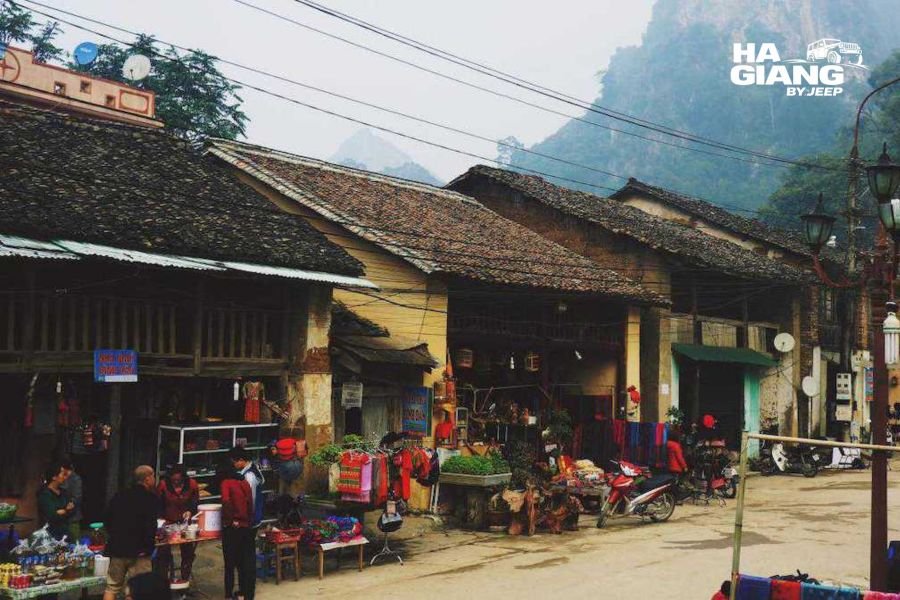
Dong Van and its Old Quarter are a genuine pleasure in the rain, the stone streets shining, a coffee under cover while a shower passes over. To see how the route joins up, our Ha Giang Loop map lays out the stops. Lung Cu, the flag tower at the northern tip, is an add on depending on your trip length.
Afternoon: Ma Pi Leng, Weather Permitting
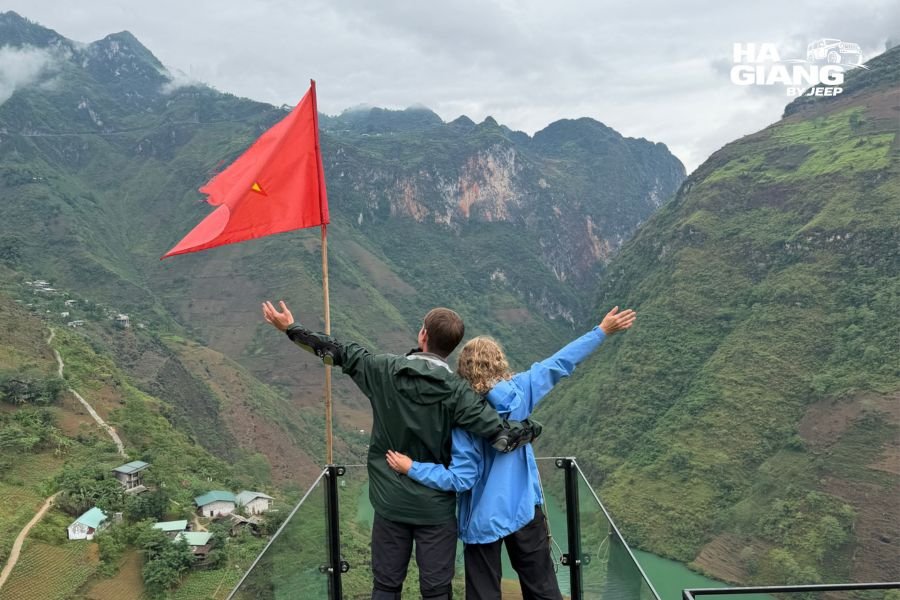
Ma Pi Leng, the great cliff road above the Nho Que River between Dong Van and Meo Vac, is the centrepiece, and in the rainy season it is the most weather dependent stop of all. On a clear afternoon it is staggering, the canyon deep and green, the river far below running brown with silt from the rain. In low cloud you may see very little.
This is exactly why a flexible plan wins. If the pass is socked in when you first reach it, we can time a second run for a clearer window rather than accepting the one bad view and moving on. Being private is what makes that possible.
Markets, Villages and Food When It's Wet
The Sunday markets in Dong Van and Meo Vac run right through the wet season, and rain does not stop them, it just adds umbrellas and mud. They are as real and as busy as ever, full of produce that is thriving in the rain. Go early and take your time.
Village life carries on regardless of weather, and a wet day is a good excuse to slow down: more time in a homestay, more time watching the rain come across the valley, more time over food. At Lung Tam Linen Village the Hmong weaving goes on whatever the sky is doing, and a rainy afternoon is a fine time to watch indigo dyed hemp linen being made by hand.
Food is where a wet day genuinely shines. Cold, damp weather and hot local food go together, and the region delivers:
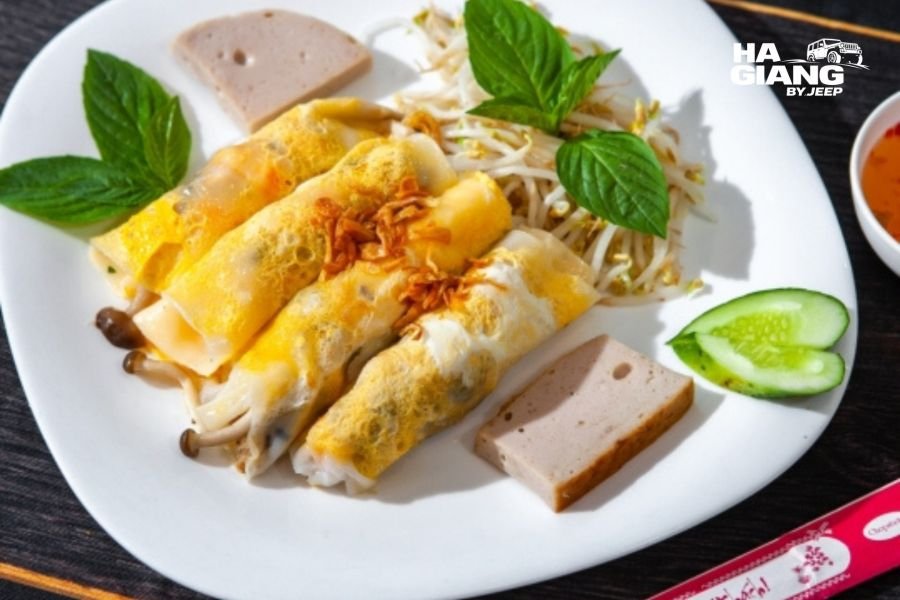
- Banh cuon trung. Steamed rice rolls with an egg inside, served with a bowl of hot bone broth. On a grey, wet morning it is exactly what you want.
- Com lam. Sticky rice grilled in a bamboo tube over a fire, split open hot at the table.
- Thang den. Warm glutinous rice balls in ginger syrup, sold in the evening. The ginger heat is perfect against the damp.
- Chao au tau. Dark, bitter tuber porridge eaten at night. Deeply warming when the rain is coming down.
- Ruou ngo. Corn wine, poured generously at homestay dinners.
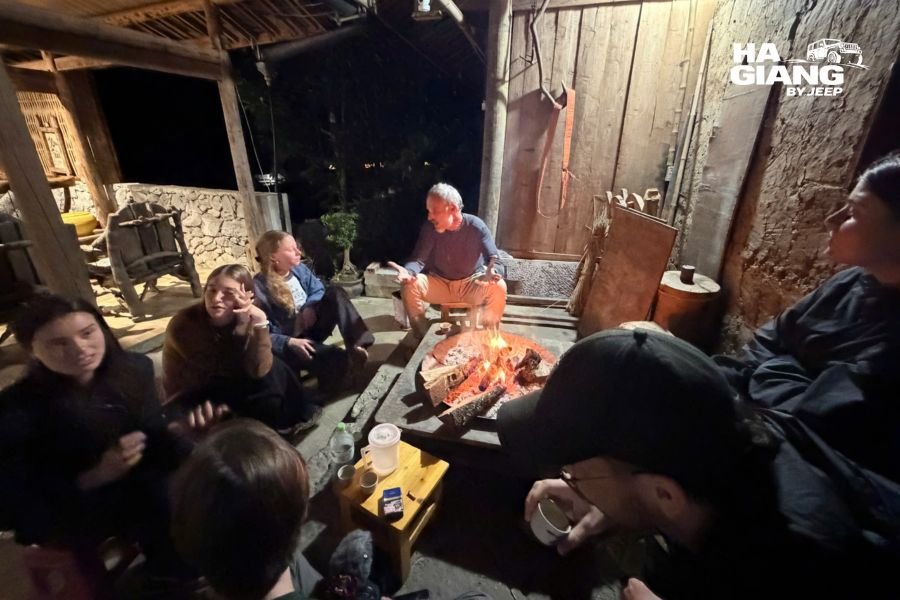
That last one is where the jeep quietly pays for itself. When your driver is driving, you can settle in by the fire on a rainy night, accept the glass and the next one, and not think about the road until morning. The same goes for every steaming roadside pot you pass. Somebody spots it, we pull over, and nobody gets soaked wrestling with parking or gear. A private jeep turns a wet day into a long, easy, well fed one.
What to Pack for the Ha Giang Loop Rainy Season
Pack for wet and warm, with the assumption that you will get rained on at least once and want to be comfortable when you do.
A Simple Wet Weather Packing List for Ha Giang
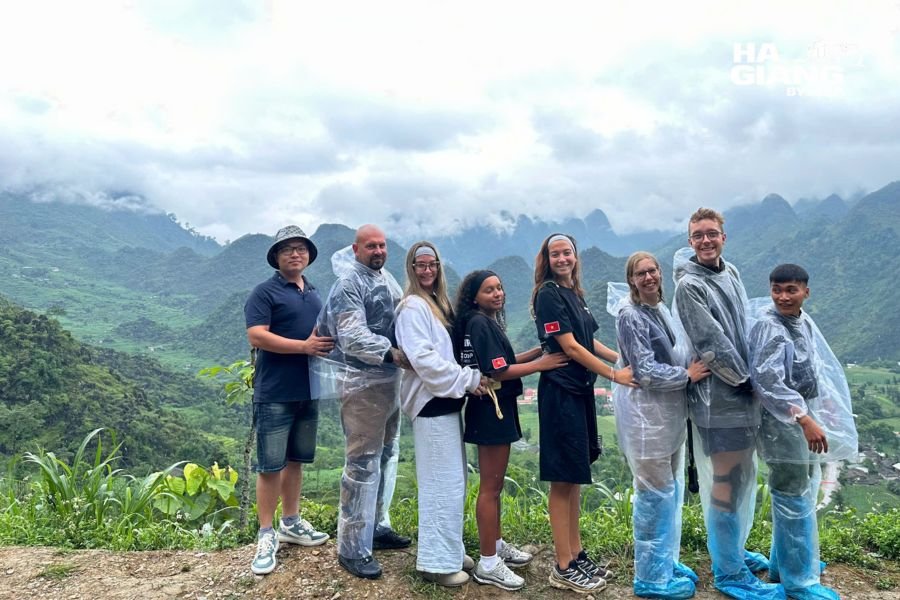
- A proper rain jacket. Not a flimsy poncho. A real waterproof shell with a hood.
- Quick drying clothes. Synthetics or merino that dry overnight. Cotton stays wet.
- A light warm layer. After rain, and up on the passes, it cools down fast.
- Waterproof footwear or sandals with grip. Trails and market ground turn to mud. Some people bring both closed shoes and grippy sandals.
- Dry bags or zip bags. To keep phone, camera, passport and a spare set of clothes dry.
- A quick dry towel. Small, useful, worth its space.
- Insect repellent. The wet season brings more mosquitoes, especially lower down and in the evenings.
- A hat with a brim. Keeps rain off your face better than a hood alone.
- Cash in small notes, kept dry. Markets, roadside stalls, village shops.
- Any personal medication. Do not rely on finding a specific product in a mountain town.
You do not need trekking gear, and you do not carry your own luggage between stops. It stays dry inside the jeep.
Adding Cao Bang: Ban Gioc at Its Most Powerful
If you have five or six days, the rainy season is arguably the single best time of year to continue east from Ha Giang into Cao Bang, for one reason above all: water.
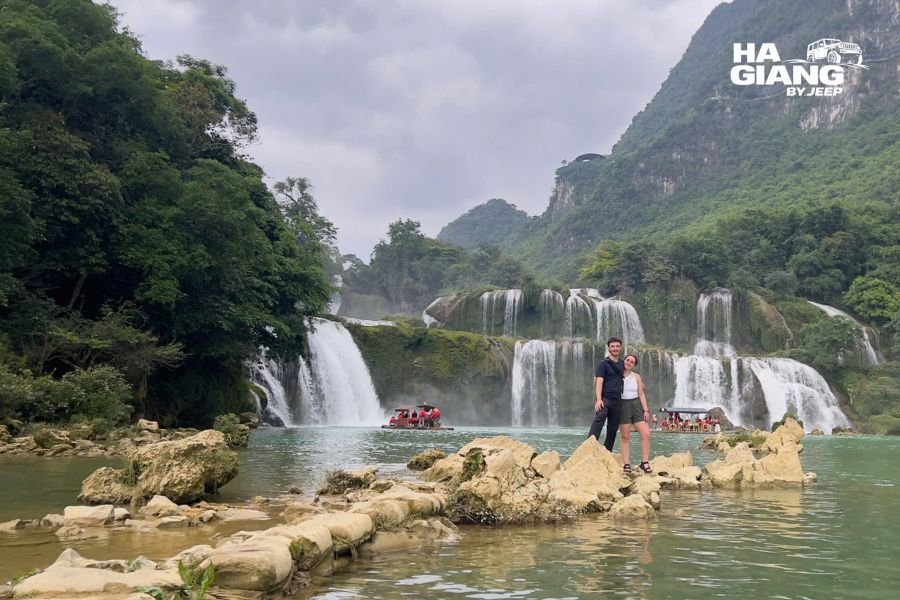
Ban Gioc Waterfall is at its most powerful now. Fed by a full border river, the wide terraced falls thunder in a way they simply cannot in the dry months. The spray, the sound and the sheer volume are the whole experience, and this is when you get all three. The trade off is that the water can run brown with silt, and a heavy weather day can shut the view down, so it is not guaranteed. But when it is on, rainy season Ban Gioc is unforgettable.
The route across is quieter than the loop and a complete change of scene, running through the Non Nuoc Cao Bang UNESCO Global Geopark, the second geopark of the trip, where the landscape opens into rounded karst towers, wide green valleys and rivers rather than canyons, all lush and full in the wet season. People remember the stacked bends of the 15 step pass, the hole punched clean through the summit at God's Eye Mountain, the fields of Ngoc Con valley, the Nguom Ngao cave, which is a perfect rainy day stop because it does not care about the weather, and the Pac Bo historical site.
We cover the crossing in our guide to going from Ha Giang to Cao Bang, and it is the spine of both our 5 days Ha Giang and Cao Bang jeep tour and the slower 6 days version.
Rainy Season vs the Rest of the Year: A Straight Comparison
No season here is universally best. Here is how the rainy season stacks up against the three the rest of the year, so you can see the trade off clearly.
| Rainy season (roughly May to Sep) | Autumn (Sep to Nov) | Winter (Dec to Feb) | Spring (Mar to May) | |
|---|---|---|---|---|
| Weather | Frequent heavy rain, storms possible | Rain easing, comfortable | Cold, fog risk | Mild, drizzle to haze |
| Landscape | Greenest of the year, flooded terraces | Harvest gold, buckwheat | Bare stone, frost | Green returning, blossom |
| Waterfalls | Most powerful | Strong | Gentle | Balanced |
| Visibility | A gamble, brilliant after rain | Reliably good | Best on a clear day | Good early, hazier late |
| Roads | Landslide and closure risk | Good | Ice risk in cold snaps | Generally good |
| Crowds | Emptiest | Busy | Very quiet | Moderate |
| Price | Lowest | Highest | Low | Moderate |
| Best for | Green chasers, budget, solitude | First timers, classic views | Photographers, solitude | Easy weather, blossom |
Want the reliable classic version instead? Read our guide to visiting Ha Giang in October. Prefer it cold, bare and empty? See Ha Giang in winter. Want the gentlest weather? Try Ha Giang in spring. And if the greenest, wildest, quietest version appeals and you can roll with the weather, the rainy season is yours.
Which Jeep Tour Is Right for You in the Rainy Season?
Every jeep we run is private, which matters more now than in any other season, because a private trip is the one that can adapt instantly when the weather changes the plan.
| Your situation | The trip that fits | Why |
|---|---|---|
| Short on time, want the highlights | Ha Giang Loop, 3 days | The core loop. Doable in the wet, but you have less room to wait out bad weather. |
| Want a buffer against the weather | Ha Giang Loop, 4 days | Our recommendation for the rainy season. The extra day is your insurance against a washed out afternoon or a closed road. |
| Want the loop plus Ban Gioc at full power | Ha Giang and Cao Bang, 5 days | Two UNESCO geoparks, ending at the waterfall when it is at its most powerful. |
| Want all of it, with room to flex | Ha Giang and Cao Bang, 6 days | The best rainy season option. The most slack in the schedule to absorb weather delays. |
| Confident driver, want the wheel | Jeep Wrangler Rubicon rental | Self drive, by the day. Worth saying plainly: wet mountain roads, mud and landslide risk are a serious step up. We will give you the honest current conditions, and sometimes we will advise against it. |
Still weighing up length? We break the whole question down in our guide to how many days for the Ha Giang Loop.
Our rainy season steer is firm: take more days, not fewer. Weather delays are the defining feature of this season, and days in hand are the only thing that turns a delay into a non event.
Mistakes to Avoid in the Rainy Season
- Booking a one day dash and expecting the view. Rain and cloud do not negotiate. More days is the only real insurance.
- Packing cotton and a cheap poncho. You will be wet and cold. Bring a real shell and quick drying layers.
- Following a rigid, fixed itinerary. In the wet season, the ability to reroute is worth more than any schedule.
- Ignoring road conditions. Landslides and closures are real. Take current advice from people who drive these roads daily, and do not push into something unsafe to save time.
- Assuming the rainy season means nonstop rain. It usually does not. It means bursts, and dry spells you plan around.
- Trusting any source that publishes exact driving times between stops. Nobody can honestly give you those, least of all in the wet season, when a slide or a closure can change everything. Anyone quoting precise minutes between villages is guessing.
- Underestimating how good it can be. The greenest terraces, the loudest waterfalls and the emptiest roads of the year are all here. Come with the right kit and the right plan, and it delivers.
Ha Giang Loop Rainy Season: FAQ
For the right traveller, yes. You get the greenest landscapes, the most powerful waterfalls, empty roads and the lowest prices of the year. The trade off is rain, variable visibility, and a real risk of landslides and short road closures. If you are flexible and come prepared, it is rewarding.
Broadly across the summer months, roughly May or June into September, with the heaviest rain usually in the middle of that window. Timing shifts year to year, so treat any calendar as a guide and check current conditions near your dates.
Usually not. The typical pattern is heavy bursts, often in the afternoon or overnight, with dry and sometimes bright spells in between. You plan around the bursts rather than losing whole days.
They require respect. Heavy rain can cause landslides and temporary closures, which is why local knowledge and a flexible plan matter so much. Our drivers know these roads year round, monitor conditions constantly, and will reroute or wait rather than take a risk.
They can cause delays and reroutes, but rarely ruin a well planned trip. Extra days in your itinerary are the best insurance, and a private jeep can adapt instantly when a road is blocked.
A proper waterproof shell, quick drying clothes, a light warm layer, grippy waterproof footwear, dry bags for electronics, insect repellent and a brimmed hat. Skip cotton and flimsy ponchos.
This is the season where the vehicle matters most. A soft top and heating keep you dry and warm, the clearance handles muddy roads, and a local driver reads conditions you cannot see coming. Those advantages compound the wetter it gets.
It is the best season for green. The terraces flood early on, then grow in thick and vivid. The electric green Ha Giang is famous for is a wet season sight.
It is at its most powerful now, fed by a full river. The volume and spray are the whole experience. The water can run brown and a bad weather day can obscure it, but at full flow it is unforgettable.
No. You are a passenger, and a local English speaking driver handles the vehicle. A licence only matters for the self drive Wrangler Rubicon rental, and rules can change, so check current requirements with us first.
Yes. It is the lowest season for prices and the easiest time to get availability, since international visitor numbers drop. That value is a big part of the appeal.
Some areas near the border require paperwork, and requirements can change. We handle permits for our guests as part of the trip. If you are self driving, ask us what is currently required before you set off.
Secure Your Spot
The rainy season is not for everyone, and we would never pretend otherwise. But if the greenest mountains, the loudest waterfalls and the emptiest roads of the year sound like your kind of trip, and you would rather have the weather handled than avoided, this is a wonderful and seriously underrated time to be here.
Everything is private. Your driver was born in these mountains and reads these roads for a living. The soft top goes up and the heating comes on the moment it rains, and your luggage stays dry inside with you. And when a storm rolls through, you sit it out warm and dry, then carry on into a washed clean afternoon.
Ha Giang Loop rainy season: let's get your dates held
Secure Your Spot with a 20 percent deposit. We use it to pre pay your homestays, your driver and your border permits, so everything on your route is genuinely held. The remaining 80 percent is cash on arrival, with nothing hidden behind it.
Questions first? Tell us your dates and we will give you the straight picture of what the roads and the weather are doing, and if we think you would be happier in another month, we will say so.
Secure your spot WhatsApp us Contact pageWhatsApp: +84 862 379 288 or +84 938 988 593
Email: booking@hagiangbyjeep.com