
Ha Giang in Winter: Cold Mornings, Clear Skies and the Emptiest Roads of the Year
The plateau in January is a different country. The corn is gone, the tour vans are gone, and the stone is bare. What is left is the shape of the place, and almost nobody to share it with.
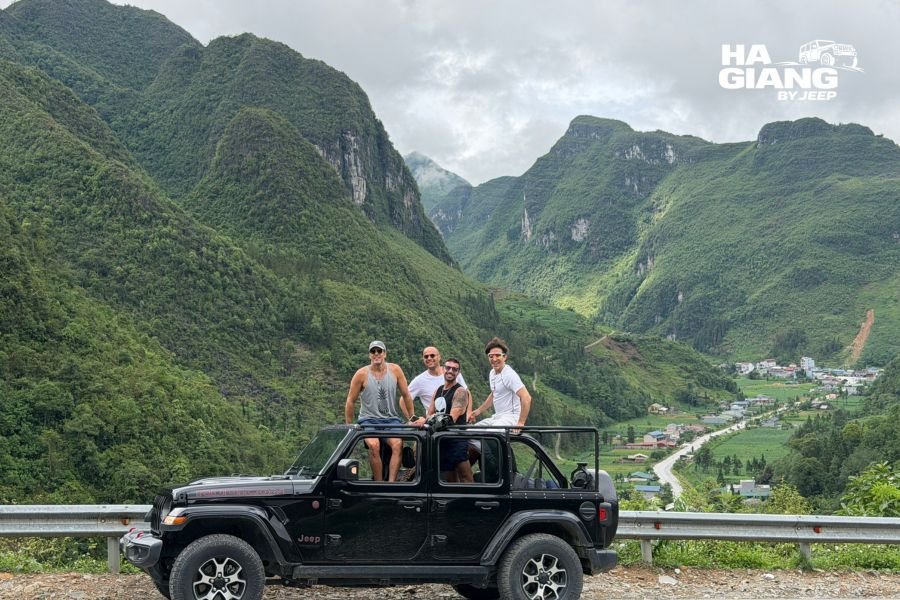
Most people plan their trip north for autumn, and they are not wrong to. But there is a version of this region that only exists between December and February, and the travellers who find it tend to come back talking about it for years.
Ha Giang in winter is cold. Properly cold, in a way that surprises people who have just come from Hoi An in a t shirt. It is also, on the right day, the clearest and most beautiful the mountains ever get, and you can stand at the top of Ma Pi Leng with the whole canyon to yourself.
This guide is the honest version: what the weather really does across the three winter months, what fog can cost you, what blossom you might catch, how Tet changes everything, what to pack, and how a heated jeep with a soft top turns the coldest season into the most comfortable one.
Why Winter Is the Season Most Travellers Skip, and Why That Is the Point
Ha Giang has a busy season and a quiet season, and the quiet season is not quiet because the region gets worse. It is quiet because the marketing calendar says autumn.
What emptiness actually buys you:
- Viewpoints you can stand at alone. In peak season the Ma Pi Leng pull offs have a queue. In January you often park, get out, and there is nobody.
- Homestay hosts with time. In the busy months your host is feeding thirty people. In winter you might be the only guests at the table, and the conversation is completely different.
- Markets that are for locals. Winter markets are not staged for anyone. People are there because they need salt, a blanket, a pig.
- The best long views of the year. Winter is the dry season, and dry season air, on a clear day, has a hardness to it that autumn cannot match.
- Availability. Outside the Tet window, this is the easiest time of year to get the dates and the rooms you want.
The catch is the cold and the fog, and we are going to be straight with you about both. But if you are the kind of traveller who would rather have the mountain to yourself and wear a coat, a private jeep tour of the Ha Giang Loop in winter is the version of this trip almost nobody sees.
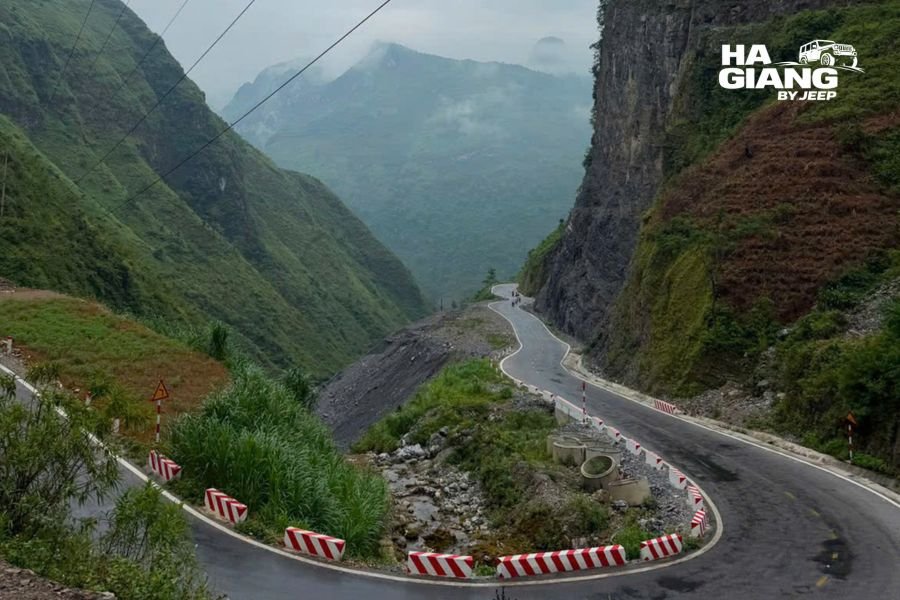
Ha Giang in Winter: Weather from December to February
First, the thing that matters most: the plateau is much colder than Ha Giang City. The city sits low in a river valley. The loop climbs onto the Dong Van Karst Plateau, and the Dong Van Karst Plateau UNESCO Global Geopark sits high, which is where you sleep. If you check a weather app for Ha Giang City and pack for that, you will be cold in Dong Van.
We do not publish exact temperatures for a given week, because nobody honestly can. What we can give you is the pattern, month by month.
December: Cold Arrives, Skies Open
Early December still carries the tail of autumn. The last buckwheat fields are usually fading out rather than blooming. The air dries out properly, and this is often when the long views arrive: no summer haze, no monsoon cloud, just distance.
Mornings turn genuinely cold, and the sun drops behind the ridges early, so the useful daylight is shorter than you expect. Plan your last stop earlier than you would in autumn.
January: The Coldest Weeks
This is the hard edge of the year, and for some people it is the best one. Frost on the grass at dawn. Cloud filling the valleys below you while you stand in sun. Villages with smoke coming out of every roof.
In extreme cold snaps, ice can form on the highest sections of road. It is not common, it does not happen every year, and conditions change fast. This is exactly the situation where you want a local driver who checked the pass this morning rather than a plan you made from a hotel in Hanoi.
February: Blossom, Drizzle and Tet
February is the month of two faces. It brings the blossom, and it brings the drizzle.
The northern winter can settle into a fine, persistent mist and light rain that locals call mua phun. It is not heavy, but it can hang around for days and it makes everything grey and damp. It can also lift completely and hand you a sharp blue afternoon.
February is also usually Tet, or right around it, and that changes the trip enough to deserve its own section further down.
Fog or Clarity: The Honest Trade Off
Here is the thing no brochure will tell you, so we will.
Winter in Ha Giang gives you two possible days. Day one: the air is dry and hard and you can see ridge behind ridge behind ridge, all the way out, and it is the best visibility of the entire year. Day two: cloud sits down on the plateau, the viewpoints are white, and Ma Pi Leng is a rumour.
Both are real. Neither is predictable more than a few days out. Anyone who promises you clear skies in January is selling something.
What you can control:
- Give yourself more days. A very short trip in winter is a coin flip. A 4 days trip almost always contains at least one spectacular day.
- Start early. Valley fog often burns off through the morning, and the cloud inversions are a dawn phenomenon anyway.
- Have a driver who can flip the plan. If the plateau is socked in and the lower valleys are clear, that is a decision someone needs to make at 7am, and it should be someone who was born here.
- Stay warm regardless. A grey day is fine when you are warm, dry and comfortable. It is miserable when you are cold and wet. This is where the jeep quietly does its job: soft top up, heating on, big windows, and the whole day stays pleasant even when the sky is not.
Thinking about a winter trip and not sure about your dates? Message us on WhatsApp and we will tell you what the plateau has actually been doing this week: fog, frost, road conditions, whether the blossom has started. Real answers from drivers who were up there yesterday.
What the Plateau Actually Looks Like in Winter
Frost, Smoke and Bare Stone
Strip out the corn and the green, and Ha Giang shows you its bones. The limestone is the whole point of this landscape, and winter is when you actually see it: grey teeth of rock coming out of the hillsides, terraces cut down to bare steps, stone walls that were hidden all summer.
Every village has smoke rising from it. Buffalo wear coats. People wrap themselves in layers of indigo. It is a working, lived in landscape rather than a scenic one, and it photographs beautifully.
Cloud Inversions
On cold, still mornings, cloud settles into the valleys overnight and sits there like a lake until the sun burns it off. If you are high, above it, this is one of the great sights of northern Vietnam. Quan Ba and the passes above Yen Minh are classic places for it.
This needs the right conditions and a lot of luck, so treat it as a gift rather than an itinerary item. Being out early is the only way to give yourself a chance.
Peach and Plum Blossom
Late winter is blossom season on the plateau. UNESCO's own geopark page notes that from January to February the landscape is transformed by peach and plum blossom.
White plum blossom appears against the clay walls and stone fences of the villages, and pink peach blossom is everywhere around Tet, because families cut branches for the house. Around Pho Bang and Sung La it is genuinely lovely, and hardly anyone is there to see it.
As with all flowers here: timing shifts with the year and the altitude. Ask us before you build your dates around it.
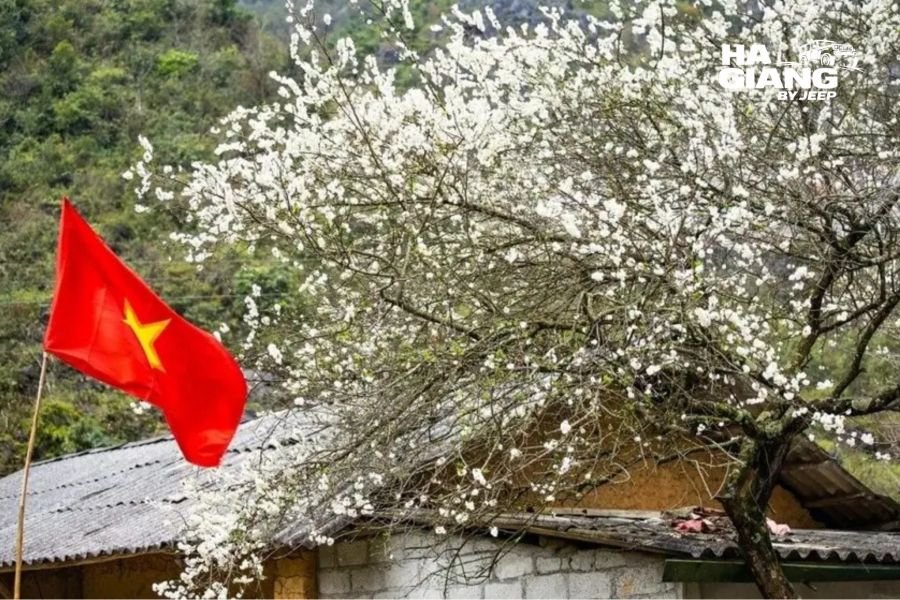
A Winter Day in Ha Giang, Inside a Heated Jeep
Morning: Cold Start, Big Reward
You leave Ha Giang City early, because in winter early is where the good stuff is. The valley is grey and cold. The road climbs, the switchbacks stack up behind you, and then somewhere above Quan Ba you come out of the murk and into the sun with a lake of white cloud sitting where the world used to be.
Inside the jeep the heating is on and the windows are up. Outside it is bitter. You get out anyway, take the photograph, get back in, and your hands warm up in about a minute. That loop, warm, cold, warm, is the rhythm of a winter day up here.
Midday: Yen Minh, Sung La, Pho Bang, Dong Van
The pine forests above Yen Minh look properly alpine in winter. Sung La in blossom season is worth a slow hour. Pho Bang, the faded old town off the main road, is almost eerie in the cold, in the best way, with clay walls and wooden shutters and almost no one about.
Then Dong Van, where in winter the Old Quarter earns its keep. Coffee outside with a blanket over your knees while the mist comes down the street is an experience the summer crowds never get. If you want to see how the pieces of the route fit together, our Ha Giang Loop map lays it out. Lung Cu, the flag tower at the top of the country, is an add on depending on your trip length.
Afternoon: Ma Pi Leng, and the Light Going Early
The Ma Pi Leng road between Dong Van and Meo Vac is the reason most people come. In winter, on a clear day, it is at its most severe and its most beautiful: no haze, no heat shimmer, just rock and air and the Nho Que a long way down in shadow.
Two practical notes. Sunset comes early behind the ridges, so the golden light window is short and you want to be in position for it rather than driving toward it. And it is cold up there, colder than anywhere else you will stand all day, because of the wind coming through the canyon. That is a fifteen minute discomfort, and then you are back in a warm vehicle. It is a good trade.
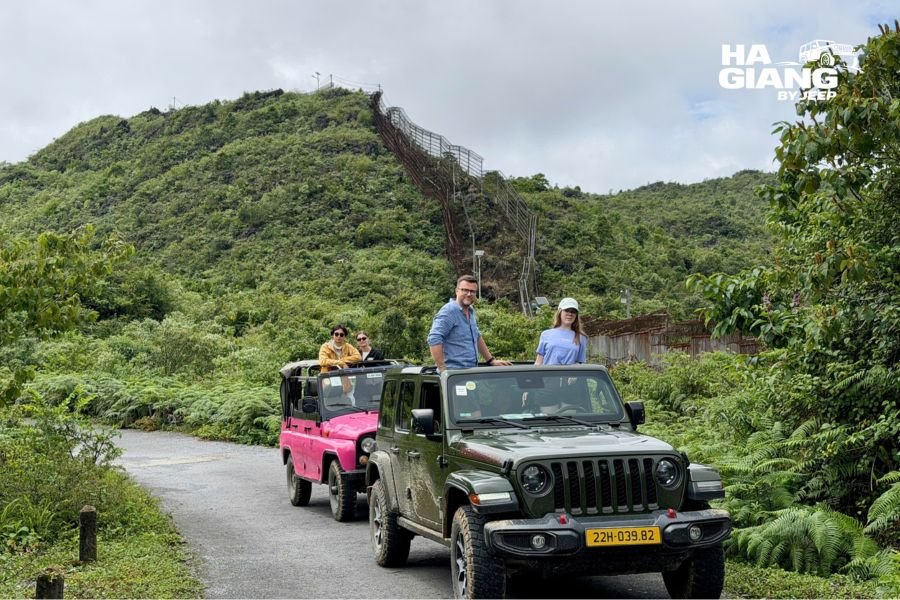
Tet: What Changes and How to Plan Around It
Tet is the one week Ha Giang in winter stops being quiet. The Lunar New Year is the biggest event in the Vietnamese calendar. It falls on a different date each year, somewhere between late January and mid February, so check the date for the year you are travelling before you commit to anything.
What Tet does to a Ha Giang trip:
- Villages become extraordinary. Peach branches in every house, best clothes, gatherings, visiting, food. This is the most alive the region gets all year.
- Businesses close. Many restaurants, shops and some homestays shut for several days while families celebrate. What is open is unpredictable.
- Markets change. The big markets in the days before Tet are chaotic and wonderful. During Tet itself, many do not run at all.
- Roads get busy. Vietnamese families travel home, and the domestic tourism spike around the holiday hits the plateau too.
- Everything must be arranged in advance. This is not a week to improvise.
Our honest steer: travelling during Tet is not a mistake, but it is not for a first trip to Vietnam if you value predictability. Come in the run up, or the week or two after, and you get the blossom, the atmosphere and the leftover warmth without the shutters coming down. If you do want Tet itself, tell us early and we will build a trip that works with it rather than fighting it.
Winter Markets and Village Life
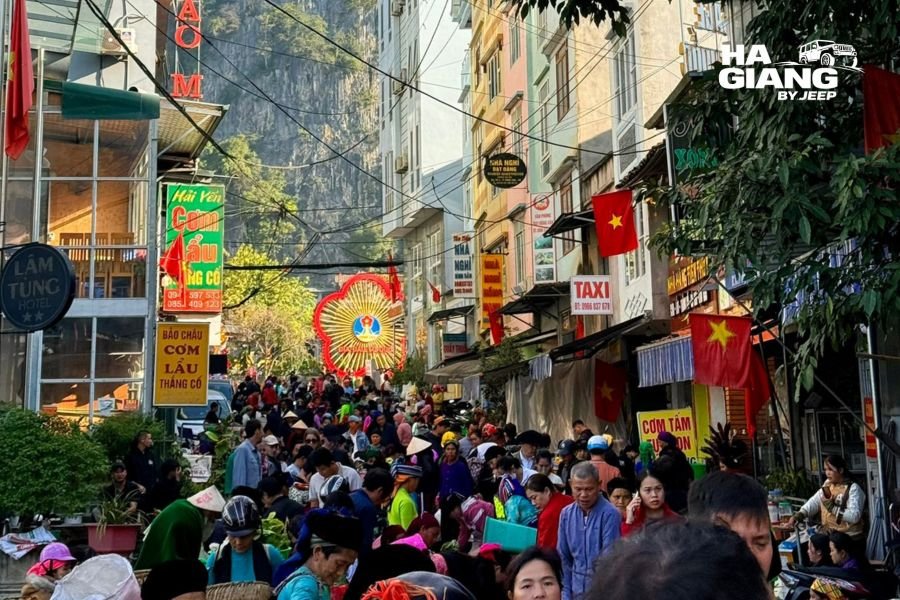
The Sunday markets in Dong Van and Meo Vac run through the winter, and this is when they are at their most real. Nobody is there for you. People come down from the villages to buy what they need for the cold, trade animals, drink corn wine at 8am, and see each other.
Go early, wear more than you think you need, and take your time. Meo Vac's livestock section is the one people remember.
Two honest notes. First, Khau Vai's famous Love Market is an annual spring event, not a winter one, so do not build a trip around it in January. Second, around Tet the market calendar goes out the window entirely, so check with us.
Lung Tam Linen Village is a strong winter stop, and one of the best places to spend money in the region. The Hmong women there grow, spin, dye with indigo and weave hemp linen by hand. In the cold months there is often more weaving going on, and buying a scarf or a blanket in the place it was made, from the person who made it, beats anything you will find in a Hanoi souvenir shop.
Winter Food: Chao Au Tau, Thang Den and a Fire
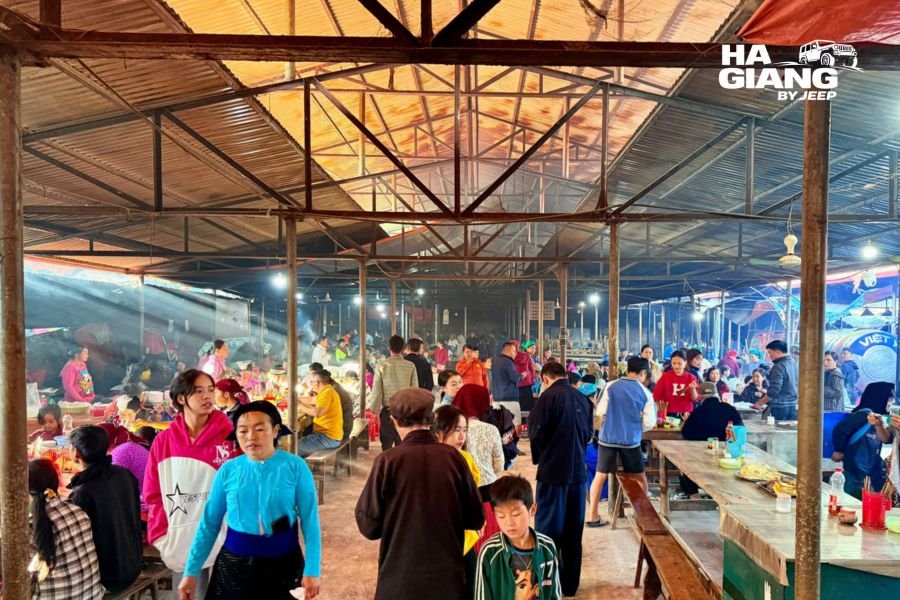
Cold weather food in Ha Giang is not a gimmick. It is what people actually eat when it is cold, and winter is when it makes the most sense.
- Chao au tau. A thick, dark porridge made from the au tau tuber, eaten at night, in the cold. This is the winter dish of Ha Giang City. It is bitter, warming and completely unlike anything you have had.
- Thang den. Warm glutinous rice balls in hot ginger syrup, sold on the street in the evening. The ginger is the point. It goes down like a small fire.
- Banh cuon trung. Steamed rice rolls with an egg inside, served with a bowl of hot bone broth instead of a dipping sauce. The best cold morning breakfast in Vietnam, and it is not close.
- Com lam. Sticky rice cooked in a bamboo tube over a fire and split open at the table.
- Ruou ngo. Corn wine, poured hard at homestay dinners, and never more welcome than in January.
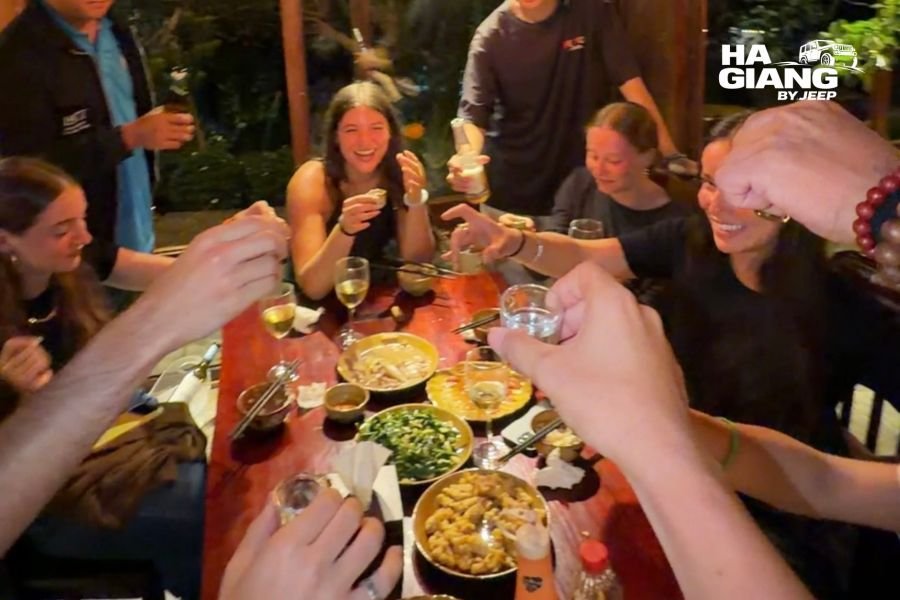
That last one is where the jeep quietly pays for itself. When your driver is driving, dinner is just dinner. You can accept the glass, and the next one, sit by the fire and go to bed warm. Nobody at the table has to be the person who says no.
The same applies to every steaming pot you pass at the side of a road with no name. Somebody sees it, we pull over, we get out, we eat. No cold hands, no wet bags, no argument.
Homestays in Winter: The Thing Nobody Warns You About
Here is the single most useful practical thing to know about Ha Giang in winter: most homestays on the plateau are not heated.
They are built of wood, clay and stone. They have thick blankets, and often a fire in the common area, and they are exactly as cold inside at 6am as they are outside. This is not a complaint about the homestays. It is how buildings work up here, and it is part of the experience. But if you arrive expecting a hotel radiator, you will have a bad night.
How to deal with it:
- Bring thermal base layers to sleep in. This solves ninety percent of it.
- Ask for an extra blanket. There is always an extra blanket.
- Warm socks for the night, and keep them dry.
- Sit by the fire in the evening rather than retreating to your room early.
- Tell us if warmth is a priority. On some routes we can put you in accommodation with heating, and on others we cannot. We will tell you honestly which is which rather than promising you something and letting you find out at midnight.
What to Pack for Ha Giang in Winter
The mistake is treating this like the rest of Vietnam. It is not. Pack for a cold mountain trip, not a beach country.
A Simple Winter Packing List for Ha Giang
| Item | Why |
|---|---|
| Thermal base layer, top and bottom | For the jeep at dawn and for sleeping in an unheated homestay |
| A proper insulated jacket | Down or synthetic. This is the item people regret skipping |
| A fleece or mid layer | Goes under the jacket on the coldest mornings |
| Waterproof and windproof shell | For drizzle, and for the wind at Ma Pi Leng |
| Gloves | Your hands are the first thing to go at a viewpoint |
| Warm hat and a scarf or buff | Cheap, tiny, and the best value things you will bring |
| Warm socks, several pairs | Cold feet ruin days. Keep a dry pair for the evening |
| Closed shoes with grip | Frost, wet stone and muddy market ground |
| Sunglasses and sunscreen | Winter sun at altitude is stronger than it feels |
| Lip balm and moisturiser | The dry season air is harsh |
| A power bank | Cold kills phone batteries fast |
| Cash in small notes | Markets, roadside stalls, village shops |
You do not need trekking gear, and you do not carry your own luggage. It travels in the jeep with you.
Adding Cao Bang: Ban Gioc in the Dry Season
If you have five or six days, continuing east from Ha Giang into Cao Bang is a completely different half to the trip. In winter that comes with an honest trade off.
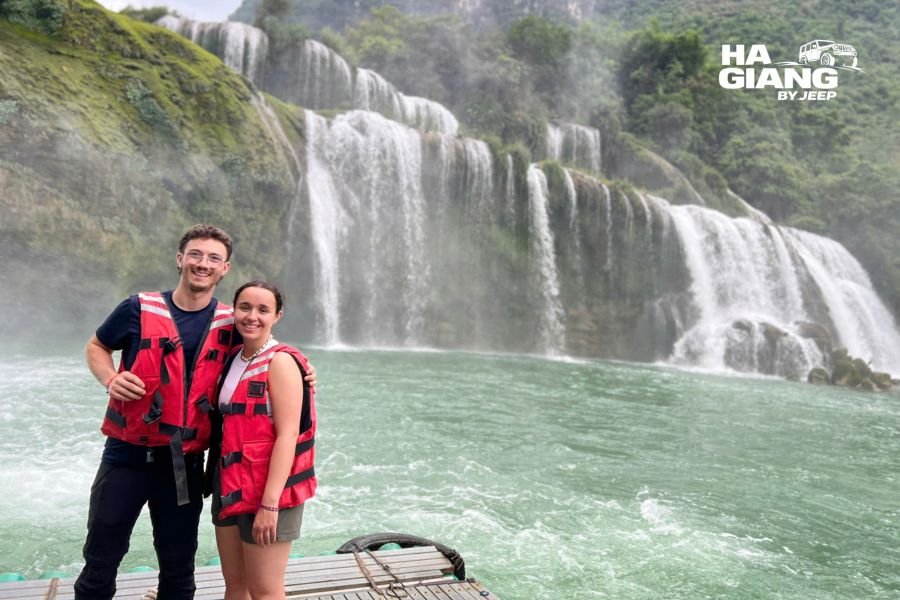
Ban Gioc Waterfall is gentler in the dry season. After months without heavy rain, the flow drops. It is still a wide, beautiful, terraced waterfall on a border river, and the water often runs clearer and more turquoise than it does in the wet months. But if your dream photograph is the falls at full thundering power, autumn does that better and we would rather say so.
What winter gives you at Ban Gioc instead: almost no one else. The site in January can be close to empty, and standing at a famous waterfall in near silence is its own kind of luxury.
The rest of the Cao Bang route holds up completely. You cross into the Non Nuoc Cao Bang UNESCO Global Geopark, the second geopark of the journey, and the landscape softens: rounded karst towers, wide valleys, rivers instead of canyons. The stacked bends of the 15 step pass, the hole punched clean through the peak at God's Eye Mountain, the fields of Ngoc Con valley, the Nguom Ngao cave system, which does not care what the weather is doing, and the Pac Bo historical site.
We cover the crossing in detail in our guide to going from Ha Giang to Cao Bang. It is the spine of both our 5 days Ha Giang and Cao Bang jeep tour and the slower 6 days version.
Winter or Autumn? A Straight Comparison
We are not going to pretend one is universally better. They are different trips, and the right answer depends on what you actually want.
| Winter (December to February) | Autumn (September to November) | |
|---|---|---|
| Crowds | Very quiet, except around Tet | Busy, especially weekends |
| Visibility | Best of the year on a good day, white out on a bad one | Reliably good, fewer extremes |
| Temperature | Cold to very cold, especially at night | Comfortable, big daily swing |
| Landscape | Bare stone, frost, cloud inversions, blossom late in the season | Rice harvest gold, buckwheat |
| Rain | Little, but February drizzle is real | Easing off, occasional late storm |
| Ban Gioc | Gentler flow, no crowds | Strong flow |
| Booking | Easy outside Tet | Book one to three months ahead |
| Best for | Photographers, repeat visitors, people who hate crowds | First timers, families, anyone who wants the classic version |
If the harvest and the flowers are what pulled you here, read our guide to visiting Ha Giang in October instead, and come then.
If you want the mountains with the volume turned down, come in winter, and bring a coat.
Which Jeep Tour Is Right for You in Winter?
Every jeep we run is private. You are never grouped with strangers. What changes between our trips is how much ground you cover and how much time you have to wait out a bad morning.
| Your situation | The trip that fits | Why |
|---|---|---|
| Short on time, want the headline sights | Ha Giang Loop, 3 days | The core loop: Quan Ba, Dong Van, Ma Pi Leng, Meo Vac. Works in winter, but you are more exposed to a bad weather day. |
| Want the loop with a buffer against fog | Ha Giang Loop, 4 days | Our recommendation for winter. The extra day is what turns a foggy morning into a story instead of a loss. |
| Want the loop plus Ban Gioc | Ha Giang and Cao Bang, 5 days | Two UNESCO geoparks, ending at a waterfall with almost nobody at it. |
| Want all of it, unhurried | Ha Giang and Cao Bang, 6 days | The same route with the pressure taken out. Best winter option if you can spare the days. |
| Confident driver, want the wheel yourself | Jeep Wrangler Rubicon rental | Self drive, by the day. Worth saying plainly: winter fog and cold mountain roads are a serious step up in difficulty. We will give you the honest current conditions before you decide. |
Still weighing up length? We break the whole thing down in our guide to how many days for the Ha Giang Loop.
For winter specifically, our steer is simple: take the extra day. Weather variance is the defining feature of this season, and days are the only real insurance against it.
Mistakes to Avoid on a Winter Trip
- Packing for Vietnam instead of for mountains. Ha Giang in winter has nothing in common with Hoi An in winter.
- Assuming the homestay will be heated. It usually will not be. Bring thermals and sleep well.
- Booking a short trip and gambling on the view. Fog does not negotiate. Days are your buffer.
- Ignoring Tet. Check the date for your year. It changes what is open, what is running and how busy the roads are.
- Expecting Ban Gioc at full power. In the dry season it is gentler. Beautiful, quiet, but gentler.
- Trusting any source that publishes exact driving times between stops. Nobody can honestly give you those. Fog, ice, roadworks, livestock and how long you want to stand at a viewpoint all change the day. Anyone quoting precise minutes between villages is guessing, and we would rather tell you that than pretend.
- Chasing blossom on a fixed date. Peach and plum move with the year. Ask first, then book.
- Skipping the region because it is cold. The people who do this are the reason the roads are empty for everyone else.
Ha Giang in Winter: FAQ
Yes, for the right traveller. You get the emptiest roads, the clearest air of the year on a good day, frost, cloud inversions and late winter blossom. You also get real cold and a genuine chance of fog. If you value quiet over guarantees, it is an excellent choice.
Cold enough for frost on the plateau, and occasionally cold enough for ice on the highest roads, though that is not an every year event. The plateau around Dong Van and Meo Vac is much colder than Ha Giang City, and nights are the hardest part. We do not publish exact figures because they vary too much to be useful.
Snow is rare and not something to plan a trip around. Frost is common on cold mornings. If someone promises you snow, be sceptical.
It can cost you a viewpoint, not a trip. Winter alternates between exceptional clarity and low cloud, sometimes in the same day. More days in your itinerary is the only real insurance, and starting early helps, since valley fog often lifts through the morning.
Thermal base layers, a fleece, a proper insulated jacket, a waterproof shell, gloves, a hat and warm socks. Add sunglasses and sunscreen, because the winter sun at altitude is strong.
Most are not. They have thick blankets and usually a fire in the common area, but the rooms get cold. Bring thermals to sleep in and ask for an extra blanket. Tell us if warmth is a priority and we will be honest about what is available on your route.
Usually from around January into February, and it is one of the great sights of the year here. Exact timing shifts with altitude and the weather, so message us before you fix your dates.
It is spectacular and it is complicated. Many businesses close, markets change, roads get busy. If you want the atmosphere without the shutters, aim for the weeks just before or after. Tet moves each year, so check the date for yours.
Yes, and it is the season where a jeep matters most. Soft top up, heating on, proper seats, luggage in the vehicle, and stops whenever anyone wants one. That is what "adventure without exhaustion" means when it is four degrees outside.
Yes, with adjusted expectations. The flow is gentler in the dry season, but the water is often clearer and the site can be almost empty. If maximum water is your priority, come in autumn instead.
No. You are a passenger, and a local English speaking driver handles the vehicle. A licence only matters for the self drive Wrangler Rubicon rental, and rules can change, so check current requirements with us before planning around it.
Outside Tet, winter is the easiest season to get the dates you want, but jeep availability is still limited. Once your dates are confirmed, book. For anything touching Tet, book as early as you possibly can.
Secure Your Spot for a Winter Trip
Ha Giang in winter rewards people who commit. Bring the right coat, give yourself an extra day, and let someone who grew up on these passes decide what time you leave in the morning.
Everything is private. Your driver was born in these mountains and speaks English. The soft top goes up and the heating goes on when it is cold, and both come off the moment the sun does its job. Your luggage stays in the jeep. And when you spot a fire in a roadside kitchen at 7am, we stop.
Ha Giang in winter: let's get your dates held
Secure Your Spot with a 20 percent deposit. We use it to pre pay your homestays, your driver and your border permits, so everything on your route is genuinely held. The remaining 80 percent is cash on arrival, with nothing hidden behind it.
Questions first? We answer 24/7, and we will tell you honestly if your dates look like a bad idea.
Secure your spot WhatsApp us Contact pageWhatsApp: +84 862 379 288 or +84 938 988 593
Email: booking@hagiangbyjeep.com